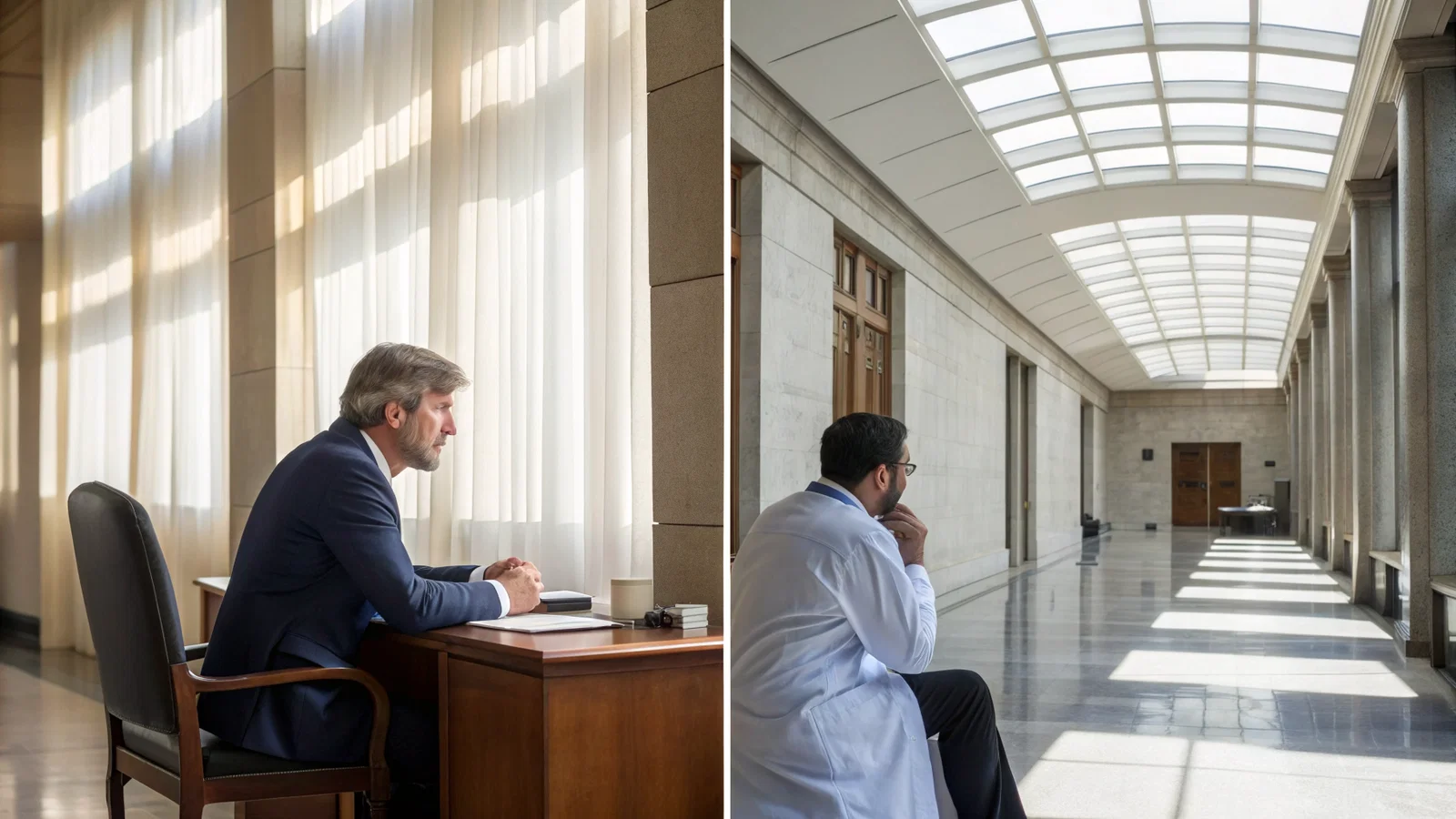
You're standing in a hallway. To your left, a closed oak door. Behind it sits an admissions dean waiting to ask you why you want to be a doctor. To your right, a flimsy plastic door with a number on it. Behind it is a crying standardized patient who is furious because the lab lost their blood work.
Welcome to the waiting room paradox. One demands a deep dive conversation. The other feels like a high-stakes obstacle course. If you're trying to figure out which one requires more preparation, you're asking the wrong question. "More preparation" isn't about total hours logged. It's a nuanced question of depth versus breadth. Here's the direct answer you're looking for.
The Traditional Interview: Preparing for Depth
The traditional interview is a biographical excavation. They have your CV. They have your personal statement. Now they want you to sit across from them and make it sound like a cohesive, authentic narrative rather than a disjointed list of achievements.
Your strategic focus here is mastery of self. You need to know your personal story, your CV highlights, and your "Why Medicine" themes inside and out. The preparation burden is heavy on rehearsal, consistency, and the articulate delivery of specific life experiences.
I've seen applicants with incredible GPAs crash and burn in traditional interviews because they couldn't explain a three-month gap in their research without stuttering. You can't wing this. The focus is on rapport building and conversational mastery. You have to sound rehearsed without actually sounding rehearsed. It's a brutal tightrope.
You map out your answers to "Tell me about yourself," "What is your greatest weakness," and "Tell me about a time you failed." You drill them until they feel like second nature. The cognitive load is vertical. You are digging a very deep hole in one specific spot.
The Actor-Based MMI: Preparing for Breadth
The Actor-Based MMI isn't about acting. It's about problem-solving under pressure while pretending the person in front of you isn't an actor. The fundamental challenge is the unknown. You cannot script a five-minute interaction with an upset patient or an angry colleague. If you try, you will fail the moment they pivot.
Your preparation burden shifts entirely. You move away from memorized answers and toward dynamic mental frameworks. You aren't memorizing what to say; you're training how to think. You need to internalize ethical decision-making models, like the four pillars of medical ethics (autonomy, beneficence, non-maleficence, justice), and learn to apply them on the fly.
You are training your situational intelligence rather than your biographical recall. The MMI tests your capacity for empathy, your ability to maintain composure when challenged, and your skill in de-escalating conflict.
I remember watching a brilliant applicant botch an MMI station because they treated it like a debate club exercise. The actor was playing a mother refusing vaccines for her child. The applicant aggressively cited CDC statistics and "won" the argument. They got rejected. They prepared for a debate, not a conversation. MMI prep is about learning to listen, validate, and then gently redirect. That requires a broad understanding of human behavior, not just a good memory.
Comparing the Effort: A Direct Verdict
Let's debunk the myth right now: One format isn't "harder" than the other. They demand completely different cognitive muscles. The traditional interview is a memory and performance test. The MMI is a stress and adaptability test.
Use this decision framework to figure out where your preparation deficit lies:
- Are you better at storytelling or spontaneous problem solving? If you're a storyteller, traditional interviews are your playground. If you're a quick thinker, the MMI favors you.
- When to prioritize Traditional Prep: You are nervous about summarizing your life story, explaining red flags in your application, or articulating a clear vision for your medical career.
- When to prioritize MMI Prep: You struggle with ethical dilemmas, tend to get flustered when challenged, or have a habit of freezing when you don't know the "right" answer.

If you over-prepare for a traditional interview, you sound robotic. If you under-prepare for an MMI, you look incompetent. The "hardest" interview is simply the one for which you haven't identified the underlying competency being tested.
Action Plan: Your Interview Strategy
Stop guessing. Start executing. Here is your step-by-step action plan.
- Audit your interview invites. Log into each portal and determine the exact format for every school. Don't assume. Some schools mix traditional and MMI formats on the same day.
- Allocate your study time. Dedicate 70% of your prep time to the specific format of your top-choice schools. If your dream school is 100% MMI, you spend your time on ethical frameworks, not memorizing your AMCAS work and activities section.
- Engage in mock sessions. For traditional interviews, record yourself. Watch your eye contact and body language. For the MMI, find a partner. Give them a prompt and have them play an unreasonable patient or a difficult peer. Your goal is to keep your composure, not to "win" the argument.
- Adopt a feedback loop. Don't just practice in a vacuum. Get brutal, honest feedback from your mock partners. If your empathy sounds fake, fix it. If your personal story rambles, cut it down. Refine your performance in real-time.
Key Takeaways:
- Traditional interviews reward deep, scripted reflection on your personal history.
- MMI formats reward the mastery of ethical frameworks and the ability to think on your feet.
- Do not over-rehearse for an MMI, as it makes you appear robotic and incapable of empathy.
- The "hardest" interview is the one for which you have not identified the underlying competency being tested.