Introduction: Why Study Groups Matter in Medical School
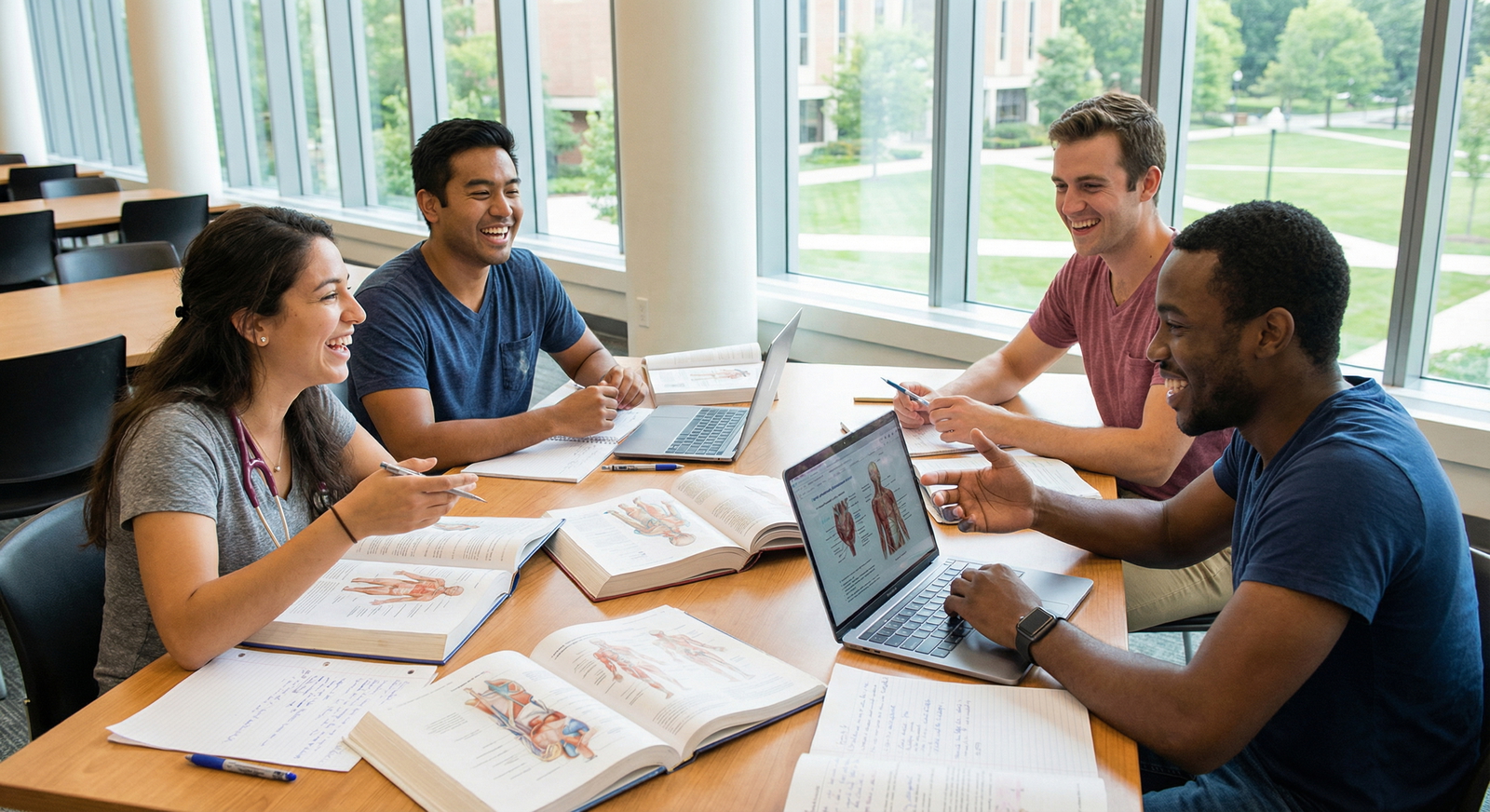
Medical school is intense. The volume of information, the pace of exams, and the emotional weight of clinical training can feel overwhelming. Many students quickly realize that relying solely on solo study is not enough to stay on top of coursework, prepare for board exams, and develop the communication skills needed for clinical practice.
This is where well-structured Study Groups become a powerful tool.
Effective collaborative learning in medical school can:
- Deepen your understanding of complex topics
- Improve long-term retention and exam performance
- Build critical communication and teamwork skills
- Provide vital peer support during stressful periods
- Help you transition more smoothly into the team-based environment of clinical medicine
This guide explores the benefits of study groups in medical school and provides concrete, step-by-step strategies to help you collaborate effectively for academic success and personal well-being.
The Academic Benefits of Study Groups in Medical School
1. Deeper Understanding of Complex Medical Content
Medical school content is dense and concept-heavy. Courses like anatomy, physiology, pharmacology, pathology, and microbiology demand more than memorization—they require integration and application.
How study groups help:
- Active discussion: Explaining mechanisms of disease or treatment rationales to others forces you to organize and clarify your own understanding.
- Peer teaching: Teaching a concept (e.g., the RAAS system, insulin signaling, or heart murmurs) reveals gaps in your knowledge and solidifies what you truly know.
- Clarification on the spot: When one member is confused, others can re-explain material in simpler words, different analogies, or with diagrams.
Example in practice:
You’re reviewing cardiac physiology. One student is strong in hemodynamics and can walk the group through pressure–volume loops, while another is better at correlating valves and heart sounds. Together, the group maps out diagnostic clues for conditions like aortic stenosis or mitral regurgitation and connects them to exam vignettes.
This kind of interactive, collaborative learning is far more powerful than passively rereading lecture slides alone.
2. Harnessing Diverse Perspectives and Learning Styles
Every medical student brings a different background, strengths, and experiences:
- Some are visual learners who excel with diagrams and videos.
- Others are verbal learners who benefit from discussion and teaching.
- Some may have prior experience as EMTs, nurses, scribes, or researchers.
Why diversity in study groups matters:
- Broader clinical context: A classmate who worked night shifts as a nurse can share real-world patient care scenarios that make theoretical content more concrete.
- Multiple problem-solving approaches: One person may approach a question using pathophysiology, another using pattern recognition from question banks. Seeing both strategies strengthens your toolkit.
- Exposure to new resources: You’ll discover flashcards, note-taking methods, YouTube channels, Anki decks, and question banks you might never have found on your own.
Mini case study:
A group is preparing for a small-group PBL (problem-based learning) session on sepsis. One student with ICU volunteering experience describes how septic patients actually look and behave clinically—tachycardic, hypotensive, mottled skin—making the diagnostic criteria much more memorable for the others.
In this way, Study Groups transform isolated information into clinically relevant, memorable knowledge.
3. Built-In Motivation, Accountability, and Consistency
In medical school, procrastination is costly. Content piles up quickly, and falling behind can trigger a cycle of stress and burnout.
Study groups support accountability by:
- Creating scheduled, non-negotiable study times
- Making it socially expected that you arrive prepared
- Encouraging you to complete pre-reading or question sets before each session
- Providing gentle peer pressure to stay on track
Research in education consistently shows that peer collaboration increases engagement, decreases avoidance behaviors, and supports consistent study habits. When you know others are relying on you to contribute, you’re more likely to:
- Finish that pathology video before the meeting
- Review the week’s lectures instead of pushing them off
- Attempt the assigned question bank block so you’re ready to discuss
Over time, this rhythm strengthens your discipline and prepares you for the sustained effort required for board exams like the USMLE or COMLEX.
4. Strengthening Communication and Teaching Skills
The ability to explain complex information clearly is central to being a good physician. Whether you’re:
- Counseling patients
- Presenting on rounds
- Teaching junior trainees
- Collaborating with multidisciplinary teams
you need strong communication skills.
Study groups are a low-stakes training ground for:
- Presenting a topic succinctly (“5-minute mini-lecture” on nephrotic vs. nephritic syndrome)
- Answering questions clearly and respectfully
- Adapting explanations based on others’ level of understanding
- Handling disagreement or confusion constructively
These micro-practice sessions prepare you for clinical rotations where you’ll present histories, physicals, and management plans in front of attendings and residents.
Over time, you’ll find your ability to “think out loud” and structure information improves—which also directly benefits your exam performance, especially on oral exams or OSCE-style assessments.
5. Enhanced Clinical Reasoning and Problem-Solving
Medical training is not just about recall—it’s about solving diagnostic and management problems. Study groups can significantly boost your clinical reasoning skills when used intentionally.
High-yield ways to use groups for problem-solving:
- Work through clinical vignettes together, step by step:
- Identify key findings (age, risk factors, vital signs, lab results)
- Build a differential diagnosis as a group
- Debate the best next step in management
- Practice “think aloud” reasoning:
- One student verbalizes their thought process
- Others challenge or refine the logic
- Simulate OSCE or oral exam scenarios:
- One person plays the “standardized patient”
- Another takes a history and presents a plan
- The group gives constructive feedback
Example:
Your group tackles a USMLE-style question on chest pain. One student focuses on risk factors (smoker, diabetic), another emphasizes EKG changes, and a third brings in pharmacology (which anti-platelet to choose). By the end, everyone has a more integrated, clinically oriented understanding of acute coronary syndromes.
Practicing this kind of collaborative reasoning now prepares you for:
- Small-group sessions
- Clerkship discussions
- Morning reports and team rounds
where you’ll be expected to think quickly and justify your decisions.
6. Efficient Resource Sharing and Study Strategy Optimization
Navigating medical school resources is overwhelming. There are endless options: lecture slides, textbooks, review books, flashcards, question banks, podcasts, and videos.
A well-functioning study group can help you curate and prioritize:
- Compare what’s working for each person
- Decide which resources align best with your school’s curriculum and your learning styles
- Share annotated slides, condensed notes, and high-yield summaries
- Divide and conquer:
- One person summarizes microbiology antibiotics
- Another creates a chart of cardiac murmurs
- Another compiles commonly tested formulas
Practical example:
- A classmate shares an Anki deck for pharmacology they’ve been using successfully.
- Someone else explains how they use spaced repetition effectively.
- The group agrees on a shared schedule for finishing a block of questions every week.
This kind of collaborative resource management can save everyone time and prevent redundant work, allowing you to focus on what truly leads to academic success rather than constantly reinventing the wheel.
7. Emotional, Social, and Wellness Support
The emotional demands of medical school are significant. Imposter syndrome, test anxiety, fatigue, and personal challenges are common.
Healthy Study Groups are not just academic—they also provide peer support:
- A safe space to normalize stress and doubts
- People who understand the specific pressures of anatomy lab, OSCEs, or Step prep
- Allies to celebrate small victories: passing an exam, improving a score, finishing a tough rotation
- Friends who notice when you’re burning out and encourage you to rest or seek help
Many medical students report that their study group:
- Helped them feel less isolated
- Provided reassurance during exam weeks
- Became their core social circle throughout medical school and beyond
These relationships often evolve into lifelong friendships and professional networks, supporting you not just as students, but as future colleagues.
How to Build an Effective Study Group in Medical School
Knowing that study groups can be powerful is one thing; making them work well is another. Poorly structured groups can easily become unfocused, time-wasting, or even anxiety-provoking.
Below are practical steps to create a study group that truly supports collaborative learning and academic success.
1. Choose Members Intentionally
The right group composition matters more than sheer enthusiasm.
Aim for:
- Size: 3–6 members is ideal—large enough for diverse input, small enough for everyone to participate.
- Commitment: Choose peers who are reliable, respectful, and reasonably aligned with your work ethic.
- Complementary strengths: A mix of strong test-takers, good explainers, and organized planners can work very well.
Red flags to avoid:
- Chronically late or unprepared people
- Highly competitive or undermining attitudes
- Consistent negativity or dismissiveness
You don’t need to be best friends with everyone in your group, but there should be mutual respect and shared purpose.
2. Set Clear Goals and Expectations from the Start
Before your first real session, have a brief meeting (in person or online) to align expectations.
Discuss:
- Primary purpose
- Reviewing lectures weekly?
- Preparing for block exams?
- Focused board exam prep?
- Frequency and duration
- Once or twice a week, 1–2 hours per session is typical.
- Format
- Case-based? Question-based? Topic teaching? Mixed?
- Preparation expectations
- Should members complete Anki, watch lectures, or finish specific questions beforehand?
Clarify non-academic expectations too:
- Start and end on time
- Cameras on for virtual meetings, if possible
- Respect for different opinions
- No shaming for wrong answers—mistakes are learning opportunities
This up-front clarity prevents future frustration and ensures that the group supports everyone’s learning style and time constraints.
3. Use Roles and Structure to Keep Sessions Productive
Unstructured sessions easily drift into chatting, complaining, or unfocused review. A simple framework goes a long way.
Helpful rotating roles:
- Facilitator: Guides the agenda, keeps conversation on track, ensures everyone participates.
- Timekeeper: Manages time spent on each topic or question, keeps the group from getting bogged down.
- Scribe/Note-taker: Jots down key insights, high-yield points, and questions to revisit.
- Question Leader: Brings practice questions or cases for the group to work through.
Example structure for a 90-minute session:
- 5–10 min: Quick check-in and review of session goals
- 30–40 min: Topic review (each member teaches or summarizes a subtopic)
- 30–35 min: Group questions/cases with discussion and reasoning
- 5–10 min: Rapid recap of high-yield takeaways + assign prep for next session
Having a loose but consistent structure keeps your Study Group focused and efficient.
4. Create a Supportive, Respectful Learning Environment
Psychological safety is crucial. People learn best when they feel safe asking “basic” questions or making mistakes.
To foster a healthy environment:
- Encourage all voices—especially quieter members.
- Use techniques like round-robin sharing so each person has space to contribute.
- Treat wrong answers as opportunities to explore concepts, not as failures.
- Avoid one person lecturing the entire time; encourage interaction.
- If someone is dominating conversation, the facilitator can gently redirect:
“Let’s pause here and hear from others—how are you thinking about this question?”
Group norms that value learning over ego will make your sessions more effective and enjoyable.
5. Monitor Group Dynamics and Adjust as Needed
No group is perfect from the start. Plan to periodically reassess how things are going.
Ask openly:
- Is the pace too fast or too slow?
- Are the sessions too social or too intense?
- Is everyone getting a chance to participate?
- Are we meeting our original goals?
Be willing to:
- Change the structure (e.g., more questions, fewer lectures).
- Rotate roles more often.
- Split into smaller groups if size becomes unwieldy.
- Kindly address problematic behavior (chronic lateness, unpreparedness).
If a group truly isn’t working, it is acceptable—professionally and respectfully—to step back and find a different study arrangement. Your learning and mental health come first.
6. Use Technology Strategically for Collaborative Learning
Digital tools can enhance both in-person and virtual study groups.
Consider:
- Video platforms: Zoom, Microsoft Teams, Google Meet for remote sessions.
- Shared documents: Google Docs/Sheets for collaborative notes, tables, and topic lists.
- Whiteboard tools: Online whiteboards or built-in Zoom tools for drawing pathways and anatomy.
- Flashcard tools: Shared Anki decks or Quizlet sets created by group members.
- Scheduling apps: Doodle polls or group chats to coordinate times.
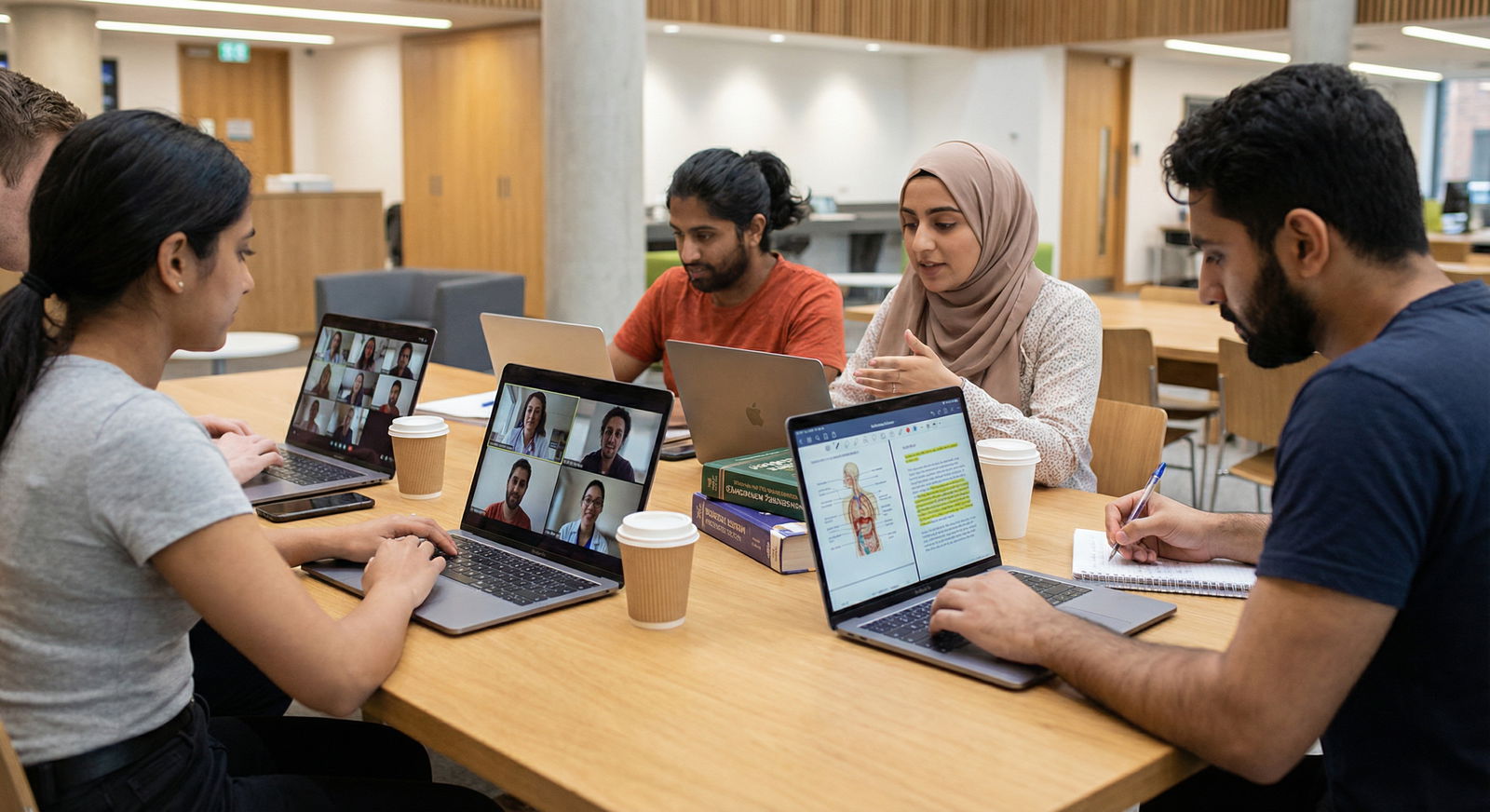
Virtual Study Groups can be especially helpful during demanding rotations or when schedules don’t align for in-person meetings, allowing you to maintain consistency and peer support throughout the year.
7. Reflect, Get Feedback, and Continuously Improve
Every few weeks, intentionally review:
- What’s working well?
- Which activities feel most effective (e.g., question review vs. concept teaching)?
- Where are we wasting time or losing focus?
Encourage honest but kind feedback:
- “I feel like we spend too long on side conversations.”
- “The question review has been really helpful; can we do more of that?”
- “It might help if we decide topics earlier so we can prepare better.”
This continuous improvement mindset mirrors the reflective practice you’ll use throughout your medical career.
FAQs: Study Groups, Collaborative Learning, and Academic Success in Medical School
1. How do I find people to start a study group with in medical school?
- Ask classmates after lectures or labs if anyone is interested in forming a small Study Group focused on a specific course or exam.
- Post in your class group chat or learning management system (e.g., Canvas, Blackboard) with a brief description of your goals (e.g., “Weekly pathology review,” “USMLE-style question practice”).
- Try an initial “trial session” with potential members to see if personalities, goals, and study styles align before committing long-term.
Start small—you can always invite others later if the group dynamic is healthy.
2. What is the ideal size of a medical school study group?
In most cases, 3–6 members is optimal:
- Fewer than 3 can limit diversity of viewpoints and make absences more disruptive.
- More than 6 can lead to side conversations, reduced individual participation, and scheduling difficulties.
If your group grows larger over time, consider splitting into two smaller groups with slightly different focuses (e.g., one more question-based, one more concept-focused).
3. How can we keep everyone engaged and prevent the group from becoming a social hangout?
Use structure and shared responsibility:
- Set a clear agenda before each session and stick to it.
- Rotate roles (facilitator, timekeeper, question leader).
- Dedicate a short, defined time for social catch-up (e.g., 5–10 minutes at the start or end).
- Integrate interactive elements: timed questions, rapid-fire teaching, mini-quizzes.
If the group regularly goes off track, have a direct but respectful conversation:
“We all value this time—can we agree to keep social chat short so we can cover our material?”
4. What should I do if someone in the group doesn’t prepare or contribute?
Address it early and kindly:
- Check in privately if possible:
- “I’ve noticed you haven’t had as much chance to contribute. Is there anything we can change to make the group more helpful for you?”
- Clarify expectations again with the whole group (preparation, participation).
- If the behavior continues and significantly impacts the group, it is acceptable to suggest that the format may not be the best fit for them—or for you—to step back and join or form a new group.
Your responsibility is to your learning and well-being; preserving a functional learning environment is essential.
5. Are study groups always better than studying alone?
Not always. The most effective approach typically combines both:
- Use solo study for:
- Initial learning of new content
- Deep focus, memorization, and spaced repetition
- Use Study Groups for:
- Clarifying difficult concepts
- Applying knowledge to questions and clinical scenarios
- Practicing explanations and presentations
- Receiving peer support and accountability
If a group is lowering your productivity, increasing your stress, or not aligned with your exam goals, it may be time to adjust how often or how long you attend—or to seek a better-fitting group.
Final Thoughts: Turning Study Groups into a Strategic Advantage
When built with intention and respect, Study Groups can transform the medical school experience. They provide:
- Richer understanding of complex material
- Increased motivation, structure, and accountability
- Stronger clinical reasoning and communication skills
- Efficient resource sharing and smarter study strategies
- Genuine peer support through one of the most challenging phases of your training
By combining thoughtful group collaboration with focused individual study, you can not only improve your grades and exam scores, but also develop the teamwork, empathy, and communication skills that define excellent physicians.
Used wisely, your study group can become one of your most powerful tools for academic success—and a source of friendships and professional connections that last well beyond medical school.