Understanding Clerkship Demands and Realistic Expectations
Clerkships are often the turning point in medical education—where the abstract concepts from pre-clinical years become real patients, real decisions, and real responsibility. They are also one of the most demanding phases of medical school life and exams. Learning to master Clerkship Management early will protect your well-being, sharpen your clinical skills, and set you up for a stronger residency application.
Clerkships usually require you to manage several domains at once:
Clinical Responsibilities
- Pre-rounding, writing notes, presenting patients
- Performing histories and physical exams
- Following up labs, imaging, and consult recommendations
- Communicating with nurses, residents, attendings, and other team members
- Participating in procedures (when appropriate and supervised)
Ongoing Medical Education
- Attending lectures, conferences, and bedside rounds
- Engaging in self-directed study to fill knowledge gaps from the day’s patients
- Reviewing guidelines, articles, and textbooks
Assessment and Evaluation
- Shelf/subject exams and quizzes
- OSCEs, simulations, practical examinations
- Daily “micro-assessments” via observed interactions, presentations, and professionalism
- Letters of evaluation and clerkship grades that influence residency applications
Personal Well-Being and Self-Care
- Managing fatigue and irregular hours
- Coping with emotionally intense clinical situations
- Preserving time for relationships, sleep, nutrition, and physical activity
Recognizing that clerkships demand simultaneous performance in all of these domains helps you design a Time Management and Self-Care strategy that is realistic, sustainable, and aligned with your long-term goals.
Strategic Time Management for Clerkship Success
Clerkship Management is fundamentally about effective Time Management—being intentional with your energy, focus, and schedule.
1. Prioritize with Purpose: The Clinical “Eisenhower Box”
The classic Eisenhower Box (urgent vs. important) works especially well in clerkships when adapted to your clinical day:
Urgent and Important
- Pre-rounding and being on time
- Returning patient phone calls or addressing acute issues
- Preparing for a presentation or case you’ll give that day
Important but Not Urgent
- Shelf exam studying
- Reading about your patients’ conditions
- Practicing oral presentations or physical exam skills
- Working on long-term projects (e.g., research, QI projects, residency CV)
Urgent but Less Important (Delegate or Minimize)
- Some administrative emails (batch these when possible)
- Non-critical group chats and notifications
Neither Urgent Nor Important (Avoid or Strictly Limit)
- Endless social media scrolling
- Non-educational internet browsing late at night when exhausted
Practical system:
At the start of each week:
- List your known responsibilities (clinical, study, personal).
- Place each into a priority category.
- Translate the highest-value tasks into your calendar with specific time blocks.
Example:
- Monday: On call until 7 pm
- Shelf exam in 3 weeks
- One research abstract due in 10 days
Your priority plan:
- Morning (before rounds): Skim key labs and notes; quickly review one topic relevant to your sickest patient.
- Post-call day: Focus on sleep, a short low-intensity review session, and light exercise.
- Evenings on non-call days: 60–90 minutes of focused shelf study, then 15–20 minutes on the research abstract.
2. Use Digital Tools Intentionally (Not Just Frequently)
Technology can support or sabotage your time. Used well, it becomes a powerful ally in Clerkship Management.
Task and project apps:
- Todoist, Notion, Trello, or Asana for tracking:
- Patient follow-up tasks
- Study objectives for the week
- Deadlines for evaluations, paperwork, or research
Calendar tools (Google Calendar, Outlook):
- Schedule:
- Rounding hours, call shifts, clinic days
- Protected study time (treat like a non-negotiable appointment)
- Self-care blocks (exercise, social time, therapy, or religious services)
Tips for managing digital tools:
- Turn off non-essential notifications during clinical hours and focused study.
- Use color-coding (e.g., red = patient care, blue = studying, green = wellness, purple = admin/research).
- Keep a simple “Today’s 3 Priorities” list on your phone or pocket notebook to prevent overwhelm.
3. Master Time Blocking and Micro-Studying
Traditional “marathon” study sessions are often unrealistic during busy clinical rotations. Instead, combine time blocking with micro-learning:
Time Blocking for Predictable Periods
- Morning commute: Listen to 10–20 minutes of audio (podcast, question review).
- Post-round lunchtime (if not paged): Do 5–10 practice questions or review a patient’s condition.
- Evening block: 60–90 minutes of focused study (no phones, no multitasking), followed by rest.
Micro-Studying (“Study in the Cracks”)
Use brief intervals—waiting for lab results, between patients, or during short breaks:
- Do 3–5 board-style questions on your phone.
- Review flashcards (Anki) on a specific topic you just saw on the wards.
- Read 1–2 pages of a concise clerkship text or guideline.
This approach turns fragmented time into a powerful Active Learning system and reduces the pressure of needing huge blocks of uninterrupted time.

Maintaining Work–Life Balance and Protecting Your Well-Being
Sustained performance in clerkships is impossible without deliberate Self-Care. You are not just a medical student; you are a human with limits, emotions, and needs.
4. Setting Boundaries Without Seeming “Unprofessional”
Boundaries are not laziness; they are risk-management for burnout.
Examples of healthy boundaries:
- Let family and friends know your typical schedule and ideal times to connect.
- Silence non-urgent notifications when on the wards or during focused studying.
- Avoid committing to every social invite—choose what truly restores you.
You can frame boundaries professionally:
- “I’m on a surgical rotation with early mornings this month; I’ll likely be free to talk on Sunday afternoons.”
- “I need to use evenings on weekdays mainly for studying and sleep, but I’d love to meet up on my post-call day or weekend.”
5. Mindfulness and Emotional Regulation in Real Clinical Settings
Mindfulness isn’t only about meditation—it’s about intentional awareness in the moment.
Simple strategies you can use on the wards:
One-minute breathing reset:
- Inhale slowly for 4 seconds, hold 4 seconds, exhale 6–8 seconds.
- Repeat for 5–6 breaths between patients or before presenting.
Name the feeling:
- “I’m feeling anxious about presenting this patient.”
- Naming the emotion reduces its intensity and helps you think more clearly.
Micro-reflection after intense encounters:
- Ask yourself: “What did I learn? What do I need right now?”
- If needed, talk briefly with a trusted resident, peer, or mentor.
Using mindfulness in real time can improve clinical communication, patient empathy, and your ability to handle stress.
High-Yield Study Strategies for Busy Clerkships
Studying during clerkships requires a shift from volume-based to outcome-based learning. Focus on Active Learning methods that align with exams and clinical performance.
6. Active Learning as Your Default Mode
Passive reading is rarely enough. Instead, prioritize:
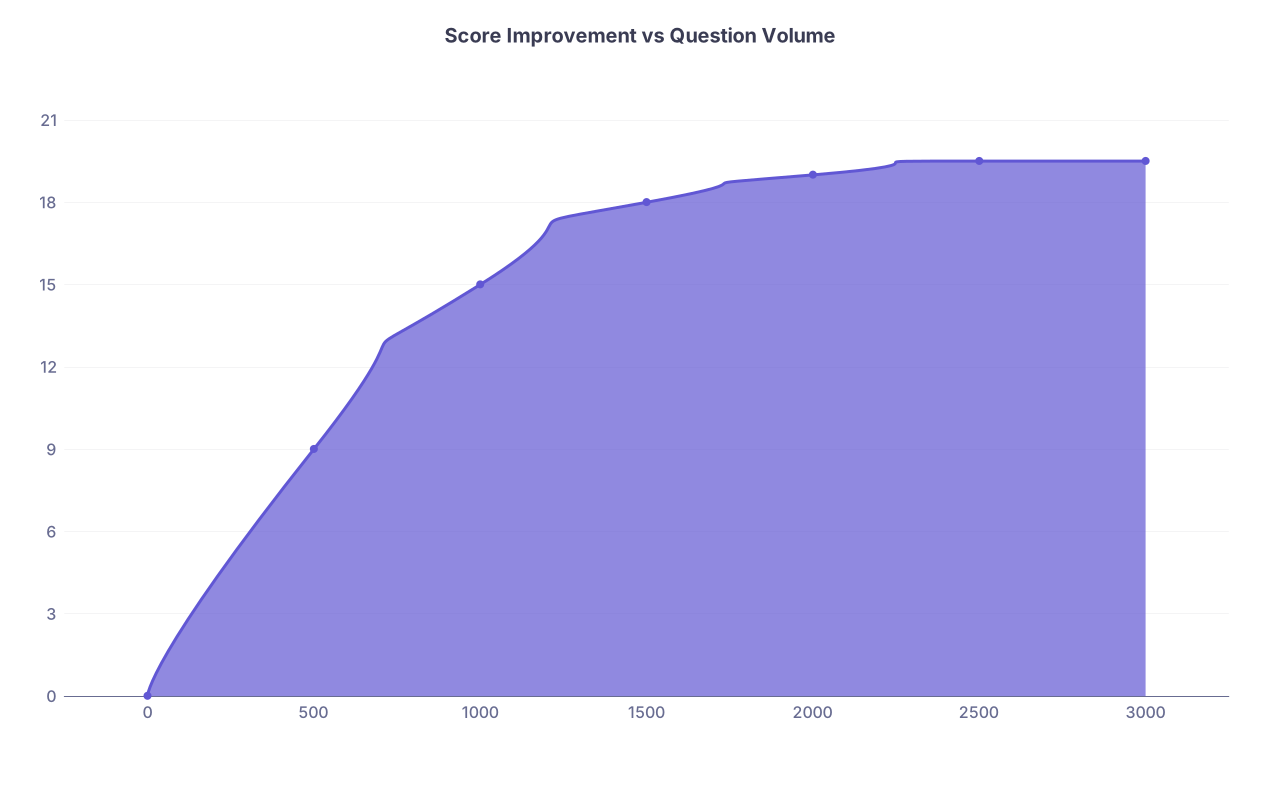
Practice questions (UWorld, AMBOSS, or school-specific banks):
- Aim for a small, consistent daily question goal.
- Actively review explanations: “Why is this answer right? Why are others wrong?”
Teaching others:
- Explain a disease, workup, or guideline to a peer, partner, or even to yourself out loud.
- Use the Feynman technique: teach it in simple language, identify what you can’t explain clearly, then re-study those gaps.
Case-based learning:
- After seeing a patient, read about their condition that same day.
- Connect: symptoms → differential → workup → management → prognosis.
Daily “one-page” summaries:
- At night, write a one-page outline of 1–2 high-yield conditions you saw.
- Include: definition, key features, red flags, workup, first-line management, and common pitfalls.
These methods align with how clerkship evaluations and exams test knowledge—applied, integrated, and clinically relevant.
7. Making Study Groups Efficient (Not Time-Draining)
Study groups can be powerful if structured; they can be disastrous if unplanned.
Effective study group practices:
- Group size: 2–4 students is usually ideal.
- Frequency: 1–2 times per week for 60–90 minutes.
- Focus each session on:
- Question review (everyone prepares 5–10 questions in advance)
- One organ system or chief complaint
- Practice oral presentations or “pimp-style” questions
Example session plan:
- 15 minutes – Each person presents a recent challenging case and a key takeaway.
- 45 minutes – Work through a block of questions together; discuss reasoning.
- 15 minutes – Quick review: everyone shares one “clinical pearl” they will apply next week.
Avoid letting group time turn into venting or unfocused review. Build in 5–10 minutes at the end for debrief and support, but keep the core academic.
Core Self-Care Habits: Sleep, Nutrition, and Physical Activity
Clerkships test your physical and mental resilience. Small, consistent Self-Care habits compound into better performance and less burnout.
8. Prioritizing Sleep in an Imperfect World
You may not always get a perfect 8 hours, but you can often improve sleep quality and consistency.
Practical strategies:
- Aim for a regular wind-down routine, even if short:
- 10–15 minutes of stretching, reading, or journaling.
- Avoid heavy studying or bright screens right before bed when possible.
- Use sleep “anchors” on variable schedules:
- If wake times change (e.g., call), try to keep bedtime as consistent as possible across days.
- Protect post-call sleep:
- Let roommates or family know you’ll be unavailable; use earplugs, eye masks, or white noise.
Even improving your average sleep by 30–60 minutes per night can meaningfully enhance memory, mood, and clinical performance.
9. Movement and Nutrition That Fit Your Reality
You don’t need a perfect gym schedule to benefit from physical activity.
Realistic movement options:
- 10–15-minute brisk walk before or after shift.
- Use stairs instead of elevators when time allows.
- Short bodyweight routines (push-ups, squats, planks) at home a few times per week.
Nutrition in a hospital environment:
- Keep small, portable snacks in your bag or white coat (nuts, granola bars, fruit).
- Hydrate steadily throughout the day—carry a refillable water bottle if allowed.
- When choosing cafeteria meals, aim for:
- Protein + vegetables when possible
- Limit heavy, greasy foods right before call or long OR cases
Remember: your brain is an organ, and clerkships are cognitively demanding. Fuel and movement are academic tools, not luxuries.
Building Support Networks and Using Feedback for Growth
10. Cultivating a Reliable Support System
Medicine can feel isolating if you try to carry everything alone. A deliberate support network helps you stay grounded.
Key components of a healthy support system:
- Peers and classmates to share strategies, resources, and encouragement.
- Residents and attendings who model healthy boundaries and effective learning.
- Mentors (formal or informal) for career guidance and perspective.
- Non-medical friends/family to remind you of life outside medicine.
- Professional support (counselors, therapists, wellness services) when needed.
Consider:
- Joining interest groups (specialty-specific, wellness, diversity & inclusion).
- Attending faculty office hours to build relationships.
- Participating in mentorship or near-peer programs at your institution.
You are not expected to navigate clerkships without help. Asking for assistance is a professional skill.
11. Reflection as a Tool for Resilience and Learning
Reflection helps you process experiences, integrate learning, and prevent emotional overload.
Weekly reflection practice (10–15 minutes):
- What were 2–3 meaningful clinical moments this week?
- What did I handle well? Where did I struggle?
- What did I learn about myself as a future physician?
- What is one small change I’ll make next week?
You can do this via journaling, voice notes, or brief check-ins with a trusted friend or mentor. Over time, these reflections become valuable stories for personal statements, interviews, and future leadership roles.
12. Actively Seeking and Using Feedback
Feedback is one of the highest-yield tools in clerkship education—but you often have to ask for it.
How to get more useful feedback:
- Ask specific questions:
- “How can I make my oral presentations more concise?”
- “What’s one thing I could do differently on rounds to be more helpful?”
- Request feedback at midpoint and at the end of a rotation.
- Clarify expectations early:
- “What do you expect from a third-year student on this team?”
Using feedback constructively:
- Separate your performance from your identity. You are learning.
- Write down recurring feedback themes and set targeted goals.
- Share your improvement plan with a mentor or friend for accountability.
Residents and attendings usually notice when students respond to feedback with maturity and action. This significantly impacts evaluations and letters.

Frequently Asked Questions About Managing Clerkship Workloads
1. How can I realistically balance clinical responsibilities with shelf exam studying?
Think in terms of integration rather than separation. Use your patients as anchors for learning:
- Each day, choose 1–3 conditions from your patient list and read about them for 10–20 minutes.
- Do a modest, achievable number of practice questions daily (e.g., 10–20) instead of cramming.
- Reserve 1–2 longer study blocks on lighter days (e.g., weekend morning).
If you’re truly overwhelmed, speak with your clerkship director, advisor, or a dean about adjusting expectations or getting support. Falling behind on studying is common—but ignoring it makes it worse. Small, consistent steps are most effective.
2. What should I do if I feel burned out or emotionally exhausted during clerkships?
First, recognize that this is common and valid. Then:
- Pause and assess: Are sleep, nutrition, and social connection severely compromised?
- Reach out: Talk to a trusted peer, resident, mentor, or mental health professional.
- Set one immediate change: Short walks, a single evening off, or reducing optional commitments.
- Use school resources: Wellness offices, counseling services, or faculty advisors can help you problem-solve and, in some cases, adjust schedules.
Early intervention is much easier than recovering from full burnout. Taking care of your mental health is part of being a safe, sustainable physician.
3. Can technology really help with Clerkship Management, or does it just add more distraction?
Technology is neutral—it depends on how you use it. It can:
Help:
- Centralize tasks in one app
- Provide portable access to high-quality references (e.g., UpToDate, guideline apps)
- Enable efficient micro-study with question banks and flashcards
Hinder:
- Constant notifications and social media interruptions
- Unstructured browsing when stressed or tired
Set intentional rules: disable nonessential notifications during clinical hours and study blocks, use “Do Not Disturb” modes, and choose 1–2 core apps rather than constantly switching platforms.
4. How important is feedback for my clerkship grades and long-term development?
Feedback is crucial in three ways:
- Immediate performance: It helps you correct habits (e.g., long-winded presentations, incomplete notes).
- Evaluations and letters: Faculty often comment favorably on students who actively seek and apply feedback.
- Professional growth: Learning to receive and act on feedback is fundamental for residency and beyond.
Make it easier for supervisors to give meaningful feedback by being specific, asking early, and demonstrating visible changes based on their suggestions.
5. What are some quick, high-yield habits I can start this week to improve my clerkship experience?
You don’t need a major overhaul to see improvement. Try:
Daily:
- Arrive 10–15 minutes early to review your patients’ overnight events.
- Do 10–15 practice questions or 15 minutes of flashcards.
- Take one short walk or stretch break.
Weekly:
- Write a brief reflection on a challenging or meaningful case.
- Ask one attending or resident for targeted feedback.
- Plan your schedule for the coming week, including at least one real break.
Small, repeatable habits form the backbone of sustainable Clerkship Management, strong medical education, and long-term well-being.
By approaching clerkships with intentional Time Management, Active Learning strategies, and committed Self-Care, you can handle heavy workloads more confidently and grow into a more capable, compassionate future physician. Aim for progress—not perfection—and build a routine that supports both your performance and your humanity throughout medical school life and exams.