
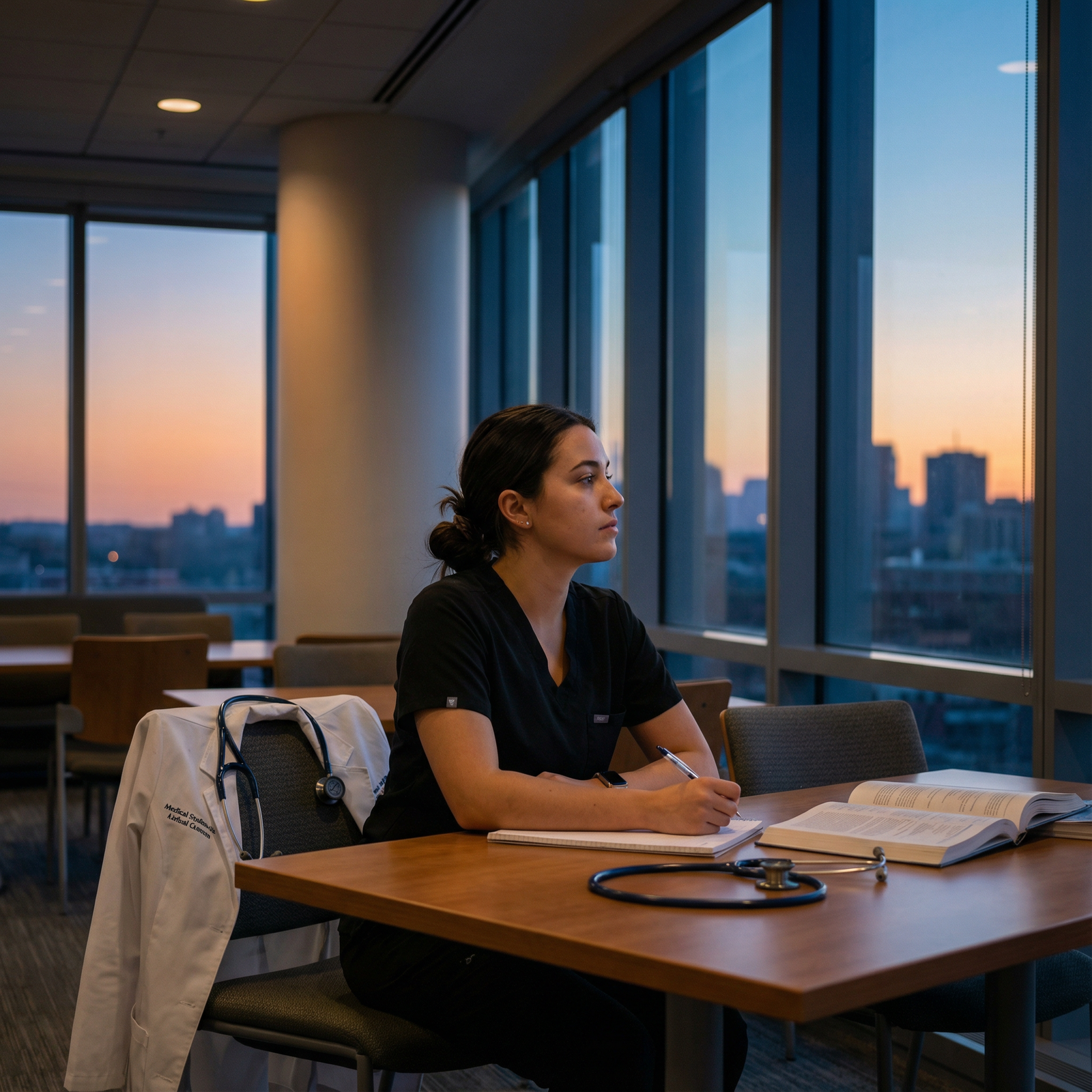
Unlocking the Power of Reflection: A Core Skill for Medical Students
Reflection in medicine is far more than an academic exercise or another box to tick in your portfolio. It is a powerful, evidence-informed tool that supports Clinical Skills Development, strengthens Well-Being, and shapes you into a more self-aware, compassionate, and effective physician.
During medical school, you are constantly exposed to new information, intense clinical experiences, ethical dilemmas, and emotional challenges. Without intentional reflection, these experiences can blur together—stress accumulates, learning is incomplete, and opportunities for growth are missed. With reflection, however, they become fuel for professional development and personal resilience.
This article explores why reflection in medicine matters, how it supports self-awareness and clinical competence, and practical strategies to integrate reflective practice into your busy medical education journey.
Why Reflection Matters in Medical Education
Reflection as a Professional Competency
Accrediting bodies and residency programs increasingly view reflection as a core professional competency. It is closely linked with:
- Lifelong learning
- Ethical decision-making
- Patient-centered care
- Professional identity formation
- Burnout prevention and well-being
Reflective practitioners are better at recognizing when they need help, adjusting their approach, and learning from outcomes (good and bad). In a field where uncertainty and complexity are the norm, this adaptability is essential.
1. Cultivating Deep Self-Awareness
Self-awareness is the foundation of effective clinical care and healthy professional relationships. Reflection offers a structured way to understand yourself within the context of medicine.
Understanding Emotional Responses in Clinical Work
Medical training exposes you to suffering, death, conflict, and uncertainty. You may feel:
- Anxiety during first patient interviews
- Guilt after a difficult conversation with a family
- Frustration with system inefficiencies
- Helplessness when treatments fail
Reflective practice helps you:
- Name what you’re feeling (“I felt ashamed when I couldn’t answer that question”)
- Explore why (“Because I equate not knowing with inadequacy”)
- Decide how to respond constructively (“I’ll prepare more before rounds and normalize not knowing everything”)
This emotional literacy reduces the risk of compassion fatigue and unprocessed distress, which can quietly erode your motivation and empathy.
Identifying Strengths, Blind Spots, and Learning Gaps
Reflection also sharpens your insight into your abilities and limitations:
- After an OSCE or exam: You can review not only what went wrong, but why—was it knowledge, communication, time management, or anxiety?
- After a ward round: You might realize you’re strong at rapport-building but hesitant to volunteer differential diagnoses.
- After feedback: You can take a step back and ask, “How does this feedback fit with patterns I’ve seen in myself before?”
Over time, you build a realistic picture of your strengths and growth areas—critical for targeted Clinical Skills Development and for planning your medical education trajectory.
2. Enhancing Clinical Skills and Judgement
Reflection in medicine directly improves clinical reasoning, decision-making, and patient communication.
Reflecting on Clinical Encounters
Each patient encounter is an opportunity to refine your clinical skills. A structured post-encounter reflection might include:
- What happened? Briefly describe the case and your role.
- What went well? For example, building trust, asking open-ended questions, performing a thorough exam.
- What was challenging? Maybe you missed a key question, felt rushed, or were thrown by an unexpected answer.
- What did I learn? About the disease process, communication style, or system issues.
- What will I do differently next time? One or two concrete, realistic changes.
Over time, this cycle sharpens your diagnostic thinking, improves your history-taking and physical exam skills, and aligns your clinical decisions more closely with best practices and patient preferences.
Learning from Peer and Team Reflection
Medicine is inherently team-based. Reflecting with peers and interprofessional colleagues adds perspectives you may have missed:
- A nursing student may highlight how your body language affected a patient’s comfort.
- A senior resident could point out subtle clinical clues you overlooked.
- A fellow student might share a strategy for organizing presentations more coherently.
Group debriefings after rounds, procedures, or simulation are powerful spaces for shared learning—and for normalizing mistakes as part of growth.

Reflection as a Tool for Well-Being and Resilience
Medical Education is demanding—academically, physically, and emotionally. Reflection helps transform stress into insight rather than burnout.
1. Managing Stress and Protecting Mental Health
Without reflection, distressing events tend to accumulate unprocessed. Reflective practices can:
- Create a pause: A few minutes of journaling or mindful breathing between activities can interrupt constant “go-mode.”
- Reveal patterns: You may notice that certain types of patients, assessments, or supervisors consistently trigger anxiety or self-doubt.
- Name needs: Reflection can highlight when you need rest, supervision, peer support, or professional help.
For example, after a week of night shifts, a student might write:
“I felt irritable with patients today and less patient with questions. I realize I’m sleep deprived and not making time to eat or decompress. I need to prioritize basic needs and talk with my resident about workload.”
This awareness—and action—can prevent stress from silently escalating into more serious mental health problems.
2. Building Resilience Through Meaning-Making
Resilience is not “toughing it out.” It is the ability to recover, adapt, and find meaning in difficulty. Reflection strengthens resilience by helping you:
- Reframe failures as learning opportunities (“I missed that diagnosis, but now I understand the presentation far better.”)
- Recognize growth over time (“I handled that breaking-bad-news conversation better than I could have a year ago.”)
- Reconnect with purpose (“This experience reminded me why I chose medicine—being present for patients in vulnerable moments.”)
Tracking these reflections over months and years provides tangible evidence of your evolution—from a pre-clinical student to a capable, reflective clinician.
Practical Strategies for Integrating Reflection into Daily Medical Training
Reflection only works if it is sustainable. The key is to build small, realistic habits that fit your life and learning style.
1. Reflective Journaling: Simple but Powerful
Journaling remains one of the most flexible and accessible forms of reflection in medicine.
Types of Reflective Journaling
- Daily Micro-Reflections (3–5 minutes):
- One thing I learned today
- One moment that stood out emotionally
- One thing I’d like to try differently tomorrow
- Longer Weekly Reflections (10–20 minutes):
- What challenged me this week?
- How did I respond to stress or uncertainty?
- What patterns do I see in my learning or behavior?
- Event-Focused Reflections: After a code, breaking bad news, an exam, or a conflict with a team member.
Prompts to Deepen Self-Awareness
Use prompts that encourage exploration of Self-Awareness and Well-Being, such as:
- “What made me feel most like the kind of doctor I want to become?”
- “Which experience this week triggered the strongest emotional response, and why?”
- “What assumptions did I bring into a patient encounter that might have shaped my interaction?”
- “How is my current work-life balance affecting my energy, empathy, and performance?”
Digital tools (e.g., Notion, OneNote, dedicated journaling apps) can make this process easier, searchable, and secure.
2. Peer Reflection Groups and Learning Communities
Peer reflection groups can normalize struggle and create a safe space for shared processing.
How to Structure an Effective Reflection Group
- Group size: 4–8 students works well.
- Frequency: Every 1–2 weeks for 30–60 minutes.
- Ground rules:
- Confidentiality
- Respectful listening (no interruptions)
- No forced disclosure—share as comfortable
- Focus on learning, not judgment
A simple format:
- Brief check-in (How’s everyone doing this week?)
- One or two members share a recent experience.
- Group asks clarifying questions (not cross-examination).
- Group reflects on what they heard: themes, similar experiences, possible approaches.
- Each person shares one takeaway or intention.
This kind of collaborative reflection supports both Clinical Skills Development and emotional Well-Being.
3. Using Supervision and Mentorship for Deeper Reflection
Faculty, residents, and mentors can help you see what you cannot see in yourself.
Making the Most of Mentorship Meetings
Instead of only discussing exams or CVs, you might:
- Bring one specific clinical or ethical dilemma and walk through your thought process.
- Ask: “What patterns have you noticed in my presentations/notes/bedside manner?”
- Explore questions like:
- “What do you think my strengths are as a future clinician?”
- “Where do you see growth opportunities that I might be missing?”
- “How did you develop your own reflective practice during training?”
Mentors can also share their own reflective strategies and missteps, helping you feel less alone in the process.
Real-World Applications of Reflection in Clinical Training
Reflection moves from abstract concept to essential tool once you see its real clinical impact.
1. Reflection During Clinical Rotations
Rotations are filled with high-yield reflective opportunities.
Post-Encounter “Micro-Debriefs”
Immediately after a patient encounter (or whenever you have a brief pause), ask yourself:
- Clinically: “What were the key problems? Did I miss any important questions or exam maneuvers?”
- Interpersonally: “How did the patient respond to my communication? What helped or hindered rapport?”
- Logistically: “Was I clear, organized, and efficient in my presentation and documentation?”
Even 1–2 minutes of intentional reflection can lead to rapid adjustments in how you interact, present, and reason clinically.
Incorporating Reflection into Case Presentations
You can also integrate reflection directly into case presentations (where appropriate):
“In addition to the clinical findings, I realized I initially anchored on infection and almost missed the autoimmune possibilities. On reflection, I’d like to broaden my differential earlier in similar cases.”
This shows supervisors that you are not just accumulating knowledge—you’re actively refining your thinking.
2. Simulation, OSCEs, and Skills Labs
Simulation and OSCEs are designed to be safe environments where reflection drives improvement.
Structured Debriefing
After simulations, pay particular attention to:
- Technical Skills: Steps you performed well vs. those you skipped or rushed.
- Team Communication: Did you speak clearly, delegate, and close the loop?
- Crisis Resource Management: How did you prioritize tasks under pressure?
When given feedback, reflect on:
- “What surprised me about this feedback?”
- “Does it align with feedback from other contexts?”
- “What are one or two concrete changes I can practice before the next session?”
Simulation reflection accelerates skill acquisition without risking patient safety.
3. Reflection for Personal and Professional Identity Formation
You are not just learning medicine—you are becoming a physician. Reflection helps you proactively shape that identity.
Clarifying Your Values and Practice Style
Over time, reflect on:
- What kind of doctor do I want to be—clinically, ethically, interpersonally?
- What patient populations or clinical environments energize or drain me?
- How do I want to handle uncertainty, errors, or disagreements?
This self-knowledge informs specialty choice, work setting, and leadership roles, guiding you toward a career that aligns with your values and supports your long-term Well-Being.
Monitoring Work-Life Integration
Regularly ask yourself:
- How am I balancing clinical work, studying, relationships, rest, and hobbies?
- What early signs do I notice when I’m approaching burnout?
- What boundaries or habits protect my mental and physical health?
By reflecting on these questions before crisis points, you’re more likely to maintain a sustainable, fulfilling career in medicine.

Practical Tips to Start or Strengthen Your Reflective Practice
To make reflection sustainable during Medical Education, keep it small, specific, and consistent.
- Start with one habit: 3–5 minute reflection at the end of your day.
- Use a consistent trigger: After leaving the hospital, before bed, or before opening social media.
- Choose your medium: Handwriting, digital notes, voice memos—whatever feels natural and secure.
- Protect privacy: Use password-protected apps or physical journals kept in a safe place.
- Review periodically: Revisit older reflections every few months to notice patterns and progress.
- Be honest, not performative: This is for your growth, not for grading—let go of the urge to write “correct” reflections.
Over time, reflection will feel less like an assignment and more like an integral part of how you think, learn, and care.
Frequently Asked Questions (FAQs) About Reflection in Medical Training
1. How does reflection in medicine actually improve patient care?
Reflection improves patient care by:
- Enhancing self-awareness, so you recognize biases, emotional triggers, and communication blind spots.
- Strengthening clinical reasoning, as you analyze past decisions and refine future approaches.
- Supporting empathy, by helping you understand and process the emotional dimensions of patient interactions.
- Reducing repeated errors, as you consciously learn from near-misses or suboptimal encounters.
Patients ultimately benefit from clinicians who are thoughtful, emotionally attuned, and continuously learning from their experiences.
2. I’m already overwhelmed. How can I fit reflection into my schedule realistically?
You don’t need long, elaborate entries to benefit from reflection. Consider:
- A 3-minute daily check-in: “What stood out today? What did I learn? How did I feel?”
- A brief voice memo on your commute home.
- Choosing one patient or event per day to reflect on, not everything.
- Using existing structures—like post-OSCE feedback or simulation debriefing—as your reflection time.
Consistency matters more than duration. Tiny, regular reflections accumulate into profound learning over months and years.
3. What if reflection makes me feel worse by bringing up difficult emotions?
It’s common for reflection to surface uncomfortable feelings—guilt, shame, sadness, anxiety. This is not a sign that reflection is harmful, but it is a sign to use it wisely:
- Pair reflection with self-compassion, not self-criticism.
- Recognize when you need support: talk to trusted peers, mentors, or mental health professionals if reflections reveal persistent distress.
- Set boundaries: it’s okay to pause reflection on very raw topics until you have support in place.
- Focus on what you can learn or change, rather than ruminating on what you cannot control.
Reflection should ultimately help you integrate experiences and grow, not relive them in a punishing way.
4. Are there formal models or frameworks I can use to structure my reflections?
Yes. Many students find it easier to reflect using a simple framework. Common ones include:
- Gibbs’ Reflective Cycle:
Description → Feelings → Evaluation → Analysis → Conclusion → Action Plan - What? So what? Now what?
- What happened?
- So what does it mean (for me, the patient, the team)?
- Now what will I do differently?
You can adapt these models to your style—what matters is that you move from description to insight to action.
5. Can I use digital tools or AI to support my reflective practice?
Yes, thoughtfully used technology can support reflection:
- Digital journals/apps for secure, searchable entries.
- Calendar reminders for brief daily or weekly reflection blocks.
- Note templates in apps like Notion or OneNote with your preferred prompts.
- AI tools (like this one) to suggest reflection prompts or help organize themes from your notes—while keeping identifiable patient data strictly out of any non-secure platform.
Always maintain confidentiality and follow institutional and professional guidelines when using digital or AI tools.
By intentionally integrating reflection into your Medical Education and Clinical Skills Development, you cultivate Self-Awareness, strengthen your Well-Being, and lay the foundation for a thoughtful, resilient, and patient-centered medical career. Reflection is not an optional extra; it is a core habit that transforms everyday experiences into lifelong learning and meaningful practice.


