
The room is booked as "Educational In-Service: Hands-On Skills Lab." There's free lunch. Paninis that actually taste good. A $300 bone model that you get to drill into. Four residents, two fellows, one attending who's checking his phone. And one rep. Smiling, polo shirt with the company logo, bringing two Pelican cases that click open like they contain nuclear codes.
You think you're there to learn. Let me tell you what really happens in that room when the rep closes the door.
That "training" isn't training. It's a sales funnel with gloves on. I've watched hundreds of these. I've run them from the faculty side. And if you don't understand the mechanics of the illusion, you'll walk out feeling confident about a device that will betray you at 2 AM when the rep doesn't pick up.
Before attending these sessions, it is crucial to understand what to do when a tech rep is basically running the or to maintain your professional boundaries.
This article is for educational purposes only. It is not financial advice, not legal advice, and not tax advice. Figures vary by individual circumstances, consult a qualified professional before acting.
The Setup: The 'Complimentary' Illusion
First truth: Nothing in that room is complimentary. That steak dinner, that beautiful sawbones model, the rep's time, it's all budgeted under customer acquisition. You are the customer.
The company knows your program bought zero units of their anchor system last quarter. So they send Jake, because it's always a Jake or a Matt, ex-athlete, incredibly likable, with a mission: convert three users.
The "hands-on" demo is their best weapon. Why? Because when you touch something, your brain codes it as experience. You didn't watch a video. You did it. Except you didn't. You did the version they let you do.
Here's the power shift no one talks about. The second the rep becomes your instructor, they own the narrative of success and failure. If the drill catches perfectly? "See, intuitive design." If you struggle to load the cartridge? "Yeah, there's a little trick to it, you just have to angle it like this." Every failure becomes user error. Every success becomes device superiority. You'll never hear, "Yeah, this loading mechanism is garbage and our engineers know it."
Always remember that what attendings really think about ai clinical decision tools often differs from the sanitized marketing presentations you see during vendor demonstrations.
That's marketing bias embedded in simulation. The synthetic bone is softer. The demo implant is pre-sized. The battery pack is fresh from the charger, not the one that's been autoclaved 110 times and holds 40% charge. It's a magic trick. And the prestige of the "training" label makes you lower your guard.
The Scripted Failures: Why the Device Never Breaks
You ever notice how the device never fails in the lab? Not once.
That's because you're not holding a clinical unit. You're holding a sandbox unit. I've had reps admit this off the record, the demo kits are hand-picked, calibrated, sometimes even tuned down to make them more forgiving. The torque limiter is set to be less sensitive. The software is on "demo mode" with half the alarms disabled. Of course it feels smooth.
In the OR, with a real patient, real blood, calcified tissue that doesn't match the brochure, that same device will throw error E47. And you'll freeze.
Reps know this. They have a literal script for it. I've seen the one-pager in a rep's backpack that was left open. It's a troubleshooting grid:
"Device won't fire" -> Response: "Let's check your hand position, you need more proximal pressure." "Battery dies quickly" -> Response: "Are you storing it on the charger correctly? Facility power fluctuation can affect it." "Blade skips" -> Response: "That usually happens when you're going too fast through cortical bone. Try slowing down."
Translation: It's always you. Never the device. The goal is to deflect until you internalize the blame.
What they won't tell you about is cycle 50. That beautiful $80K robot arm? The brochure says 10-year lifecycle. Nobody mentions the proprietary wrist cable that frays at 18 months and costs $14K to replace, and you can't buy it from anyone else. Or the sterilization case seal that warps after 60 cycles and starts throwing a leak test failure. That's the real cost. The ugly maintenance tail they never put on the slide.
And the most dangerous moment? When you're feeling confident, the rep says, "You know, a lot of creative surgeons are using this off-label for X..." They smile. They show you. They take zero liability. Your name goes on the op note. Not theirs. If that off-label use leads to a complication, the company's legal team will say you were never trained to do that.
Data Masking: The Metrics They Want You to See
Let's talk about the data slide. Every training has one. Bar chart, 2% better, p<0.05, footnoted with 12 authors and one asterisk.
Here's how I teach residents to read a rep's slide in three seconds: look for what's missing.
Selective inclusion is the name of the game. They'll show you the 30-day success data from a single high-volume center, the center where the inventor works and has a 24/7 tech in the room. They won't show you the multi-center registry where the revision rate doubled after year two. That study exists. It just isn't in the PowerPoint.
They love to talk about acquisition price. "We've lowered our implant list by 15%." Great. What they don't say: each implant now requires three single-use disposables at $600 each that shatter if you look at them wrong. That's the cost-of-ownership shell game. The hospital saves $500 on the box and spends $4,000 on the disposables, service contract, and proprietary trays. And guess who gets to explain that to the OR manager? You.
Watch the loudest person in the room during Q&A. It's rarely the quiet attending who's actually used the device for five years. It's the junior surgeon who had one good case last week and is suddenly a key opinion leader, because that junior surgeon has a high commission potential. Reps know who is influenceable. They cultivate them. Loud praise is often a surrogate for inexperience.
And that "statistically significant" finding? Ask who funded the study. Sample size of 43, all enrolled at two sites, both sites funded entirely by the manufacturer. P-value is real. Clinical relevance is not. Significance without independence is just advertising with a Kaplan-Meier curve.
The Insider Playbook: How to Handle the Rep
You need reps. I'm not anti-rep. A good rep who knows his tray and stays in his lane is worth his weight in gold when you need a 7.5mm rescue screw at 9 PM. The problem is when you let them teach you medicine.
So how do you break the script?
First, ask the uncomfortable question out loud, in front of the room. Not to be a jerk. To watch the reaction.
"What's the top three reasons your customers return this device?"
"What's the actual mean time between failures for the handpiece after 100 reprocessings?"
"Can I use a Medtronic or Stryker drill bit with this, or are you locking me into your $800 proprietary bit?"
Silence will tell you everything. A confident rep with a good product will answer. A sales guy with a quota will pivot.
Second, stop asking for the brochure. Demand the technical manual. The IFU is marketing perfume. The internal service manual has the torque specs, the error log definitions, the sterilization tolerance limits, the warning that says "DO NOT USE if ambient temperature exceeds 27 degrees." That's the truth. Reps have it on their iPad. Make them show you.
Third, the quiet trial. Never adopt based on a demo or a rep-sponsored visit. Ask this: "Give me the name of a surgeon in my region who has used this without a rep in the room for more than two years." Then call that surgeon. Not the reference they offer, the one you find yourself. That conversation will be 30 minutes of unfiltered reality about loaner delays, bioburden in the cannula, and how the robot freezes during draping.

Finally, set the boundary early. I tell my fellows to say this verbatim: "I appreciate your support. For today, let's focus less on benefits and more on clinical failure modes and logistical burden. Where does this device make my life harder?" It flips the power dynamic. You're no longer a student. You're an auditor. Good reps respect it. Bad reps get nervous.
Final Verdict: Education vs. Influence
Reps are vital logistical resources. They are terrible sources of clinical evidence. You can hold both ideas at once.
The best programs I've seen have moved away from rep-led education to peer-to-peer verification. A senior surgeon teaching a junior surgeon, no logos on the slides. Rep stays outside until we need to know tray order. That's it.
Remember this: when that device fires incorrectly, when the patient has a complication, when chart review happens, your license is on the line. Not the rep's quarterly bonus. Not the company's stock price. Yours. You signed the op report.
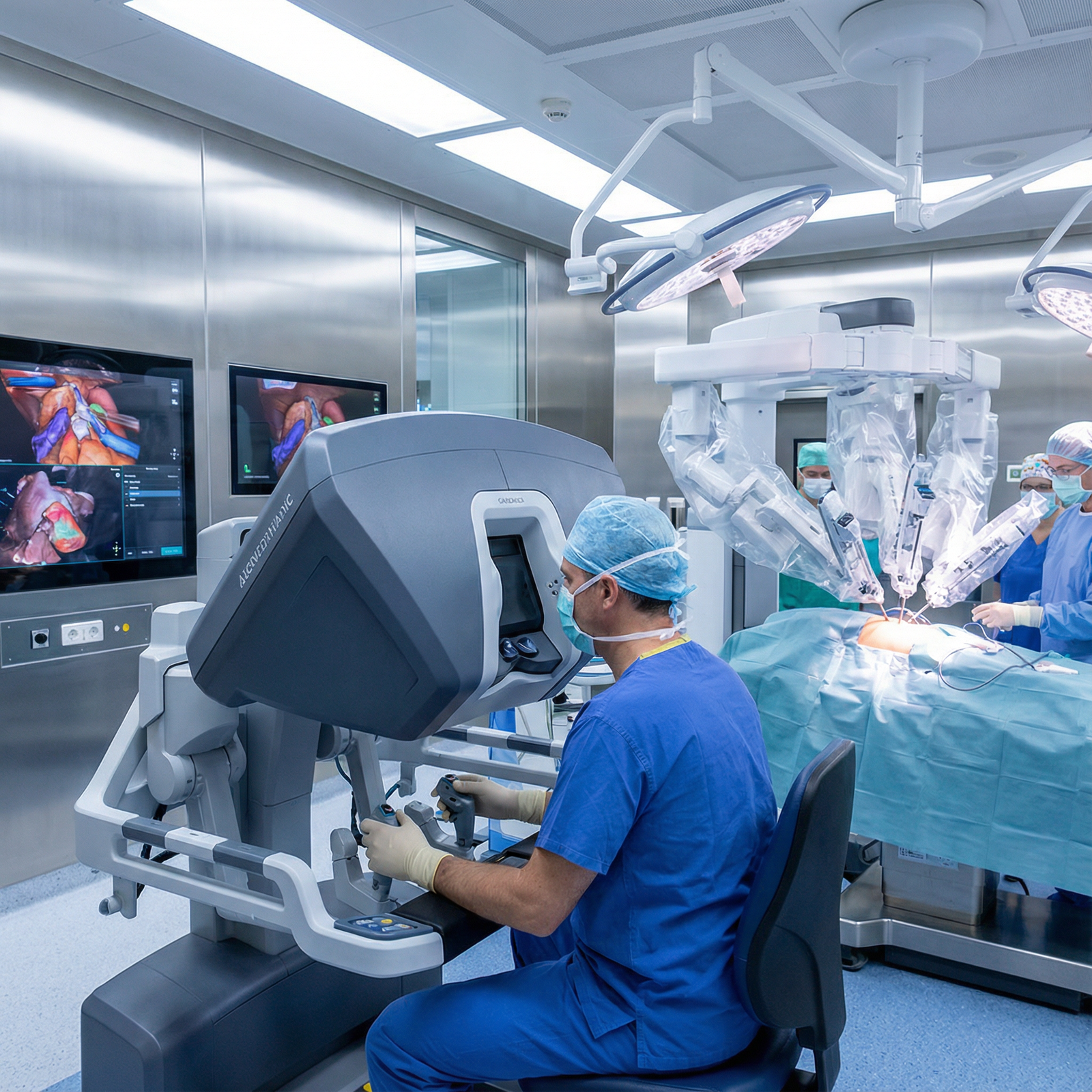
Skepticism isn't cynicism. It's your most important tool. More important than any $120K device they rolled in on a cart. The ability to look at a perfectly polished demo, smile, thank the rep for the panini, and say "Show me what happens when this fails", that's what separates a technician from a physician.
Don't be rude. Be rigorous.