
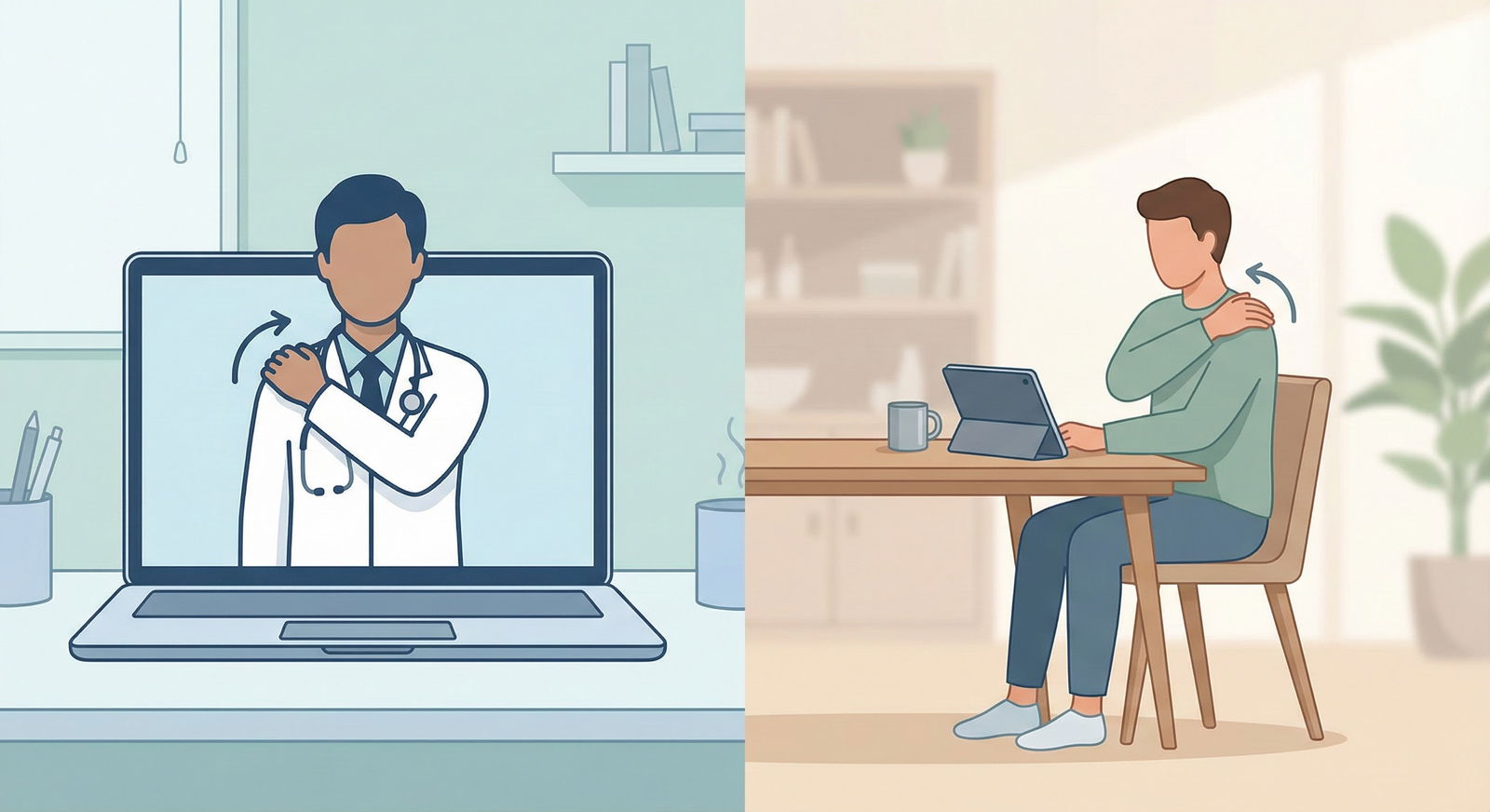
The day a patient knows more about a new therapy than you do is not a hypothetical disaster. It’s guaranteed. It’s coming. And it’s not a sign that you’re a bad doctor in the making.
It just feels like it.
As a med-student / future resident / chronically worried applicant, this is one of those scenarios that haunts me. I picture myself in clinic as an intern, exhausted, already behind on notes, and then a patient says the sentence that instantly makes my stomach drop:
“I’ve been reading about this new therapy… do you know about it?”
And I don’t.
My brain immediately goes: They think I’m incompetent. I’m going to miss something lifesaving. They’ll complain. I’ll look stupid in front of my attending. This is it — the exposure of the fact that I’m just faking it.
Let’s talk about this honestly, without the sugarcoating.
The Myth: “Real Doctors Always Know the New Stuff”
This idea is poison.
We grow up in premed / med school culture where everyone treats knowledge like a flex. Step scores, pimp questions, random cytokines, obscure side effects. You’re rewarded for being the walking UpToDate app in human form.
So your brain builds this rule: “A good physician always knows more than the patient.” And then the real world quietly burns that rule to the ground.
Here’s what’s actually happening out there:
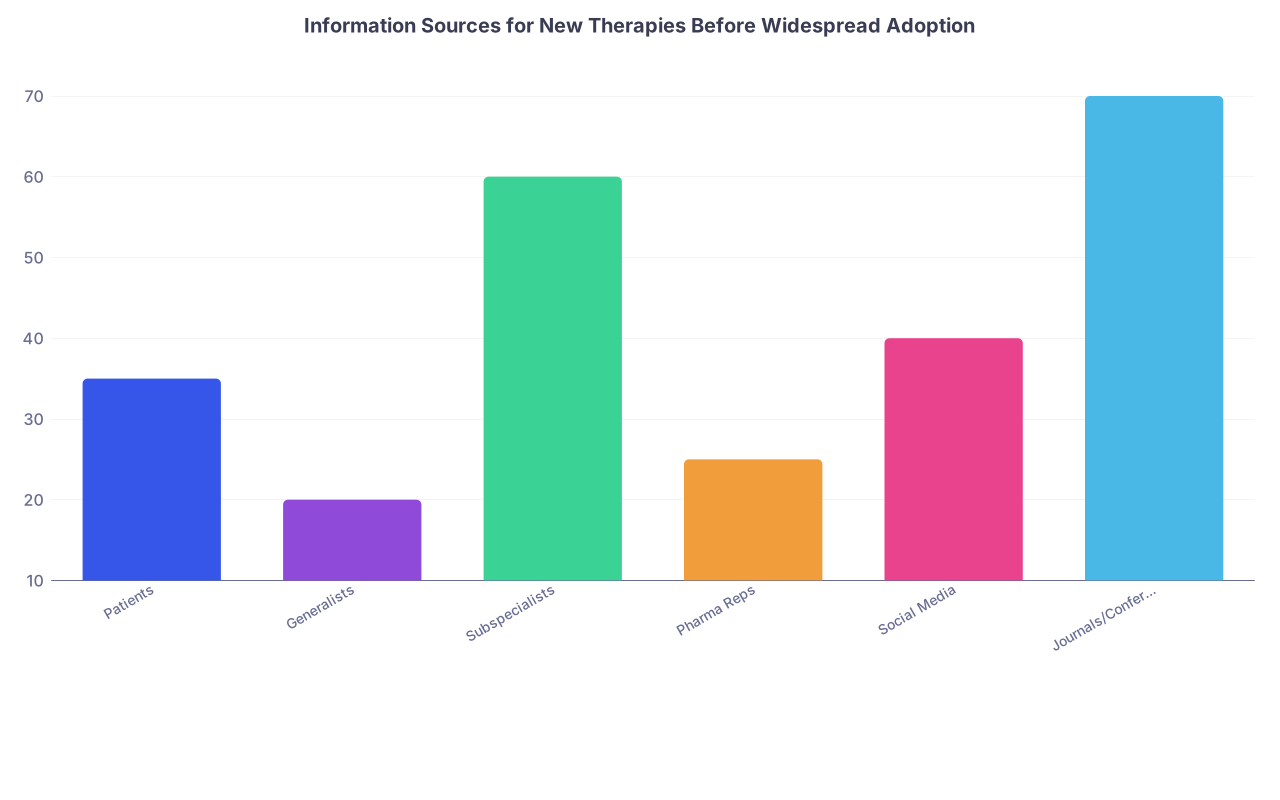
| Category | Value |
|---|---|
| Patients | 35 |
| Generalists | 20 |
| Subspecialists | 60 |
| Pharma Reps | 25 |
| Social Media | 40 |
| Journals/Conferences | 70 |
In plain language:
Patients hear about shiny new things fast. Social media, YouTube doctors, pharma-funded “patient education,” Reddit, Facebook groups, news headlines. Sometimes way before guidelines catch up.
Meanwhile, that community internist seeing 24 patients a day is hanging on by a thread just staying current on diabetes, hypertension, lipids, vaccines, cancer screening, and a thousand other evolving topics. Brand new niche gene therapy for a rare disease? That might not be top of the list. And that doesn’t make them a bad doctor.
So your core fear — “I’ll be the only one who doesn’t know” — is already wrong. Lots of perfectly competent physicians get blindsided by “Have you heard of this new therapy?” conversations.
The gap isn’t the problem.
How you handle the gap is.
The Worst-Case Movie in My Head (And Why It’s Exaggerated)
The worried-applicant brain works like this: take a realistic scenario, then apply a horror-movie filter.
My internal script goes:
Patient: “I read about this new immunotherapy that cures my kind of cancer. Why aren’t we using it?”
Me (intern, dead inside): stares blankly “Uhhh…”
Attending: appears behind me like a villain in a thriller “You don’t know about that Phase I study in Germany? How could you miss that?”
Patient: “Wow. So you’re just experimenting on me with old drugs?”
Hospital: emails me “We heard about the incident.”
Reality?
It’s usually more like:
Patient: “I read about this new treatment… what do you think?”
You: “I’m not familiar with that specific therapy yet, but let’s look at what we know and figure out if it actually applies to you.”
Attending: “Yeah, that’s still investigational / limited / not covered / not better than what you’re on, here’s why.”
No fire. No lawsuit. No career-ending complaint. Just an awkward moment that becomes a normal conversation.
But because we obsess over worst-case ethics exam scenarios — “Doctor fails to recognize breakthrough therapy and patient dies” — our brains think that’s the baseline expectation. It’s not.
What Actually Matters Ethically When You Don’t Know
The ethical disaster isn’t “not knowing.” It’s pretending you do.
There’s a very clear difference between:
“I don’t know, but I’ll find out and we’ll figure this out together.”
and
“I’ve heard of it, it’s not for you,” when you clearly haven’t and can’t defend that statement.
The first is honest. The second is arrogance in self-defense clothing.
From an ethics standpoint, when a patient brings up a new therapy you don’t know well, you’re balancing a few duties:
- Respect for autonomy: They have the right to be informed, to ask, to push, to decide.
- Beneficence/non-maleficence: You need to avoid harm, including harm from overhyped or unproven interventions.
- Truth-telling: You can’t misrepresent your knowledge or the evidence.
- Professional humility: Admitting limits, getting help, referring when appropriate.
That’s the real core. Not “be omniscient,” but “be honest and responsible about your non-omniscience.”
And yeah, that sounds nice and abstract until you’re the one in the room, sweating through your white coat. So what do you say?
What To Actually Say In The Room (So You Don’t Panic)
I’m convinced half of our anxiety comes from not having the words loaded and ready. So here are scripts I wish I’d had earlier — not to memorize like a robot, but to steal and adapt so your brain doesn’t go blank.
Scenario: Patient clearly knows more about some very specific new therapy than you do.
They bring printed articles. They drop trial names. They quote YouTube oncologists. Your heart rate spikes.
You can say something like:
“Thank you for bringing this up. I’ll be honest — I’m not fully up to speed on that particular therapy yet. What I can do is look at the actual study data with you and, if needed, loop in [your specialist/attending/team] to see whether it makes sense in your case.”
Or:
“I really appreciate that you’re this engaged in your care. I don’t want to guess or give you half-right information, so let me review the evidence on this therapy and we can talk in more detail at our next visit, or I can reach out to your specialist.”
Notice what you’re not doing:
You’re not dismissing it. You’re not surrendering authority. You’re not pretending expertise you don’t have. You’re repositioning yourself as what you actually are: someone trained to interpret evidence and weigh risk/benefit in context.
Because yes, patients can Google faster. They can even find the newest thing before you’ve seen the abstract. But you still have something they don’t: medical training, pattern recognition, familiarity with comorbidities, systems knowledge, an understanding of what “statistically significant” actually means when the n=23 and the follow-up is 6 weeks.
That’s your lane. You don’t lose it just because they read a press release first.
But What If Their New Therapy Is Actually Better?
This is the really scary “what if” my brain fixates on:
What if they bring something in, and it really is superior, and I missed it? What if I’m the dinosaur doctor clinging to old habits while they beg for innovation?
This one hits hard because it touches the nightmare: harming someone by omission.
Here’s the uncomfortable truth: medicine is always playing catch-up. There will always be a period where the evidence is emerging, guidelines haven’t fully updated, and access/coverage is a mess.
Your duty isn’t “instant adoption.” It’s “responsible adoption.”
That means asking things like:
- Is this Phase I/II or Phase III?
- Are outcomes meaningful (survival, quality of life) or just surrogate markers?
- Is it studied in their population, disease stage, and comorbidities?
- Is there safety data that isn’t just 30 highly selected patients?
- Can we actually get it outside a trial? Is it covered? Is it even available at this institution?
Sometimes, after you dig, you’ll realize:
Yes, this really is promising and applicable. And you’ll refer them to a center running that trial or to a subspecialist comfortable with that therapy.
Sometimes the answer is: It’s exciting, but not ready for prime time in your situation. And then your job is to explain why in plain language, without sounding dismissive or condescending.
Either way, the ethical “win” is that you engaged with it. You didn’t just hide behind “I haven’t heard of it so it’s probably nonsense.”
The Ego Problem: Feeling Threatened by Informed Patients
This is the part nobody wants to admit, but we all feel:
It stings when a patient knows more about some cutting-edge thing than you.
It pokes at that impostor syndrome wound. It whispers: “See? You don’t belong here.”
I’ve watched senior residents get visibly defensive when patients say, “I read a study that says…” They roll their eyes, they cut them off, they say “don’t trust Dr. Google.” You can almost see the insecurity under the surface.
A more grounded response is closer to:
“I’m glad you’re looking into your options. The internet has a mix of really good and really misleading stuff, so let’s sort out which is which together.”
You’re not fighting the patient. You’re teaming up with them against bad information.
But that takes swallowing some ego. And that’s hard when the whole training system has spent years rewarding you for always having the answer first, never saying “I don’t know,” and equating worth with knowing more.
Let me put it bluntly:
If your self-worth as a physician depends on always knowing more than every patient about every topic, you’re setting yourself up for constant shame. And that shame is dangerous — it pushes you toward defensiveness and pretending, which is where bad ethical decisions are born.
You need a different anchor: “I’m the person who will tell you the truth about what I know, who will go and find out what I don’t, and who will help you make sense of all of it.”
Concrete Tactics So You Don’t Freeze
Because the anxiety is not just conceptual; it’s very physical. You’re in the room, your heart is racing, you’re trying not to sweat through your scrubs.
Here’s a rough flow of what to do when a patient drops a new-therapy bomb on you.

| Step | Description |
|---|---|
| Step 1 | Patient mentions new therapy |
| Step 2 | Pause and listen fully |
| Step 3 | Ask what they have read or heard |
| Step 4 | Explain evidence and relevance |
| Step 5 | Admit you are not fully up to date |
| Step 6 | Offer to review data and follow up |
| Step 7 | Discuss next steps with team or specialist |
| Step 8 | You know the therapy well? |
The key moves are simple but not easy:
- Don’t interrupt their explanation. Let them finish. You need to know what they think this therapy does.
- Ask, “What have you read or heard about it?” so you know their starting point.
- Internally check: Do I understand what this is, what phase of evidence it’s in, and whether it’s applicable? If not, own that.
- Give a clear next step: “I’ll review this tonight and we’ll follow up,” or “I’ll message your oncologist and get their input,” or “We can schedule another visit to talk just about this.”
And then actually do it. Because nothing destroys trust faster than promising to look into something and then… not.
Also: you’re a student or a resident at some point in this. You’re allowed — expected — to say:
“I’m still in training, so I’d like to discuss this with my attending / your specialist and make sure we’re giving you the best information.”
That feels like weakness when you say it. It reads as maturity to almost everyone else in the room.
Using These Moments as Fuel Instead of Shame
Here’s the part that makes my anxious brain pause for a second: these moments can actually push you to grow in a more sustainable way than just cramming UpToDate at midnight.
When a patient brings up a new therapy:
- It’s a real human attached to that question, not just a test item. That makes the learning stick.
- It forces you to practice explaining uncertainty and nuance, which is half of modern medicine.
- It exposes gaps in your knowledge early, when you’re supervised, not years later when you’re the attending flying solo.
You can even systematize it for yourself:
| Step | Question |
|---|---|
| 1 | What therapy did the patient ask about? |
| 2 | What did I know and not know at the time? |
| 3 | What did I learn after reading the evidence? |
| 4 | How did I explain it to them (or how would I now)? |
| 5 | What will I do differently next time this comes up? |
Do that a few times and you realize something: the fear shrinks. Not because you suddenly know everything, but because you’ve survived the “I don’t know, let me find out” moment and nothing exploded.
The Thing Nobody Tells You About “Being the Doctor”
Years from now, your patients won’t remember whether you knew the brand name of the latest monoclonal antibody on the day the press release dropped.
They’ll remember whether you listened when they were scared and clinging to hope. Whether you rolled your eyes at their research or leaned in and said, “Let’s look at this together.” Whether you reflexively shut them down or you were brave enough to say, “I’m not sure yet — but I’ll help you figure it out.”
The scary truth is: yes, a patient will absolutely know more than you about some new therapy at some point.
The reassuring truth is: that doesn’t disqualify you from being a good physician. It just forces you to decide what “good” actually means.
Not omniscient. Not always first. But honest, curious, and willing to stand with them in the messy, unfinished parts of medicine.
One day, when you’re the person in the white coat in that room, I’m pretty sure you’ll handle it better than your anxious brain is predicting right now — and that gap between the nightmare in your head and the reality you live out is where you’ll see how much you’ve grown.


