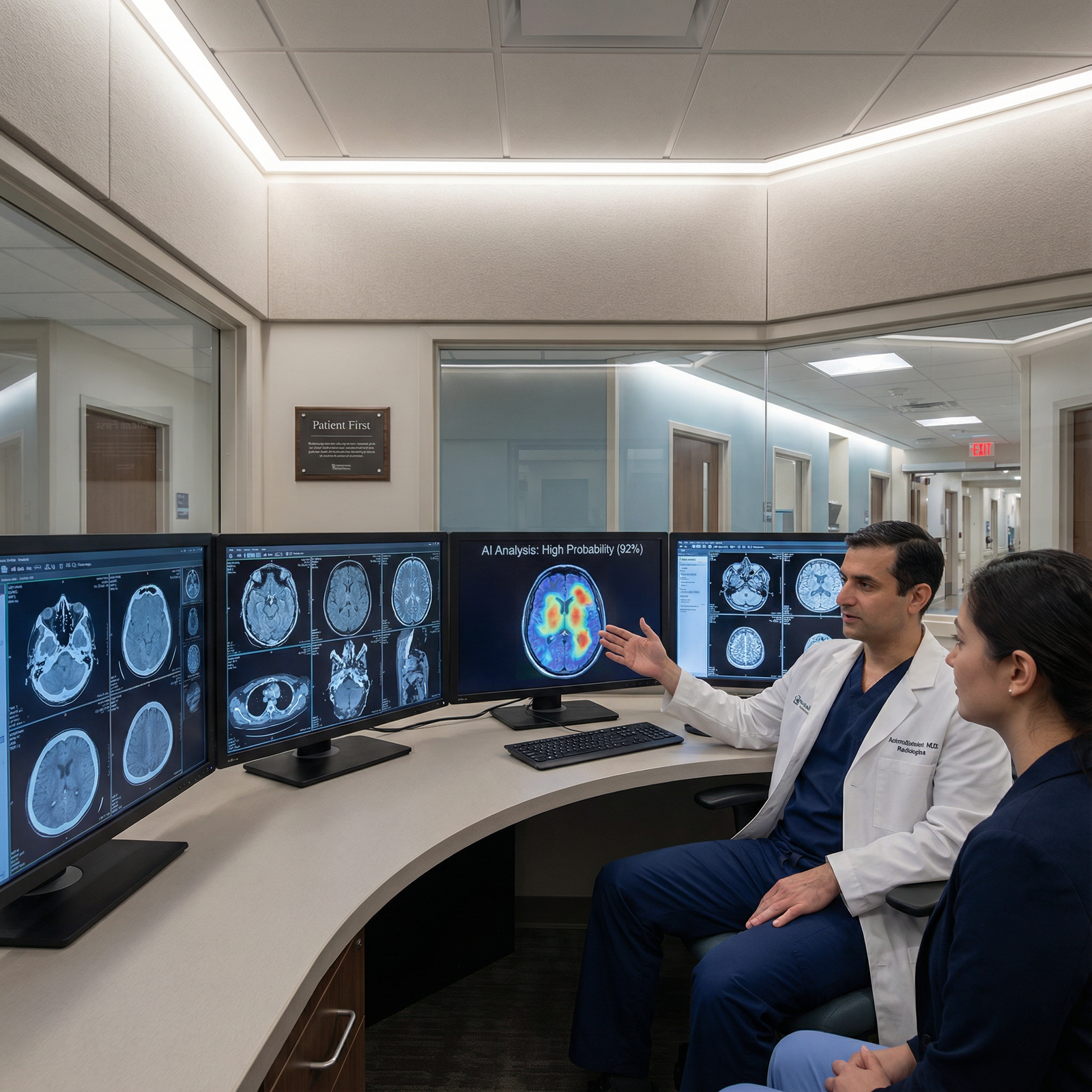
The most dangerous diagnostic errors young physicians make now are not about missing rare zebras. They are about blindly trusting AI that was meant to “help.”
You are being trained in an era where AI tools are everywhere: decision support systems, imaging algorithms, sepsis alerts, risk scores, auto‑drafted notes. That is not the problem. The real threat is quiet: you stop thinking as deeply, you anchor on the AI suggestion, and you call that “being efficient.”
Let me be blunt. Courts, boards, and families will not care that “the algorithm said so.” They will ask why you did not think.
This is where young physicians are getting burned.
1. The First Big Mistake: Treating AI as an Answer, Not a Hypothesis
The core mistake: letting AI convert your uncertainty into fake certainty.
You open the EHR. The clinical decision support system flags “Low risk for PE.” Or the imaging AI labels the CT as “No acute intracranial pathology.” You exhale. You relax. You move on.
That is where the error starts.
AI outputs must be treated like this: a slightly opinionated medical student suggestion. Not a final read. Not a ruling‑out. A hypothesis that deserves to be challenged.
Here is what I keep seeing in residents and new attendings:
- They let the AI suggestion become the frame for the whole case.
- They downgrade or ignore clinical red flags that do not fit the AI’s conclusion.
- They document in a way that echoes the AI output without independent reasoning.
You must reverse it. Your process is:
- Own the clinical question first.
- Form your own differential.
- Then see what the AI says.
- Decide where it is likely wrong or blind.
If your first move is “Let me see what the AI thinks about this chest pain,” you have already given up cognitive ground.
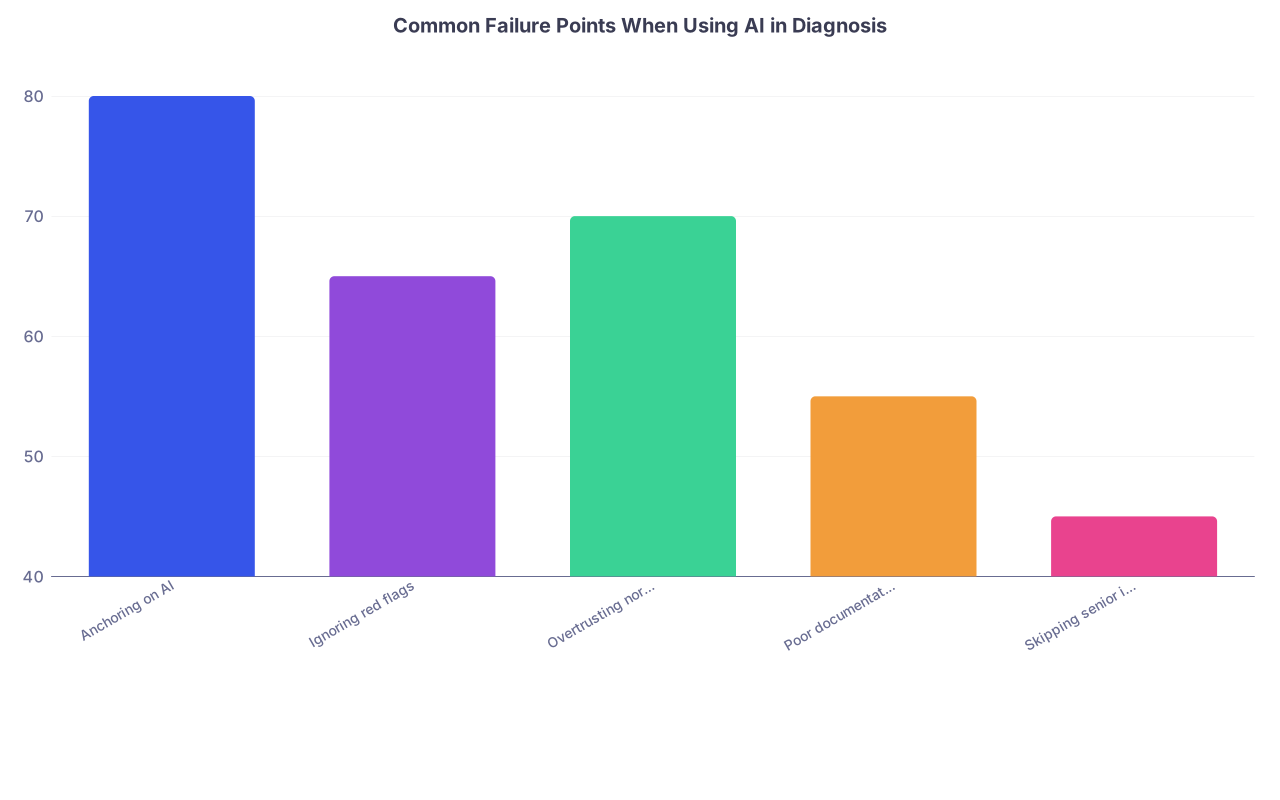
| Category | Value |
|---|---|
| Anchoring on AI | 80 |
| Ignoring red flags | 65 |
| Overtrusting normal AI read | 70 |
| Poor documentation | 55 |
| Skipping senior input | 45 |
Those are not abstract risks. They are exactly what turns a solvable case into a disaster: “AI said low risk,” “AI read it as normal,” “the sepsis alert did not fire.”
2. Anchoring on AI: How It Quietly Corrupts Your Clinical Reasoning
Anchoring bias is old. AI just made it more seductive.
Once an AI system suggests “Likely viral illness” or “No acute cardiopulmonary process,” it becomes the mental default. Everything you see after that tends to be interpreted in that direction.
Common versions of this I see on rounds:
- ED note: “AI chest X‑ray read: normal.” So the intern downplays subtle hypoxia.
- “Low‑risk HEART score auto‑calculated.” So the resident stops fighting for the troponin delta or the overnight obs bed.
- NLP‑generated problem list puts “panic attack” on top. So everyone reads the chart like psych first, medicine second.
Do not make that mistake. You must build a deliberate anti‑anchoring habit.
Three practical guardrails:
Delay looking at AI outputs
Do your own “pre‑AI differential.” Even 60 seconds of genuine thinking changes how you interpret the AI.Always ask: “If the AI is wrong, what is the worst thing I am missing?”
Viral vs meningitis. Anxiety vs PE. Musculoskeletal vs aortic dissection.
If the downside of being wrong is catastrophic, you do not outsource that call.Look for one data point that contradicts the AI’s narrative
Not to be cute. To stay cognitively alive.
Example: AI says “No acute process on CT abdomen,” but the patient has guarding and fever. That contradiction should bother you enough to push back.
If you never find yourself saying, “This AI suggestion does not fit this piece of data,” you are not thinking hard enough. You are following.
3. The Imaging Trap: “AI Read It as Normal, So I’m Safe”
Radiology AI is where overreliance is most obvious and most dangerous.
The pattern is depressingly predictable:
- Young physician sees: “AI: No acute intracranial hemorrhage.”
- They skim the images at 1 am while exhausted.
- They see no obvious bleed.
- They accept the AI read as essentially final.
Then a neuroradiologist in the morning catches the tiny SAH. Or the early ischemic change. Or the subtle dissection.
The problem is not using AI. The problem is outsourcing responsibility.

You will see more and more:
- AI for chest X‑ray pneumothorax, consolidation, cardiomegaly.
- AI for CT stroke, PE, appendicitis.
- AI for mammography and lung nodules.
Here is how to avoid the classic imaging‑AI mistakes:
Never let “AI normal” override “patient abnormal”
If the patient is crashing and the AI says the scan is clean, you trust the patient. Not the pixels. Order the repeat study, different modality, or get the human radiologist on the phone.Respect what the algorithm was trained for
Many tools are tuned for a narrow set of findings: hemorrhage, large vessel occlusion, big pneumothoraces. They are not guaranteeing “no pathology.” They are saying “no obvious X‑type finding above threshold.” That is a different claim.Escalate when the clinical picture and AI output conflict
“I know the AI read is negative, but clinically I am very worried. Can you personally review this CT now?”
That call is annoying to make at 3 am. Make it anyway. The AI is not the medico‑legal shield. You are.
Common rationalization you must watch in your own head: “Well, AI and I both think it’s negative, so that’s two independent reads.” No. It is not independent. Because you already saw the AI read before you looked. Your interpretation is contaminated.
4. Clinical Decision Support: Letting Alerts Think for You
Sepsis alerts. VTE prophylaxis reminders. Renal dosing suggestions. Risk calculators.
These tools do a lot of good. They also breed complacency.
I have watched new interns say, verbatim: “The sepsis alert didn’t fire, so I don’t think this is sepsis.” That is insane. But it is extremely common.
| Tool Type | Typical Overreliance Mistake |
|---|---|
| Sepsis alert systems | Assuming no alert = no sepsis |
| VTE risk calculators | Skipping prophylaxis because score says low |
| AKI/renal dose alerts | Ignoring trend because no dosing pop‑up yet |
| Early warning scores (NEWS) | Downplaying subtle decline with low score |
| Readmission risk scores | Letting disposition hinge on the risk number |
Your mental stance must be brutally simple: alerts can catch what you miss; they cannot clear what you are worried about.
Dangerous habits to kill early:
Using AI scores to reverse‑justify a disposition
“AI pneumonia score low → I feel okay sending them home.” You wanted to send them home, and you used the score like a permission slip.Assuming absence of an alert equals absence of disease
These systems have false negatives. Abundant ones. They were optimized for “practical” sensitivity / specificity levels in messy real‑world data. Not for never missing your one patient.Letting an alert silence your discomfort
You were uneasy. Then you saw a low risk score. Suddenly you are calm. That calm is not wisdom. It is sedation.
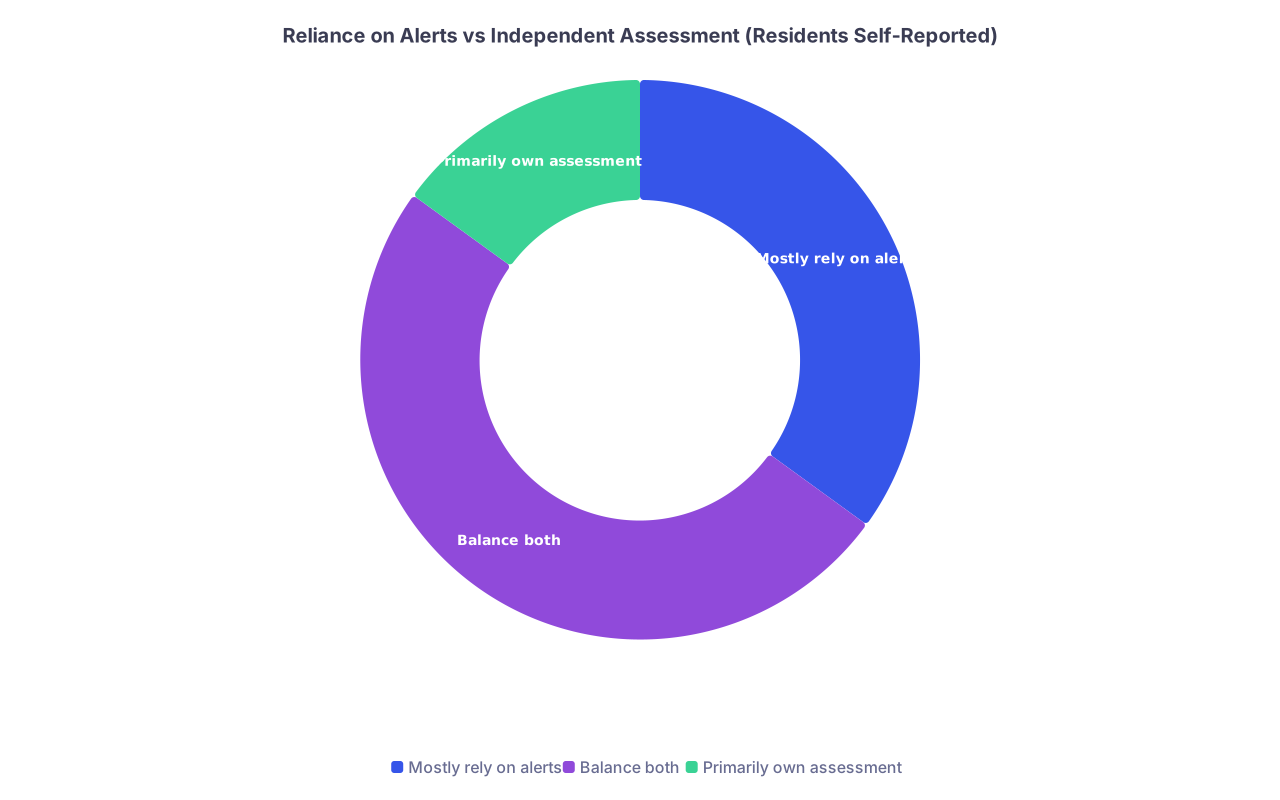
| Category | Value |
|---|---|
| Mostly rely on alerts | 35 |
| Balance both | 50 |
| Primarily own assessment | 15 |
The ethical problem is obvious: patients assume you are thinking, not just following whatever popped up on the EHR screen.
5. Documentation and Ethics: The Lazy AI Note That Will Haunt You
AI‑assisted documentation tools auto‑generate H&Ps, differentials, and plans that sound… impressive. They can also misrepresent what actually happened.
Examples I have actually seen in charts:
- “Neurologic exam nonfocal” auto‑inserted in a template when no proper neuro exam was done.
- “Shared decision making with risks and benefits thoroughly discussed” in a 3‑minute hallway conversation.
- Auto‑generated differential including diagnoses the clinician never considered.
You are ethically responsible for every word under your name. Whether you typed it or not.

Three big errors here:
Letting AI fabricate thoroughness
The note reads like a careful, exhaustive evaluation. The reality was rushed and superficial. That gap is not trivial. Plaintiffs’ attorneys love it.Letting AI hallucinate clinical reasoning
The note lists a beautiful 8‑item differential you never actually worked through. You cannot defend that in court. “Why did you document that PE was considered but not order a D‑dimer?” Your answer cannot be “The documentation tool added that.”Hiding your uncertainty
AI‑drafted notes often sound overly confident. You quietly accept it because it sounds “better.” That is dishonest. And it blocks appropriate follow‑up and handoff, because nobody sees your real level of concern.
Ethically clean practice in an AI‑documented world:
- Delete any auto‑text that you did not actually do or think.
- Explicitly correct overstatements: change “no focal deficits” to “limited neuro exam; no gross focal deficits noted; full exam pending.”
- Add your own risk assessment in your own voice: “Concern remains for early sepsis despite reassuring early labs. Plan: repeat lactate / close monitoring.”
AI can help with efficiency. It cannot be allowed to forge reality on your behalf.
6. The Training Trap: Letting AI Shrink Your Clinical Muscles
The scariest effect of AI overreliance is not one missed diagnosis. It is the slow erosion of your ability to diagnose at all.
I see this in residents who grew up with calculators, then smartphone reference apps, and now AI everywhere. You ask for a differential on abdominal pain, and they reflexively reach for a device.

| Step | Description |
|---|---|
| Step 1 | Frequent AI use |
| Step 2 | Less independent thinking |
| Step 3 | Weaker pattern recognition |
| Step 4 | More reliance on AI |
| Step 5 | Inability to function without AI |
| Step 6 | Higher risk of catastrophic error |
Symptoms of atrophying diagnostic skill:
- You feel uncomfortable making decisions without “something” on the screen validating you.
- Your differentials look like whatever the AI or UpToDate page listed first.
- You struggle on oral boards or case presentations where no AI tool is available.
Remember: residency is where you are supposed to build the mental library you will use for the next 30 years. If you let AI do the heavy lifting now, there will be nothing in your own head later.
Protective habits:
- Do “offline reasoning reps.” For one patient each day, force yourself to build a full differential and management plan on paper before looking at any AI or reference.
- Present cases on rounds without reading from the note or the AI‑generated summary. Force recall.
- Ask attendings to challenge your pre‑AI assessment: “Before we see the AI suggestion, here is my top 3 and why.”
You are not training to be an AI operator. You are training to be a physician who can use AI as a tool when it helps and ignore it when it harms.
7. Legal and Ethical Reality: “The Algorithm Said So” Will Not Save You
Young physicians often have a quiet fantasy: If I follow guidelines and AI tools, I am “protected.” That is naive.
Ethically, you owe the patient your independent judgment. Legally, “standard of care” will evolve, but it will never be “whatever the AI says, uncritically.”
Picture a deposition:
- “Doctor, the patient had hypotension, tachycardia, and altered mental status. Why did you discharge them?”
- “Well, the sepsis alert did not fire, and the risk score suggested low probability…”
That answer will not go well. You are expected to see the obvious.
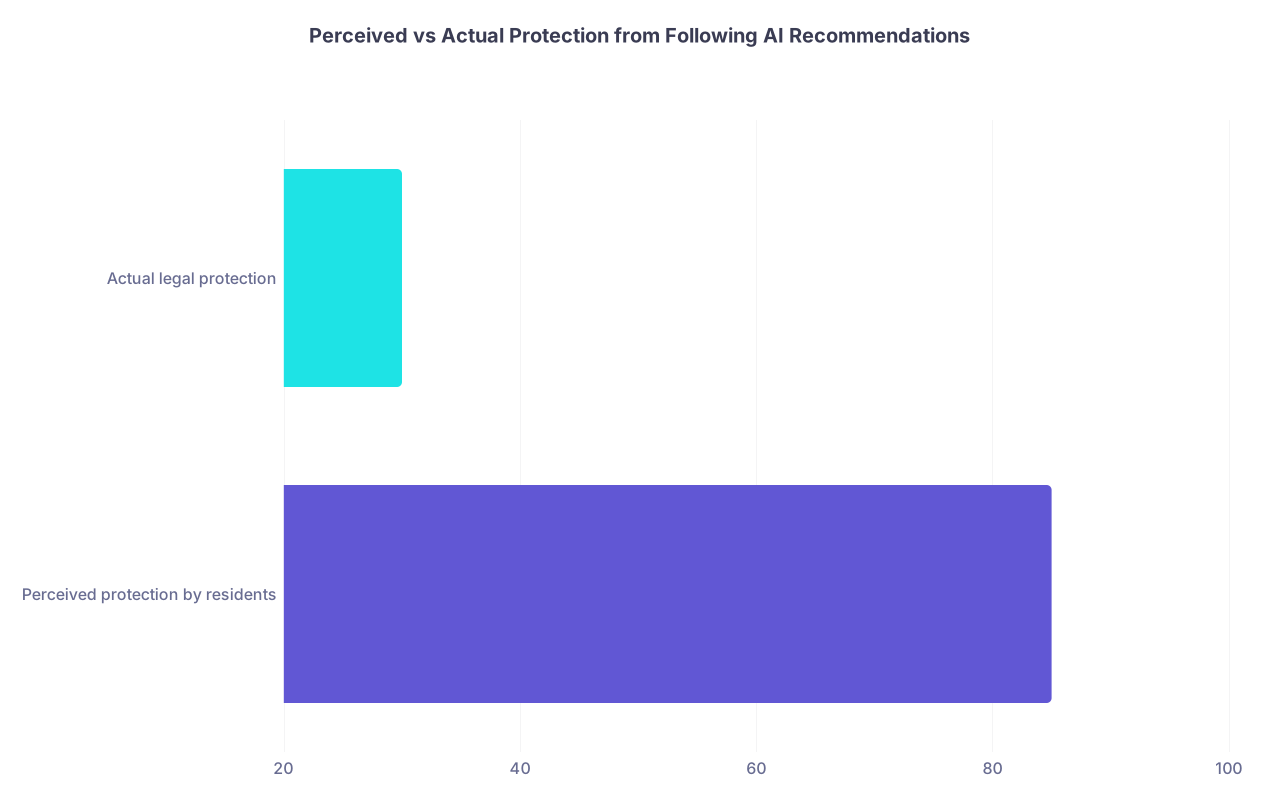
| Category | Value |
|---|---|
| Perceived protection by residents | 85 |
| Actual legal protection | 30 |
Ethical danger zones:
- Hiding behind AI to justify borderline decisions (“AI said low risk” instead of “I judged it safe because…”).
- Letting cost or time pressure push you to lean on AI when your gut says otherwise.
- Failing to disclose uncertainty and the limitations of tools to patients when it materially affects decisions.
Better approach:
- Document AI input as one factor, not the deciding factor. Example: “PERC low and decision support tool suggests low PE risk; however, persistent pleuritic pain and tachycardia → D‑dimer ordered despite low score.”
- When disagreeing with AI, say so clearly: “Stroke AI negative, but exam concerning for posterior circulation stroke → MRI brain / neurology consult ordered.”
- Remember: ethically, your loyalty is to the patient, not the software vendor, not the hospital’s throughput metrics, not your own desire to be done with the shift.

8. Practical Guardrails: How To Use AI Without Letting It Use You
You do not need to reject AI. You need to cage it.
Concrete rules I recommend to interns and junior residents:
Always think first, then check AI
Make it a personal rule: you must write down at least 3 diagnoses before looking at an AI suggestion for any nontrivial case.Never let AI override strong clinical red flags
Chest pain + diaphoresis + risk factors? I do not care what the risk score says. You treat that as high risk until proven otherwise.Use disagreement as a trigger for escalation
If your assessment and the AI output truly conflict, that is not a “tie” where AI wins. That is a signal to call a senior, consult, or radiologist.Treat AI notes as drafts, not final
Edit aggressively. Remove anything you did not actually do or think. If you are too busy to edit, you are too busy to safely use auto‑documentation.Periodically practice “AI‑free days” or “AI‑free patients”
On purpose, for training. Just as you would practice manual blood pressure measurement even in an automated unit. Keeps your skills from rotting.Learn the limitations of the specific tools you use
Ask: What was this trained for? What is its sensitivity and specificity? In which populations? For which endpoints? If you cannot answer that, you should not trust it blindly on your sickest, most complex patient.

FAQ (Exactly 3 Questions)
1. Is it ever acceptable to fully trust an AI diagnostic tool without double‑checking?
No. Full, uncritical trust is exactly the mistake you must avoid. For low‑acuity, routine situations, you may pragmatically lean more on AI, but you still need to confirm that the output matches the clinical picture and your own reasoning. For anything high‑risk, atypical, or unstable, AI is at most a second opinion, never the deciding voice.
2. How do I push back on attendings or seniors who seem overly dependent on AI tools?
You do it respectfully and with data. Frame your concern around the patient: “I know the sepsis alert did not fire, but I am worried about their lactate and mental status; could we consider treating as sepsis anyway?” Senior physicians are not immune to AI overreliance, but if you bring a clear, clinically grounded argument, most will listen. Your duty is to the patient, not to keeping the AI‑driven workflow smooth.
3. Will not using AI as much put me at a disadvantage compared to my peers?
You will be at a disadvantage only if you ignore AI completely or if you let it replace your own thinking. The sweet spot is using AI as a powerful aid while building deep, independent diagnostic skills. In a few years, the best clinicians will be those who can do both: strong unaided reasoning plus strategic AI use. The worst outcomes will belong to those who can do neither without the crutch.
Two things to remember: AI is a tool, not a shield. And your brain is still the last line of defense between a patient and a catastrophic miss. Use the tools. But do not let them do your thinking for you.