
CRISPR and Its Role in Treating Genetic Disorders: A Practical Guide for Future Physicians
Introduction: Why CRISPR Matters for Modern Medicine
In just over a decade, CRISPR has moved from an obscure bacterial defense system to one of the most transformative tools in biomedical science. For clinicians and trainees, understanding CRISPR is no longer optional background knowledge—it is becoming directly relevant to patient care, especially in hematology, oncology, neurology, and rare disease clinics.
CRISPR (Clustered Regularly Interspaced Short Palindromic Repeats) is a powerful gene editing platform that allows precise, targeted modification of DNA. Unlike traditional therapies that manage symptoms or downstream effects, CRISPR targets the root cause: the genetic variants driving disease. This makes it uniquely promising for the treatment of genetic disorders, from monogenic diseases like sickle cell disease to more complex conditions such as certain cancers.
At the same time, CRISPR has ignited intense debate in Ethics in Genetics, particularly around germline editing, equity of access, and long‑term societal impacts. As future physicians, you will be counseling patients about these therapies, interpreting emerging data, and navigating complex consent and ethical conversations.
This expanded guide will walk through:
- The mechanism of CRISPR and how it compares to other gene editing tools
- Current and emerging applications in genetic disorders
- Key clinical trials and what they mean for real-world practice
- Core ethical and policy questions you should be prepared to discuss
- Future directions and how to stay informed as medical advances accelerate
Understanding CRISPR: Mechanism and Core Concepts
From Bacterial Defense to Precision Gene Editing
CRISPR was first identified as part of a bacterial immune system. Bacteria capture snippets of viral DNA and store them in their genome as “memory.” When the virus reappears, bacteria produce CRISPR RNAs that guide nucleases to the matching viral DNA, cutting it and neutralizing the threat.
Researchers realized this system could be repurposed to edit almost any DNA sequence in almost any organism by reprogramming the guide RNA.
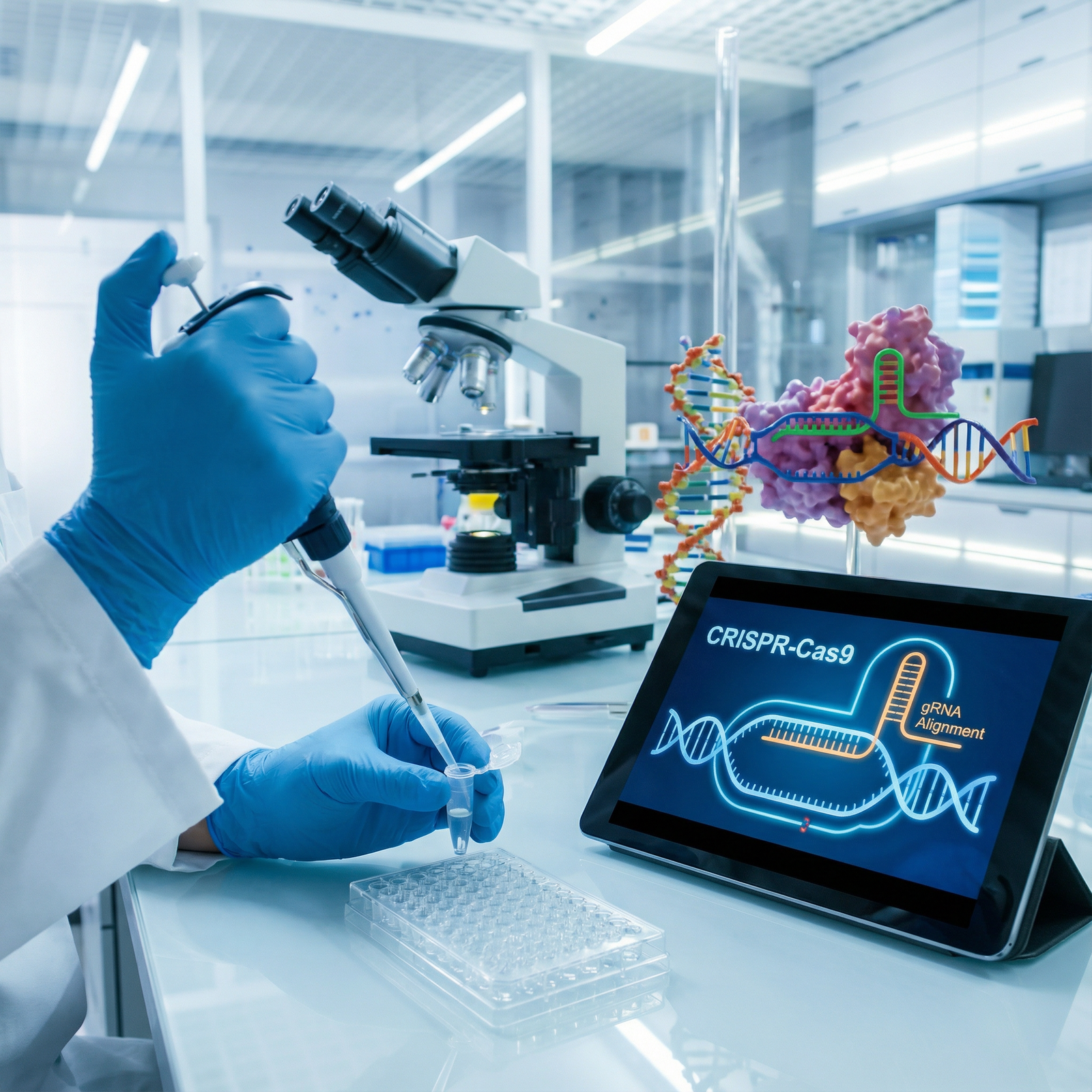
The CRISPR-Cas9 System: Step-by-Step
Though there are multiple CRISPR systems (Cas9, Cas12, Cas13, base editors, prime editors), CRISPR-Cas9 remains the best known and most widely used. Its basic workflow involves three key components:
Guide RNA (gRNA)
- A short artificial RNA sequence designed to be complementary to a specific DNA target.
- Acts like a GPS system: it “guides” the Cas9 enzyme to the exact genomic site to be edited.
- Designed in silico using bioinformatic tools to minimize off-target binding.
Cas9 Enzyme (the “molecular scissors”)
- An endonuclease that binds the gRNA and scans DNA for a matching sequence adjacent to a PAM (protospacer adjacent motif).
- Once bound, Cas9 introduces a double-strand break (DSB) in the DNA at the specified location.
Cellular DNA Repair Mechanisms
After the DSB, the cell attempts to repair the damage via two main pathways:Non-Homologous End Joining (NHEJ)
- Rapid but error-prone repair.
- Often produces small insertions or deletions (indels), which can disrupt gene function.
- Used to knock out pathogenic genes or regulatory elements.
Homology-Directed Repair (HDR)
- More precise but less efficient and typically active only in dividing cells.
- Requires a donor DNA template provided by researchers, allowing exact sequence changes or insertion of a correct gene copy.
- Used to correct disease-causing mutations.
Through these mechanisms, CRISPR enables:
- Gene knockout (loss of function)
- Gene correction (fixing specific variants)
- Gene insertion (adding new functional sequences)
This flexible toolkit is the basis for current CRISPR-based gene editing therapies.
How CRISPR Compares to Earlier Gene Editing Tools
Before CRISPR, gene editing relied heavily on:
- Zinc Finger Nucleases (ZFNs)
- Transcription Activator-Like Effector Nucleases (TALENs)
These platforms also create targeted DNA breaks but require complex protein engineering for each new DNA target.
Key advantages of CRISPR:
- Design simplicity: Only the gRNA sequence needs to change; Cas9 remains the same.
- Scalability: Enables high-throughput genome-wide screens.
- Cost-effectiveness: Cheaper and faster to design and implement than ZFNs or TALENs.
- Versatility: Variants like base editors and prime editors expand beyond simple cuts.
For clinicians, this translates into more feasible development of personalized therapies and a rapidly expanding pipeline of CRISPR-based interventions.
CRISPR Applications in Genetic Disorders
Targeting Monogenic Disorders: From Concept to Clinic
Monogenic disorders—conditions caused by mutations in a single gene—are ideal early targets for CRISPR because the pathophysiology is often well-characterized and the genetic lesion is discrete.
1. Sickle Cell Disease (SCD)
- Caused by a single base substitution in the HBB gene, leading to abnormal hemoglobin S.
- Results in hemolytic anemia, vaso-occlusive crises, organ damage, and early mortality.
CRISPR Strategy:
There are two major approaches:
- Direct correction of the HBB mutation via CRISPR in hematopoietic stem cells (HSCs).
- Reactivation of fetal hemoglobin (HbF) by disrupting regulatory genes such as BCL11A, which represses HbF.
Ex vivo workflow:
- Autologous HSCs are harvested from the patient.
- Cells are edited outside the body using CRISPR-Cas9.
- Patients undergo myeloablative conditioning.
- Edited HSCs are reinfused, engraft, and ideally produce healthy red blood cells.
Early clinical trials have shown:
- Significant reduction or elimination of vaso-occlusive crises.
- Transfusion independence in many participants.
- Durable HbF expression with improved quality of life.
Several CRISPR-based SCD therapies are now in advanced clinical stages or regulatory review, representing one of the first true gene-editing–based “functional cures.”
2. Cystic Fibrosis (CF)
- Due to mutations in the CFTR gene, affecting chloride channels and leading to thick secretions in lungs, pancreas, and other organs.
- Over 2,000 CFTR variants exist; a limited subset drive most disease.
CRISPR Approaches:
- Ex vivo editing of airway epithelial cells or organoids to correct CFTR mutations (e.g., F508del) in preclinical models.
- In vivo strategies under exploration using viral vectors or lipid nanoparticles to deliver CRISPR components directly to the airway epithelium.
Challenges include:
- Efficient and safe delivery to the respiratory tract.
- Addressing mutation diversity (one-size-fits-all vs mutation-specific therapies).
- Ensuring long-term expression in non-dividing epithelial cells.
While clinical CF gene-editing trials are not yet mainstream, the proof-of-concept work is a major milestone in respiratory genetics.
3. Duchenne Muscular Dystrophy (DMD)
- X-linked disorder due to mutations in the dystrophin gene.
- Results in progressive muscle degeneration and early cardiopulmonary failure.
CRISPR Strategies:
- Exon skipping: Using CRISPR to remove exons that disrupt the reading frame, allowing production of a shorter but partially functional dystrophin protein (similar to Becker muscular dystrophy).
- Gene correction: Attempting to fix specific pathogenic variants.
Animal studies have demonstrated:
- Partial restoration of dystrophin in skeletal and cardiac muscle.
- Functional improvement in muscle strength and pathology.
Early-phase trials are exploring systemic delivery using adeno-associated virus (AAV) vectors, though issues of immune response, distribution to all affected muscles, and repeated dosing remain active challenges.
CRISPR and Complex Genetic Disorders
While monogenic disorders are appealing initial targets, complex diseases—driven by multiple genes and environmental factors—are also under active investigation.
Cancer and CRISPR-Enhanced Immunotherapy
Cancer often involves numerous somatic mutations, epigenetic alterations, and immune evasion strategies. CRISPR offers several ways to intervene:
Engineering T cells (CRISPR-CAR-T)
- Enhancing CAR-T cells by:
- Knocking out inhibitory receptors (e.g., PD-1) to increase antitumor activity.
- Modifying TCRs to reduce off-target recognition and graft-versus-host disease in allogeneic settings.
- Enhancing CAR-T cells by:
Targeting Oncogenes and Tumor Suppressors
- In preclinical models, CRISPR is used to inactivate oncogenes or restore tumor suppressor function (e.g., TP53, PTEN), though safe systemic delivery remains a barrier.
Functional Genomic Screens
- Genome-wide CRISPR screens identify genes critical for tumor growth or resistance to therapies, driving new drug targets and combination regimens.
Several first-in-human trials have already tested CRISPR-modified T cells in refractory cancers, reporting acceptable safety profiles and some durable responses, though larger studies are needed.
Neurodegenerative Diseases
Neurodegenerative disorders such as Huntington’s disease, Alzheimer’s disease, and certain familial forms of amyotrophic lateral sclerosis (ALS) have a strong genetic component.
- Huntington’s disease: CRISPR is being explored to selectively inactivate or reduce expression of mutant HTT alleles.
- Familial ALS (e.g., SOD1, C9orf72): Preclinical work uses CRISPR to knock down or correct mutant genes.
- Alzheimer’s disease: More complex, but efforts include modulating genes like APP, PSEN1/2, or risk-modifying loci (e.g., APOE variants) in models.
Key barriers:
- Achieving targeted and safe delivery to the CNS (often via intrathecal or intraparenchymal routes).
- Minimizing off-target edits in post-mitotic neurons.
- Understanding long-term impacts in slowly progressive diseases.
Cardiovascular Disease
CRISPR has been used in preclinical models to:
- Knock out PCSK9 in the liver, leading to dramatic LDL-C reduction.
- Correct mutations causing familial hypercholesterolemia or cardiomyopathies.
A landmark early human study used a CRISPR-based in vivo therapy to edit PCSK9 in hepatocytes via intravenous infusion, showing substantial LDL-C reductions with a single dose. This approach hints at future “one-shot” gene-editing therapies for cardiovascular risk reduction.
Clinical Trials and Real-World Translation
Ex Vivo vs In Vivo Gene Editing in Clinical Practice
Two major paradigms dominate current clinical applications:
Ex Vivo Gene Editing
- Cells are removed, edited in the lab, and returned to the patient.
- Used primarily for blood and immune cells (e.g., HSCs, T cells).
- Advantages: Greater control, screening for off-target effects, and avoiding systemic delivery challenges.
- Examples: SCD and β-thalassemia trials, CRISPR-engineered T cells in cancer.
In Vivo Gene Editing
- CRISPR components are delivered directly into the patient via viral vectors (AAV) or non-viral methods (lipid nanoparticles).
- Targets include liver (e.g., PCSK9, transthyretin amyloidosis), eye (Leber congenital amaurosis), and potentially the CNS and muscle.
- Advantages: Bypasses ex vivo cell manipulation; can reach tissues not amenable to cell harvest.
- Challenges: Delivery specificity, immune reactions, and irreversibility of edits.
Selected High-Impact CRISPR Trials
Sickle Cell Disease & β-Thalassemia
- Ex vivo editing of HSCs to upregulate fetal hemoglobin or correct HBB.
- Findings: Sustained transfusion independence in thalassemia and near-elimination of SCD crises in many recipients.
Transthyretin (ATTR) Amyloidosis
- In vivo CRISPR therapy targeting TTR in hepatocytes.
- Early trials showed >80–90% reduction in TTR protein levels after a single dose.
Inherited Retinal Diseases (e.g., Leber Congenital Amaurosis 10)
- In vivo subretinal injection of CRISPR components to correct CEP290 mutations.
- Initial results suggest some patients experience modest improvement in vision, illustrating the potential for local gene editing.
As these and other studies mature, clinicians will face new questions about patient selection, long-term follow-up, toxicity management, and integration into standard care algorithms.
Ethics in Genetics: Navigating CRISPR’s Moral and Social Dimensions
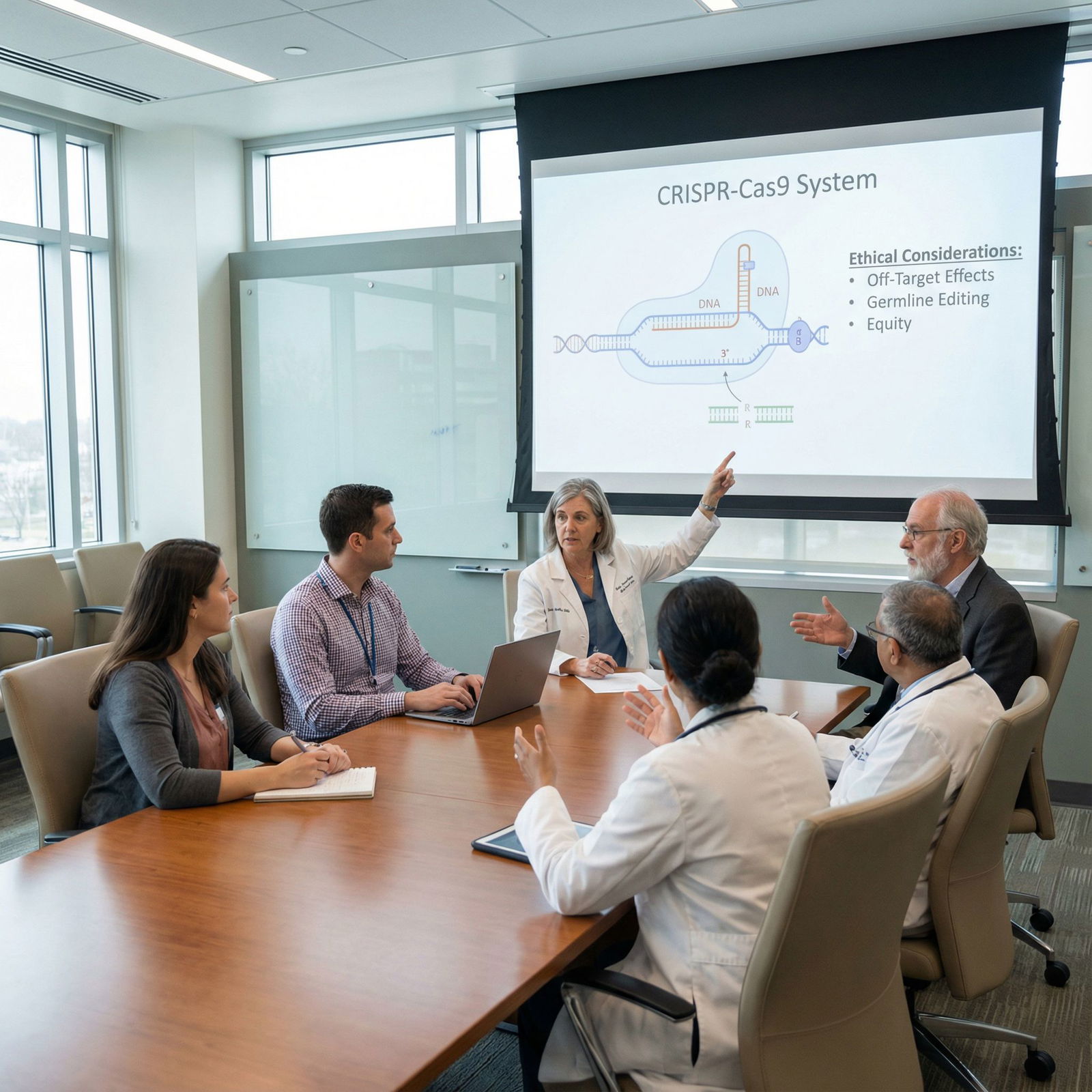
The clinical power of CRISPR is inseparable from its ethical complexity. As a physician or trainee, you will be expected to understand not just what CRISPR can do, but what it should be allowed to do.
Somatic vs Germline Editing
Somatic Gene Editing
- Alters non-reproductive cells.
- Effects are limited to the treated individual and not passed to offspring.
- Widely considered ethically acceptable when used for serious disease, under strong regulatory oversight.
Germline Editing
- Alters sperm, eggs, or embryos; changes are heritable.
- Highly controversial due to potential unintended consequences, issues of consent for future generations, and risk of misuse for non-medical “enhancement.”
- Most countries currently prohibit or heavily restrict germline editing in clinical practice.
International bodies (e.g., WHO, National Academies) have called for global governance frameworks and, in many cases, a moratorium on clinical germline editing until safety, societal consensus, and regulatory structures are better established.
Equity, Access, and Global Justice
CRISPR therapies are technologically sophisticated and currently extremely expensive. This raises pressing questions:
- Who will have access to potentially curative gene editing?
- Will these treatments exacerbate existing healthcare disparities?
- How should resource-limited settings prioritize gene-editing therapies vs foundational public health interventions?
Ethical practice demands that medical advances in gene editing do not become limited to wealthy individuals or countries. Discussions around tiered pricing, global funding mechanisms, and open science are ongoing.
Informed Consent and Risk Communication
Because CRISPR therapies are new and often irreversible:
- Informed consent must cover:
- Known and unknown risks, including off-target edits and immune reactions.
- Uncertainties about long-term outcomes and intergenerational effects (for germline research).
- Alternatives, including standard-of-care treatments and supportive care.
For trainees, this means developing skills in risk communication, recognizing therapeutic misconception, and collaborating with genetic counselors, ethicists, and multidisciplinary teams.
Responsible Innovation and Oversight
High-profile cases of unethical CRISPR use (e.g., unauthorized editing of human embryos) have highlighted the need for:
- Robust institutional review board (IRB) oversight
- Transparent reporting of adverse events
- Clear professional norms and sanctions for misconduct
Participation in these professional and regulatory conversations is a key dimension of your personal development and medical ethics education.
The Future of CRISPR in Treating Genetic Disorders
CRISPR is evolving rapidly. Future iterations may look very different from the classic Cas9 double-strand break model.
Emerging Technologies: Beyond Cas9
Base Editors
- Fuse a catalytically impaired Cas enzyme to a deaminase.
- Enable single-base changes (e.g., C→T or A→G) without causing double-strand breaks.
- Attractive for correcting point mutations in monogenic diseases with potentially fewer off-target structural changes.
Prime Editors
- Use a Cas9 nickase fused to a reverse transcriptase plus a specialized guide (pegRNA).
- Can introduce targeted insertions, deletions, and all 12 types of base substitutions without DSBs.
- May greatly expand the repertoire of safely correctable mutations.
CRISPR Interference/Activation (CRISPRi/CRISPRa)
- Use dead Cas9 (dCas9) fused to repressor or activator domains to modulate gene expression without changing underlying DNA sequence.
- Could be used to dial gene expression up/down in conditions like hemoglobinopathies or metabolic disorders.
Improving Delivery and Specificity
Research is focused on:
- Safer viral vectors and non-viral carriers (e.g., lipid nanoparticles, cell-penetrating peptides).
- Tissue-specific promoters and targeting ligands to limit off-target exposure.
- Computational tools and high-throughput assays to rigorously profile off-target edits.
For future clinicians, understanding therapeutic delivery platforms will be as relevant as understanding drug metabolism and pharmacokinetics.
Integrating CRISPR into Clinical Practice and Training
As CRISPR-based therapies become part of standard care:
- Medical education will increasingly include genomics, gene editing, and ethics in genetics.
- Residency and fellowship programs may incorporate exposure to gene therapy trials, molecular tumor boards, and genomic medicine clinics.
- Interdisciplinary collaboration with genetic counselors, bioinformaticians, and molecular pathologists will be essential.
To stay current:
- Follow major journals (e.g., NEJM, Nature Medicine, Science Translational Medicine).
- Attend sessions on gene editing at specialty conferences.
- Engage with institutional seminars and ethics rounds focused on genomics.
FAQ: CRISPR, Gene Editing, and Clinical Practice
Q1: What makes CRISPR different from earlier gene editing techniques like ZFNs and TALENs?
CRISPR is more modular and easier to program. With ZFNs and TALENs, each new DNA target required designing and engineering a new protein complex. With CRISPR, the Cas enzyme is constant; only the guide RNA must be redesigned, which is relatively fast and inexpensive. This simplicity has accelerated research, reduced costs, and broadened adoption, making CRISPR the leading platform for gene editing and a key driver of current medical advances.
Q2: Can CRISPR cure genetic disorders permanently?
Potentially, yes—especially for monogenic diseases where correcting or disabling a single gene can normalize function. Ex vivo edited stem cells can, in theory, provide lifelong benefit once engrafted. However, long-term data are still emerging. Key considerations include:
- Durability of edited cell populations
- Risk of clonal expansion or oncogenic events
- Disease biology (e.g., whether other pathways can reintroduce pathology)
For now, it is more precise to counsel patients about “functional cures” or long-term disease modification rather than guaranteed permanent cures.
Q3: How safe is CRISPR in clinical use?
Current evidence suggests CRISPR can be used with an acceptable safety profile in carefully controlled settings, but several risks remain:
- Off-target edits: Unintended DNA changes elsewhere in the genome.
- On-target but undesirable effects: Large deletions, rearrangements, or unexpected repair outcomes.
- Immune responses: Against Cas proteins or delivery vectors (e.g., AAV).
- Long-term unknowns: Particularly in non-regenerating tissues or in vivo systemic edits.
Ongoing trials use extensive preclinical testing, careful patient selection, and long-term follow-up (often 15 years or more) to monitor safety. As a clinician, you should emphasize both the promising benefits and the genuine uncertainties.
Q4: What are the main ethical concerns with CRISPR and gene editing?
Major ethical issues include:
- Germline editing and the possibility of heritable genetic changes.
- Equity and access, as advanced gene therapies risk deepening disparities between rich and poor populations.
- Potential non-therapeutic uses, such as enhancement of physical or cognitive traits.
- Consent and autonomy, especially for vulnerable populations, pediatric patients, or embryo research.
Clinicians must be prepared to discuss these topics, advocate for equitable access, and adhere to evolving professional and regulatory guidelines in ethics in genetics.
Q5: Which types of genetic disorders are currently the most realistic targets for CRISPR therapies?
The most advanced applications focus on:
- Hematologic monogenic disorders: Sickle cell disease, β-thalassemia.
- Liver-based monogenic disorders: Transthyretin amyloidosis, certain lipid disorders (e.g., PCSK9-related hypercholesterolemia).
- Inherited retinal diseases: Such as Leber congenital amaurosis.
- Oncology: CRISPR-enhanced T-cell therapies for refractory cancers.
Conditions like cystic fibrosis, Duchenne muscular dystrophy, and various neurodegenerative diseases are active areas of research but have more significant delivery and safety challenges before routine clinical use.
CRISPR is reshaping the landscape of how we understand and treat genetic disease. For medical students and residents, building a solid conceptual foundation in gene editing, staying informed about emerging trials, and engaging critically with the ethical dimensions will be essential parts of practicing medicine in the genomic era.