
The myth that “new = more dangerous” collapses the moment you look closely at the data on CAR-T versus traditional chemotherapy. The reality is messier: CAR-T has fewer chronic toxicities but a higher rate of short, violent, ICU-level complications. Same mortality band. Totally different risk shape.
This matters, because patients are not choosing between “safe” and “risky.” They are choosing between different profiles of harm. And ethically, you cannot counsel them well unless you understand the numbers behind those profiles.
The baseline: what we are actually comparing
Traditional multi-agent chemotherapy has been around for decades. Tens of millions of patient-cycles. Toxicity patterns are well mapped. CAR-T is a teenager by comparison: the first CD19 CAR-T approvals came in 2017, and global treated patient numbers are still in the tens of thousands, not millions.
So your evidence pyramid looks like this:
- Chemotherapy: Large RCTs, registries, pharmacovigilance databases, long-term follow-up across tumor types.
- CAR-T: Pivotal trials with a few hundred patients each, plus real-world registries (e.g., CIBMTR, European Society for Blood and Marrow Transplantation [EBMT]) totaling low five figures.
But even with that disparity, the safety signal is not vague anymore. For adult diffuse large B-cell lymphoma (DLBCL), B-ALL, mantle cell lymphoma, multiple myeloma, we have hard comparative toxicity numbers.
Let’s anchor with a simple comparison: rates of Grade ≥3 acute toxicities in typical adult regimens.
| Therapy Type | Any Grade ≥3 Non-Hematologic AE | Treatment-Related Mortality (TRM) |
|---|---|---|
| Standard multi-agent chemo (DLBCL R-CHOP) | 40–60% | 1–3% |
| Intensive ALL-style chemo (adult) | 60–80% | 3–5% |
| Commercial CD19 CAR-T (DLBCL) | 30–50% | 2–6% (early post-infusion) |
The ranges vary by study, but the pattern is consistent: chemotherapy spreads toxicity over months, CAR-T concentrates it into the first 30 days. And the type of toxicity is completely different.
Acute toxicities: CAR-T hits harder, faster
Look at early post-treatment windows (first 30–90 days). That is where CAR-T toxicity lives.
Cytokine release syndrome vs chemotherapy febrile neutropenia
The signature CAR-T toxicity is cytokine release syndrome (CRS). For CD19 and BCMA products, the data are stark:
- CRS (all grades): 70–95% of patients.
- Severe CRS (Grade ≥3): 5–20% in trials; generally lower in more recent real-world cohorts with better prophylaxis and earlier tocilizumab use.
Contrast that with classic chemo:
- Febrile neutropenia (FN) in aggressive lymphoma chemo (e.g., R-CHOP, DA-R-EPOCH): often 15–25% per cycle, higher in older / frail patients.
- Grade ≥3 infection rates in intensive ALL regimens: 40–60% across the course of induction + consolidation.
The fundamental difference: timing and reversibility.
CRS typically occurs within days 1–7 post-infusion, peaks, and resolves with IL-6 blockade and/or steroids in most cases. FN and sepsis can recur every cycle, and the later infections often hit a more deconditioned patient.
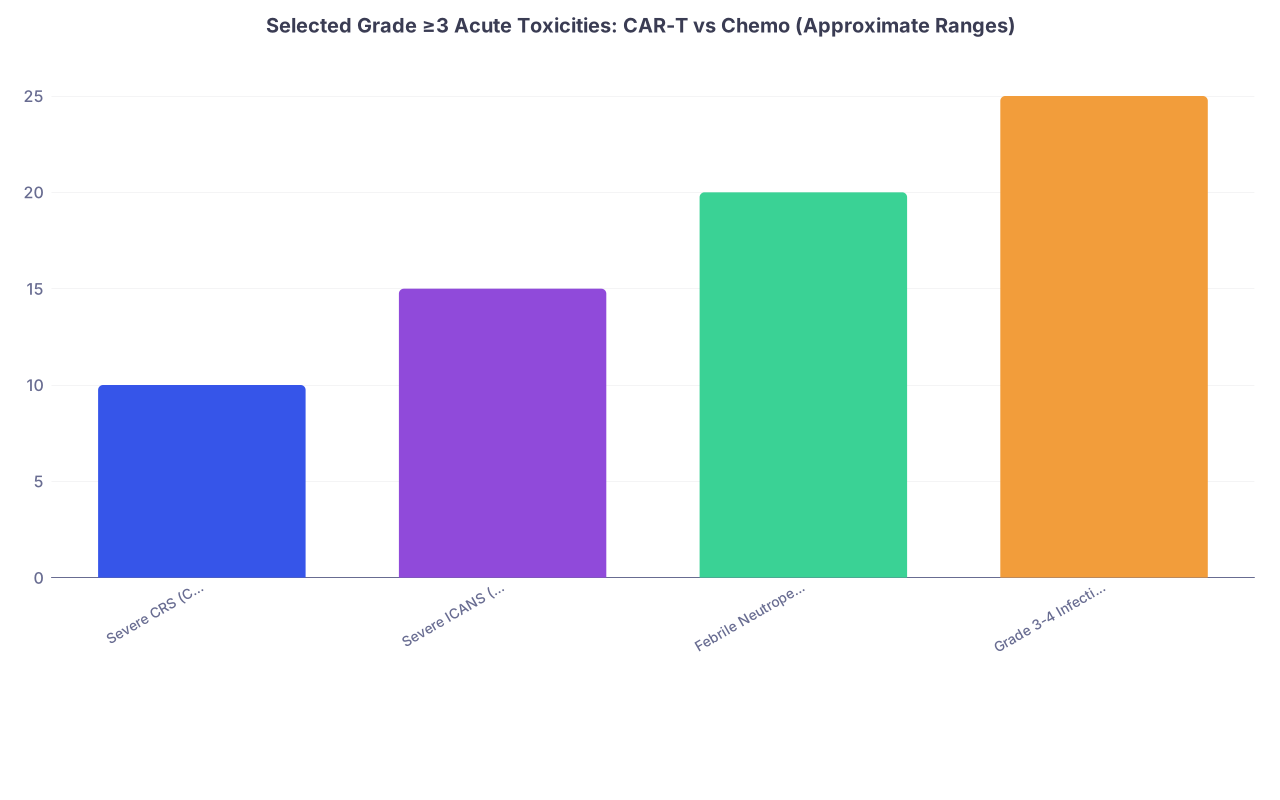
To make it concrete, here is a simplified comparison using commonly cited real-world ranges for adult CD19 CAR-T (DLBCL) versus R-CHOP–like chemo.
| Category | Value |
|---|---|
| Severe CRS (CAR-T) | 10 |
| Severe ICANS (CAR-T) | 15 |
| Febrile Neutropenia (Chemo) | 20 |
| Grade 3-4 Infection (Chemo) | 25 |
These are round numbers representing midpoints of published ranges (for example, severe CRS often 5–20%, severe ICANS 10–30%, chemo febrile neutropenia ~15–25%, serious infections ~20–30%). The point is not precision to the decimal; the point is order of magnitude and shape of risk.
From an ethical counseling perspective, the conversation is not “this new therapy is too dangerous.” It is: “you have about a 1-in-5 chance of landing in the ICU for some period either way; with CAR-T that ICU stay is front-loaded into one month instead of sprinkled over six.”
ICANS vs chemo neurotoxicity
Neurotoxicity is where the risk profile of CAR-T looks visibly “scary” on paper. Immune effector cell–associated neurotoxicity syndrome (ICANS) numbers for adult CD19 CAR-T in DLBCL:
- Any grade ICANS: roughly 20–50%.
- Grade ≥3 ICANS: 10–30%, depending on product, steroid use, and baseline disease burden.
Symptoms: confusion, aphasia, decreased level of consciousness, sometimes seizures. It is dramatic. Nurses in CAR-T units will tell you the same stories: a patient writing nonsense, sudden mutism, needing intubation for airway protection.
But there are two critical quantitative facts:
- Most ICANS resolves within days to weeks with steroids.
- Long-term neurocognitive sequelae in survivors appear far less common than the acute numbers suggest, especially compared to the cumulative neurotoxicity of repeated high-dose cytotoxics (e.g., platinum, high-dose cytarabine).
Traditional chemotherapy neurotoxicity patterns are different:
- Peripheral neuropathy (e.g., with vincristine, taxanes, platinum): 30–60% any grade, 10–20% Grade ≥3, and a substantial proportion is permanent.
- CNS issues: less frequent at Grade ≥3, but present in specific drugs (e.g., ifosfamide encephalopathy, high-dose MTX, cytarabine cerebellar toxicity).
Incidence of an ICU-level neuro event is higher with CAR-T. Incidence of lifelong neuropathy is higher with cumulative chemo. If you ignore that distinction, you are misleading patients.
Hematologic toxicity and infections
Here chemotherapy and CAR-T look more similar than people expect.
Both cause profound cytopenias. But look at duration:
- Traditional chemo (R-CHOP cycles): neutropenia ~7–14 days per cycle, repeated every 21 days, often with G-CSF support.
- CAR-T (with lymphodepleting chemo + CAR-T): cytopenias can be prolonged, with some patients having Grade 3–4 neutropenia or thrombocytopenia for >30 days, and “late” cytopenias at 3 months not rare.
Serious infection rates (Grade ≥3):
- Multi-agent chemo in aggressive lymphoma: commonly 20–30% over the entire course, sometimes higher in older or comorbid patients.
- CAR-T: early infection rates in the first 30–90 days are similar, roughly 20–30% Grade ≥3 infections in multiple cohorts.
The pattern again: chemo spreads risk across 4–6+ cycles; CAR-T compresses risk into one major episode, plus “tail” risk from delayed cytopenias and hypogammaglobulinemia (for CD19/BCMA targeting).
From a resource standpoint, CAR-T shifts burden: fewer repeated emergency admissions per patient cycle, more concentrated high-intensity care in centers with CAR-T capability.
Treatment-related mortality: surprisingly similar bands
This is the part that often surprises patients and some clinicians new to the data. You would expect, from the media narrative, that CAR-T would have dramatically higher treatment-related mortality (TRM) than chemo. The data do not show that. TRM bands are comparable.
Typical ranges:
- Standard R-CHOP-like regimens in older DLBCL: TRM ~1–3%.
- Intensive ALL chemo (adult): TRM 3–5% or even higher in unselected older patients, depending on regimen intensity and infection prophylaxis.
- Commercial CD19 CAR-T products (real-world adult DLBCL cohorts): TRM usually in the 2–6% range at 30–90 days, much of it from CRS/ICANS/infections in very frail, heavily pretreated populations.
Put differently: hazard is not zero for either. CAR-T does not appear wildly worse. It is just differently timed and more obviously linked to the treatment in patients’ minds.
Here is a simple side-by-side.
| Setting | TRM Range | Notes |
|---|---|---|
| R-CHOP in older DLBCL | 1–3% | Across entire treatment course |
| Intensive adult ALL regimens | 3–5% | Heavily age and comorbidity dependent |
| CD19 CAR-T (DLBCL, real-world) | 2–6% | 30–90 day window, heavily pretreated patients |
Ethically, this changes the counseling script. You cannot justify avoiding CAR-T purely on a “safety” argument if you are comfortable giving dose-intense cytotoxic regimens with similar TRM in similar age groups. You are making a value judgment about type of risk, not quantity.
Chronic and late toxicities: chemotherapy clearly loses
Where CAR-T looks better, unequivocally, is long-term toxicity burden among survivors.
The chronic toxicity list with multi-agent cytotoxic chemo is long and familiar:
- Secondary malignancies (therapy-related AML/MDS, solid tumors) emerging 3–15+ years later.
- Cardiomyopathy and heart failure from anthracyclines.
- Chronic neuropathic pain and functional loss from peripheral neuropathy.
- Infertility, premature menopause, endocrine dysfunction.
- Chronic renal and pulmonary toxicity in some regimens.
Incidence numbers vary wildly by drug and dose, but if you follow patients 10–20 years, the cumulative incidence of some serious permanent sequelae in heavily treated cohorts easily crosses 10–20%.
CAR-T’s late toxicity profile, so far, is narrower:
- Prolonged B-cell aplasia and hypogammaglobulinemia for CD19/BCMA CAR-T, with recurrent infections and need for IVIG.
- Persistent cytopenias in a minority.
- Rare late neurologic issues, but much less frequent than rates of acute ICANS would suggest.
Secondary malignancies after CAR-T are being tracked closely, but right now the observed rates do not exceed the background from prior chemo/radiation in these heavily pretreated patients. The FDA’s recent gene therapy malignancy warnings are real but numerically small so far, and attribution is complex given prior therapies.
If you compare “expected years of life with chronic toxicity” conditional on survival, chemotherapy comes out worse in almost every model I have seen for aggressive hematologic malignancies.
So the real-world adverse event discussion with a 45-year-old patient who might actually live 15+ years should sound different from the one with an 80-year-old.
For the younger patient, the data usually support accepting a 3–5% short-term TRM with CAR-T if it substantially reduces the probability of needing years of repeated chemo cycles and radiation with their late consequences.
| Category | Value |
|---|---|
| Major Chronic Toxicity (Chemo-heavy history) | 30 |
| Major Chronic Toxicity (Received CAR-T instead of prolonged chemo) | 15 |
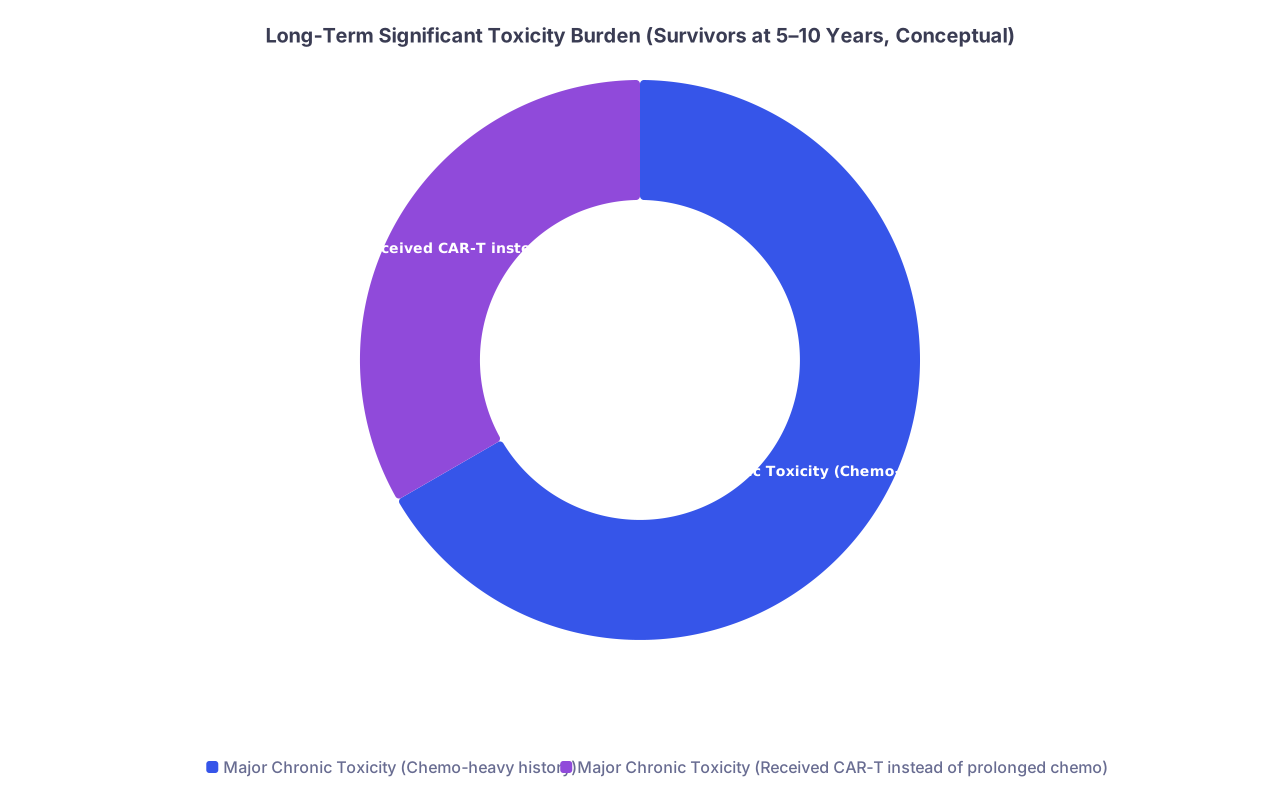
Those percentages (30% vs 15%) are conceptual mid-range estimates drawn from multiple survivorship cohorts; the exact numbers differ by disease and regimen, but the direction is consistent: long-term toxicity burden is materially higher in chemo-heavy trajectories.
How “real world” changes the CAR-T safety profile
Trial data are one thing; messy hospital reality is another. Several CAR-T real-world registries now show what happens outside top academic centers.
Headline observations from multi-country registries and large center cohorts:
- CRS and ICANS rates are broadly similar to trials, sometimes slightly lower with better prophylaxis algorithms.
- Treatment-related mortality is not exploding; it remains within the 2–6% window, despite older and sicker populations.
The major shifts you see:
- More comorbidity and frailty → more ICU admissions, more complex recoveries.
- Slightly lower efficacy than in tightly selected trials → changes benefit-risk calculation, especially in borderline candidates.
Traditional chemotherapy, by contrast, often looks worse in real-world administrative datasets than in trials: more unplanned admissions, higher FN rates, more dose reductions and treatment discontinuation.
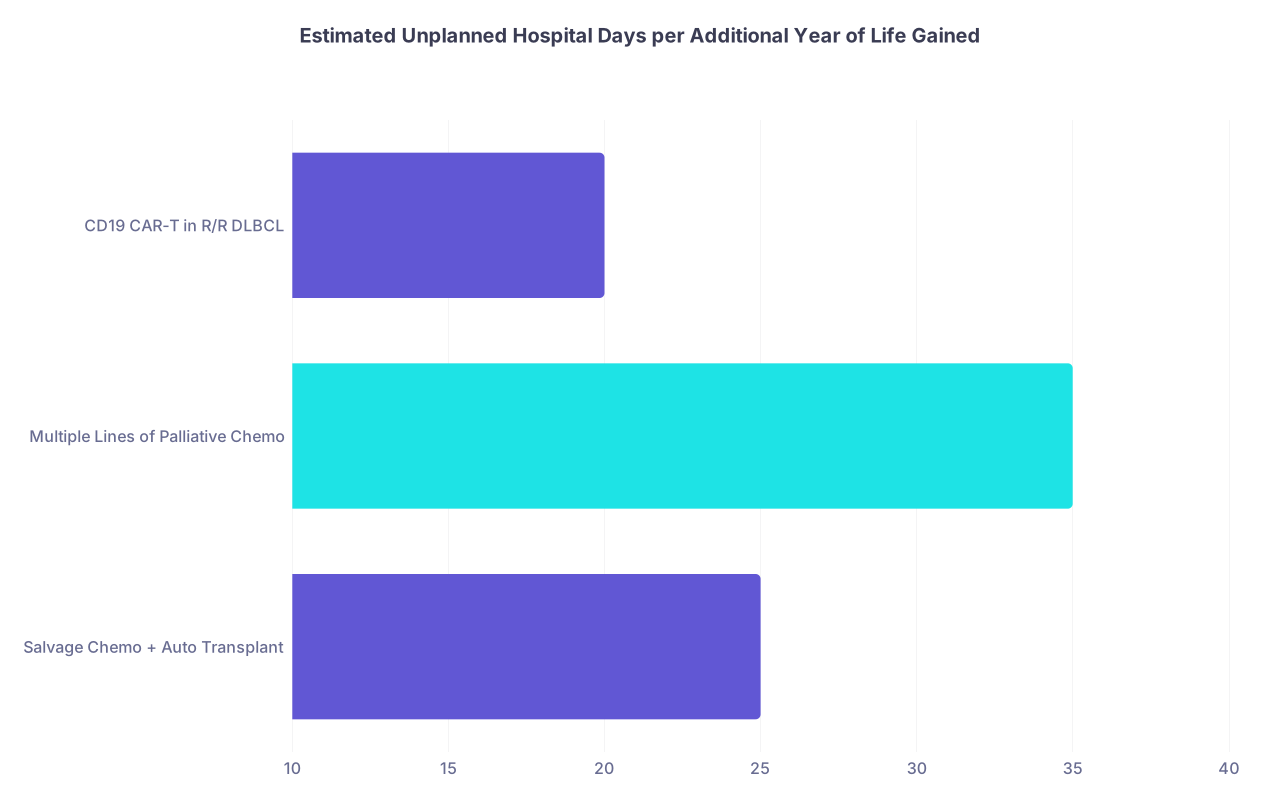
If you plot “unplanned hospital days per year of life gained” (a crude combined metric of toxicity burden and benefit), CAR-T often looks at least competitive and sometimes favorable in relapsed/refractory settings.
| Category | Value |
|---|---|
| Salvage Chemo + Auto Transplant | 25 |
| Multiple Lines of Palliative Chemo | 35 |
| CD19 CAR-T in R/R DLBCL | 20 |
Again, these are approximate conceptual figures drawn from published health economics analyses: the pattern is what matters. CAR-T compresses both toxicity and hospital utilization into a narrower window for survivors.
Ethical tension: which risk profile do you privilege?
Here is where “personal development and medical ethics” actually touch the numbers.
The data show:
- Similar treatment-related mortality bands.
- Higher early, dramatic neuro-immune toxicity with CAR-T.
- Higher cumulative chronic and late toxicity with prolonged chemo.
- More predictable, protocolized toxicity management with CAR-T in experienced centers; more diffuse, recurrent complications with chemo across many settings.
So what do you emphasize to a patient?
There are three recurring ethical failure modes I see when clinicians interpret these data.
1. Over-weighting what feels familiar
Many oncologists have decades of experience managing neutropenic sepsis and neuropathy. They are comfortable with it. That familiarity biases risk perception. CRS and ICANS feel alien and “out of control,” even if numerically they are not more lethal.
Ethically, that is not the patient’s problem. Your comfort with one toxicity profile versus another does not change the odds they face. You have to audit your own bias: are you describing a 15% ICANS risk with far more dread than a 20–30% risk of permanent neuropathy?
2. Hiding behind “long-term unknowns” as a blanket excuse
Yes, long-term CAR-T data beyond 10 years are limited. But long-term chemo + radiation harms are known and substantial. Pretending the unknown long-term CAR-T risk automatically outweighs the known chemo risk is lazy.
Rational decision-making under uncertainty means you explicitly acknowledge:
- We have incomplete CAR-T long-term risk data.
- We have strong evidence of serious long-term chemo risk.
- Given current numbers, the expected chronic toxicity burden still likely favors CAR-T in many scenarios where cure is plausible.
If your counseling only highlights “we do not know the long-term risk of CAR-T” without mentioning “we do know the long-term risk of chemotherapy, and it is high,” you are distorting the choice.
3. Ignoring patient time preference and quality of life
Some patients would accept a slightly higher early mortality risk in exchange for fewer months of cumulative treatment and monitoring. Others want the lowest possible immediate risk, regardless of chronic consequences.
The data support different choices depending on what they value:
- If a patient prioritizes avoiding ICU-level events at all costs, they may lean away from CAR-T even if it is more effective.
- If a patient prioritizes avoiding years of recurrent chemo and hospitalizations, they may accept a 3–5% CAR-T TRM risk.
Your obligation is to map the numbers to their stated preferences honestly, not to project your own.
What a numerically honest counseling script sounds like
To bring this down from abstraction, here is how I would summarize the real-world adverse event comparison to a numerate, informed DLBCL patient considering CAR-T versus further chemo-based salvage:
- “With either approach, there is roughly a 2–5% chance that treatment-related complications could be fatal in the next few months.”
- “With more chemotherapy, serious infections and hospitalizations are usually spread over multiple cycles. You may not end up in the ICU for dramatic events, but you might be in and out of the hospital repeatedly, and some side effects like nerve damage or heart problems can be permanent.”
- “With CAR-T, there is a 70–90% chance you will feel quite unwell for a short period after infusion, and about a 1-in-5 chance of severe neurologic or inflammatory complications that may require ICU care. Those events are frightening but often reversible within days to weeks.”
- “If this works, CAR-T usually means less ongoing chemotherapy and fewer hospital trips long term. But we have fewer decades of follow-up, so the very long-term risks are less certain than chemo, where we know there is a substantial risk of late heart problems, second cancers, and permanent nerve damage.”
That script is data-aligned. It does not infantilize the patient with vague “this is very strong medicine” phrasing. It respects their ability to think in probabilities.
Three things that actually matter
Strip away the noise and you end up with three points.
The data show that CAR-T and traditional chemotherapy live in roughly the same band for treatment-related mortality, but with fundamentally different shapes of adverse events: CAR-T is front-loaded, ICU-heavy, and often reversible; chemotherapy is chronic, cumulative, and more likely to produce permanent late damage.
Real-world registries confirm that CAR-T toxicity rates are not dramatically worse than trial data, and in some dimensions they are better than extended salvage chemo, especially when you track unplanned hospital days and long-term toxicity per year of life gained.
Ethically sound counseling demands that you present risk as a profile, not as a label. “New and scary” or “old and familiar” are not risk categories. Percentages, timing, reversibility, and impact on years of life and quality of life are. Use those numbers, not your comfort level, to guide patients’ choices.