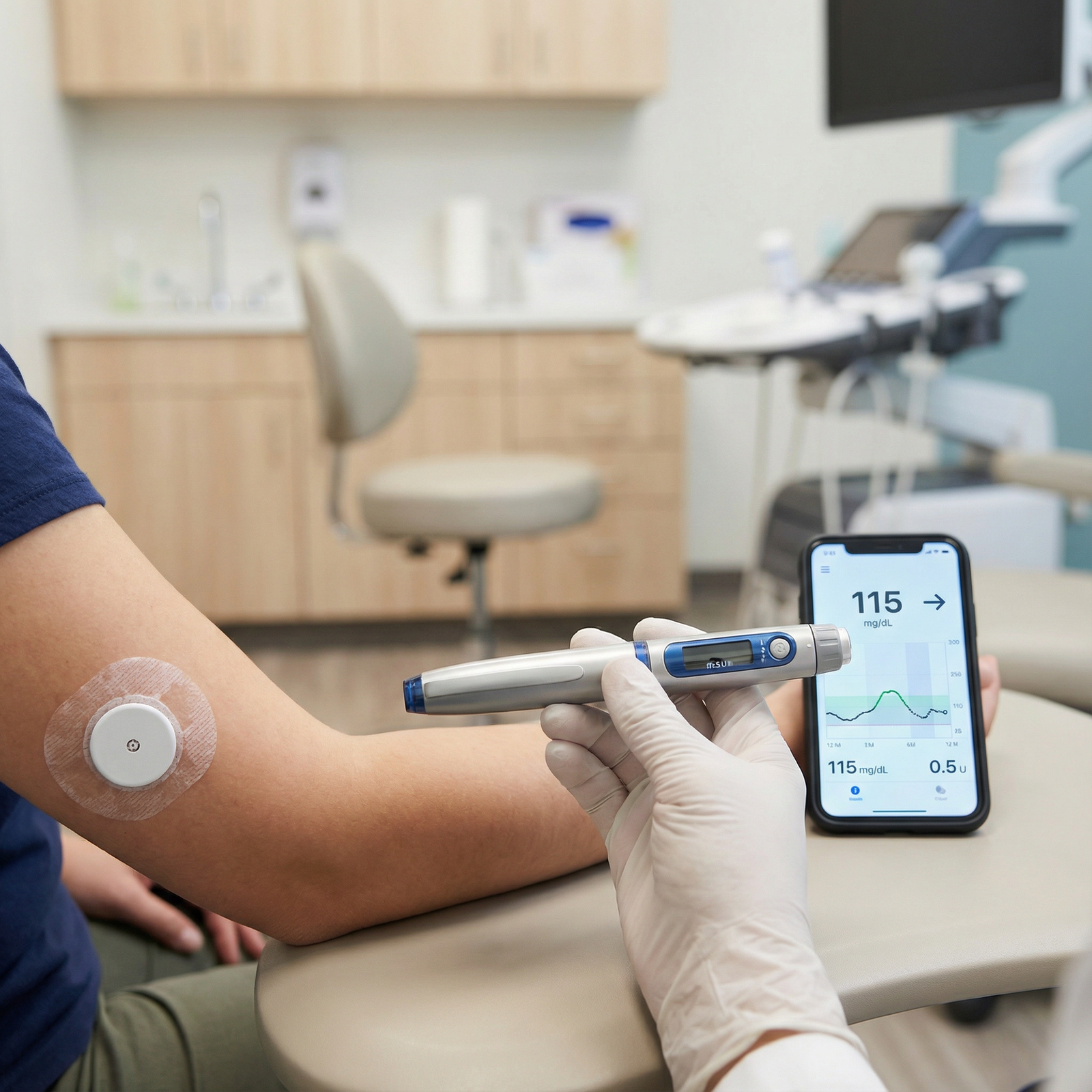
The Impact of Blockchain on Health Data Security and Patient Privacy
Healthcare is experiencing a profound digital transformation. Electronic Health Records (EHRs), telemedicine platforms, wearable devices, and AI decision-support tools all generate massive volumes of sensitive data. At the same time, cyberattacks on hospitals and health systems are escalating, threatening both operations and patient trust. In this context, blockchain has emerged as a powerful, though still maturing, tool within Healthcare Technology to enhance Health Data Security, protect Patient Privacy, and support regulatory compliance.
For medical students, residents, and early-career clinicians, understanding blockchain is no longer merely a “tech hobby”—it is increasingly relevant to clinical practice, quality improvement, and leadership roles. This article explores how blockchain works, where it is being applied in healthcare, its benefits and limitations, and what you should know as a future healthcare professional and ethical steward of patient data.
Understanding Blockchain Technology in a Healthcare Context
To appreciate blockchain’s role in Cybersecurity and Health Data Security, it helps to understand what it is—and what it is not.
Core Principles of Blockchain
Blockchain is a type of distributed ledger technology (DLT). While originally created to support cryptocurrencies, its underlying properties make it attractive for high-stakes data environments such as healthcare.
Distributed Ledger (No Single Point of Failure)
- Instead of one central database, a blockchain ledger is replicated across many computers (nodes) in the network.
- Every participant has a synchronized copy of the ledger, which improves transparency and reduces dependence on a single authority.
- In healthcare, this means critical metadata about health data access or transactions can remain available even if one server or data center fails.
Immutability (Tamper-Evident Records)
- Data added to a blockchain is grouped into “blocks.” Each block is cryptographically linked to the previous one, forming a chain.
- Changing any past entry would require altering all subsequent blocks across most network nodes—computationally and practically very difficult.
- For medical records and research data, immutability provides strong guarantees that audit trails, consent logs, and transaction histories are not secretly altered.
Consensus Mechanisms (Agreement on the Truth)
- New blocks are added only when network participants reach agreement (consensus) on their validity.
- Mechanisms include Proof of Work (PoW), Proof of Stake (PoS), or more healthcare-appropriate alternatives like Practical Byzantine Fault Tolerance (PBFT) or permissioned consensus protocols.
- Consensus reduces the risk of fraudulent or unauthorized modifications to the ledger, enhancing integrity and trust.
Cryptographic Security (Protecting Identity and Integrity)
- Blockchain uses cryptographic hashes (unique digital fingerprints of data) and public–private key pairs for identity and authorization.
- Rather than storing raw health data directly, many healthcare blockchains store hashes or pointers to encrypted data held off-chain.
- This approach maintains data integrity verification while helping preserve Patient Privacy and regulatory compliance.
What Blockchain Is Not
For clinicians and trainees, one common misunderstanding is assuming blockchain stores complete medical records directly “on chain.” In practice:
- Most health blockchains store references or hashes of records, not full EHRs, because:
- Health data sets are large and frequently updated.
- Regulatory requirements (e.g., right to rectification or deletion) don’t align with strict immutability of raw data.
- Blockchain complements, rather than replaces, existing databases and EHR systems by adding verifiable audit trails, consent management, and secure data-sharing layers.

Why Blockchain Matters for Health Data Security and Cybersecurity
Healthcare is among the most targeted sectors for cybercrime due to the value of medical records and the critical nature of services. Blockchain’s design directly addresses several vulnerabilities within current Healthcare Technology infrastructures.
Current Threats to Health Data Security
As a resident or medical student, you may already have encountered some of these risks:
- Ransomware attacks that encrypt hospital systems, disrupt clinical care, and leak patient data.
- Data breaches exposing EHRs, billing data, and genomic information—often undetected for months.
- Insider threats where staff misuse access privileges or alter records.
- Medical identity theft, enabling fraudulent billing or acquisition of controlled substances.
- Integrity violations in research data, clinical trial results, or quality metrics.
Traditional security relies heavily on centralized databases and perimeter defenses (firewalls, VPNs), which create single points of failure. Once compromised, attackers can often move laterally through systems and manipulate logs or records.
How Blockchain Strengthens Health Data Security
Blockchain supports a more resilient, transparent approach to Cybersecurity:
Decentralization and Resilience
Because audit trails and transaction logs are distributed across many nodes:- There is no single database that, if hacked, allows silent alteration of access logs.
- Attackers would need to compromise a majority of nodes to falsify history—significantly harder than attacking one central server.
Immutable Audit Trails
- Every access, update, or data-sharing event can be recorded on the blockchain as a timestamped, cryptographically signed transaction.
- Attempts to alter or delete historical logs become quickly detectable.
- For clinicians, this means greater assurance that what you see in an EHR has not been covertly modified.
Fine-Grained Access Control and Patient-Centered Consent
- Using smart contracts, blockchain can encode detailed rules: who may access what data, under which conditions, and for how long.
- Patients can be given cryptographic keys or app-based interfaces to grant and revoke access dynamically.
- This aligns with ethical principles of autonomy and respect for persons by giving patients greater control over their information.
Data Integrity Verification
- Even when raw health data is stored off-chain, its hash on-chain allows easy integrity checks.
- If even a single byte of an image or lab report is altered, its hash no longer matches the blockchain record.
- This is valuable for medico-legal defensibility, research integrity, and quality assurance.
Practical Applications of Blockchain in Healthcare
Blockchain is not a theoretical concept; it is already being piloted and deployed across different domains of healthcare. Below are key use cases, with implications for your future practice and research.
1. Secure Health Records Management and Interoperability
Problem:
EHRs are fragmented across multiple institutions, vendors, and regions. Data sharing is often slow, risky, and incomplete, leading to repeated tests, medication errors, and patient frustration.
Blockchain-enabled approach:
- Unified, verifiable index of records:
- Blockchain can serve as a “master index” indicating where a patient’s records reside and who can access them.
- Each entry might store a patient identifier (often pseudonymized), a hash of the record, and a pointer (URI) to its secure off-chain storage location.
- Patient-controlled permissions:
- Through digital wallets or consent management apps, patients can authorize specific providers, researchers, or institutions to access defined categories of data.
- Permissions changes are recorded on-chain for full traceability.
- Interoperability layer:
- Blockchain can act as a neutral, standards-based interoperability layer between disparate EHR systems.
- Combined with FHIR (Fast Healthcare Interoperability Resources) standards, it can allow verified, permissioned data exchange across vendors and borders.
For a resident care example:
A patient with complex chronic disease moves between a community clinic, tertiary center, and telehealth service. A blockchain-based index enables each site to verify which data sets are current, who last updated them, and under what authority, while the patient retains control over sharing sensitive domains (e.g., HIV status, mental health records).
2. Pharmaceutical Supply Chain and Anti-Counterfeiting
Problem:
Counterfeit medications, especially in oncology, infectious diseases, and biologics, pose life-threatening risks and erode trust. Traditional paper-based or siloed digital systems are easy to forge.
Blockchain-enabled approach:
- End-to-end traceability:
- Each step—from manufacturer to wholesaler, distributor, pharmacy, and finally to the patient—can be logged on a blockchain.
- Each transfer is timestamped, digitally signed, and immutably recorded.
- Verification at point of care:
- A pharmacist or clinician can scan a drug package to verify its entire provenance on the blockchain before dispensing.
- Anomalies (gaps in chain, duplicate serials, or unrecognized entities) trigger alerts.
Real-world example: MediLedger Project
- The MediLedger network, involving major pharmaceutical companies and distributors, aims to help comply with drug supply chain security regulations and combat counterfeit products.
- It uses blockchain as a shared “source of truth” for product verification and transaction histories.
3. Clinical Trials, Research Integrity, and Data Sharing
Problem:
Concerns about data fabrication, selective reporting, and lack of reproducibility erode confidence in clinical research. Multi-center trials also struggle with secure yet efficient data sharing and consent management.
Blockchain-enabled approach:
- Time-stamped protocol registration and amendments:
- Study protocols, statistical analysis plans, and amendments can be hashed and anchored on-chain.
- This creates a tamper-evident record of what was planned and when.
- Immutable audit trails for data and outcomes:
- Key data snapshots and primary endpoints can be hashed to demonstrate that they were not altered post hoc.
- Enables regulators, journals, and collaborators to verify integrity.
- Consent tracking and dynamic consent:
- Participant consent forms and preferences can be stored as transactions (or their hashes).
- Participants can update preferences (e.g., future use of biospecimens) via secure apps, with automatic logging.
For clinician-researchers, these tools can help meet ethical obligations of transparency and respect for participants, while streamlining cross-institutional collaboration.
4. Identity Management and Provider Credentialing
Problem:
Verifying clinician identities, licenses, and credentials across institutions and states is slow and duplicative. Fraudulent providers can exploit gaps.
Blockchain-enabled approach:
- Verifiable digital credentials:
- Medical schools, residency programs, boards, and licensing bodies can issue cryptographically signed credentials stored on a blockchain.
- Institutions can verify authenticity quickly without chasing paper documents.
- Reduced administrative burden:
- Faster onboarding of clinicians, locum tenens, and telehealth providers improves access to care and reduces administrative pain points.
Real-World Blockchain Implementations in Healthcare
Beyond MediLedger, several initiatives illustrate the range of blockchain applications in Health Data Security and Healthcare Technology.
Guardtime in Estonia
- Estonia has pioneered a national digital identity and e-health infrastructure.
- Guardtime’s blockchain-based solution secures health data for the Estonian population by:
- Providing a tamper-evident log of who accessed which records and when.
- Allowing patients and regulators to verify that no unauthorized changes occurred.
- This strengthens both Patient Privacy and public trust in digital health systems.
Change Healthcare
- In the United States, Change Healthcare has used blockchain to support:
- Real-time healthcare claims management and tracking.
- Transparent communication between payers and providers, reducing disputes.
- The blockchain component ensures that transaction histories are auditable, consistent, and secure, enhancing financial integrity in a complex ecosystem.
Additional Emerging Efforts
- Personal health data wallets enabling individuals to manage access to their wearable, genomic, and EHR data across platforms.
- Blockchain-enabled registries for rare diseases to support global research while preserving patient control and privacy.
- Decentralized data networks that allow AI model training on distributed health datasets without centralizing raw data (e.g., combining blockchain with federated learning).
Benefits of Blockchain for Health Data Security, Ethics, and Operations
Blockchain’s potential advantages span technical, operational, and ethical domains.
1. Enhanced Security and Cyber-Resilience
- Resistance to tampering: Immutable and distributed logs make unauthorized data alteration detectable.
- Reduced single points of failure: Compromising the entire ledger is significantly harder than breaching one central database.
- Cryptographic identity: Public–private key infrastructure enables strong authentication for systems and users.
2. Strengthened Patient Privacy and Autonomy
- Patient-centric control: Patients can specify which providers or researchers may access specific categories of data.
- Selective sharing: Instead of sharing entire records, systems can share only verified attributes (e.g., “over 18,” “HIV negative”) via zero-knowledge proofs or similar techniques.
- Ethical alignment: More transparent, auditable consent aligns with fundamental principles of medical ethics—autonomy, beneficence, and nonmaleficence.
3. Data Integrity, Trust, and Medico-Legal Protection
- Verifiable records: Hash-based verification protects against subtle tampering with charts, imaging, and labs.
- Legal defensibility: Immutable audit trails can support malpractice defense or quality investigations by demonstrating who did what and when.
- Research credibility: Transparent recording of protocols and outcomes can bolster trust in published findings.
4. Operational Efficiency and Cost Reduction
- Streamlined verification processes: Faster provider credentialing, claims processing, and supply chain verification.
- Reduced intermediaries: Some reconciliation and clearinghouse functions can be automated via smart contracts.
- Less duplicated testing and documentation: Improved interoperability may reduce unnecessary repeat imaging or labs.
5. Standardization and Interoperability
- Common rules of engagement: Consortium blockchains can enforce shared data formats and permission structures.
- Cross-institution collaboration: Hospitals, labs, insurers, and public health agencies can participate in shared networks while maintaining appropriate privacy boundaries.
Challenges and Limitations of Blockchain in Healthcare
Despite its promise, blockchain is not a universal solution. Understanding its limitations is crucial for ethical and effective deployment.
1. Regulatory and Legal Complexity
- Compliance with HIPAA, GDPR, and other privacy laws:
- Regulations often require the ability to amend or delete personal data (“right to be forgotten”), which clashes with blockchain’s immutability.
- Workarounds include storing personal data off-chain and only storing non-identifiable hashes on-chain.
- Unclear legal frameworks:
- Courts and regulators are still defining how to treat blockchain-based records, smart contracts, and digital signatures.
- Cross-border data flows add additional layers of complexity.
2. Interoperability and Standards Gaps
- Varied EHR systems and data models:
- Many legacy systems do not natively support modern APIs or FHIR standards.
- Integrating blockchain layers without causing workflow disruption is challenging.
- Proliferation of competing platforms:
- Multiple blockchain frameworks (e.g., Hyperledger Fabric, Corda, Quorum) may fragment efforts unless common standards emerge.
3. Scalability, Performance, and Energy Use
- Transaction volume and latency:
- Healthcare generates immense volumes of data; high-throughput, low-latency blockchains are needed.
- Public blockchains using PoW are too slow and energy-intensive for most health applications.
- More suitable: permissioned blockchains:
- Consortium or private networks with known participants can use more efficient consensus mechanisms and limit resource use.
4. Cultural and Organizational Resistance
- Change management:
- Clinicians and health staff are already burdened by EHR complexity; new tools must integrate seamlessly and add obvious value.
- Education is needed to demystify blockchain and focus on practical benefits.
- Trust and governance:
- Who runs the network? How are disputes handled?
- Clear governance structures are essential, especially when competing institutions share infrastructure.
5. Data Privacy Risks if Poorly Implemented
- Re-identification risks:
- Even hashed or pseudonymized data can sometimes be re-identified, especially when combined with other datasets.
- Key management challenges:
- Lost private keys could mean lost access to data; stolen keys could grant unauthorized access.
- Robust key recovery and revocation mechanisms are essential.
For medical professionals, understanding these limitations helps in critically evaluating vendor claims and advocating for ethically sound, evidence-based adoption of Healthcare Technology solutions.

Practical Takeaways for Medical Students and Residents
While you may not be designing blockchain systems yourself, you can anticipate how these technologies might shape clinical practice and your responsibilities around Patient Privacy and ethics.
How This Affects Your Day-to-Day Practice
- More transparent access logs: You may practice in institutions where every chart access is immutably recorded; be mindful of appropriate access and documentation.
- Patient questions about data control: Patients may ask who owns their data and how it is protected. A basic understanding of blockchain-enabled consent can help you respond intelligently.
- Research opportunities: Blockchain-related projects in data integrity, registries, and multi-center collaboration are growing. These can be excellent scholarly pursuits during training.
Ethical and Professional Considerations
- Respecting digital autonomy: Support systems that genuinely enhance patients’ control over information, rather than using “blockchain” as a buzzword.
- Advocating for secure design: When serving on quality or IT committees, ask how new tools handle encryption, auditability, access control, and compliance.
- Balancing innovation with caution: Recognize the promise of blockchain while insisting on rigorous evaluation, pilot studies, and ongoing monitoring for unintended consequences.
FAQ: Blockchain, Health Data Security, and Patient Privacy
1. Does blockchain store complete Electronic Health Records (EHRs)?
Generally, no. Most healthcare blockchains do not store full EHRs directly on-chain. Instead, they store:
- Cryptographic hashes of records to verify integrity.
- Pointers (links) to where encrypted data is stored off-chain (e.g., secure databases, cloud storage).
This design balances blockchain’s immutability and auditability with regulatory requirements and the need to update or correct clinical data.
2. How does blockchain improve Patient Privacy if records are more visible across a network?
Visibility on a blockchain does not mean open access to raw medical information. Privacy is protected by:
- Encryption: Actual health data remains encrypted off-chain.
- Access control: Smart contracts and permissions define who can decrypt and view data.
- Pseudonymization: Patient identifiers can be masked or replaced with pseudonyms on-chain.
Only authorized entities with the right cryptographic keys and permissions can view the underlying health information.
3. Is blockchain compliant with HIPAA and GDPR?
Blockchain can be part of a HIPAA- or GDPR-compliant solution, but it does not guarantee compliance on its own. Compliance depends on:
- What data is stored on-chain vs. off-chain.
- How identities and keys are managed.
- Whether individuals can exercise rights such as data access, correction, and (where applicable) deletion.
Most compliant architectures avoid placing directly identifiable personal health information on the blockchain itself, using it instead for hashes, audit logs, and consent records.
4. What are realistic near-term uses of blockchain I might see in my training?
In the next few years, you are most likely to encounter blockchain in:
- Supply chain verification for high-cost or critical medications.
- Claims processing and prior authorization workflows with payers.
- Research registries and multi-center studies improving data integrity and consent tracking.
- Enhanced logging of access to sensitive domains such as mental health or genomic information.
These applications aim to improve trust, efficiency, and security without radically changing your clinical interface.
5. As a trainee, how can I get involved in blockchain and health data security?
Consider the following steps:
- Join your institution’s informatics, quality improvement, or cybersecurity working groups.
- Seek mentorship from faculty involved in health IT, digital health, or data ethics.
- Explore research projects on audit trails, consent management, interoperability, or clinical trial integrity that may leverage blockchain.
- Stay updated via reputable sources (e.g., AMIA, HIMSS, peer-reviewed journals) rather than marketing materials.
Blockchain is not a cure-all for healthcare’s cybersecurity and interoperability challenges, but it is a powerful tool in the broader movement toward secure, patient-centered, ethically grounded digital care. As a future physician or healthcare leader, understanding how blockchain intersects with Health Data Security, Patient Privacy, and Healthcare Technology will help you navigate and shape the evolving landscape of digital medicine.