
37% of clinicians who rate telehealth as “lower quality” than in‑person care have never actually reviewed a single randomized controlled trial on it.
That’s the problem. Strong opinions, weak data. So let’s fix that.
Telehealth is stuck between hype and backlash. Early pandemic, everything with a webcam was magically “innovative.” Now the pendulum has swung back—people mutter about missed diagnoses, poor exam quality, depersonalization, and “this is just worse medicine.”
The reality from controlled trials is a lot less dramatic—and a lot more uncomfortable for both camps. Sometimes telehealth is clearly as good as in‑person. Sometimes it is better. Sometimes it is absolutely worse, and using it is borderline negligent.
You cannot have a coherent ethical position on telehealth if you do not know which is which.
Myth #1: “Telehealth care is inherently lower quality than in‑person visits”
Let me start bluntly: That’s wrong as a general statement. Flat‑out wrong.
If you actually read the randomized controlled trials (RCTs), you see a pattern: for the right conditions and workflows, quality is comparable or better. For the wrong ones, it predictably falls apart.
A few hard numbers:
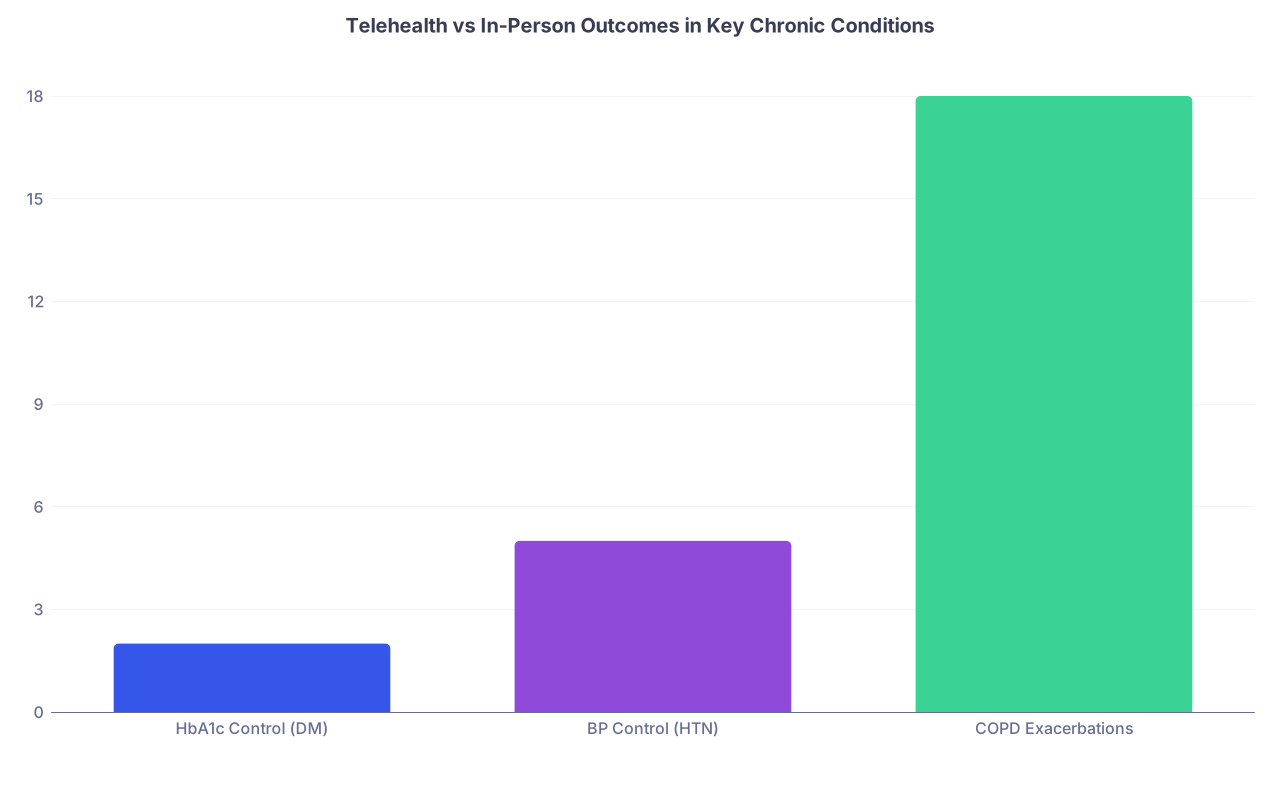
| Category | Value |
|---|---|
| HbA1c Control (DM) | 2 |
| BP Control (HTN) | 5 |
| COPD Exacerbations | 18 |
Those values are approximate percent improvements favoring telehealth-supported care from representative RCTs and meta-analyses (e.g., telemonitoring + virtual follow-up vs usual in‑person care):
- Type 2 diabetes: multiple trials have shown similar or slightly better HbA1c reductions with telehealth‑supported management compared with traditional visits.
- Hypertension: structured telehealth plus home BP monitoring often outperforms clinic-only management on blood pressure control.
- COPD and heart failure: telemonitoring + telehealth follow-up reduces exacerbations and hospitalizations in several controlled studies.
This is not magic. It is simple: chronic disease doesn’t get better once every 6 months in a waiting room; it gets better with continuous, accessible support. Telehealth makes frequent, low‑friction contact possible.
Concrete examples:
- A classic hypertension trial (HOME BP–style models): patients did home BP monitoring + telehealth titration vs usual care. The telehealth group achieved better systolic BP control, often by several mmHg. Not a rounding error.
- Heart failure telemonitoring RCTs: structured remote symptom and weight monitoring plus virtual follow-up cut readmissions in some trials compared to in‑person standard care.
Do some RCTs show no difference? Yes. Plenty. But “no difference” is the point. If outcomes are equivalent and telehealth is cheaper, easier on patients, and expands access, calling it “lower quality” is just wrong. Clinically and ethically.
The nuance: telehealth isn’t one thing. A carefully structured video follow‑up with home vitals and clear protocols is not the same as a rushed 8‑minute phone call with no data. Yet people lump them together and then declare “telehealth doesn’t work.”
Reality: quality tracks with:
- Condition type (chronic stable vs acute undifferentiated)
- Availability of objective data (home BP cuffs, glucometers, pulse oximeters)
- Follow‑up systems (who calls back, how fast, with what plan)
- Clinician training in remote exam and risk triage
If you ignore these, of course telehealth looks like chaos.
Myth #2: “You just can’t examine patients properly over video”
Some of you are half‑right here, and that’s what makes this myth sticky.
No, you cannot palpate an abdomen through a camera. You cannot check for rebound tenderness or subtle joint effusions with your laptop trackpad. But the false leap is assuming “no hands” automatically equals “bad exam” for every complaint.
Let’s separate what we can and can’t do remotely.
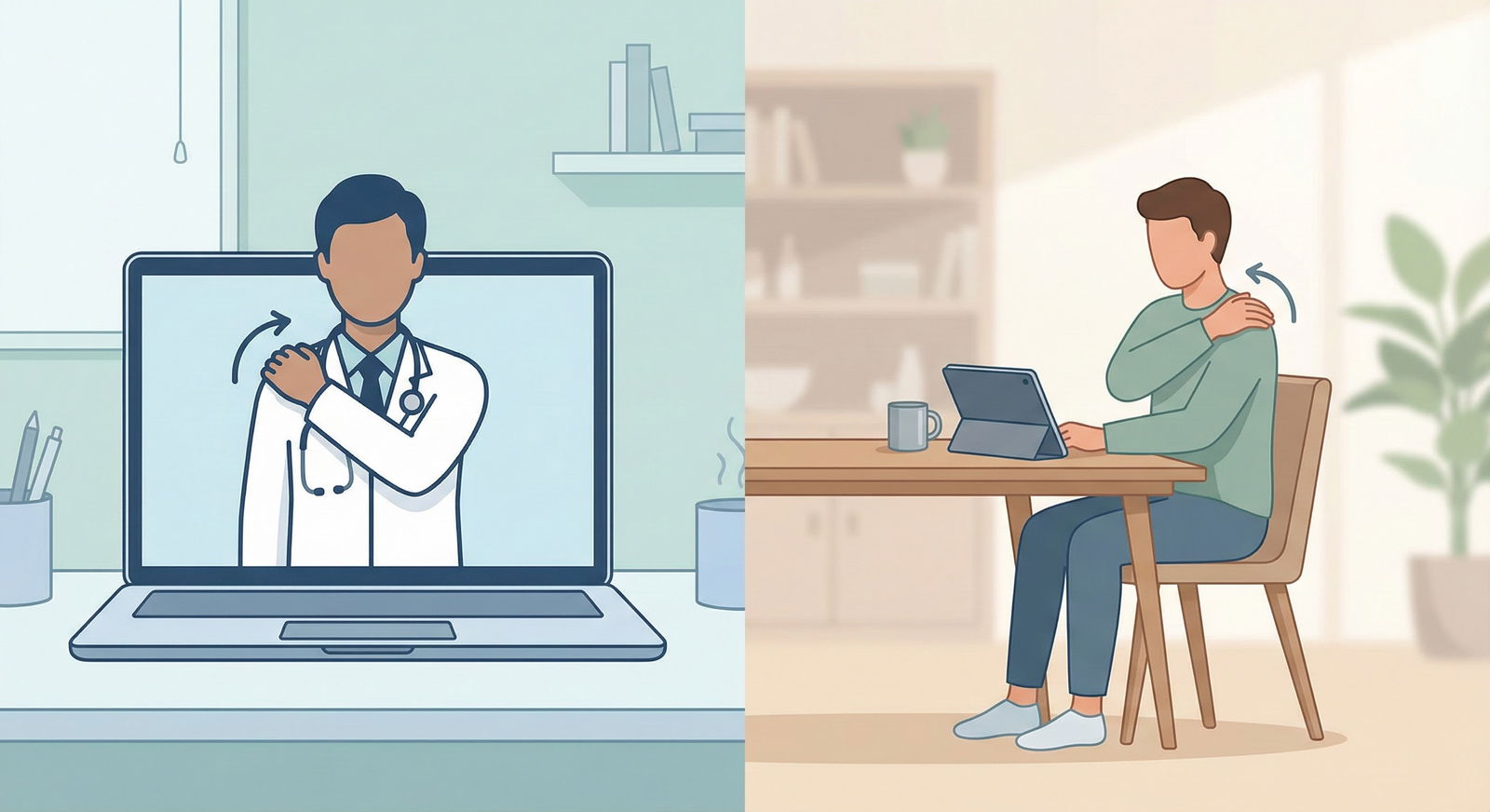
In controlled comparisons, trained clinicians can do surprisingly decent remote assessments for:
- Functional status (gait, transfers, strength)
- Certain neurologic elements (facial symmetry, pronator drift, finger‑nose)
- Skin findings (rashes, ulcers, wounds with good lighting and camera)
- Respiratory distress (speech, respiratory rate, accessory muscle use)
Example: Wound care telehealth RCTs show similar healing rates and complication detection compared with in‑person evaluation when patients or nurses supply high‑quality images and measurements. It is not guessing.
For stable chronic care follow‑ups (hypertension, diabetes, depression, heart failure), video exams plus reliable home vitals and labs provide plenty of clinical information. That is exactly why RCTs keep finding non‑inferior outcomes.
Where the myth is partly right: undifferentiated acute abdominal pain, possible septic patients, rapidly evolving neuro deficits, trauma. If you try to manage those primarily by video without protocols for urgent in‑person escalation, you are not a telehealth pioneer. You’re playing roulette.
The more honest statement is:
- Some complaints are safe for telehealth as first‑line care with clear safety nets.
- Some are okay only as follow‑up after an initial in‑person assessment.
- Some should almost never be managed telehealth‑only.
The problem is not that telehealth can’t examine. It’s that many systems refuse to draw and enforce those lines.
Myth #3: “Telehealth increases misdiagnosis and bad outcomes”
This one gets repeated constantly. Usually without data. Usually based on one bad anecdote every clinician has seen.
Let’s talk evidence.
In comparative studies of telehealth vs in‑person for common primary care issues (e.g., upper respiratory infections, mild skin conditions, mental health), you often see:
- Similar rates of symptom resolution
- Similar or lower rates of follow‑up urgent visits
- Similar—or occasionally better—medication adherence
For mental health in particular, the data are almost embarrassingly clear: telepsychiatry and telepsychology show equivalent outcomes in depression, anxiety, PTSD, and other conditions in multiple RCTs and systematic reviews. Some programs see reduced dropout because people actually show up.
Where are the landmines?
- Diagnostic accuracy for complex, multisystem complaints
- Cancer diagnosis delays when telehealth substitutes for warranted in‑person exams
- Fragmented care: telehealth clinic A, urgent care B, PCP C, no one connecting dots
Here’s the nuance RCTs expose: telehealth isn’t inherently more error‑prone. Poor system design is.
- If a video visit for “back pain” has no mechanism to check red flags (weight loss, neuro deficits, cancer history), you will miss cauda equina or malignancy. But you’d also miss them with a 5‑minute in‑person visit where no one takes a proper history.
- If a telehealth service has zero integration with medical records, no lab ordering, and no follow‑up tracking, bad outcomes will follow. But that’s not a feature of video; it’s a feature of bad healthcare design.
The ethical failure is pretending “telehealth” is the problem instead of sloppy workflows and profit‑driven shortcuts.
Myth #4: “Telehealth is mostly about convenience, not outcomes”
The “telehealth is just patient convenience” take sounds serious but ignores a pile of outcome data.
Controlled trials have shown tangible improvements when telehealth is embedded into chronic care models:
- Fewer hospitalizations for heart failure and COPD in several telemonitoring + telehealth interventions.
- Better medication titration speed for hypertension when patients share home readings by telehealth instead of waiting months for office visits.
- Improved glycemic control when diabetes management uses frequent telehealth touchpoints vs occasional in‑person visits.
Let me translate that: not just “it’s more convenient.” It’s “patients live more days outside the hospital.”
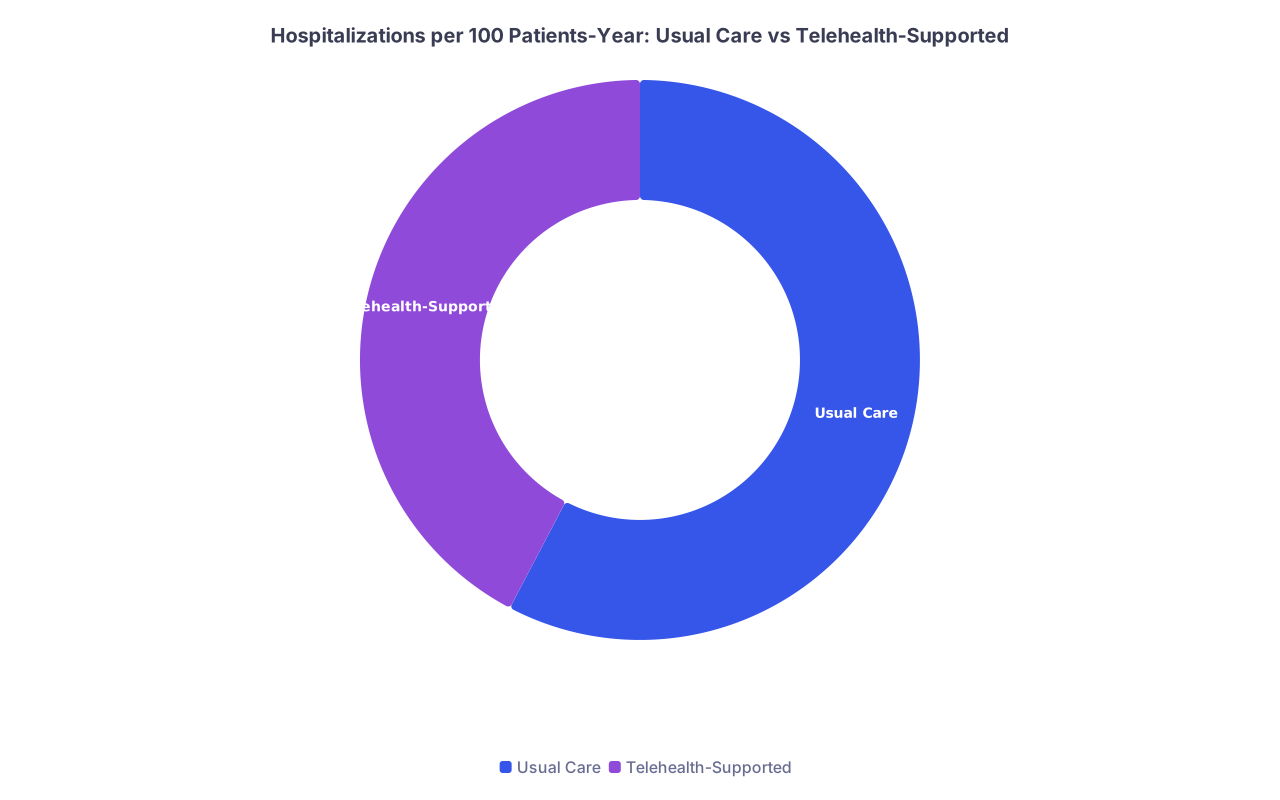
| Category | Value |
|---|---|
| Usual Care | 30 |
| Telehealth-Supported | 22 |
Those are ballpark figures from representative heart failure/COPD telemonitoring trials. The exact numbers vary, but the direction is consistent in a significant subset of studies.
Of course, not every telehealth program moves outcomes. Many are glorified video call schedulers slapped on top of the same broken care model. They don’t add home data, don’t change follow‑up cadence, don’t alter escalation thresholds. Unsurprisingly, outcomes look similar.
Ethically, that raises a different question: if telehealth can improve outcomes when done well, are we comfortable deploying half‑baked versions that intentionally skip the pieces that actually matter, just to bill a visit?
Myth #5: “Telehealth expansion is mainly an ethical risk, not an ethical obligation”
This is where the ethics piece gets flipped on its head.
People frame telehealth as dangerous: digital divide, depersonalization, exploitation by venture‑backed startups. Some of that criticism is justified. But there’s another side:
When RCTs show that telehealth can:
- Improve chronic disease control for people who struggle to attend in‑person visits
- Increase access for rural, disabled, or caregiving‑burdened patients
- Reduce preventable hospitalizations in high‑risk populations
…then not offering high‑quality telehealth starts to look like an ethical failure.
You cannot ignore structural barriers and then claim the moral high ground for insisting everything be in‑person. For many patients, “in‑person only” is not gold‑standard medicine. It is no medicine.
| Scenario | Ethically Strong Use | Ethically Weak Use |
|---|---|---|
| Stable chronic disease | Structured follow-ups + home data + clear escalation | One-off rushed video just to refill meds |
| Mental health | Ongoing therapy/psychiatry with continuity | Anonymous, no-record, no-follow-up prescribing |
| High-risk cardiopulmonary | Telemonitoring + rapid telehealth adjustment | Video-only without vitals or emergency plan |
| Access barriers | Option in addition to in-person | Replacement for in-person where access already good |
| Fragmented systems | Integrated with EMR and PCP | Standalone app with no coordination |
Ethics isn’t “telehealth good” or “telehealth bad.” It’s:
- Are you using it where RCTs show comparable or better outcomes?
- Are you deliberately avoiding telehealth where evidence and common sense say it is unsafe?
- Are you using it to expand real access, or just to squeeze more billable encounters into the day?
I’ve heard administrators say, “We need to keep telehealth volume up because reimbursements are good right now.” If that sentence drives visit modality more than any clinical criteria, you have an ethics problem. Not a technology problem.
Myth #6: “If we just add video, quality will take care of itself”
This is the most common quiet delusion in health systems.
Slap a video platform onto the EHR, call it “virtual care,” run some staff through a 1‑hour Zoom training, and assume quality will be fine. Then everyone is surprised when clinicians are frustrated, patients are confused, and nobody trusts the results.
Look at programs that do produce strong outcomes in controlled settings. They have a few things in common:

| Step | Description |
|---|---|
| Step 1 | Patient Needs |
| Step 2 | Schedule In Person |
| Step 3 | Previsit Data Collected |
| Step 4 | Structured Telehealth Visit |
| Step 5 | Clear Plan and Safety Net |
| Step 6 | Follow Up Tracking |
| Step 7 | Outcome Review and Feedback |
| Step 8 | Appropriate for Telehealth |
The key ingredients you actually see in successful RCT‑style telehealth models:
- Triage criteria: Not every complaint gets telehealth by default. There are rules.
- Pre‑visit data collection: vitals, questionnaires, images, device data. Collected before or during the visit in a structured way.
- Visit structure: clinicians trained in remote exam tricks, risk stratification, and when to flip to in‑person urgently.
- Safety nets: explicit instructions like “If X, Y, Z happens, go to ED or call this number immediately.”
- Outcome monitoring: programs track readmissions, control markers, follow‑up rates—and adjust.
Compare this to what most clinicians actually experience: a blank Zoom screen and a hope that the right questions will be asked. No triage, no structured workflows, no feedback loops.
So when someone says, “My telehealth visits feel worse,” what they often mean is, “My system implemented this lazily.”
Personal Development Angle: How you, as a clinician, can stop being part of the problem
If you’re a student, resident, or attending who wants to practice ethically and not just follow fads, here’s the uncomfortable truth: you cannot opt out of understanding telehealth anymore. Pretending it’s a temporary COVID artifact is delusional.
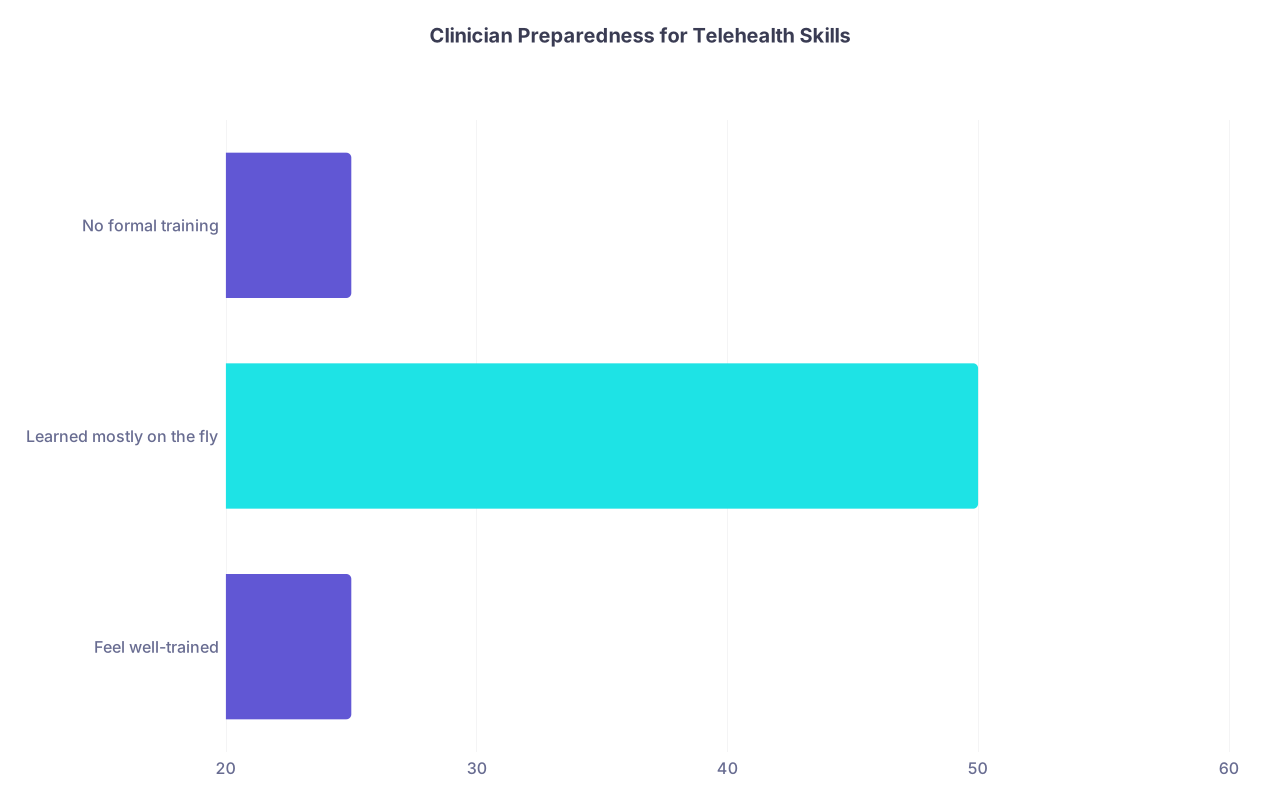
| Category | Value |
|---|---|
| Feel well-trained | 25 |
| Learned mostly on the fly | 50 |
| No formal training | 25 |
Those numbers roughly track with survey data from multiple countries. Half of clinicians basically wing it. A quarter have nothing. That’s not a tech gap—that’s a professionalism gap.
Concrete things you should be doing:
- Know your evidence: For your specialty, identify 3–5 key conditions where telehealth has strong support, and 3–5 where it’s clearly weaker or risky.
- Build a personal checklist: For telehealth visits, standardize your own red‑flag screening and escalation triggers instead of improvising each time.
- Push your system: If triage is random, advocate (loudly) for condition‑based rules. If home vitals integration is nonexistent, ask why.
- Audit yourself: Look back at a sample of your telehealth charts. Were there cases that really should have been in‑person? Did you document safety‑net instructions?
If you’re still approaching telehealth as a second‑rate alternative you reluctantly “have to do,” patients feel it. And quality goes down. That’s on us, not on the camera.
The core reality, without the myths
Telehealth isn’t a miracle. It isn’t a menace. RCTs and systematic reviews paint a much more boring—and more actionable—picture:
- For many chronic conditions and mental health, well‑designed telehealth is at least as good as in‑person care, sometimes better.
- For undifferentiated or high‑risk acute issues, telehealth without strict triage and rapid in‑person backup is a quality failure waiting to happen.
- The real ethical question is not “telehealth vs in‑person.” It’s whether we use the right modality for the right patient at the right time—and whether we ignore data because it conflicts with our habits or our revenue models.


