
You are on evening call. The patient in front of you is wearing a smartwatch, has a continuous glucose monitor, and mentions using three different health apps. Your EHR is pulling in streams of data you did not order, did not fully review, and frankly do not have time to digest. You click through a few screens, grab a single heart rate value, write a quick note, and move on.
Six months later, that same patient has an adverse event. A lawyer prints the record: thousands of device datapoints, auto-imported into your chart. And your documentation? Two vague lines and a copy‑pasted blurb about “data reviewed.”
That gap is where people get hurt—and where clinicians get burned.
This is an article about avoiding those gaps.
1. Treating Digital Health Data as “Background Noise”
The most common—and dangerous—mistake: pretending the data is not really there.
You see:
- Wearable step counts
- Home blood pressure readings
- Continuous ECG strips
- App-based mood scores
- Home spirometry data
And you think: “I did not order this. I cannot possibly review it all. It is just noise.”
That attitude is how you end up with:
- Inconsistent care (sometimes you act on home BP readings, sometimes you ignore them)
- Confusing records (data present but never referenced)
- Legal exposure (data visible in the chart that you never acknowledged)
The rule I use:
If the data is in the chart and could reasonably be interpreted as clinically relevant, you must either:
- Acknowledge it and state what you did with it, or
- Explicitly document why it was not used / considered reliable / outside scope for that encounter.
Otherwise, it looks like you ignored possibly actionable information.
Bad pattern:
“Reviewed Apple Watch data. Stable.”
What does that even mean? Heart rate only? Steps? ECG? For what period?
Better pattern (even if brief):
“Patient’s Apple Watch heart rate history (resting HR 62–75 over past 7 days per device report) reviewed today. No episodes of tachycardia or irregular rhythm reported by device. No device ECG data available or reviewed this visit.”
Do not overcomplicate it. Just be explicit about:
- What you looked at
- Time frame
- What you did not look at
If you ignore the data entirely and it later turns out there was a recorded abnormality, you are going to have to explain that silence.
2. Blindly Trusting Device Readings Without Stating Limitations
The opposite mistake is just as bad: treating consumer digital tools like they are FDA‑approved, calibrated clinical devices when they are not.
I have seen this far too often:
- Basing medication changes solely on unverified home BP cuffs
- Using smartwatch oxygen saturation values as if from hospital pulse oximetry
- Documenting “AFib” based only on an app notification without confirmatory ECG
- Relying only on CGM screenshots from patients without checking calibration or lab values
You are responsible for the interpretation of data you use, even if the device generated it automatically.
You must document limitations when you rely on these tools:
- Consumer‑grade vs medical‑grade
- Potential calibration issues
- Patient technique (poor cuff placement, inconsistent timing)
- Environmental factors (motion artifacts, cold hands, low perfusion)
Bad documentation:
“AFib per Apple Watch. Started anticoagulation.”
Better documentation:
“Patient reports recurrent Apple Watch notifications for possible AFib over last 2 weeks. Device is consumer‑grade and not a diagnostic tool; discussed limitations with patient. 12‑lead ECG in clinic today confirms atrial fibrillation. Based on ECG, CHADS‑VASc = 3. Decision to start anticoagulation based on ECG and risk profile, not solely on watch notifications.”
You avoid:
- Overstating the reliability of digital data
- Misrepresenting how you reached a decision
- The impression that an app, rather than a clinician, made the diagnosis
If you use digital data in a clinical decision, write down the limitations. Every time.
3. Over‑Documenting Raw Data, Under‑Documenting Clinical Judgment
Digital tools tempt you into “data dumping”—massive flowsheets, dozens of screenshots, imported PDFs—while your actual assessment is one or two flimsy sentences.
That is backwards.
Courts, colleagues, and future you care much more about:
- What you concluded
- Why you concluded it
- What you told the patient
- What plan you made
Than the minute‑by‑minute glucose trend.
The mistake: stuffing the chart with raw data while failing to articulate your interpretation.
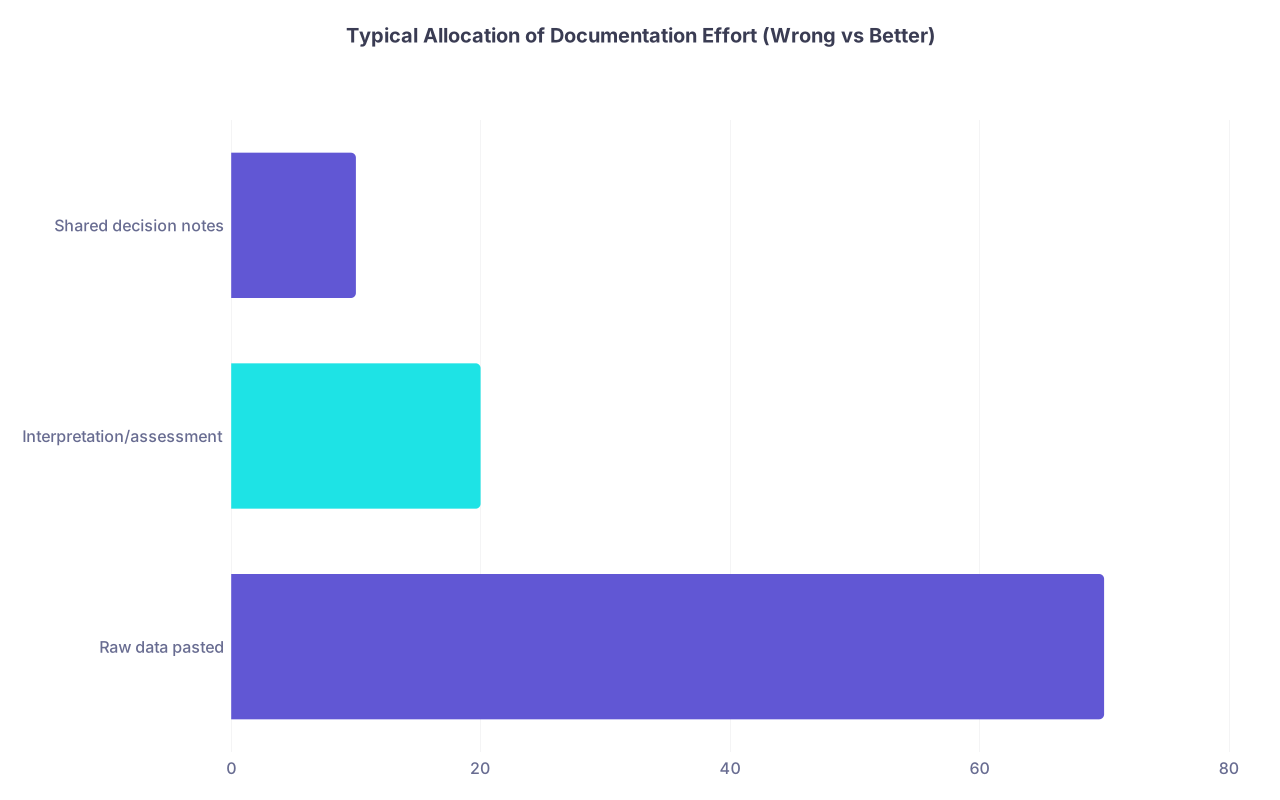
| Category | Value |
|---|---|
| Raw data pasted | 70 |
| Interpretation/assessment | 20 |
| Shared decision notes | 10 |
Most people invest:
- 70% effort: pasting / importing / attaching data
- 20%: minimal interpretation
- 10%: documenting discussion
You want those numbers flipped.
Weak documentation:
“CGM data shows multiple highs and lows. Adjusted insulin.”
Stronger documentation:
“Reviewed last 14 days of CGM data (Libre, patient device upload):
- Time in range (70–180): 51%
- High (>180): 39%
- Low (<70): 10%
Pattern: Post‑dinner hyperglycemia, early morning hypoglycemia on current basal dose.
Assessment: Suboptimal glycemic control with increased hypoglycemia risk likely due to excessive basal insulin.
Plan: Reduce basal insulin from 24u to 20u at bedtime; maintain bolus doses for now. Counseled on hypoglycemia recognition, advised to contact clinic if CGM alerts <70 persist. Follow‑up in 2 weeks via telehealth with CGM download for reassessment.”
Notice:
- You did not paste all values
- You summarized key metrics
- You documented your interpretation and specific plan
Do not let the EHR become a storage locker for device output. It is a record of your thinking.
4. Sloppy Consent and Expectations Around Remote Monitoring
Digital tools blur boundaries about what you are actually monitoring and when.
Here is a classic set‑up for conflict:
- Patient uses a home blood pressure app linked to your system
- They assume “My doctor is watching” 24/7
- The system auto‑imports everything
- You only look at it once a month—if that
- An outlier value appears: SBP 210, 3 a.m. Saturday
- No one calls. No alert is configured.
- Six weeks later: “Why did no one warn me?”
If your documentation never clarified what you monitor, how often, and under what conditions you respond, you have a problem.
You must avoid vague language that implies continuous surveillance.
Dangerous chart language:
“Patient enrolled in remote BP monitoring.”
What does that mean?
- Reviewed daily? Weekly? Only if alerts fire?
- Who monitors—clinician, centralized team, algorithm?
- What thresholds trigger contact?
- What is the patient’s responsibility when they see high readings?
If you are using remote monitoring, explicitly document:
- Scope: which parameters are being monitored (BP, HR, glucose, etc.)
- Frequency: how often someone actually reviews the data
- Responsibility: when the patient should self‑act (e.g., go to ED, call clinic) versus when the clinic will reach out
Example of better documentation:
“Discussed home BP monitoring using connected cuff integrated with clinic system. Data is stored in EHR but is not continuously monitored in real time. Clinic team reviews averaged readings at scheduled visits or during hypertension management calls, not instantly at time of measurement. Advised patient:
- If SBP ≥180 or DBP ≥110 with symptoms (chest pain, dyspnea, neuro deficits), seek emergency care.
- If 2 or more readings ≥160/100 without symptoms over 1 week, send message via portal or call clinic.
- Expect routine review of data at follow‑up visits, not immediate notification for each reading.”
Then—key point—copy this into the patient instructions and your note. That documentation protects both patient and clinician.
5. Ignoring Data Provenance and Version Control
Here is a quieter but nasty mistake: not recording where digital data came from, how it got into the chart, and which version you reviewed.
This gets messy quickly:
- Patient emails a PDF of their device report
- The MA uploads it under “outside records”
- A week later, an updated PDF with corrected times is sent
- You base your decision on the second file but do not specify that in your note
- Later, only the first file is retrieved in a records request
Now it looks like your decision does not match the record.
For digital health data, you should document:
- Device / app name and model (e.g., “Apple Watch Series 8”, “Omron Evolv cuff”)
- How data was obtained (direct integration, patient-reported, uploaded file, screenshot)
- Time range of data (e.g., “7/1/2026–7/14/2026”)
- Version if relevant (e.g., “second CGM report uploaded 8/1/2026; prior file deleted as inaccurate”)
| Element | Example Entry |
|---|---|
| Device/App | Dexcom G7 CGM, Apple Watch S8 |
| Source | Direct EHR integration / PDF upload |
| Time Range | 2026-07-01 to 2026-07-14 |
| Version/Status | Updated report, prior superseded |
You do not need to turn every note into a forensic log. But when decisions hinge on outside digital data, be precise.
Bad:
“Reviewed patient’s CGM report.”
Better:
“Reviewed Dexcom G7 CGM report uploaded today (2026‑08‑10), covering 2026‑07‑27 to 2026‑08‑09 from Dexcom cloud portal. This is the corrected report per patient; prior version from 2026‑08‑08 had incomplete data and is not used for this assessment.”
That one extra sentence has saved people from serious headaches.
6. Failing to Document Patient Understanding and Shared Decisions
Digital tools can distort patients’ expectations. Apps and wearables often speak in absolutes:
- “Your rhythm is irregular.”
- “You may be in atrial fibrillation.”
- “You are in poor cardio fitness for your age.”
Then the patient comes to you terrified.
If you do not document the conversation that corrects, contextualizes, or builds on those automated interpretations, the record makes it seem like:
- Either you ignored their concern
- Or you silently agreed with whatever the app said
Both are bad outcomes.
You need visible proof that you:
- Acknowledged the device data and alerts
- Explained uncertainty and limitations
- Agreed on next steps with the patient
Superficial documentation:
“Reviewed smartwatch arrhythmia alert. Ordered Holter.”
Robust, protective documentation:
“Patient reports Apple Watch notifications for irregular rhythm on 3 occasions over last month. No associated chest pain, syncope, or dyspnea. Explained that watch detection is screening only and not a definitive AFib diagnosis. Discussed options:
- No further workup now vs
- Short‑term ambulatory ECG monitoring
Patient prefers formal evaluation. Ordered 14‑day patch monitor. Advised that if symptoms such as palpitations with lightheadedness, chest pain, or syncope occur, seek urgent care. Patient states understanding and agreement with plan.”
If later the monitor is normal, that conversation matters even more. It shows you took the alert seriously and involved the patient in the reasoning.
7. Copy‑Pasting From Devices and Apps Without Attribution or Context
Another recurring mistake: copying app or device text directly into your note without labeling it as such.
Examples I see:
- Pasting Fitbit or Garmin “fitness age” assessments as if they are your statements
- Copying proprietary risk scores from apps with no explanation
- Dropping in “Your stress levels were high this week” lines from wellness apps
If you do not clearly distinguish your words from the tool’s language, you own whatever is on the page.
You must avoid:
- Letting marketing‑style language live in your clinical note as if you wrote it
- Using undefined app scores (e.g., “stress index 73”) with no documented meaning
- Mixing your assessment with canned device “coaching” text
Always:
- Attribute text from digital tools explicitly
- Translate scores into clinically understandable terms—or state you did not use them
- Strip out nonclinical fluff before importing
Sloppy example:
“Stress levels were high this week and cardio fitness is below average (per app). Recommend focusing on wellness.”
Whose judgment is that? What is “stress level”? What app?
Responsibly documented:
“Patient shared report from Garmin app indicating ‘Body Battery’ and ‘stress’ metrics categorized as high stress several days in the last week. Explained that these proprietary measures use heart rate variability and other signals but are not validated clinical tools. I did not base clinical decisions on these app scores, but patient’s subjective report of increased stress is consistent with their anxiety symptoms. Discussed nonpharmacologic anxiety management strategies and option for therapy referral.”
If you are going to bring it into the note, own it or label it clearly as external content.
8. Poor Handling of Sensitive or Behavioral Data From Apps
Digital health is not just vital signs. It is also:
- Mood tracking
- Sexual activity logs
- Substance use diaries
- Location-based exposure notifications
- Journals and mental health apps
Dumping all of that into the chart without thought is a mistake.
Two big problems:
- Privacy / stigma: Not every intimate detail from an app needs to be in a widely accessible portion of the medical record.
- Relevance: Endless subjective entries can obscure key information.
You must be selective and intentional. Your job is to capture clinically relevant summaries, not to warehouse every log entry.
Risky documentation:
Copying a month of sexual activity or self‑harm ideation logs verbatim when only the pattern matters.
Better approach:
- Summarize trends, thresholds, and clinical implications
- Use neutral, professional language
- Avoid gratuitous detail that does not change management
- Document consent if importing large volumes of behavioral data
Example:
Instead of this:
“Patient’s phone app shows 19 episodes of self‑harm ideation in last 30 days, with detailed event descriptions copied here…”
Use this:
“Patient shared data from a mood and safety tracking app: reported self‑harm thoughts on 19 of last 30 days, with variable intensity, but no actions taken. No current plan or intent today. Discussed safety plan, provided crisis resources, and confirmed they understand to seek emergency help if intent develops. Patient consented to summarizing app data in medical record but declined inclusion of detailed narrative entries.”
That protects the patient, respects privacy, and still gives you solid medicolegal documentation.
9. Letting the EHR Template Drive the Encounter
Digital tools + EHR templates are a dangerous combination. I have seen clinicians:
- Check boxes for “home readings reviewed” when they did not open the integrated flowsheet
- Auto‑populate “normal” assessments that contradict attached digital data
- Use canned phrases like “no concerning trends” when the graph clearly shows deterioration
This is not just sloppy. It looks deceptive.
If your template says “telemonitoring reviewed” but you never looked at the data trend, that line is a liability.
You must align template language with reality:
- If you did not review the data, delete or modify the default line
- If a phrase implies continuous or comprehensive review you did not actually do, change it
- If you see clear abnormalities but choose a conservative plan, write down why
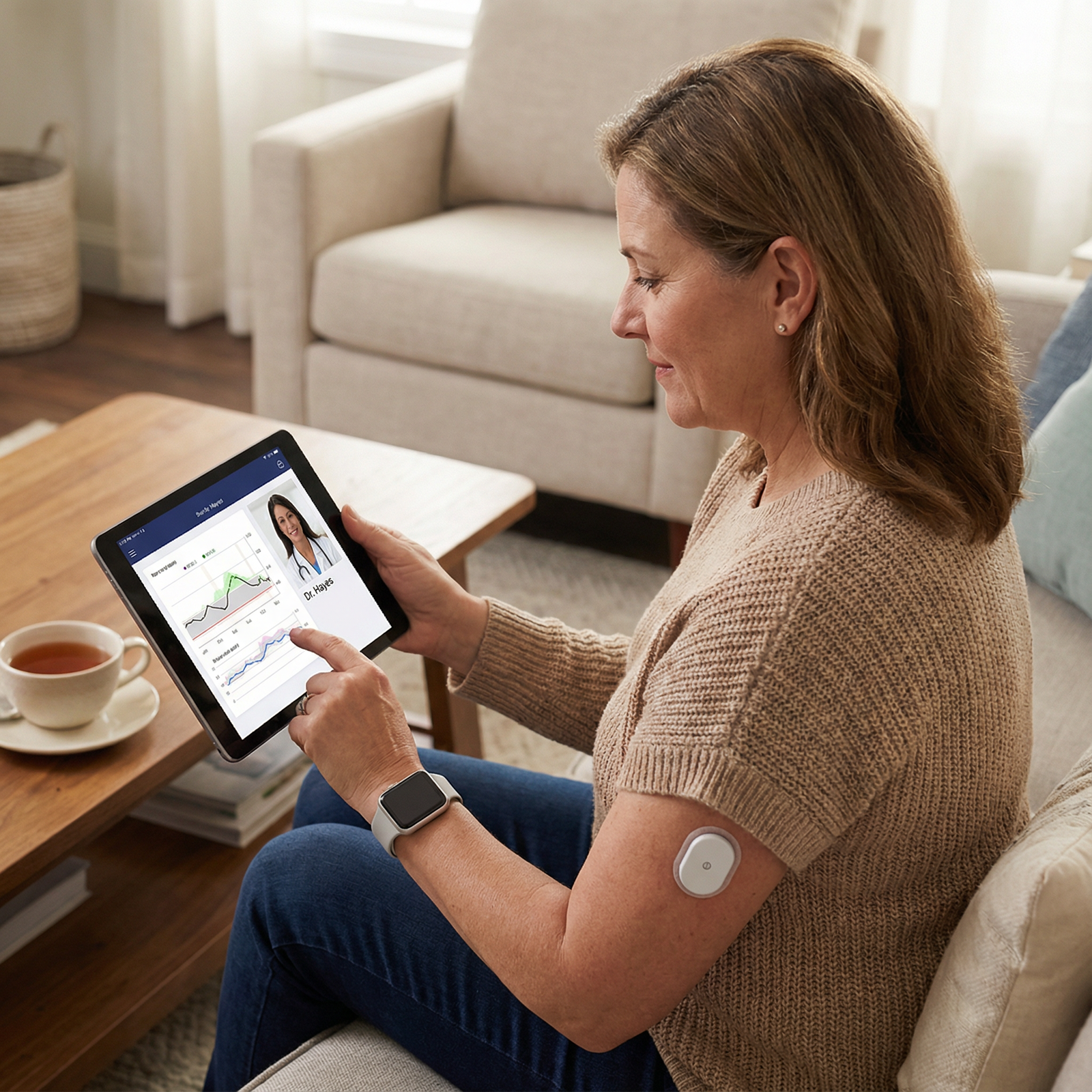
Misleading template use:
“Remote BP readings reviewed—no significant issues.”
But the graph shows multiple SBP > 170.
Accurate but protective:
“Remote BP readings for past 2 weeks reviewed. Multiple SBP readings 160–175 noted, but patient also reports missed doses and measurement immediately after exertion on several days. Today in clinic BP is 136/84. Discussed medication adherence and correct measurement technique; will continue current regimen and reassess in 4 weeks. Advised to contact clinic if home SBP persistently >160 on 3 separate days despite correct technique.”
Same data. Very different impression of your care and reasoning.
Do not let templates speak for you.
FAQ: Common Questions About Documenting Digital Health Data
1. Do I have to review every single piece of device data that ends up in the chart?
No. You are not obligated to manually inspect every datapoint. But if your system makes data reasonably accessible and obviously abnormal patterns are visible, you should at least document your general review or why you did not rely on it. Use your notes to define the scope: what you routinely look at, what you treat as supplemental, and when you will respond.
2. Can I be held liable for alerts from wearables or apps that I never saw?
Possibly, if those alerts or underlying data are integrated into your EHR and appear as part of the clinical record you ostensibly “reviewed.” That is why you must document clearly what is and is not monitored in real time, and what responsibility remains with the patient. For data that stays entirely outside your systems (patient’s personal app with no sharing), your risk is different—but once it is brought into the visit and discussed, document how you handled it.
3. How detailed should I be when documenting remote monitoring consent and expectations?
More detailed than you think. At minimum, specify: what is monitored, how often it is reviewed, what triggers clinician outreach, and what scenarios require the patient to act on their own. Then copy that language into both the note and patient instructions. One or two precise paragraphs now will prevent misunderstandings and conflict later.
4. Should I paste screenshots or full PDF reports from apps and devices into the chart?
Use them sparingly. Attaching a key PDF CGM report can be appropriate, but your note still needs a concise interpretation. For many apps, screenshots just add noise. If you attach something, clearly reference it in your note (e.g., “See attached Dexcom report dated 2026‑08‑10, interpreted as follows…”). Avoid importing large volumes of raw, low‑value data that obscure clinically meaningful information.
5. What if I think a patient’s digital data is unreliable—how do I document that safely?
Do not just ignore it. Acknowledge the data, then clearly state why you consider it unreliable or insufficient for decision‑making: poor calibration, inconsistent use, known device limitations, conflicting in‑clinic measurements. Then explain what you are basing your decision on instead (office measurements, lab tests, validated devices). That way, if someone later asks why you did not act on the digital data, your reasoning is already on the record.
Key points to walk away with:
- Do not pretend digital health data is invisible—acknowledge it, define its limits, and summarize your interpretation.
- Do not let tools, apps, or templates speak for you—your note must capture your judgment, your reasoning, and the patient’s understanding.
- Be explicit about scope, reliability, and responsibility—what you monitor, what you do not, and what the patient must do when devices raise alarms.