
New cancer drugs are both a miracle and a minefield.
And if you’re anything like me, you’re terrified of ending up on the wrong side of that.
I’m the kind of person who lies awake thinking: What if the old standard treatment is quietly worse and I’m just too cautious? Then five minutes later: What if the shiny new drug ruins my quality of life for nothing? And tangled inside all of that is a darker fear: What if I miss the one life-saving option that actually could have helped?
This is where medical innovation collides head‑on with personal ethics and gut‑level fear. It’s not abstract. It’s you, a real body, real side effects, real odds.
Let’s walk through this like two anxious people trying to think clearly anyway.
The Ugly Truth About “New = Better” (And Why That’s Not Always True)
A lot of messaging around cancer advances sounds like: breakthrough, game‑changer, revolutionary. That language gets thrown around way too easily.
Here’s what’s actually going on with many “new” cancer drugs:
- They’re often approved on surrogate endpoints (like tumor shrinkage or progression‑free survival) rather than “you live significantly longer and feel better.”
- Many are crazy expensive (tens of thousands per month) with modest benefits for most people.
- Long‑term side effects? Often not fully known yet.
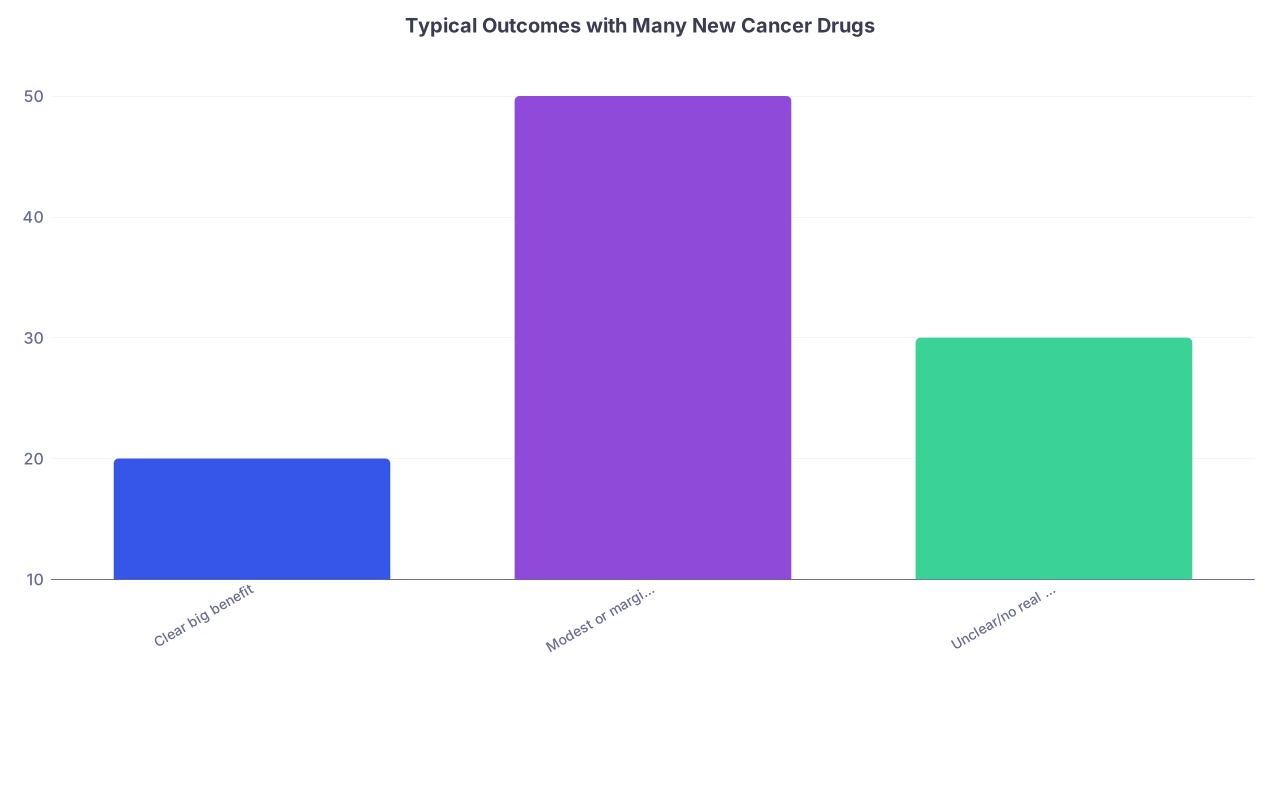
| Category | Value |
|---|---|
| Clear big benefit | 20 |
| Modest or marginal benefit | 50 |
| Unclear/no real benefit | 30 |
Those numbers aren’t exact for every drug, but that’s the pattern I keep seeing in trial reports and oncology discussions: a small subset of true game‑changers, a big chunk of “meh, sometimes helpful,” and a worrying number of drugs that look impressive on slides but don’t really change the story for most patients.
So if your brain is screaming:
- “I’m scared I’ll be a guinea pig.”
- “What if my doctor is overselling this?”
- “What if pharma hype is driving this more than actual benefit?”
You’re not crazy. Those are valid ethical questions.
But here’s the part that’s equally true—and just as scary in the opposite direction.
Some new drugs really are life‑saving or life‑extending for certain people. Targeted therapies for specific mutations. Immunotherapy in some cancers. Drugs that take someone from “months” to “years,” or turn a rapidly terminal cancer into something you live with.
So the real fear isn’t “new drugs are bad” or “old drugs are safer.”
The real fear is: How do I not miss the specific thing that could actually help me while not wrecking my life chasing false hope?
The Real “What If” Scenarios (And Which Ones Actually Matter)
Everyone acts like the choice is simple. It’s not. In reality, you’re stuck between several terrifying possibilities:
You use the new drug, and it doesn’t help, and you suffer side effects.
This is the “I wasted my time and my body on something that didn’t matter” nightmare.You use the new drug, and it helps, but the side effects are brutal.
You get extra time, but maybe it’s filled with fatigue, nausea, complications. Ethically messy. Personally, emotionally messy.You don’t use the new drug, and it wouldn’t have helped anyway.
Honestly? That’s the least bad scenario. But you only know that in hindsight.You don’t use the new drug, and it would have helped in a big way.
This is the fear that really haunts people. “I could have lived. I said no.”
The worst-case scenario that keeps you up at 2 a.m. is #4.
The most common scenario in real life is some mix of #1–#3.
So how do you reduce the chances of #4 without driving yourself insane or saying yes to everything just out of fear?
You stop asking “Is this new drug good or bad?” and start asking “How strong is the evidence that someone like me benefits from this?”
Not “people in general.” Not “some patients.”
You. Your cancer type, stage, mutations, health status, goals.
How Oncologists Actually Think About New Drugs (Not the Instagram Version)
I used to imagine oncology decision‑making like a magic algorithm with one correct answer. It’s not. It’s a messy blend of data, experience, and your personal values.
But there is more structure to it than it looks from the outside.

| Step | Description |
|---|---|
| Step 1 | Your Diagnosis |
| Step 2 | Stage and subtype |
| Step 3 | Biomarker and mutation tests |
| Step 4 | Recommend standard regimen |
| Step 5 | Consider new drugs or trials |
| Step 6 | Review evidence and guidelines |
| Step 7 | Discuss risks, benefits, goals |
| Step 8 | Shared decision with you |
| Step 9 | Standard of care clear? |
When a new drug comes up, good oncologists are asking:
- Is this drug in the guidelines (NCCN, ASCO, ESMO) as a recommended option, or is it fringe?
- Is there a biomarker (like a specific mutation, PD‑L1 level, etc.) that predicts response?
- Are we talking about first‑line (initial treatment) or second/third line after others fail?
- What’s the size of benefit in the trials? Small statistical blip, or truly meaningful?
- Side effects: rare but catastrophic vs common and manageable?
They don’t always say all this out loud, but you’re absolutely allowed to make them.
Next time you’re in that conversation, you can literally ask:
- “Is this drug considered standard of care yet, or more experimental?”
- “Are there specific markers that make it more likely to work for me?”
- “What’s the realistic benefit in people like me—weeks, months, years?”
- “What are the worst common side effects you actually see in clinic?”
Those questions shift the conversation from vague fear to concrete risk‑benefit.
The Ethics of “What If I Miss My Only Shot?” vs “What If I Destroy My Quality of Life?”
This is where the personal development and ethics piece really hits.
Because medicine has its own ethics (beneficence, non‑maleficence, autonomy, justice), but none of that magically answers:
- “Should I trade possible extra months for almost guaranteed misery?”
- “Is it morally wrong to say no to something that might help?”
- “If I’m scared and overwhelmed, can I even trust myself to decide?”
You’re not trying to be a statistic. You’re trying to be a person with a life that still feels like yours.
So here’s the ethical frame that actually helps when you’re scared:
Your autonomy isn’t selfish.
Choosing not to undergo a newer, harsher, or unknown treatment—even if it might help—is not immoral. Medical ethics recognize your right to decide what’s acceptable for your body and your remaining time. Doctors know this. Some just suck at saying it plainly.Chasing every possible option isn’t automatically “brave” or “right.”
I’ve watched families and patients get emotionally bullied by the narrative that “we have to try everything.” Sometimes “everything” means your last year is hospitals, side effects, and no meaningful extra time. That can be a tragedy, not a victory.Refusing everything out of fear isn’t automatically “protecting yourself” either.
If a drug has solid evidence of benefit in people exactly like you, and side effects are manageable, saying no purely because it’s new might cost you time you’d actually value.
So practically, how do you protect yourself from making a regret‑soaked decision?
You make the decision on purpose, not by default.
Not “I was scared so I hid from it.” Not “I felt pressured so I said yes.”
You ask for:
- Clear numbers (even ranges)
- Expected best case, likely case, and worst case
- What they would recommend if you were their family member
And then—this is important—you ask your own questions:
- “What am I afraid of more: dying sooner, or living longer but much sicker?”
- “What do I want my days to actually look like if I get extra time?”
- “Whose voice is in my head right now—mine, my family’s, or my doctor’s?”
That’s not soft self-help. That’s ethics, applied to a real human life.
Making Peace With “New” Without Blindly Trusting It
I know the haunting thought: I don’t want to be the person who finds out too late there was an option I never took seriously enough.
You’re trying to manage two fears at once:
- Fear of harm from a new drug
- Fear of loss from not taking it
Here’s a way to make those fears a bit more manageable and less paralyzing.
1. Use a second (or third) opinion as standard, not as an emergency
Second opinions aren’t insults. They’re normal in oncology, especially for new treatments and clinical trials. Big cancer centers do this all the time.
You can literally frame it to your doctor like:
“This is a huge decision and I’m scared of missing an option. Would you be okay if I get a second opinion just to confirm the plan?”
If they bristle, that’s a red flag. Most good oncologists welcome it.
| Situation | Why It Matters |
|---|---|
| New drug just approved | Evidence is still evolving |
| Clinical trial suggested | Complex inclusion/exclusion, ethics |
| No clear standard of care | Multiple reasonable paths |
| You feel rushed | Risk of regret and mistrust |
| Rare cancer type | Expertise may be limited locally |
2. Insist on “personalized” not just “innovative”
Innovation sounds glamorous. Personalized is actually what you care about.
Ask:
- “What’s my predicted benefit here, not just the average in the trial?”
- “Did trial patients look like me—age, other illnesses, stage?”
- “If I skip this now, can it still be used later if things worsen?”
Sometimes the “new” drug works better when used earlier. Sometimes it’s saved for second‑line. That matters a lot for the “what if I miss my shot?” fear.
3. Name your decision rules out loud
This sounds weird, but it works.
Examples:
- “If this drug gives a realistic chance at a year or more of decent‑quality life, I’ll consider it.”
- “If the benefit is only adding a few months with high chance of severe side effects, I’ll likely say no.”
- “If there’s a strong biomarker in my favor, I’ll lean toward yes, even if I’m scared.”
Once you say that kind of thing out loud—to yourself, to family, to your doctor—you’re less likely to be yanked around by fear in the moment.
The Part Nobody Says: You Can Make the “Wrong” Choice and Still Be Okay
Here’s the thing that makes my chest tighten even writing it:
You might make a decision you later wish you’d made differently.
You might say no to a drug that turns out to help people like you a lot.
You might say yes and spend months regretting what it did to your body.
That possibility will always exist because medicine moves, data changes, and you’re forced to choose with incomplete information.
But ethically—and I mean this literally—you’re judged by the decision you made with the information and values you had at the time, not by how the story turned out.
That’s what doctors are held to. That’s what you can hold yourself to.
If you:
- Asked the hard questions
- Understood in plain language what the drug was expected to do
- Considered your own priorities and fears
- Got another opinion when things felt muddy
…then even if the outcome hurts, the decision was still reasonable. Not reckless. Not negligent. Not a moral failure.
Sometimes there is no path that doesn’t hurt. There’s just the one you can live with more.

Quick Reality Check: Signs You’re Being Sold Hype vs Offered a Real Option
Because yes, there are situations where your fear is actually your brain waving a red flag.
Here are patterns I’ve seen that worry me:
- You hear phrases like “miracle drug” or “this changes everything” with very little actual data.
- No one explains what not taking the drug would look like.
- You’re not told what the alternative is (observation, other drugs, palliative care, etc.).
- Your questions get brushed off with “don’t worry about that right now.”
- You feel rushed to sign up for a trial without enough time to think.
Contrast that with a solid, grounded conversation:
- The doctor explains both standard options and new options, clearly.
- You get real numbers or at least ranges (not hand‑waving).
- Side effects are described in concrete ways (“I often see…”) instead of just listing them.
- You’re explicitly told that saying no is an option.
You can literally say:
“I’m afraid of being oversold on a new drug. Can you tell me the strongest reasons not to do this, as well as the reasons to do it?”
If they can’t answer that? I’d be nervous.
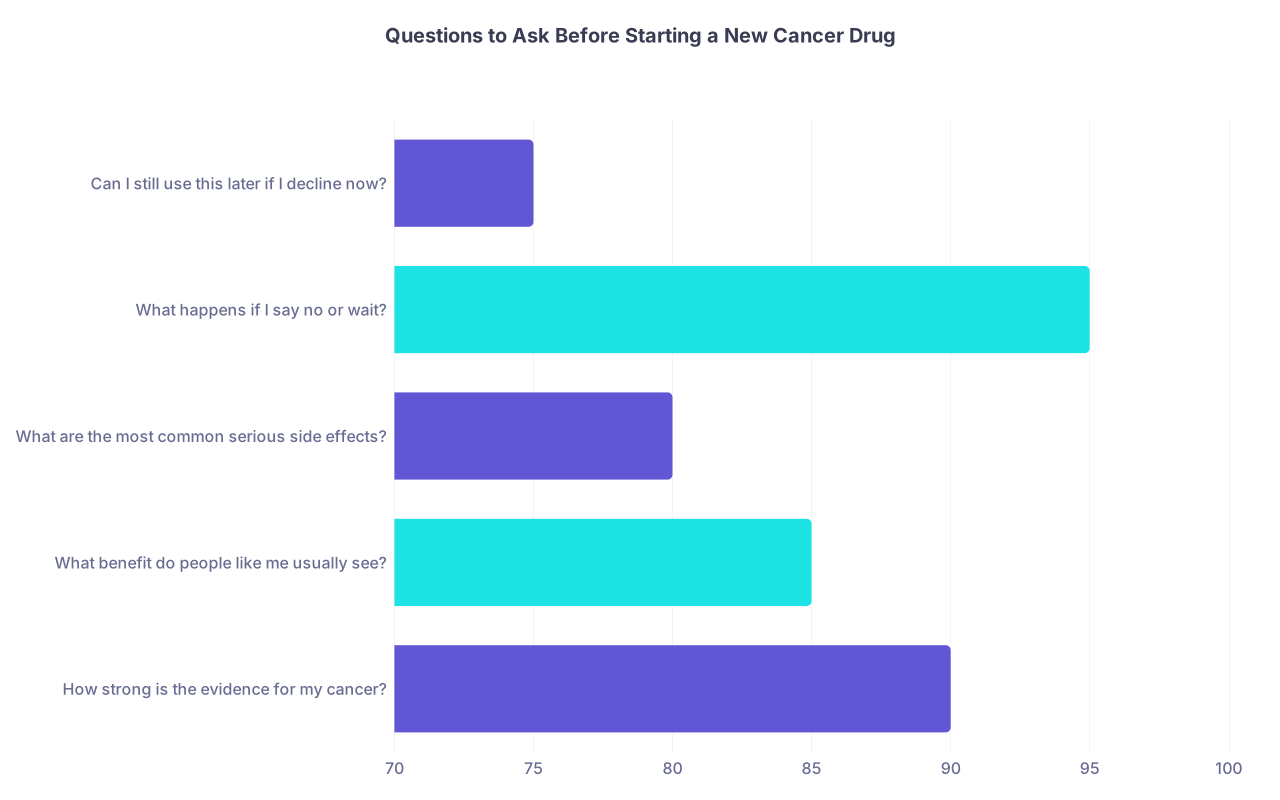
| Category | Value |
|---|---|
| How strong is the evidence for my cancer? | 90 |
| What benefit do people like me usually see? | 85 |
| What are the most common serious side effects? | 80 |
| What happens if I say no or wait? | 95 |
| Can I still use this later if I decline now? | 75 |

If You’re Spiraling Right Now, Here’s the Minimal Next Step
If your brain is in “I’ll never make the right choice” mode, don’t try to solve the whole thing at once.
Do just this:
- Write down every single question that’s keeping you awake. No censoring.
- At your next appointment, hand that list to your doctor and say:
“These are the things I’m scared I’ll regret later. Can we go through them slowly?”
If you can, bring one person whose job is only to:
- Take notes
- Ask “Can you say that in simpler words?”
- Remind you of what you said mattered to you before the appointment
You don’t need to suddenly become fearless.
You just need enough clarity to make a decision that feels like it belongs to you.
FAQ (Exactly 6 Questions)
1. How do I know if a new cancer drug is truly “life‑saving” for someone like me?
Look for specifics, not buzzwords. Ask your doctor: “In the clinical studies, how many people with my exact cancer type and stage had big, meaningful benefits?” If the answer is vague, push: “Are we talking about months, years, or rare dramatic responses?” You can also ask if the drug is recommended in respected guidelines (NCCN, ASCO, ESMO) for your situation. True game‑changers usually show up clearly in those.
2. What if I’m too overwhelmed to even understand the pros and cons?
That’s normal; these conversations are cognitively brutal. Tell your doctor directly: “I’m overwhelmed and scared. Can you explain this as if you were talking to a family member?” Ask them to pause after each point so you or a support person can repeat back: “So what I heard is…” If they can’t or won’t slow down or simplify, that’s a good reason to seek a second opinion somewhere that respects your emotional reality.
3. Can I start a new drug and then stop if side effects are bad or it doesn’t seem worth it?
Often yes, but ask explicitly. “If I start this and it goes badly, can we stop quickly? What does stopping look like?” Many regimens can be modified, paused, or discontinued if toxicity is high or scans show no benefit. Knowing you’re not chained to it forever can lower some of the fear and make it easier to try something you’re on the fence about.
4. Am I being irresponsible if I refuse a new treatment that might help?
No. Medical ethics are clear on this: you have the right to refuse any treatment, even potentially beneficial ones. Responsible doesn’t mean “say yes to everything.” It means you listened, asked questions, understood the trade‑offs as best you could, and then chose in line with your own values and thresholds. That is responsible, even if someone else would choose differently.
5. How do I deal with family who want me to “try everything” when I’m not sure I want that?
You’re allowed to set boundaries, even when everyone’s scared. You can say: “I know you want me to fight. For me, fighting also means protecting my quality of life. I need treatments that fit my limits, not just what’s theoretically possible.” Sometimes a family meeting with the oncologist or a palliative care specialist helps, because they can explain that comfort‑focused or selective treatment is not “giving up”—it’s a valid medical choice.
6. What’s the one question I absolutely shouldn’t leave the clinic without asking about a new drug?
Ask this: “If you were in my exact situation—or if this were your spouse/parent/child—would you personally choose this drug, and why or why not?” Then stay quiet and watch their face. Most doctors drop the polished script when you frame it that way, and you’ll get a much more honest sense of how strongly they believe in the treatment for you.
Key takeaways:
- New cancer drugs aren’t automatically miracles or disasters; the only thing that matters is how well they fit your specific situation and values.
- You reduce the “what if I miss a life‑saving option?” fear by asking concrete questions, getting second opinions, and making a deliberate—not default—choice.
- A decision can still be ethically and personally sound even if the outcome hurts; you’re responsible for the process, not for predicting the future.