
Meta description: Do publications matter more than posters in the MD/DO Match? See how programs interpret ERAS research items and build a smarter application strategy.
Educational disclaimer: This article is for general medical education and career-planning purposes only. It is not financial, legal, tax, or individualized advising guidance. Residency application strategy, compensation tradeoffs, and long-term career decisions should be discussed with qualified mentors and, when relevant, professional advisors.
Labels: residency match, research, ERAS, scholarly activity, publications, posters, MD/DO applicants
A lot of applicants believe posters are basically interchangeable with publications. Same bucket. Same "research." Same line on ERAS. That belief is comforting. It's also wrong.
Here's what actually happens when residency programs review applications: they don't just count abstracts, posters, presentations, and publications on an application like Halloween candy. They infer what those items mean. A poster can mean genuine scholarly work. It can also mean you stood next to a trifold for 45 minutes after helping with one spreadsheet tab. A publication, especially a real peer-reviewed one, usually signals something heavier: deeper involvement, more revision, more scrutiny, more staying power.
Let's stop lumping everything together.
- Publication: a manuscript accepted by a journal, usually after peer review.
- Poster: a visual presentation of a project shown at a meeting, local or national.
- Abstract: a short summary submitted to a conference or journal supplement.
- Presentation: oral or podium delivery of a project, often more selective than a poster.
Those are not the same thing. Not even close.
Myth: "Research is research, so posters are good enough."
Reality: quality, relevance, and actual scholarly engagement matter more than the label alone, but publications usually send the stronger signal. That's the part applicants don't love hearing, because publications are harder, slower, and less available. Tough. The match process doesn't reward convenience. It rewards evidence that you can start something difficult, stay with it, and finish.
I've seen students proudly list eight posters and assume that beats one solid manuscript. Then they get asked a basic question about methods, freeze, and reveal the whole thing was résumé upholstery. Programs can smell that. Fast.
This article is for educational purposes only. It is not financial advice, not legal advice, and not tax advice. Figures vary by individual circumstances, consult a qualified professional before acting.
Publications vs Posters: What Actually Matters in MD/DO Match Decisions?
The common applicant script goes like this: "I have a few posters, so I'm covered on research." Maybe. But "covered" depends entirely on what kind of specialty you're targeting, what the rest of your application looks like, and whether those posters represent real work or decorative productivity.
Programs generally value research for two reasons. First, it can help screen large piles of applicants. Second, it can differentiate people who otherwise look similar on grades, scores, and letters. But the mistake is thinking every research line carries equal weight. It doesn't.
A publication often gets more attention because it suggests more than output. It suggests process. You asked a question, dealt with data, survived revisions, and got through peer review. That's a different signal than "submitted abstract, presented poster."
That doesn't mean posters are worthless. That's another dumb extreme. A specialty-specific poster at a national meeting, discussed fluently in an interview, can absolutely help. If it led to an abstract, manuscript, or ongoing collaboration, even better. What matters is whether the item shows intellectual engagement and follow-through.
The thesis is simple: programs don't just care whether you "did research." They care whether your research looks credible, relevant, and complete. Publications more often check those boxes. Posters can too. But they have to earn it.
What the Data Actually Shows About How Programs Read Research
The available evidence from residency selection surveys, NRMP reporting, and specialty-specific program director behavior points in one clear direction: research matters, but not in a cartoonishly simple "highest count wins" way.
Program directors often use scholarly output as one piece of holistic application review of the broader file review. Especially in academic or competitive specialties. Dermatology, orthopedics, ENT, neurosurgery, radiation oncology, ophthalmology, obvious examples. But even outside those fields, research can serve as a marker of curiosity, discipline, and fit. Not always. Often enough.
What the data does not support is the fantasy that every poster, abstract, and publication is weighted equally. They aren't. Programs know the difference between a peer-reviewed manuscript and a conference listing. They also know that ERAS categories can inflate raw totals because "research items" may include abstracts, posters, presentations, and publications bundled together. That's why applicants who obsess over raw counts miss the point. A bloated number can be impressive on paper and flimsy on inspection.
Why do publications tend to carry more weight? Because they imply a longer arc of work:
- project design
- literature review
- data collection or analysis
- drafting
- revision
- external critique
- eventual acceptance
That sequence matters. It signals endurance. And residency is, among other things, a test of endurance.
Posters still matter when they're real. A good poster can show early-stage scholarly productivity, strong mentorship, specialty relevance, and conference engagement. I've seen applicants use one national poster to start a great interview conversation about study design, bias, and future questions. That's valuable. I've also seen applicants list five nearly identical local posters from the same data set and expect applause. That's padding, and reviewers notice.
The real takeaway from the data is this: research is usually a differentiator, not a cheat code. One meaningful publication can help more than several weak posters. But one thoughtful poster connected to a coherent scholarly story can still outperform a hollow publication where the applicant barely remembers the title.
Why the Publication Advantage Exists
The publication advantage isn't magic. It's labor.
A manuscript usually reflects a chain of work that programs infer even if they never read the paper itself. You found a mentor. Helped shape the question. Wrestled with data that didn't behave. Got comments back that were annoying, contradictory, and occasionally brutal. Revised anyway. Resubmitted. Waited. Rewrote. Finished. That story is what the publication signals.
And no, not all publications are equal. Anyone pretending otherwise hasn't reviewed enough applications.
- First author: usually strongest signal of ownership and leadership.
- Middle author: can still be meaningful, but contribution matters and should be explainable.
- Guest or token authorship: common enough to be a problem, and easier to detect than students think.
If your name is buried in the middle of a paper and you can't explain the methods, your "publication" isn't helping much. Maybe not at all.
That said, let's kill another bad myth: applicants whose research portfolio leans heavily on posters and abstracts are not automatically weaker. A small set of substantive posters can beat shallow publication farming every day of the week. I've seen students crank out low-quality case reports in dubious journals just to say "published." Programs aren't blind. A predatory-journal publication with no meaningful role is not superior to a strong poster you can defend intelligently.
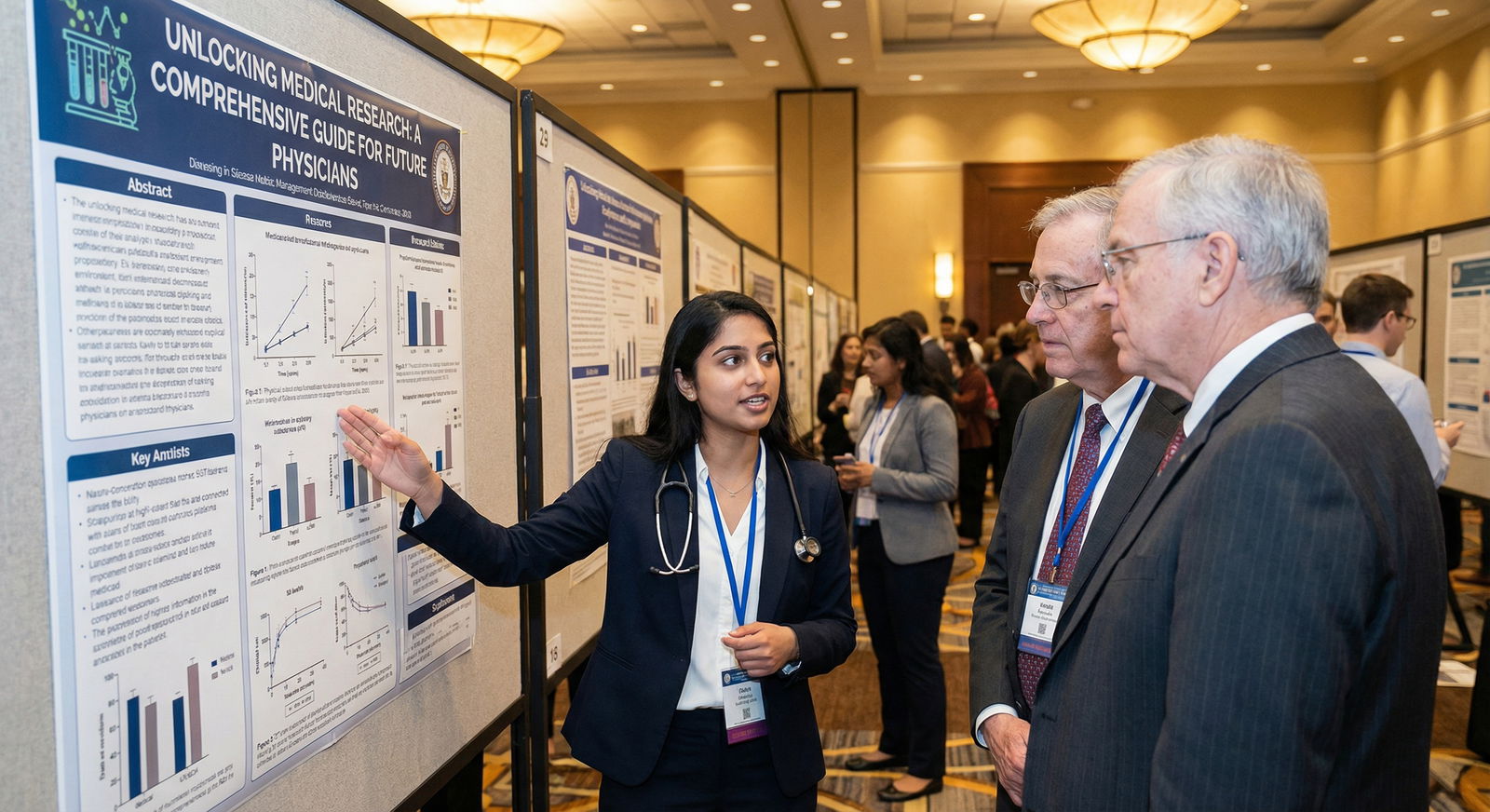
The advantage exists because publications more often represent completed scholarship. More friction. More scrutiny. More proof.
When Posters Can Compete, and When They Cannot
Posters carry real weight in a few specific situations.
They matter more when they are:
- presented at regional or national meetings
- tied to your intended specialty
- backed by a known mentor or active research group
- part of a project that is moving toward manuscript submission
- discussed with clarity about your exact role
In those cases, a poster is not fluff. It's evidence of active scholarly participation.
Now the weaker scenarios. The ones reviewers roll their eyes at.
- duplicate posters from the same project with cosmetic title changes
- low-bar local presentations with no follow-through
- unclear authorship role
- scattershot topics with no connection to your story
- poster lists so long they scream quantity-chasing
For many programs, one substantive poster may help, but multiple posters usually do not equal one strong peer-reviewed publication. That's the uncomfortable truth. Posters can compete when they show momentum, rigor, and fit. They lose when they're just decorative.
How MD and DO Applicants Should Strategize Their Research Portfolio
Here's the strategy I recommend, and yes, I mean recommend, not vaguely suggest.
Prioritize depth over count. One or two real projects beat a chaotic pile of minor entries. Every time.
If you have time and mentor access, push at least one project as far as it can go. Poster first, then abstract, then manuscript if possible. That's the cleanest arc because it shows progression. Programs like progression. It looks adult. It looks reliable.
Also, align your work with your likely specialty when you can. Not because every project must be perfectly on-brand, but because relevance makes your application easier to understand. An applicant pursuing psychiatry with sustained mental health outcomes research tells a coherent story. An applicant with random unrelated poster fragments often looks like they were just collecting stamps.
What should your portfolio show?
- consistency over time
- clear personal contribution
- a believable scholarly narrative
- enough depth to discuss methods, limitations, and next steps
And when you write ERAS or answer interview questions, don't say, "I did a poster on X." That's dead language. Say what you actually did. "I screened charts, built the dataset, helped revise the abstract, and presented findings on readmission trends." Better. Concrete. Credible.
If all you have are posters, make them count. Know the methods. Know the flaws. Know what happened next. If you have publications, don't coast on the citation line alone. Be able to prove you earned it.
Bottom Line: Stop Asking Which Is "Better" in a Vacuum
Yes, publications usually carry more weight than posters. That's the answer. Clean and simple.
But the bigger mistake is asking the question like labels exist in a vacuum. They don't. Programs are reading for substance. For relevance. For whether your scholarly work sounds like something you actually did and actually understand.
Applicants waste ridiculous amounts of energy comparing poster counts, abstract counts, and publication counts like they're fantasy football stats. Wrong game. What wins is a coherent research story with depth and follow-through.
Not vanity metrics. Not padding. Not decorative productivity.
Build something real. Then talk about it like someone who was actually there.