

What if I built something incredible, a tool that could save thousands of lives, only to have it all destroyed because I used one patient's chart wrong? What if my hospital's legal team sends me a letter? What if a patient I saw three years ago finds out and sues me for everything I own?
If you're lying awake at 2 AM Googling "can I get sued for using my own patient data," take a breath. You're not alone. This is the most common fear I hear from residents and post-residency physicians trying to commercialize clinical insights. The legal landscape is genuinely confusing, the stakes are real, and most physicians have zero training in healthcare data law. But here's the good news: you can build a startup on patient data without getting sued. You just can't do it the way most people think they can.
This article is for educational purposes only and is not financial advice or legal advice. It is not tax advice. Figures vary by situation, and you should consult a qualified professional before taking action on any of the topics discussed below.
Can I Really Be Sued for Using My Own Medical Data?
Yes. You absolutely can. And that answer alone is probably what brought you here.
The biggest misconception I see among physician-founders is the assumption that "my patient, my data, my rules." I thought that too, before I lost a week of sleep reading HIPAA regulations. The truth is, HIPAA doesn't actually care whose data it is. It cares about who the "covered entity" is.
Hospitals, clinics, and healthcare providers are covered entities. When you see a patient as a resident, an attending, or even a moonlighting physician at a free clinic, the data you generate usually belongs to the institution, not you. That's true even if you performed the surgery, wrote the notes, or invented the diagnostic algorithm from scratch. The patient gave consent to the institution, not to your future startup.
So when can you use "your own" patient data?
- If you de-identify it according to HIPAA Safe Harbor (more on this in a minute).
- If you got explicit written consent from the patient for commercial use.
- If your employment contract or hospital innovation policy specifically assigns data ownership to you (rare, but possible).
If you skip these steps, you're exposed. Not theoretically, actually. A patient or a hospital can file a complaint with the Office for Civil Rights, trigger a federal investigation, or sue you in state court for invasion of privacy. The penalties aren't slaps on the wrist either. HIPAA violations can carry fines up to $1.5 million per year per category.
But, and this is the part that should calm your 2 AM spiral, being sued and being convicted are different things. Most physicians who use patient data without permission never face legal consequences because they never get caught, they de-identified properly, or they worked out agreements with their institutions. The risk is real, but it's manageable if you're deliberate.
The Real Legal Landmines: De-identification, Consent, and Commercial Use
Forget what you think you know about removing names from a spreadsheet. That's not de-identification. That's just the start.
HIPAA's Safe Harbor method requires you to strip 18 specific identifiers. Names, geographic data smaller than a state, dates (except year) related to a patient, phone numbers, fax numbers, email addresses, Social Security numbers, medical record numbers, health plan beneficiary numbers, account numbers, certificate/license numbers, vehicle identifiers, device identifiers, URLs, IP addresses, biometric identifiers, full-face photos, and any other unique identifying number or code. Miss one and your "de-identified" dataset is still protected health information under federal law.
But Safe Harbor isn't the only path. You can also use Expert Determination, where a qualified statistician certifies the re-identification risk is "very small." This is more expensive ($5,000 to $20,000 typically) but gives you flexibility for datasets where stripping 18 identifiers would destroy their analytical value.
Here's the landmine most people don't see coming: re-identification risk.
Even with all 18 identifiers stripped, certain combinations of data can identify a person. A patient with a rare disease, in a specific zip code, of a specific age, hospitalized on a specific week, that's one person. Lawsuits over re-identification have happened. Doctors have been the defendants. You need a re-identification risk assessment, which is exactly what it sounds like: someone stress-tests your dataset to see if patients can be picked out of the crowd.
Then there's the employer problem. If you built your startup while employed at a hospital, and you used anything from that hospital's systems, even your own notes, your employer probably has a claim to your intellectual property. Most employment contracts include language about work product, and "work product" can be stretched to include algorithms, models, and databases derived from clinical work. This is the single biggest legal risk for physician-founders, and it's almost entirely preventable with a written agreement before you start.
State laws make this messier. California's CCPA, for example, gives consumers (including patients) rights over their data that go beyond HIPAA. If your startup touches California residents, you have CCPA obligations. Illinois has BIPA for biometric data. Texas, New York, Massachusetts, each has its own quirks. Federal compliance isn't enough.
What Happens If I Get Sued? The Worst Case Scenario (and Why You Might Survive)
Let me walk you through the worst case, because the only way to stop being afraid of it is to actually look at it.
Three flavors of legal trouble show up most often for physician-founders. The first is your employer claiming they own the IP. The second is a patient alleging privacy violations. The third is the federal government fining you for HIPAA breaches.
Employer IP claims are the most common by a wide margin. Hospitals are aggressive about this because they've been burned by physicians walking out with valuable research before. If you don't have a signed agreement assigning IP rights to you, your hospital can sue for ownership of your startup, demand royalties, or shut you down entirely. I've watched a colleague lose 18 months of work and a $200,000 investment because his contract had a clause he never read.
If your employer raises ownership concerns, you'll want to understand why your hospital may claim your startup idea (and what to do) before proceeding further.
Patient privacy lawsuits are rarer but more personal. A patient discovers their data was used, claims they didn't consent to commercial use, and sues for damages. Even if you win, you've spent $50,000 on legal defense and your reputation is bruised. If you can't document proper de-identification and consent, you'll probably lose.
Government fines are the rarest but most expensive. The Office for Civil Rights investigates HIPAA complaints and can issue penalties ranging from $100 to $1.5 million per violation category per year. For a small startup, even a six-figure fine is existential.
Here's the survival part: if you follow HIPAA Safe Harbor or Expert Determination, document the process with a lawyer, and have written agreements with your employer, you have a strong affirmative defense. Courts have dismissed cases against defendants who showed good-faith compliance efforts. Insurance also helps. Errors and omissions (E&O) insurance covers professional mistakes. Cyber liability insurance covers data breaches. Together, they're your safety net when the worst case actually happens.
The Anxious Applicant's Checklist: 7 Steps to Sleep Better at Night
For more on navigating common misconceptions, check out this article on the myth vs reality of using patient data freely in a startup.
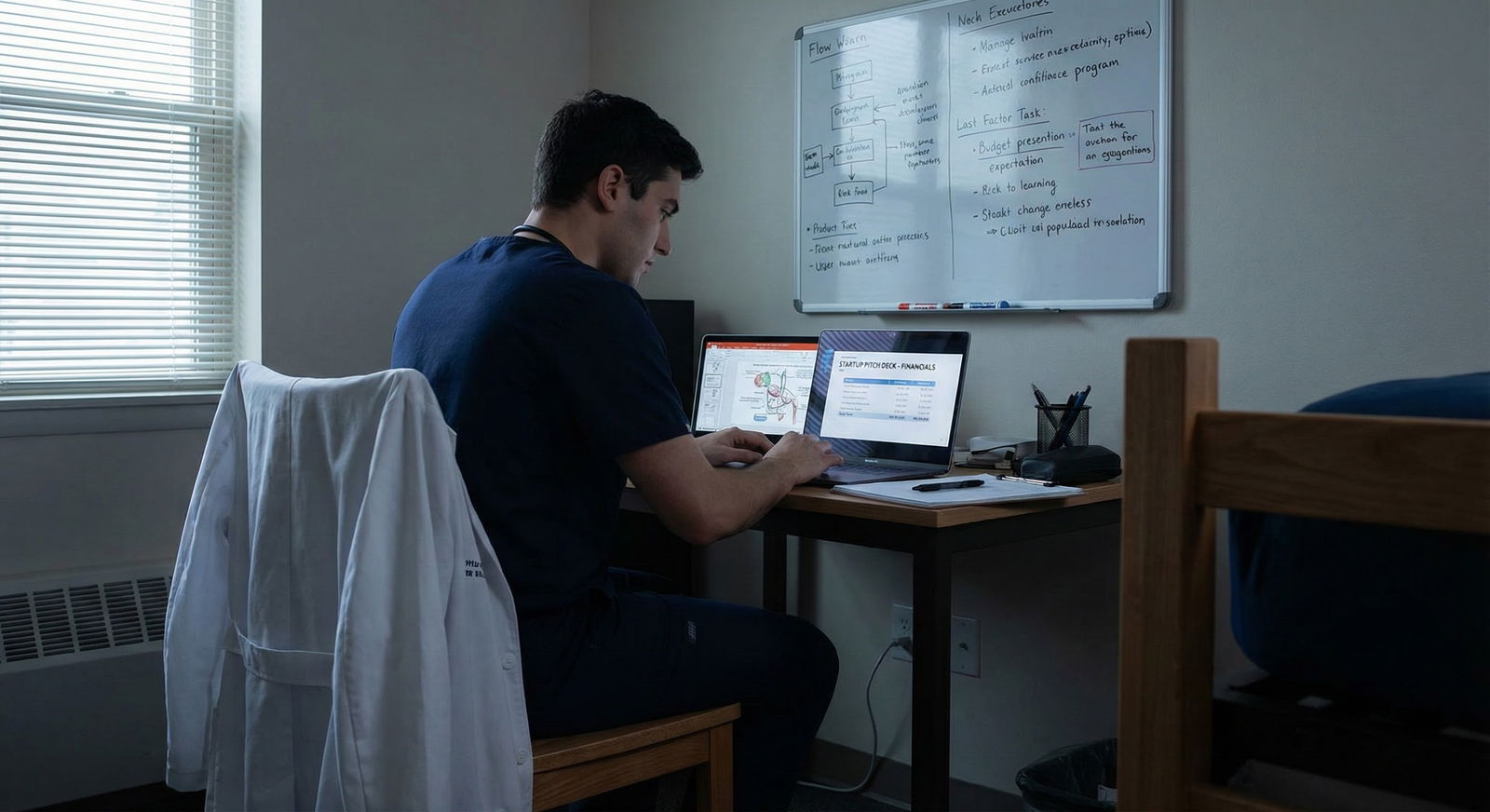
Here's the actionable list I wish someone had handed me before I started. Follow these seven steps and your risk profile drops dramatically.
Get a signed agreement with your employer or hospital about data ownership. Do this before you write a single line of code or query a single chart. If your hospital has an innovation office, that's your first stop. If they refuse to assign data rights, you have a decision to make: walk away from the data, or walk away from the project.
Fully de-identify using Safe Harbor or Expert Determination. Safe Harbor is cheaper. Expert Determination is more flexible. Either way, document the process. Screenshot your scripts. Save your statistician's certification letter. Future-you will thank past-you.
Write a clear privacy policy and obtain ethics review. Most institutions have an IRB or ethics board. Even if your project is "just" a startup and not a research study, getting ethical review signals good faith and protects you legally.
Use a HIPAA-compliant cloud provider, even for de-identified data. AWS, Google Cloud, and Microsoft Azure all offer Business Associate Agreements (BAAs). A BAA contractually obligates them to safeguard your data, even if (in your opinion) HIPAA doesn't apply. It's cheap insurance.
Encrypt everything at rest and in transit. No excuses. AES-256 for stored data, TLS 1.3 for data in motion. If you can't configure this yourself, hire someone who can. Sloppy encryption has killed startups.
Put legal structure in place, form an LLC. This separates your personal assets from your startup's liabilities. If the startup gets sued, your house and savings are protected. If you skip this, you're personally on the hook for every claim.
Buy cyber liability and E&O insurance before launching. Policies start around $1,500 per year for small startups. They cover data breaches, lawsuit defense, and settlement costs. Without insurance, one lawsuit ends your company and possibly your career.
This isn't paranoia. It's how mature founders operate.
How to Talk to a Lawyer Without Panicking (When You Have No Money)
Lawyers are expensive. As a resident or post-residency physician with student loans and a startup budget of maybe $10,000, the idea of paying $500 an hour for legal advice feels obscene. I get it.
You have options.
Many healthcare and startup lawyers offer free 30-minute consultations. Use them. Come with a one-page summary of your project and specific questions. Don't waste the call asking general questions like "what should I do?" Ask: "What is the risk of re-identification with my dataset?" Ask: "Do I need a BAA with my cloud provider if I'm only using de-identified data?" Ask: "Can you review my hospital's IP clause and tell me if I need to negotiate?"
Law school clinics are underrated. Most law schools have health law or entrepreneurship clinics where supervised students handle real cases for free. Stanford, Harvard, Yale, and many state schools run these. You get quality work from motivated students overseen by faculty.
Never sign anything from your employer without a lawyer reading it. Not the IP assignment. Not the moonlighting clause. Not the "we just need your signature for HR." If they pressure you to sign without review, that's a red flag the size of a billboard.
And here's the move that saves money long-term: find one lawyer who will be your general counsel. Pay them a small retainer ($2,000 to $5,000 annually) for unlimited emails and a few hours of consultation. It's cheaper than per-incident billing and you build a relationship with someone who knows your business.
A Real Case Study: How One Resident Built a Startup Without Getting Sued
Sarah (name changed) was a third-year internal medicine resident who noticed a pattern. Patients who developed sepsis in her ICU often had subtle vital sign changes 6 to 12 hours before they crashed. She wanted to build an early warning algorithm.
She knew she couldn't use identifiable patient data. So she did it right.
First, she approached her hospital's innovation office with a formal proposal. She signed a written agreement that the IP for her algorithm would be hers, but the hospital would be her pilot partner. This took four months and two rounds of negotiation.
Next, she hired a statistician to perform Expert Determination on her training dataset. Cost: $8,000. Worth every penny. The statistician certified that re-identification risk was below 0.04%.
She incorporated as an LLC, opened a business bank account, and bought cyber liability and E&O insurance. Total legal and insurance setup: $5,200. She secured a $50,000 grant from a healthcare innovation fund to cover costs.
Her sepsis tool is now live in three ICUs. She's published peer-reviewed validation data. She hasn't been sued, hasn't received a cease-and-desist, and sleeps well at night.
Her advice to anxious applicants like you: "The legal stuff feels like a wall. But once you start climbing it, you realize it's just a series of small steps. And the view from the top is worth it."
A Final Word Before You Stop Spiraling
Look. The fear is legitimate. The legal landscape is complicated, the penalties are severe, and the rules weren't written with startups in mind. But thousands of physician-founders have built successful companies on patient-derived data without getting sued. The pattern they share is simple: they didn't wing it.
They got agreements in writing. They de-identified properly. They hired lawyers. They bought insurance. They incorporated. They did the boring, unsexy, responsible work that nobody talks about at pitch competitions.
You can do this. The fact that you're anxious means you take it seriously. The physicians who get sued are the ones who didn't worry enough.
So worry productively. Then act. The patients waiting for your innovation don't care about your fears, they need what you're building.


