
It is July 1st. Your co-residents are getting fitted for white coats with embroidered hospital logos. You are in a WeWork conference room staring at a slide titled “Prospect: 12,000 covered lives, ASO, self-insured employer” and realizing no one in residency ever explained what any of that means.
You know medicine. You know hypertension, CHF, A1c targets, READMISSIONS.
But this world speaks ROIs, PMPMs, and “engagement along the employee journey.”
This playbook is for you.
You are a physician stepping into (or seriously considering) an employer-focused population health startup. Think: care models built for self-insured employers, virtual-first clinics, navigation platforms, chronic disease programs, high-risk maternity bundles, MSK “centers of excellence,” or integrated primary care targeted to the workforce.
Let me break this down specifically.
1. The Employer-Focused Population Health Landscape: What Game Are You Actually Playing?
First, get the field straight. If you confuse “health plan” world with “employer” world, you will sound lost in the first investor or client meeting. I have watched that happen. It is painful.
Who are the players?
At minimum, you have:
- The employer (e.g., 5,000–50,000 employees, self-insured)
- The health plan / ASO administrator (e.g., UHC, Aetna, Cigna, regional Blues)
- The startup (you)
- The employees and their dependents (the “population”)
- Sometimes: brokers/benefits consultants (Mercer, Aon, Gallagher, etc.)
Employers do not think in “patients.” They think in:
- Employees
- Dependents
- Covered lives
- Total cost of care
And they obsess over trends:
- Year-over-year medical/Rx spend
- High-cost claimants (transplants, NICU, oncology, catastrophic trauma)
- Absenteeism / disability
- Turnover and productivity (measured badly, but they still try)
You are selling them a promise:
“We will reduce your health spend trend and improve employee health and retention, in a way your CFO can recognize on a spreadsheet.”
How employer-focused population health differs from classic clinical practice
In clinic, your unit of success is one patient:
- BP controlled, depression improved, no ED visit after CHF hospitalization.
In employer-focused population health, your unit of success is:
- A cohort.
- A statistically valid denominator.
- “All diabetics on your plan with A1c ≥ 8.0” or “all pregnancies in the last 12 months.”
You win by:
- Shifting risk curves
- Moving averages
- Reducing variance
- Preventing high-cost outliers
And your timeline:
- Employer: wants to see trend movement within 12–18 months
- Clinical reality: many interventions need 2–3+ years
So your job is partly medicine, partly expectation management, partly measurement design.
2. Economics 101 for Employer Health: PMPM, Risk, and Why Your Value Prop Lives or Dies in Excel
If you do not understand the economic engine, you will get sidelined into “nice to have clinical input.” You want to be in the room when the contract terms, inclusion criteria, and success metrics are defined. That requires speaking finance fluently enough.
Core financial concepts (fast but specific)
Let us anchor this with a simple frame.
| Term | What It Actually Means |
|---|---|
| PMPM | Per Member Per Month payment tied to covered lives |
| PEPM | Per Employee Per Month (often excludes dependents) |
| ASO | Administrative Services Only; employer bears the risk |
| TPA | Third Party Administrator; runs the plan logistics |
| Trend | Year-over-year increase in total medical/Rx spend |
| High-cost | The top 1–3% of claimants driving ~30–50% of spend |
Think in very rough numbers. A mid-sized self-insured employer might see:
- $5,000–$7,000 annual medical/Rx cost per employee
- $12,000–$18,000 annual cost for family coverage
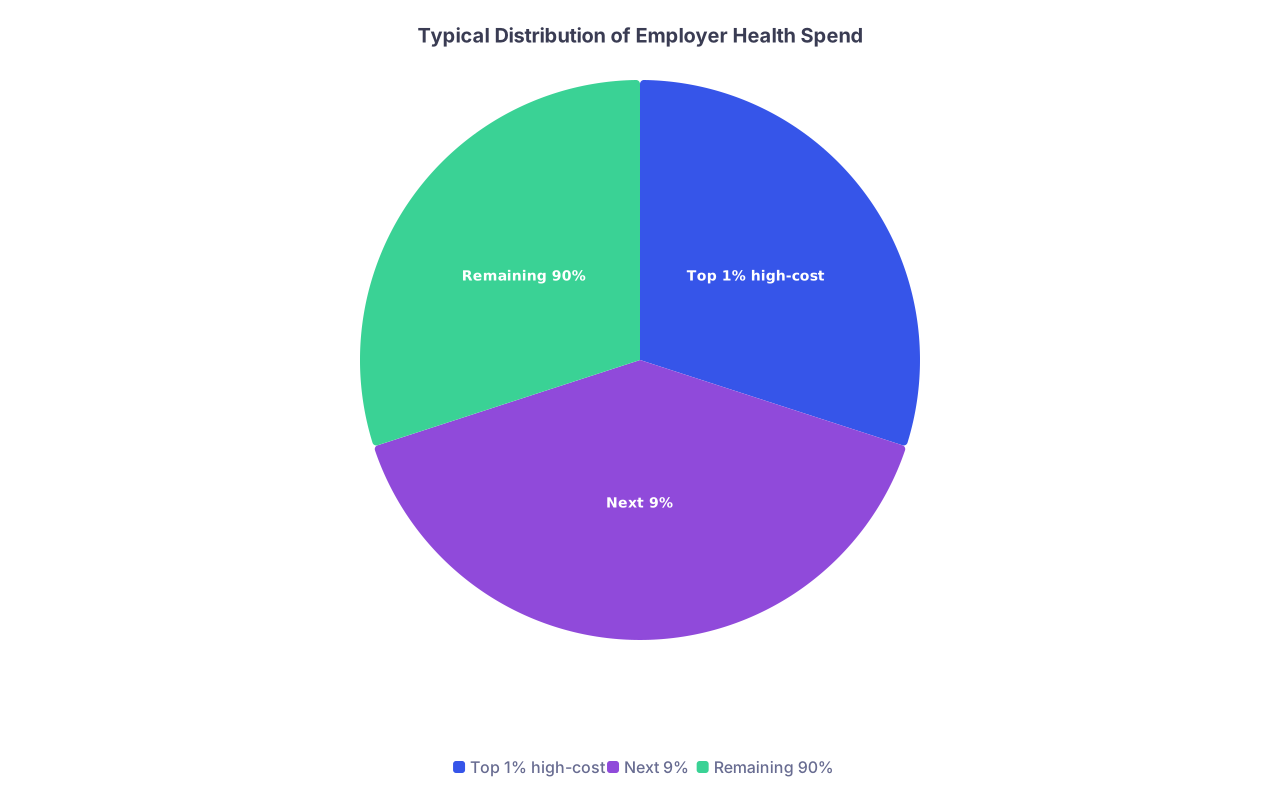
| Category | Value |
|---|---|
| Top 1% high-cost | 30 |
| Next 9% | 40 |
| Remaining 90% | 30 |
If your startup charges, say, $10–$20 PEPM and you touch 10,000 employees, that is:
- $100,000–$200,000 per month
- $1.2–$2.4 million per year in fees
To justify that, you must produce value beyond your fee:
- Measurable reduced trend vs. what actuarial models predicted
- Fewer high-cost episodes (e.g., NICU, avoidable readmissions, unmanaged cancer)
- Improved productivity / retention (harder to prove, but employers love the idea)
Your clinical intuition should be used to design interventions that can realistically move those outputs. Not hypothetically. In the constraints of:
- Variable engagement (most people do not pick up their phone)
- Limited employer levers (they cannot force a patient into your program)
- Fragmented data (you rarely see 100% of claims or clinical info in real time)
3. Core Business Models: Where Physician Insight Actually Moves the Needle
Let us categorize the typical employer-focused population health startup models. You will see hybrids, but you need the archetypes.
Model 1: Virtual-First Primary Care / Onsite-Neat Hybrid
Think: Crossover Health, One Medical at Work, Marathon Health.
Value proposition:
- “We own the gateway to care for your workforce. We reduce downstream costs by controlling referrals, tests, repeat ED visits.”
Revenue model:
- PMPM or PEPM for access to virtual and clinic services
- Sometimes shared savings if total cost-of-care targets are met
Where physicians matter:
- Designing visit templates and workflows to actually capture risk (HCCs, chronic disease staging)
- Building referral management rules (who gets sent to which specialist and why)
- Determining clinical protocols for “manage virtually vs. send to ED” with safe but cost-aware thresholds
- Helping articulate to employers the difference between “same-day access” fluff and actual cost-saving care pathways
Model 2: Condition-Specific Programs (Diabetes, HTN, CHF, MSK, Maternity)
Think: Livongo (now Teladoc), Omada, Hinge Health, Ovia, Carrot, etc.
Value proposition:
- “We narrow-focus on one high-cost domain and beat the health plan at managing it.”
Revenue model:
- PMPM/PEPM for eligible population (e.g., all diabetics)
- Or per-registered member
- Sometimes outcomes-based fees (A1c reduction thresholds, reduced NICU days)
Where physicians matter:
- Defining eligibility and inclusion criteria (all diabetics vs. only uncontrolled vs. claims + lab triggers)
- Clinical escalation rules (when a coach/RN escalates to MD, when to push local ED)
- Medication protocols (e.g., GLP-1s, SGLT2s, step therapy, dealing with PBMs and formularies)
- Designing what “success” means clinically vs. economically:
- A1c average improvement vs. reduced severe hypoglycemia vs. avoided admission
- For maternity: gestational age at delivery, preeclampsia management, NICU length-of-stay
Model 3: Navigation / Care Coordination / Center of Excellence
Think: Grand Rounds/Included Health, Accolade, Transcarent, Carrum.
Value proposition:
- “We guide employees through the chaos: second opinions, best specialists, optimal facility selection.”
Revenue model:
- PMPM plus episodic fees for COE surgeries or episode bundles
- Sometimes shared savings on avoidable care or negotiated bundled prices
Where physicians matter:
- Curating COE networks with real clinical standards (not just “top brand name hospital”)
- Designing triage algorithms: which symptoms or conditions absolutely need expedited specialist review
- Determining safe constraints for virtual-only second opinions
- Carefully defining when to recommend against a surgery or high-cost intervention
- Being the voice that prevents the product team from overselling “tele-everything” when in-person is clearly safer
4. The Employer’s Real Questions (That No One Puts on the Slide)
Behind closed doors, HR and CFO leaders say versions of the same five lines.
You need to know them and engineer your work to answer them.

| Step | Description |
|---|---|
| Step 1 | New Vendor Pitch |
| Step 2 | Reject |
| Step 3 | Approve Pilot |
| Step 4 | Scale or Renew |
| Step 5 | Cost Justified |
| Step 6 | Operationally Simple |
| Step 7 | Member Experience Good |
The underlying questions:
- “Is this really going to save me money, or just move cost around?”
- “Will my employees actually use this?”
- “Will this create more headaches for HR or reduce them?”
- “Will we get blamed when something goes clinically wrong?”
- “Will this vendor die or get acquired mid-contract?”
As a physician, here is where you lean in:
- Provide realism on what percentage of a target population you can engage at various intensity levels:
- 70% light touch (emails, texts)
- 30% moderate interaction (few video visits / coaching)
- 10–15% deep management (frequent monitoring, med changes)
- Clarify clinical risk tradeoffs:
- Example: virtual-first MSK program + PT + behavioral + pain management vs. expedited orthopedic surgery.
- Where is the line where delaying surgery is harmful vs. beneficial?
You become the translator between medical reality and sales promises.
5. Data, Risk Stratification, and Metrics: Designing a Population Health Engine That Is Not Fantasy
You will be told, “We have a proprietary risk model.” Often, that means someone pulled some logistic regression from a Kaggle notebook and slapped a logo on it.
You need to interrogate how your population health engine is built.
Data sources and integration
You will encounter:
- Medical claims (ICD, CPT, revenue codes)
- Pharmacy claims
- Eligibility files (who is covered, when, what tier)
- Sometimes lab feeds
- Rarely: real-time EHR data, unless you are tightly integrated
Step one: demand clarity on latency.
- Claims are delayed: often 30–90 days.
- Labs somewhat better, but still not real time.
That means:
- You are reacting to risk, not predicting it magically.
- You need workflows that work with lag. For example:
- Hospital discharge programs triggered by EHR integrations or ADT feeds, not just claims.
- Chronic disease program outreach that accepts you may only see an A1c 2–3 months late.
Building risk strata that actually work clinically
Clinical stratification is where physicians matter more than any glossy ML pitch.
For a diabetes program, a simple but strong structure:
High-risk:
- A1c ≥ 9, or
- ≥2 ED visits or ≥1 hospitalization in prior 12 months, or
- CKD stage 3+, or
- Evidence of severe hypoglycemia events
Moderate-risk:
- A1c 7.5–8.9, no severe events, maybe comorbid HTN/HLD
Lower-risk:
- A1c <7.5, no ED, controlled BP, no end-organ damage
Engagement intensity tiered accordingly:
- High-risk: MD or NP-led, frequent touchpoints, structured care plans
- Moderate: RN / coach with MD oversight
- Low: digital-only with periodic check-ins
Your role:
Define these tiers in a way that is both clinically sound and operationally feasible given your staffing.
And do not forget: risk models are only as good as their outcome definitions. If your “high-risk” label is built around “probability of any spend,” you will chase noise. Push for:
- Hard endpoints: admissions, ED visits, ICU stays, NICU days, high-cost procedures
- Where possible: clinical markers layered on spend (A1c, eGFR, BNP, etc.)
6. Designing Clinical Programs For Employer Populations: Specific Use Cases
Let us walk through a couple of core employer-focused populations and what a physician should own.
Example 1: Hypertension / Cardiometabolic Program for a 10,000-Life Employer
Scenario: Employer with ~10,000 employees, ~18,000 total covered lives. Claims show:
- 25% with HTN diagnosis
- 10% with diabetes
- Spiking ED visits for hypertensive urgency and chest pain
Your role as physician leader:
Define inclusion:
- All adults with ICD codes for HTN or on antihypertensives
- Plus those with repeated BP >140/90 on any available data sources (onsite clinic, prior programs)
Set tiered interventions:
- High-risk: HTN + CHF, CKD, CAD, or uncontrolled diabetes
- Moderate: HTN alone, systolic 140–160 range
- Low: borderline HTN, lifestyle risk factors
Write explicit, operational protocols:
- Frequency of BP checks
- Med titration rules (including when your team can titrate and when they must coordinate with PCP)
- Clear ED vs. urgent vs. routine rules for symptoms
- Labs, follow-up windows, communication cadence
Engage with an employer-relevant angle:
- Offer onsite or near-site screenings during working hours
- Integrate with occupational health or wellness initiatives
- Talk to HR about scheduling policies that make follow-ups possible
Then you define what success looks like:
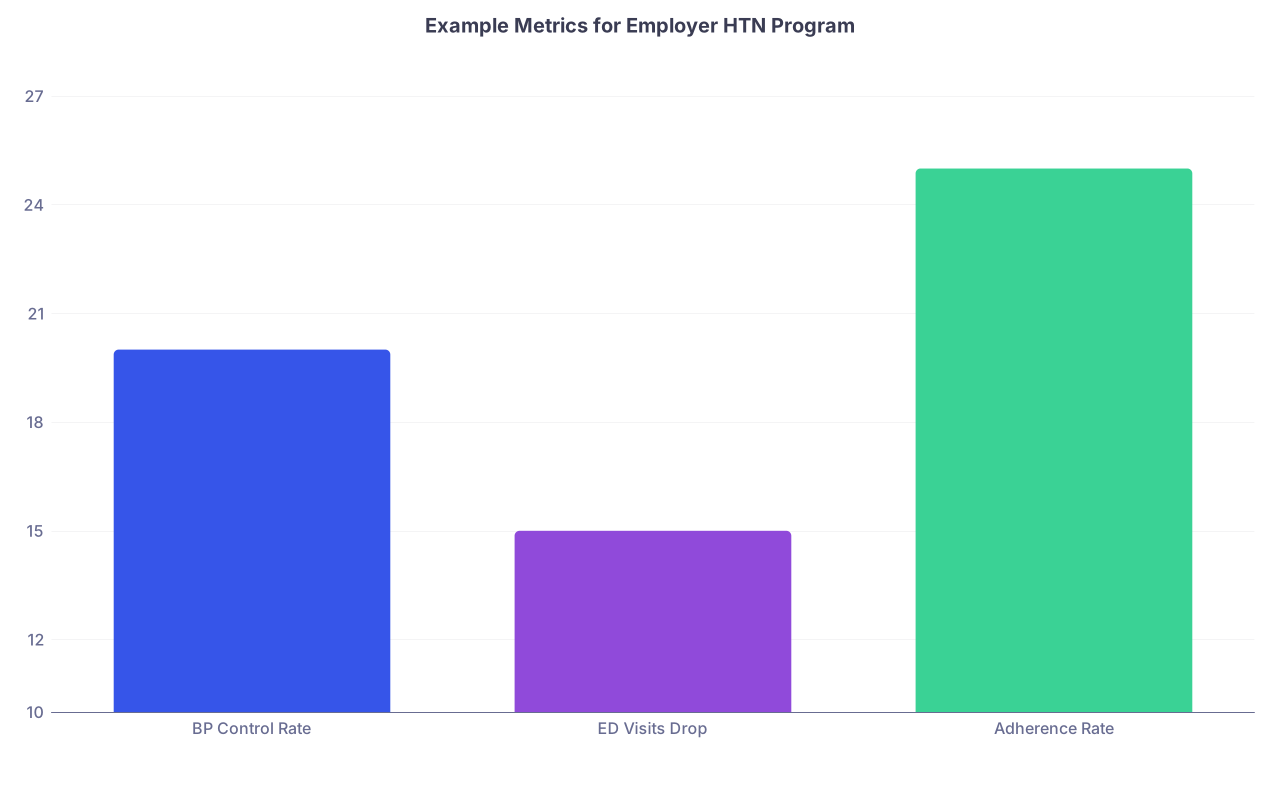
| Category | Value |
|---|---|
| BP Control Rate | 20 |
| ED Visits Drop | 15 |
| Adherence Rate | 25 |
Those numbers could mean:
- 20% absolute improvement in BP control rate among enrolled
- 15% relative reduction in HTN-related ED visits vs. baseline
- 25% increase in med adherence (based on PDC / MPR from pharmacy claims)
Your startup's CFO will want to translate that into:
- X fewer admissions
- Y fewer ED visits
- $Z savings vs. fees
But you drive what counts as clinically credible endpoints.
Example 2: High-Risk Maternity for a Manufacturing Employer
This is one of the most employer-relevant clinical domains:
preterm birth, preeclampsia, NICU days. Enormous cost and emotional weight.
Practical physician actions:
Define risk flags using both claims and basic intake:
- Prior preterm birth
- Preexisting HTN or diabetes
- BMI thresholds
- Twin/triplet gestation
- Age cutoffs
Build escalation and monitoring:
- Remote BP / weight monitoring, structured symptom reviews
- Rapid escalation pathways with OB partners for worrisome signs
- Integration with local hospitals: who gets a call when you see alarming data?
Define “out-of-bounds” zones:
- Preeclampsia symptoms, bleeding, severe pain → ED now, no argument
- Clear scripts for your nurses and non-physician staff
Work with the employer on support structures:
- Leave policies
- Flexible work arrangements for high-risk pregnancies
- Mental health resources
This is not “soft” stuff. It determines engagement and adherence. You can design the most clinically flawless virtual monitoring program, but if a pregnant employee cannot step away from a line job to take a 20-minute tele-visit, you lose.
You want to be the person in the room who says that clearly to HR and leadership.
7. Your Actual Role in a Startup: Titles vs. Reality
You might be:
- “Medical Director”
- “Chief Medical Officer”
- “VP, Clinical Strategy”
- Or a consulting physician on contract
Do not get hypnotized by the title. Look at your real levers.
Domains you should own or deeply influence
Clinical model
- Care pathways, triage, escalation
- Clinical staffing mix (MD, NP/PA, RN, pharmacists, coaches)
Safety and quality
- Incident review processes
- Protocols for adverse events, near misses
- Clinical documentation standards
Measurement
- Definition of clinical outcomes
- Guardrails on what sales can claim
- Design of pilots and internal studies
Product design
- Workflow design for clinicians (avoid UI that makes errors more likely)
- Clinical integrity of any algorithms or nudging tools
External credibility
- Speaking to employers, health plans, brokers
- Publishing or presenting program outcomes
If a startup wants a CMO as pure marketing, be careful. If you are not in the rooms where contract language, KPIs, and product decisions are made, your impact will be small and your name will still be on the line.
8. Common Traps Physicians Fall Into (And How Not To Be That Person)
I have seen the same patterns repeat.
Trap 1: Acting like this is just outpatient clinic with Zoom
If you try to transplant a traditional clinic model 1:1 into a startup built on thin PMPM economics, the CFO will tune you out.
You must account for:
- Time-based cost per interaction
- Asynchronous vs synchronous tradeoffs
- Decision support for non-physician staff
Your job is to define what actually needs physician-level attention versus what can be safely handled by nurses, pharmacists, or coaches with guardrails.
Trap 2: Ignoring operational constraints
It is easy to say “every high-risk patient should have a 30-minute tele-visit every week.” Then you realize:
- You have 1 FTE MD per 5,000 high-risk lives
- Employer will not pay enough to triple that staffing
You need to think like this:
- What is the minimum clinically safe cadence?
- What can be automated or delegated?
- Where do we accept slightly higher clinical risk in exchange for significant population-level benefit?
If that last line makes you flinch, good. Sit with it. Employer population health is full of regulated compromises.
Trap 3: Overpromising to sales / under-documenting to employers
Nothing kills physician credibility faster than going on a sales call and promising “30% cost reduction” without:
- Baseline data
- Clear inclusion criteria
- Realistic ramp-up timelines
You should be the one who says:
- “In year 1, with X% engagement, a 5–10% reduction in ED/avoidable admits in this high-risk group is realistic.”
- “We need at least 18–24 months to see stable trend movement, but here is what you will see by month 6, 12, 18.”
Document these assumptions. Get them into contracts or at least into joint steering committee notes.
9. How to Evaluate Whether an Employer-Focused Startup Is Worth Your Time
You are post-residency. Your opportunity cost is not theoretical. Before you sign on:
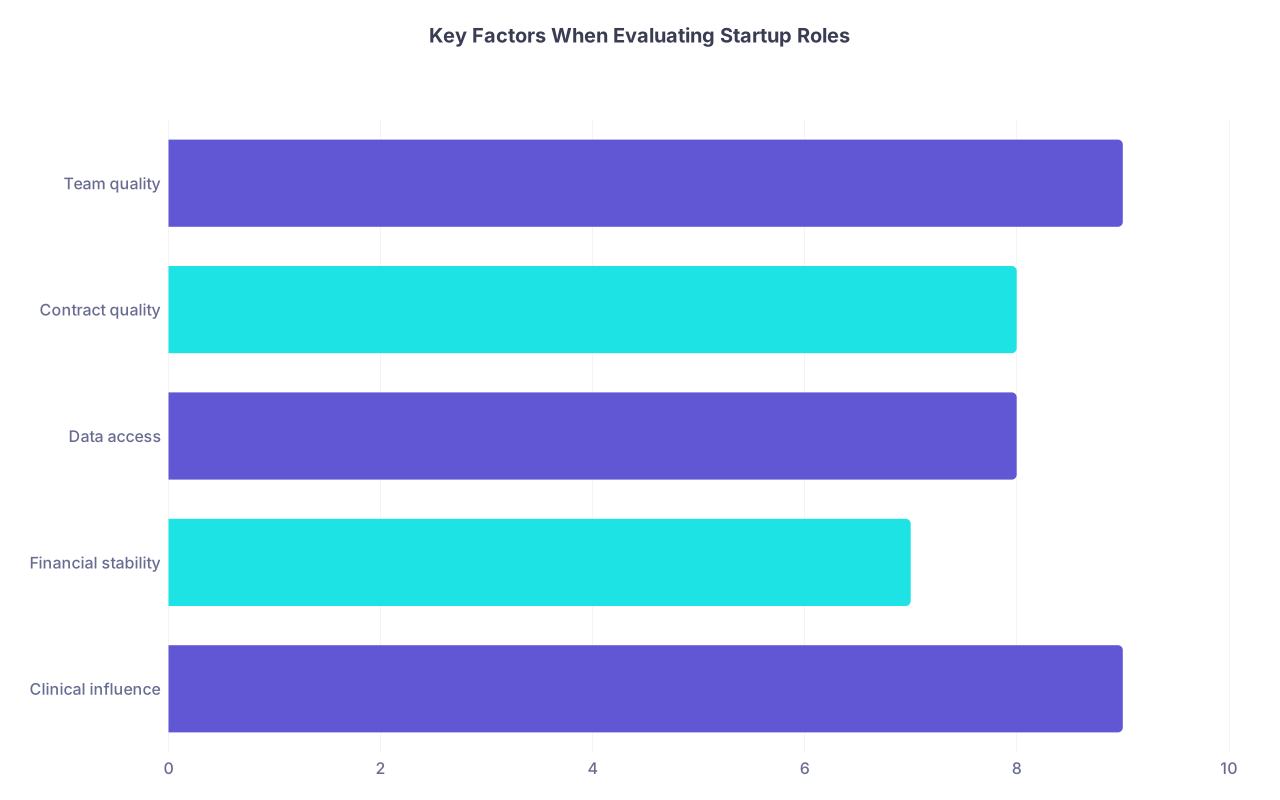
| Category | Value |
|---|---|
| Clinical influence | 9 |
| Financial stability | 7 |
| Data access | 8 |
| Contract quality | 8 |
| Team quality | 9 |
Ask very direct questions.
Clinical influence
- Who currently decides clinical protocols?
- Have they overruled physicians for “business reasons” in the last year? Examples?
- How are adverse events handled and who sees the incident reports?
Data reality
- Do you have actual claims data or just member self-report and survey tools?
- Are there real data feeds from TPAs / health plans? Latency?
- Who owns the analytics roadmap? Any clinicians?
Business sanity
- Unit economics per employer: are they profitable at scale or burning cash hoping for acquisition?
- Contract lengths and churn rates: how many employers renewed vs. dropped?
- Are they primarily selling cost savings, “wellness,” or member satisfaction? (Cost savings is hard but real; pure “wellness” is where many programs go to die.)
Your protections
- Malpractice coverage specifics. Tail coverage if you leave.
- Clear statement in writing about your liability limitations when you advise but do not provide direct care.
- IP and non-compete language; employer health is small, you do not want to be banned from the whole sector for 2 years.
If leadership cannot answer these cleanly or seems evasive, walk.
10. Building Your Own Skill Set: From Clinician to Population Health Operator
You can survive in this world by being clinically excellent. You will not lead it unless you build a few additional muscles.
Areas to actively develop:
Basic health economics and actuarial thinking
- Not to become an actuary, but enough to check their math and assumptions
- Understand trend, regression to mean, risk adjustment basics
Data literacy
- Read dashboards critically
- Ask about denominators, confidence intervals, selection bias
- Partner tightly with an analyst; review cohorts together
Vendor and benefit ecosystem fluency
- Know the major PBMs, TPAs, large brokers, and common point solutions
- Understand where your product sits: replacement vs. complement
Communication with non-clinical executives
- Distill complex clinical tradeoffs into 2–3 clear options with pros/cons
- Tie recommendations to financial and operational impact, not just “best practice”
This is learnable. You do not need an MBA. You need curiosity, time with your analytics and sales teams, and willingness to sit in on conversations that feel foreign at first.
11. A Simple Mental Model You Can Carry into Any Employer Meeting
When you are in front of an HR VP or CFO, hold this model:
- WHO: Which exact population are we addressing? (Size, risk profile, current costs)
- WHAT: What specific outcomes will we move? (Clinical + financial, with numbers)
- HOW: What are the concrete interventions and required behavior changes? (For employees, for HR, for local providers)
- WHEN: What timeline for signal detection vs. real ROI?
- RISKS: What clinical safety and reputational risks exist, and how are they mitigated?
If you can answer those five domains cleanly, using real data and concrete examples, you will sound like someone who understands both sides of this world. Because you will.
And you will be doing what physicians should be doing in these startups: keeping the work grounded in reality while still pushing for ambitious, scalable care models.



Key Takeaways
Employer-focused population health is not clinic with nicer dashboards. It is a financial and operational game where clinical decisions live inside PMPM constraints and Excel models. Learn that language.
Your leverage as a physician is in defining the population, the clinical pathways, and the outcome metrics—so they are both safe and economically credible. Get into the rooms where those are decided.
Before you sign on, interrogate data reality, clinical influence, and unit economics. A smart, clinically grounded physician can transform these startups. A sidelined “medical mascot” just lends a degree to someone else’s marketing.