
The biggest mistake doctor CEOs make with fundraising is treating it like a one‑time event instead of a 12–18 month operating system.
You are not “doing a round.” You are running a continuous, quarter‑by‑quarter campaign to make your company impossible to ignore by the right investors, right when they are ready to wire.
I will walk you through that operating system.
Assume this: you are post‑residency, have a clinical role (full‑ or part‑time), and you want to raise an institutional seed or Series A within 12–18 months for your medical startup. You might have some angel money already. You probably do not have a full‑time CFO. And you almost certainly underestimate how long this will take.
So we build a concrete, quarter‑by‑quarter timeline.
Big Picture: 4‑Quarter Fundraising Arc
At this stage you should think in four quarters:
- Quarter −2: Pre‑raise foundation (6–9 months before raise)
- Quarter −1: Quiet pre‑marketing and data sharpening
- Quarter 0: Active raise, intensive investor meetings
- Quarter +1: Close, clean up, and prepare for the next round
Most doctor CEOs start at Quarter 0 and wonder why no one cares. You will not do that.
To anchor it, here is a simple high‑level arc:
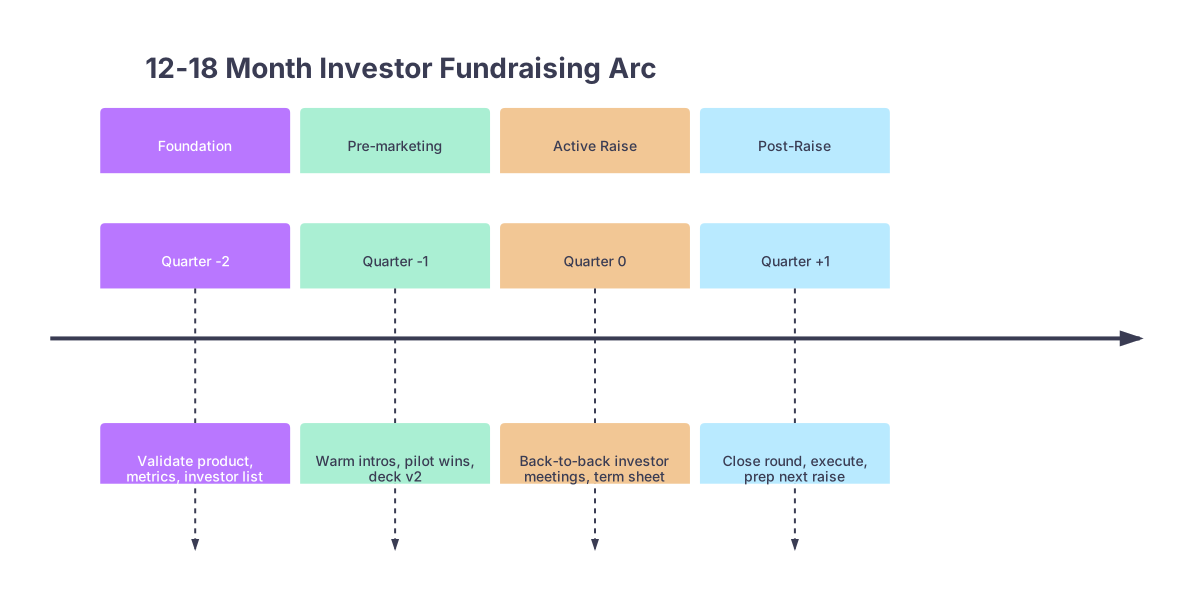
| Period | Event |
|---|---|
| Foundation - Quarter -2 | Validate product, metrics, investor list |
| Pre-marketing - Quarter -1 | Warm intros, pilot wins, deck v2 |
| Active Raise - Quarter 0 | Back-to-back investor meetings, term sheet |
| Post-Raise - Quarter +1 | Close round, execute, prep next raise |
Now we go quarter by quarter, then week by week when it matters.
Quarter −2: Pre‑Raise Foundation (6–9 Months Before You Raise)
At this point you should stop telling people you are “raising” and start acting like a surgeon in pre‑op: meticulous, systematic, no drama.
Month 1: Clarify the Story and the Numbers
You cannot fix your narrative in the middle of a partner meeting. You fix it now.
This month you should:
Define the target raise and runway
- Decide: are you raising a $750k–$1.5M seed, or a $3–5M seed+/Series A?
- Build a 24‑month runway model on a simple spreadsheet:
- Headcount (who, when, cost)
- Product milestones (MVP → v2 → regulatory steps if relevant)
- Commercial milestones (pilots, contracts, ARR, patient volume)
Lock your “why now / why you” thesis
- One sentence problem.
- One sentence solution.
- One sentence “why now” (regulatory shift, reimbursement change, new tech).
- One sentence “why you,” and it must actually leverage your clinical background.
- Example: “Former Stanford cardiologist who ran the valve clinic and saw 300+ TAVR patients per year, building triage software used in 4 major cath labs.”
Decide your initial business model
- You cannot walk into investor meetings saying “we are exploring B2B and direct‑to‑consumer and maybe a marketplace.”
- Pick one primary:
- B2B SaaS to health systems / payers
- B2B2C (via employers, payers)
- Tech‑enabled clinic or care delivery model
- Regulated device/diagnostic with a clear path to reimbursement
By the end of Month 1 you should have a one‑page narrative and a rough financial model. Not pretty, but coherent.
Month 2: Build Early Traction and Credibility
Investors do not care that you are a physician. They care that being a physician gets you traction faster than a non‑physician.
This month you shift from slides to evidence.
This month you should:
- Secure 2–5 serious clinical or institutional partners
- Not “interested” hospitals. Actual:
- LOIs
- Pilot agreements
- Letters of support from department chairs or CMOs
- Not “interested” hospitals. Actual:
- Implement at least one live pilot or beta
- Even if tiny: a single clinic, a 30‑patient cohort, a 2‑physician practice.
- Aim for measurable metrics:
- Reduction in no‑shows
- Improved throughput
- Time saved for clinicians
- Readmission reduction
- Assemble a minimal advisory layer
- One industry person who has exited a health tech company.
- One operator (non‑physician) who has built sales / GTM in healthcare.
- One respected clinician in your niche (do not collect 12 random advisors).
You are not “announcing” anything yet. You are accumulating ammunition.
Month 3: Create Version 1 of Investor Materials
You do not obsess over fonts now. You build a coherent version 1.
By end of Month 3 you should have:
- Pitch deck v1 (12–16 slides):
- Problem (grounded in your real clinical experience).
- Solution.
- Market (TAM/SAM that is believable, not fantasy).
- Product demo screenshots.
- Early traction and pilots.
- Business model and pricing.
- Go‑to‑market strategy.
- Team and advisors.
- High‑level financials + use of funds.
- One‑pager / executive summary (PDF):
- For people who will never read full decks.
- Data room skeleton (folder structure only):
- Corporate docs (incorporation, cap table).
- Product (roadmap, architecture overview).
- Clinical / regulatory (if applicable).
- Pilots and metrics (case studies).
- Financial model.
At this point, do not spam investors. Share drafts only with 2–3 trusted founders or mentors who have actually raised in health tech (Carbon Health, Oscar, Cityblock, Thirty Madison alumni, etc.).
Quarter −1: Quiet Pre‑Marketing and Sharpening (3–6 Months Before Raise)
This is where most doctor CEOs go either too fast (spray every VC on LinkedIn) or too slow (stay in perfection mode forever). You will not do either.
You move deliberately: warm the market without formally “kicking off” the round.
Month 4: Build the Target Investor List and Warm Intros
At this point you should know exactly whom you want money from. Not “healthcare VCs.” Names.
This month you should:
- Build a tiered investor list
- Tier 1 (8–15 firms): Strong health tech experience, right stage, right check size, have led rounds in companies like yours.
- Tier 2 (10–20 firms): Adjacent theses, maybe less healthcare depth but strong SaaS or marketplace angle.
- Angels / syndicates (10–30 names): Operator angels, exited healthcare founders, physician angels with real networks.
| Tier | Count Target | Profile Example |
|---|---|---|
| Tier 1 VCs | 8–15 | A16Z Bio+Health, Oak HC/FT |
| Tier 2 VCs | 10–20 | Generalist funds with 1–2 health bets |
| Angels | 10–30 | Health tech founders, senior clinicians |
| Strategics | 2–5 | Health systems, payers innovation arms |
- Research each firm deeply
- Partners who lead healthcare.
- Their last 5–10 deals in your space.
- Stage and check size. Do not pitch a $50M fund for a $5M Series B.
- Start lining up warm paths
- Use LinkedIn and your clinical network intentionally:
- Co‑residents now in consulting, PE, or digital health.
- Attendings on advisory boards.
- Alumni groups from your med school or residency.
- Ask for “quick feedback” calls, not funding yet.
- Use LinkedIn and your clinical network intentionally:
Month 5: Soft‑Pitch and Iterate on Story
At this point you should start running low‑risk reps of your pitch to refine it.
This month you should:
- Do 5–10 “friendly” pitch conversations
- Not formal partners’ meetings. One partner or senior associate. Angels. Operators.
- Frame it as:
- “We are planning a formal raise in ~X months; I would value candid feedback on whether this is venture‑scale and what milestones we should hit before then.”
- Do not push for a check. You are learning.
- Systematically collect objections
- “Sales cycle to hospitals is too long.”
- “Not convinced payers will reimburse.”
- “Product looks like feature, not company.”
- Write them down in a dedicated doc. I have seen this doc save rounds.
- Evolve deck to v2
- Every substantial objection should either:
- Be pre‑empted in the deck, or
- Be reframed by stronger evidence or clearer strategy.
- Every substantial objection should either:
Month 6: Hit Target Milestones Before Formal Launch
You do not launch the raise just because the calendar turned. You launch when 2–3 key milestones are real, not aspirational.
At this point, you should aim to lock in:
- Traction proof point
- Example set:
- 2–3 paid pilots, or
- 500–2,000 patients through the platform, or
- $10–30k MRR if SaaS.
- Example set:
- Clinical validation signal
- IRB‑approved study underway.
- Pre/post data from pilot (even early).
- Named KOL endorsing results.
- Team signal
- At least one non‑physician, execution‑heavy hire or cofounder:
- Product, engineering, or sales who has shipped in healthcare.
- At least one non‑physician, execution‑heavy hire or cofounder:
Once 2 out of those 3 feel real, you are ready to flip into active raise mode next quarter.
Quarter 0: Active Raise (12–16 Weeks of Controlled Chaos)
This is the only quarter anyone talks about. It is also the one you are most likely to mismanage if you ignore the previous two.
Here you deliberately compress the process so that investors feel real time pressure and signal from each other.
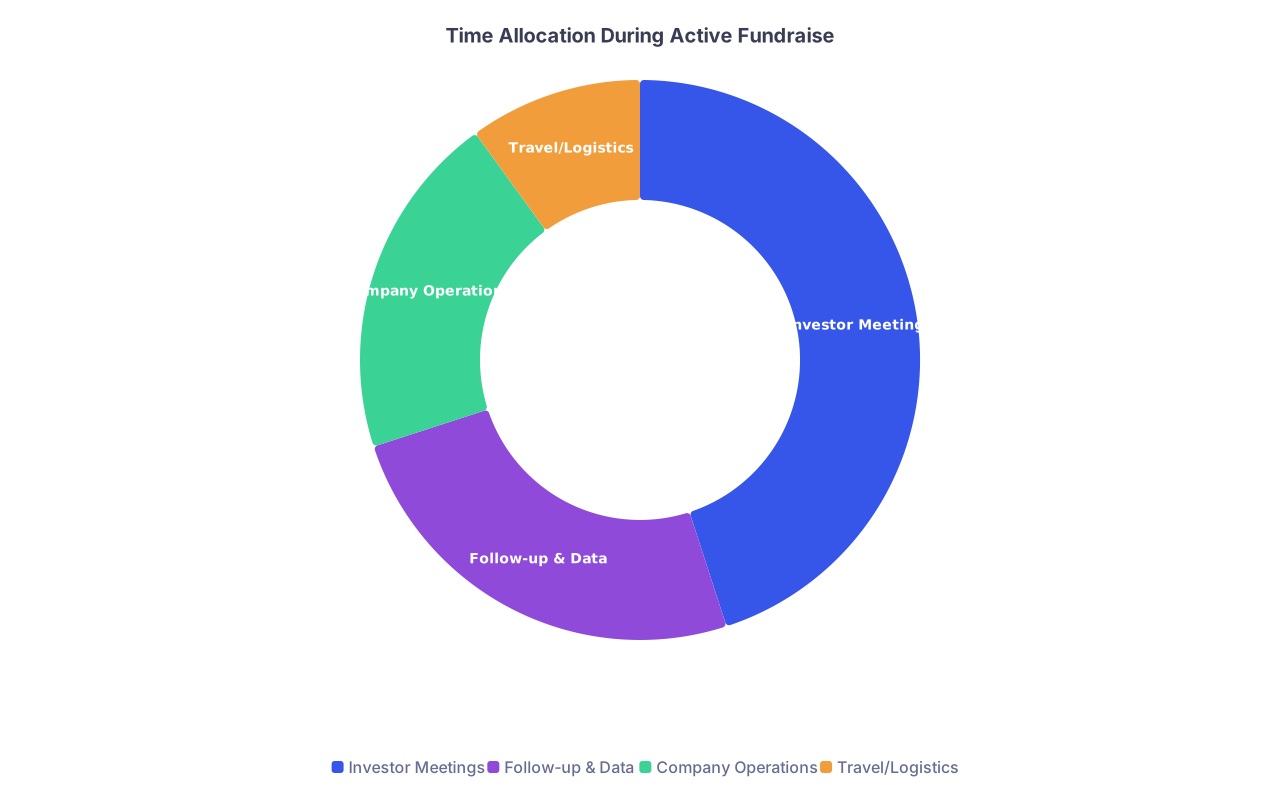
| Category | Value |
|---|---|
| Investor Meetings | 45 |
| Follow-up & Data | 25 |
| Company Operations | 20 |
| Travel/Logistics | 10 |
Weeks 1–2: Official Launch and First Wave
At this point you should formally declare the round open to your top targets.
This 2‑week window you should:
- Send tailored outreach to Tier 1 investors
- Short email, 3–5 sentences:
- Who you are (one clinical credibility line).
- What the company does (one clear sentence).
- One traction / proof bullet.
- The raise size and target close timeline.
- Example: “We are raising a $2.5M seed, aiming to close by [Month].”
- Short email, 3–5 sentences:
- Stack meetings tightly
- Aim for 8–15 meetings in the first 2 weeks, across multiple firms.
- Use Zoom aggressively to save your clinical time.
- Run a crisp 30–40 minute pitch
- 15–20 minutes presentation.
- 15–20 minutes Q&A.
- Always leave them wanting a second meeting, not dragging on.
Do not accept “intro calls” that are clearly fishing expeditions from funds far outside your stage or thesis. Protect your calendar.
Weeks 3–6: Second Meetings and Deep Diligence
If the foundation is solid, partners will lean in during this window. This is where real work happens.
This month you should:
- Convert initial interest into partner‑level discussions
- Second meetings should include:
- At least one decision‑making partner.
- Sometimes an operating partner with healthcare focus.
- You move from high‑level vision to:
- Unit economics.
- Regulatory and reimbursement path.
- Integration with EMRs or payer systems.
- Second meetings should include:
- Open your data room (carefully)
- Only for investors who show real interest.
- Organize so an overworked associate can find answers in 5 minutes:
- Folder names clear.
- Files dated.
- KPIs explained (how you define “active user,” etc.).
- Use clinical credibility intelligently
- Have 1–2 champion clinicians available for reference calls.
- Prepare them; do not just give out numbers cold.
- Let them talk about:
- Workflow impact.
- Patient outcomes.
- Adoption challenges (yes, the real ones).
This is also when you will feel the strain of your clinical role. Block fixed “fundraising days” if you can (e.g., Tuesday/Thursday), and communicate that to investors.
Weeks 7–10: Drive Toward Term Sheets
At this point you should manufacture a decision window. Endless “circle back in a few weeks” is how rounds die.
This stretch you should:
- Narrow to 3–5 serious leads
- Criteria:
- Partner conviction (you can feel it).
- Real champion inside the firm.
- Check size and fund age make sense.
- De‑prioritize perpetual tire‑kickers.
- Criteria:
- Create a soft deadline
- Communicate something like:
- “We are aiming to decide on a lead by [date 3–4 weeks out]. We will keep this process tight so everyone has clarity.”
- Do not bluff. Only say this if you have genuine interest.
- Communicate something like:
- Negotiate term sheets when offered
- Key points to focus on:
- Valuation and dilution.
- Size of lead check.
- Board composition.
- Pro‑rata / follow‑on rights.
- This is where you get counsel:
- Lawyer with venture experience.
- At least one founder who has raised 1–2 rounds.
- Key points to focus on:
If you are getting only weak interest or heavily structured term sheets (multiple liquidation preferences, extreme control terms), revisit whether you launched too early or targeted the wrong investors.
Weeks 11–12: Syndication and Soft Circle
Once you have a credible lead (or close to it), you let the rest of the market know.
In this closing window you should:
- Fill out the round with follow‑on investors and angels
- Phrases you want to be able to use:
- “We have a term sheet from [firm] and are allocating $X for value‑add angels.”
- This creates urgency and clarity for angels sitting on the fence.
- Phrases you want to be able to use:
- Keep running the company
- At least one leadership person needs to guard operations.
- Nothing kills investor confidence like metrics falling off a cliff mid‑raise.
Quarter +1: Close, Paper, and Reset the Clock
Post‑residency doctors often think the money hitting the bank is the end. It is the midpoint.
This quarter is about closing cleanly, then methodically setting up the next raise, even as you execute.
Month 1 After Term Sheet: Legal and Closing
At this point you should slow down your external fundraising noise and focus on papering the deal correctly.
This month you should:
- Work through legal docs efficiently
- Stock purchase agreement.
- Investor rights.
- Board consents.
- ESOP / option pool size.
- Communicate clearly with all investors
- Timeline to close.
- Any remaining diligence items.
- Final allocation decisions.
Do not let this drag for 3–4 months. Aim for 4–8 weeks from signed term sheet to money wired.
Month 2: Announce and Reposition
You do not need a PR agency, but you do need to control the story.
This month you should:
- Announce the round strategically
- Coordinated:
- Press release (if meaningful).
- LinkedIn posts from you, investors, and key clinicians.
- Website update.
- Focus messaging on:
- Problem and impact on patients/clinicians.
- Why this capital now (what it unlocks).
- Coordinated:
- Re‑segment your investor relationships
- Existing investors → monthly or quarterly updates.
- Warm but passed investors → keep on a light drip:
- Significant milestones.
- Role‑specific asks (e.g., “Intro to payer medical director”).
You are now laying ground for Series A, not begging for leftover checks.
Month 3: Operationalize and Start Tracking Next‑Round Metrics
At this point you should shift your mind to “what metrics do we need to show in 18–24 months to raise the next round?”
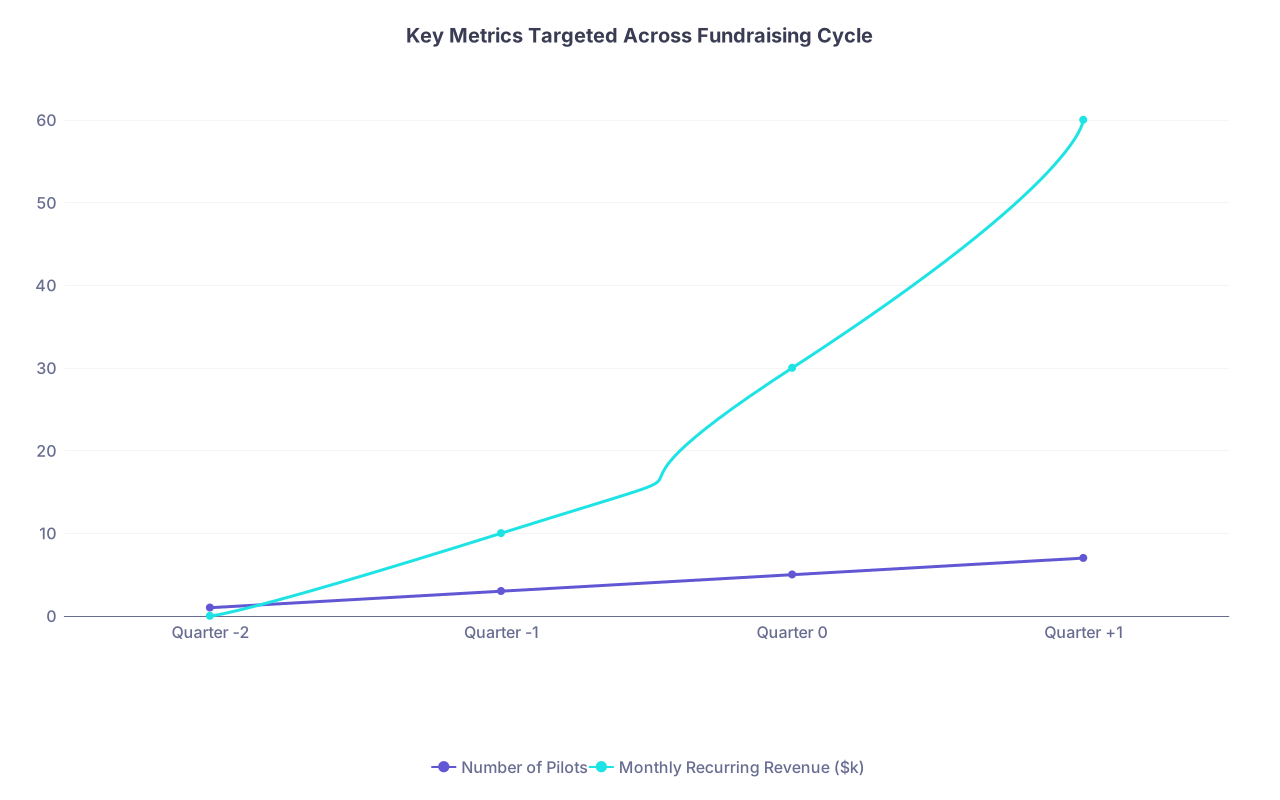
| Category | Number of Pilots | Monthly Recurring Revenue ($k) |
|---|---|---|
| Quarter -2 | 1 | 0 |
| Quarter -1 | 3 | 10 |
| Quarter 0 | 5 | 30 |
| Quarter +1 | 7 | 60 |
This month you should:
- Define your “next raise” story backward
- For Series A style raise, you might need:
- $1–3M ARR.
- 5–10 live enterprise customers.
- Demonstrated expansion within accounts.
- Clear clinical and economic outcomes data.
- For Series A style raise, you might need:
- Build a simple metric dashboard
- 5–7 KPIs you track every week:
- New customers / pilots.
- Activation and retention.
- Revenue and gross margin.
- Clinical outcome proxy metrics if applicable.
- 5–7 KPIs you track every week:
- Schedule consistent investor updates
- Monthly for first 6 months post‑raise.
- Then quarterly, with:
- Highlights.
- Lowlights and risks (yes, be honest).
- Asks (specific intros, roles, pilots).
Congratulations, you are back at Quarter −2 for the next cycle. Smarter this time.
Practical Weekly Cadence During Active Fundraising
Because you are a doctor CEO, your weeks are already chaotic. Here is a realistic weekly pattern during Quarter 0 that I have seen work.

Weekly pattern (12‑week raise):
- Monday
- Morning: Clinical or internal team standup.
- Midday: 2–3 investor calls (Tier 1).
- Late afternoon: Debrief, update CRM/spreadsheet with investor notes.
- Tuesday
- Deep work on follow‑ups:
- Send requested materials.
- Tweak deck for specific verticals (payer vs provider).
- 1–2 second‑meeting‑level conversations.
- Deep work on follow‑ups:
- Wednesday
- Block as much clinical or product time as possible. You cannot let the product stall.
- Evening: 1–2 West Coast calls if needed.
- Thursday
- Heavy meeting day:
- Partner‑level pitches.
- Reference calls with clinicians or customers.
- Heavy meeting day:
- Friday
- Morning: Internal review of pipeline.
- Afternoon: Decide who moves forward, who is cooling off, where to push.
- Send weekly investor follow‑ups and scheduling for next week.
The non‑negotiable: every investor interaction gets logged. Spreadsheet is fine. You cannot keep 40+ conversations in your head between overnight calls and clinic.
Common Mistakes by Doctor CEOs and When They Happen
One more thing. There are predictable failure points. You want to see them on the timeline before they hit.
| Quarter | Critical Mistake | Impact |
|---|---|---|
| Q -2 | No clear business model | Confused investors, no conviction |
| Q -1 | Spraying cold emails | Wasted signal, brand damage |
| Q 0 | Meetings too spread out | No urgency, no term sheets |
| Q +1 | No metric focus | Weak position for next round |

If you know when these usually appear, you can blunt them:
- Quarter −2: Force yourself to choose a primary business model and customer, even if it hurts.
- Quarter −1: Limit outreach to people you can reach via warm paths. Quality over volume.
- Quarter 0: Cluster meetings. Two quiet weeks in the middle of a raise is a red flag.
- Quarter +1: Treat post‑raise like pre‑raise for the next round; start tracking the right metrics immediately.
Final Snapshot
Keep three points front and center:
- Fundraising is a 12–18 month cycle, not a 6‑week sprint. Quarter −2 and Quarter −1 determine whether Quarter 0 works at all.
- Every quarter has a specific job. Early quarters: sharpen story and data. Raise quarter: compress meetings and create a decision window. Post‑raise: execute while quietly preparing the next story.
- Play the physician card strategically, not sentimentally. Your clinical background buys you fast insight and access, not a free pass. Convert that advantage into pilots, outcomes, and sharp execution on this timeline.