
The biggest lie physicians tell themselves about startups is: “I’ll figure it out as I go.” You will not. Not in the first 12 months. You either run a tight, structured year, or the year runs you into the ground.
Here is how to run it.
Big Picture: Your First-Year Timeline As A Physician Founder
You are post‑residency, post‑job market. Maybe you have a part‑time clinical role, maybe you just left a full‑time attending job. Either way, the next 12 months will decide whether you actually become a founder or just a doctor with a half‑finished deck.
At this point you should be crystal clear on three constraints:
- Clinical hours per week
- Runway (cash + income months)
- Risk tolerance (how long you will give this before you must pivot or stop)
Now we lay out the year.
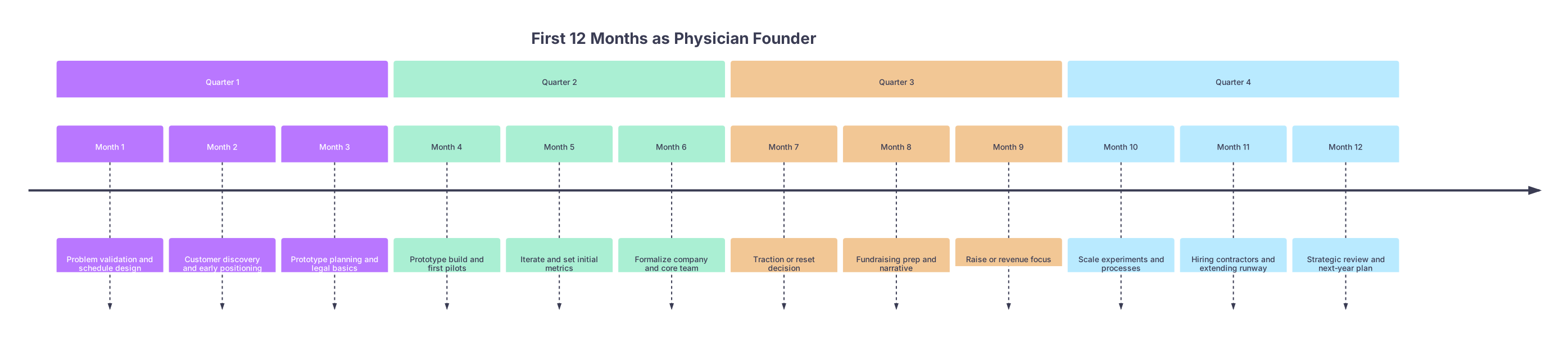
| Period | Event |
|---|---|
| Quarter 1 - Month 1 | Problem validation and schedule design |
| Quarter 1 - Month 2 | Customer discovery and early positioning |
| Quarter 1 - Month 3 | Prototype planning and legal basics |
| Quarter 2 - Month 4 | Prototype build and first pilots |
| Quarter 2 - Month 5 | Iterate and set initial metrics |
| Quarter 2 - Month 6 | Formalize company and core team |
| Quarter 3 - Month 7 | Traction or reset decision |
| Quarter 3 - Month 8 | Fundraising prep and narrative |
| Quarter 3 - Month 9 | Raise or revenue focus |
| Quarter 4 - Month 10 | Scale experiments and processes |
| Quarter 4 - Month 11 | Hiring contractors and extending runway |
| Quarter 4 - Month 12 | Strategic review and next‑year plan |
Months 1–3: Foundation And Brutal Validation
Month 1: Commit, Clarify, And Design Your Life
At this point you should stop thinking like a resident and start thinking like a capital allocator. Your scarcest resource is time, not intellect.
Week 1–2: Decide your clinical–startup split
You must block your calendar now or your clinical life will eat your startup.
- Choose one:
- 0.4–0.6 FTE clinical with dedicated 2 full days for startup, or
- Full‑time clinical for 3–4 months to stack cash, then step down to 0.4–0.5 FTE
- Hard‑block:
- 2–3 “deep work” blocks per week (3–4 hours each) for startup only
- 1 admin block for email, scheduling, and reading
Week 3: Define the problem, not the product
If you started by sketching an app, you already went wrong. Step back.
Write one clear problem statement:
- Who: “Hospitalists at community hospitals…”
- Situation: “…struggle to coordinate discharges quickly…”
- Pain: “…leading to avoidable LOS and readmissions.”
- Evidence: “…I see delays on >30% of my discharges; case managers complain constantly.”
By the end of Month 1 you should have:
- 2–3 tightly defined problem statements
- A written personal runway plan (savings, income, months you can last)
- A fixed weekly schedule you will defend like a call schedule
| Day | Clinical | Startup Deep Work | Admin/Meetings |
|---|---|---|---|
| Monday | AM/PM | - | - |
| Tuesday | - | 9–1 | 2–3 |
| Wednesday | AM/PM | - | - |
| Thursday | - | 9–1 | 2–4 |
| Friday | AM | 1–4 | - |
Month 2: Customer Discovery Or You Are Guessing
At this point you should be talking to humans, not perfecting a pitch deck.
Weeks 1–2: 20–30 structured interviews
Target people who feel the pain:
- If B2B: CMOs, CMIOs, practice owners, medical directors
- If B2C: patients with a specific condition, caregivers, or a narrow demographic
Your questions must be non‑leading:
- “Walk me through the last time this happened.”
- “What did you do instead?”
- “What have you tried? What was frustrating about it?”
- “If this was magically solved, what would that change for you?”
Track insights in a simple spreadsheet.
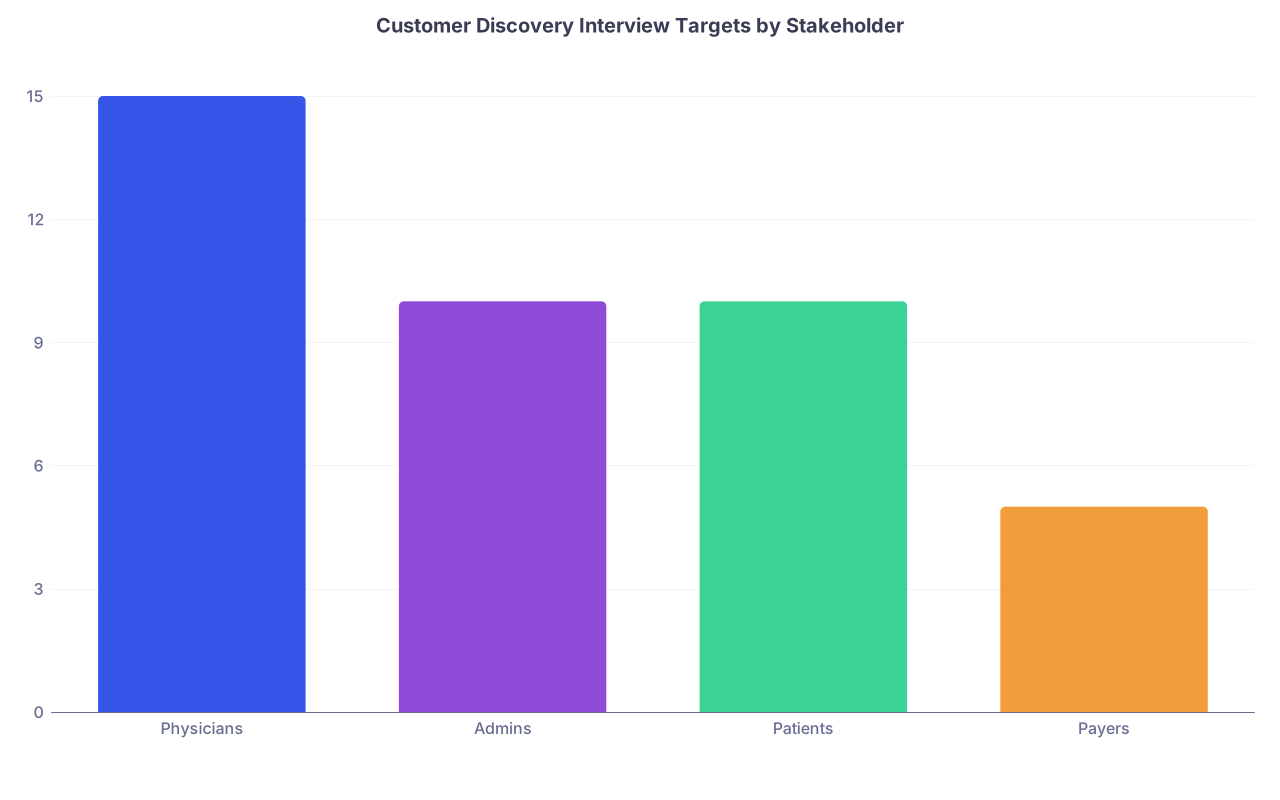
| Category | Value |
|---|---|
| Physicians | 15 |
| Admins | 10 |
| Patients | 10 |
| Payers | 5 |
Week 3–4: Synthesize and narrow
By the end of Month 2 you should:
- Kill at least one idea
- Have 1 primary problem and 1 primary customer
- Be able to write a one‑sentence positioning test:
“We help [customer] who struggle with [pain] by providing [solution type] that delivers [measurable benefit].”
If you cannot fill those blanks without rambling, you are not ready to build anything.
Month 3: Prototype On Paper, Not Code
At this point you should stop fantasizing and start externalizing.
Week 1: Decide your product category
- SaaS / workflow tool
- Clinical service / telehealth
- Device / diagnostic
- Marketplace / staffing
Each has different regulatory and capital needs. Most first‑time physician founders underestimate SaaS complexity and overestimate device sexiness. Service + lightweight tech is often the most realistic starting point.
Week 2–3: Build a low‑fidelity prototype
Examples:
- Screens drawn on paper or Figma for a software tool
- A simple intake form + scheduling workflow for a telehealth service
- Slide deck showing how your algorithm or process fits into existing systems
You are not “being scrappy.” You are avoiding wasting 6–9 months.
Week 4: Basic legal and structure
You are post‑residency; you are not a college hacker. Clean structure early saves pain later:
- Decide: LLC vs C‑Corp (most venture‑scale startups → C‑Corp; lifestyle / consulting → LLC)
- File in a standard state (often Delaware C‑Corp for serious tech plays)
- Get:
- EIN
- Business bank account
- Simple IP assignment (if cofounder / contractors)
By end of Month 3 you should have:
- 1 clear problem + customer
- 1 prototype you can show
- A basic legal entity and bank account
Months 4–6: Build, Test, And Formalize
Month 4: First Real‑World Use, However Ugly
At this point you should be putting your prototype in front of actual users. Not friends who will “totally use it someday.”
Week 1–2: Secure 3–5 pilot users or sites
Target:
- A friendly practice where you trained
- A small hospitalist group
- A niche patient community (e.g., autoimmune Facebook group, migraine subreddit with appropriate outreach)
Offer:
- Early access
- Deep involvement in shaping the product
- Clear benefit (time savings, extra patients, better documentation)
Week 3–4: Measure reality, not feelings
You need 2–3 core metrics, even at this stage. For example:
- Time‑saved per clinician (minutes per day or per task)
- Conversion rate (sign‑ups → active users)
- Patient outcomes proxy (no‑show rate, LOS on pilot floor, etc.)
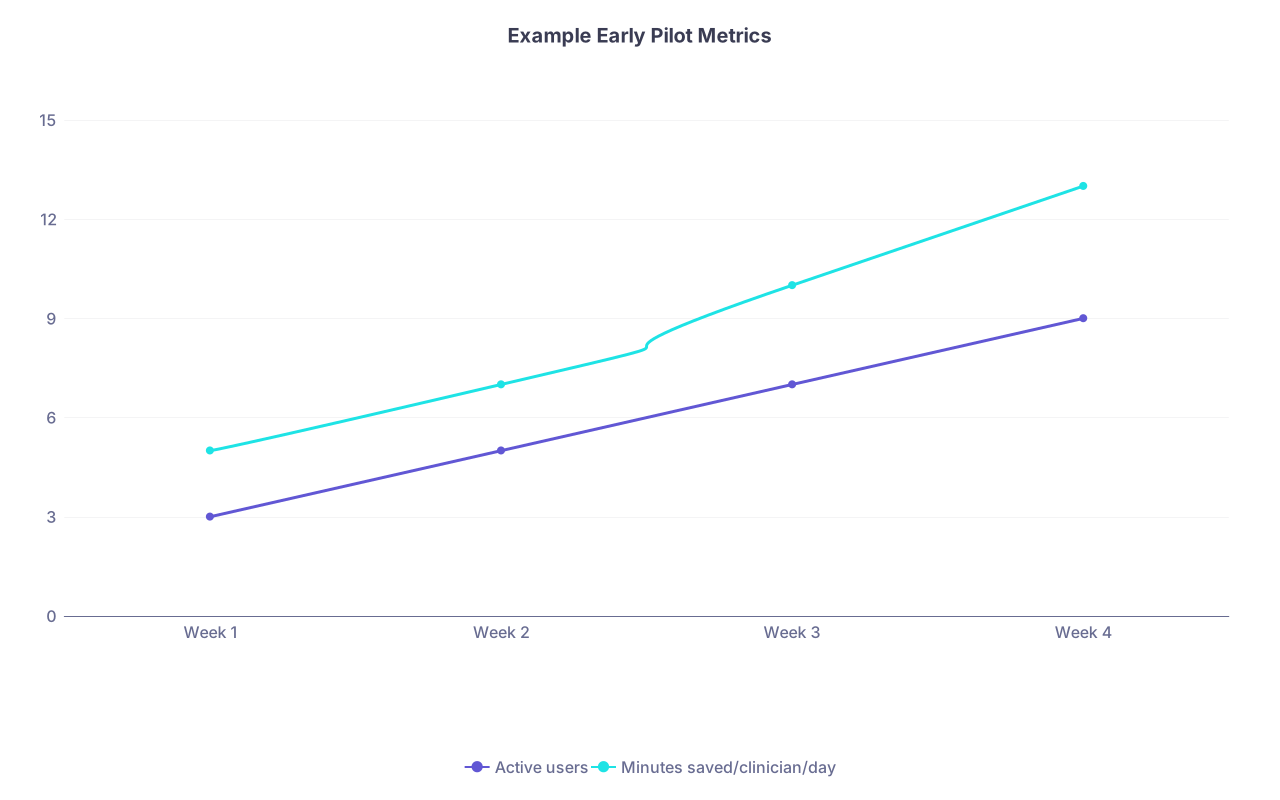
| Category | Active users | Minutes saved/clinician/day |
|---|---|---|
| Week 1 | 3 | 5 |
| Week 2 | 5 | 7 |
| Week 3 | 7 | 10 |
| Week 4 | 9 | 13 |
By the end of Month 4 you should have:
- At least one real setting where the product is used, even if clunky
- Early metrics, even if they look terrible (that is normal)
Month 5: Iterate Hard Or Pivot The Angle
At this point you should be rewriting, not polishing.
Week 1: Ruthless feedback review
Sit down with each pilot user:
- Screen‑share or shadow them using it
- Ask:
- “Where did you get stuck?”
- “What did you avoid using?”
- “If I removed this tomorrow, what would you miss?”
You will hear painful things. Good. This is where most physician founders quit mentally.
Week 2–3: Implement only what matters
Resist the urge to add every requested feature. Focus on:
- Reducing clicks and friction
- Automating manual steps you see them taking
- Clarifying language and workflows
Week 4: Re‑test metrics
Compare Week 1 vs Week 4 of this iteration cycle:
- Are more users logging in / using it daily or weekly?
- Is the promised value (time, cost, revenue, satisfaction) actually moving?
If you see flat lines even after serious changes, your problem may not be painful enough. That is a signal.
Month 6: Formal Team And Capital Plan
At this point you should know if this is a real company or just a side project.
Week 1: Decide team structure
You do not need a cofounder for everything. But you cannot be:
- CEO
- CTO
- Head of product
- Head of sales
Not for long. Decide:
- Are you CEO (business / vision) or CMO (clinical + product)?
- Who owns technical execution (employee, agency, or contract dev)?
- Is there a non‑clinical cofounder you genuinely trust?
Week 2–3: Capital needs and runway
Build a simple 12‑month budget:
- Fixed:
- Clinical income
- Personal burn (rent, loans, etc.)
- Startup:
- Dev costs
- Tools (EHR sandbox, Stripe, cloud)
- Legal/accounting
- Contractor support
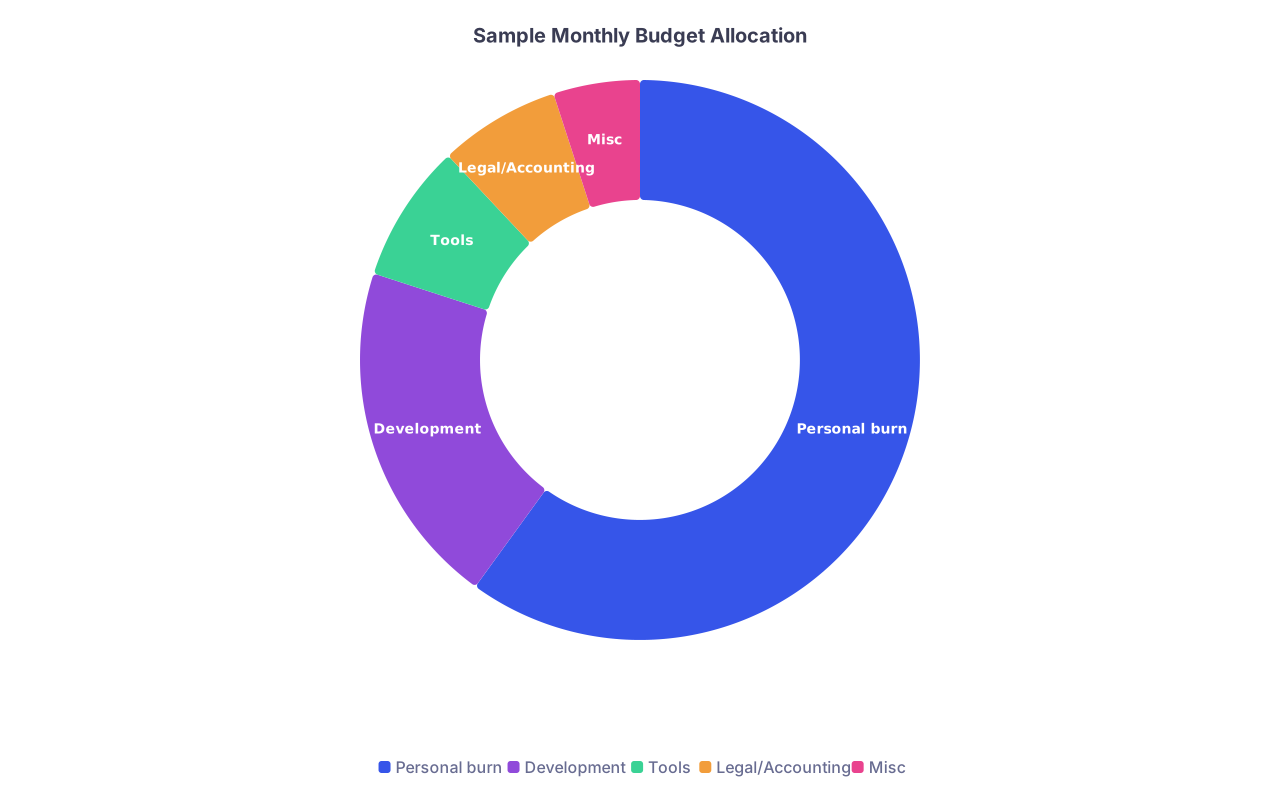
| Category | Value |
|---|---|
| Personal burn | 60 |
| Development | 20 |
| Tools | 8 |
| Legal/Accounting | 7 |
| Misc | 5 |
Week 4: Decide funding path
By the end of Month 6 you should choose:
- Bootstrapped (clinical income + small savings)
- Small angel round ($100–300k)
- Accelerator (e.g., YC, Techstars, Medtech programs)
- Strategic pilot‑with‑payment from an institution
You do not need a full seed round yet. You do need clarity on how you survive another 12 months.
Months 7–9: Traction, Story, And Funding
Month 7: Traction Or Reset Decision
At this point you should stop lying to yourself with vanity metrics.
Ask:
- Do I have at least:
- 20–50 consistent individual users or
- 1–2 organizations using this regularly with clear benefit?
If not, you decide now:
- Minor reset (same problem, different solution/angle), or
- Full pivot (different problem/customer), or
- Kill it (preserve your runway and sanity)
Assuming there is real traction:
- Start collecting specific success stories:
- “Dr. X saved 30 minutes per clinic session”
- “Practice Y increased weekly telehealth visits by 15%”
Month 8: Build Your Fundraising Narrative
Whether you raise money this year or not, you must know your story.
Your pitch needs to answer, in order:
- Who has this problem and how badly?
- Why are current solutions failing?
- Why you (clinical insight, access, timing)?
- What traction proves anyone cares?
- What is the business model and market size?
- What does the next 18 months look like with $X?
By end of Month 8 you should have:
- A 10–12 slide deck
- A 1–2 page “traction memo” with real numbers
- A short, clear email you can send to potential angels
Month 9: Raise Or Double Down On Revenue
At this point you should have enough signal to choose between:
- Path A: Fundraise
- Path B: Revenue‑first
Path A: If you raise
Target:
- Physician‑angel syndicates
- Early‑stage healthtech angels
- Healthcare‑focused accelerators
Do not spam 200 investors. Make a list of 20–30 tightly targeted ones.
Path B: If you focus on revenue
Your goal:
- Close 3–5 paying contracts (even small) or
- Convert free pilots to paid
Offer:
- Time‑limited founder pricing for early adopters
- Implementation help from you personally
- Measured ROI
By end of Month 9 you should either:
- Have soft‑circled capital (verbal commitments) or
- Have real revenue, even modest
Months 10–12: Systematize, Hire Lightly, Plan Year 2
Month 10: Stop Heroics, Start Systems
At this point you should not be doing every task ad‑hoc.
List recurring tasks:
- Onboarding new users
- Handling support issues
- Deploying product updates
- Scheduling demos and sales calls
Turn each into:
- A checklist
- A template email/script
- A documented process
You are building the playbook your future team will follow. Or you are guaranteeing burnout.
Month 11: Strategic Hiring And Runway Extension
You are not building an academic lab. You do not need 10 people.
Look at where your time goes today:
- Product
- Sales / demos
- Support
- Admin
Hire or contract for the lowest‑leverage, most time‑sucking tasks first.
Typical early hires/contractors:
- Part‑time ops/admin (10–20 hours/week)
- Contract developer or UX designer
- Part‑time sales/BD if inbound interest is real
Revisit runway:
- If you raised: extend runway to at least 12–18 months
- If you are bootstrapping: confirm clinical hours and minimize personal burn
Month 12: Hard Review And Concrete Year‑2 Plan
At this point you should treat yourself like you are on a one‑year fellowship with an evaluation.
Do a brutal review across:
Customers:
- How many?
- How frequently do they use the product?
- How many would be very upset if it disappeared?
Product:
- Clear value?
- Stable enough for wider rollout?
- Regulatory/compliance gaps?
Business:
- Revenue level and predictability
- Unit economics (even rough)
- Churn and satisfaction

Then write a simple Year‑2 plan:
- 3 company‑level objectives (e.g., “Reach $25k MRR”, “Land 3 hospital contracts”)
- 3–5 key initiatives to hit them
- Quarterly targets
By the last day of Month 12 you should know:
- Am I doubling down, pivoting, or exiting?
- What does my time and money commitment look like for the next 12 months?
- Who do I need around me (advisors, operators, technical talent)?
Clinical Commitments And Burnout: The Uncomfortable Reality
You are not special. I have watched brilliant physicians flame out in Month 6 because they tried to maintain:
- 0.8–1.0 FTE clinical
- Family responsibilities
- And a “serious” startup
Does not work. Not consistently.

Here is the honest breakdown across a year:
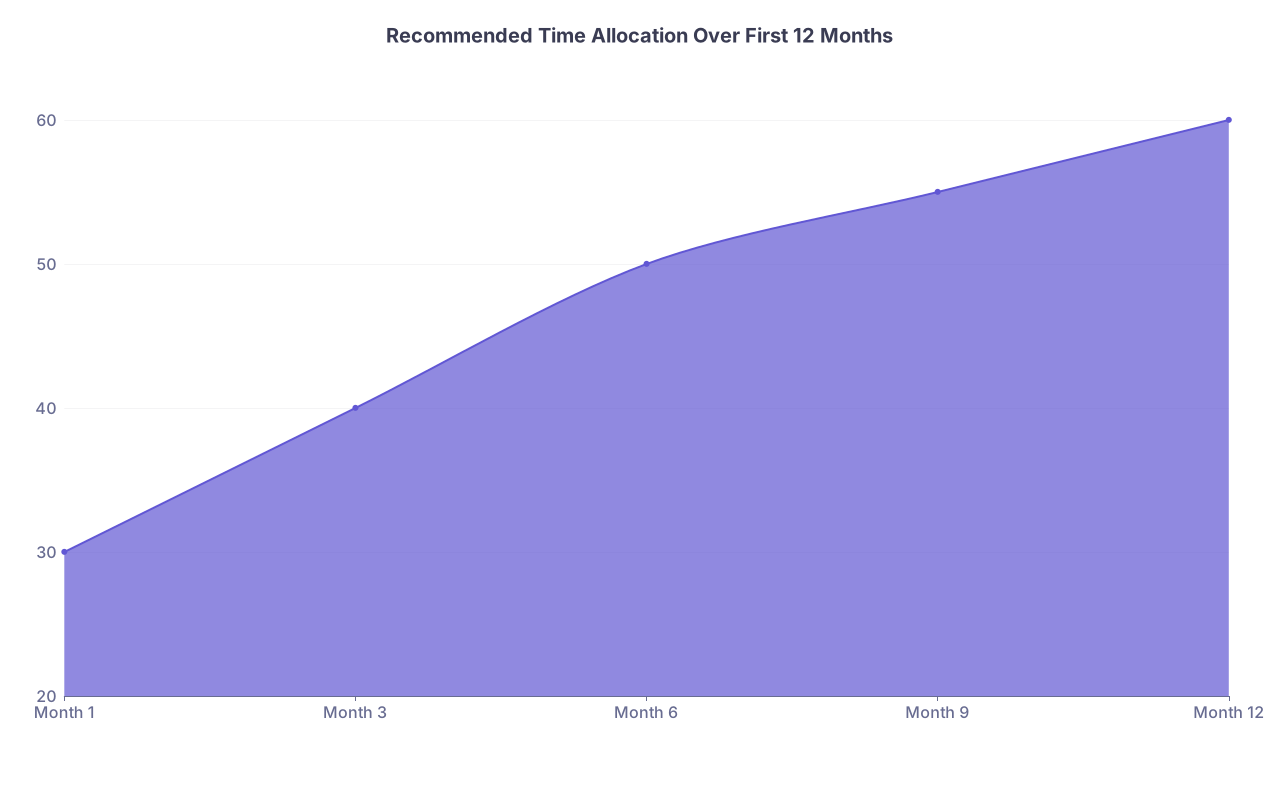
| Category | Value |
|---|---|
| Month 1 | 30 |
| Month 3 | 40 |
| Month 6 | 50 |
| Month 9 | 55 |
| Month 12 | 60 |
Interpretation: By Month 12, at least 60% of your professional energy should be on the startup if you expect real progress. That probably means:
- 0.4–0.5 FTE clinical, not more
- Having an honest conversation with your group or department chair
- Saying no to extra committees, teaching, and “fun side projects”
If you are not willing to do that, fine. But stop pretending you are building a company. Call it a side project and spare yourself the guilt.
Common Pitfalls In Year One (And When They Usually Hit)

Most physician founders trip over the same issues, at roughly the same points:
Month 2–3: Analysis paralysis
- Endless reading, no customer conversations
- Fix: Book 10 interviews this week. Today.
Month 4–5: Product perfectionism
- Refusing to pilot until it is “ready”
- Fix: Launch with manual back‑end. You as the “API.”
Month 6–7: Identity crisis
- Torn between being “good doctor” and “real founder”
- Fix: Decide your identity for the next 2 years. Write it down.
Month 8–9: Investor distraction
- Chasing VC before having basic traction
- Fix: 90% of your time should stay on customers, 10% on investors at most.
Month 10–12: Hero mode burnout
- Doing everything yourself because “no one else understands healthcare”
- Fix: Start delegating non‑clinical tasks aggressively.
FAQ (Exactly 2 Questions)
1. Can I realistically do this while working full‑time clinically in my first year post‑residency?
You can start, but you cannot sustain serious progress. Full‑time clinical plus a true startup usually results in one of three outcomes by Month 6–9: your startup stalls, your clinical work suffers, or your personal life implodes. If you must work full‑time initially for financial reasons, fine—treat Months 1–3 as heavy discovery and planning, stockpile savings, then deliberately step down to 0.4–0.6 FTE by Month 4–6. Put that transition on a calendar now, not “someday.”
2. Do I need a technical cofounder in the first 12 months?
Not always, and often not in Month 1–3. Many physician founders waste months trying to “find a CTO” when they do not even know what to build. Your priority in the first 6 months is problem clarity and real‑world validation, which you can do with low‑code tools, no‑code prototypes, or simple service models. A technical cofounder becomes truly valuable once you have validated the problem, see real usage, and know that technology is core to scaling. Until then, contract or agency support is usually enough.
Open your calendar right now and block two recurring, non‑negotiable 3‑hour startup work sessions each week for the next 8 weeks. If those blocks are not on your schedule by tonight, you are not actually building a company—you are daydreaming about one.