
It’s T‑minus 6 months to your planned first‑patient‑in date. You’ve left residency, you’ve got a job that “covers the bills,” and now you’re staring at a protocol draft, a half‑built spreadsheet, and a blank timeline.
You promised your investors, or your hospital innovation office, that this clinical study would be enrolling by [Month X]. Right now, it is not even approved. You are not crazy to feel behind.
Let’s build a real launch countdown. Month by month, then week by week as the clock winds down. So you know exactly what should be done now, what can wait, and what is a hard stop if you miss it.
Overview Timeline – 6 Months to First Patient In
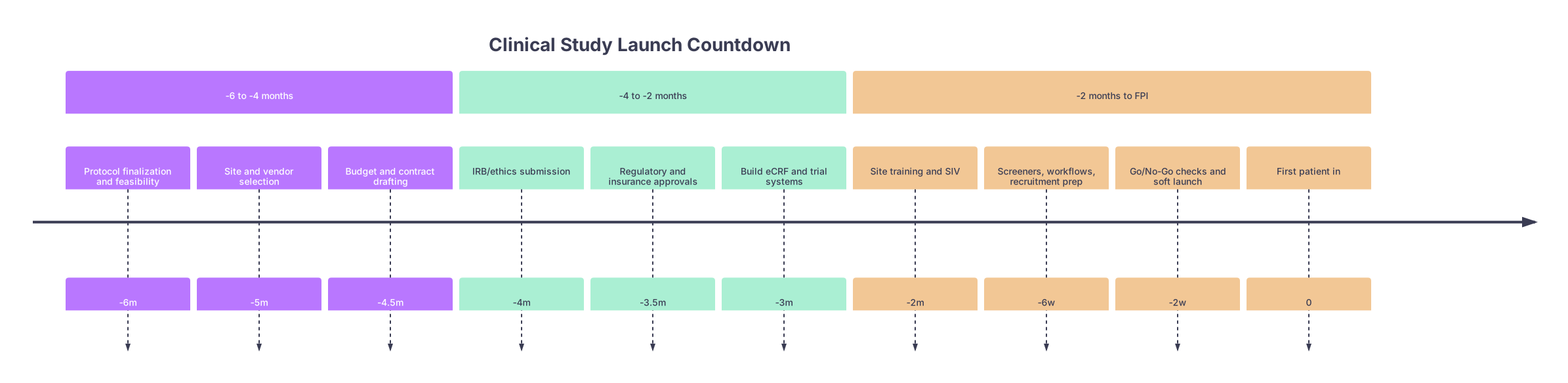
| Period | Event |
|---|---|
| -6 to -4 months - Protocol finalization and feasibility | -6m |
| -6 to -4 months - Site and vendor selection | -5m |
| -6 to -4 months - Budget and contract drafting | -4.5m |
| -4 to -2 months - IRB/ethics submission | -4m |
| -4 to -2 months - Regulatory and insurance approvals | -3.5m |
| -4 to -2 months - Build eCRF and trial systems | -3m |
| -2 months to FPI - Site training and SIV | -2m |
| -2 months to FPI - Screeners, workflows, recruitment prep | -6w |
| -2 months to FPI - Go/No-Go checks and soft launch | -2w |
| -2 months to FPI - First patient in | 0 |
Think of your 6‑month plan in three phases:
- Months −6 to −4: Design + deals (protocol, feasibility, budget, vendors, contracts)
- Months −4 to −2: Approvals + infrastructure (IRB, regulatory, systems)
- Months −2 to 0: Operationalization (training, recruitment, dry runs, first patient)
I’ll walk you straight through it in that order.
Month −6: Lock the Foundation (Protocol, Feasibility, High‑Level Plan)
At this point you should be:
- Past the “idea on a napkin” phase
- Holding a near‑final protocol draft
- Clear on where you’ll run the trial and who you want to enroll
If you are not there yet, do not fake it. Everything downstream collapses if the protocol is mush.
Week 1–2 (Month −6): Finish the Real Protocol, Not the Fantasy One
You need something that a real IRB and a real site can actually run.
Checklist:
- Finalize:
- Objectives and endpoints (primary and key secondaries)
- Inclusion/exclusion criteria (tight enough for safety, loose enough to recruit)
- Study schedule (visit windows, procedures, labs, imaging)
- Safety plan (AEs, SAEs, stopping rules, DSMB if applicable)
- Decide:
- Intervention logistics (drug/device supply, administration, storage, SOPs)
- Control/comparator approach (placebo, SOC, historical)
Common mistakes I keep seeing:
- Exclusion lists that make half the real‑world population ineligible
- Burdensome visit schedules that sound fine on paper but no one can run on a Tuesday afternoon in clinic
At this point you should be able to send the protocol to a skeptical PI and not be embarrassed.
Week 3–4 (Month −6): Basic Feasibility and Site Strategy
You’re post‑residency. Use that. You know which clinics are actually busy and which are ghost towns.
Tasks:
Identify 1–3 core sites:
- Your own institution
- One backup (in case your home IRB crawls)
- Optional: a community site if your patient population is mostly outside the academic center
Rough feasibility:
- Talk to at least 3 clinicians who see your target population
- Ask: “In a month, how many patients would really qualify?” Not “in theory.”
- Investigate competition: Are similar trials recruiting? Are they struggling?
Build a back‑of‑the‑envelope enrollment model:
- Estimated eligible per month per site
- Reasonable consent rate
- Drop‑out guess (20% is not crazy in many spaces)
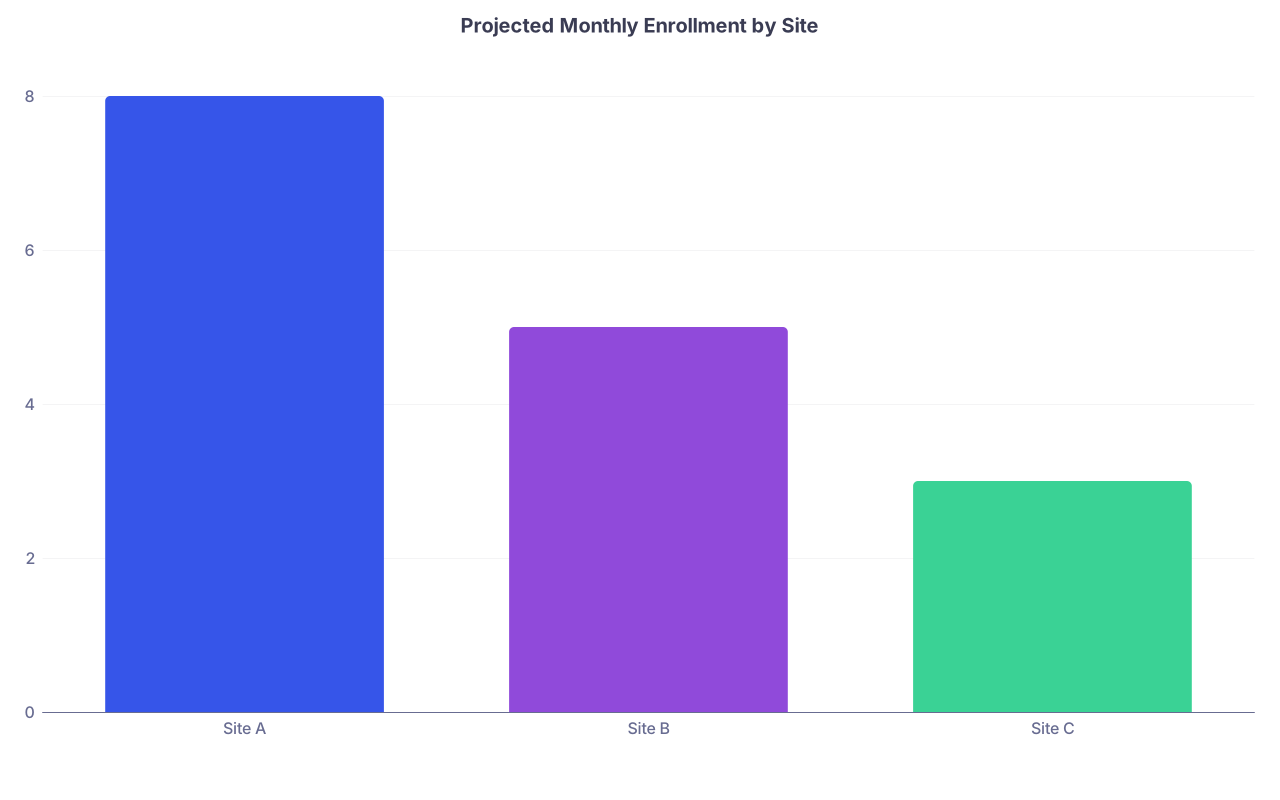
| Category | Value |
|---|---|
| Site A | 8 |
| Site B | 5 |
| Site C | 3 |
If your back‑of‑envelope math shows you need 20 patients/month and your likely reality is 4–5, you don’t tweak recruitment materials—you rewrite the protocol.
Month −5: Budget, Vendors, and Contracts
If Month −6 was about what you’re doing, Month −5 is about how you’ll pay for it and with whom.
At this point you should:
- Know your core sites
- Have your protocol 90–95% baked
- Be ready to talk money without mumbling
Week 1–2 (Month −5): Detailed Budgeting
You need a line‑item budget, not “we’ll figure it out from the grant.”
Key cost buckets:
- Per‑patient costs:
- Visit procedures (labs, imaging, ECG, etc.)
- Clinician time (sub‑Is, coordinators, PI oversight)
- Participant compensation/travel
- Fixed study costs:
- eCRF / EDC platform (Castor, REDCap, Medrio, etc.)
- Regulatory and IRB fees
- Pharmacy, storage, shipping
- DSMB or statistician oversight
- Startup fees:
- Site start‑up fee (yes, they will ask)
- Training, SIV, document prep
| Category | Example Items |
|---|---|
| Per-Patient | Labs, imaging, visits, stipends |
| Site Start-Up | IRB prep, contract setup |
| Fixed Study | EDC, DSMB, monitoring |
| Vendor | Central lab, supplies, shipping |
| Contingency | Protocol amendments, delays |
Be ruthless. Under‑budgeting by 25–30% is common and absolutely preventable.
Week 3–4 (Month −5): Vendor Selection and Early Contracting
Decide who your actual partners are:
- EDC / data capture platform
- Central or local labs?
- Drug/device packaging and logistics (if applicable)
- Monitoring (internal vs external CRO; for small startup trials, often hybrid)
You are not Pfizer. You need vendors who can tolerate:
- Smaller volume
- Less polished internal SOPs
- Occasional chaos
Shortlist, then move to:
- Basic capability calls (30 minutes each)
- Ask about:
- Minimum contract sizes
- Startup timelines
- Integration with your institution’s systems (if any)
- Support during audits
Start contracts now. Legal review always takes longer than you think, especially at big academic centers.
Month −4: IRB, Regulatory, and Documents
This month is your first true hard gate. If IRB submission drifts, your whole launch date moves.
At this point you should:
- Have a protocol ready for IRB
- Know your PI and co‑investigators
- Have at least rough site budgets agreed in principle
Week 1–2 (Month −4): IRB / Ethics Package
You’re building a complete submission, not sending random PDFs.
Core components:
- Final protocol (v1.0 with date)
- Informed consent form (language level matters; most IRBs will push back if it reads like a law textbook)
- Recruitment materials:
- Flyers, EMR alerts, social media text (if allowed)
- Patient‑facing documents:
- Diaries, instructions, visit schedules
- Investigator Brochure or device manual (if relevant)
- PI and study staff CVs, training certificates
If you’re in a US hospital system, your IRB may take 4–8 weeks. I’ve seen 12. That’s why you’re doing this at Month −4, not Month −2.
Week 3–4 (Month −4): Regulatory and Institutional Odds and Ends
Parallel tasks:
- Hospital/health system approvals:
- R&D committee
- Pharmacy and Therapeutics (P&T) if drug on formulary or special storage
- Radiation safety (if your protocol touches imaging with extra dose)
- Insurance / coverage:
- Clarify what’s standard of care (billable to insurance) vs research‑only (paid by study)
- If device study:
- Check whether you need FDA IDE or if it qualifies as non‑significant risk (NSR)
- If drug study:
- Clarify IND status (sponsor‑investigator IND if required)
This is one of those unpleasant surprises people run into post‑residency: the hospital billing office cares about your trial. Ignore them and you’ll get billing errors, patient complaints, and possibly compliance trouble.
Month −3: Systems, Tools, and Operational Design
IRB is in. You’re waiting. Do not just wait.
At this point you should:
- Have your IRB submission sent
- Be midway through contract negotiations
- Be ready to build the actual engine that will run the trial day to day
Week 1–2 (Month −3): Build Your eCRF / EDC and Data Plan
This is where a lot of startups get oddly lazy—EDC design is treated like an afterthought. Then they drown in junk data.
Tasks:
- Define:
- What data fields are truly essential to answer your primary endpoint
- Which secondary data will matter for future fundraising or publications
- In the EDC:
- Create visit‑based forms matching your schedule of events
- Add range checks, required fields, and basic logic (e.g., skip pregnancy test if post‑menopausal)
- Build SAE reporting forms and workflows
Invest in a clean eCRF now. Redesigning after you enroll 10 patients is a nightmare.
Week 3–4 (Month −3): Recruitment Workflow and Integrations
You’ve talked theoretically about recruitment. Now you script it.
Concrete steps:
- Map the path of a patient from clinic schedule to consented subject:
- How will you identify candidates? (EMR queries, clinician referrals, advertising)
- Who contacts them, when, and how? (phone, portal, in‑clinic)
- Build basic tools:
- Pre‑screening log (Excel, REDCap, EDC—doesn’t matter, but it must exist)
- Standard script for clinicians and coordinators
- Quick reference sheet for inclusion/exclusion

| Step | Description |
|---|---|
| Step 1 | Clinic schedule |
| Step 2 | Pre-screen list |
| Step 3 | Check inclusion exclusion |
| Step 4 | Clinician introduces study |
| Step 5 | Coordinator explains and consents |
| Step 6 | Log screen failure |
| Step 7 | Enroll and randomize |
If you cannot explain, step by step, how your average clinic Tuesday will turn into eligible participants, you are not ready for first‑patient‑in.
Month −2: Training, Site Initiation, and Reality Checks
Clock’s ticking. Two months out, the glamorous planning phase is over. This is about execution.
At this point you should:
- Have IRB approval or be days away
- Have EDC ready in at least test mode
- Have contracts close to final
Week 1 (Month −2): Finalize IRB Conditions and Documents
IRBs always want something changed.
Do this fast:
- Address IRB stipulations:
- Consent language edits
- Clarified safety reporting procedures
- Minor tweaks to recruitment or inclusion criteria
- Re‑submit and secure final approval
- Lock down:
- Final protocol version
- Final ICF template
- Final recruitment materials
These become your “source of truth” documents. Version control matters now. Sloppy version control is one of the first things auditors and monitors notice.
Week 2–3 (Month −2): Site Initiation Visit (SIV) and Staff Training
Whether you’re doing a formal SIV with a CRO or running it yourself, the goals are the same:
Everyone at the site should understand:
- The protocol (practically, not just conceptually)
- Eligibility criteria
- Visit flow and documentation
- Safety reporting timelines
- How to use the EDC
Training tasks:
- Live session (in person or Zoom) with:
- PI
- Sub‑investigators
- Study coordinators
- Pharmacy
- Nursing staff who will touch the trial
- Walk through:
- One hypothetical patient from screen to end of study
- One hypothetical SAE, including reporting and documentation

Sign training logs. Upload them to your regulatory binder. This is not busywork; this is what makes your trial feel real to the site.
Week 4 (End of Month −2): Dry Runs and Workflow Shakedown
Before you touch a real patient:
- Conduct:
- Mock screening using de‑identified charts
- Mock consent conversation (role play)
- Mock data entry into your EDC
- Check the painful details:
- Does the consent process fit inside a 20–30 minute clinic window?
- Is there a private space consistently available?
- Does pharmacy actually have storage and labelling workflows in place?
Fix bottlenecks now. Not after you botch your first live day.
Month −1: Recruitment Launch Prep and Go/No‑Go Readiness
This month is about tightening screws. No big design changes. No heroic reinventions.
At this point you should:
- Have all regulatory approvals
- Have trained staff and tested systems
- Be clear on your first week’s realistic enrollment target (even if it’s 1)
Week 1–2 (Month −1): Final Recruitment Launch Setup
Tasks:
- Turn on:
- EMR recruitment alerts (if used)
- Clinic reminders to mention the study
- Any approved patient messaging (portal messages, emails)
- Prepare:
- Printed materials (flyers, visit schedule handouts)
- Patient compensation workflows (gift cards, checks, etc.)
- Clarify:
- Who owns weekly recruitment numbers?
- How misses will be tracked (e.g., patients not approached, and why)
This is when you want your clinicians to stop saying “Oh right, that study” and start saying “We’re ready; when do we start?”
Week 3–4 (Month −1): Go/No‑Go Review
Hard question: are you truly ready to see your first real subject?
Run through a pre‑launch checklist:
- Regulatory:
- IRB approval letter in hand
- All consent versions and recruitment materials stamped and current
- Contracts and budget:
- Site agreements fully executed
- Vendor contracts signed
- Systems:
- EDC live in production environment
- User access tested and documented
- Operations:
- Pharmacy ready with drug/device
- Lab kits on site (if central lab)
- Coordinators have availability scheduled
If you have multiple red flags (no executed budget, EDC unstable, pharmacy not prepared), push your FPI date by a few weeks and fix them. An ugly first month can tank team morale and scare your sponsors more than a small delay.
Final 2 Weeks: The Countdown to First Patient In
We’re down to days.
At this point you should:
- Have a firm FPI date on the calendar
- Have all key stakeholders aware of that date (and accountable)
T‑14 to T‑7 Days: Micro‑Planning
Get specific.
- Identify which clinic sessions are most likely to contain eligible patients
- Brief those clinicians again:
- Remind them of inclusion/exclusion
- Give them a one‑page cheat sheet
- Confirm:
- Study coordinator coverage on those days
- Pharmacy hours and contact person
- Lab hours and sample pickup time
Adjust your expectations. Your first week goal might be “screen 2–3 patients, consent 1–2.” That’s fine. You’re not proving scalability in Week 1; you’re proving that the machine turns on.
T‑7 to T‑1 Days: Final Walkthrough and Communication
- Do a pre‑FPI huddle (15–30 minutes):
- PI
- Coordinator(s)
- One key clinic nurse or MA
- Pharmacy lead
- Walk through:
- Tomorrow’s clinic schedule
- Likely candidates
- Exact steps once a candidate is identified
- Confirm documentation:
- Paper consent forms printed (if applicable)
- Screening logs ready
- Regulatory binder up‑to‑date

This is also when you set the tone: calm, methodical, and clear. Not desperate.
Day 0: First Patient In
Your first real subject walks in. Do not try to be a hero. Just execute the plan.
Steps:
- Identify and confirm eligibility using your checklist.
- Conduct the consent discussion:
- Unhurried
- In private
- Following the IRB‑approved script and checklist
- Document:
- Signed consent with time stamps
- Eligibility confirmed
- Perform baseline procedures exactly per protocol.
- Enter data into EDC same day or next morning at worst.
Then debrief the same day:
- What worked?
- What felt clunky?
- Any protocol ambiguities that surfaced?
Fix workflows, not data. Don’t start rewriting the protocol unless something is truly broken.
First 2–4 Weeks Post‑Launch: Stabilization
You launched. You’re not done. The first month will tell you whether your 6‑month plan was realistic or fantasy.
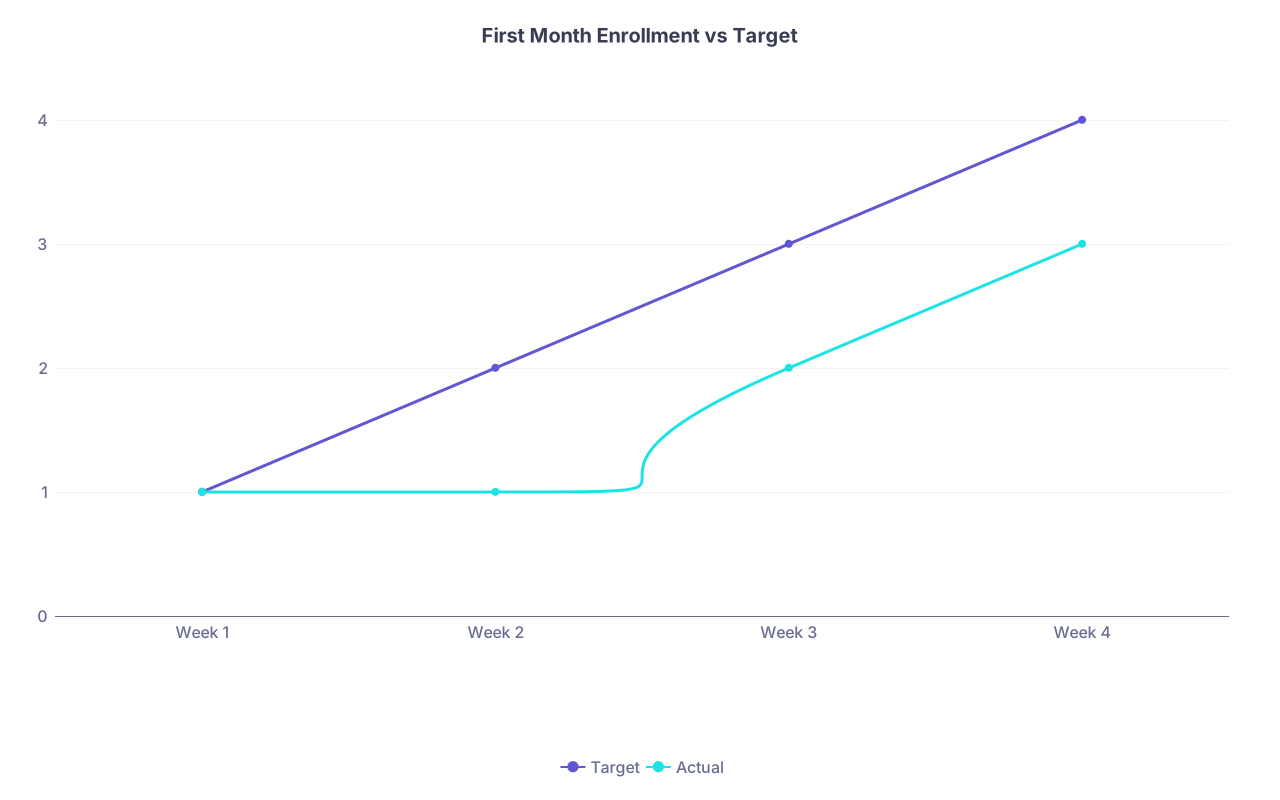
| Category | Target | Actual |
|---|---|---|
| Week 1 | 1 | 1 |
| Week 2 | 2 | 1 |
| Week 3 | 3 | 2 |
| Week 4 | 4 | 3 |
At this point you should:
- Have at least a few patients screened, maybe a couple enrolled
- Know your real‑world screen failure rate
- Have debugged your basic data entry and workflow issues
Weekly routine:
- 30‑minute standing check‑in:
- Screens this week / enrolled this week
- Screen failures and reasons
- Any operational blockers (rooms, staffing, lab issues)
- Tweak:
- Recruitment scripts
- Clinic flow
- Reminder systems (for both staff and patients)
If, by Week 4, you’re at 0 enrolled and almost no screens, your problem is not “awareness.” It’s upstream: protocol design, inclusion criteria, or clinic alignment.
Key Takeaways
- The study does not fail at Month 6. It fails quietly in Month 5 when you skip hard feasibility and in Month 4 when you slide on IRB and institutional realities.
- At each month, there are non‑negotiables: finalized protocol (−6/−5), IRB submitted (−4), systems ready (−3), staff trained (−2), and contracts executed (−1). Miss those, your FPI date is fiction.
- Treat the first 2–4 weeks post‑launch as part of the launch phase, not “after.” Tight weekly reviews there will save your trial from slow, expensive drift later.