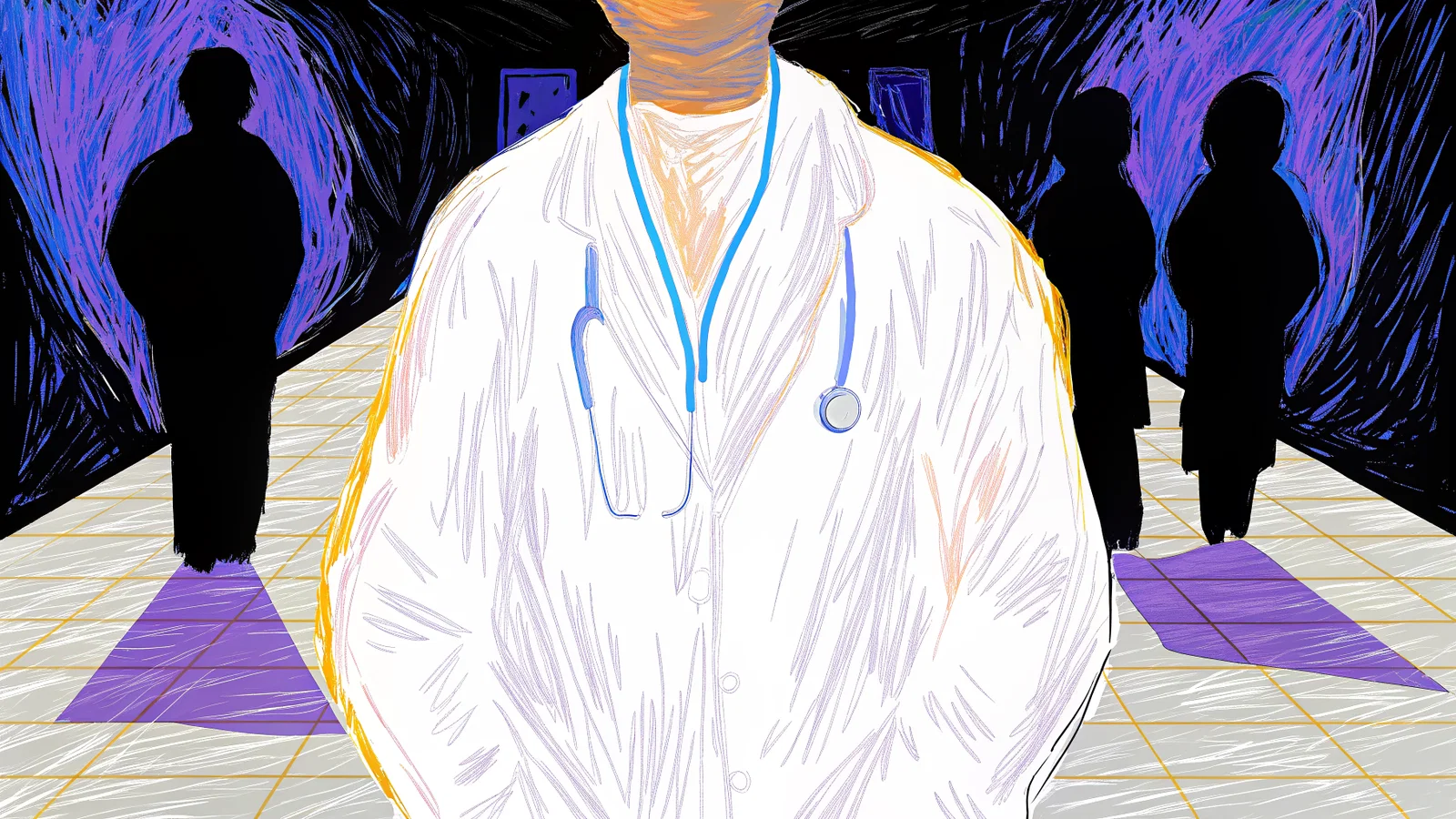
You've been here. The pager won't stop. Your clinic list is triple-booked. The ED is boarding six of your patients. And somewhere in that noise, a resident is trailing you like a shadow, waiting for something, anything, that feels like teaching. You tell yourself you're "modeling excellence." You're "being present." You're wrong. You're disappearing.
The Scenario: You Are Drowning in Patients, Not Residents
It starts with the volume. Eighty percent clinical load is the polite way of saying you're underwater. You're running from bay to bay, signing notes in the elevator, answering nurse calls while scrubbing in. The residents and students are physically next to you. You assume that's enough. It's not.
I've watched excellent clinicians become invisible educators in under a year. They show up. They work hard. They never sit down with a learner and say, "Here's what I was thinking when I chose that antibiotic." They believe proximity equals pedagogy. It doesn't. The learner sees a blur of efficiency and learns one dangerous lesson: keep your head down and survive. That's the onset of the Invisible Educator syndrome. You are still in the building. Your teaching presence has already left the room.
The false belief that "being there" is teaching is the first red flag. Don't make this mistake. Presence without intention is just occupancy. And occupancy doesn't build careers, yours or theirs.
The Trap: Why 'Osmosis' is a Dangerous Myth
The Invisible Educator trap is simple and brutal. High clinical load leaves no protected time, so you stop planning teaching. You become a passive presence. Learners watch. You assume they absorb. They don't. They resent the silence. You burn out. Your promotion file stays thin because "teaching" never appears as deliberate work. Career stagnation follows.
Osmosis is a myth sold to overworked faculty. Learners do not magically extract clinical reasoning by standing near you while you order labs. They extract your haste, your shortcuts, and your unspoken frustration. I've seen residents graduate after a year with a high-volume attending and still freeze on basic decision points they never heard articulated.
Look at the cycle. It feeds itself.
The hidden cost isn't just weak evaluations. It's the quiet professional death of becoming the attending no one remembers teaching them anything useful. Don't romanticize the grind. The grind erases you.
Mistake #1: Treating Teaching Like a Separate Event
Here's the classic error: waiting for the "scheduled teaching hour" that never comes. You tell yourself you'll do a chalk talk next Tuesday when the census drops. The census never drops. So teaching never happens. When you're already maxed past 80%, separate events are fantasy. They get cancelled. Every time.
I've done it. Protected a lunch slot. Got pulled to a code. Never recovered the hour. The residents stopped expecting anything. That's how you vanish.
The fix is integration, not addition. Teaching has to live inside the work you are already doing. Narrate one decision while you write the note. Ask the learner to propose the next step before you order it. Turn the three-minute walk to radiology into a focused probe: "What would change your mind about PE here?" No extra calendar block required. The workflow is the classroom. Treat it any other way and you guarantee silence.
If you keep waiting for clean teaching time, you will keep disappearing. Stop waiting.
Mistake #2: The 'Lecture' Trap
When guilt finally hits, some of us swing the other way and try to dump a full lecture into the middle of rounds. Bad idea. Long lectures drain the last of your energy and produce abysmal retention under clinical stress. You're tired. They're overloaded. Nobody wins.
Trying to teach "everything" in one sitting is inefficient and self-destructive. You walk away more exhausted. They walk away with fragments. The data is clear on this: high energy cost, low lasting value.
Micro-teaching is the antidote. Five minutes. One concept. One takeaway. Done. "Here's why I chose ceftriaxone over pip-tazo in this case, renal function and the local antibiogram. Write that down." Then move. Energy preserved. Retention higher because the point is sharp and immediately usable.
Protect your battery. The five-minute rule is not a compromise. It's the only sustainable move when clinical load owns most of your day. Anything longer is a trap that accelerates burnout.
Mistake #3: Ignoring the 'Third Place'
Most faculty only think of teaching in two places: the clinic room or the conference room. Both are already saturated. That's how you convince yourself there's no time left. Wrong. The third place is everywhere else, the hallway between patients, the two minutes before you walk into the room, the cafeteria line, the elevator, the brief pause while waiting for the ultrasound tech.
I've reclaimed more teaching in pre-rounds coffee runs than in any formal session. "While we walk, tell me the three things that would make you call a rapid response on this patient." Done. No schedule change. No extra hour stolen from sleep.
Identify the non-clinical micro-moments you already have. Use them. The third place doesn't add to your day. It converts dead time into deliberate presence. Ignore it and you stay invisible by choice.
Reclaim those spaces or keep wondering why your evaluations say "great clinician, limited teaching."
Mistake #4: Forgetting the Socratic Method
Talking at learners drains you faster than talking with them. Monologue mode feels productive for thirty seconds and then empties the tank. Questions reverse the flow. They force the learner to do the cognitive work while you conserve energy and still guide.
Ask instead of tell. "What are you most worried about right now?" "If the lactate is rising, what's your next move and why?" You stay in control of the frame. They stay engaged. You both leave the interaction sharper. I call it the Socratic Shield. It protects your limited bandwidth and makes the learner visible to themselves, which is half the job of an educator.
When you're past 80% clinical, monologue is a luxury you cannot afford. Questions are armor. Use them or burn out faster than necessary.
Closing: Do Not Fade Into the Background
Watch for the warning signs: you stop planning any teaching, learners stop asking questions, your name never comes up in "who taught you the most" conversations, and your academic file has a thin teaching section. That's the fade. Don't let it finish.
Visibility matters for your career and for the next generation who will copy whatever you model, including invisibility. Reclaim the role. Integrate, micro-teach, use the third place, and lead with questions. You do not need more hours. You need deliberate seconds inside the hours you already own.
You cannot teach effectively by osmosis; you must be deliberate. Micro-teaching and the Socratic method are your best defenses against burnout. Reclaim your Third Place to find teaching time you didn't know you had.
Stay visible. The alternative is professional erasure dressed up as "just being busy." I've seen too many good people make that mistake. Don't be one of them.