Introduction: Why Consider a Career as a Medical Education Professor?
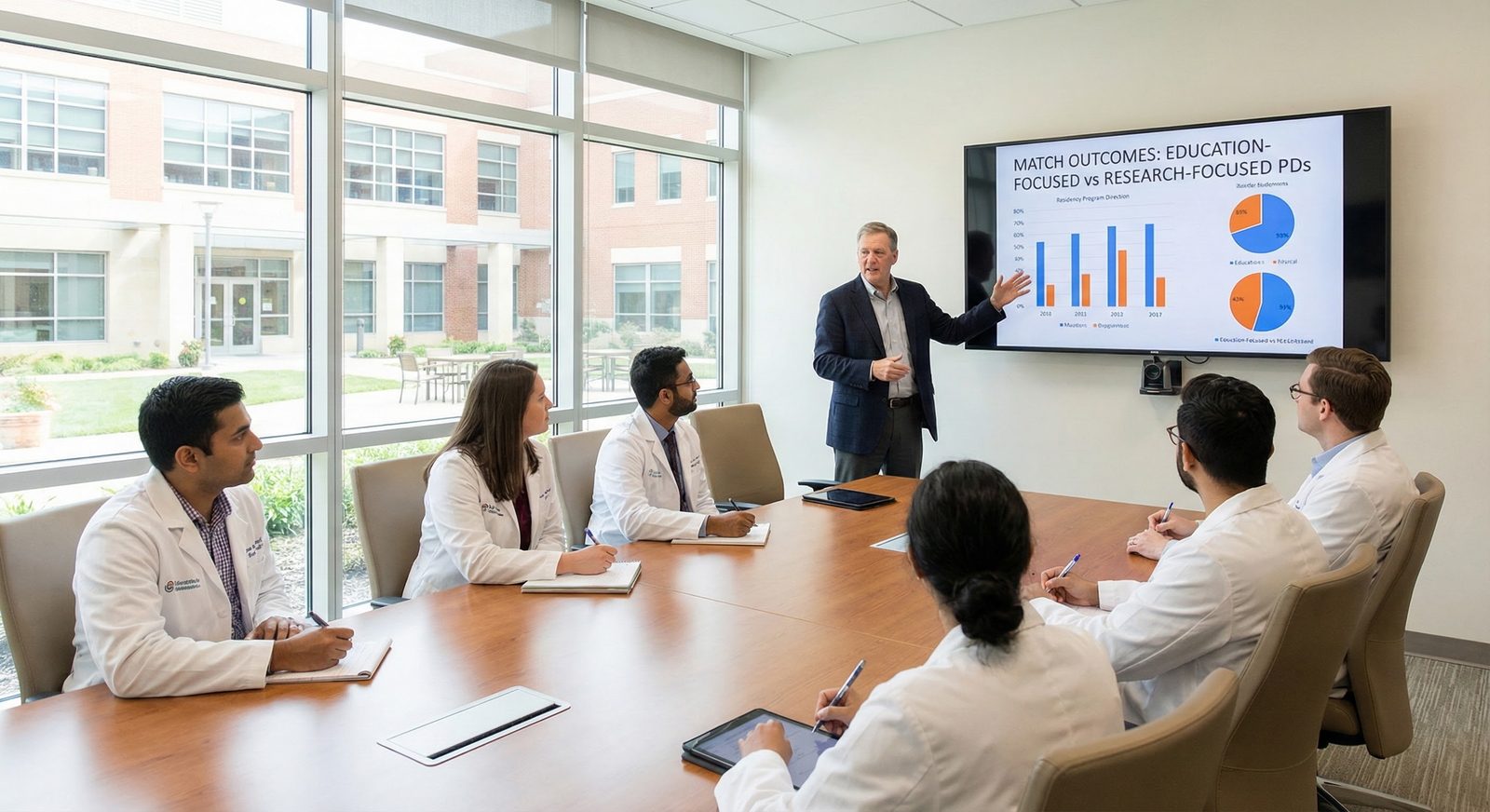
Becoming a medical education professor is one of the most impactful ways to blend clinical expertise with a passion for teaching. As health systems, technologies, and patient needs rapidly evolve, there is a growing demand for physician-educators who can design innovative curricula, train the next generation of clinicians, and lead scholarship in Medical Education.
If you enjoy explaining complex concepts, find satisfaction in watching learners grow, and are curious about how people learn—not just what they learn—an Academic Career in medical education may be an ideal path.
This expanded guide walks you through:
- What medical education professors actually do day to day
- The typical training pathway (and realistic variations)
- How to develop teaching skills and an education-focused CV during medical school, residency, and fellowship
- Strategic steps to securing faculty positions with significant Teaching and education leadership responsibilities
- Practical tips and examples from the perspective of Professional Development for future clinician-educators
Understanding the Role of a Medical Education Professor
To build a successful Academic Career in Medical Education, it helps to be clear on what the role really involves. While individual positions vary by institution, several core domains are common across most faculty roles in medical education.
Core Responsibilities
1. Curriculum Development and Educational Design
Medical education professors are key architects of the learning experience:
- Designing and revising pre-clinical and clinical curricula
- Aligning content with national standards and competency frameworks (e.g., ACGME milestones, Entrustable Professional Activities)
- Integrating basic sciences with clinical reasoning and professionalism
- Developing longitudinal themes (e.g., health equity, quality improvement, patient safety)
You may sit on curriculum committees, lead course or clerkship director roles, or oversee specific components such as simulation or OSCEs.
2. Teaching Across Multiple Formats
Teaching is central, but it’s more than lectures:
- Large-group teaching: Traditional lectures, flipped classroom sessions, case-based learning, and team-based learning
- Small-group teaching: Problem-based learning (PBL), clinical reasoning conferences, ethics discussions
- Clinical teaching: Bedside teaching, ward rounds, precepting in clinics, supervising procedures
- Assessment and feedback: Designing OSCE stations, MCQs, workplace-based assessments (WBAs), and delivering high-quality feedback
Effective medical education professors understand adult learning principles, create psychologically safe learning environments, and adjust to diverse learner needs.
3. Educational Research and Scholarship
Many faculty positions expect some level of scholarship in Medical Education, such as:
- Studying the effectiveness of teaching methods or curricula
- Evaluating assessment tools and feedback strategies
- Investigating issues like burnout, professionalism, or diversity and inclusion in learners
- Publishing in medical education journals and presenting at national conferences
Educational scholarship doesn’t always mean large randomized trials; quality improvement projects, curriculum evaluations, and innovations can also be meaningful scholarly contributions when rigorously designed and disseminated.
4. Mentorship and Career Guidance
Medical education professors often serve as:
- Academic advisors for medical students and residents
- Mentors for trainee-educators (e.g., chief residents, education fellows)
- Coaches for learners struggling academically, professionally, or personally
Strong mentorship is a major reason many trainees pursue careers in medical education themselves.
5. Service and Leadership
In academic settings, service is part of your role:
- Serving on school or hospital committees (curriculum, assessment, admissions, promotions)
- Working with national organizations (AAMC, specialty societies, clerkship director groups)
- Leading programs (clerkship director, residency program director, course director, vice chair of education, etc.)
These roles shape the direction of medical training locally and nationally.
Different Types of Medical Education Roles
Not every medical education professor has the exact same mix of responsibilities. Common role types include:
- Clinician-Educator: Majority clinical time with substantial teaching and some scholarship; often 60–80% clinical, 20–40% education/academic time.
- Education Leadership Roles: Clerkship directors, program directors, vice chairs or deans of education with a higher proportion of protected time for teaching, administration, and program development.
- Education Scholar/Researcher: Significant focus on educational research, often with advanced degrees and external funding; may have less direct patient care.
As you plan your Professional Development, it helps to understand which model appeals most to you—this will shape your training and job search strategies.

Step 1: Build a Strong Clinical and Medical Education Foundation
Completing Medical School with an Education Mindset
The formal path begins like most physician careers:
Undergraduate Degree (or equivalent pre-med pathway)
- Strong foundation in sciences (biology, chemistry, physics) plus communication and social sciences.
- Early exposure to tutoring, peer-instruction, or TA roles can signal an interest in teaching.
Medical School (MD/DO)
During medical school, you can start building an education-focused profile:- Get involved in teaching early:
- Peer tutoring programs
- Teaching assistantships for anatomy, clinical skills, or physiology
- Leading review sessions for your classmates
- Participate in education committees:
- Student curriculum committees
- Liaison roles with administration for course feedback
- Pursue medical education projects:
- Help develop new modules or workshops
- Pilot exam question banks or simulation scenarios
- Get involved in teaching early:
These early experiences will help you test your interest in Medical Education and give concrete examples for your future CV and personal statements.
Residency: Where Clinician-Educators Start to Take Shape
Completing residency in your chosen specialty is essential:
- Confers clinical expertise and credibility as a future teacher
- Exposes you to various models of clinical teaching
- Provides formal and informal opportunities to supervise and teach students and junior residents
High-yield strategies during residency:
Seek structured teaching roles
- Volunteer for medical student orientation, skills sessions, or OSCEs
- Sign up for “resident-as-teacher” programs or workshops
- Serve as chief resident if appropriate—this role often includes significant education responsibilities (scheduling conferences, curriculum design, evaluation processes).
Document everything
- Keep a log of teaching activities, workshops attended, and feedback received
- Start a teaching portfolio early (you’ll build on it later)
Fellowship and Specialized Training (Optional but Valuable)
Not all medical education professors complete fellowship, but it can be very beneficial, especially if:
- You want a strong focus on medical education scholarship or leadership
- You plan to lead large programs or become a dean/vice dean in the future
Options include:
Clinical Fellowship with Education Emphasis:
Many specialties offer fellowships where you can simultaneously develop subspecialty expertise and engage in education research or leadership.Dedicated Medical Education Fellowship:
Some institutions offer 1–2-year programs focused on educational research, curriculum design, assessment, and leadership, often combined with partial clinical practice.Formal Advanced Degrees:
- Master of Health Professions Education (MHPE)
- Master of Medical Education
- Master of Education (MEd) focused on adult or higher education
- Master of Public Health (MPH) with education or leadership components
- EdD or PhD in education or health professions education
These degrees enhance your theoretical grounding in learning science, strengthen your research skills, and distinguish you for education-focused Faculty Positions.
Step 2: Develop Deep Expertise in Medical Education
Beyond clinical training, you need to consciously cultivate skills as an educator.
Build Real Teaching Experience
Your goal is to demonstrate a progressive trajectory in teaching:
- During Medical School: Tutoring, TA roles, peer teaching.
- During Residency/Fellowship:
- Leading case conferences, morning reports, journal clubs
- Supervising medical students in clinics and wards
- Designing and delivering short workshops (e.g., EKG interpretation, ultrasound basics)
Whenever possible, ask for formal feedback:
- Request written comments from supervising faculty
- Collect learner evaluations through official systems
- Reflect on feedback and incorporate changes—this demonstrates growth and professionalism.
Grow as an Educational Leader
Educational leadership doesn’t require a lofty title at first. Start small:
- Organize a recurring teaching series for interns or students
- Revise a rotation orientation guide or checklist
- Coordinate simulation sessions with faculty supervision
- Lead QI or patient safety education projects
Over time, seek more formal leadership roles:
- Chief resident
- Associate/assistant clerkship director during advanced training
- Co-leader of resident teaching initiatives or curriculum committees
Leadership experience signals readiness for more senior education roles on faculty.
Engage in Medical Education Scholarship
Even if your career will be primarily teaching-focused, most academic institutions expect some scholarship. Practical steps:
Identify a specific education question or problem
- Are students struggling with a particular exam?
- Is there a gap in training on a high-yield topic (e.g., social determinants of health)?
- Is feedback inconsistent or unsatisfying?
Design an education project
- Example: Introduce a flipped classroom module for a commonly challenging topic and evaluate learner satisfaction and knowledge outcomes.
- Example: Implement a new assessment tool for clinical reasoning and study its reliability and validity.
Collaborate with experienced mentors
- Join ongoing projects led by faculty in undergraduate or graduate medical education.
- Ask for advice on IRB processes, study design, and dissemination.
Disseminate your work
- Submit abstracts to conferences (e.g., AAMC, specialty education meetings).
- Present posters or oral presentations.
- Convert projects into manuscripts for peer-reviewed journals.
Over time, your scholarship portfolio should show a coherent theme (e.g., simulation, assessment, wellness, DEI in medical education), which strengthens your identity as an education scholar.
Step 3: Build an Outstanding Teaching and Academic Portfolio
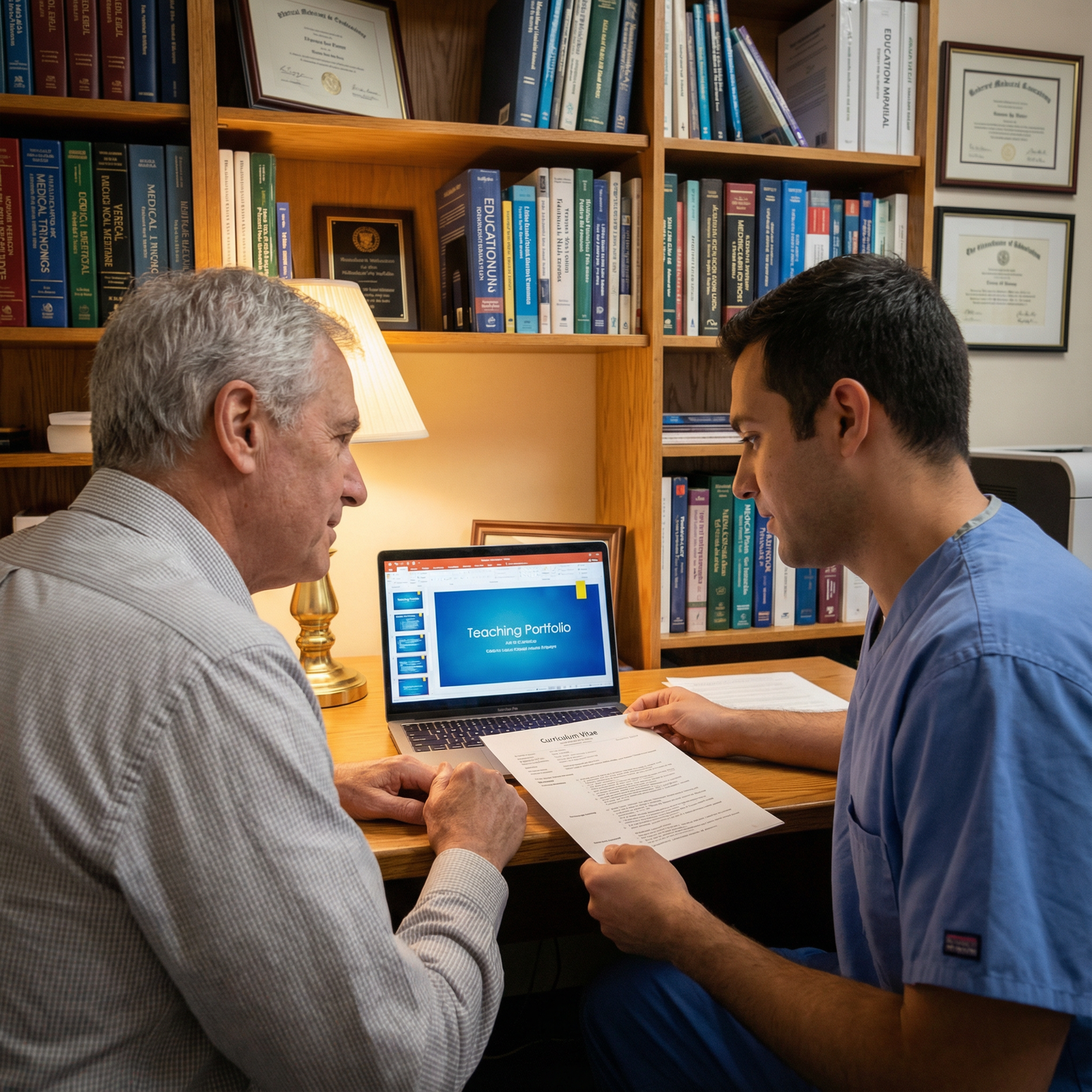
A strong teaching portfolio is crucial for securing education-focused Faculty Positions and for promotion later in your Academic Career.
Key Components of a Teaching Portfolio
1. Curriculum Vitae (CV)
Your CV should clearly highlight your Medical Education contributions:
- Teaching roles and responsibilities (with date, setting, and level of learner)
- Educational leadership positions (chief resident, course director, committee membership)
- Workshops taught, invited lectures, and conference presentations
- Education-related grants or funding
- Peer-reviewed publications and non-peer-reviewed educational materials (e.g., online modules, podcasts, curricula posted on MedEdPORTAL)
Consider a dedicated “Education” section in your CV for clarity.
2. Teaching Philosophy Statement
This 1–2-page narrative explains:
- Your core beliefs about how adults learn
- How you foster inclusive, supportive learning environments
- How you use feedback and reflection to continuously improve
- Your approach to assessing learner progress
Example points to include:
- Emphasis on active learning rather than passive lectures
- Commitment to equitable learning opportunities and addressing bias
- Use of evidence-based teaching strategies
3. Sample Teaching Materials
Include representative examples that demonstrate your skills:
- Syllabi or detailed session outlines
- Slide decks for a signature teaching session
- OSCE or simulation scenarios you designed
- Assessment tools or rubrics you helped create
4. Teaching Evaluations and Peer Review
- Aggregated learner evaluations (anonymized, summarized)
- Peer observation reports with constructive feedback
- Evidence of improvement over time in response to feedback
5. Education Scholarship
- Copies or citations of your education-related publications
- Abstracts from conference presentations
- Educational grants or awards
Remember that some institutions may ask for a formal “educator’s portfolio” at the time of promotion or for certain hiring decisions—building this systematically from the start will save you a great deal of time later.
Step 4: Network Strategically and Invest in Professional Development
Academic success in Medical Education is deeply relational. Networking and Professional Development help you find mentors, collaborators, and job opportunities.
Find and Work with Mentors
Mentorship is essential for navigating an Academic Career:
Local mentors:
- Clerkship directors, residency program directors, vice chairs of education
- Faculty who lead simulation centers, skills labs, or assessment offices
External mentors:
- Faculty you meet at national conferences
- Senior educators from societies or interest groups in your specialty
When meeting with potential mentors:
- Be specific about your interests and goals
- Ask about their own paths into medical education
- Request feedback on your CV or project ideas
- Clarify expectations if you embark on a long-term mentoring relationship
Join Professional Organizations and Education Communities
Professional societies provide structure for your growth:
General Medical Education organizations:
- Association of American Medical Colleges (AAMC)
- Alliance for Academic Internal Medicine (AAIM), or equivalents in other specialties
- Local/regional medical education societies
Specialty-specific education groups:
- Clerkship director groups
- Residency program director associations
- Education SIGs (Special Interest Groups) within major professional societies
These organizations offer:
- Webinars, workshops, and certificate programs
- Calls for education research abstracts
- Leadership opportunities within committees and working groups
Attend and Present at Conferences
Conferences are incredibly valuable for learning and visibility:
- Present posters or oral presentations on your education work
- Attend sessions on teaching techniques, assessment, and curricular innovation
- Introduce yourself to speakers whose work aligns with your interests
- Follow up by email or LinkedIn to sustain the connection
Conferences commonly become the place where future collaborators and even job references first meet.
Ongoing Professional Development as an Educator
In addition to clinical CME, prioritize education-focused training:
- “Resident-as-teacher” or “faculty-as-teacher” programs
- Simulation instructor courses
- Workshops on giving feedback, remediation, or assessment
- Longitudinal educator academies or certificates offered by many institutions
These experiences not only improve your teaching but also demonstrate commitment to your identity as a medical educator.
Step 5: Applying for and Thriving in Medical Education Faculty Positions
Once your training and portfolio are in place, you’re ready to apply for Faculty Positions that align with your education interests.
Finding and Evaluating Positions
Look for openings at:
- Medical school and teaching hospital career pages
- Professional society job boards and newsletters
- Word-of-mouth through mentors and conference contacts
When evaluating positions, consider:
- Protected time: How much FTE is allocated to education versus clinical work?
- Role clarity: Are responsibilities clearly defined (e.g., course director, clerkship supervisor, simulation curriculum lead)?
- Mentorship and support: Are there senior educators who can guide your growth?
- Promotion pathways: Is there a clinician-educator track with clear expectations and criteria?
- Resources: Access to instructional designers, simulation labs, evaluation expertise, and funding for conference travel.
Crafting a Strong Application
Tailor your materials for each role:
Cover Letter:
- Clearly articulate your interest in Medical Education and the specific position
- Highlight key teaching, leadership, and scholarship experiences aligned with the job description
- Explain how your skills will advance the institution’s educational mission
CV and Teaching Portfolio:
- Emphasize education roles and accomplishments
- Include a concise one-page “educator highlights” summary when appropriate
Letters of Recommendation:
- Choose referees familiar with your teaching and education projects
- Provide them with your CV and job description so they can write targeted letters
Succeeding in Academic Interviews
Expect multi-step interview processes including:
- One-on-one meetings with faculty and leadership
- Teaching demonstrations (e.g., a mini-lecture, small-group session, or simulated teaching encounter)
- Discussions about your future scholarly interests and Professional Development plans
Prepare to discuss:
- Your teaching philosophy with concrete examples
- Lessons learned from challenging teaching situations
- Your vision for the role in 3–5 years (e.g., new curricula, research program, or leadership goals)
- How you handle feedback and adapt to learner needs
Showing insight, humility, and a clear trajectory in Medical Education will help you stand out.
FAQs About Becoming a Medical Education Professor
1. What qualifications do I need to become a medical education professor?
Most institutions expect:
- An MD or DO (or equivalent clinical doctoral degree) from an accredited medical school
- Completion of residency training and board eligibility/certification in a clinical specialty
- Demonstrated teaching experience with medical students and/or residents
- Evidence of engagement in Medical Education activities (curriculum work, assessment, or scholarship)
For more education-focused or senior roles, additional qualifications may include:
- A master’s or doctoral degree in medical education, health professions education, or a related field
- A track record of education scholarship (publications, conference presentations)
- Prior leadership roles (course or clerkship director, chief resident, education fellow)
2. Do I need a fellowship or advanced degree to have an academic career in medical education?
Not always, but they can be very helpful:
- Not strictly required: Many clinician-educators enter faculty positions after residency with strong teaching experience and mentorship, then develop their education portfolio on the job.
- Helpful when:
- You aim for substantial protected time for education and scholarship
- You want to become a program director, vice chair of education, or dean
- You’re interested in rigorous educational research and grant funding
If you’re unsure, discuss options with mentors. Some faculty complete advanced degrees part-time after starting their first faculty position.
3. How can I start building my teaching portfolio as a medical student or resident?
Start with what is available to you:
- Volunteer as a tutor or TA for pre-clinical courses
- Run review sessions or OSCE practice for junior students
- Participate in “resident-as-teacher” programs and log your teaching activities
- Ask for learner and faculty feedback, and save any formal evaluation summaries
- Get involved in small education projects (creating a workshop, revising rotation materials, studying a new teaching method)
Keep an organized folder (digital or physical) where you store:
- Session outlines and slides
- Feedback and evaluations
- Documentation of roles and dates
You can later curate these into a formal teaching portfolio.
4. How important is networking for an academic career in medical education?
Networking is extremely important. It helps you:
- Find mentors and collaborators who share your interests
- Learn about unadvertised opportunities (education fellowships, leadership roles)
- Receive feedback on your projects and career plans
- Build a reputation in the broader Medical Education community
Practical networking steps:
- Talk with local education leaders early in your training
- Attend education-focused sessions at specialty meetings
- Introduce yourself to speakers and follow up by email
- Join education committees or interest groups in professional societies
5. Where can I find job openings for medical education faculty positions?
Common places to search include:
- Medical school and teaching hospital career websites
- Specialty society job boards and newsletters
- Major platforms like AAMC CareerConnect and specialty-specific academic job sites
- Listservs and email groups for clerkship directors, program directors, and education scholars
- Personal networks: mentors and senior educators often know about upcoming positions before they are widely advertised
Staying engaged in the Medical Education community through conferences and professional organizations will naturally increase your awareness of available roles.
Pursuing a career as a medical education professor is both challenging and deeply rewarding. By intentionally developing your teaching skills, engaging in scholarship, building a robust portfolio, and seeking mentorship and Professional Development opportunities, you can shape an Academic Career that not only advances your own growth but also transforms how the next generation of physicians learns and practices medicine.