Introduction: Why Medical Education Professors Matter More Than Ever
In an era of rapid scientific advancement, shifting healthcare policies, and growing patient expectations, the role of medical education professors has never been more critical. These educators stand at the intersection of Medical Education, Healthcare delivery, and academic leadership. They are responsible not only for teaching core clinical knowledge and skills, but also for shaping the professional identity, ethics, and resilience of the next generation of physicians and healthcare leaders.
Medical education professors wear many hats: curriculum designers, mentors, researchers, advocates, and role models. Their work influences how future clinicians think, how they communicate, how they collaborate in interprofessional teams, and ultimately, how they care for patients and communities. The quality of today’s teaching directly shapes tomorrow’s Patient Care.
This article explores the multifaceted impact of medical education professors—from Curriculum Development and mentorship to innovation and policy—highlighting how their work reverberates throughout healthcare systems worldwide.
The Expanding Role of Medical Education Professors in Modern Healthcare
Curriculum Development: Designing Education that Matches Real-World Healthcare
Thoughtful Curriculum Development is one of the most visible and high-impact responsibilities of medical education professors. A modern curriculum must balance biomedical science, clinical skills, systems thinking, and professional development—while remaining responsive to emerging health threats, new technologies, and evolving patient needs.
Aligning Education with Current Clinical Practice
Medical education professors collaborate with clinical departments, hospital leadership, and community partners to ensure that what is taught in classrooms and skills labs aligns with contemporary Healthcare practice. This includes:
- Rapid integration of emerging topics
- Pandemic preparedness and outbreak management
- Telemedicine and digital health
- Genomics and personalized medicine
- Climate change and health impacts
For example, during the COVID-19 pandemic, many schools—guided by medical education faculty—quickly incorporated training on infection prevention, vaccine science, triage ethics, and virtual Patient Care. Professors developed cases, simulations, and OSCE stations that reflected real-world dilemmas residents and attendings were facing in the hospital.
- Competency-based focus
Many institutions are transitioning from time-based training to competency-based medical education (CBME). Professors define core competencies (e.g., communication, teamwork, systems-based practice), create milestones, and design assessments that measure what learners can do rather than just what they know.
Interprofessional Education: Preparing Teams, Not Just Individuals
Modern Healthcare is inherently team-based. Medical education professors are leading the shift toward interprofessional education (IPE), where medical students learn alongside colleagues in nursing, pharmacy, physician assistant, social work, and other disciplines.
They:
- Develop shared courses and case-based sessions with other health professions.
- Design simulations where mixed teams manage complex patients (e.g., sepsis resuscitation, stroke codes, end-of-life discussions).
- Emphasize mutual respect, clear communication, and understanding of each team member’s scope of practice.
This approach improves collaboration, reduces errors, and prepares learners for the realities of coordinated Patient Care in hospitals, clinics, and community settings.
Mentorship and Student Support: Shaping Professional Identity and Well-Being
Beyond lectures and exams, medical education professors function as mentors, coaches, and advocates. They play a critical role in shaping how students see themselves as professionals, how they navigate stress, and how they align their careers with their values.

Role Modeling Professionalism and Humanism
Students observe how professors:
- Communicate with patients and families—even in simulated encounters.
- Handle uncertainty, complex decisions, and medical errors.
- Approach ethical challenges (e.g., resource allocation, informed consent, end-of-life care).
- Treat colleagues, nurses, and staff with respect.
This hidden curriculum—what learners see modeled day-to-day—often has as much impact as formal lectures. Effective medical education professors are intentional about demonstrating:
- Empathy and respect for diverse patient backgrounds
- Integrity and transparency
- Accountability and humility
- Cultural sensitivity and awareness of health inequities
They help students understand that high-quality Patient Care is not just about diagnostic accuracy; it also requires compassion, communication, and trust-building.
Supporting Academic Success and Mental Health
Medical training is emotionally and cognitively demanding. Professors who serve as mentors and advisors can significantly influence student resilience and well-being.
They do so by:
- Holding regular office hours and open-door sessions for academic and career guidance.
- Helping learners identify and address gaps in knowledge and skills early.
- Encouraging healthy study strategies, time management, and reflective practice.
- Normalizing discussions around burnout, anxiety, impostor syndrome, and depression.
- Partnering with mental health services, wellness programs, and peer-support initiatives.
For residency applicants and early trainees, mentors often help navigate high-stakes decisions—specialty choice, research involvement, leadership roles—while balancing personal and family responsibilities. Good mentorship directly impacts career satisfaction and retention in the Healthcare workforce.
Research, Scholarship, and Innovation in Medical Education
Many medical education professors are not only teachers but also scholars who systematically study how people learn medicine and how training influences healthcare outcomes.
Evidence-Based Teaching and Assessment
Educational research by faculty drives improvements in teaching methods and assessment tools. Common areas of inquiry include:
Teaching strategies
- Flipped classrooms versus traditional lectures
- Simulation-based learning and debriefing best practices
- Team-based learning and problem-based learning
- Integration of digital tools, VR, and AI in Medical Education
Assessment and feedback
- Objective Structured Clinical Examinations (OSCEs)
- Workplace-based assessments and entrustable professional activities (EPAs)
- Narrative feedback and coaching models
- Programmatic assessment (combining multiple data points over time)
These studies inform curriculum revisions and faculty development programs, ensuring teaching remains data-driven and learner-centered.
Linking Education to Patient Care and System Outcomes
Increasingly, medical education research extends beyond grades and test scores to examine impacts on:
- Patient safety and error rates
- Adherence to evidence-based guidelines
- Quality metrics (e.g., readmissions, preventive screening rates)
- Interprofessional communication and team dynamics
For instance, a professor might study whether simulation-based training for sepsis recognition leads to earlier treatment initiation and improved mortality in real patients. This directly connects educational design with tangible healthcare quality improvements.
Innovating for the Future: Technology and Adaptive Learning
Medical educators are also at the forefront of integrating new technologies into training:
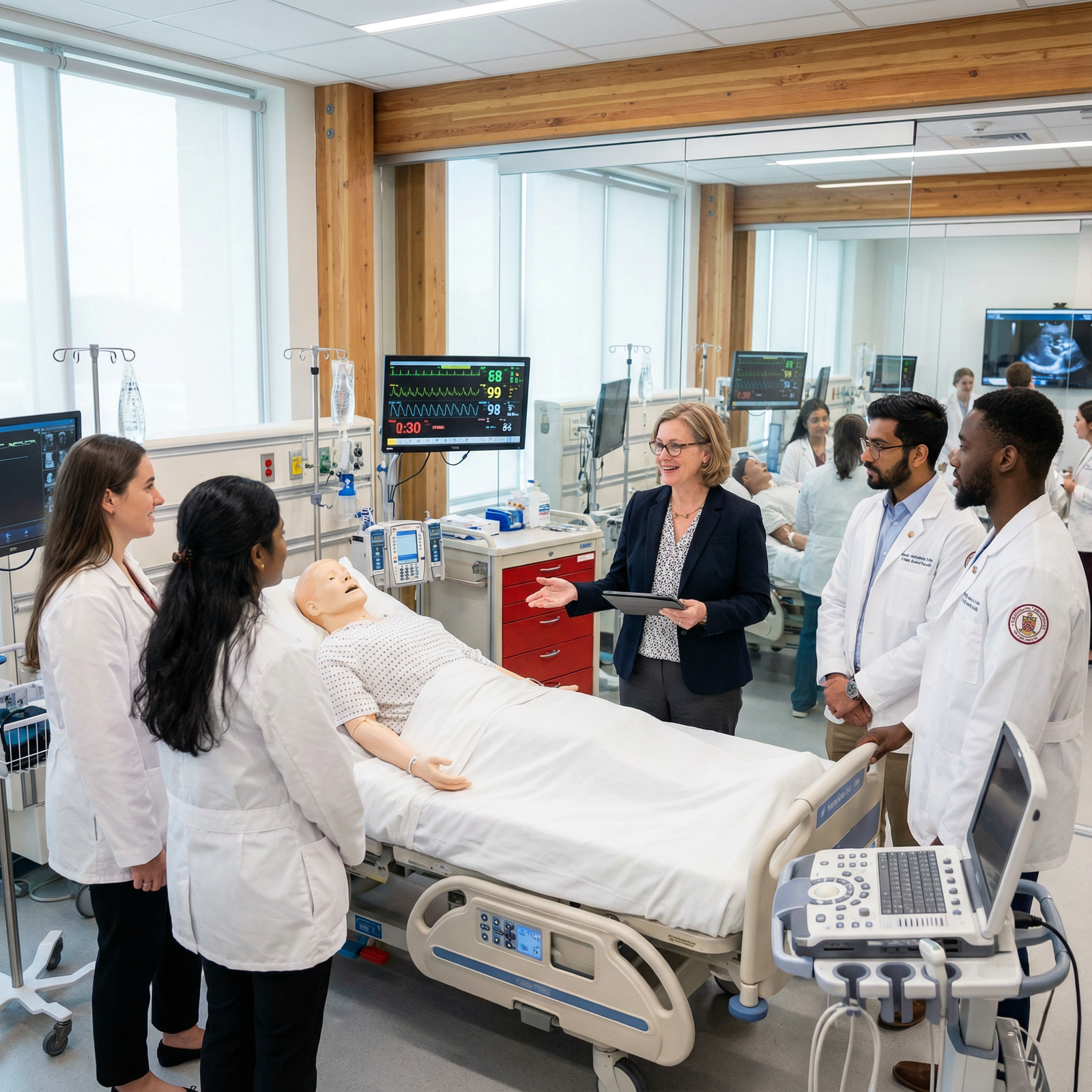
- Simulation centers with high-fidelity mannequins, standardized patients, and procedural trainers.
- Telemedicine training, including remote consultations, virtual rounds, and digital professionalism.
- Learning analytics to identify at-risk learners early and tailor remediation.
- Adaptive e-learning platforms that personalize content based on performance.
By embracing innovation, professors ensure that future clinicians are prepared for a healthcare system where digital competence and data literacy are essential.
Leadership and Policy: Professors as Architects of Healthcare Systems
Medical education professors often extend their influence beyond classrooms and exam halls into institutional leadership and health policy.
Shaping Institutional and National Education Policy
Many serve as:
- Deans, associate deans, or program directors.
- Leaders within curriculum committees and assessment boards.
- Members of national accreditation organizations and specialty boards.
- Advisors to ministries of health or education.
In these roles, they advocate for:
- High standards in Medical Education aligned with patient and societal needs.
- Adequate clinical exposure and supervision for trainees.
- Fair, transparent assessment and promotion criteria.
- Support for diversity, equity, and inclusion in admissions and training.
- Funding for educational infrastructure, including simulation centers and faculty development.
They inform workforce planning by contributing data and expertise on:
- Specialty distribution and anticipated shortages.
- Rural vs. urban training needs.
- Training capacity and pipeline development.
- Retention and well-being of healthcare professionals.
Advocacy for Better Healthcare and Social Accountability
Many professors champion the concept of socially accountable Medical Education, which emphasizes:
- Training physicians to address the health needs of underserved and marginalized populations.
- Incorporating social determinants of health and structural competency into training.
- Encouraging service-learning and community-engaged research.
They may collaborate with:
- Governmental agencies on public health campaigns.
- NGOs on global health projects.
- Community organizations on local health initiatives.
Through these efforts, medical education professors help ensure that the healthcare workforce is not only clinically excellent but also socially responsive and equity-focused.
How Medical Education Professors Improve Healthcare Quality and Patient Outcomes
The ultimate test of any Medical Education system is its impact on real-world patient outcomes. The work of medical education professors contributes to safer, more effective, and more equitable Healthcare in several key ways.
Building Strong Clinical and Professional Competencies
By designing robust, competency-based curricula, professors ensure that graduates:
- Perform accurate histories and physical exams.
- Use clinical reasoning to generate thoughtful differential diagnoses.
- Apply evidence-based guidelines and current literature to Patient Care.
- Communicate clearly with patients and healthcare teams.
- Document thoroughly and legally in the electronic health record.
- Recognize their limits and seek help appropriately.
Professors also embed lifelong learning skills—critical appraisal of evidence, self-assessment, and continuous professional development—so clinicians can adapt as medicine advances.
Enhancing Workforce Readiness and Adaptability
Healthcare systems face mounting pressure: aging populations, rising chronic disease, workforce shortages, and technological disruption. Medical education professors help prepare trainees to meet these challenges by:
- Emphasizing cultural competence and humility, so graduates can care effectively for diverse communities and address health disparities.
- Incorporating health systems science—value-based care, quality improvement, patient safety, and healthcare financing—into the curriculum.
- Encouraging interest in high-need specialties (e.g., primary care, psychiatry, geriatrics) and underserved areas (e.g., rural practice).
- Teaching leadership and change management skills so clinicians can improve the systems they work in.
Direct Impact on Patient Care: Communication, Safety, and Outcomes
High-quality Medical Education—guided by dedicated professors—translates directly into:
Better patient–physician communication
Training in shared decision-making, motivational interviewing, and delivering bad news improves patient understanding, adherence, and satisfaction.Reduced errors and improved safety
Simulation training and team-based crisis resource management enhance preparedness for emergencies and rare events, reducing preventable harm.More consistent evidence-based care
Emphasis on critical appraisal and guideline-based management helps reduce unwarranted variation in care and improves outcomes across populations.
Case Examples: Medical Education Professors in Action
Simulation-Based Training for Critical Events
A group of medical education professors designs a multi-session simulation curriculum for managing cardiac arrest, sepsis, and anaphylaxis. Residents and students rotate through high-fidelity scenarios, followed by structured debriefings focused on:
- Clinical decision-making
- Role clarity and teamwork
- Closed-loop communication
- Emotional reactions and resilience
Follow-up studies show improved code performance metrics and better adherence to ACLS guidelines on inpatient units, illustrating a direct link between educational innovation and patient outcomes.
Telemedicine and Digital Health Integration
Recognizing telehealth’s permanence in modern Healthcare, professors:
- Develop modules on virtual physical exams, privacy laws, and digital professionalism.
- Incorporate standardized patient encounters conducted over video.
- Teach documentation and billing specifics for telehealth visits.
Graduates feel more confident in managing chronic disease follow-up, mental health visits, and triage through telemedicine, improving access—especially for rural and mobility-limited patients.
Community Health and Service-Learning
Medical education professors partner with local clinics and community organizations to create:
- Longitudinal service-learning experiences in free clinics.
- Community-based research projects on topics like diabetes prevention or asthma management.
- Mobile health units providing screenings and vaccinations in underserved neighborhoods.
Students gain first-hand experience of social determinants of health and health equity challenges, while communities receive meaningful health services—a tangible example of Medical Education advancing public health.
FAQs: Medical Education Professors and Their Impact on Healthcare
1. What qualifications and training do medical education professors typically have?
Most medical education professors hold advanced professional or academic degrees such as:
- MD, DO, or equivalent medical degree (often with board certification in a clinical specialty).
- PhD or EdD in education, health professions education, or a related field.
- Master’s degrees (e.g., MHPE, MEd, MPH) focusing on Medical Education, public health, or Healthcare leadership.
Many also complete:
- Formal fellowships in medical education or simulation.
- Faculty development programs on teaching, assessment, and Curriculum Development.
- Training in research methods and statistics to support educational scholarship.
This blend of clinical and educational expertise enables them to connect teaching directly with real-world Patient Care.
2. How can medical students and residents get the most benefit from faculty mentorship?
To maximize mentorship:
- Be proactive: Reach out early to potential mentors whose interests align with your career goals (e.g., specialty, research, leadership, Medical Education).
- Clarify goals: Come to meetings with specific questions—about specialty choice, research ideas, or skills you want to develop.
- Seek feedback regularly: Ask for honest, constructive feedback on clinical performance, communication, and professionalism.
- Engage in projects: Participate in your mentor’s educational, clinical, or research work to gain deeper exposure and experience.
- Cultivate multiple mentors: Consider a “mentorship team” that includes clinical, research, and wellness-focused advisors.
Strong mentorship relationships can influence your specialty choice, competitiveness for residency, and long-term career satisfaction.
3. How do medical education professors contribute to curriculum improvement over time?
Medical education professors regularly:
- Review outcomes data (exam performance, clinical evaluations, residency match results, patient feedback).
- Collect learner and faculty feedback on what is working and what needs revision.
- Pilot new teaching methods (e.g., simulations, flipped classrooms) on a small scale, then expand successful approaches.
- Align content with national competency frameworks and accreditation standards.
- Monitor emerging trends in Healthcare (e.g., AI, new therapies, health policy changes) and update content accordingly.
This continuous quality improvement mindset keeps Medical Education current, relevant, and effective.
4. What emerging trends in Medical Education should students and residents be aware of?
Key trends shaping the future include:
- Competency-based medical education: Progress determined by demonstrated skills and behaviors rather than fixed time.
- Health systems science: Greater emphasis on quality improvement, patient safety, health policy, and healthcare economics.
- Technology integration: Use of simulation, telemedicine training, virtual reality, and AI-supported learning platforms.
- Well-being and resilience: Structured curricula and policies to address burnout, mental health, and work–life integration.
- Equity and social accountability: Stronger focus on diversity, inclusion, anti-racism, and care for underserved communities.
Engaging with these areas can make trainees more adaptable and future-ready.
5. How does investing in medical education faculty ultimately improve patient outcomes?
Investment in medical education professors—through protected time, training, and resources—yields:
- Better-prepared graduates with stronger clinical reasoning and communication skills.
- More reliable adherence to evidence-based practice across healthcare settings.
- Improved interprofessional collaboration and fewer communication-related errors.
- Greater attention to patient safety, quality improvement, and health equity.
- A more resilient and fulfilled healthcare workforce, which is strongly associated with better Patient Care.
In short, strengthening Medical Education faculty is a powerful, scalable strategy for elevating healthcare quality at the system level.
By shaping curricula, mentoring learners, advancing educational science, and influencing policy, medical education professors are quietly—but profoundly—reshaping the future of Healthcare. For medical students, residents, and institutions aiming to improve Patient Care and population health, partnering closely with these educators is not optional; it is essential.