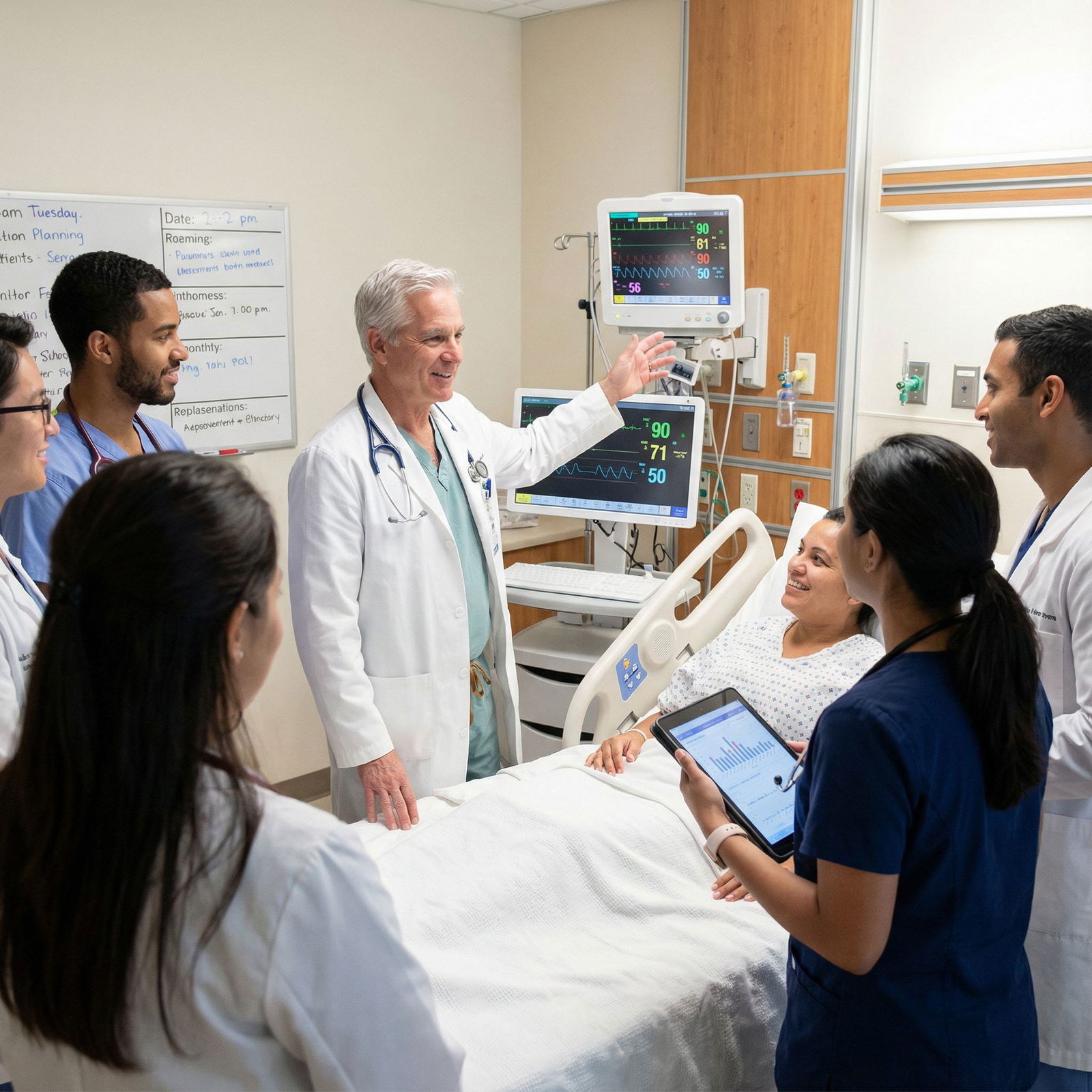
Medical education sits at the heart of healthcare quality. Every effective clinician was once a learner shaped by the mindset, habits, and standards of their teachers. Mastering the art and science of medical teaching is therefore not just an academic goal—it is a direct investment in safer, more compassionate, and more efficient patient care.
This enhanced guide dives deeper into practical, evidence-informed teaching strategies used by expert clinicians, clerkship directors, and residency faculty. Whether you are a resident preceptor, junior attending, or seasoned academic educator, you will find concrete approaches to elevate your teaching, strengthen mentorship in medicine, and adapt your methods to a rapidly evolving world of healthcare training and technology in education.
Understanding Modern Medical Teaching in Clinical Training
Effective medical teaching today looks very different from the purely lecture-based model of the past. Modern healthcare training emphasizes competency-based education, interprofessional teamwork, patient safety, and lifelong learning.
The Unique Demands of Medical Education
Medical teaching requires balancing several distinct roles:
- Content expert: Providing accurate, current clinical knowledge and reasoning frameworks.
- Skills coach: Teaching physical exam, procedures, communication, documentation, and teamwork.
- Professional role model: Demonstrating ethics, humility, empathy, and professionalism in real time.
- Supervisor and patient safety steward: Ensuring learners contribute safely to patient care.
- Mentor and advocate: Supporting learners’ career development, well-being, and identity formation.
Unlike many other disciplines, medical educators often teach:
- In high-stakes, time-pressured environments (wards, ED, OR, clinics).
- With multiple learner levels simultaneously (students, interns, residents, fellows).
- While providing real patient care, supervising teams, and meeting productivity metrics.
Recognizing these constraints is the first step toward designing realistic, effective teaching strategies that fit smoothly into daily clinical practice.
Why Skilled Medical Teaching Matters
Research across medical schools and residency programs consistently shows that:
- High-quality clinical teaching improves knowledge retention, clinical reasoning, and procedural skills.
- Positive educational climates are associated with better professionalism, less burnout, and stronger team functioning.
- Strong mentorship in medicine is linked to career satisfaction, academic productivity, and successful residency or fellowship matching.
International bodies such as the World Federation for Medical Education (WFME) and accreditation organizations stress continuous improvement in teaching quality as a core standard. In short, improving your teaching is one of the most powerful ways to impact not just individual learners, but entire systems of care.
Building Strong Relationships: The Foundation of Effective Clinical Teaching
Successful healthcare training rests on psychological safety and mutual respect. Even the best teaching strategies fail if students or residents feel intimidated, dismissed, or invisible.
1. Establish Rapport and Psychological Safety Early
On the first day with a new group, set the tone deliberately:
Introduce yourself as a teacher, not just a supervisor.
“I’m Dr. Lopez. My goals this month are to provide you with clear expectations, frequent feedback, and opportunities to grow. Let’s talk about what you want to get out of this rotation.”Learn and use learners’ names and levels.
This signals you see them as individuals, not interchangeable trainees.Co-create goals.
Ask: “What are two skills you most want to improve this week?” Note them and revisit at the end.Normalize questions and uncertainty.
Say explicitly: “If you don’t know something, that’s okay—say so. We’ll work through it together. Patient safety and learning both depend on honesty.”
These small steps promote trust and make learners far more likely to engage actively, admit knowledge gaps, and receive feedback constructively—key conditions for effective Medical Education.
2. Practice Active Listening and Respectful Communication
Skilled medical teachers:
- Listen fully when a learner presents a case or asks a question, without interrupting.
- Reflect back what they heard: “So you’re concerned about missing sepsis in this patient—tell me more about your reasoning.”
- Validate effort even when answers are incomplete: “You’re thinking in the right direction by considering red flag symptoms.”
Avoid public humiliation, sarcasm, or “pimping” styles that prioritize gotcha questions over genuine inquiry. Instead, use Socratic questioning with a supportive tone:
- Start with broad, open questions (“What’s your differential?”).
- Narrow progressively (“What’s the most dangerous possibility you must rule out first?”).
- Fill gaps with brief teaching (“A useful mental model here is…”).
Learners remember not just what you taught, but how you made them feel—this shapes their own future teaching and leadership.
Using Diverse, High-Yield Teaching Strategies in Clinical Settings
There is no single best teaching method. Learners differ in experience, background, and learning preferences. Clinical environments vary in pace and resources. Expert educators therefore use a flexible toolkit of teaching strategies.
3. Transform Lectures into Interactive Learning
Traditional slide-heavy lectures have limited impact unless they are engaging and applicable.
Enhance your large-group teaching by:
- Chunking content into 10–15 minute segments with brief activities in between (polls, think–pair–share).
- Using audience response systems (Poll Everywhere, Kahoot!, built-in LMS tools) to:
- Assess baseline knowledge.
- Pose clinical vignettes.
- Debunk common misconceptions.
- Integrating clinical storytelling to anchor facts in memorable patient cases.
Example: In a session on heart failure, present a short case, ask learners to vote on the next best step, then reveal the correct approach with a brief rationale and guideline reference.
This use of technology in education not only improves engagement but also generates real-time data on learner understanding.
4. Optimize Small Group and Case-Based Learning
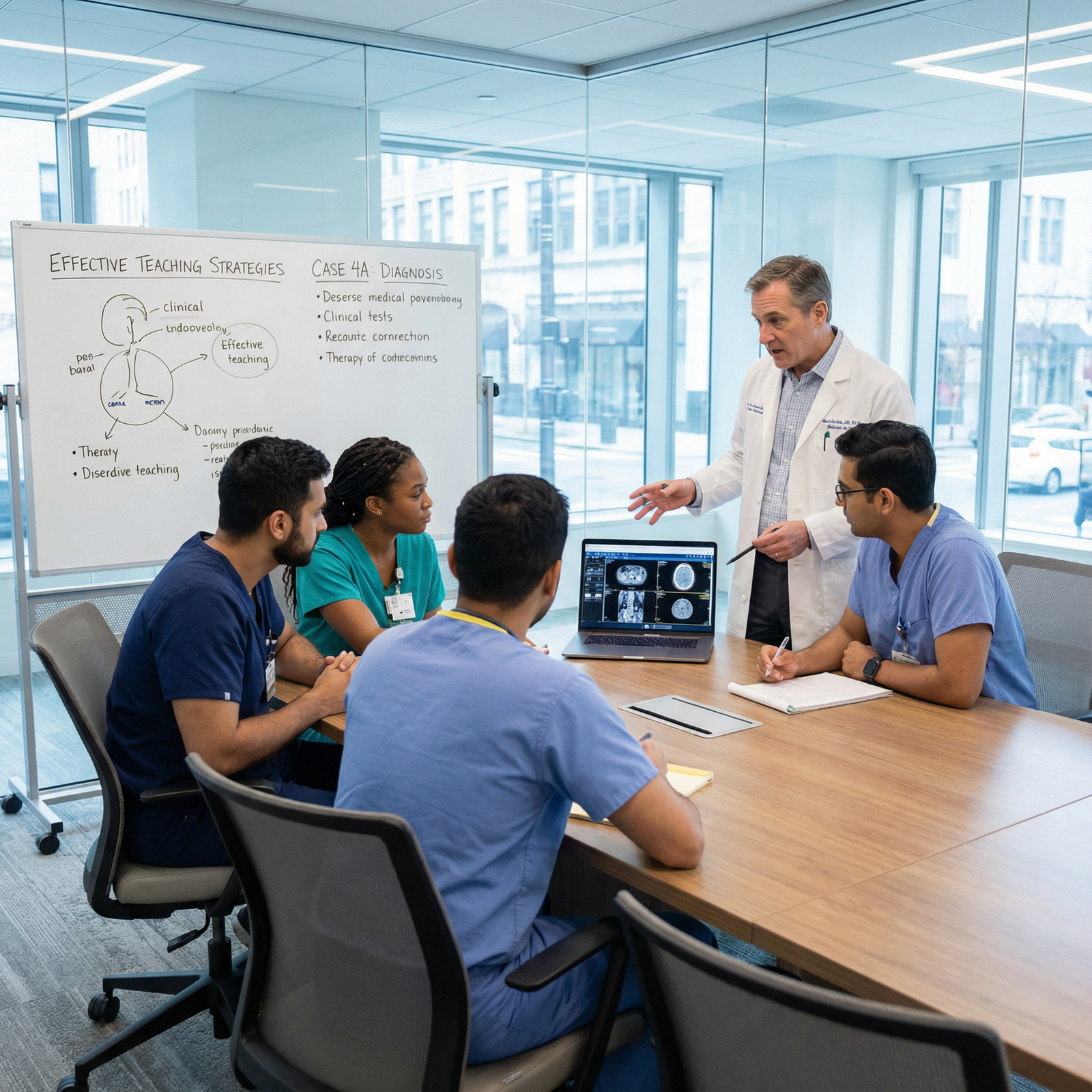
Small-group formats are ideal for developing clinical reasoning and communication.
High-yield tactics include:
Structured case discussions
Use a consistent framework:- Chief complaint
- Problem representation (“one-liner”)
- Differential diagnosis
- Diagnostic plan
- Initial management
- Reflection: What could we miss?
Assign rotating roles among learners:
- Case presenter
- Differential diagnosis leader
- Evidence summarizer
- Timekeeper
- Scribe on the whiteboard
Encourage uncertainty and debate
Ask: “What else could this be?” “What would change your mind?” This builds critical thinking skills central to modern Medical Education.
5. Make the Most of Simulation and Skills Training
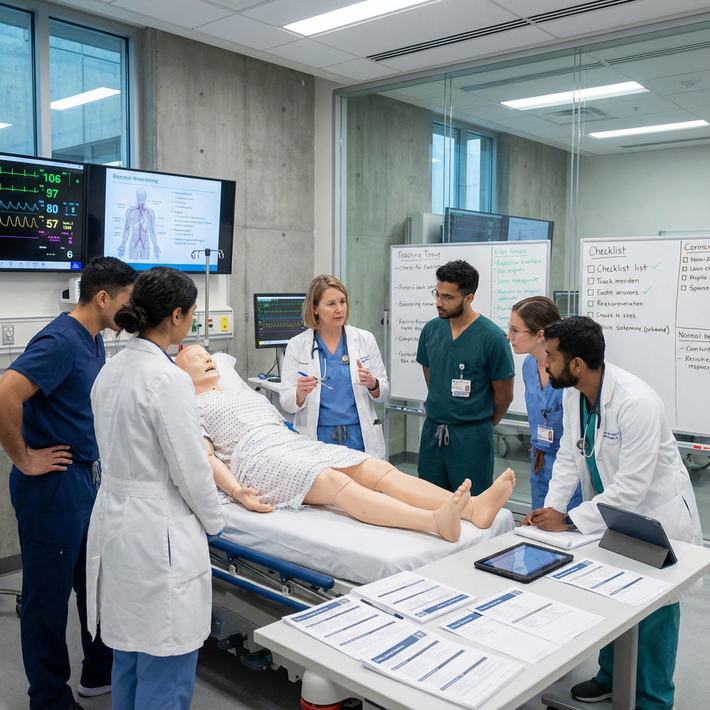
Simulation—standardized patients, mannequins, task trainers, and virtual reality—is essential in contemporary healthcare training.
You can:
- Use simulation for rare but critical events (e.g., anaphylaxis, shoulder dystocia, code blue).
- Focus on both technical skills (airway management, line placement) and non-technical skills (teamwork, communication, leadership).
- Conduct structured debriefs based on frameworks like PEARLS (Promoting Excellence and Reflective Learning in Simulation):
- Reactions
- Description
- Analysis
- Summary
Even brief “micro-simulations” in clinic—role-playing a difficult conversation for 5–10 minutes—can dramatically improve comfort and competence.
Making Learning Clinically Relevant and Sticky
Nothing motivates learners more than clearly seeing why something matters to their patients and their future practice.
6. Anchor Teaching in Real-World Clinical Problems
To emphasize relevance:
Use real patients (with consent) as teaching anchors:
“We admitted a 67-year-old with dyspnea this morning. Before we go see her, let’s walk through a structured approach to shortness of breath.”Connect pathophysiology to management decisions rather than teaching it in isolation:
“Understanding why nephrotic syndrome causes edema will help you understand why we use ACE inhibitors in this setting.”Highlight patient outcomes and safety:
Emphasize how early recognition, correct dosing, or appropriate tests change morbidity and mortality.
7. Integrate Evidence and Guidelines into Bedside Teaching
Teach learners how to learn, not just what to know:
- Ask: “What clinical question does this case raise?” (Use PICO format: Patient/Problem, Intervention, Comparison, Outcome.)
- Demonstrate rapid, point-of-care literature searches using:
- PubMed Clinical Queries
- Guidelines apps (e.g., UpToDate, specialty societies)
- Institutional protocols
- Model critical appraisal briefly:
- “This is a randomized controlled trial with low risk of bias.”
- “These guidelines are based on expert consensus due to limited evidence.”
This approach reinforces that Technology in Education is not just about flashy tools, but about teaching learners how to access and apply high-quality information at the bedside.
8. Use Guest Faculty and Interprofessional Perspectives
Invite other healthcare professionals to enrich sessions:
- Pharmacists to discuss complex medication regimens and safety.
- Nurses or advanced practice providers to talk about workflow and team communication.
- Social workers or case managers to address social determinants of health and discharge planning.
Such interprofessional Teaching Strategies mirror real healthcare teams and broaden learners’ understanding of systems-based practice.
Cultivating a Growth Mindset and Feedback Culture
Medical culture has historically prized perfection, but real learning requires space to fail safely and improve.
9. Foster a Growth Mindset Explicitly
Help learners shift from “I’m either good or bad at this” to “I can get better with effort and strategy.”
Practical ways:
Praise process and strategies, not just outcomes:
“You improved your handoffs this week by using a written template—that’s effective adaptation.”Normalize struggle:
Share (appropriately) your own learning curve: “I also found EKGs confusing as an intern. Here’s what helped me.”Frame errors as learning opportunities, while maintaining accountability and patient safety:
“Let’s review what led to this near-miss and how we can prevent it in the future—this is how all of us become safer clinicians.”
10. Give Timely, Specific, Actionable Feedback
Feedback is one of the most powerful tools in Medical Education, yet often underused or poorly delivered.
Use simple frameworks:
Ask–Tell–Ask
- Ask: “How do you think that patient encounter went?”
- Tell: Share your observations (behaviors, not labels): “You explained the diagnosis clearly but used a lot of jargon.”
- Ask: “What is one thing you’ll try differently in your next explanation?”
Pendleton’s rules (learner states what went well, teacher adds, then same for what to improve).
Make feedback:
- Specific: “Pause after each key point and ask the patient to repeat it back” vs. “Communicate better.”
- Timely: Within hours or at end of day, not weeks later.
- Balanced: Include strengths and targets for growth.
- Linked to goals discussed at the start of the rotation.
Encourage learners to seek feedback proactively and to create a personal learning plan based on recurring themes.
Leveraging Technology in Education and Professional Development
Thoughtful use of digital tools can extend teaching beyond the ward and tailor learning to individual needs.
11. Integrate Digital Resources Strategically
Rather than overwhelming learners with lists of apps, recommend a curated toolkit:
- Clinical decision support and references:
- UpToDate, DynaMed, specialty society guidelines.
- Anatomy, imaging, and procedure apps:
- 3D anatomy platforms, ultrasound tutorials.
- Question banks and spaced repetition:
- Apps using spaced-repetition algorithms for high-yield topics.
- Learning management systems (LMS):
- Use your institution’s LMS (Canvas, Blackboard, Moodle) for:
- Pre-session readings/videos (flipped classroom)
- Post-session quizzes
- Discussion forums
- Tracking progress and competencies
- Use your institution’s LMS (Canvas, Blackboard, Moodle) for:
When introducing a tool, model how you personally use it on rounds or in clinic to answer real clinical questions.
12. Use Social Media Thoughtfully for Medical Education
Platforms like X (Twitter), LinkedIn, and YouTube are increasingly used for healthcare training:
- Curate high-quality accounts and channels (journals, specialty societies, established educators).
- Create or share educational content:
- Threaded case discussions
- Mini-lectures
- Infographics and visual abstracts
- Discuss digital professionalism with learners:
- Patient privacy and HIPAA
- Boundaries with patients
- Representing the profession online
Encourage learners to see social media as a tool for community building, mentorship in medicine, and staying current, not just entertainment.
Mentorship, Career Guidance, and Educator Well-Being
Outstanding medical teaching extends beyond the formal curriculum. It includes shaping careers, identities, and resilience.
13. Provide Meaningful Mentorship in Medicine
As an educator, you may be the most influential mentor some learners encounter.
Effective mentorship includes:
- Regular check-ins about:
- Career goals
- Research or quality improvement interests
- Residency or fellowship planning
- Work–life integration
- Advocacy and sponsorship:
- Writing strong, specific letters of recommendation.
- Connecting learners with projects, committees, or networks.
- Attention to diversity, equity, and inclusion (DEI):
- Recognizing unique challenges faced by underrepresented and international medical graduates.
- Supporting equitable access to opportunities.
If you cannot be a long-term mentor, you can still serve as a connector, helping learners find appropriate mentors aligned with their goals.
14. Teach Life Skills and Professional Identity Formation
Modern healthcare training demands more than clinical knowledge:
- Time management and prioritization:
- Share strategies for managing notes, inboxes, and tasks efficiently.
- Communication and conflict resolution:
- Role-play difficult conversations with consultants, colleagues, and patients.
- Resilience and boundaries:
- Discuss managing uncertainty, coping with errors, and seeking help early.
These skills are central to sustainable careers and are increasingly recognized as core components of Medical Education and Continuing Education.
15. Protect Your Own Well-Being as an Educator
To teach effectively, you must remain engaged and healthy yourself.
Practical steps:
- Set realistic teaching goals that fit your clinical load (e.g., one focused teaching point per patient).
- Share teaching responsibilities with the team (resident-led mini-teaches, peer teaching).
- Participate in faculty development:
- Medical education workshops
- Teaching academies
- Online courses in pedagogy, assessment, and curriculum design
- Seek collegial support:
- Debrief challenging teaching situations.
- Exchange strategies and materials.
- Celebrate successes.
Remember: modeling healthy boundaries and self-care is itself powerful teaching for trainees who are watching how you navigate your career.

Frequently Asked Questions About Mastering Medical Teaching
1. What makes an effective medical teacher in today’s training environment?
An effective medical teacher:
- Creates a safe, respectful learning climate and builds genuine rapport.
- Uses diverse, evidence-based teaching strategies (bedside teaching, case-based learning, simulation, interactive lectures).
- Connects learning directly to clinical relevance and patient outcomes.
- Provides timely, concrete feedback that supports a growth mindset.
- Integrates technology in education thoughtfully rather than for its own sake.
- Serves as a mentor and role model, demonstrating professionalism, empathy, and ethical behavior.
- Commits to ongoing professional development in Medical Education, not just clinical excellence.
2. How can I improve my bedside and ward teaching without slowing down patient care?
You can embed teaching into routine workflow by:
- Using “one-minute preceptor” techniques:
- Get a commitment (“What do you think is going on?”)
- Probe for reasoning
- Teach a general rule
- Provide feedback
- Teaching one key take-home point per patient rather than trying to cover everything.
- Asking learners to prepare brief teaching pearls on topics arising from the day’s patients.
- Using “on-the-fly” micro-teaching in the hallway while walking between rooms.
- Encouraging learners to look up one clinical question per shift and share the answer with the team.
These methods maintain efficiency while significantly enhancing learning.
3. How can technology best enhance medical education, rather than distract from it?
Technology enhances healthcare training when it:
- Solves a specific educational problem (e.g., access to guidelines at bedside, structured feedback, exam preparation).
- Is integrated into clinical reasoning, not used as a shortcut for thinking.
- Supports spaced repetition and retrieval practice (e.g., flashcard apps, question banks).
- Facilitates communication and continuity (LMS discussion boards, shared OneNote or cloud folders with teaching resources).
- Is curated for quality and reliability, with clear guidance on trusted sources.
Discuss with learners how and when to use technology and explicitly model digital professionalism and critical appraisal.
4. What is the real impact of mentorship in medicine on career development?
Mentorship in medicine is consistently associated with:
- Increased career satisfaction and sense of belonging.
- Greater academic productivity (publications, presentations, leadership roles).
- More successful residency and fellowship applications, including stronger letters and clearer narratives.
- Improved retention of underrepresented groups in academic and leadership pathways.
- Better navigation of life transitions, such as parenthood, relocation, or career changes.
Even brief, focused mentoring interactions—helping refine a personal statement, reviewing a CV, talking through specialty choice—can have a lasting effect on learners’ trajectories.
5. How can I start improving my teaching skills if I have no formal training in education?
You do not need a master’s degree in education to begin teaching well. Start with:
- Observing respected educators and consciously noting their techniques.
- Asking learners for feedback on what’s working and what isn’t.
- Choosing one or two new strategies from this article (e.g., one-minute preceptor, structured case discussions) to practice for a month.
- Attending short faculty development workshops or online webinars focused on Teaching Strategies or assessment.
- Reading key resources in Medical Education (e.g., articles from Academic Medicine, Teaching and Learning in Medicine, or specialty-specific education journals).
Approach teaching as you approach clinical practice: as a craft improved through deliberate practice, feedback, reflection, and continuing education.
By intentionally refining your approach to Medical Education—building rapport, diversifying your teaching methods, leveraging technology, fostering growth mindsets, and embracing mentorship—you shape not only individual learners, but the future culture and quality of healthcare itself. Each learner you teach will carry your influence forward to countless patients and colleagues, multiplying the impact of every thoughtful teaching moment.