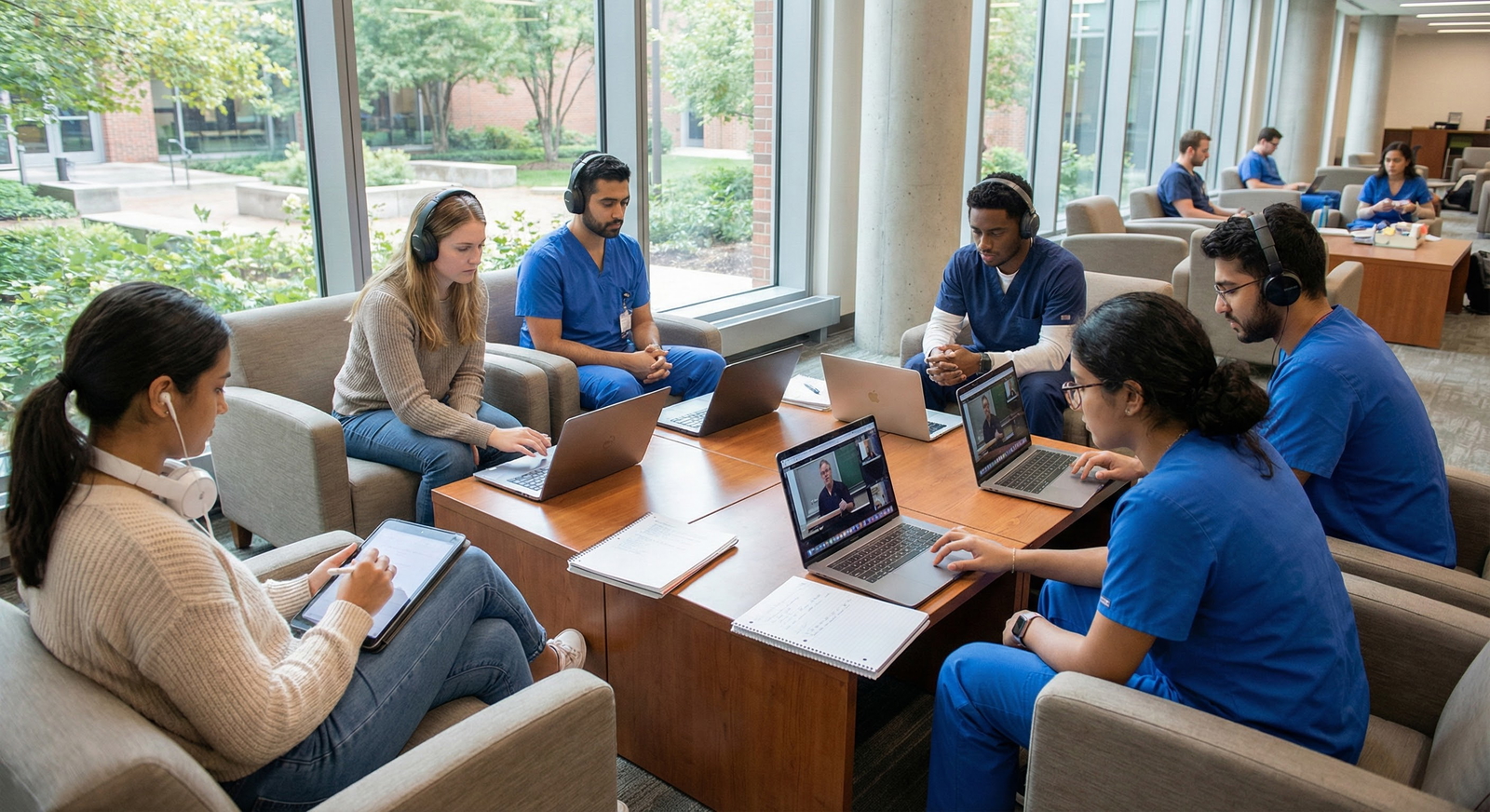
In the fast-paced world of medical education, a strong professional network is not a luxury—it is an essential part of your career infrastructure. Whether you are a resident just dipping your toes into teaching, a new faculty member, or a seasoned program director, the right connections can accelerate your professional development, open doors to leadership opportunities, and amplify your impact as an educator.
This expanded guide walks through why networking matters in medical education, practical networking strategies tailored to busy clinicians and educators, and the key types of people you should intentionally connect with throughout your career.
Why Networking Matters for Medical Educators and Clinician-Teachers
Networking in medical education is not about collecting business cards or LinkedIn connections. It is about building meaningful, mutually beneficial relationships that support your growth as an educator and improve training for learners.
1. Mentorship and Sponsorship for Career Growth
Mentorship is one of the most powerful outcomes of intentional networking:
- Guidance on career decisions: A mentor can help you decide whether to pursue a clinician-educator track, fellowship in medical education, or graduate degrees (e.g., MEd, MHPE, MPH).
- Skill development: Experienced educators can help refine your teaching, feedback, assessment, and curriculum design skills.
- Navigating institutional culture: Mentors often understand the “unwritten rules” of promotion, committee service, and scholarly expectations.
Beyond mentorship, networking can lead to sponsorship—when senior leaders actively advocate for you, nominate you for roles, and help you gain visibility. Sponsors are often found through professional relationships built over time in committees, collaborative projects, and conferences.
2. Collaboration in Teaching, Research, and Innovation
Medical education thrives on collaboration:
- Curriculum development: Partner with colleagues across departments or professions to create integrated, interprofessional curricula.
- Education scholarship: Collaborate on studies of teaching methods, assessment tools, remediation strategies, or wellness initiatives.
- Quality improvement and patient safety: Educational interventions often intersect with clinical systems; having a network makes it easier to partner on projects that satisfy both educational and institutional priorities.
Networking strategies that emphasize collaboration can lead to multi-institutional studies, co-authored publications, and regional or national education initiatives.
3. Ongoing Learning, Resources, and Knowledge Sharing
The field of medical education evolves rapidly—competency-based training, EPAs, AI in assessment, simulation, and more. A strong network helps you:
- Stay current with best practices and emerging evidence.
- Access teaching resources (slide decks, OSCE stations, assessment rubrics, workshop outlines).
- Learn how other programs are dealing with challenges like duty hour limits, remediation, learner mistreatment, and wellness.
Many educators report that a single listserv, WhatsApp group, Slack workspace, or Twitter/X hashtag provides daily learning and support.
4. Career Advancement and Leadership Opportunities
Networking can directly impact your professional trajectory:
- Identifying new roles (course director, clerkship director, program director, simulation director).
- Being invited to join institutional or national committees (curriculum committees, assessment working groups, GME committees).
- Being considered for leadership programs, fellowships, or awards in medical education.
Strategic networking increases your visibility and credibility, making it more likely you will be tapped for leadership positions or recruited for ideal roles.
Foundational Networking Strategies for Busy Medical Educators
Networking need not be time-consuming or uncomfortable. Thoughtful, targeted actions—done consistently—build a robust professional network over time.
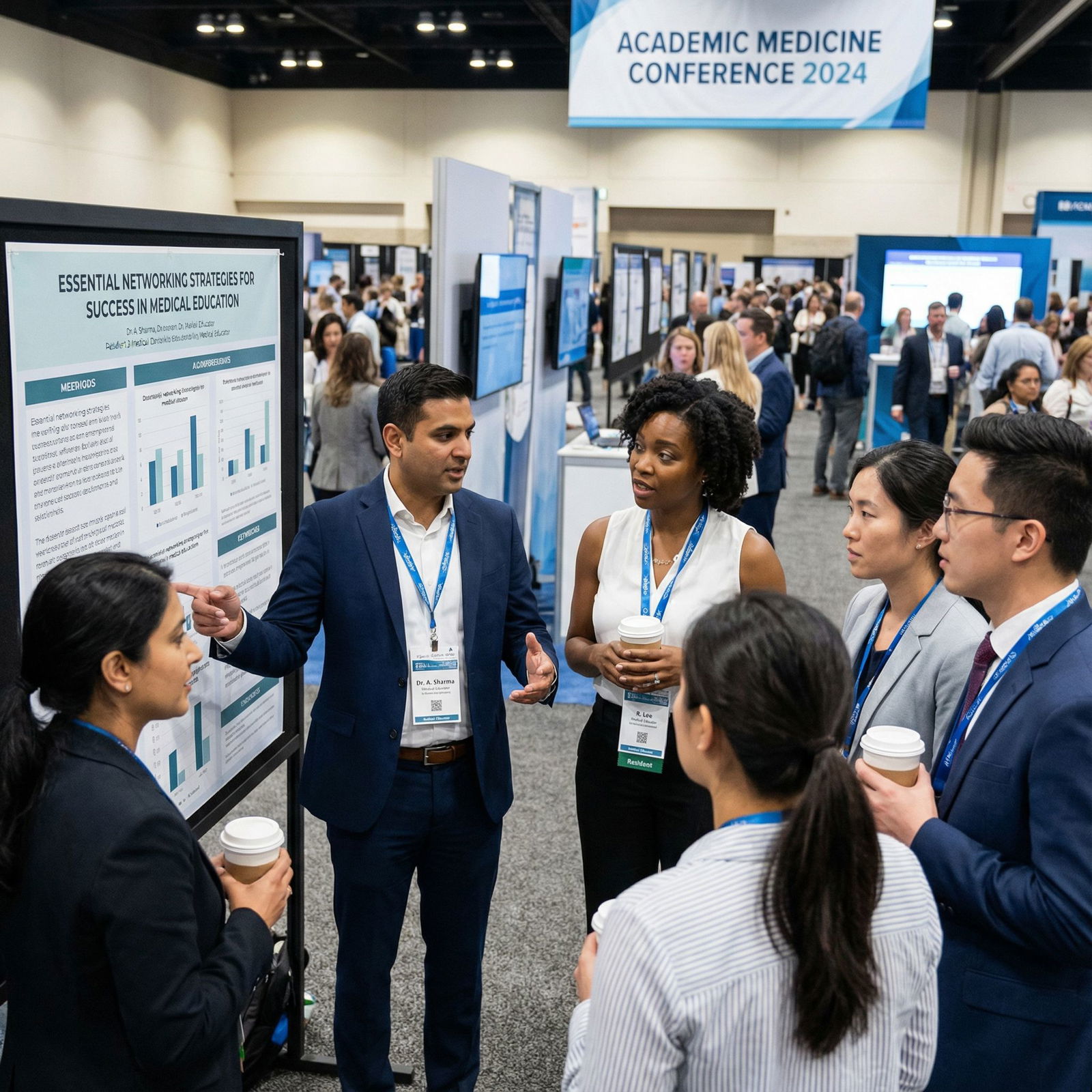
1. Make the Most of Conferences and Workshops
Regional, national, and international meetings are high-yield networking environments. Examples include the AAMC Annual Meeting, regional GEA meetings, APDIM, APPD, SGIM, STFM, AMEE, and specialty-specific education forums.
Before the meeting
- Clarify your goals: Are you seeking mentorship, collaborators, a new position, or ideas for curriculum reform? Your goals determine whom you prioritize.
- Review the program and attendee list: Mark sessions where key medical education leaders or potential collaborators are speaking.
- Reach out in advance: Email 2–5 people you want to meet (e.g., “I found your MedEdPORTAL publication on resident assessment very helpful. I’ll be at AAMC—could we meet for 15 minutes?”).
During the meeting
- Attend intentionally: Choose sessions that align with your career goals (e.g., clinician-educator tracks, assessment, simulation, leadership).
- Ask thoughtful questions: Engaging during Q&A can lead to post-session conversations with speakers and attendees.
- Use networking events strategically: Attend mixers for medical education interest groups, early-career educator sessions, or specialty-specific receptions.
- Practice concise introductions: Have a brief “elevator pitch” for yourself—who you are, what you do, and what you are interested in (education-wise).
After the meeting
- Follow up within 3–7 days: Send personalized emails or LinkedIn messages referencing your conversation and suggesting a next step (e.g., sharing a resource, scheduling a virtual meeting).
- Organize your notes: Keep a simple networking log (spreadsheet or note app) listing names, roles, how you met, and possible future collaborations.
2. Leverage Online Platforms for Medical Education Networking
Digital networking allows you to connect across institutions, regions, and even countries—especially useful if you have limited time or travel funding.
LinkedIn for Medical Educators
- Optimize your profile:
- Headline that reflects your educator identity (e.g., “Internal Medicine Hospitalist | Medical Educator | Simulation and Assessment”).
- Summary highlighting your teaching interests, scholarly projects, and goals in medical education.
- Add sections for Teaching Experience, Education Scholarship, and Committees.
- Join relevant groups:
- Medical education or specialty-specific educator groups.
- Groups for clinician-educators, academic medicine, and simulation.
- Engage regularly:
- Post brief reflections on teaching, share articles, or highlight sessions you attended.
- Comment meaningfully on others’ posts to build visibility and rapport.
Twitter/X and Hashtags like #MedEd
Many medical educators actively use Twitter/X for real-time discussions:
- Follow hashtags such as #MedEd, #FOAMed, #MedTwitter, and specialty-specific tags.
- Participate in live tweet-chats about teaching, assessment, and professional development.
- Share key takeaways from conferences or interesting teaching experiences (while respecting privacy and institutional policies).
Webinars and Virtual Communities
- Attend webinars hosted by professional organizations, departments of medical education, or teaching academies.
- Engage in the chat, introduce yourself, and connect with speakers afterwards by email or LinkedIn.
- Join listservs or Slack/Teams channels for education communities within your institution or specialty.
3. Join and Actively Engage in Professional Organizations
Professional organizations are central hubs for networking, mentorship, and collaboration in medical education.
Examples include:
- AAMC (Association of American Medical Colleges) – broad medical education initiatives across UME, GME, and faculty development.
- SGIM, APDIM, APPD, STFM, SAEM, ACEP, ATS, and similar specialty societies – most have education committees and interest groups.
- Simulation, assessment, and education research societies – depending on your focus.
To get the most from membership:
- Join education-focused sections or interest groups within your specialty.
- Volunteer for committees, abstract review, or working groups—small, consistent contributions lead to deep connections.
- Apply for mentoring programs many organizations offer (often pairing early-career educators with established leaders).
- Consider education leadership academies or certificate programs associated with these organizations.
4. Collaborate on Medical Education Research and Scholarly Projects
Collaboration is one of the most effective networking strategies because you build relationships through shared work.
Finding collaborators
- Look within your department or residency program for colleagues interested in similar questions (e.g., feedback, burnout, wellness, remediation).
- Attend institutional “Education Day” or research-in-progress meetings to identify like-minded educators.
- Reach out to authors whose MedEdPORTAL or journal articles align with your interests; many are open to cross-institutional collaboration.
Types of collaborative projects
- Curriculum development and evaluation
- New rotations, longitudinal scholarly tracks, or interprofessional simulations.
- Assessment and feedback initiatives
- CBME frameworks, milestones, EPAs, OSCEs, workplace-based assessments.
- Learning environment and wellness
- Projects addressing mistreatment, inclusion, burnout, or psychological safety.
- Online learning and technology
- Podcasts, video-based teaching, e-learning modules, AI-enhanced feedback.
Practical collaboration strategies
- Start small—pilot projects or single-site studies.
- Clearly define roles, authorship expectations, and timelines early.
- Use shared documents and project management tools (e.g., Google Docs, Trello, Teams).
- Present your work locally first, then regionally/nationally, and aim for publication in education-focused journals.
Advanced Networking Strategies: Social Media, Students, and Internal Visibility
As you gain experience, you can broaden and deepen your network through less traditional but highly effective channels.
1. Using Social Media Thoughtfully and Professionally
Platforms like Facebook, Instagram, and TikTok can support medical education networking, especially for those involved in public-facing education or learner engagement.
Best practices:
- Maintain clear boundaries between personal and professional content.
- Align posts with institutional social media policies.
- Use your platform to:
- Share bite-sized teaching pearls or short explainer videos.
- Promote educational events or journal clubs.
- Highlight resident or student achievements (with permission).
Engage with educational content creators:
- Comment on their teaching ideas, ask questions, or share implemented adaptations.
- Propose collaborative content (e.g., co-hosting a live Q&A on applying for residency or thriving as a new intern).
2. Cultivating Relationships with Students, Residents, and Fellows
Learners are not only the focus of your teaching—they are also part of your evolving professional network.
Ways to build lasting, professional relationships:
- Be accessible and supportive: Offer office hours or informal “coffee chats” about career planning, research, or teaching.
- Invite learners into projects:
- Co-author education posters or manuscripts.
- Partner on curriculum development (e.g., near-peer teaching programs).
- Provide meaningful feedback and mentorship:
- Help learners interested in medical education find scholarship opportunities or graduate programs in health professions education.
- Write detailed, personalized letters of recommendation when appropriate.
As former students and residents become faculty, you may find yourself collaborating with them as peers, co-authors, or co-leaders in education initiatives.
3. Building Your Internal Network at Your Home Institution
External connections are important, but your local network often has the greatest direct impact on your daily work and promotion.
Key steps:
- Meet regularly with:
- Course, clerkship, or program directors.
- Associate deans for UME, GME, or faculty development.
- Leaders of simulation centers, skills labs, and teaching academies.
- Attend:
- Departmental and educational conferences.
- Grand rounds and education-focused seminars.
- Faculty development workshops.
- Offer to help with:
- Resident orientation or boot camps.
- OSCE stations or assessment initiatives.
- Education committees or task forces.
Consistently showing up, being reliable, and contributing ideas builds your reputation as a high-value collaborator and future leader.
Key Connections Every Medical Educator Should Cultivate
As your network grows, be intentional about the types of connections you nurture. The following categories are particularly impactful.
1. Senior Educators and Institutional Leaders
Senior faculty, course/clerkship directors, program directors, and deans can play critical roles in your growth:
- Mentors who guide your academic trajectory.
- Sponsors who recommend you for committees, awards, or leadership roles.
- Advocates during promotion and tenure discussions.
Approach them with clarity about your interests (e.g., assessment, simulation, remediation, wellness) and ask for specific advice or opportunities to contribute.
2. Interprofessional and Interdisciplinary Colleagues
Modern medical education is inherently interprofessional. Networking outside your discipline can significantly enhance your impact.
Connect with:
- Nursing, pharmacy, and allied health educators.
- Public health, psychology, and education school faculty.
- Librarians, instructional designers, and educational technologists.
These collaborators can help you design richer curricula, create interprofessional simulations, or study systems-based practice and team-based care.
3. Medical Education Researchers and Scholars
Even if you see yourself “primarily as a clinician,” education scholarship is essential for academic advancement in many institutions.
Build relationships with:
- Faculty with MHPE, MEd, or PhD degrees in medical education or related fields.
- Members of your institution’s office of medical education or teaching academy.
- Methodologists and statisticians who regularly work on education projects.
They can help refine your research questions, improve study design, navigate IRB processes, and identify appropriate journals or conferences.
4. Alumni, Former Trainees, and External Partners
Former students and residents become:
- Faculty at other institutions.
- Leaders in community hospitals or health systems.
- Partners in multi-site educational initiatives.
Stay connected through:
- Alumni groups and newsletters.
- Social media connections (LinkedIn is especially suited to this).
- Periodic emails checking in and offering collaboration.
These relationships may lead to visiting professorships, multi-site studies, or external career opportunities.
5. Subject Matter Experts and Master Teachers
Subject matter experts (both clinicians and educators) deepen your expertise and teaching repertoire.
Examples include:
- Master clinicians in your specialty (e.g., renowned proceduralists, diagnosticians).
- Experts in pedagogy (e.g., simulation, narrative medicine, assessment, remediation).
- Leaders in wellness, DEI (diversity, equity, inclusion), and professionalism initiatives.
Learn from their workshops, invite them as guest speakers, and ask for feedback on your own teaching. Over time, these experts can become valued mentors or collaborators.

Practical Tips to Sustain and Strengthen Your Network
Building a network is not a one-time task; it is an ongoing part of your professional life in medical education.
1. Be Generous and Reciprocal
Effective networking is not transactional. Focus on what you can contribute:
- Share teaching resources or assessment tools you have found useful.
- Introduce people to each other (“You two should meet—you are both working on simulation in pediatrics.”).
- Offer to review abstracts or manuscripts, or provide feedback on workshops.
When you consistently add value, others will naturally want to help and collaborate with you.
2. Systematize Your Networking Habits
Simple routines prevent connections from fading:
- Block 30–60 minutes per month to:
- Send a few check-in emails.
- Congratulate colleagues on new roles or publications.
- Share an article with someone who might find it useful.
- Keep a running list of people to follow up with after conferences or webinars.
- Use a note app or spreadsheet to track projects and next steps with collaborators.
3. Protect Your Time and Focus on Quality
There is a limit to how many committees, collaborations, and projects you can sustain while maintaining clinical, teaching, and personal responsibilities.
- Prioritize relationships and projects that align with your career goals and values.
- Learn to say no (or “not now”) respectfully when opportunities do not fit.
- Aim for fewer, deeper collaborations rather than many superficial ones.
Frequently Asked Questions (FAQs)
Q1: I’m a resident/fellow interested in medical education. How do I start networking without a big track record?
- Begin locally: talk with your program director, clerkship directors, or faculty known for teaching excellence.
- Join your institution’s education interest group, resident-as-teacher program, or teaching academy events.
- Present a small education project (e.g., a new curriculum, teaching session, or QI-education project) at a local or regional conference.
- Use LinkedIn and Twitter/X to follow and engage with medical education leaders—comment on posts, ask thoughtful questions, and attend webinars.
Even one or two well-chosen mentors can significantly accelerate your growth early on.
Q2: How can I keep in touch with contacts made at conferences and online?
- Send a personalized message within a week of meeting, referencing a specific part of your conversation.
- Add them on LinkedIn or connect via email, and organize contacts with tags or notes (e.g., “assessment,” “simulation,” “pediatrics”).
- Periodically send brief updates (e.g., when you publish, present, or implement a project related to your shared interests).
- Share relevant articles, resources, or calls for abstracts that might interest them.
Consistency (even a few times a year) matters more than intensity.
Q3: I’m an introvert and find networking uncomfortable. What can I do?
- Prepare a few conversation starters about topics you care about—teaching methods, curricula, or professional development.
- Set small, achievable goals for each event (e.g., “meet three new people and exchange contact information”).
- Schedule one-on-one or small-group meetings rather than relying solely on large receptions.
- Use digital networking (email, LinkedIn, webinars, Twitter/X) where you can communicate more deliberately and at your own pace.
Remember that many medical educators feel the same way; thoughtful, genuine interactions are more valuable than forced small talk.
Q4: How do I ask someone to be my mentor in medical education?
- Start by having a few informal conversations about your interests and goals.
- If the fit feels right, you might say:
- “I’ve really valued your advice about medical education and wonder if you’d be willing to serve as a mentor as I develop my educator career.”
- Be specific about:
- What you are hoping for (e.g., meeting 2–3 times a year, reviewing your CV, guiding education scholarship).
- Your short- and medium-term goals (e.g., becoming a clinician-educator, building assessment expertise, or pursuing an MHPE).
- Be open to the possibility that they may suggest a co-mentor or someone even better aligned with your interests.
Q5: How do I know if a networking opportunity is worth my time?
Ask yourself:
- Does this organization, event, or project align with my career goals in medical education?
- Will this allow me to:
- Build relevant skills (teaching, assessment, curriculum design, leadership)?
- Produce education scholarship (presentations, publications, MedEdPORTAL resources)?
- Connect with people who share my interests and values?
If the answer is “yes” to at least one or two of these—and the time commitment is feasible—then it is likely a worthwhile networking opportunity.
By deliberately building and nurturing your professional network, you invest in your long-term success as a medical educator. Effective networking strengthens mentorship, enhances collaboration, accelerates professional development, and ultimately improves the learning environment for students, residents, and fellows. Over time, you will not only benefit from your network—you will become a vital connector and mentor for the next generation of medical educators.