
The first year as clerkship director exposes every flaw in your course and every gap in your planning. Treat it like a seasonal job with hard deadlines, or it will run you.
Below is how the year actually unfolds in most U.S. medical schools: what explodes when, what absolutely must be done by each season, and what you can safely ignore until later. I am assuming a July–June academic year and a core required clerkship (IM, surgery, peds, psych, OB/GYN, family med, etc.), but you can adjust by a month either way and the pattern still holds.
Big-Picture Year: What Happens When
At this scale, your job has four distinct phases:
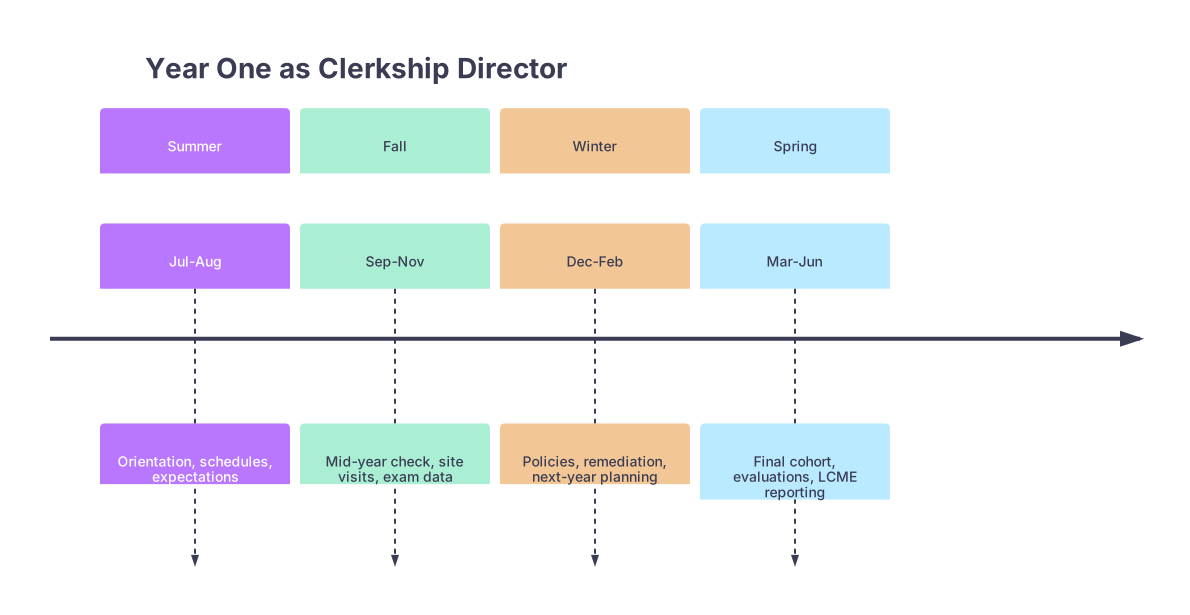
| Period | Event |
|---|---|
| Summer - Jul-Aug | Orientation, schedules, expectations |
| Fall - Sep-Nov | Mid-year check, site visits, exam data |
| Winter - Dec-Feb | Policies, remediation, next-year planning |
| Spring - Mar-Jun | Final cohort, evaluations, LCME reporting |
You will be living on three overlapping calendars:
- The student calendar (blocks/rotations).
- The institutional calendar (curriculum committee, LCME reporting, catalog deadlines).
- The residency/GME calendar (for your own clinical life and your faculty).
Accept that now: you need all three in front of you at all times.
Late Spring – Early Summer (April–June): Pre‑Job Groundwork
If you are starting July 1 and you want to survive, you start working before you “start.”
April–May: Before Your Official Start
By this point you should:
Get access and information
- Request:
- Prior 2–3 years of clerkship syllabi.
- Grade distributions by site and by year.
- NBME or shelf exam score reports.
- Student narrative comments, grouped by site/preceptor.
- LCME citations or “areas for improvement” involving your clerkship.
- Meet briefly (30–45 minutes) with:
- The outgoing clerkship director (if there is one).
- The course/clerkship coordinator (non‑negotiable).
- The associate dean for clinical education.
- Request:
Map the rotation structure
- Identify:
- Block dates (start and end of each rotation).
- Maximum students per block, per site.
- Required clinical experiences/procedures log (if any).
- Ask blunt questions:
- Which site always complains about student numbers?
- Which site always has evaluation delays?
- Which faculty are “untouchable” politically?
- Identify:
Clarify your authority
- Decide now:
- Do you control final grades fully, or just aggregate site data?
- Can you change assessment tools this year or only next?
- Are you expected to remediate students personally?
- Decide now:
You are not fixing anything yet. You are learning the battlefield.
June: Quiet Setup Before Chaos
By June 1–15 you should:
- Review and minimally update the syllabus:
- Attendance policy.
- Duty hour language.
- Grading policy and required components.
- Clerkship objectives mapped to school competencies/EPAs.
- Confirm or repair basic logistics:
- Site capacity and which blocks each site will take.
- Who is the site director at each site (and their backup).
- Who releases students from EMR/orientation requirements.
By the last week of June you should have:
- A final (or nearly final) schedule of students to sites.
- Draft orientation slides for students.
- Draft orientation slides or email for faculty and residents.
If you wait until July to do these, you will be fixing them during live fire.
Early Year – Orientation & Launch (July–August)
This is where most new clerkship directors drown. Everything starts at once.
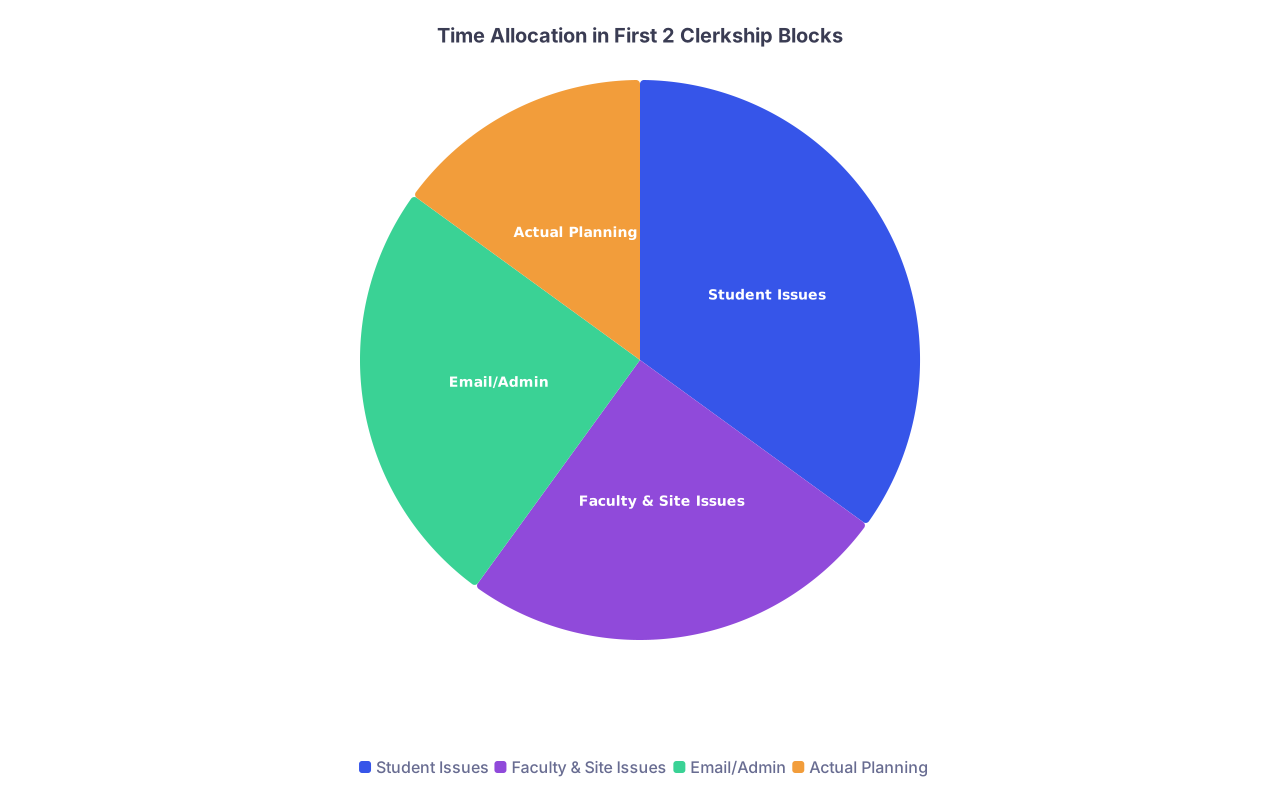
| Category | Value |
|---|---|
| Student Issues | 35 |
| Faculty & Site Issues | 25 |
| Email/Admin | 25 |
| Actual Planning | 15 |
Week 1 of Block 1 (usually early July)
By this point you should:
Run a clean student orientation
- 60–90 minutes, tightly structured:
- Expectations: professionalism, hours, communication.
- Schedule: clinics, call, didactics, required conferences.
- Assessment: what counts, how much, and what “honors” requires.
- Exams: date, format (NBME, OSCE), required prep.
- Hand them:
- A 1–2 page quick reference (not just a 30‑page syllabus PDF).
- Contact info for: you, coordinator, on‑site director, IT/EMR help.
- 60–90 minutes, tightly structured:
Brief your faculty and sites
- Ideally before students arrive, but at worst in week 1:
- Email a one-page faculty guide:
- How many students per attending is expected.
- How often to give feedback.
- How to complete evaluations (with a specific deadline).
- What to do for professionalism concerns (who to call, same day).
- Email a one-page faculty guide:
- For major sites, do a short Zoom or in‑person huddle.
- Ideally before students arrive, but at worst in week 1:
Set up evaluation and grade infrastructure
- Confirm in your system:
- Student mid‑rotation evaluation forms.
- End‑of‑rotation evaluations (of students and of the clerkship).
- Faculty and site evaluations by students.
- Decide:
- Who checks that mid‑rotation feedback actually happens.
- Your policy if a faculty evaluation is missing (no eval, no grade? estimated grade?).
- Confirm in your system:
Weeks 2–4 of Block 1
At this point you should:
Enforce early habits
- Check weekly:
- Have preceptors logged into the evaluation system?
- Any student not assigned a primary preceptor?
- Any student missing core clinic/OR exposure?
- Check weekly:
Start a “problem list” for the year
- Every time you say “I should fix this later,” add it to one list:
- Example entries:
- “Site C does not orient students until day 3.”
- “NBME exam scheduled before students finish core inpatient week.”
- “Too many preceptors sharing one student; no clear owner.”
- Example entries:
- Every time you say “I should fix this later,” add it to one list:
You are not redesigning the clerkship right now. You are keeping this first group from being collateral damage.
Block 2 (Still July/August)
Block 2 is where you fix your most painful lessons from block 1.
By the end of Block 2 you should:
- Tighten orientation based on student feedback:
- Clarify call schedules, expectations for notes, and exam weighting.
- Open grade books and start your first full grading cycle:
- Run a mock grade calculation before you release anything.
- Check:
- Are there outlier sites with 100% honors?
- Any student missing required evaluations or procedure logs?
This is the time to catch a broken grading formula before it hits someone’s dean’s letter.
Early Fall (September–October): Stabilize and Standardize
Once 2–3 blocks have run, patterns are obvious. This is your first real window to make adjustments.
September: Data and Small Fixes
By this point you should:
Review first 2–3 blocks of data
- For each site:
- Average exam scores.
- Distribution of clinical grades.
- Number and content of student comments.
- For each student cohort:
- How many grade appeals?
- How many remediation cases or professionalism concerns?
- For each site:
Do targeted, not global, changes
- Examples:
- If one site is always behind on evaluations → Set a hard evaluation deadline and copy the site director on reminders.
- If students complain about unclear expectations in the OR → Create a 1‑page “OR expectations” sheet distributed at all surgical sites.
- If exam scores lag → Introduce a weekly quiz or case conference; do not rewrite the whole teaching curriculum mid‑year.
- Examples:
Begin site visits
- Aim for:
- 1–2 major sites in September.
- 1–2 more in October.
- Agenda:
- 30‑minute meeting with site director.
- Brief visits with residents/attendings if feasible.
- Look for:
- Where students actually sit.
- How pagers/communication work.
- How orders/notes are handled (write, pend, or observe only).
- Aim for:
Log what you see. You will need specific examples when you propose changes later.
October: Alignment With Curriculum Leadership
By October you should:
- Attend at least one curriculum committee or clinical education meeting as clerkship director.
- Clarify:
- When next year’s catalog entries are due.
- Any upcoming LCME reviews involving your clerkship.
- School‑wide policies on:
- Mid‑rotation feedback.
- Duty hours.
- Required experiences (e.g., number of deliveries for OB).
| Deadline Type | Typical Due Date | Owner |
|---|---|---|
| Next-year catalog edits | Jan–Feb | Clerkship Director |
| LCME data submission | Feb–Mar | Curriculum Office |
| Annual course report | Apr–May | Clerkship Director |
| Faculty evaluation list | Nov–Dec | Clerkship Coordinator |
You cannot “retro‑collect” data you did not plan. October is your last chance to clean up your metrics for this academic year.
Late Fall – Early Winter (November–January): Policy, Remediation, Next Year
Fatigue sets in. For you and for everyone else. This is where disorganized clerkships drift and organized ones quietly get stronger.
November: Handle Edge Cases
By this point you should:
Have a functioning remediation pathway
- For:
- Failed or borderline clinical performance.
- Failed shelf exam.
- Professionalism concerns.
- Define clearly:
- Who decides on remediation.
- What the options are (extra time, repeat rotation block, structured study plan with re‑exam).
- How it is documented and communicated to the student.
- For:
Review professionalism trends
- Pull:
- Incident reports.
- Faculty complaints.
- Attendance issues.
- Look for:
- Recurrent issues at the same site or with the same attending.
- Systemic problems (e.g., students being pulled as scribes instead of learners).
- Pull:
You are not trying to “catch” students. You are showing the school that your clerkship is not asleep at the wheel.
December: Draft Next‑Year Changes
December is often quieter clinically. Use it.
By end of December you should have draft proposals for:
Assessment adjustments
- Example: Move from purely global rating scales to more behavior‑anchored checklists.
- Example: Reweight shelf from 40% to 30% if data show misalignment with observed performance.
Structural tweaks
- Add or remove:
- Sites that are dysfunctional or chronically underperforming.
- Mandatory didactic sessions (e.g., weekly case‑based teaching).
- Add or remove:
Faculty development priorities
- E.g., “Residents need a 30‑minute orientation on giving feedback and writing evaluations.”
You are collecting ideas now so that when the school demands your catalog edits in January, you already have them.
January: Commit to Next Year’s Structure
At this point you should:
Submit or finalize catalog/syllabus changes
- Objectives.
- Assessment components with weightings.
- Required experiences and sites.
Lock in site capacity for next year
- Confirm:
- Which sites will continue.
- Any new sites that need onboarding.
- Any sites you plan to sunset (with political cover from leadership).
- Confirm:
Plan faculty/resident development
- For July turnover:
- Schedule at least one resident‑focused session on:
- How to supervise students.
- Giving feedback.
- Writing useful evaluations.
- Schedule at least one resident‑focused session on:
- For faculty:
- Short sessions at existing department meetings work better than standalone “education days” no one will attend.
- For July turnover:

Late Winter – Spring (February–April): Data, Reporting, and Refinement
Now you are running two years at once: fixing the current year while solidifying the next.
February: Data Deep Dive
By February you should:
Generate mid‑year reports
- For your own use and for leadership:
- Exam performance by site.
- Clinical evaluation averages by site and by evaluator.
- Grade distributions overall and by site.
- Themes from student comments.
- For your own use and for leadership:
Identify outliers and action plans
- A site where:
- Mean shelf scores are much lower than others.
- Honors rates are wildly high or low.
- Students report being used as staff, not learners.
- For each, define:
- What you will do in the next 3–4 months.
- What structural change you propose for next year.
- A site where:
Prepare for LCME / internal reviews
- Have ready:
- Clear objectives linked to assessment components.
- Evidence of mid‑rotation feedback compliance.
- Evidence that clinical experiences are equitable across sites.
- Have ready:
March: Annual Course Report Drafting
Every school calls it something—annual report, course evaluation, quality improvement document. Whatever the name, it lands in your lap.
By end of March you should:
Draft your annual course report:
- Strengths (with data).
- Weaknesses (also with data).
- Specific changes made during the year.
- Planned improvements for the upcoming year.
Align with:
- Other clerkship directors to avoid contradictions.
- Department leadership so they are not blindsided by your comments on site performance or faculty engagement.
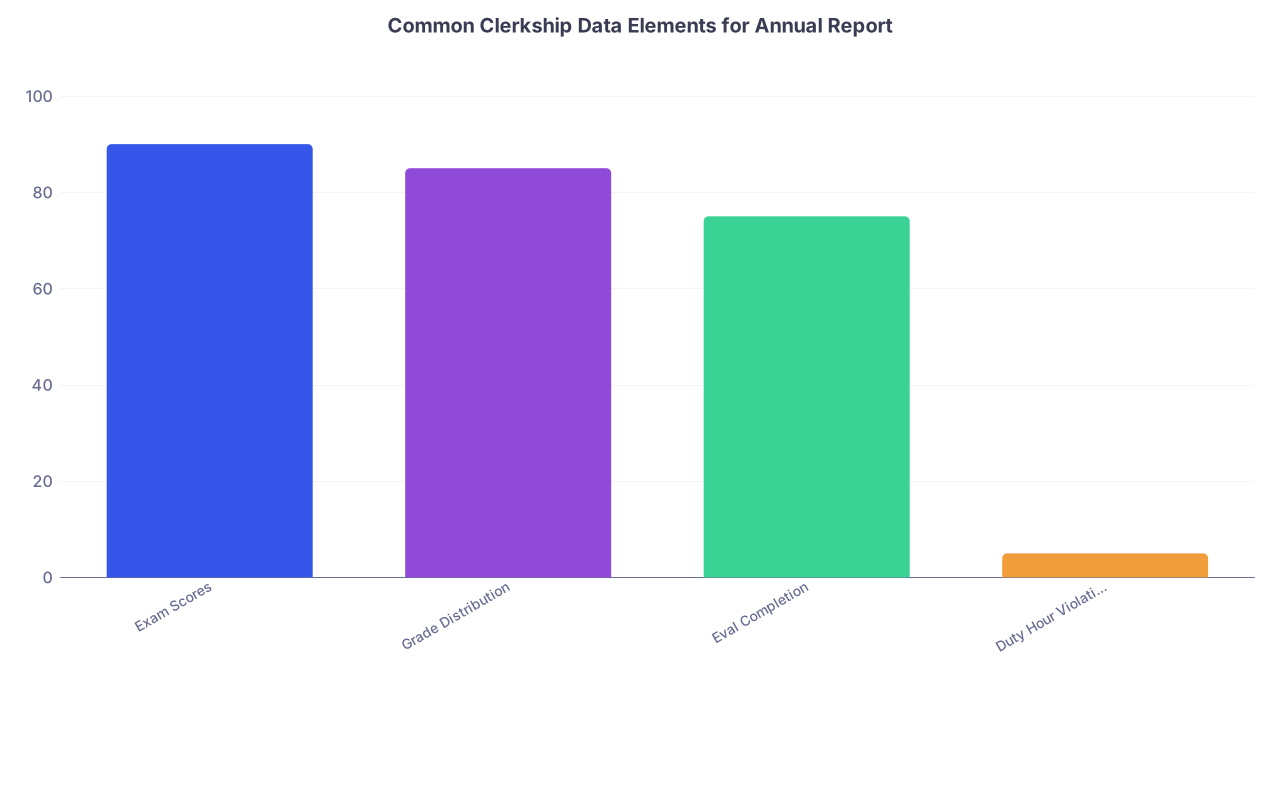
| Category | Value |
|---|---|
| Exam Scores | 90 |
| Grade Distribution | 85 |
| Eval Completion | 75 |
| Duty Hour Violations | 5 |
This report is tedious. It is also your best leverage to push for resources and structural fixes.
April: Tune the Final Blocks
You are in the home stretch for this cohort.
At this point you should:
- Smooth the last 1–2 blocks:
- Confirm exam dates and OSCE slots.
- Ensure graduation‑critical students (those needing to pass this clerkship) are on your radar.
- Pre‑emptively talk with site directors about:
- Evaluation deadlines for graduating students.
- Any students with ongoing remediation plans.
You do not want a May crisis about a missing evaluation holding up a diploma.
Late Spring – Early Summer (May–June): Close the Loop and Reset
You started early. You finish late. This is where you turn a chaotic first year into a cleaner second one.
May: Finalize Grades and Outcomes
By May you should:
Ensure all final grades are entered on time
- Track:
- Any incompletes (I’s) and the plan to resolve them.
- Any late exam or repeat exam takers.
- Track:
Review grade appeals and edge cases
- Document:
- How you resolved disputes.
- Any policy changes needed to avoid repeating the same mess.
- Document:
Complete institutional reporting
- LCME tables.
- Curriculum committee summaries.
- Departmental review documents.
June: Debrief, Plan, and Pre‑Load Year Two
This is the second chance you will not get again.
By end of June you should:
Meet with key stakeholders
- Department chair or vice chair for education:
- Present your data briefly.
- Be explicit about what you need (protected time, coordinator support, site changes).
- Major site directors:
- Agree on changes for July.
- Clarify expectations for next year.
- Department chair or vice chair for education:
Revise documents and systems for year two
- Update:
- Syllabus and quick‑reference sheets.
- Faculty one‑pager.
- Orientation slide decks.
- Adjust:
- Evaluation forms if feasible.
- Grading algorithms if approved.
- Update:
Schedule next year’s essentials now
- Put on the calendar:
- Student orientation dates for every block.
- Faculty/resident teaching sessions.
- Your own site visits.
- Deadlines for annual report and catalog edits.
- Put on the calendar:
You start year two with work already done instead of reinventing everything in July again.
Final Thoughts: What Actually Matters in Year One
Condensing all of this down, three points:
Front‑load structure. If you build clear schedules, policies, and evaluation systems by August, the rest of the year is troubleshooting, not crisis management.
Use each block as a feedback cycle. Do not overhaul everything mid‑year. Fix the worst problems quickly, capture the rest on a list, and fold them into planned changes for the next academic year.
Document ruthlessly. Data and specific examples turn your frustration into leverage—for resources, for site changes, and for real improvement. Without that, you are just the person everyone emails when something breaks.