
It is July 1st of your intern year. You just finished signing your contract, you barely know where the bathrooms are, and someone on the academic affairs committee just said the sentence: “Start building your teaching portfolio now; you will need it later.”
You smiled and nodded. You have no idea what that actually means.
This guide is the thing I wish someone had handed me at that moment. Year by year, month by month, what to collect, what to ignore, and when to turn “a mess of emails and memories” into a real teaching portfolio that will actually help you get a job, a promotion, or a teaching award.
I am going to walk you straight through:
- Medical school (late pre‑clinical through graduation)
- Residency (by PGY year)
- Fellowship and early faculty years
At each point: what to do this year, what to collect, and how to avoid the classic “I swear I taught a lot but I have no proof” problem.
First, understand the end goal (briefly)
By the time you apply for an academic job or promotion, your teaching portfolio usually needs to show:
- What you taught (levels of learners, formats, frequencies)
- How good you are at teaching (evaluations, awards, invitations)
- How you improved (faculty development, feedback, curriculum work)
- How you contributed beyond the bare minimum (mentoring, leadership, scholarship)
That means every year of training, you should be collecting raw materials that can later be shaped into:
| Component | Later Deliverable |
|---|---|
| Evaluations | Teaching effectiveness |
| Syllabi/Slides | Teaching examples |
| Feedback emails | Narrative evidence |
| CV updates | Academic record |
| Certificates | Faculty development |
If you are not saving things as you go, you will not reconstruct them from memory. You think you will. You will not.
Medical School: Late Pre‑Clinical and Clinical Years
You are not “faculty” yet, but this is when the trail starts. Especially if you suspect you might want an academic career.
MS2–MS3: Start the habit
At this point you should:
Create a single folder system that will follow you for a decade.
- In a cloud drive:
Teaching Portfolio > 01_MedSchool > Year_MS3 - In that, subfolders:
Evaluations,Presentations,Certificates,Notes.
- In a cloud drive:
Start a running “teaching log” document. One page. Simple table.
| Date | Role | Audience | Session |
|---|---|---|---|
| 2025-01-15 | Small group TA | MS1 | Cardio Physiology |
| 2025-03-02 | Peer tutor | MS2 | Renal Path |
| 2025-04-10 | Patient educator | Community group | Diabetes basics |
At this stage, the main teaching you will collect:
- Peer teaching sessions (tutoring, review sessions, small groups)
- Any formal TA work for pre‑clinical courses
- Presentations to classmates (case presentations, journal clubs)
- Community health education or patient education sessions
What to keep that year:
- Slides or handouts you created (PDF them; file in “Presentations”)
- Any official letters or emails that mention your teaching role
- Copies/screenshots of feedback forms (many school LMS systems purge old data)
- Certificates from “how to teach” electives or workshops
Scope is small now, but habits matter more than volume.
MS4: Decide your narrative
At this point you are applying to residency. You do not need a full teaching portfolio, but you should:
Make sure your CV reflects:
- Peer tutoring roles (with dates and approximate hours/semester)
- TA or facilitator roles
- Teaching awards (yes, even small internal ones)
Collect:
- Any summative comments from clerkship directors that mention “excellent teacher,” “role model,” “explains concepts well”
- If your school uses “teaching distinction” or “education pathway,” save the final reports or capstone projects
This year, the key is to not lose things when you move institutions. Back it all up in a personal cloud account, not only in school systems.
Residency: PGY‑1 to PGY‑3 (or PGY‑4)
This is where most people start to do actual teaching and fail to document any of it. Do not be that person.
Global system to set up in PGY‑1 (first 1–2 months)
At this point you should:
Set up a permanent folder tree that will carry you through residency and beyond:
Teaching Portfolio01_MedSchool02_ResidencyPGY1PGY2PGY3
03_Fellowship04_Faculty
Within each PGY year, use:
EvaluationsPresentationsCurriculum_ProjectsMentorshipCertificates_FacultyDev
Create a quarterly recurring reminder (phone or calendar): “Teaching portfolio update – 30 minutes”.
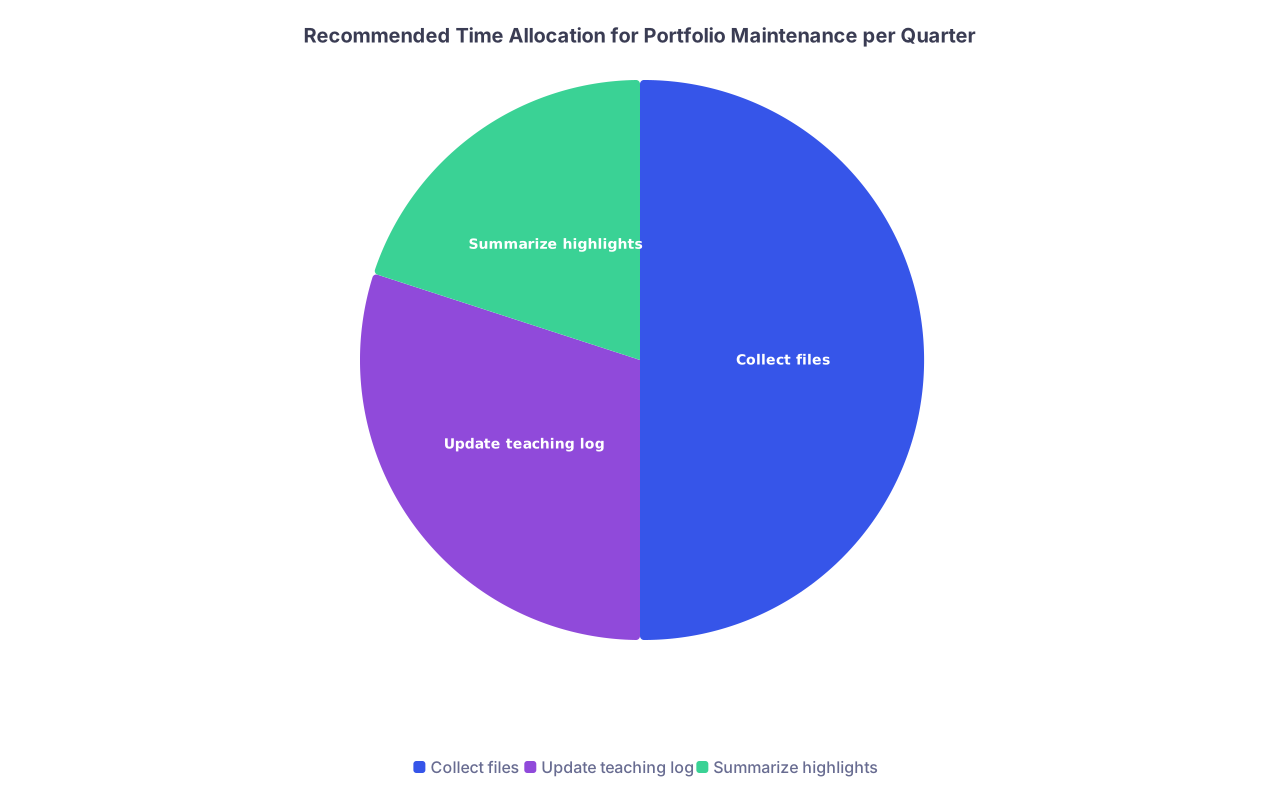
| Category | Value |
|---|---|
| Collect files | 50 |
| Update teaching log | 30 |
| Summarize highlights | 20 |
Thirty minutes every three months sounds trivial. It is the difference between having a coherent portfolio and a junk drawer.
PGY‑1: You are mostly learning, but the trail starts
Reality: you will feel too junior to think of yourself as a teacher. That is wrong. Interns teach constantly: students, other interns, patients.
During PGY‑1, aim to collect rather than over‑curate.
At this point you should:
Track every semi‑formal teaching activity:
- Case presentations you build for morning report
- Student-oriented chalk talks on rounds
- Simulation sessions where you assist or debrief
- Any invited small talk for interest groups (e.g., “Life as an intern”)
Save:
- Slides/handouts from any talk where you had >10 minutes and some prep
- Agenda or email screenshots that show your name listed as teacher/presenter
- Eval summaries of your role as team leader or senior-substitute (often hidden in 360s)
Start a simple PGY‑1 teaching log with 5 columns:
- Date, Setting (inpatient, clinic, sim), Learner level, Topic, Duration.
You do not need to overthink quality yet. You are building a timeline and a body count of experiences.
Common mistake I see: interns wait until they are “officially” teaching MS3s on wards. By then they have thrown away six months of talks and informal sessions.
PGY‑2: Now you are expected to teach; you start to lead
This is the big jump. Almost every residency now explicitly evaluates residents as teachers at this stage.
At this point you should:
Formalize your teaching log
Add columns for:
- Type of teaching: bedside, small group, lecture, sim, feedback session
- Approximate number of learners
- Whether there was formal evaluation (yes/no)
Capture evaluations aggressively
This is where people lose data. Some specific moves:
- When you finish a 4‑week block with students, ask the clerkship coordinator how to access your “resident as teacher” evaluation summary. Download as PDF. File to
Evaluations/PGY2_blockname. - For noon conferences and journal clubs that generate attendee feedback, request the compiled report from the chief resident or education office. Do not trust them to keep it forever. They rarely do.
- When you finish a 4‑week block with students, ask the clerkship coordinator how to access your “resident as teacher” evaluation summary. Download as PDF. File to
Start a “great comments” document
Open a doc called
PGY2_highlight_comments. Every time you see a narrative comment that is portfolio‑worthy, paste it there with source and date.Example:
- “Dr. Lee is the best teacher I had all year – explains complex concepts clearly and always checked for understanding.” – MS3 eval, Medicine Wards, 10/2026
These are gold later on when you need narrative evidence or examples for teaching statements.
Do at least one thing that is clearly “above baseline”
By the end of PGY‑2, try to have one thing you can point to as intentional educational involvement:
- Developing a new intern orientation talk
- Leading a recurring board review session
- Helping chiefs update a teaching slide deck
- Serving on the residency education committee as resident rep
Document it:
- Save emails assigning you the role
- Save before/after versions of materials you improved
- Write a 3–4 sentence summary of what you did and impact (for yourself)
PGY‑3 (and PGY‑4): Position yourself as “junior faculty in training”
This is the critical year for your teaching portfolio if you are heading to fellowship or academic jobs.
At this point you should:
Shift from “I teach” to “I design and lead teaching”
You want concrete evidence of:
- Session design (you built the structure, not just delivered content)
- Curriculum involvement (new elective, revamped series, sim case design)
- Leadership roles in education (chief resident, teaching track, committee work)
Quarterly checklist
Every 3 months, run through this quick list:
Update teaching log with:
- All conferences, workshops, small groups you led
- Any bedside teaching you want to count (only if systematic, e.g., weekly teaching rounds)
Download and file:
- Resident-as-teacher evaluations with students
- Evaluations from conferences (noon talks, M&M, grand rounds)
- Any peer evaluations of teaching (chiefs, faculty)
Capture:
- Screenshots of clinic schedules showing you precepting students/NPs (if relevant)
- Program newsletters where your teaching is mentioned
Mid-year: build a rough “mini-portfolio”
By around January of PGY‑3, create a simple 3–5 page document:
- 1 page: Summary of your teaching roles this year (bullet list)
- 1–2 pages: Selected evaluations – pick best 5–8 quotes, clearly labeled
- 1–2 pages: Teaching activities table (abbreviated log)
This mini-portfolio is incredibly useful for:
- Fellowship applications
- Letters of recommendation (you can hand this to writers)
- Internal teaching awards or resident‑as‑teacher tracks
End of residency: lock down everything
Final 2–3 months:
Request from program:
- Any cumulative resident-as-teacher reports they can generate
- Confirmation letters for leadership roles (chief, committee, QI with teaching component)
Export copies of:
- LMS teaching course rosters where you were listed as instructor
- Online course materials you created
Update CV teaching section in detail:
- List recurring sessions as series (e.g., “IM Board Review – weekly, 2027–2028”)
- Distinguish one‑off talks vs standing roles
This is when people realize their institution closes their email and LMS access the day they leave. Do not discover that the hard way.
Fellowship: Convert “good resident teacher” to “future faculty”
Fellowship is where institutions decide very quickly who looks like faculty material. Your teaching portfolio should start to look purposeful now, not accidental.
Early Fellowship (Months 1–6)
At this point you should:
Sit down with your program director or education mentor and ask one blunt question:
“If I want an academic job with a significant teaching role, what kind of portfolio evidence will matter here?”Then write down their answer. Tailor your collecting to that.
Update your folder tree:
Teaching Portfolio/03_Fellowship/F1(and laterF2,F3as needed)
Immediately log:
- Any assigned teaching roles:
- Didactics for residents or students
- Lab or procedure teaching
- Simulation involvement
- QI/Research mentorship of residents or students
- Any assigned teaching roles:
Identify 1–2 areas to go deep:
- Example: “I will be the go‑to person for ultrasound teaching.”
- Example: “I will build a recurring ECG workshop series.”
Deep is better than scattered. You want at least one recognizable “product.”
Mid–Late Fellowship: Start creating visible “products”
By mid‑fellowship, you should have at least one of these:
- A short curriculum or workshop you designed (with clear objectives and evaluation)
- A simulation scenario set that you built and now run regularly
- A structured mentorship or coaching program for residents/students
- An educational scholarship project (abstract, poster, or paper)
At this point you should be collecting:
- Curriculum documents: objectives, session plans, assessment tools
- Pre/post‑session surveys or knowledge tests with summary data
- Emails inviting you back to teach (repeated invitations are a strong signal)
- Evidence of educational scholarship:
- Conference abstracts
- Posters (PDFs)
- Manuscripts on education topics
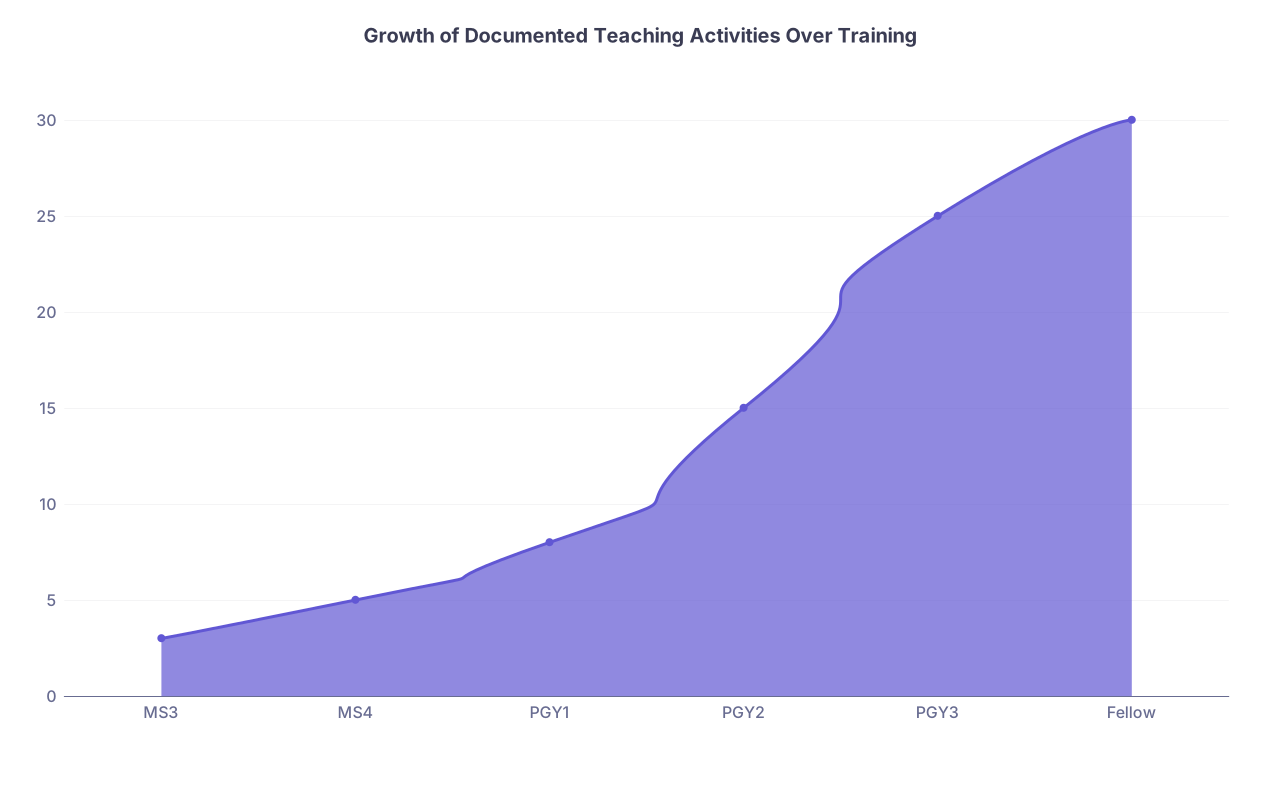
| Category | Value |
|---|---|
| MS3 | 3 |
| MS4 | 5 |
| PGY1 | 8 |
| PGY2 | 15 |
| PGY3 | 25 |
| Fellow | 30 |
End of fellowship: assemble a real, multi-section teaching portfolio draft. Not just folders.
Structure it as:
- Teaching philosophy (1–2 pages) – you can write this now.
- Summary of teaching activities – by learner level and format.
- Selected teaching materials – 2–3 de-identified examples.
- Evidence of effectiveness – evaluations, awards, comments.
- Educational leadership and scholarship – roles, projects, publications.
You are not polishing for promotion yet; you are proving you are faculty‑ready.
Early Faculty: Convert the pile into promotion‑ready evidence
You land your first faculty job. Someone mentions that for promotion you will need a formal teaching portfolio aligned with your institution’s criteria.
Most people wait until promotion time. That is how they end up spending 40 hours digging through old email.
Do 4 hours now. It will save you 40 later.
Year 1 Faculty: System + Alignment
At this point you should:
Get the actual promotion guidelines and templates
From your faculty affairs office or department:
- Criteria for “educator” track (or whatever your track is called)
- Sample teaching portfolios from recently promoted faculty
Map what you already have to their required sections. You will immediately see the gaps.
Adapt your folder structure to match promotion sections
For example:
04_FacultyTeaching_ActivitiesTeaching_EvaluationsCurricula_and_MaterialsMentoringEducational_LeadershipScholarship_Ed
Set a simple yearly maintenance routine
Once per quarter:
- Update teaching log with:
- Courses taught (with # sessions and learner numbers)
- New supervisees or mentees
- New workshops, invited talks
- Download evaluation summaries from:
- Course management systems
- Resident/student evaluation portals
Once per year (June or December):
- Write a 1–2 page “Teaching Year in Review” for yourself:
- What you taught
- Any improvements you made
- Evidence of impact (scores, comments, invitations, outcomes)
- Update teaching log with:
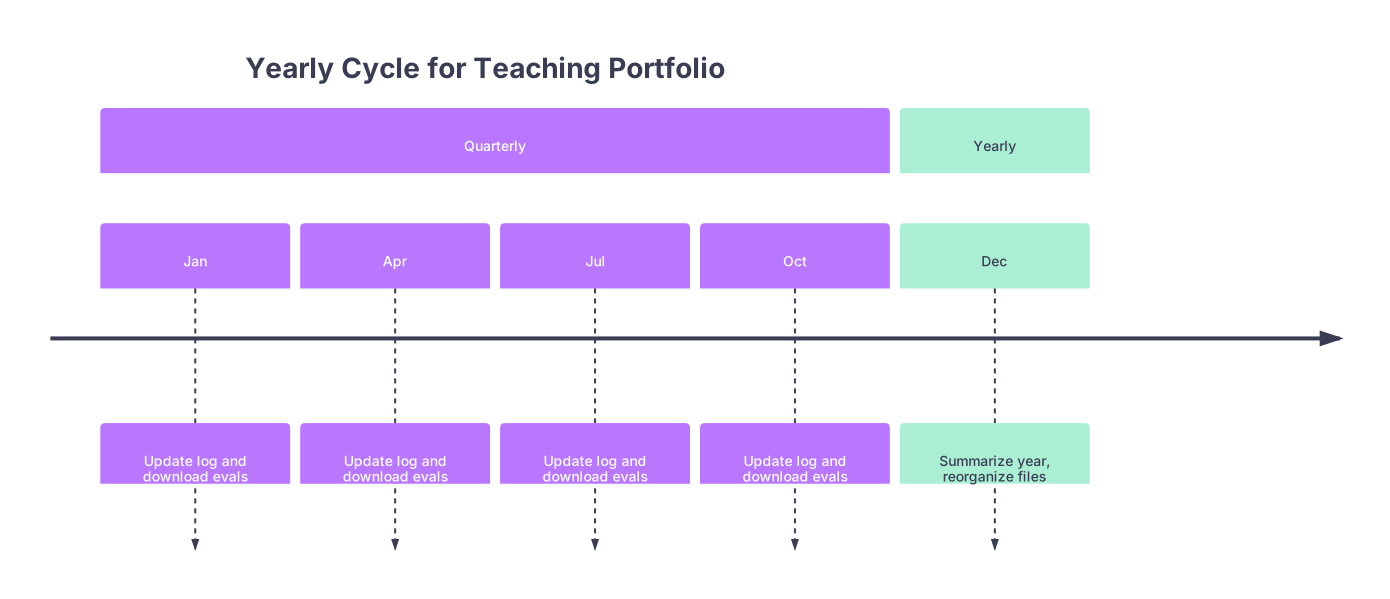
| Period | Event |
|---|---|
| Quarterly - Jan | Update log and download evals |
| Quarterly - Apr | Update log and download evals |
| Quarterly - Jul | Update log and download evals |
| Quarterly - Oct | Update log and download evals |
| Yearly - Dec | Summarize year, reorganize files |
This “Year in Review” becomes the skeleton of your future promotion narrative.
Years 2–3 Faculty: Think like someone going up for promotion
At this point you should:
Stop just collecting; start aggregating and interpreting:
- Create tables that show:
- Number of teaching hours per year
- Range of learner types (UGME, GME, CME)
- Evaluation scores over time
- Create tables that show:
For each major teaching role, build a one-page summary:
- Role description
- Your specific contributions (design, delivery, leadership)
- Outcomes:
- Evaluation scores
- Qualitative comments
- Any changes in learner performance or satisfaction
Turn your highlight comments into curated evidence:
Instead of 5 random pages of quotes, create short sections like:
- “Clarity of explanation” – 3 quotes
- “Supportive learning environment” – 3 quotes
- “Role model / mentor” – 3 quotes
This makes committee reviewers’ lives easier and makes you look organized and intentional.
Where the portfolio tends to fall apart (and how to avoid it)
Common failure points I see repeatedly:
- No dates – a pile of talks with no sense of chronology. Fix: your log solves this.
- No context – “Gave small group” is useless. You need: learner level, objectives, frequency.
- No outcomes – “I redid the curriculum” with no evidence of effect. Fix: build simple evaluations or pre/post surveys when you make changes.
- No narrative – pure data dump. Promotion and hiring committees want clear, focused stories: “I am the go‑to educator for X, here is the proof.”
Use your yearly check-ins to see where your story is thin and adjust what you say yes to.
Visual snapshot: what to collect by phase
| Stage | Core Items to Collect |
|---|---|
| Med School | Peer teaching logs, TA roles, early evals |
| PGY1 | Informal talks, early evals, basic log |
| PGY2 | Resident-as-teacher evals, highlight comments |
| PGY3/4 | Leadership roles, curricula work, mini-portfolio |
| Fellowship | Curricula, sim cases, ed scholarship artifacts |
| Early Faculty | Aggregated evals, mentorship, leadership docs |
Quick example: turning raw material into a coherent arc
To make this more concrete, here is what a “good” longitudinal story might look like when your portfolio is assembled:
- Med school: Peer tutor and small group TA in physiology.
- Residency PGY‑2: Developed and led a monthly ECG bootcamp for interns. Positive evals, repeatedly requested.
- Residency PGY‑3: Co-created an ECG curriculum for the residency, implemented over a full year with pre/post knowledge tests.
- Fellowship: Led hospital-wide ECG workshop for multiple departments. Published a brief report on outcomes.
- Early faculty: Director of ECG curriculum for residency; mentor for resident teaching projects; invited to give regional CME on ECG interpretation.
All of that is built from small, annual steps of collecting and documenting. None of it requires a giant leap.
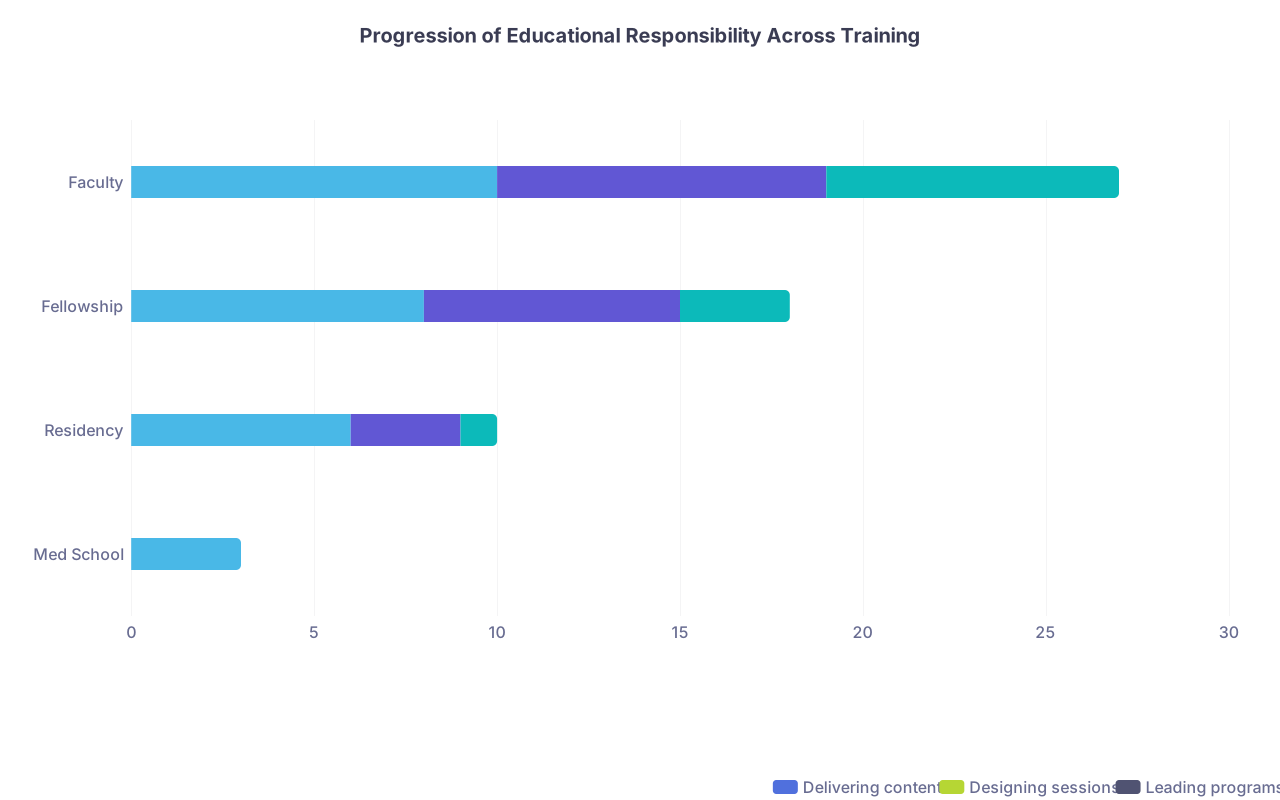
| Category | Delivering content | Designing sessions | Leading programs |
|---|---|---|---|
| Med School | 3 | 0 | 0 |
| Residency | 6 | 3 | 1 |
| Fellowship | 8 | 7 | 3 |
| Faculty | 10 | 9 | 8 |
Final pass: what you should be doing right now
To close, here is the “if you do nothing else, do this” list, tailored to where you are.

| Step | Description |
|---|---|
| Step 1 | Identify your current stage |
| Step 2 | Med Student |
| Step 3 | Resident |
| Step 4 | Fellow |
| Step 5 | Junior Faculty |
| Step 6 | Create first teaching folder and log |
| Step 7 | Set quarterly reminder and start saving evals |
| Step 8 | Define one signature teaching project |
| Step 9 | Obtain promotion criteria and align folders |
If you are a med student or intern:
- Create the folder. Start the log. Save anything that even smells like teaching or feedback.
If you are a mid‑residency trainee (PGY‑2/3):
- Systematize your evaluations. Build a mini‑portfolio by the middle of the year.
If you are a fellow:
- Choose 1–2 domains where you will build real educational products. Collect evidence of design and impact, not just presence.
If you are early faculty:
- Get the actual promotion criteria. Align your folders and yearly routines to that structure from day one.
Key points to remember:
- Start early, and keep everything in one evolving system.
- Document what you did, for whom, how often, and with what effect.
- Once a year, step back and shape the raw material into a coherent, forward‑looking teaching story.