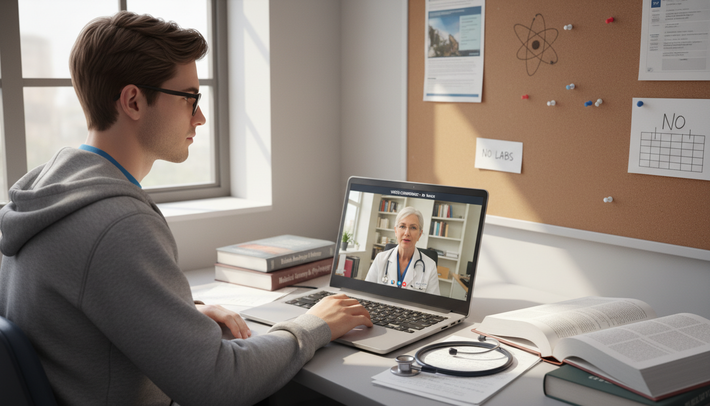
Connecting with Mentors: Why Guidance Matters in Your Pre-Med Journey
The path from curious pre-med student to confident, capable physician is long, competitive, and often confusing. You’re expected to excel in rigorous science courses, build a meaningful extracurricular profile, prepare for the MCAT, and navigate a complex application process—often without a clear roadmap.
Mentorship is what turns that maze into a navigable path.
In medical education, mentorship is far more than simple advice. It is a relationship that provides guidance, accountability, emotional support, and access to valuable opportunities. For pre-med students, strong mentorship can accelerate Career Development, sharpen decision-making, and prevent costly mistakes along the way.
This guide explores the importance of Mentorship in the pre-med and early medical education phases, the different types of mentors you can seek out, specific strategies for building and maintaining these relationships, and how mentorship benefits both mentees and mentors.
The Transformative Role of Mentorship in the Pre-Med Journey
Mentorship is a cornerstone of Medical Education and professional formation. At its core, mentorship is a sustained relationship between a more experienced individual (mentor) and a less experienced learner (mentee) focused on growth, reflection, and development.
For pre-med students, mentorship can profoundly impact both academic and professional trajectories.
1. Personalized Guidance Through a Complex Process
No two pre-med paths are identical. Course sequencing, research timing, MCAT preparation, gap-year decisions, financial planning, and school selection all depend on your goals and circumstances. A mentor helps you:
Map out your academic plan
For example, a professor or physician mentor can help you decide:- When to take organic chemistry relative to the MCAT
- Whether to double major or focus on a strong single major with high GPA
- How to balance clinical experiences with research and leadership roles
Strategize your timeline
A mentor who understands the admissions process can advise you on:- Whether to apply during your junior year or take a gap year
- How long to study for the MCAT based on your baseline practice scores
- When to start requesting letters of recommendation
Navigate setbacks
If you receive a low grade in a key course or underperform on an MCAT practice exam, a mentor can help you:- Decide whether to retake a course
- Build an academic improvement plan
- Reframe setbacks when writing personal statements or secondaries
Instead of piecing together advice from random websites or forums, you gain tailored guidance rooted in experience.
2. Mentorship as a Powerful Networking Tool
In medicine, who you know can deeply influence what opportunities you access. This is where Mentorship and Networking intersect.
A mentor’s professional network may include:
- Physicians across multiple specialties
- Researchers and principal investigators
- Academic advisors and admissions committee members
- Leaders in community health organizations or hospital systems
Through your mentor, you may be able to:
Arrange clinical shadowing
A physician mentor might introduce you to colleagues willing to host you in their clinics, giving you exposure to multiple specialties and practice settings.Secure research roles
A faculty mentor can connect you with investigators looking for motivated undergraduates, helping you gain experience with data collection, literature review, or lab work.Access leadership and service opportunities
Mentors involved in community outreach may invite you to join health fairs, education programs, or student initiatives that strengthen your application and your skills.
This kind of intentional Networking accelerates your Career Development and makes your pre-med experience richer and more aligned with your future goals.
3. Emotional Support and Resilience Building
The pre-med years are often emotionally intense. Pressure to maintain a high GPA, financial stress, imposter syndrome, comparison with peers, and fear of failure can erode confidence.
A mentor can:
- Normalize the ups and downs of pre-med and medical training
- Share their own stories of rejection, redirection, or burnout
- Help you interpret setbacks as data and growth opportunities rather than evidence you “don’t belong”
- Encourage healthy boundaries, self-care, and time management
For instance, a mentor may help you reframe a rejection from a competitive summer program as a sign to explore other meaningful experiences—such as working as a medical assistant or pursuing community-based research.
This emotional buffer is crucial for maintaining motivation and well-being over the long term.
4. Exploring Specialties and Career Paths Early
Mentors—especially physicians and advanced trainees—can provide early, realistic insight into different specialties and career trajectories.
They can help you understand:
- Differences between primary care and subspecialties
- Lifestyle considerations (call schedules, clinic versus procedural work, income variability)
- Training length and competitiveness of different fields
- Emerging fields such as hospital medicine, palliative care, or clinical informatics
For example, a mentor in internal medicine might connect you with colleagues in cardiology, endocrinology, and hospital medicine so you can compare their day-to-day experiences. This helps you develop an informed long-term vision, even before you set foot in medical school.
5. Professional Identity and Soft Skill Development
Medicine requires more than scientific knowledge. It demands maturity, empathy, communication, leadership, and professionalism. Mentors model and teach these skills.
Through mentorship, you can learn:
- How to introduce yourself professionally in clinical settings
- How to write effective, polite emails
- How to advocate for patients and for yourself
- How to respond to feedback without becoming defensive
- How to navigate ethical dilemmas or conflicts in academic or clinical environments
These “soft skills” are increasingly recognized by admissions committees and residency programs as critical components of physician competence.
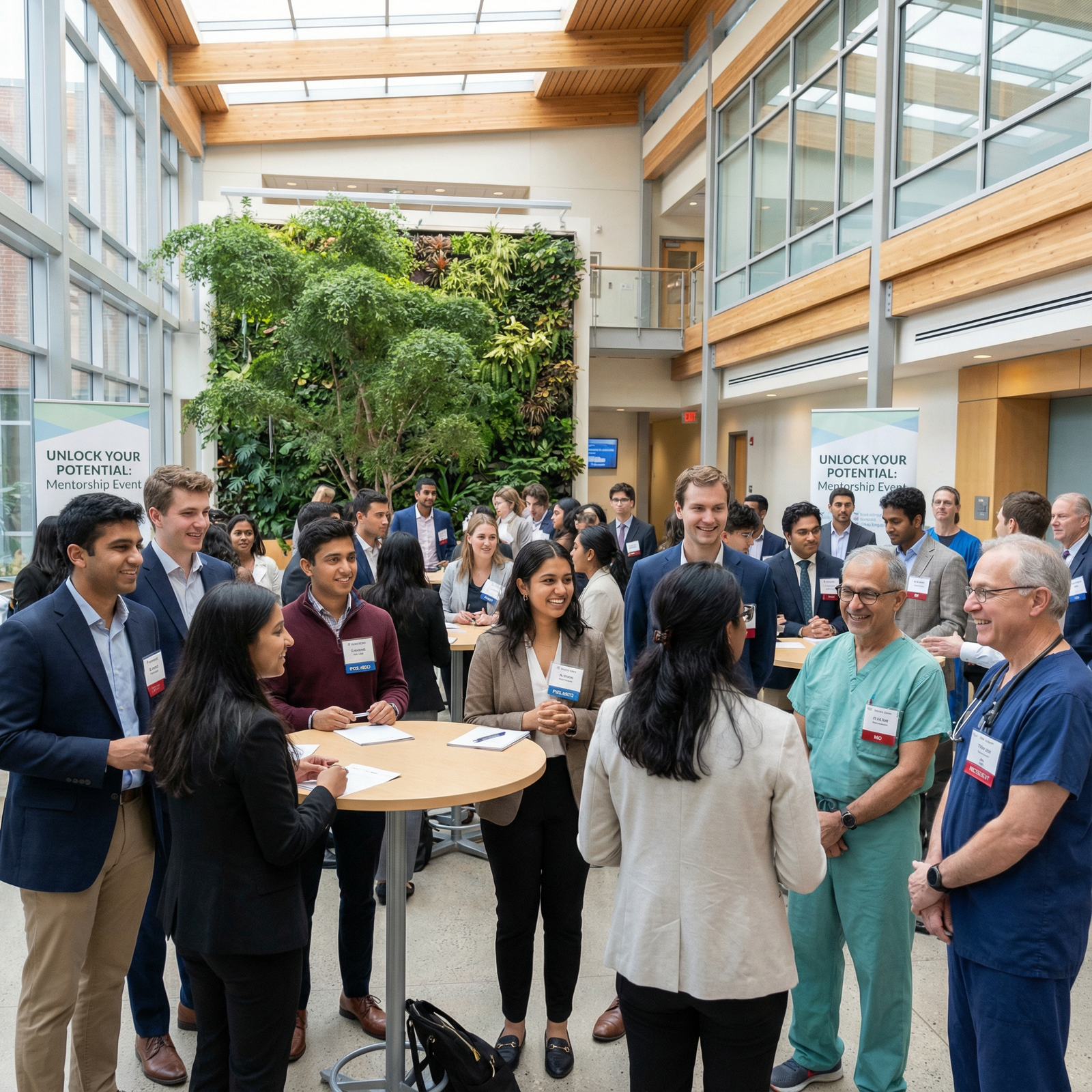
Types of Mentorship in the Pre-Med and Early Medical Education Phases
Mentorship is not one-size-fits-all. In a strong Medical Education ecosystem, you’ll likely benefit from more than one type of mentor at different stages.
1. Formal Mentorship Programs
Many universities, honors colleges, and medical schools offer structured mentorship programs tailored to pre-med students.
These programs may provide:
- Matching with a physician, resident, or medical student mentor
- Regularly scheduled meetings or check-ins
- Workshops on topics such as MCAT planning, personal statements, and interview skills
- Group mentoring events, panels, or “near-peer” sessions
Examples include:
- A pre-health advising office that pairs juniors with alumni physicians
- An AMSA (American Medical Student Association) chapter that runs a mentoring series with current medical students
- Hospital-based volunteer programs with assigned physician liaisons
These programs are especially useful if you’re a first-generation college student or don’t have existing connections in healthcare.
2. Informal Mentorship Relationships
Informal mentorship grows more organically. It can develop from:
- A professor whose office hours you attend consistently
- A physician you shadow who takes interest in your progress
- A supervisor at a clinic, research lab, or community organization
- A family friend or neighbor who is a health professional
Informal mentors may not use the label “mentor,” but they invest in you over time by checking in, offering advice, and opening doors.
To cultivate informal mentors:
- Show reliability and initiative in your work or volunteering
- Ask thoughtful questions about their careers and decisions
- Keep in touch periodically with brief updates and gratitude
These relationships are often long-lasting and evolve as you move through pre-med, medical school, and beyond.
3. Peer and Near-Peer Mentorship
Peer mentors—students just a few steps ahead of you—are often your most accessible and relatable guides.
Examples include:
- A senior who recently took your toughest biology course
- A student who just completed the MCAT successfully
- A first- or second-year medical student from your undergraduate institution
Peer mentors can provide:
- Study strategies tailored to specific courses or instructors
- Honest reviews of extracurriculars and campus organizations
- Recently used resources for MCAT prep, including what worked and what didn’t
- Emotional support from someone who “just went through it”
Near-peer mentorship (e.g., medical students mentoring pre-meds, residents mentoring medical students) is especially powerful because these mentors clearly remember what it’s like to be where you are now.
4. Online and Remote Mentorship Platforms
If your local environment lacks resources—or if you’re a non-traditional pre-med, career changer, or community college student—online Mentorship and Networking can be a game-changer.
Potential sources include:
- LinkedIn, where you can connect with physicians, residents, and medical students
- Professional societies (e.g., SNMA, LMSA, AMSA, specialty societies) that offer virtual mentoring programs
- School-affiliated alumni networks offering email or video-based mentoring
- Social media communities (e.g., X/Twitter, Instagram, or forums) where physicians and trainees share advice
When engaging online:
- Maintain professionalism in your messages and profile
- Be specific in your requests (e.g., “Could I ask 3–4 brief questions about your path to pediatrics?”)
- Respect boundaries and time—do not overshare or demand extensive help upfront
Remote mentorship can offer you diverse perspectives beyond your geographic region, exposing you to different training environments and practice types.
How to Effectively Find, Approach, and Work With Mentors
Finding a mentor is only half the challenge; approaching them thoughtfully and nurturing the relationship over time is equally important.
1. Clarify What You Need From Mentorship
Before reaching out, take time to identify what you’re looking for:
- Academic planning?
- MCAT or application strategy?
- Clinical exposure or research opportunities?
- Insight into a specific specialty?
- Emotional support or confidence building?
You don’t need one mentor who does everything. Often, having a small “board of mentors”—each offering different strengths—is more realistic and effective.
2. Identify Potential Mentors Strategically
Start close to home and expand outward:
On campus
- Pre-health advisors
- Science or humanities professors
- Research supervisors
- Leaders of pre-health or service organizations
In clinical settings
- Physicians you shadow
- Volunteer coordinators
- Nurses, PAs, or other health professionals who can connect you with physicians
Beyond your institution
- Alumni from your college on LinkedIn
- Physicians or residents speaking on panels and webinars
- Professionals you encounter at conferences, community health events, or virtual info sessions
Look for mentors whose values and communication styles resonate with you, not just big titles or prestigious institutions.
3. Make a Professional, Intentional First Contact
When reaching out, be concise and clear. For example, by email or LinkedIn:
- Use a clear subject line:
- “Pre-med student seeking brief career advice about internal medicine”
- Introduce yourself briefly:
- Your school, year, major, and interest in medicine
- Explain why you’re reaching out to them specifically:
- A talk they gave, a course you took with them, research they do, or a mutual connection
- Make a specific, reasonable request:
- “Would you be willing to speak with me for 20 minutes about your path into pediatrics and any advice for aspiring medical students?”
End with a polite thank-you and flexibility about scheduling.
4. Prepare for the First Meeting and Ask Thoughtful Questions
Respect your mentor’s time by coming prepared:
- Review their background (website, papers, LinkedIn, or institutional bio)
- Bring a short list of questions, such as:
- “What experiences in college were most important for your career development?”
- “Looking back, what would you have done differently as a pre-med?”
- “How did you choose your specialty?”
- “What qualities do you see in students who succeed in medical school?”
Avoid asking questions you could easily answer with a quick web search. Focus on their unique perspective.
5. Follow Up, Show Gratitude, and Stay in Touch
After your conversation:
- Send a concise thank-you note within 24–48 hours
- Mention one or two specific points you found valuable
- Briefly share how you plan to apply their advice
Over time:
- Send occasional updates (e.g., after semester grades, MCAT results, major application milestones)
- Acknowledge when their advice helped you make a decision or overcome a challenge
- Ask permission before listing them as a reference or requesting a letter of recommendation
This consistency strengthens trust and makes the mentoring relationship more rewarding for both of you.
6. Be Open to Feedback and Willing to Grow
Good mentors won’t just affirm you; they’ll also challenge you.
- If they suggest improving your study strategies, take it seriously and ask for concrete tips
- If they recommend reconsidering your timeline or school list, explore their reasoning
- If they gently push you toward more realistic goals, understand that honesty is a form of respect
Your willingness to adapt and act on feedback signals maturity—something mentors and admissions committees both value highly.
The Mutual Benefits of Mentoring Relationships
While pre-med students often feel like they’re the primary beneficiaries, strong mentorship is mutually rewarding.
1. Enhanced Career Satisfaction for Mentors
Many physicians and educators derive deep meaning from guiding the next generation. Mentoring allows them to:
- Reflect on their own journeys and lessons learned
- See their influence extend beyond their own patients
- Contribute to improving the culture of medicine for future trainees
This sense of legacy can buffer burnout and renew enthusiasm.
2. Expanded Networks for Mentors
Mentors also benefit from Networking with their mentees:
- Mentees may introduce mentors to new community organizations, research groups, or educational initiatives
- Over time, mentees become colleagues and collaborators, further expanding each other’s professional circles
In this way, mentorship becomes a two-way street of ongoing Career Development.
3. Sharpened Teaching, Leadership, and Communication Skills
Working with mentees helps mentors:
- Practice giving clear, constructive feedback
- Develop coaching and leadership abilities
- Stay up to date on changes in exams, admissions processes, and student experiences
These skills are valuable for teaching, academic promotion, and clinical leadership roles.
4. A Way to Give Back to the Medical Community
Many physicians and residents remember mentors who helped them persist through difficult phases. Mentoring pre-med students allows them to:
- Pay forward the support they once received
- Increase diversity and inclusion in medicine by supporting students from underrepresented or non-traditional backgrounds
- Contribute to a healthier, more humane culture in Medical Education
Recognizing these mutual benefits can ease some of the anxiety you may feel when asking busy professionals for their time. You are offering them an opportunity to make a meaningful impact—not just asking for a favor.

Practical Tips to Maximize the Value of Mentorship
To translate mentorship into concrete progress in your pre-med journey, keep these strategies in mind:
Set Clear, Evolving Goals
At the start of a mentoring relationship, share your short- and long-term goals:
- Short-term (6–12 months): improve study habits, gain clinical experience, prepare for MCAT
- Medium-term (1–2 years): apply to medical school, strengthen personal statement, choose schools
- Long-term (5–10 years): potential specialties, research interests, service or advocacy goals
Revisit these periodically with your mentor and adjust as you grow.
Respect Boundaries and Time
Mentors are often balancing clinical care, teaching, research, and family responsibilities.
- Be punctual and prepared for meetings
- Ask how often they prefer to be contacted
- Combine questions into fewer, more focused emails rather than frequent short messages
This professionalism encourages mentors to stay engaged.
Diversify Your Mentorship “Team”
Don’t rely on just one mentor for everything. Consider building a small network that may include:
- An academic mentor (professor, advisor)
- A clinical mentor (physician or advanced practice provider)
- A peer mentor (upperclassman or medical student)
- A personal or wellness mentor (someone who helps you with balance, resilience, and well-being)
This broad support system makes your pre-med experience more sustainable and comprehensive.
FAQ: Mentorship in the Pre-Med and Medical School Preparation Phases
Q1. How early should I start looking for a mentor as a pre-med student?
You can start as early as your first year of college—or even late high school if you’re in a health-focused program. Early mentors can help you select appropriate courses, explore health professions broadly, and avoid overcommitting. However, it’s never too late to seek mentorship. Even if you’re a senior, a post-bacc student, or a career changer, mentors can still help you refine your application strategy and long-term plans.
Q2. What if my first mentor isn’t a good fit? Can I switch mentors?
Yes. Mentorship relationships can evolve, and not every match will be ideal. If communication feels strained, your goals change, or your mentor’s availability decreases, it’s acceptable to:
- Gradually reduce the frequency of contact
- Seek additional mentors who better match your current needs
- Politely thank your original mentor for their help and update them occasionally rather than expecting ongoing intensive guidance
You’re not “failing” if you adjust your mentorship network—it’s part of healthy Career Development.
Q3. How do I ask a busy physician or professor to be my mentor without feeling like a burden?
Frame your request clearly and respectfully:
- Start with a small ask (e.g., a brief conversation) rather than immediately asking them to be your “mentor.”
- After one or two positive interactions, you can say something like, “I’ve really appreciated your advice so far—would you be open to continuing as a mentor as I navigate my pre-med journey?”
- Emphasize that you value their time and will come prepared to make the most of each conversation.
Remember that many professionals want to mentor; you are offering them a meaningful way to contribute.
Q4. Can I still benefit from mentorship if I don’t have in-person access to doctors or a strong pre-med advising office?
Absolutely. If local resources are limited, focus on:
- Online mentorship programs through national organizations
- Alumni networks from your college or community college
- LinkedIn outreach to physicians or medical students with shared backgrounds or interests
- Virtual panels, Q&A sessions, and webinars with interactive components
Remote mentorship can still provide rich guidance, networking, and support, especially when you’re proactive and professional.
Q5. How does mentorship directly help my medical school application?
Mentorship can strengthen nearly every component of your application:
- GPA and MCAT: better study strategies, course planning, and timing
- Experiences section: acquiring meaningful, sustained clinical, research, and leadership roles
- Personal statement and essays: refining your narrative and reflecting deeply on your motivations
- Letters of recommendation: mentors who know you well can write strong, personalized letters
- Interviews: practicing responses, understanding what schools value, and developing professional confidence
In short, mentorship helps you become not just a stronger applicant—but a more thoughtful future physician.
By intentionally building and nurturing mentorship relationships throughout your pre-med and early Medical Education journey, you invest in far more than a competitive application. You’re developing a professional support system, a clearer sense of purpose, and the skills and resilience you’ll need to thrive in medicine for decades to come.