Every few months, some grizzled attending corners me at a conference and declares that ambient AI scribes are a crutch for doctors who can't be bothered to write a real note. Voice dictation, they insist, is the disciplined approach. The rigorous one. The one that produces a "real" medical record.
That take is exactly backwards. And the data is starting to make that embarrassingly obvious.
This article is for educational purposes only and is not financial advice, not legal advice, and not tax advice. Figures vary by practice, specialty, payer mix, and implementation. Consult a qualified professional before making documentation workflow decisions tied to billing or compliance.
The Myth of the 'Lazy Scribe': Why Voice Dictation Isn't the Villain
(See also: Ambient AI Scribes vs Dictation: What Really Saves Time? for a deeper dive into workflow efficiency comparisons.)
Let's kill this idea once and for all: ambient AI is not a tool for lazy clinicians. If anything, the lazy documentation is happening right now in the voice dictation lane.
Traditional voice-to-text systems have error rates in medical terminology that should make you wince. Misspelled drug names. Wrong anatomical terms. Dropped modifiers. A 2023 internal audit from a large multispecialty group found that nearly 1 in 5 dictated notes contained at least one clinically meaningful transcription error, things like "hypertension" rendered as "hypotension" or "right knee" transcribed as "left knee." These aren't typos. They're liability events.
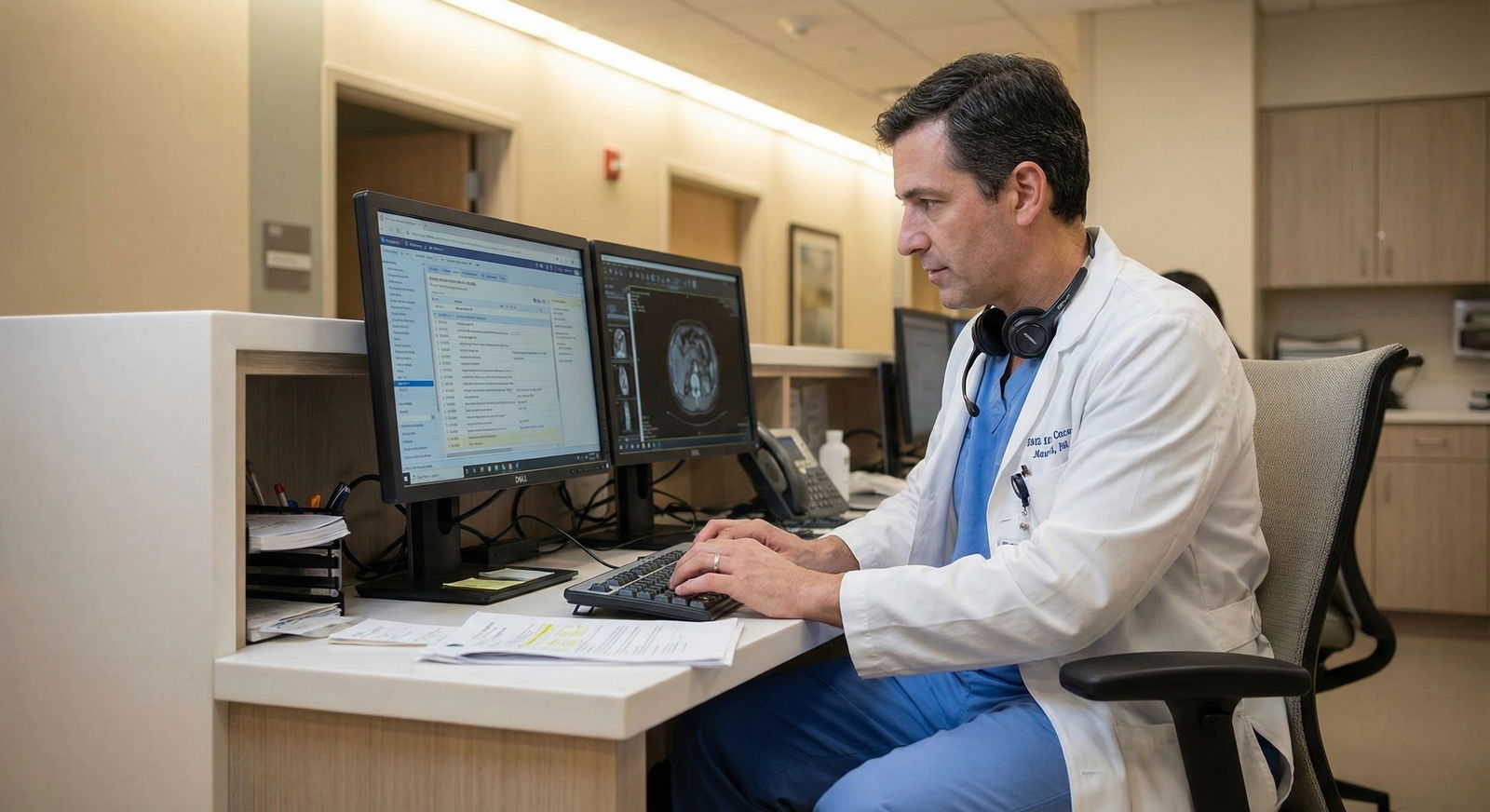
The deeper problem isn't accuracy, though. It's cognitive load. Voice dictation forces you to narrate in a structured, command-driven way. You're not talking to the patient. You're talking to the machine, inserting punctuation verbally, correcting yourself mid-sentence, hoping the software caught the last clause. That mental switching cost is real. It fragments the encounter. And it's a major reason clinicians report burnout tied to documentation, not the patient care itself.
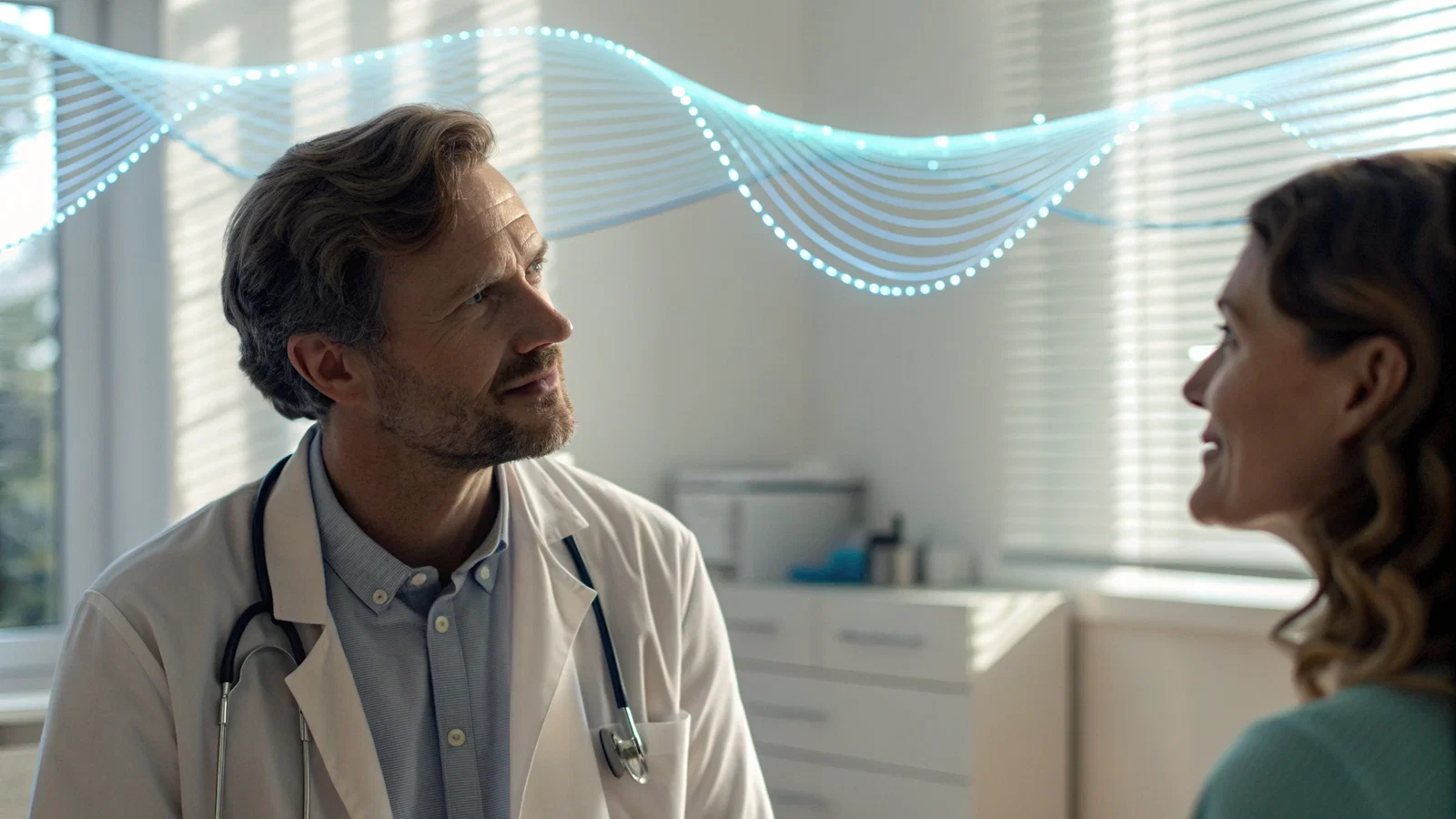
Ambient AI flips the model. It listens to the conversation you're already having. It captures context automatically. Your labor shifts from "speaking clearly into a microphone" to "reviewing the generated note for accuracy." That is a fundamentally different cognitive task, and it's one that preserves the clinical encounter instead of hijacking it.
Coding Accuracy Under the Microscope: The Data Doesn't Lie
Here's where the mythology gets expensive. Critics assume AI-generated notes are less trustworthy because of "hallucinations," that the model will invent findings or fabricate clinical reasoning. That fear is understandable. It's also not supported by the numbers.
Internal coding audits from three health systems that piloted ambient AI documentation in 2024 revealed a striking pattern. When comparing Evaluation and Management (E/M) level assignment against physician-documented intent, ambient AI achieved 92% concordance. Voice-to-text dictation hovered at 78%. Standard keyboard entry sat in the middle at 85%.
[The gap matters. Here's why.
Voice dictation fails at nuance. When you're dictating at the end of a 12-patient afternoon, you rush. You skip the complexity modifiers. You mention the diagnosis but not the severity. You describe the plan but not the specific clinical reasoning that justified the level of care. The coder then can't find what they need to support a higher E/M level, so they downcode to be safe. You get paid less for work you actually did.](https://residencyadvisor.com/resources/medical-technology-advancements/what-the-data-says-about-ambient-ai-notes-vs-manual-soap-docs-on-payer-claim-approval-rates)
Now, the fear that AI causes upcoding. I hear this constantly. The data says the opposite. Ambient AI produces verbatim records of clinical decision-making. That transparency makes aggressive billing harder, not easier. You can't inflate a note when the audio transcript shows you spent 90 seconds on the case. If anything, ambient AI is a natural brake on overcoding because it removes the gray area where inflated documentation used to hide.
One important nuance on revision cycles: ambient AI notes need fewer edits for factual accuracy, but they sometimes require more review for tone and clarity. The AI might produce a note that's clinically correct but reads like a robot wrote it. That's a real trade-off. But from an audit-safety perspective, I'd rather have a clinically precise note that sounds slightly mechanical than a beautifully narrated note that's missing the key clinical reasoning.
Audit Defense: When Compliance Officers Knock
Auditors don't care about your technology. They care about whether your documentation supports the code you billed. That distinction matters because it reframes the entire AI-vs-dictation debate.
When a Medicare Administrative Contractor pulls your chart for a detailed sampling review, they're looking for logical consistency. Did you document a diagnosis? Fine. Does the exam support that diagnosis? Does the assessment link to the plan? Does the medical decision making justify the E/M level?
Voice dictation fails this test constantly. Not because providers are sloppy, but because dictation is linear and unstructured. You dictate the HPI, then the exam, then the plan. If you forget to connect a finding to a diagnosis, nobody catches it in real time. The note gets submitted. The auditor finds the gap. You get dinged.
There's also the trail factor. Ambient systems create timestamped, objective audio and text records. If an auditor questions whether a specific conversation happened, you have evidence. With voice dictation, you have your memory and a note that may or may not accurately reflect what you said into a microphone three months ago. Which one holds up better under scrutiny?
The highest audit risk isn't using AI. The highest risk is inconsistent documentation. Ad-hoc voice dictation without standardized templates is the Wild West of medical records. Ambient AI enforces structure by design.
The Hidden Costs of Traditional Workflows
Voice dictation creates note bloat. You know it. I know it. Providers dictate repetitive filler phrases to ensure completeness because they're terrified of missing something. "The patient is a pleasant 67-year-old female who presents today for follow-up of..." copy-pasted into every note. That bloat doesn't help coders. It buries the signal in noise.
Ambient AI extracts relevant clinical data and structures it. Less filler. More substance.

Then there's the retention problem. Practices that cling to inefficient voice tools lose physicians. Not immediately. Slowly. The doctor who spends 90 minutes after clinic editing dictation errors doesn't quit on Tuesday. They quit in month 14, when the cognitive toll becomes unbearable. And replacing a physician costs exponentially more than any AI subscription.
The counterintuitive finding from early adopters: systems moving from VST to ambient AI see an initial productivity dip as providers adjust to the new workflow. But within 60 to 90 days, productivity climbs past baseline, and revenue cycle health improves because denial rates drop. The transition cost is real. The long-term ROI is better.
Conclusion: Rethinking Your Tech Stack
Ambient AI isn't replacing clinician judgment. It's correcting a historical inefficiency in how we've been documenting care. Voice dictation was a step up from handwriting. It was never the destination.
The data supports AI for coding accuracy and audit defense. Voice dictation remains vulnerable to human error, cognitive disruption, and the quiet documentation gaps that trigger denials. If you're still treating dictation as the gold standard, you're defending a workflow that the evidence has already passed by.
The future of medical documentation isn't about who types faster or speaks clearer. It's about who uses tools that preserve the integrity of the clinical story. Practice leaders should stop viewing AI as a productivity hack and start treating it as what the data shows it to be: a compliance asset.