Most students think a state medical society meeting is a dressed-up lecture weekend. A few panels. A policy update nobody fully understands. Coffee in bad hotel cups. Then home.
That’s not what really happens.
Let me tell you what actually happens in those rooms. Relationships get formed before formal introductions ever appear on paper. Committee chairs notice who keeps showing up. Program directors quietly clock which students care enough to be present when the profession is talking about itself. Senior physicians decide, often in casual conversation, who seems serious, who seems polished, and who is just there collecting lanyards and free food.
That’s the part nobody explains well enough.
If you’re a medical student, resident, or early-career physician, a state medical society meeting can give you something far more valuable than CME-style information. It gives you exposure to the people who shape the local ecosystem of medicine: section leaders, department chairs, society officers, advocacy veterans, and the physicians everyone calls when a committee seat opens or a speaker drops out. That means specialty access. Political awareness. Mentorship. Referrals later. Sometimes even an interview advantage, though nobody will say that part out loud.
And no, the win is not stacking up business cards like you’re at a sales expo. That’s amateur hour. The real advantage is becoming a familiar face. Familiar beats impressive more often than trainees realize. If someone has seen you ask a sharp question, volunteer for a task, and follow through afterward, you stop being a random applicant or student. You become “that thoughtful student from the meeting” or “that resident who helped with the section project.” That label travels.
So go in with the right mindset. Not passive observer. Not tourist. Not awkward résumé machine. Go in with a plan. Know who matters, where they’ll likely be, and how you want to be remembered.
State Medical Society Meetings: Why They Matter More Than You Think
The biggest misunderstanding about state society meetings is that people assume the value is in the scheduled programming. It isn’t. The sessions matter, yes. They give you talking points, context, and a reason to be in the room. But the real value sits in the margins. The hallway after the policy panel. The breakfast table where a section chair is more relaxed than they’ll ever be in their office. The reception where two program directors are talking shop and you get pulled into the conversation because you asked a smart question an hour earlier.
I’ve watched students spend an entire meeting hiding in the back row, taking notes as if they’re preparing for a shelf exam. Then they leave saying the event was “informative.” Informative is fine. Memorable is better.
These meetings matter because they gather a strange and powerful mix of people who usually exist in separate silos. Academic leaders. Community physicians. Hospital executives. Resident representatives. Advocacy-minded faculty. Sometimes legislators or health system figures. That mix gives you a wider view of medicine than your clerkship ever will. You start to see how influence actually works. Not just clinical excellence. Visibility. Reliability. Service. Politics. Yes, politics. Medicine has always had politics; pretending otherwise is childish.
For trainees, that matters enormously. You get early specialty exposure outside the sanitized version presented on a residency website. You hear what attendings are worried about. Scope battles. reimbursement pressure. workforce shortages. training gaps. public health fights. You begin to understand which physicians are builders and which ones just complain professionally.
And here’s the quiet advantage: people remember who shows up where serious conversations are happening. If you are present repeatedly, with curiosity and discipline, doors open faster. Committee invitations. Research ideas. Introductions. Speaking opportunities. The people influencing those doors are often in that building for a weekend, standing ten feet away from you.
Who You Should Prioritize Meeting First
You do not need to meet everyone. You shouldn’t try. That’s a rookie mistake. Wide but shallow networking is mostly vanity. You want targeted contact with people who actually move things.
Start with the state medical society president and other visible officers. Not because you need a photo with them, but because they are usually plugged into everything: committees, advocacy efforts, specialty sections, leadership pipelines. They know who is active and who is dead weight. A brief, thoughtful introduction can matter later if your name comes up for a student seat, resident role, or volunteer opportunity.
Next, committee chairs and section leaders. These are often the most useful people in the room. They’re not always the most famous. They are the ones who can say, “We need a student on this task force,” or “Talk to our residency director,” or “Come to the next meeting.” They sit at the switchboard of opportunity.
Then come residency program directors, department chairs, and senior faculty who are active in the state association. Here’s what trainees miss: when a program director sees you at a society meeting, you are no longer just another person asking for attention from the outside. You are now someone who bothered to enter the professional community. That carries more weight than a cold email with perfect grammar and no relationship attached. I’ve heard faculty say versions of the same thing for years: “I like applicants who show up where medicine is being shaped.” They do remember it.
But don’t ignore the underrated people. In fact, some of your best long-term connections will come from them. Young attendings. Chief residents. Resident section officers. Assistant program directors. Society staff and administrators who coordinate awards, speaker slots, logistics, and follow-up. That last group especially gets overlooked by students trying too hard to impress the biggest name badge in the room. Bad strategy. The administrator who runs the section calendar may be the person who tells you, “Dr. Patel is free after lunch,” or “We’re looking for someone to help with the advocacy day.” Useful beats glamorous.
You also need to learn how to read the room. Influence matters, but approachability matters too. Chasing the most decorated physician in the middle of a dense conversation cluster is usually pointless. You’ll get 20 strained seconds and leave no impression. Far better to speak with a committee vice-chair who has actual time, or a resident leader who can walk you over to a faculty mentor later.
This is the hierarchy I’d use in real life: people with decision-making power, people with connector power, and people with access power. Decision-makers open doors. Connectors mention your name. Access people tell you where to stand so the right conversation happens. You need all three.
How to Approach the Right People Without Looking Desperate
The fastest way to look desperate is to announce that you are networking. Don’t do that. Nobody wants to feel like they’re being harvested for career advantage. They know why you’re there. You know why you’re there. Keep some dignity.
The best openings are context-based. Use the room. Use the session. Use the obvious shared topic in front of you. “Dr. Nguyen, I’m a third-year at State U. I appreciated your comment during the workforce panel about rural rotation design. I’m interested in family medicine and wanted to ask how trainees can get involved in that committee work.” That works. It’s specific, respectful, and low-pressure.
Faculty respond best to concise conversations. Always. They can smell over-rehearsed ambition from across a ballroom. The student who launches into a two-minute monologue about their life story loses the room immediately. The one who gives a clean introduction, asks one intelligent question, and exits gracefully? That person gets remembered.
Use a simple structure. Who you are. Why you’re at the meeting. What you’re interested in. One thoughtful question. That’s enough for a first interaction.
For example: “Hi, I’m Maya, an MS2 at Jefferson. I came because I’m trying to understand how organized medicine intersects with pediatrics advocacy. I saw you chair the child health section. What issues do you think trainees misunderstand most?” That’s sharp. It gives them something real to answer.
And then the part people mishandle: etiquette. Insider etiquette. The stuff faculty notice even when they don’t say it out loud.
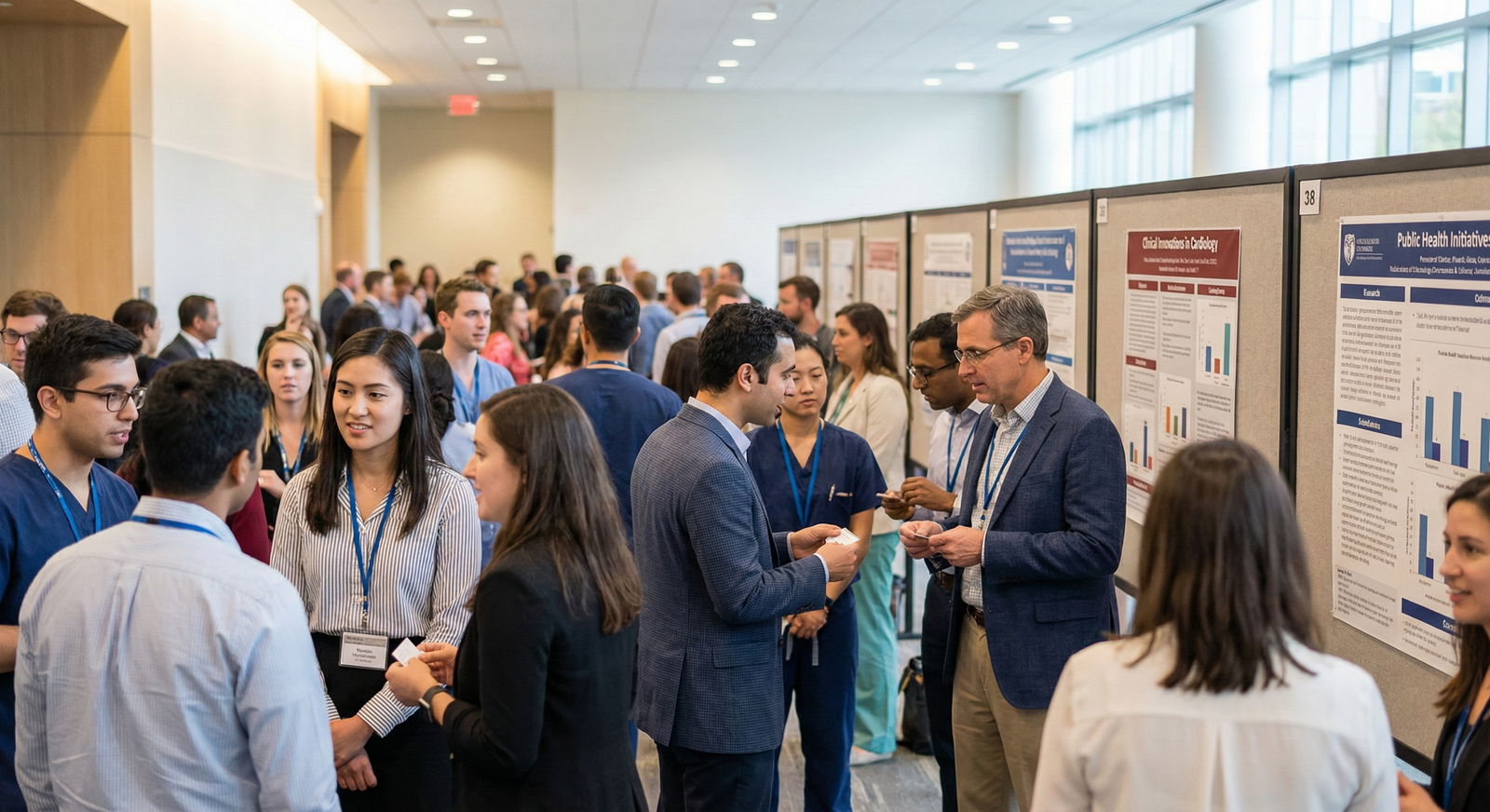
Make eye contact. Don’t hover awkwardly at the edge of a private cluster for five minutes. Don’t interrupt a conversation that clearly has emotional or business weight behind it. Wait for a natural opening. Meal lines are great for this. Poster sessions too. Hallway transitions. Receptions when someone has just disengaged from another exchange.
Respect time. If someone gives you 90 seconds, treat it like a gift. Don’t trap them. Don’t ask for three favors in one breath. And know how to leave. “Thank you, that was really helpful. If it’s alright, I’d love to follow up by email about that committee.” That’s clean. Mature. Professional.
The irony is simple: the less needy you seem, the more people are willing to help you.
The Hidden Opportunities Most Attendees Miss
The lecture hall is the least interesting part of your networking map.
The best conversations often happen at breakfast, in a coffee line, during a poster walk, in a committee room with six half-tired physicians, or in the hallway outside a session that ran five minutes over. I’ve seen more useful introductions happen beside a tray of scrambled eggs than during formal networking blocks. Why? Because people are less guarded when they are not “performing.”
Committee meetings are especially underrated. If trainees are allowed to attend, go. Even if the topic sounds dry. Especially if it sounds dry, frankly, because that’s where actual work gets assigned. Fancy plenary sessions get applause. Committees create roles.
Here’s another secret advantage: offering to help. Not in a vague way. Specific help. “If your section needs a student volunteer for note-taking or event prep, I’d be happy to help.” “If someone is summarizing this policy issue for trainees, I’d love to assist.” Usefulness accelerates trust. Fast. Most students only ask for mentorship. The smarter move is to become someone who lightens a burden.
This is also where you should start distinguishing mentors from sponsors. A mentor gives advice. Good. Necessary. A sponsor does something rarer: they mention your name when you’re not in the room. “That resident would be good for this.” “That student asked a strong question.” “We should invite her.” That’s career-changing behavior. You find sponsors by watching who has influence and whether they naturally advocate for younger people.
Once you’ve had a solid brief interaction, follow up on a narrow topic. Not “I’d love to pick your brain.” That phrase should be retired permanently. Instead: “You mentioned the upcoming telehealth policy discussion. I read the state brief and had one follow-up thought.” Or: “I appreciated your point about community hypertension outreach. I’d love to learn whether students can support that effort.” Narrow follow-up turns a forgettable meeting into an actual relationship.
What to Do After the Meeting So the Connection Actually Counts
If you disappear after the meeting, most of the value evaporates. That’s the blunt truth.
Your reputation starts forming in the 48 to 72 hours afterward. This is when you send the follow-up email. Short. Specific. Professional. Nobody wants a diary entry.
A good message has three parts: where you met, what you discussed, and one clear next step or expression of appreciation. Example: “Dr. Lewis, it was a pleasure meeting you after the workforce panel at the state society meeting on Saturday. I appreciated your advice about getting involved with the resident advocacy section, especially your point about starting with committee work. Thank you again—I’d welcome the chance to stay involved and will watch for future opportunities.” Done. That’s enough.
Then track your contacts. You do not need some ridiculous CRM system like you’re managing corporate sales. A simple spreadsheet or notes app works fine. Name, role, where you met, topic discussed, promised follow-up, next step. Separate the list into categories: potential mentor, sponsor possibility, committee lead, research lead, residency contact. Otherwise every good intention dissolves by Tuesday.
And here’s the final insider truth. Reliability is what people remember most. Not your polished elevator pitch. Not your fancy school. Not even your publication count, at least not first. They remember whether you followed through. Did you send the email? Did you show up to the committee call? Did you send the summary you offered? Medicine is full of smart people. The rare commodity is someone who reliably does what they said they would do.
Putting It All Together: Your State Society Meeting Game Plan
So here’s the game plan. Before the meeting, identify your targets. During the meeting, use context-based introductions and spend time where people are actually available, not just where the official agenda tells you to sit. After the meeting, follow up quickly and keep a simple system so good contacts don’t vanish into your inbox.
That’s how this works behind the scenes.
State medical society meetings are not about being dazzling. They’re about being present, useful, and memorable. That’s it. The students who win these rooms are not always the loudest or the most accomplished on paper. They are the ones who keep showing up, ask good questions, respect the culture, and follow through without drama.
If you feel intimidated, good. That means you understand the room matters. But don’t let that stop you. Insiders are not born. They’re built. One meeting, one introduction, one follow-up, one repeated appearance at a time.