

Only 17% of residents say they “regularly” network within their own program beyond their class and immediate team. Yet almost every competitive fellowship director I know admits the same thing privately: they choose between two similar applicants based on what they have heard about them through the program’s internal network.
You are probably working next to the people who will decide your letters, fellowships, jobs, and leadership opportunities. And you barely talk to half of them.
Let me break this down specifically: “micro‑networking” is not conferences, not LinkedIn, not formal mentorship programs. It is the quiet, small‑scale relationship building you do with chiefs, administrators, and alumni inside your residency ecosystem. Done well, it changes everything from your call schedule to your first attending job.
What Micro‑Networking Actually Is (And What It Is Not)
Micro‑networking is targeted, local, and low‑visibility. Think:
- A 7‑minute hallway conversation with your chief that plants the seed for a senior teaching role.
- A 15‑minute office visit with the program coordinator where you actually learn how promotions and schedule changes really happen.
- A 20‑minute call with an alum who tells you which fellowship program director hates last‑minute emails and which one loves research updates.
This is not:
- “Being fake nice” to everyone.
- Complimenting every attending on “a great teaching session” in that generic, dead tone.
- Spamming alumni with “Dear Dr. X, I am a PGY-2 interested in your field…” emails that read like ChatGPT’s first draft.
Micro‑networking has three features:
- Hyper‑specific: You are not “networking.” You are building 1–1 relationships with people who control or influence specific levers: evaluations, schedules, letters, job intel.
- Repetition over time: One coffee with your chief does almost nothing. Five meaningful interactions over 6 months does a lot.
- Concrete outcomes: A real shift happens—better rotation, research role, protected time, early heads‑up on an opening.
We will go group by group: chiefs, admin, alumni. Because the strategies are different for each.
Chiefs: The Gatekeepers You Underestimate
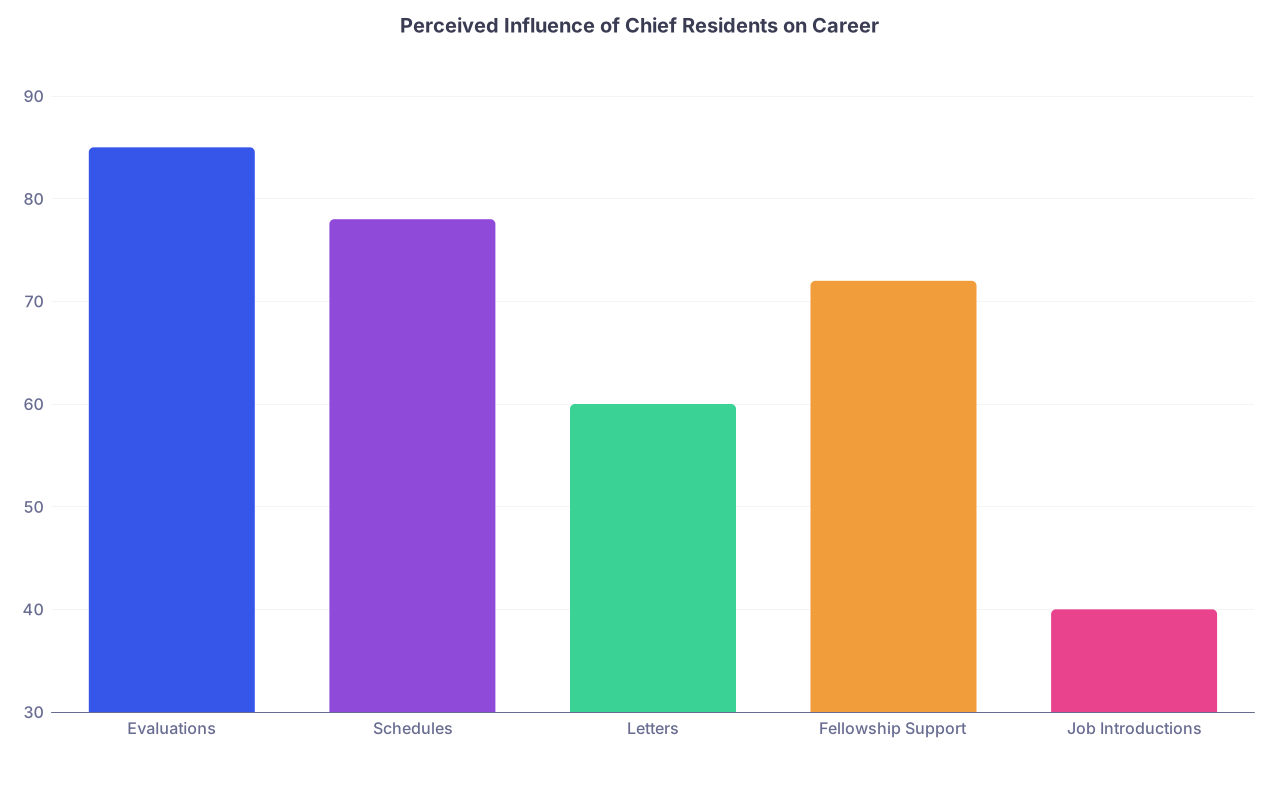
| Category | Value |
|---|---|
| Evaluations | 85 |
| Schedules | 78 |
| Letters | 60 |
| Fellowship Support | 72 |
| Job Introductions | 40 |
Ask residents how much chiefs matter, and they shrug. Ask faculty privately, and you get the truth: chiefs are the filter.
They are the ones who hear: “Who is actually reliable?” “Who do we not want on nights?” “Who is solid but invisible?”
You can treat chiefs as slightly older co‑residents. Or you can treat them as what they actually are: your first leadership‑level audience.
What Chiefs Really Control
From sitting in enough chiefs’ rooms and call rooms, here is what they actually affect:
- Schedule flexibility: vacation switches, who takes extra calls, who gets better elective months.
- Informal reputations: “good under pressure,” “chronically late,” “complains a lot,” “quiet but strong.”
- Flow of opportunities: who gets flagged for that QI project, for the resident‑as‑teacher elective, for a random visiting rotation.
- Fellowship narrative: the off‑record comment when a fellowship director calls: “So what’s this person actually like?”
Chiefs are not all‑powerful, but they are a high‑leverage networking target because 1 chief interaction usually touches multiple faculty perceptions indirectly.
How to Micro‑Network With Chiefs (Without Being Obvious)
Here is what works.
- Targeted, low‑ask introductions
Not “Can we meet to talk about my career?” That is vague and sounds like work.
Try:
- “I am thinking about applying to cards/onc/academic IM. Could I grab 15 minutes next week to ask 3 specific questions about what people from this program usually do?”
- “You mentioned at conference that you did a QI project as a resident. Could I ask you how you found the time for it? I do not want to bite off something I cannot finish.”
The key: narrow scope, time‑boxed, and with a couple of specific questions ready.
- Use rotation transitions
End of a block, sign‑out, or pre‑block briefings are golden. A simple:
“Hey, I really appreciated how you handled the census explosion last week. I am trying to get better at triaging and communicating with nursing. Any specific thing you think I should focus on based on this month?”
You achieve three things at once:
- You admit you care about improving (signal).
- You give them permission to give concrete feedback.
- You open the door for a follow‑up conversation.
Then you follow it. “I tried that on nights—tightening my sign‑outs exactly like you suggested. It actually helped. Thanks.”
Now you are in the “invested, responsive” category in their head.
- Volunteer selectively, not desperately
Do not say yes to everything. Chiefs can smell panic‑networking.
Say yes to 1–2 high‑signal things:
- Being the resident point person for a visiting med student week.
- Leading a single morning report or simulation session.
- Helping assemble data for a residency‑wide survey or small QI initiative that chiefs care about.
When you say yes, be explicit:
“I can help with the med student week, but I will be on nights the week after. If it goes well, I’d be happy to do it again later in the year.”
You sound like a peer, not a mentee begging for approval.
- Handle conflict like someone who might be a chief one day
At some point you will be angry about a schedule, an unfair eval comment, or a last‑minute coverage request.
You can explode in the group text, or you can treat it as a micro‑networking test.
- “I saw I was moved to nights again in May. Before I get too worried, can we talk for 5 minutes? I want to understand what options there are.”
- “This evaluation comment caught me off guard. I do not want to be defensive, just want to know if there is context or specifics you heard from that attending.”
Chiefs remember who brings them problems soaked in gasoline, and who brings them problems that can be worked on.
What To Avoid With Chiefs
- Being too performative: Over‑thanking, loud public praise, trying too hard in front of attendings. Chiefs are residents; they have a good fake‑detector.
- Gossiping down about co‑residents: They assume you will talk about them the same way later.
- Only showing up when you need something: The resident who ignores chiefs for 18 months and then suddenly wants “help with my fellowship list” is easy to spot.
Admin: The “Non‑Physicians” Who Quietly Run Your Career
Residents chronically underestimate administrators. Program coordinators, GME office staff, scheduling admins, clinic managers. These people control timing, paperwork, and exceptions.
I have watched a coordinator save a resident’s fellowship application by fast‑tracking missing documents at 4:45 pm on a Friday. I have also seen one “lose” paperwork for residents who were chronically rude and dismissive.
You can call that unprofessional. You can also call it human. Either way, you should be smart about it.

Who Counts as “Admin” For Micro‑Networking Purposes
- Program coordinator
- Assistant program coordinator
- GME office staff
- Scheduling coordinator
- Clinic manager / practice manager
- Education office staff for your department
They know:
- Which attendings are easy or difficult with evaluations.
- How to time things so your vacation request is more likely to be approved.
- How to push through exceptions: moonlighting approvals, away rotations, visa issues.
How to Build Real Goodwill (Not Fake Smiles)
- Basic respect, done consistently
Sounds obvious. Watch your colleagues for 48 hours and you will see how rare it is.
- Learn their names. Use them.
- Do not email “ASAP” in subject lines unless it actually is urgent.
- When they fix a problem for you, send a one‑line thank‑you that is specific: “Thanks for helping fix that schedule swap—saved me from missing my sister’s graduation.”
- Give them lead time, not emergencies
Admin staff live in email and deadlines. Residents specialize in “I need this today.” That tension is real.
Micro‑networking move: be the resident who makes their life 5% easier.
- Instead of “I need this signed today,” try “I know this is tight; I just realized the due date. If it is not possible, I will adjust, but I wanted to check with you first.”
- Submit required forms earlier than your peers. They notice who is always last.
- Ask for their insider perspective
Everyone else treats them as paperwork machines. You treat them as humans with knowledge.
- “You have seen a lot of residents apply to heme/onc. Anything people usually forget or leave too late?”
- “I am trying to choose electives before fellowship season. Is there a pattern you notice for what works best in our program?”
You are not only getting intel. You are sending the signal: “I see your experience as valuable.”
- Protect them from your chaos on rounds and clinic
Clinic managers remember the residents who:
- Show up on time so check‑in does not back up.
- Do not yell at nursing or front desk when the schedule is slammed.
- Apologize when they are wrong. “I snapped earlier. That was on me. I was stressed, but that is not an excuse.”
That reputation bleeds into what your PD hears. “Residents like working with her; she is organized.” This matters at letter‑writing time.
The Quiet Favors That Add Up
Over 3 years, micro‑networking with admin looks like this:
- Your away elective paperwork actually gets approved on time.
- Your ERAS upload issues get fixed quickly.
- You get early notice when a desirable elective slot opens.
- When the PD asks, “Any issues with this resident?” the answer is, “No, they are good to work with.”
You do not see “helpful coordinator” on your CV. But you will feel it in all the small ways your life is less painful.
Alumni: Future Colleagues, Not Abstract “Network”
Most residents either:
- Ignore alumni completely, or
- Spam them in a panic 3 months before fellowship applications.
Both are mistakes.
Your residency’s alumni network is probably the highest‑yield job and fellowship tool you have, especially for your first 3–5 years out.
| Type of Alum | Best Use Case |
|---|---|
| Recent Fellow Grad | Fellowship strategy, hidden norms |
| Mid-career Attending | First job leads, negotiation tips |
| Academic Leader | Letters, research, niche roles |
| Community Physician | Lifestyle, non-academic options |
| Non-clinical Career | Industry, admin, alternative paths |
Where Alumni Actually Sit In Your Career Pipeline
Alumni can:
- Translate your program’s reputation to external institutions. “Yes, our ICU months are brutal; if they survived that, they will do fine here.”
- Pre‑sell you to fellowship directors or group partners: “We have a PGY-3 you should watch for next cycle.”
- Tell you the quiet truth about specific programs. “On paper it is research‑heavy; in reality, you will be doing 18 clinics a week.”
- Share starting salary and call details that no recruiter email will ever reveal.
But you only get that if they trust you and do not see you as yet another transactional message.
How to Approach Alumni Without Sounding Desperate
First, use your built‑in channels:
- Alumni lists or newsletters from your program.
- PD or APD who says, “We have a grad at X; want me to connect you?”
- Departmental CME events where alumni speak.
When you reach out, your message should be:
- Short.
- Specific.
- Respectful of time.
- Grounded in actual connection (same program, same niche interest, same mentor).
Example email that actually gets answered:
Subject: Fellow grad from [Program] interested in [Field] – brief question
Dear Dr [Last Name],
I am a PGY-2 in [Program], interested in [Field]. I saw you trained here and are now at [Institution]. I am trying to understand how residents from our program are viewed when they apply to [field] fellowships and what choices helped you most during residency (rotations, research, timing).
Would you be open to a 15–20 minute call in the next few weeks? I have 3–4 specific questions and would appreciate your perspective.
Best,
[Name], PGY-[X]
Versus the email that screams “copy‑paste” and usually dies in the inbox:
“Dear Sir/Madam, I am very impressed by your career and was wondering if you had any advice…”
You see the difference.
Running a 20‑Minute High‑Yield Alumni Call
Here is a structure that works and does not waste their time.
- 30 seconds: quick intro and gratitude.
- 3–5 minutes: ask about their path (“What do you wish you had known as a PGY-2 at our program?”).
- 10 minutes: targeted questions:
- “How is our program perceived when you see applicants from here?”
- “If you were me, PGY-2 with [X interests], what 2–3 choices this year would matter most for fellowship or jobs?”
- “Anything you see applicants from our program commonly missing?”
- 2–3 minutes: close and future connection:
- “Would it be alright if I email you later this year with an update or occasional question?”
- Then actually send a brief update 6–12 months later.
Now you are not a random email. You are “that resident from my old program who actually followed through.”
Turning Alumni Into Advocates, Not Just Advice‑Givers
Alumni move from “gave advice once” to “advocate” when:
- You respect their time.
- You implement at least some advice, and tell them what happened.
- You are reliable and not chaotic.
That is when they start doing high‑leverage things like:
- “I will ping our fellowship director before your application hits their desk.”
- “Our group is opening a position; if you are interested, I’ll float your name first.”
You cannot fake this. But you can accelerate it with consistency.
Putting It Together: A Micro‑Networking System You Can Actually Run
You are working 60–80 hours a week. You do not have time to “network” as a full‑time job. Fine. This is not that.
Here is a realistic micro‑networking cadence that fits into residency:

| Step | Description |
|---|---|
| Step 1 | Start PGY Year |
| Step 2 | Identify 3 chiefs, 2 admin, 3 alumni |
| Step 3 | Schedule 1 short touchpoint with each |
| Step 4 | Follow up after key events |
| Step 5 | Ask for specific guidance or support |
| Step 6 | Update them on outcomes |
| Step 7 | Repeat yearly with new targets |
Step 1: Pick Targets, Not “Network”
For the next 6–9 months, choose:
- 2–3 chiefs (or senior residents) you respect.
- 2 key admin staff you interact with most.
- 3–5 alumni in fields or jobs you might be interested in.
Write their names down. This matters. “I should network more” is useless. “I will build real relationships with these 7 people” is a plan.
Step 2: Plan One Deliberate Touchpoint Each
For each:
- Chiefs: a 15‑minute meeting, or a focused conversation at end of rotation.
- Admin: a quick visit, thoughtful thank‑you, or a “can I ask you something about how this works?” conversation.
- Alumni: a single, well‑written email asking for a 15–20 minute call.
That is it. One intentional contact per person to start.
Step 3: Use Natural Events As Follow‑Up Hooks
You do not need forced check‑ins.
Use:
- End of a hard rotation.
- Acceptance of an abstract or poster.
- Decision about fellowship field.
- Change in schedule or duties.
Example:
- To a chief: “That ICU month was rough, but your advice about pre‑rounding lists helped. I am applying it on the floor now.”
- To admin: “Just wanted to say I appreciate how you helped juggle those swaps last month. It made a big difference.”
- To alumni: “You suggested an away elective in X; I did it and it confirmed I like this niche. Thanks again for the guidance.”
Now you are building a narrative over time.
Step 4: Ask For Specific, Reasonable Support
Once there is some relationship history, ask for reasonable help:
- Chiefs: “Would you be willing to look at my fellowship list and tell me if I am miscalibrated?”
- Admin: “Is there anything I should know about timing vacation around interview season? I want to plan in a way that is easiest for the schedule.”
- Alumni: “Would you be comfortable if I listed you as someone who knows me from our calls, in case your fellowship director asks informally?”
You are not demanding. You are inviting them to invest a bit more in someone they already see as thoughtful and responsible.
Step 5: Protect Your Reputation in the Background
All the networking in the world cannot save a resident who is:
- Chronically late.
- Dishonest.
- Disrespectful to nurses and staff.
- Impossible on call.
Everyone you are micro‑networking with also hears about your behavior indirectly. If there is a gap between “polite to chiefs/admin/alumni” and “jerk to everyone else,” it will surface. Quickly.
Red Flags And Common Mistakes
A few patterns I see that reliably backfire:
- Treating chiefs like your personal PR team
You are not their only problem. They are juggling schedules, evaluations, PD expectations, and their own futures. Do not make every interaction about your fellowship panic.
- Triangulating conflict through admin or chiefs
“I do not want to confront Dr X about that eval; can you talk to them for me?” No. Learn how to have direct, professional conversations.
- Over‑sharing or trauma‑dumping
Yes, residency is hard. Yes, burnout is real. But chiefs and admin are not your therapists. Keep emotional disclosures proportional and purposeful.
- Transactional alumni contact
If your first email to an alum asks for a letter, a shadowing slot, or “can you put in a word with your PD,” expect silence. You have not earned that yet.
Where This Pays Off 3–5 Years From Now
The dividends of micro‑networking usually show up in late PGY-2 and beyond:
- Your PD suddenly “remembers” you when a niche elective spot opens.
- A chief tells the fellowship director, “They are one of our top residents. I would rank them high.”
- Admin quietly batches your credentialing paperwork first so your job start is not delayed.
- An alum forwards you a job posting before it is public and says, “If you are interested, I will introduce you to the group lead.”
None of that shows up on your ERAS or CV. But it shapes your trajectory far more than 30 extra PubMed IDs.
You do not need to be extroverted. You do not need to attend every happy hour. You do need to be intentional with a small number of influential people who already share your institutional DNA.
Key Takeaways
- Chiefs, admin, and alumni are not background characters; they are the internal network that shapes your evaluations, opportunities, and early career moves.
- Micro‑networking means small, consistent, specific interactions—respectful asks, thoughtful follow‑ups, and visible reliability over time.
- A simple, realistic system—7–10 targeted people, 1–2 touchpoints per year each—will do more for your career than any generic “networking” advice you will hear on rounds.


