
The residents who get fellowship calls first are not always the smartest. They’re the ones the right people already trust.
Let me tell you what really happens behind those “Congratulations, we’d love to interview you” calls that hit some phones weeks before others. Because it is absolutely not a level playing field, and pretending otherwise is how you end up blindsided in your PGY-3 year.
What Actually Triggers Early Fellowship Calls
There’s a myth that fellowship calls roll out in strict order of “merit”: Step scores, publications, letters, personal statement. Programs pretend that’s the hierarchy. It is not.
The actual trigger for early calls is much simpler and far more human: someone with power vouches for you before your file is even opened.
I have sat in those rooms. The GI PD leaning back, scrolling their email casually while the coordinator pulls up ERAS, and saying, “By the way, I’ve got a name from Hopkins IM—can we just invite this one early?” That’s it. That’s the reason that resident gets the first call and your beautifully crafted application doesn’t even exist to them yet.
You think I’m exaggerating? I’ll walk you through the mechanics.
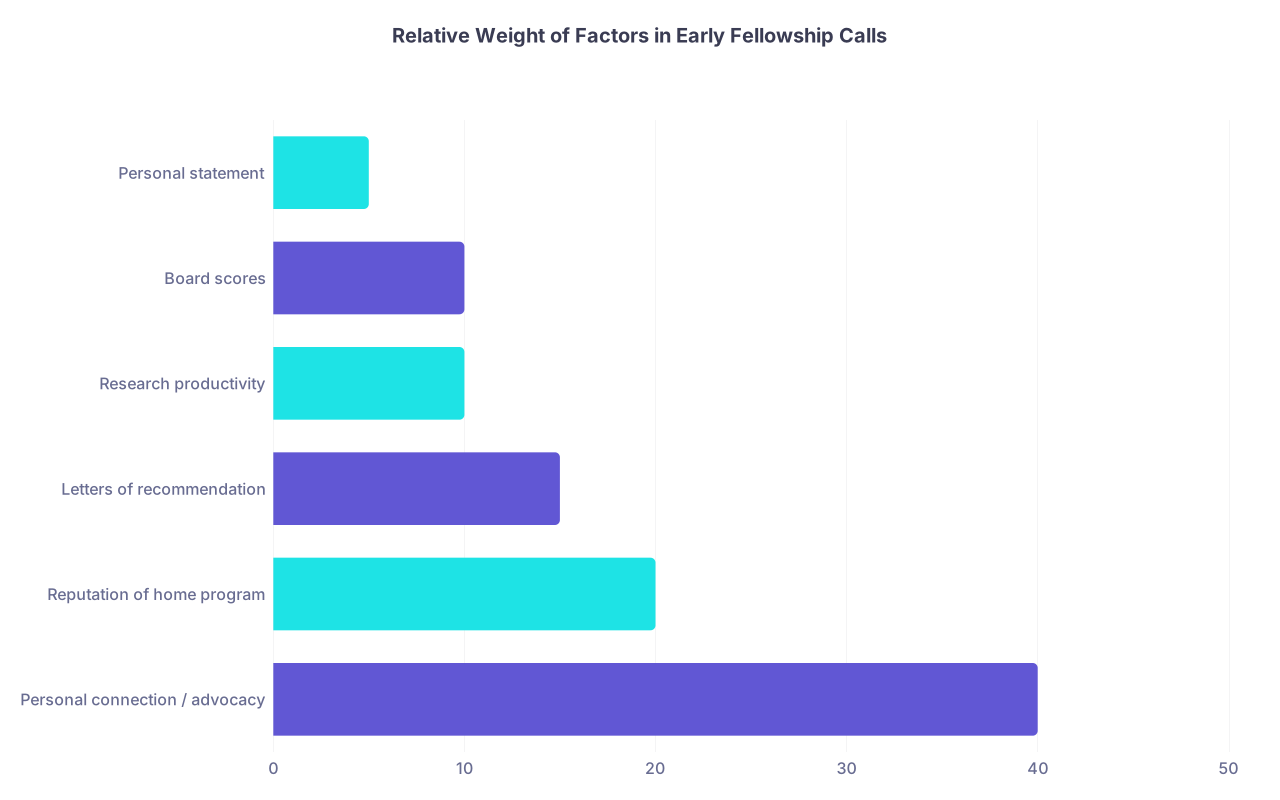
| Category | Value |
|---|---|
| Personal connection / advocacy | 40 |
| Reputation of home program | 20 |
| Letters of recommendation | 15 |
| Research productivity | 10 |
| Board scores | 10 |
| Personal statement | 5 |
Those numbers aren’t in any official document. But they’re close to how people behave when the doors close and the rank lists are still “just drafts.”
The Hidden Network: How PDs Actually Communicate
Here’s the part no one tells you as a resident: program directors and big-name attendings live in a parallel universe of quiet emails, calls, and hallway conversations that shape your future before you ever hit “submit” on ERAS.
There are a few main pipelines.
First: the direct PD-to-PD email. Subject line is something like “Outstanding resident interested in Cardiology.” Two paragraphs, short, clear, and lethal—in your favor if you’re the subject, against you if you’re not.
It usually reads like this:
“Hi [First name],
I wanted to flag our PGY-3, [Your Name], who is applying to cards this cycle. Top 5% of our residents in clinical ability, excellent team player, very reliable. Strong research with [Mentor]. I’d be grateful if you’d take a close look.
Best, [Home PD]”
You know what happens next? The receiving PD replies: “Of course—happy to take a look.” They forward it to their coordinator: “Make sure this person gets an interview.”
Done. That resident just jumped the line of 600 other applicants.
Second: the old-boys-and-girls club of subspecialty mentors. The rheum attending at your place who trained with the fellowship PD elsewhere. The transplant nephrologist who co-authored a paper with the PD at the place you’re dying to go. Those relationships pre-date your entire medical career. You’re stepping into a game that started decades before you.
Third: whisper networks at conferences. At ASN, ASH, ACG, ATS, etc., there are little circles in hotel hallways: “Hey, do you have anyone this year?” “Yeah, we’ve got one strong one—sending you their name.” That conversation counts more than anything you typed into ERAS.
You don’t see any of this. You just see that one co-resident suddenly has four interview invites while you’re still refreshing your inbox like an addict.
Why Some Residents Get Talked About (And You Don’t)
This part is going to sting a little. Because it’s not about who “deserves” it in some pure moral sense. It’s about who is top-of-mind when mentors and PDs are asked:
“Who are your top one or two people this year?”
The people who get named have done a few very specific things.
They attached themselves, early and visibly, to someone with reach. Not just a random attending who’s nice. A division chief. A PD or APD. A fellowship director. Or a specialist with a ridiculous contact list because they’ve been on every committee and panel for the last decade.
They showed up repeatedly, not just once. On rounds, at morning report, in journal club, at division conferences. They didn’t just rotate through cardiology. They then came to cardiology conference. They followed up on a case. They asked to help with a review or a case report. They made themselves hard to forget.
They made life easier for people in power. That sounds transactional, but it’s true. The residents we push hardest have a pattern: they’re the ones who don’t disappear after they get their letter. They answer emails. They submit drafts on time. They don’t blow off a 7am echo conference because they’re tired.
So when a PD is asked, “Who’s your best applicant?” there isn’t a long pause. There’s an immediate: “Oh, [Name].”
The residents who didn’t build that kind of relationship? They’re “very nice, solid, hardworking.” You know what that translates to behind closed doors? Not getting the first calls.

The Timing Game: Why Some Invites Land So Early
Another ugly secret: the timing of your fellowship calls often has nothing to do with when you applied and everything to do with when the right person finally sent that email about you.
Most programs go through three informal phases.
Phase one is “known quantities.” Before ERAS opens fully, PDs already have a mental list: the home program stars, the PD emails from other institutions, the children of former chiefs, the mentees of famous people. Those get pulled up first. Early invites go out quietly. No announcements.
Phase two is “pattern matching.” The committee looks at big buckets: home program applicants, affiliated institutions, big-name places (MGH, UCSF, Penn, Hopkins), and applicants whose recommenders they personally know. Those get sorted and invited faster because they’re easier to “trust” on paper.
Phase three is “the pile.” This is where everyone else lives. Including some excellent residents. But the energy is different. The urgency is gone. Now they’re filtering by Step scores, publications, diversity, geographic ties, whatever their pet filters are that year. You can still absolutely do well here. But you are not getting the very first phone calls. Those slots are already held.

| Step | Description |
|---|---|
| Step 1 | PD outreach and known names |
| Step 2 | Early shortlist |
| Step 3 | Immediate interview invites |
| Step 4 | Protected early interview slots |
| Step 5 | No advocacy |
| Step 6 | Bulk ERAS review |
| Step 7 | Secondary shortlist |
| Step 8 | Later interview invites |
That’s why you see one co-resident get an invite before programs have even “officially” released anything. Their advocacy email went out in phase one. Yours did not.
The Politics of “Top Support”: Why PDs Only Go All-In On a Few
Here’s the line I’ve heard PDs repeat over and over. I’ve said it myself:
“I can only really go to bat for one or two people per year per subspecialty.”
That’s the quiet background constraint.
They will absolutely write plenty of letters. They will say nice, supportive, even glowing things about several residents. But there’s a different gear reserved for the top one or two. The ones whose files they are willing to personally move across institutions.
This is why scrambling to “get close to the PD” in the last six months is mostly theater. By that point, they already know who their top people are. They’ve watched you for two and a half years. They’ve heard which names keep popping up positively (and which ones don’t).
If you’re in that top tier, things start moving early:
- Your PD asks you for an updated CV before you even start ERAS.
- They say, “Where are you thinking of applying?” and then quietly say, “I know people there.”
- You start hearing from your mentors: “X program director might reach out.”
If you’re not hearing any of that by late PGY-2 or early PGY-3, you’re not in the advocacy tier yet. That doesn’t mean you’re doomed. But you’re playing a different game, and you need different tactics.
Conference Season: Where Future Fellows Are Picked Off Early
If you think fellowship recruitment starts when ERAS opens, you’re a step behind.
For serious subspecialties—cards, GI, heme/onc, pulmonary/CC, nephrology at high-tier places—the real early scouting is happening at national conferences the year before you apply.
I’ve watched this play out in real time.
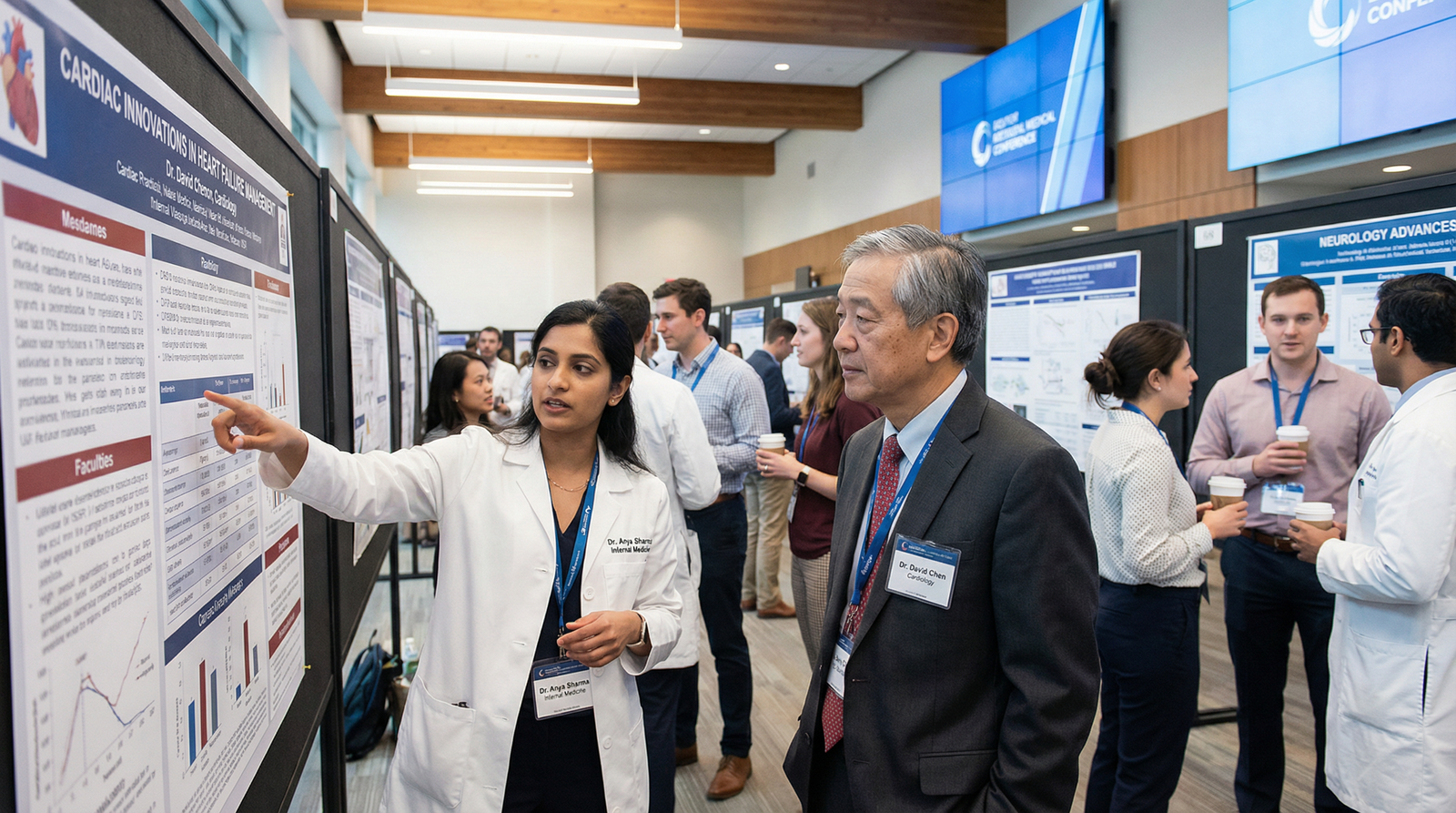
You present a poster at ACG, ASN, ATS, ASH—whatever your field’s big meeting is. Your attending stands next to the poster, doing the usual chatter. Then a fellowship PD they know walks up. There are handshakes, “How are things?” And then your name drops into the conversation.
“By the way, this is our PGY-2 who’s applying next year. Very strong.”
You chit-chat for 3–4 minutes. You think it was just pleasant small talk. It wasn’t. It was an informal first impression for a future interview slot.
Later, over dinner, those same people talk about you. “That resident from [your program] was sharp. Put them on the list.” That list does not live in ERAS. It lives in someone’s notes app or brain. But it’s real.
Sometimes, months later, when your application hits their queue, they’ll say, “Oh, I remember this one from ATS. Invite.”
That’s why some residents get calls or personalized emails like, “Glad to see your application come through—would love to talk more.” They were seen first. Long before ERAS.
The Reputation Game: Your Program’s Name Is Not Neutral
Another truth no one wants to say out loud: your home program’s reputation changes how fast people call you back.
If you’re at a high-output academic medicine factory—UCSF IM, Brigham, Penn, Duke, etc.—fellowships already trust that your top 2–3 applicants per field are “safe bets.” Those names get fast-tracked.
If you’re at a solid but lower-profile community program, you’re not disqualified. But you’re not pre-trusted either. PDs do not know your local culture. They don’t know how inflated your home letters are. So they lean harder on signals they recognize: who wrote your letter, who can vouch for you, what names they see on your CV.
What actually narrows the gap is when someone at your program plugs into the national ecosystem. A nephrology chief who is active in ASN, a heme/onc attending on an ASCO committee, a PD who trained at a major academic center and still has strong ties.
Residents under those people get a de facto reputation boost because suddenly your unknown program has a known node in the network.
| Factor | High-Profile Academic IM | Mid-Tier University IM | Community IM |
|---|---|---|---|
| PD-to-PD emails likely? | Very High | Moderate | Variable |
| Number of early calls per year | Many | Some | Few |
| Need for external networking | Helpful | Important | Critical |
If you’re at a place that doesn’t automatically generate phone calls for you, your margin for passively waiting drops to zero. You have to manufacture your own signal.
What the “Early Call” Residents Did Years Before
Let me connect the dots over time, because people always underestimate how early this really starts.
The residents who get the first fellowship calls almost always:
- Picked a field and quietly oriented toward it by mid-PGY-1 or early PGY-2. Not obsessively. But enough that key people knew: “This one’s thinking about pulm/CC.”
- Attached themselves to at least one mentor with institutional or national pull. They didn’t keep rotating with random attendings and never following up.
- Showed face at that division’s events. Not occasionally. Routinely enough that everyone in the room recognized them by name.
- Got involved in something concrete: a project, a QI initiative, a review, a case series. Not all of it has to be Nature Medicine. But it has to be real and visible.
- Had at least one sitting PD or big-name attending who could say, “I’d take this person as my own fellow.”
That last part is key. Fellowship PDs aren’t just betting on your CV. They’re betting on whoever is vouching for you.
If someone they trust says, “She’s one of the best residents we’ve had in years,” that’s enough to bypass the usual “let’s see where they fall in the pile” attitude. You get a phone call instead of a generic ERAS auto-email.
The Dark Side: When Back-Channeling Works Against You
You should also understand the flip side—because it explains why some residents with decent paper stats never get those early calls.
Negative or lukewarm back-channel comments kill early interest faster than any mediocre Step score.
Here’s the kind of thing that gets said privately:
- “Technically strong, but not someone I’d want to work with at 2am.”
- “Good on rounds, but some professionalism concerns earlier on.”
- “We’re supporting their application, but they are not our top candidate this year.”
That last line is devastating. It sounds mild. It is not. It tells the other PD: “If you’re limited on slots, prioritize someone else.”
Do you hear about any of this directly? Almost never. You just get fewer calls. Or later calls. Or perfunctory invites without much enthusiasm.
The point is not to make you paranoid. It’s to make you understand why the “networking” part of medicine is not a cute add-on. Your everyday reliability, your reputation with nurses and co-residents, your ability to not burn bridges with attendings—those are networking moves whether you think of them that way or not.
If You’re Late to the Game: What Still Moves the Needle
Let’s say you’re already a PGY-3, ERAS is coming, and you’re realizing: no one has explicitly said, “I will call people for you.”
You’re not finished. But you need to stop hoping and start engineering.
You can still:
- Have a direct conversation with your PD: “I’m very serious about [field]. If you’re willing, I’d be grateful for any programs you feel comfortable reaching out to on my behalf. I’m especially interested in X, Y, Z.” This does two things: clarifies your seriousness, and makes it easy for them to act.
- Ask your strongest mentor a very blunt question: “Are there specific programs where you’d feel comfortable emailing the PD to recommend me?” Then shut up and listen to how they answer. If they light up, you’re in good shape. If they hedge, adjust expectations.
- Show up at subspecialty conferences or even regional meetings this year. Yes, even now. One genuine 10-minute conversation with the right attending can lead to, “Oh, you’re applying this year? Tell your PD to mention your name when they email me.”
Is this fair? Not remotely. Is it how many of the early calls happen? Yes.
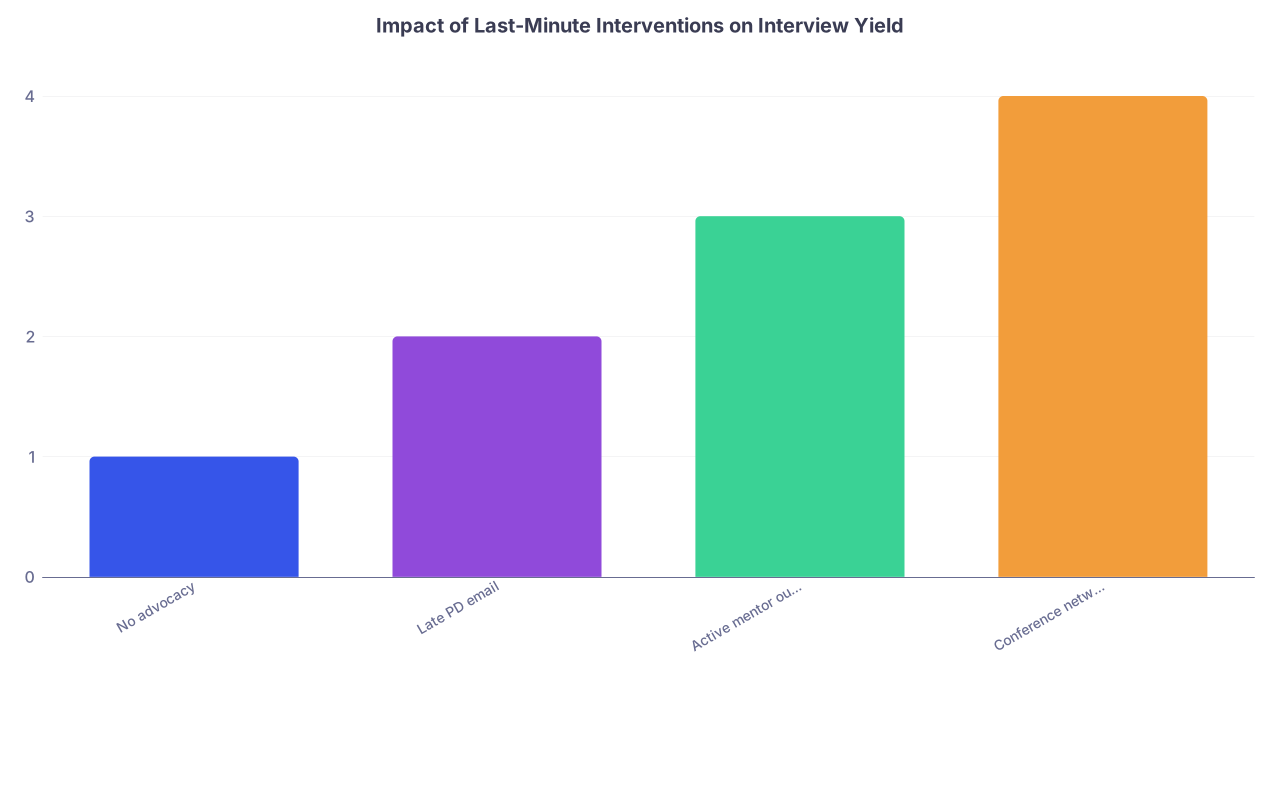
| Category | Value |
|---|---|
| No advocacy | 1 |
| Late PD email | 2 |
| Active mentor outreach | 3 |
| Conference networking plus outreach | 4 |
Those bars aren’t precise statistics; they’re the pattern you’ll see again and again if you actually track who got what and why.
The Future: Will This Ever Become More Transparent?
People like to pretend that with more standardized applications, tokens, signaling, and centralized processes, we’ll move away from this relationship-driven chaos.
We won’t. Not fully.
Fellowship PDs are drowning in applications. They’re going to cling even tighter to any shortcut that feels like a reliable filter. And the most reliable filter in a human system is still: “Do I trust the person telling me this resident is good?”
What might change is the sophistication of the network. Younger faculty, more diverse PDs, more virtual interactions, more open DM culture on Twitter/X and professional platforms. You’re already seeing fellows and residents building relationships with attendings across the country via cases, threads, and conferences long before the formal application phase.
But under all the tech and process, the core truth stays the same:
The residents who get fellowship calls before everyone else are the ones whose names are already in the room before their CV is.
Your job is to make sure your name gets into that room early, attached to someone whose word carries weight.
And once you understand that, your entire approach to “networking” in medicine stops being fake small talk and starts being the long game of who will actually pick up the phone for you when it counts.
With that mindset in place, you’re finally ready to stop being just another ERAS packet and start being the resident people talk about. How you turn that into concrete steps for your specific specialty—that’s another conversation, but now you know the game you’re actually playing.
FAQ
1. If I’m at a small community program, do I even have a shot at early fellowship calls?
Yes—but you will not get them by default. You need at least one person at your institution who’s plugged into the larger network. That might be a subspecialist who trained at a big-name place, a PD with strong connections, or a research mentor collaborating with academic centers. Your job is to identify that person early, work closely with them, and make it easy for them to advocate for you. Without that, your path is still viable, but it will run more through “bulk ERAS review” than back-channel early invites.
2. How do I know if my PD or mentor is actually going to advocate for me versus just writing a letter?
Ask a direct, respectful question: “Would you feel comfortable reaching out to any fellowship PDs on my behalf?” Then pay attention to specifics. If they name programs, mention people they know, or say “Yes, I’ll email X and Y,” they’re in your corner. If they say something vague like, “I’ll write you a strong letter,” but never bring up specific outreach, you’re probably not one of their top advocacy priorities. Useful to know early, so you can find an additional champion.
3. If I did not network early, is it still worth trying this late?
Yes, because even a single strong connection can change your cycle. You’re not going to retroactively create a 3-year relationship in a month, but you can still: meet with your PD, clarify your commitment, identify one or two mentors willing to email on your behalf, and attend at least one major or regional meeting where you can be introduced around. You may not get the very first wave of calls, but you can still move yourself out of the anonymous pile and into the “someone asked us to look at this one” category. That alone is a huge shift.