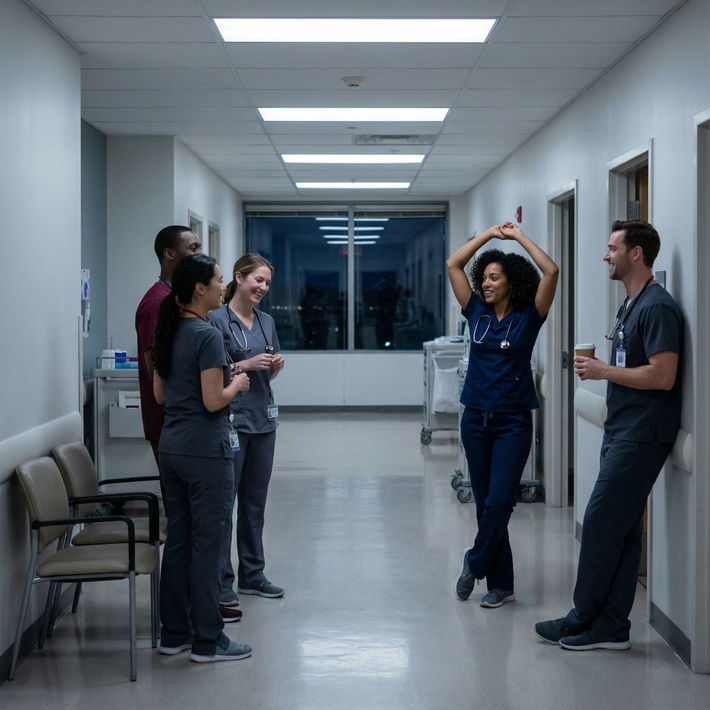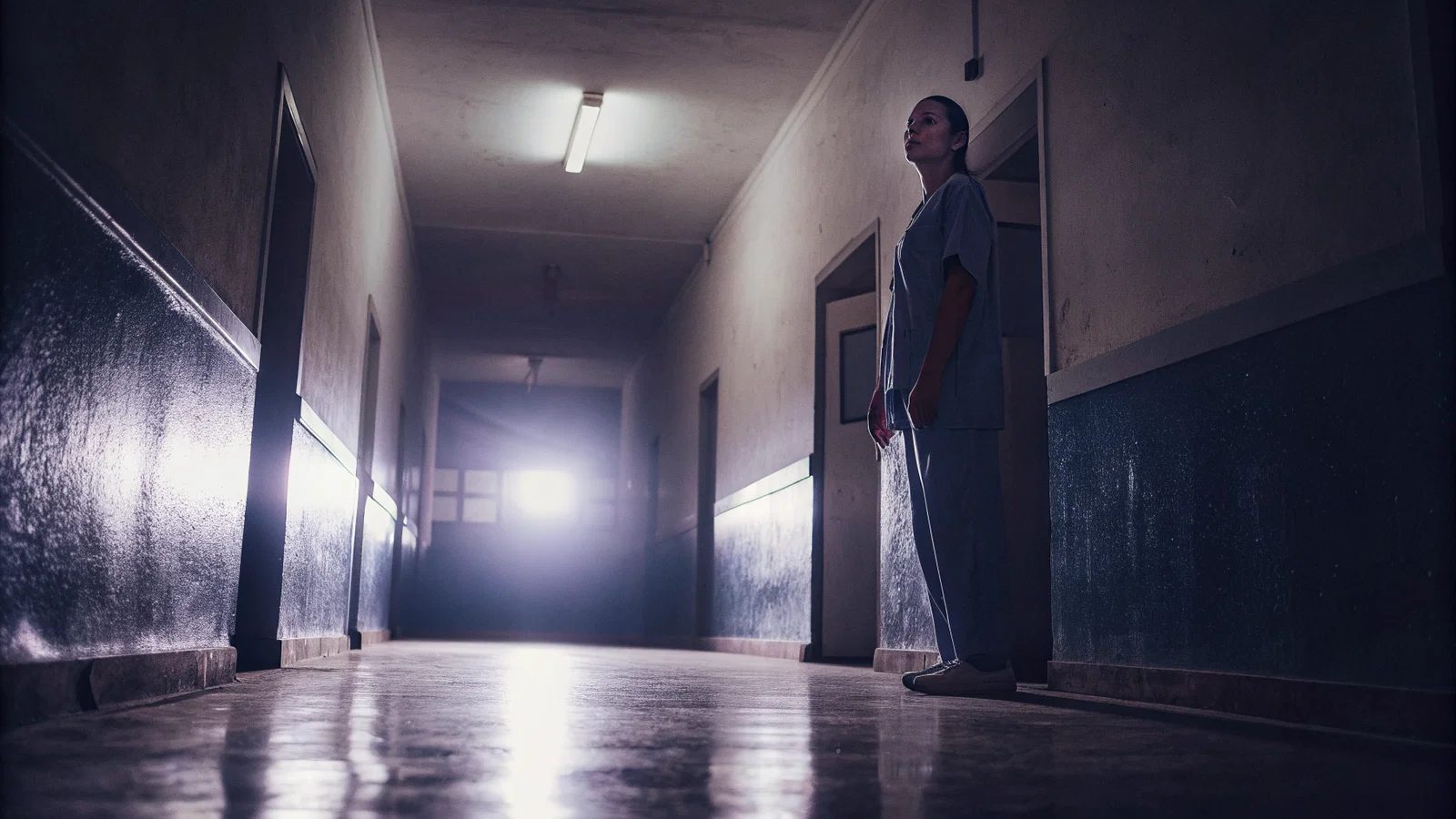
It's 0200. The call room is black, dead silent, and you were finally, finally asleep for 22 minutes. Then the pager. That shrieking, vibrating rectangle on the nightstand.
You sit bolt upright. Heart hammering in your ears. Mouth like sandpaper. Where am I? What day is it?
If you're in this situation right now, or if you know you will be tomorrow night, here's what you do.
The Scenario: 0200 AM, The Call Room Panic
Let's set the scene honestly because textbooks don't. You are heavy. Not tired, heavy. Like your limbs weigh 50 pounds extra. Your brain is running Windows 95. The nurse is on the other end: "Doctor, bed 7 is complaining of chest pain, can you come see?"
Your first instinct is panic. Fight it. Panic is expensive. It burns the only glucose your foggy brain has left.
You have 60 seconds to go from sleep mode to clinical mode. I do it the same way every single time.
One: Feet on the floor. Don't sit and stare at the wall. Two: Splash water on your face from the sink right there in the call room. Keep a water bottle by the bed for this exact reason. Three: Read the pager text out loud. Literally whisper it to yourself. "Bed 7, chest pain." Forces your brain to process language.
Now, Situation Handler rule number one: Assess the situation before you act. Is this a true emergency or is it a code brown?
I've seen residents sprint down the hall for what turned out to be constipation because they didn't ask one clarifying question. So you call back. Thirty seconds, calm voice: "What are the vitals? Any EKG changes? Is he diaphoretic, hypotensive?"
If vitals are stable, you've bought yourself two minutes to wake up fully, grab your stethoscope, and walk, don't run, to the room. Running at 2 AM makes you look panicked and makes the nurse panicked.
If they say BP 70/40, chest crushing, sweating? You're already moving while on the phone. That is a true emergency.
Your job at 0200 is not to be brilliant. It's to be safe and systematic until your brain comes back online.
Phase 1: The Pre-Shift Protocol (The Setup)
If you're trying to survive night shift during night shift, you've already lost. You win or lose before you clock in.
Here's the setup I tell every intern who thinks they can just "power through."
The 90-minute nap rule. If you're working a 12-hour night, you need 90 minutes of sleep beforehand. Not 30. Not 60. 90. That's one full sleep cycle. Anything less and you wake up in deep sleep, that drunk, groggy, can't-remember-your-name feeling called sleep inertia. It will kill you at 3 AM. I set an alarm for 100 minutes. 10 to fall asleep, 90 to sleep.
Fueling the machine. Eat 2 hours before the shift, not 20 minutes before. And what you eat matters. A burger and fries at 5 PM is a disaster. The fat sits there and at 2 AM you get a food coma. You want complex carbs that release slow. Oatmeal with peanut butter. Brown rice and chicken. Whole grain toast and eggs. Think runner's meal, not truck stop meal.
Hydration strategy. Drink 500ml of water before you walk in the doors. Dehydration feels exactly like fatigue. Headache, foggy, slow. Keep a 1-liter bottle by your bedside in the call room, not just in the breakroom you'll never have time to visit. If your urine isn't pale yellow at midnight, you've failed this step.
Your energy is not a flat line. It's a cliff.
At 2 AM you fall off. At 4 AM you hit rock bottom. At 6 AM your body lies to you with fake energy. Know the map before you drive the road.
Phase 2: Navigating the 0200-0600 Trough
This is the trench. The four hours where every bad decision in a hospital happens. Your circadian trough wants you dead asleep. The hospital wants you alert. Someone's going to lose, so you need tactics.
The Caffeine Cliff. What you're doing wrong? Drinking coffee at 7 PM when you start. Stupid. Completely backwards. If you drink it at 7 PM, by 2 AM you've crashed and you're immune. You've wasted your bullet.
Drink your coffee at 0200. Right when you feel that first heavy eyelid. Caffeine takes 20-30 minutes to peak. So if you drink it at 2 AM, it kicks at 2:30 AM and carries you until 5:30 AM. That aligns perfectly with your biological low point. One strong coffee. Black. No sugar crash.
The 20-minute power nap. If you're in this situation, census of 70, cross-cover pager blowing up every 4 minutes, you can't see straight, take a nap. Permission granted. Set an alarm for 20 minutes. Not 25. Not 40. Twenty. Any longer and you drop into slow-wave sleep and wake up worse than before. I've done it in a chair, on the floor, in the call room that smells like old pizza. Doesn't matter. 20 minutes, eyes closed, pagers on loud right next to your ear.
Movement is medicine. At 0300, stand up. Right now. Two minutes. Roll your shoulders. Touch your toes. Do 10 air squats in the workroom if you have to. Prolonged sitting drops your heart rate to 52 and tells your brain it's time for hibernation. You need to break that signal. Walk the stairs once every hour on the hour. Make it a rule.
When that call comes at 3:13 AM, you need a system. Not feelings. A system.
Unstable = you go now. New/worsening = you go soon. Stable and chronic = you can triage, document, and recheck. That filter saves you from sprinting to every single "patient can't sleep" page while missing the real decompensation.
Phase 3: The 0600-0800 Adrenaline Spike
Here's the cruel trick biology plays on you. At 0600 your cortisol surges. Suddenly you feel great. Awake. Chatty. Like you could run a marathon.
You cannot. It's fake.
This is when I've seen the most harm done because residents get complacent. They think, "I'm good, I survived." Then they sign out the wrong potassium repletion or miss that the night patient's lactate is still rising.
If you're in that 0600-0800 window, do this:
Use the energy burst for paperwork, not for heroics. Finish your notes. Clean up your to-do list. Don't start a new complex workup at 0700. You're not as sharp as you feel.
Do a safety check. Before you leave the floor, re-check one thing: vitals on your sickest patient from overnight. Just open the chart and look. It takes 15 seconds. That habit has caught more pending disasters than any other.
And do the brain dump.

Before the day team arrives, write every outstanding issue on the whiteboard or on a single handoff paper. Labs pending, consults called, "Mrs. Jones needs re-exam at 9 AM." Get it out of your tired brain. Otherwise you'll be lying in bed at 9 AM thinking, "Did I tell them about bed 7?" and you won't sleep.
A clean handoff is a clean mind.
Phase 4: The Morning After, The Recovery
You got home. Sun's up. Birds chirping. Now don't ruin the next three days.
The trap everyone falls into: Sleep from 8 AM to 4 PM. Eight blissful hours. Feels amazing. Destroys you. Because now at 10 PM you're wide awake and tomorrow night you're screwed again.
If you have another night shift tonight, sleep 8 AM to 1 PM. Max. Set an alarm. Suffer a little during the day so you can sleep at night again afterward.
If you're done with nights? Still, don't sleep all day. Nap 90 minutes, then force yourself up.
Two recovery tools actually work:
Sunlight exposure. The second you wake up, go outside. No sunglasses for 10 minutes. Stand on your balcony, walk around the parking lot. Sunlight resets your suprachiasmatic nucleus, your internal clock. It tells your brain, "Okay, daytime now." No sunlight = jet lag for a week.
Nutrient repair. Your brain just ran a marathon on fumes. Don't feed it Pop-Tarts. Eat protein. Eggs, Greek yogurt, chicken. Protein repairs muscle and neurotransmitter function. Add something salty too, you've sweated and you're volume depleted.
And one hard rule I never break: No big life decisions after a night shift. Don't send angry emails. Don't break up with your partner. Don't quit residency. You're not you. You're a sleep-deprived version of you who is not qualified to make choices until you've had real sleep.
You'll be back. Night shift always comes back. But if you handle the situation instead of just enduring it, you get through safe. Your patients get through safe. That's the whole job.