It starts like this because it always starts like this.
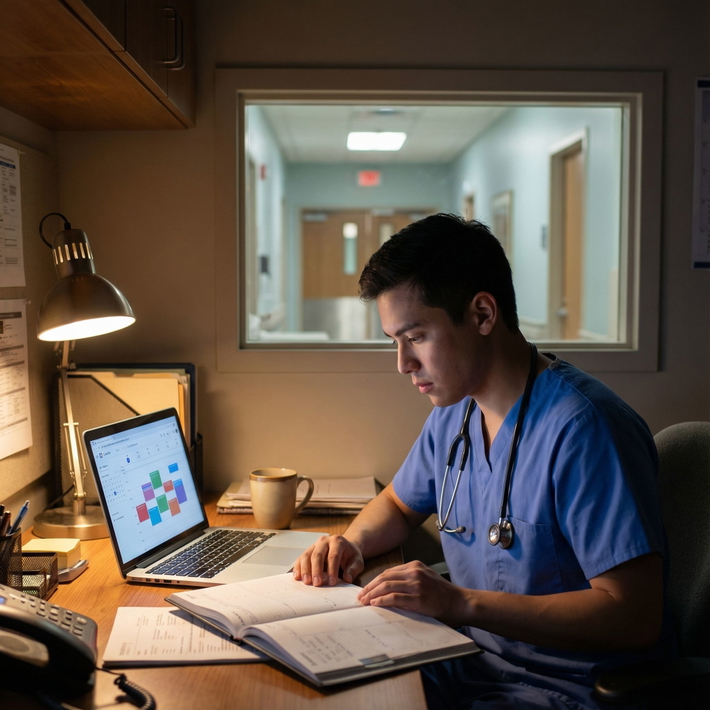
You're on nights. The ED is backed up, one patient is circling the drain, another needs pain meds re-evaluated, your pager won't shut up, and somebody says, "You can eat later." So you do the dumb thing. You skip the 2 a.m. snack just this once.
Then around 3:15, the slide begins.
You reread the same sign-out line twice. Your hands feel a little off. You're more annoyed than the situation deserves. A straightforward order takes too long. You think, I just need more coffee. That's the trap. Hunger gets treated like a personality flaw, something to override, something to be tougher than. It isn't weakness. It's low fuel.
I've seen residents act like their bodies are optional equipment. Big mistake. Your brain at 2 a.m. is already fighting circadian biology. If you strip out basic fuel on top of that, you are stacking impairment on impairment. Quietly. And that's why this matters.
Skipping the 2 a.m. snack sounds tiny. It isn't. It can turn into slower reaction time, shakier judgment, irritability, sloppy communication, and the dangerous lie that caffeine can fully replace food. It can't. Coffee can make you feel more awake while you're still underfueled and thinking worse than you realize.
That's the real warning here: the missed snack is not just about hunger. It's a patient safety issue waiting to wear a harmless disguise.
Why the Crash Happens: What Your Brain and Body Do When Fuel Runs Out
Night shift is already a physiologic ambush. Don't make it worse.
By 2 a.m. to 4 a.m., two things are hitting you at once:
Circadian sleep pressure is rising
- Your body expects darkness, sleep, and lower alertness.
- Attention, working memory, and reaction time naturally dip.
Fuel availability can drop
- If your last real meal was hours ago, blood glucose support gets shakier.
- Your brain does not love that. It gets less efficient fast.
Put bluntly: at night, you have less margin for error. So the "I can push through" mindset is not admirable. It's reckless when repeated.
The part people miss is that hunger rarely announces itself politely on shift. It doesn't always feel like a growling stomach. It often shows up wearing a fake mustache:
- fatigue
- anxiety
- brain fog
- a short temper
- sudden pessimism
- feeling weirdly overwhelmed by simple tasks
I've watched people blame themselves for being "off" when the real issue was that they hadn't eaten since evening sign-out. They'll drink another coffee, maybe chug water, maybe grab candy, and then wonder why they still feel terrible 30 minutes later.
Don't miss the red flags. If you notice these, your body is not making a suggestion:
- trembling or shakiness
- lightheadedness
- headache
- nausea
- sudden irritability
- trouble focusing
- feeling hot, sweaty, or vaguely unwell
- making simple mistakes you normally wouldn't
That is not the moment to be proud of your endurance. That is the moment to eat.
The Most Common Mistakes Night Shift Workers Make
Here's where people get themselves into trouble. Same errors, over and over.
1) Waiting until you're "really hungry"
This is probably the most common mistake. By the time you feel ravenous, shaky, or nauseated, you're already behind. The better move is early intervention. Eat when the first concentration dip shows up. Not when your body is sending flares into the sky.
2) Using sugar or caffeine alone and pretending that counts
An energy drink and a candy bar is not a strategy. It's a setup.
Yes, sugar can give you a quick bump. Yes, caffeine can sharpen the edges briefly. But if that's all you use, the improvement is often short-lived and the rebound can be uglier than the original slump. Worse, caffeine can create false confidence. You feel more alert than you actually are. Bad combination.
3) Eating a giant heavy meal at 2 a.m.
This one backfires differently. A huge burger-and-fries meal or greasy takeout can leave you sleepy, bloated, refluxy, and miserable. You wanted rescue. You got a food coma.
At 2 a.m., the goal is stability, not Thanksgiving.
4) Thinking hydration fixes everything
Hydration matters. Absolutely. But water is not calories, and it is not fuel. If you're hungry and underfueled, no amount of water is going to magically restore concentration. Don't confuse one good habit with another necessary one.
5) Deciding repeated crashes are "just nights"
No. Frequent 2 a.m. crashes are not a badge of honor and not something to normalize. They're feedback. Your routine is failing you. Fix it.
The Safer 2 a.m. Snack Plan: What to Reach For Instead
Here's the standard I want you to use: small, balanced, easy to tolerate, easy to eat fast.
The safest 2 a.m. snack usually combines:
- protein
- fiber and/or complex carbohydrate
- a portion small enough not to weigh you down
That combination helps steady energy better than sugar alone and is less likely to leave you crashing 45 minutes later.
Good options:
- yogurt and a small handful of nuts
- peanut butter on whole-grain crackers
- cheese and fruit
- hummus with carrots, cucumbers, or pita
- a simple protein bar with lower added sugar
- cottage cheese and berries
- half a turkey sandwich on whole-grain bread
- oatmeal with nuts or seeds, if you tolerate it well
These aren't glamorous. They're effective. That matters more.
What portion size should look like
Don't overcomplicate this. You want enough to take the edge off and stabilize you, not enough to make you sluggish.
Think:
- one yogurt, not a full buffet
- one serving of crackers with peanut butter, not half the sleeve
- one modest snack box, not a heavy cafeteria tray
If you regularly get sleepy after eating, your 2 a.m. portions are probably too large or too greasy.
Timing matters more than people admit
The best time to snack is before depletion. That means:
- when you first notice hunger
- when your focus starts slipping
- before a predictable busy stretch
- before a long admission, transport, or cross-cover wave if you know one is coming
Don't wait for the crash and then act shocked that you crashed.
Special situations need smarter choices
This isn't one-size-fits-all. Be careful here:
- Diabetes: your snack plan may need tighter carbohydrate planning and more deliberate timing.
- Reflux: avoid greasy, spicy, or very acidic foods overnight.
- Nausea or GI sensitivity: bland, smaller snacks may work better than dense protein-heavy choices.
- Pregnancy: long gaps without eating can hit especially hard; keep reliable options within reach.
- Shift-work stomach issues: experiment ahead of time, not during a brutal call night.
If you have a medical condition affecting blood sugar, GI function, or pregnancy nutrition, use individualized guidance from your clinician or dietitian. Don't copy someone else's snack plan just because it worked for them.
Build the No-Crash Night Shift Routine Before the Shift Starts
This is where you prevent the mistake instead of recovering from it badly.
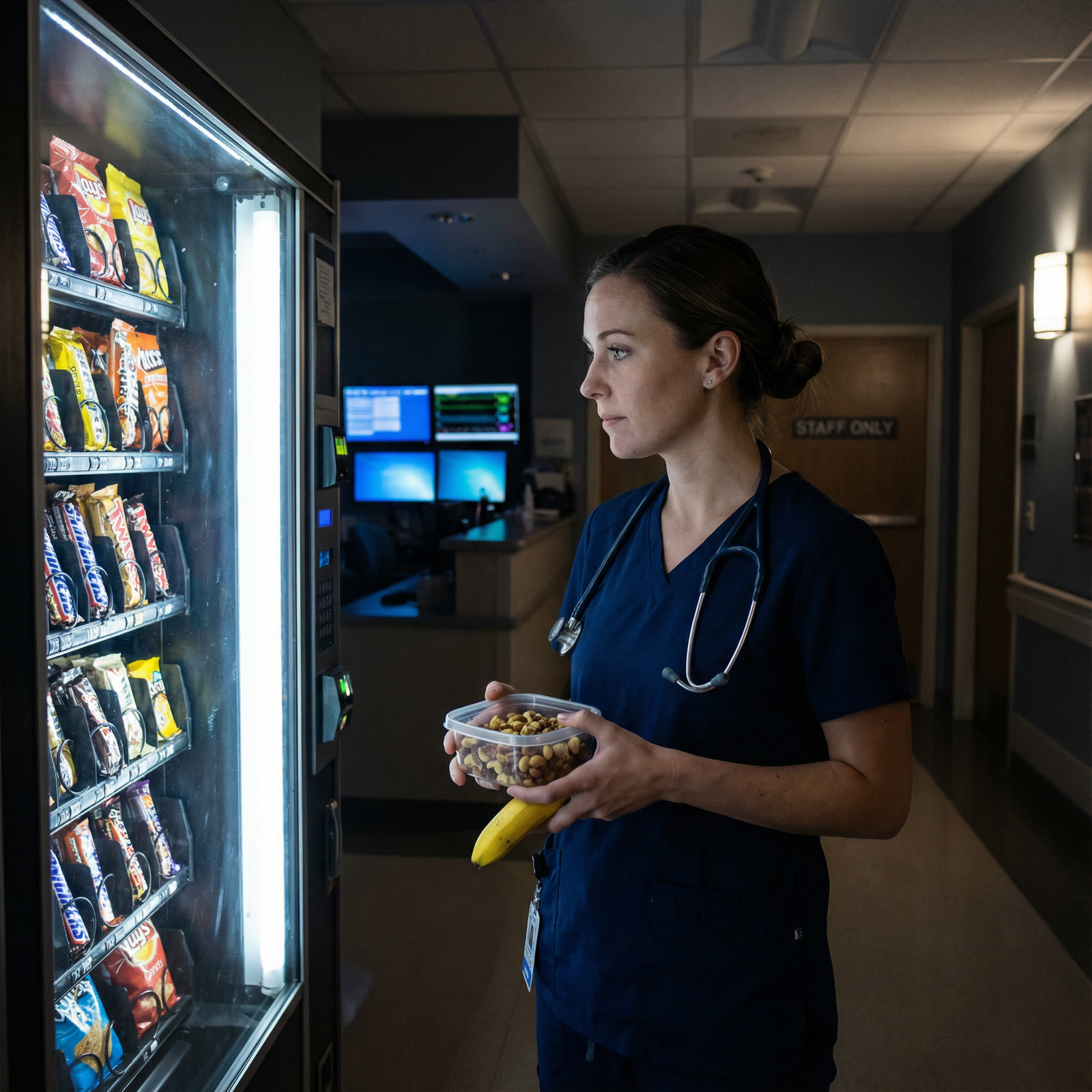
Treat the snack like a safety item. Same category as your badge, stethoscope, charger, and sign-out sheet. If you "plan to figure it out later," later will arrive at 2:20 a.m. with no cafeteria options, two pages pending, and a vending machine full of nonsense.
Do this before the shift:
Pack the snack
- Bring one primary option and one backup.
- Choose foods you know you'll actually eat, not fantasy-health foods you'll ignore.
Label it mentally as shift equipment
- Not a treat.
- Not optional.
- Equipment.
Pair it with hydration
- Bring water.
- But remember: water supports the plan; it does not replace the calories.
Use cues
- Set a phone reminder.
- Tie snack timing to a predictable lull.
- Keep it visible so it doesn't disappear into the black hole of your bag.
Drop the all-or-nothing mindset
- No ideal snack available? Fine.
- Choose the safest available option rather than skipping entirely.
- Cheese sticks, nuts, plain yogurt, crackers, a banana, half a sandwich, good enough beats perfect and absent.
This is what experienced night workers learn, usually after a few miserable shifts: preparation prevents stupid suffering. And some suffering really is stupid. The 2 a.m. nutrition crash is one of them.

If you work nights, protect your brain on purpose. Don't wait until you're shaky, snappy, and rereading orders. Don't pretend coffee is dinner. Don't turn a preventable fuel problem into a judgment problem.
The reminder is simple because it needs to be: the 2 a.m. snack is not optional if skipping it makes you worse. And for a lot of residents, it does. Pack it. Eat it early. Keep yourself out of the avoidable crash.