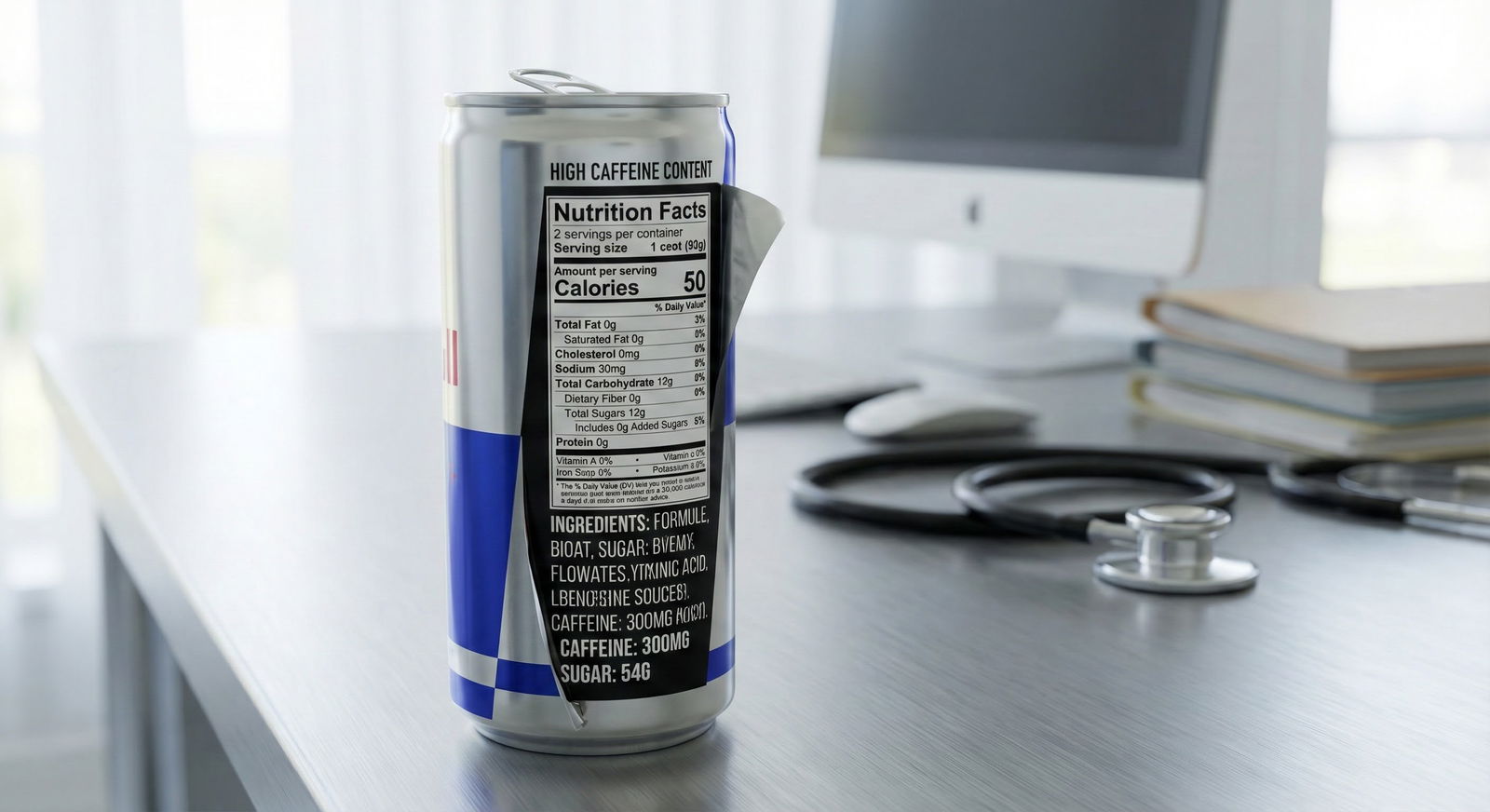
The way most residents use caffeine on nights is statistically optimized for one thing: feeling awake, not performing well.
You can do better than that.
The core problem: alertness ≠ performance
The data are blunt. Subjective alertness and objective performance separate under sleep deprivation.
In controlled night-shift and sleep restriction studies:
- People feel “fine” at blood caffeine levels where psychomotor vigilance test (PVT) lapses still double or triple.
- Reaction time, working memory, and error rates degrade long before you feel truly “sleepy”.
The goal is not “feeling normal.” The goal is minimizing actual mistakes on real patients at 03:30.
Let me anchor this with numbers.
In shift‑work and sleep‑loss literature:
- One typical hospital night (no consolidated sleep beforehand) produces impairment on attention tasks similar to a blood alcohol level around 0.05–0.08% for many subjects.
- Caffeine at 2–4 mg/kg (~150–300 mg for a 75‑kg resident) cuts lapses by ~40–70% in the next 3–4 hours, but:
- Residual impairment vs a fully rested baseline is still substantial.
- Poor timing leads to more errors in the second half of the night and destroys post‑call sleep.
So the question is not “Should I drink coffee on nights?” It is “When, how much, and how often to get the performance gain where you actually need it?”
Pharmacology first: half-life, onset, and stacking
If you do not internalize the kinetics, you cannot optimize the schedule. Period.
Key numbers
For a healthy adult:
- Time to peak plasma level: ~30–60 minutes after a dose
- Onset of noticeable effect: ~15–30 minutes
- Elimination half‑life: ~4–6 hours on average
Now adjust those numbers for your world:
- Combined oral contraceptives: half‑life ~7–8 hours
- Pregnancy, liver disease, some SSRIs and fluoroquinolones: slower clearance
- Smoking: faster clearance (can shorten half‑life down closer to ~3–4 hours)
What this means:
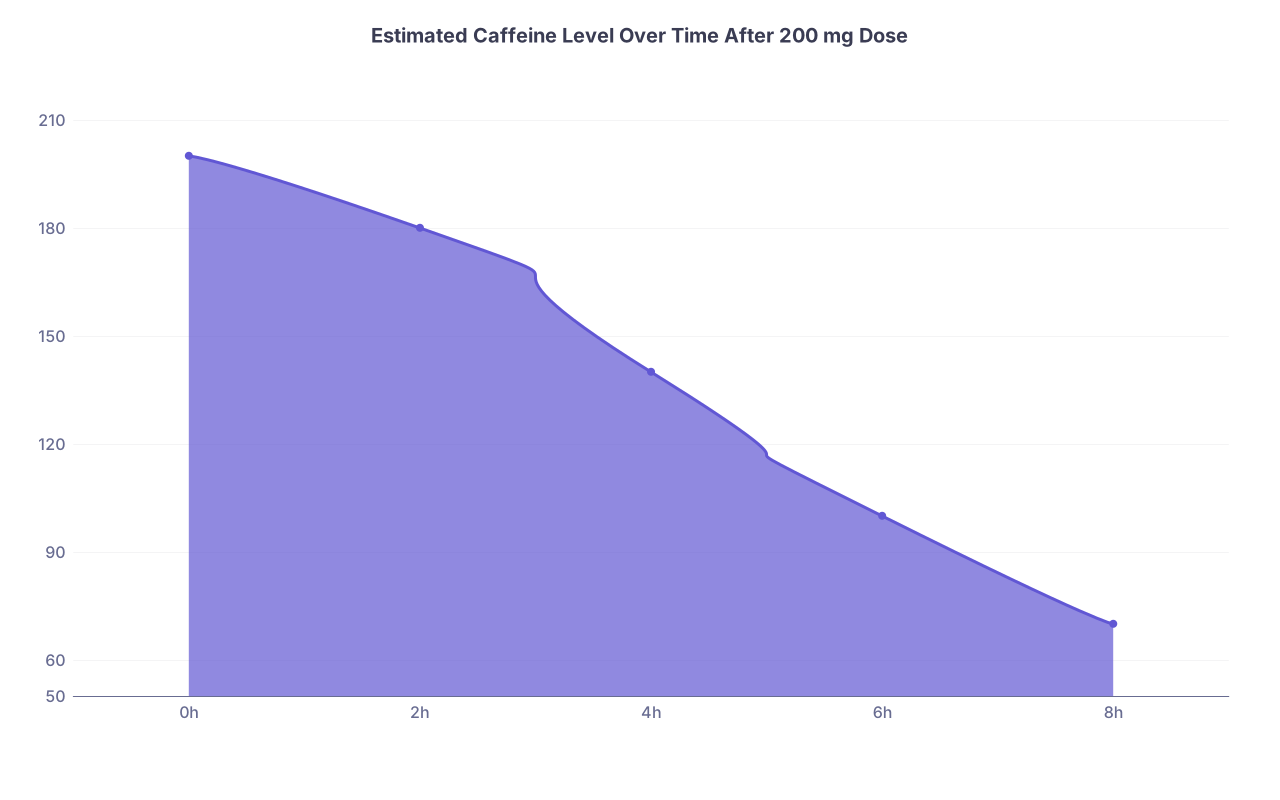
- A 200‑mg dose at 23:00 still leaves:
- ~100 mg around 03:00–05:00
- ~50 mg around 07:00–09:00
- That 50 mg is enough to fragment and shorten post‑call sleep, especially once circadian pressure to sleep is already misaligned.
You are not just deciding “Do I drink coffee?” You are programming your blood caffeine levels for the next 8–10 hours.
| Category | Value |
|---|---|
| 0h | 200 |
| 2h | 180 |
| 4h | 140 |
| 6h | 100 |
| 8h | 70 |
This is a simplified curve, but directionally accurate. Most residents keep stacking on top of this.
Dosing: how much is actually useful?
The data across military, aviation, and shift‑work studies converge on similar numbers.
For adults without major comorbidities:
- 1–2 mg/kg: mild benefit, especially if caffeine‑naïve
- 2–3 mg/kg: clear improvement in vigilance, reaction time, and sustained attention
- 4–6 mg/kg: often maximal performance benefit, but higher adverse effects and diminishing returns
6 mg/kg: more anxiety, tachycardia, GI upset, and sleep disruption with minimal extra performance gain for most people
Translate that into resident‑size doses (assume 75 kg):
- 150 mg (≈ 1 double espresso or medium coffee): noticeable, but modest
- 200–250 mg: often the “sweet spot” per dose
- 400 mg at once: strong effect, but more side effects; often unnecessary if you time it correctly
| Drink / Item | Approx Caffeine (mg) |
|---|---|
| Single espresso shot (30 ml) | 60–80 |
| 8 oz brewed coffee | 80–120 |
| 16 oz brewed coffee | 150–240 |
| 12 oz caffeinated soda | 30–50 |
| Standard energy drink (250 ml) | 80–100 |
Residents consistently underestimate these numbers. The “just one big mug” in the workroom is often 14–16 oz with 180–220 mg.
Ceiling: where the data say you should stop
Most guidelines land on a daily maximum of 400 mg caffeine for healthy adults. That number is conservative and designed for a general population, not sleep‑deprived physicians.
Real‑world resident pattern I see:
- 2–3 cups before or during the shift (300–450 mg)
- Plus soda or tea with food
- Plus “emergency” energy drink on the drive home twice a week
Weekly total and pattern matter more than one night, but if you are crossing 400–500 mg on a regular basis for nights, performance often drops rather than improves because:
- Baseline sleep debt rises
- Anxiety and tremor increase on high‑stakes tasks
- Post‑call recovery sleep gets wrecked
Timing: where residents usually get it wrong
Most residents follow the “sip constantly” model. It feels safer. It is not.
What the data suggest works better for cognitive performance and recovery:
- Front‑load moderate doses with clear cut‑off.
- Avoid “drip infusion” of small doses all night.
- Protect the pre‑sleep window aggressively.
Core timing constraints
Let’s define a typical 12‑hour night shift: 19:00–07:00.
Peak error risk without caffeine in sleep‑restricted people often clusters around 02:00–06:00. Reaction times, PVT lapses, and microsleeps spike there.
You want:
- Enough caffeine onboard to cover 01:00–05:00
- Minimal caffeine still present after 09:00–10:00 when you try to sleep
Given a ~5‑hour half‑life, back‑calculate from your target sleep time.
Say you aim to be in bed at 09:00:
- Last meaningful dose should be no later than 03:00, and ideally ~01:00–02:00.
- That still leaves ~25–35% of peak level at 09:00, which is tolerable for many but not all.
Residents who cannot fall asleep until 11:00 or later often have late‑night caffeine as the main driver, not “just being wired from the shift.”
A data‑driven caffeine schedule for nights
Let me give you a concrete template. This is not theoretical; it is synthesized from controlled studies plus what actually works for residents who have experimented systematically.
Assumptions:
- 75‑kg resident
- Shift: 19:00–07:00
- Target post‑call sleep: 08:30–09:00 start
- Some baseline caffeine tolerance (i.e., you drink coffee most days)
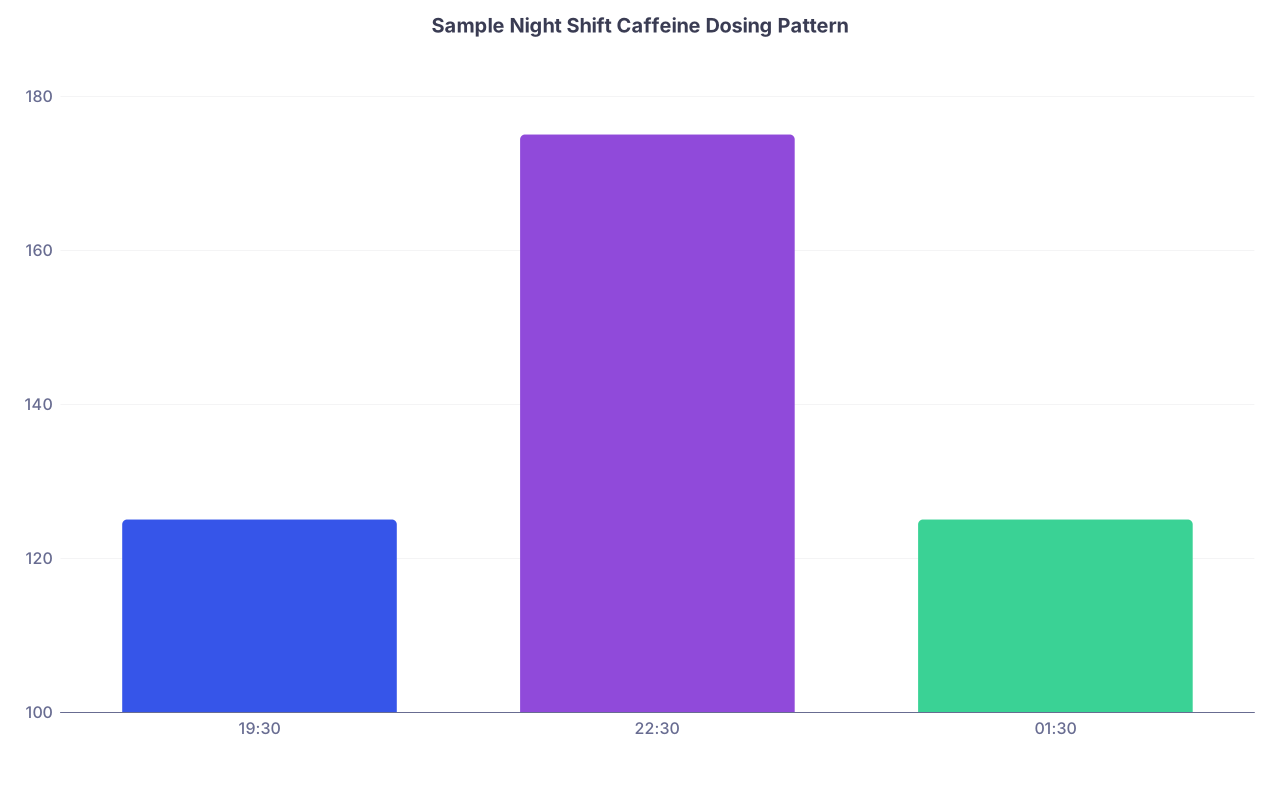
Recommended pattern (per shift)
19:00–19:30 (start of shift):
- 100–150 mg caffeine (small coffee or strong tea)
- Goal: cover early hours, avoid big initial spike
22:00–23:00:
- 150–200 mg dose
- This is your main performance block for the early circadian low
01:00–02:00:
- 100–150 mg only if you objectively feel sleepy or start noticing more slips, not automatically
- If you feel wired but “slow,” skip this dose and hydrate instead
After 02:00:
- No more caffeine
- Use light exposure, movement, brief power‑breaks as counter‑measures
Total caffeine: typically 250–400 mg, depending on whether you take the third dose.
| Category | Value |
|---|---|
| 19:30 | 125 |
| 22:30 | 175 |
| 01:30 | 125 |
If your shift is 21:00–09:00, slide everything 2 hours later but keep the “last dose ≥6 hours before intended sleep” rule.
What not to do (but everyone does)
Common anti‑patterns:
- Slamming 250–300 mg at 03:00: you feel less miserable, but your 09:30 sleep is now riddled with awakenings.
- Sipping coffee continuously from midnight to 06:00: you never let levels drop, then wonder why your “sleep” is 4–5 hours of light dozing.
- Taking a 200‑mg “stay awake” drink on the drive home at 07:30: this might prevent you from crashing your car, but it guarantees >50% chance of torpedoing your post‑call sleep.
Car safety matters. But if you regularly need caffeine to drive home, the problem is upstream—your schedule and night strategy—not the commute.
Match caffeine to your task profile
Not every night is the same. The data show that caffeine’s benefits are strongest on:
- Simple reaction tasks
- Sustained attention / vigilance
- Basic logical reasoning
Benefits are smaller on:
- Complex multi‑step decision making
- Creative problem solving
- Tasks that need fine motor precision when anxiety is high
In residency language:
- Caffeine is better at keeping you from missing a monitor alarm than at helping you handle a subtle diagnostic dilemma at 05:00.
- It keeps you from zoning out during notes; it does not turn you into a better proceduralist if your hands are already shaking.
So think about your usual task load during nights:
- ICU cross‑cover with lots of potential rapid‑response calls → prioritize stable alertness from midnight to 05:00, moderate doses.
- Floor cross‑cover with long periods of low activity → planned dosing plus movement and bright light is critical; boredom amplifies sleepiness.
- ED nights with constant stimulation → you may need less total caffeine than you think, because arousal from workload does some of the job.
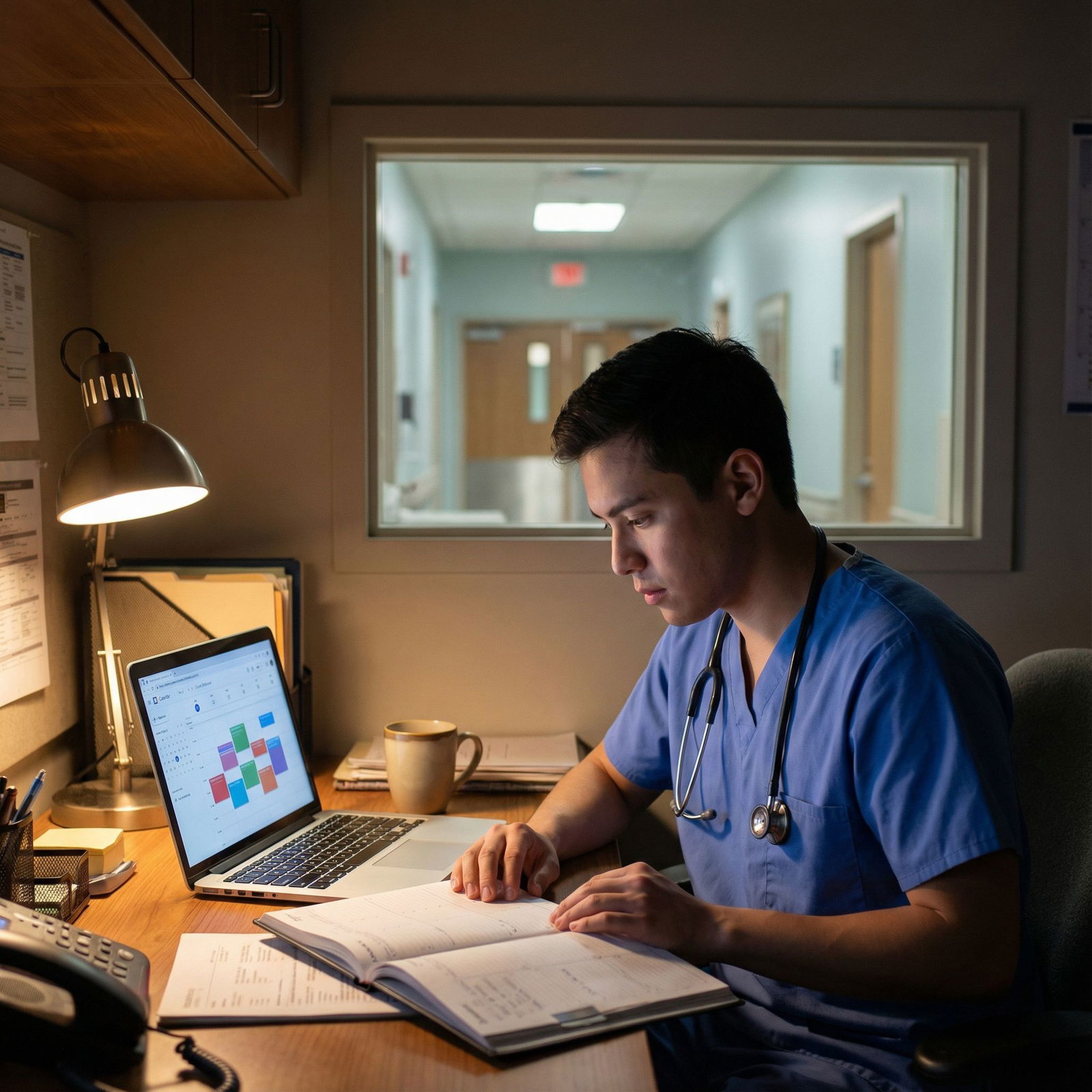
napping + caffeine: the “caffeine nap” tactic
Data here are surprisingly consistent.
A “caffeine nap,” where you drink caffeine then immediately nap 15–20 minutes, can outperform either strategy alone for short‑term vigilance.
Mechanism:
- Caffeine takes ~20–30 minutes to peak.
- Brief nap reduces adenosine load and sleepiness.
- You wake up as caffeine kicks in, with greater net benefit.
In practice during residency:
- If your unit allows it and coverage is safe, a 15–20 minute nap around 00:00–01:00 or 02:00–03:00 with ~100 mg caffeine right beforehand can give:
- Lower subjective sleepiness
- Better PVT performance for 1–3 hours afterwards
Do not stretch the nap to 45–60 minutes. That drags you into deeper sleep and worsens sleep inertia when you wake up.
Protecting post‑call sleep: the non‑negotiable constraint
Performance on subsequent shifts depends more on recovery sleep than on how aggressive you were with caffeine on one night.
If you block deep, consolidated post‑call sleep, PVT and executive function measures keep sliding down night after night, even if you keep increasing caffeine. That is the hamster wheel pattern many PGY‑1s fall into.
Data show:
- Caffeine within 6 hours of intended sleep can cut total sleep by 60–90 minutes and fragment what remains.
- Sleep architecture skews toward lighter stages, reducing recovery value.
So your caffeine cut‑off is not about willpower or “discipline.” It is a direct performance optimization for the next 24–72 hours.

| Step | Description |
|---|---|
| Step 1 | Start Night Shift |
| Step 2 | First Caffeine Dose Early Shift |
| Step 3 | Second Dose Before Midnight |
| Step 4 | Small Third Dose |
| Step 5 | No More Caffeine |
| Step 6 | No Caffeine After Cutoff |
| Step 7 | End of Shift |
| Step 8 | Drive Home |
| Step 9 | Post Call Sleep |
| Step 10 | Sleepiness 01-02? |
If you have chronic insomnia even with a sane caffeine schedule, that is a separate problem. Data‑driven fix then involves light exposure, timing of meals, and possible behavioral sleep strategies, not just coffee tweaks.
Personalization: adjusting by body size, tolerance, and schedule
Numbers above are averages. You should still think like a scientist about your own pattern.
Useful tracking metrics
Do a 2–3 week experiment where you log:
- Total mg caffeine per night (estimate using a simple chart like the table above)
- Timing of each dose
- Time you lie down to sleep post‑call
- Sleep latency (rough estimate)
- Number of awakenings you recall
- Subjective 0–10 sleep quality
- One objective sign of performance: number of times you re‑read notes, almost missed pages, asked co‑residents to double‑check something you usually would not
You are looking for systematic patterns:
- If any caffeine after 02:00 pushes sleep onset past 10:30, you move your cut‑off earlier.
- If skipping the 01:00–02:00 dose leads to obvious lapses around 04:00–05:00, you keep that small dose but cut back earlier instead.
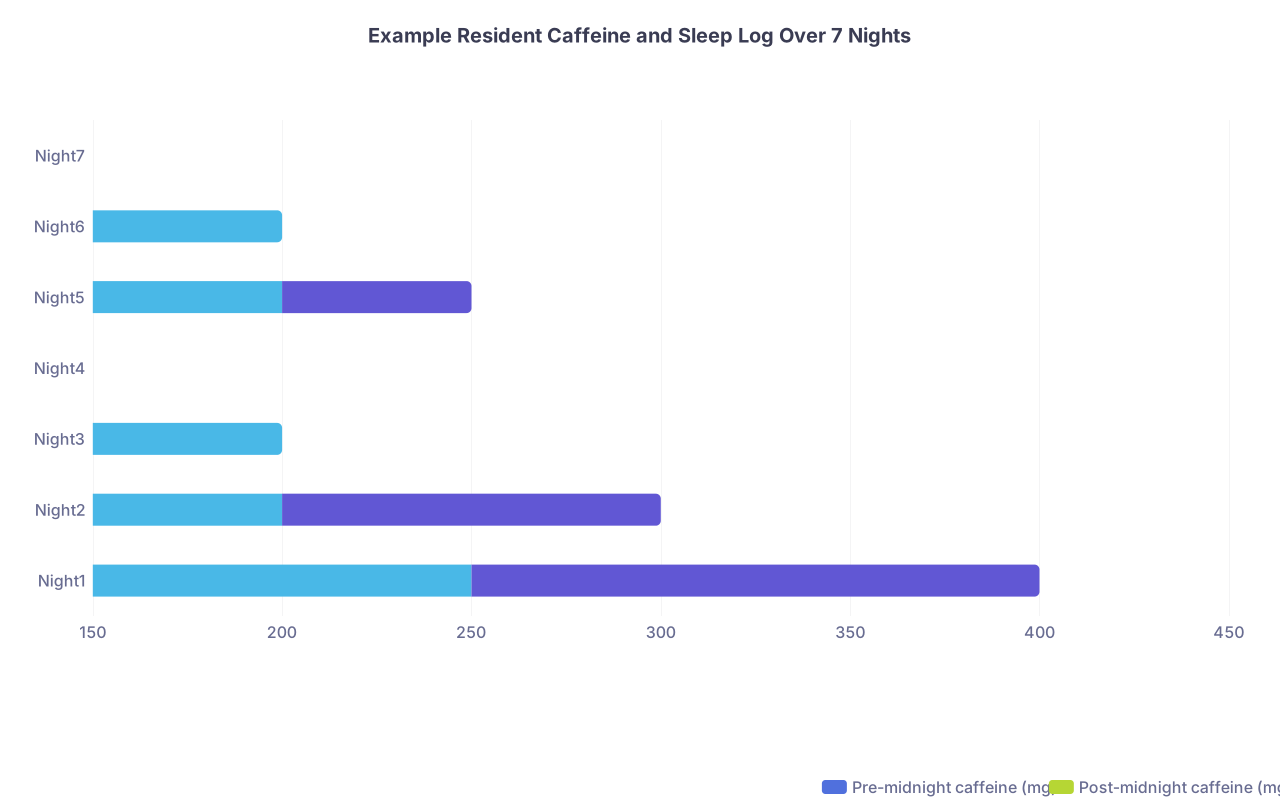
| Category | Pre-midnight caffeine (mg) | Post-midnight caffeine (mg) |
|---|---|---|
| Night1 | 250 | 150 |
| Night2 | 200 | 100 |
| Night3 | 200 | 0 |
| Night4 | 150 | 0 |
| Night5 | 200 | 50 |
| Night6 | 200 | 0 |
| Night7 | 150 | 0 |
A pattern like high post‑midnight caffeine clustering with poor sleep scores is extremely common when you actually plot it.
Body size and sensitivity
- Lightweight resident (50–60 kg) with low usual caffeine intake:
- Single 100–150 mg dose may give as much benefit as 200–250 mg does to a heavier peer.
- Heavier resident (90–100 kg) with high daily caffeine baseline:
- You may need 200–250 mg for the same effect, but your half‑life will still be similar; volume of distribution does not fully save you from late‑night dosing.
Do not copy‑paste someone else’s dosing exactly. Borrow the structure, adjust the amounts.
Interactions, side effects, and red flags
A few data points residents tend to shrug off until they are the outliers:
- Resting tachycardia >100–110 consistently on nights with caffeine: you are probably overdosing for your physiology.
- Marked hand tremor affecting procedures: dial back; beyond a threshold, more caffeine decreases your procedural safety.
- Panic‑like symptoms or intense anxiety only on nights: check how much caffeine you actually consume; I have seen people at 600–800 mg “by accident.”
Medication interactions:
- CYP1A2 inhibitors (fluvoxamine, ciprofloxacin, some antipsychotics) can dramatically slow caffeine clearance. Same dose, much longer tail.
- Oral contraceptives and pregnancy significantly extend half‑life. A 01:00 dose may still be very active at 09:00–10:00.
If you fall in those groups and use caffeine heavily, your personal cut‑off should shift earlier (23:00–00:00), not later.
Pulling it together: practical template
Let me condense this into something you can actually apply next block.
- Cap nightly caffeine at ~300–400 mg for most residents.
- Use 2–3 discrete doses, not constant sipping.
- Position the last dose at least 6 hours before target sleep.
- Use objective cues (repeated rereads, near‑misses, heavy eyelids) to decide on a small 01:00–02:00 booster.
- Log for 2 weeks and adjust.
You are not going to feel perfect on nights. The data make that clear. But you can trade vibes for performance: slightly less “wired and awake,” significantly fewer cognitive lapses at 04:00, and a far better shot at real recovery sleep post‑call.
That trade is worth making.