Is It Safe to Drive Home After a 28-Hour Call? What Research Says
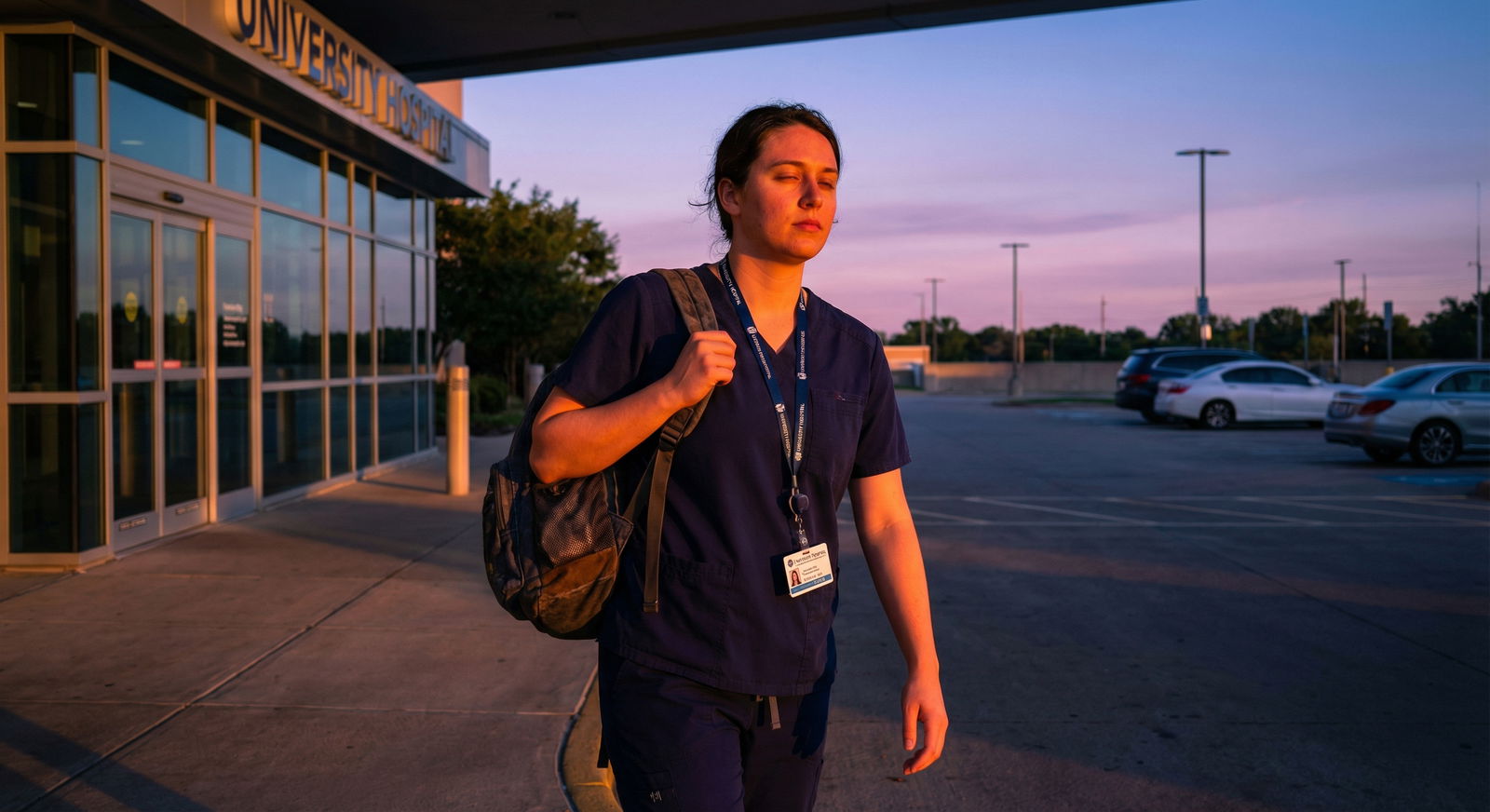
You stagger out of the hospital after a 28‑hour call, the sky is that ugly blue‑gray only post‑call people notice, and the question hits you: Am I actually safe to drive home right now, or am I basically a drunk person with a badge?
Let me ruin the comforting myth quickly: driving home post‑call is not “basically safe if you’re careful.” The best data we have says you are impaired, your crash risk is higher, and your judgment about that impairment is terrible.
But it’s not as simple as “never drive post‑call” either. The reality is more nuanced, and sometimes the alternatives are also risky or unrealistic. So let’s pull this out of the realm of vibes and culture and into what the evidence actually shows.
What the Data Actually Shows About Post‑Call Driving
Everyone has heard the story: the intern who fell asleep at the wheel on the way home from the MICU. Maybe it is told like a cautionary tale, maybe half as a badge of honor. That’s culture. Let’s look at numbers.
Crash risk after extended shifts
The cleanest data we have comes from Landrigan and colleagues and related Harvard Work Hours studies on residents.
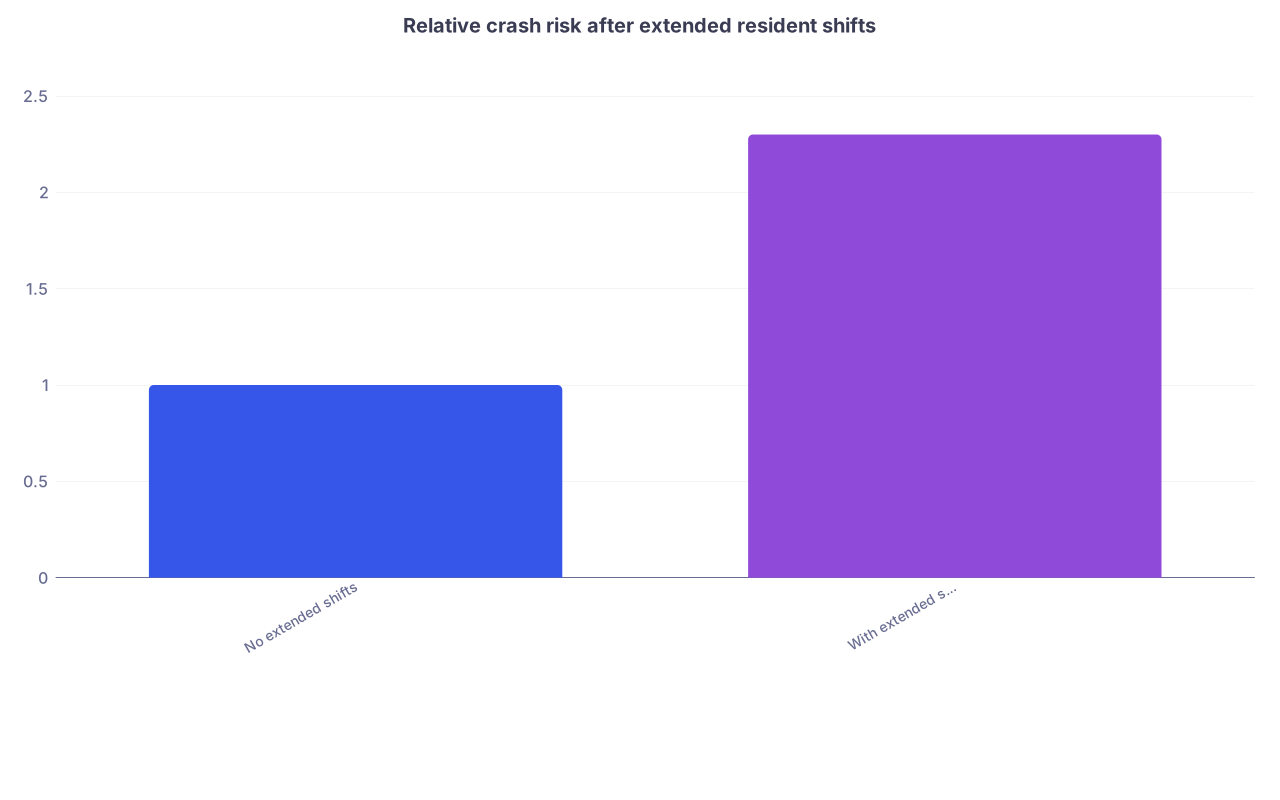
They found that compared to months with no extended shifts (24+ hour calls), months where interns had extended shifts were associated with a dramatically higher risk of motor vehicle crashes leaving the hospital.
More specifically:
| Category | Value |
|---|---|
| No extended shifts | 1 |
| With extended shifts | 2.3 |
This 2.3 isn’t miles per hour. It’s a ratio. Residents were more than twice as likely to have a crash after those extended shifts.
And that’s not just fender‑benders. The same line of research found increased rates of near‑misses, too. Which means there are a lot of people who only barely made it home.
Sleep loss vs alcohol – how bad is it, really?
There’s another myth floating around: “Being awake for 24 hours is like being legally drunk.”
Not totally wrong. But also not the full story.
Experimental lab work on healthy adults (not residents) has repeatedly shown:
- Being awake for about 17 hours impairs psychomotor performance similarly to a blood alcohol concentration (BAC) of 0.05%.
- Around 24 hours awake maps roughly to a BAC of 0.08–0.10%, which is at or above the legal limit in most places.
The catch? That’s under controlled conditions with no adrenaline, no patient notes, no overnight codes. Residents are usually adding fragmented sleep, circadian disruption, emotional stress, and often chronic partial sleep deprivation from the rest of the week.
So if you want the blunt comparison: after a full 24‑28‑hour call, your reaction time lives in the same neighborhood as a drunk driver. Maybe not as consistently awful, but clearly not “fine if I drink some coffee and open the window.”
And yes, caffeine helps with vigilance for short tasks. It does not restore complex judgment, sustained attention, or microsleep risk to baseline.
Why Residents Are So Bad at Judging Their Own Impairment
Here’s the more dangerous layer: you’re not just impaired. You’re confidently impaired.
I’ve watched exhausted residents say all the classic lines in the workroom around 9 a.m.:
- “I feel okay actually, I slept like an hour or two.”
- “I live 15 minutes away, it’s fine.”
- “I’ll just blast music and roll down the windows.”
This is exactly what drunk people say. And the psychology is disturbingly similar.
Studies on sleep deprivation and subjective alertness show:
| Condition | Objective performance | Self‑rated alertness |
|---|---|---|
| Well‑rested | Baseline | Baseline |
| 24 hours awake | Markedly impaired | Mild–moderate tired |
| Chronic short sleep (5–6 h) | Impaired | “Used to it” |
People underestimate how impaired they are, especially when they’re chronically sleep‑restricted. And residents almost universally are.
So your sense that “I feel okay” after call is, bluntly, unreliable. The systems that would tell you you’re unsafe are the same ones that are currently offline.
That’s not a character flaw. It’s physiology.
The Myth of the “Short, Familiar Drive Is Safe”
Another very popular story: “I only live 8 minutes away. It’s just a straight shot. That’s safer than trying to nap here.”
Fiction.
Crash risk isn’t just about miles; it’s about exposure time while impaired plus monotony. Short, familiar routes actually increase the chances your brain runs on autopilot. Autopilot is where microsleeps live.
Microsleeps are those 1–10 second lapses where you completely lose awareness. At 40 mph, a 4‑second microsleep is over 230 feet of blind travel. On a quiet side street with parked cars and a kid’s bike half in the road? That’s not a minor detail.
And if you think “I’d notice if I were about to fall asleep,” that’s also wrong. Microsleeps are often not preceded by a felt sense of “I’m drifting off now.” They just happen.
Driving “a short distance” in a state where your brain is prone to involuntary micro‑shutdowns is still driving in a state where you shouldn’t be behind the wheel at all.
But What About the Alternatives? Are They Actually Better?
This is where the conversation usually collapses into cynicism: “Okay, so I shouldn’t drive, but I have to get home somehow. The hospital isn’t paying for Ubers. What do you want me to do, sleep under my desk?”
Here’s where we stop pretending everything is equally bad and look at relative risk.
Option 1: Immediate drive home post‑call
Risks:
- Elevated crash risk (2–3x baseline, based on extended‑shift data).
- Microsleeps, delayed reaction, poor decision‑making.
- Impaired situational awareness for unexpected events (pedestrians, sudden braking).
Upside:
- You get home fast. That’s basically it.
Option 2: Nap in the hospital, then drive
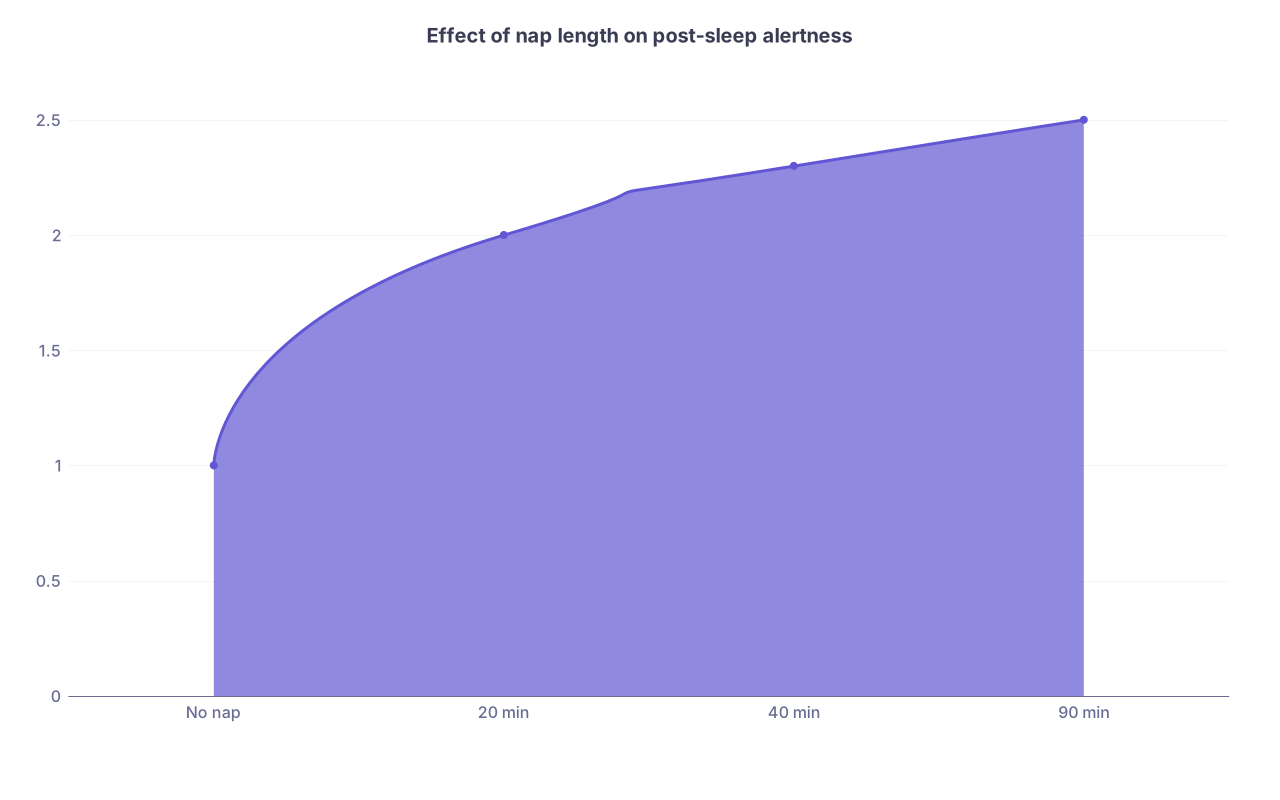
There’s actually some data on this. Brief “prophylactic” and “recovery” naps have been shown to improve alertness and performance, especially 20–90 minute naps.
| Category | Value |
|---|---|
| No nap | 1 |
| 20 min | 2 |
| 40 min | 2.3 |
| 90 min | 2.5 |
(Think of these numbers as relative alertness – higher is better.)
Naps do cause sleep inertia—that groggy, concrete‑head feeling when you first wake up. Inertia is worst right after waking and generally fades within 15–30 minutes.
So if you choose this path and immediately jump into your car the second your eyes open, you’ve just traded one problem (prolonged wakefulness) for another (peak sleep inertia). That is not smart.
But if you:
- Nap 40–90 minutes in a dark, quiet place
- Give yourself 20–30 minutes after waking (coffee, water, light, walking)
- Then drive
…your risk is probably lower than the immediate post‑call drive. Is it perfectly safe? No. But we are not chasing perfect. We’re decreasing the odds you end up as someone else’s cautionary tale.
Option 3: Rideshare, taxi, or carpool
This is the option residents like to dismiss as “unrealistic.” Sometimes that’s true. But often it’s just habit and culture talking.
Objective pros:
- Removes the single biggest risk factor: you being the one operating the vehicle.
- Crash risk becomes that of the driver, who (in theory) is not post‑call and half‑awake.
Cons:
- Cost.
- Logistics at odd hours.
- Your car is stuck at the hospital if you didn’t plan ahead.
If your hospital is in an urban area with reliable rideshare and you just finished a brutal 28‑hour trauma or MICU call, and you’re 25 minutes away on a freeway? I’m going to be blunt: paying for an Uber is safer than treating I‑95 like your personal reaction‑time experiment.
If money is tight (and for residents, it usually is), pre‑committing with a co‑resident to carpool post‑call for certain rotations can help distribute the burden. It’s not perfect. It’s better than nothing.
The Culture Problem: “We All Did It and Survived”
The most toxic myth here isn’t that post‑call driving is safe. It’s that it’s normal and therefore acceptable.
I’ve heard attendings say, with a half‑laugh, “I used to drive an hour home after 36‑hour calls in residency. You’ll be fine.” Survivorship bias in one sentence.
Thousands of physicians did this for decades and didn’t crash. Some did and died. Some killed other people. We rarely hear those stories with names, but they’re in the data.
Here’s the pattern:
- We underestimate risk when it’s culturally normalized.
- We overestimate our own driving skill and resilience.
- We treat bad outcomes as “random tragedies” instead of predictable side effects of a bad system.
There’s an ugly irony: the same profession that lectures patients about not driving on benzodiazepines or after a few drinks is weirdly comfortable putting heavily sleep‑deprived residents in cars every single week.
Safe? No. Culturally convenient? Yes.
What You Can Actually Do – System vs Individual
You’re probably not going to change your hospital’s call structure before next month’s rotation. But there are concrete things you can do that go beyond wishful thinking.
1. Treat 24+ hour wakefulness like a legit impairment, not “just being tired”
This means you pre‑plan, the same way someone plans a ride if they’ll be drinking.
- Before a 24–28‑hour call block, decide how you’ll get home for at least the worst calls (ICU, ED, trauma).
- Pre‑load a rideshare budget into your head: “I will spend up to $X/month on post‑call rides and not argue with myself about it at 8 a.m.”
Is this unfair? Yes. It should be subsidized by hospitals. But while you’re waiting for that policy to appear, you’re still the one at the steering wheel.
2. Use naps strategically, not as a badge of toughness
If you’re forced into these extended shifts:
- Short on‑call naps (even 20–30 minutes at 3 a.m.) reduce later impairment, though they’re not magic.
- A 40–90‑minute post‑call nap before driving is better than bulling through delirium to get home as fast as possible.
- Always give yourself a “buffer” after waking before you get in the car.

| Step | Description |
|---|---|
| Step 1 | End 24-28 hour call |
| Step 2 | Use rideshare or carpool |
| Step 3 | Nap then 20-30 min wake-up buffer |
| Step 4 | Very short drive only if unavoidable |
| Step 5 | Drive home with caution |
| Step 6 | Able to get safe ride? |
| Step 7 | Can you nap 40-90 min onsite? |
3. Know your personal red flags where you should not drive
There are some signs where the decision shouldn’t be “maybe.” It should be “no.”
Red flags include:
- You don’t clearly remember the last 10–15 minutes of pre‑rounding.
- You caught yourself almost falling asleep while writing notes or standing.
- You’re having trouble tracking a simple, linear conversation on checkout.
- You feel “wired and floaty” rather than just tired (that’s adrenaline fighting exhaustion, not alertness).
If those are present, your actual alertness is probably worse than you feel. That’s the day you text a co‑resident, call a ride, or crash in the call room and deal with logistics later.
System Responsibility: Hospitals Aren’t Off the Hook
Let me be absolutely clear: the major driver of this problem isn’t individual weakness or “today’s residents can’t hack it.” It’s structural.
Extended shifts, inadequate rest facilities, no safe‑ride programs, and a culture that glorifies endurance produce exactly this outcome: regularly sending impaired clinicians onto public roads.
Some institutions have finally started doing what should have been obvious 20 years ago:
| Measure | Example |
|---|---|
| Taxi/rideshare vouchers | Large urban teaching hospitals |
| On‑call sleep rooms | Designated “recovery rooms” |
| Parking proximity policies | Post‑call lots close to exit |
| Formal fatigue training | Safety modules in orientation |
If your program has none of this, you’re not being “soft” by saying so. You’re pointing out a preventable safety hazard that affects not just you, but everyone driving near your hospital at 9 a.m.
So, Is It Safe To Drive Home After a 28‑Hour Call?
No. Not in any honest sense of the word “safe.”
Is it common? Yes. Is it sometimes unavoidable given the system we’ve built? Also yes. But “everybody does it” is not the same as “it’s safe enough to ignore the risk.”
Here’s the distilled reality:
- Extended 24–28‑hour calls measurably increase your risk of a car crash on the way home.
- Your subjective confidence in your driving after call is not a reliable guide; you’ll feel “okay” while being objectively impaired.
- Short drives on familiar roads are not magically safer; they might even be where microsleeps are most likely.
- You can meaningfully reduce risk by planning ahead: rides, strategic naps, wake‑up buffers, and refusing to drive when your brain is clearly offline.
Years from now, you won’t remember exactly how many post‑call Uber receipts you had or which day you slept in the call room until noon. But you’d remember totaling your car in a ditch, or waking up in an ICU bed as “the resident who fell asleep at the wheel.”
You don’t control the call schedule. You do control whether you treat your own fatigue like a joke—or like the very real impairment the research says it is.