
It is 3:17 a.m. You are on night float. Cross-cover pager going off every few minutes. One active admit still in triage. Senior is tied up in the ICU. You just signed another order “to be helpful” and told yourself, “I will update the sign-out later when it calms down.”
It will not calm down.
And that tiny decision you just made? That is exactly the kind of thing that quietly destroys your evaluation, even if no one ever yells at you about it.
Night float does not usually implode your career with one dramatic event. It erodes you with a hundred small, sloppy habits that attendings and seniors see in the morning. And they remember.
Let me walk through the most common ways I have watched residents tank their night evaluations without realizing it—and how you can stop doing the same thing.
1. Treating Night Float Like “Babysitting” Instead of Real Patient Care
The fastest way to look useless on nights is to act like you are just “holding” patients for the day team. You are not.
When attendings read your notes, look at your orders, and debrief with the day team, they are asking one question:
Did this resident actually manage patients overnight or just exist in the building?
Common mistakes:
- Writing “stable overnight” when:
- Two rapid-response triggers fired
- You escalated oxygen
- You changed pressor doses
- Ignoring chronic issues (“that is for days”) that clearly needed some overnight attention
- Failing to re-check patients after a change because “I signed the order, so I am done”
Better mindset:
If you touch the chart, you own the next step.
That means:
- If you change:
- Pressors
- Oxygen requirements
- Sedation
- Antihypertensives
You must: - Reassess in person or at least chart review with vitals and nursing update
- Document your thinking, even briefly
Silent red flags attendings pick up in the morning:
- Flowsheet shows:
- HR 130s
- BP down-trending
- Rising O2 requirement
And your note: “No acute events overnight.”
That one line shreds your credibility.
2. Sloppy or Missing Sign-Out That Makes the Day Team Clean Up Your Mess
Your evaluation lives or dies on what the day team says about working with you. Night float is where bad handoffs spark long, angry 7 a.m. rants at the workroom computer.
Common sign-out failures:
Not updating major overnight events
- Code stroke at 3 a.m.
- Transfer to higher level of care
- New sepsis work-up
And your sign-out still says: “Stable, pending PT/OT.”
Burying the lead
- Putting a long paragraph about bowel regimens before “Started on 2L O2, CXR pending, borderline BP, lactate 2.4.”
Not closing the loop on your own plan
- You order:
- CT abdomen
- Lactate
- Troponin trend
- You never look at the results.
- You do not change the plan.
- The day team arrives to abnormal labs you initiated but never addressed.
- You order:
You want your name associated with clean, safe handoffs. Not “I have no idea what they were thinking overnight.”
Minimum standard before sign-out:
- Every test you ordered:
- Check the results
- Document at least: “CT abd: no acute process, continue current management”
- Every active overnight issue:
- Update status in sign-out (“now on 3L, sats 94–96%, consider weaning today vs. continued monitoring”)
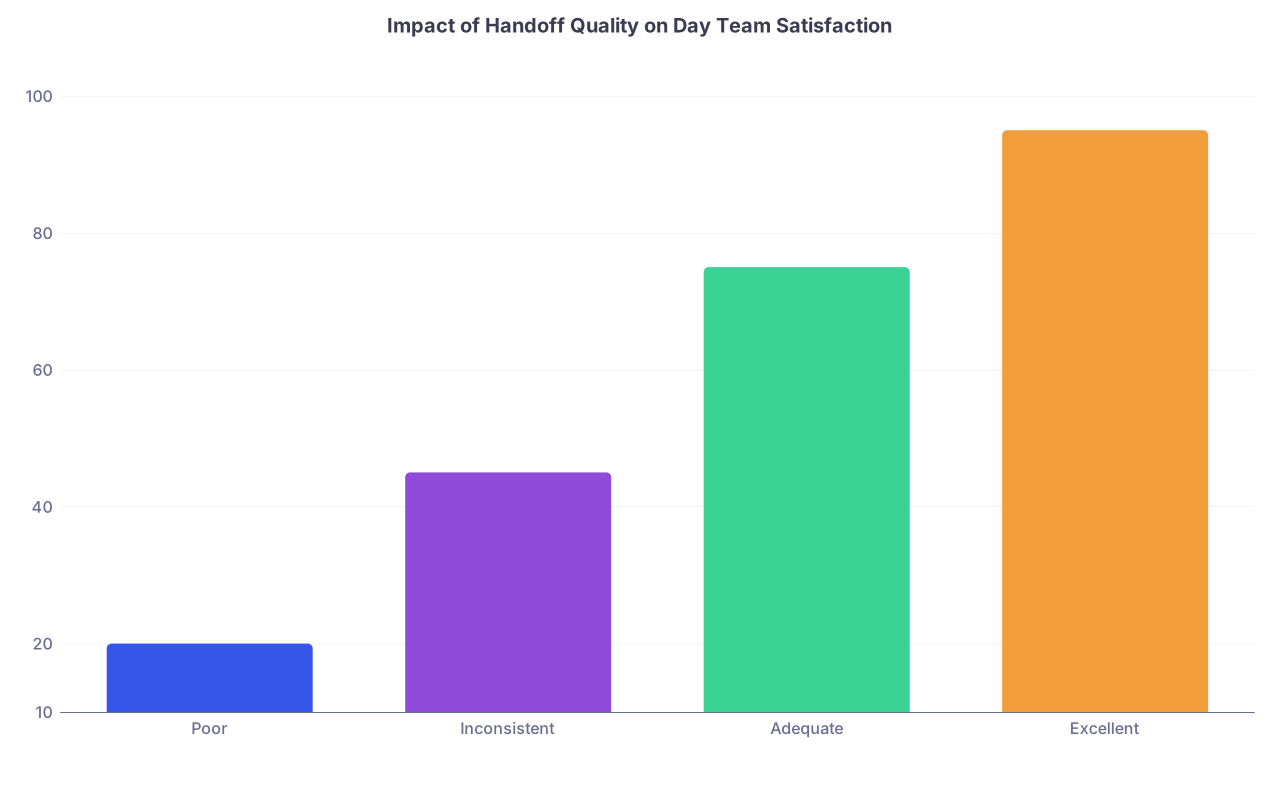
| Category | Value |
|---|---|
| Poor | 20 |
| Inconsistent | 45 |
| Adequate | 75 |
| Excellent | 95 |
Here is the unspoken truth:
Day teams will forgive slow admits. They do not forgive confusing, incomplete, or dishonest sign-outs.
3. Hiding Behind the Pager Instead of Owning Triage
Night float triage is where your judgment gets exposed. Every time.
Two big triage mistakes that quietly crush evaluations:
A. Saying “Yes” to Everything Without Thinking
New admission. Cross-cover issue. Stat consult. Nurse concern. ICU downgrade. Transfer from outside hospital. You just say “Sure, send them up” without:
- Asking why they are coming
- Clarifying the level of care needed
- Checking what else is going on in the hospital
That makes you look:
- Disorganized
- Unsafe
- Easily overwhelmed
B. Playing “Phone Resident” and Never Seeing the Patient
You answer from the workstation:
- “Just give some IV fluids.”
- “Okay, give 2 of morphine.”
- “Let us just watch it till morning.”
Then never lay eyes on the patient.
If anything goes wrong, the documentation reads:
- Nurse documented concern
- Orders placed by you
- No exam
- No re-evaluation
That is how attendings decide you are not safe on nights.
You must have clear triage categories in your head:
| Category | Action Within |
|---|---|
| Unstable / Rapid | Immediate in-person |
| Concerning change | 10–20 minutes |
| Routine cross-cover | 30–60 minutes |
| FYI / minor issue | As time permits |
If you cannot get there fast:
- Tell the nurse honestly:
“I am in a rapid response. If this changes in any way (spell it out), call RRT or overhead immediately.” - Loop your senior:
“I have three unstable-ish calls at once. Here is the quick list. What is your priority order?”
You will be judged less on “perfect triage” and more on:
- Clear communication
- Recognizing you are out of your depth early
- Not pretending you saw a patient you did not see
4. Disappearing From the Floor (Physically or Mentally)
There are two ways residents “disappear” on nights.
A. Physical Ghosting
You vanish for long stretches:
- “In the cafeteria”
- “In the call room”
- “Checking something in the ED” for 90+ minutes
Nurses notice. Charge nurses especially. They talk.
Common evaluation poison:
- “Hard to reach at night.”
- “Takes a long time to respond.”
- “We do not know where they go.”
Does not matter how smart your notes are if you are not available.
B. Mental Vacation
You sit at the computer:
- Half charting, half scrolling, half asleep
- Nodding through nurse calls without processing
- Agreeing to things you do not understand
You wake up post-call, look at the chart, and realize:
- You okayed:
- A risky PRN
- A weird insulin dose
- A med on someone with ESRD
- You never re-checked a borderline lab you said you would follow
At that point, it is not “you were tired.” It is “you were unsafe.”
Hard rule:
If you are so exhausted you are missing details, you escalate. To your senior. Every time.
I know programs where one bad night of obvious mental check-out on float followed residents for years. Words like “unreliable at night” do not leave your file quickly.
5. Over-Ordering or Under-Ordering: The Lazy Extremes
On nights, your ordering patterns tell attendings everything about your brain.
There are two bad patterns.
Pattern 1: Panic Ordering
You are tired. You do not want to think. So you overcompensate:
- For “mild chest pain” on a low-risk patient at 2 a.m.:
- CTA PE
- Full ACS panel
- CT chest
- STAT echo
- D-dimer
- For low-grade fever:
- Blood cultures
- Urine cultures
- Procalcitonin
- Full RVP
- Broad-spectrum antibiotics
- Lactate repeat Q2–4 hours
Your senior sees this in the morning and thinks:
- “They have no filter.”
- “I cannot trust them with resource use.”
- “They freak out instead of thinking.”
Pattern 2: Apathy Under-Ordering
Opposite flavor:
- Hypotension? “Give fluids and let days figure it out.”
- New neuro change? “Will reassess in the morning.”
- Rising lactate? “Probably just dehydration.”
You do not:
- Call a rapid
- Get imaging
- Order basic labs
- Notify anyone
Anything bad that happens from 7 p.m. to 7 a.m. is autopinned to night float. People will dig.
You do not need to be perfect. But you must avoid both extremes:
- Do not shotgun everything.
- Do not blow off real red flags.
Attending questions that destroy residents:
- “Why this test?” Answer: “Just to be safe.” (Translation: I did not think.)
- “Why did you not at least check a lactate?” Answer: “I thought it was fine.” (Translation: I did not think.)
Before any major test at night, ask yourself:
- What life-threatening thing am I ruling out?
- Will this change management tonight?
- If not, is there a safer, smaller step I can take?
6. Failing to Communicate Bad News Up the Chain
This might be the most common silent career-killer.
You have a rough night:
- Two rapid responses
- One ICU transfer
- One near-miss medication error
- A consultant mad at you
- A family upset with care
You are exhausted. So you just:
- Dump a rushed note in the chart
- Give minimal sign-out
- Hope no one notices
They always notice.
Morning report turns into:
- “Why did we not hear about this?”
- “Who was on nights?”
- “Why did they not call?”
Now your name is attached to:
- Poor judgment
- Poor communication
- Questionable insight
What you should do instead:
- Call or text your senior/attending when:
- A patient decompensates significantly
- There is a serious safety event
- There is a major family conflict or threat of complaint
- A consultant refuses essential care
You might be afraid of “bothering” people. Ignore that.
No one has ever been fired for over-communicating a true concern at 2 a.m.
I have seen residents rescued by their own transparency:
- “Last night was messy. Here is exactly what happened, what I did, and what I think I missed.”
Versus: - “Stable overnight” after a disaster.
Guess which one got the “teachable moment” instead of the “unsafe” label.
7. Charting That Looks Dishonest or Lazy
You are tired. You cut corners in documentation. That is how you quietly sabotage your own evaluations.
Patterns that look awful on review:
- Copy-paste of:
- Physical exams you did not do
- ROS that cannot possibly be true for an intubated patient
- “No events overnight” despite clear documentation otherwise
- Time stamps that betray you:
- Note says: “Patient seen and examined at 01:00.”
- Vitals show nurse called you at 03:15 and you responded then.
- You saw them once, at 03:30, but did not update the time.
You may think, “Everyone does this.”
They do not. And when things go wrong, chart review becomes forensic.
Safer, honest structure:
- You did not fully re-exam a patient? Write:
- “No new physical exam overnight; reviewed vitals, labs, and nursing notes; no new concerns documented.”
- You saw them briefly? Write:
- “Bedside check for X concern at 03:30: patient alert, speaking full sentences, lungs with scattered wheeze, no increased WOB.”
Your notes do not have to be long. They must be:
- Believable
- Consistent with the data
- Time-appropriate
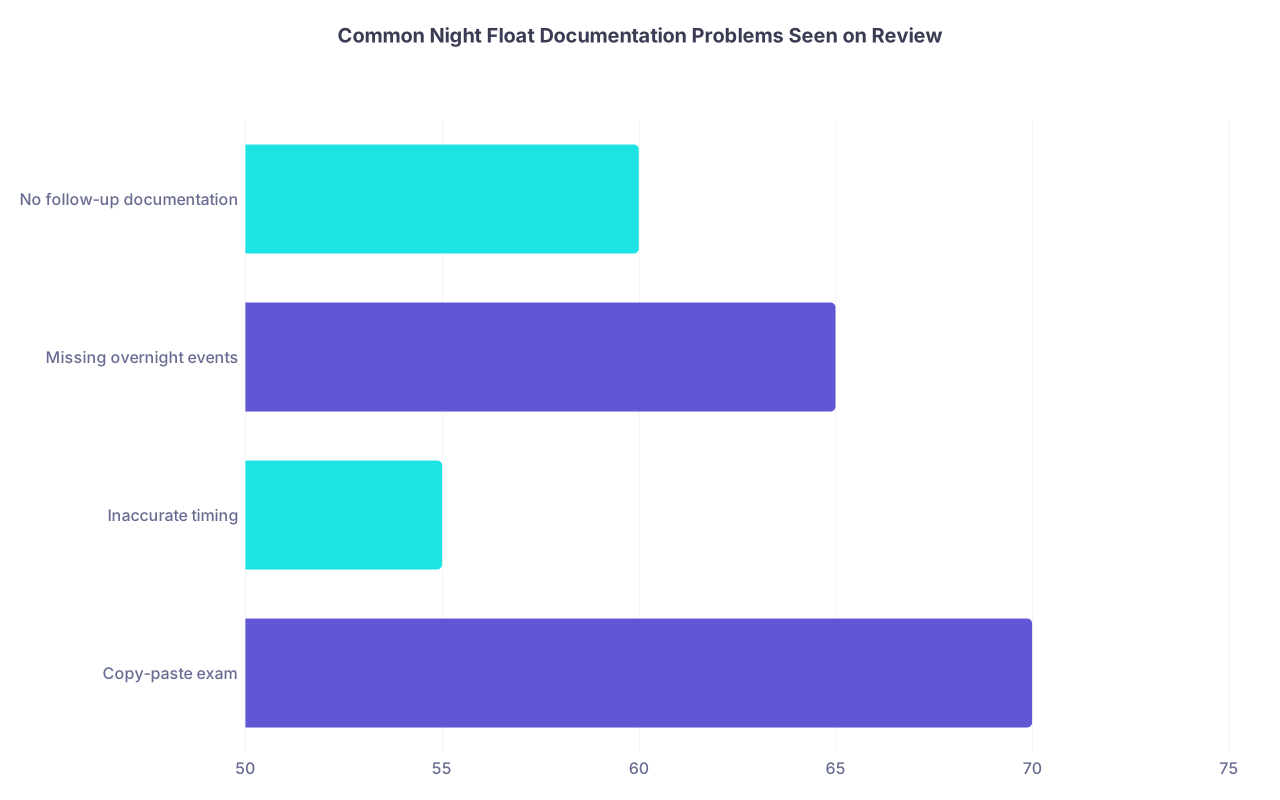
| Category | Value |
|---|---|
| Copy-paste exam | 70 |
| Inaccurate timing | 55 |
| Missing overnight events | 65 |
| No follow-up documentation | 60 |
Once an attending decides you fudge documentation, they will never fully trust your chart again. That is not a reputation you want.
8. Disrespecting Nurses and Respiratory Therapists at Night
On nights, your best ally is:
- The senior? Helpful.
- The attending? Asleep or off-site.
- The nurse and RT at the bedside? Critical.
Big mistakes:
- Brushing off a nurse concern with:
- “They always do this.”
- “It is just anxiety.”
- “Call me back if they crash.”
- Snapping on the phone:
- “Why are you waking me up for this?”
- “Just handle it.”
- “We will deal with it in the morning.”
- Ignoring RT when they say:
- “This patient’s work of breathing is different.”
- “I am uncomfortable with this setting without more monitoring.”
Quiet consequences:
- They stop calling you early.
- They start calling your senior directly.
- They document “MD notified, no new orders.”
- They tell the day team: “We do not like nights with that resident.”
Guess whose name gets brought up in evaluation meetings.
Your job at night is not to win arguments. It is to:
- Listen carefully
- Validate real concerns
- See the patient when there is any doubt
- Loop in higher level support early if the bedside team is worried
You do not need to agree with every request. But you must not dismiss people who actually stand next to the patient.
9. Not Preparing for Night Float Like Its Own Rotation
Treating night float as a “break” from real learning is a subtle but expensive mistake.
The resident who fails nights often:
- Does not know:
- Common sepsis orders at that institution
- How to enter a blood transfusion order
- Where the code cart supplies are in each unit
- Has no cheat sheet for:
- Insulin correction scales
- Pain regimen conversions
- Common comfort orders
So at 2 a.m., they:
- Fumble around the EHR
- Call pharmacy for basic questions
- Constantly ask the same things from seniors
People notice.
Before your first night:
- Build or borrow a quick-reference file:
- Standard sepsis bundle at your hospital
- DKA protocol
- COPD/asthma exacerbation standard orders
- Common ICU vasopressor starting points (if in your scope)
- Transfusion thresholds your attendings actually use
- Ask a prior night float:
- “What are the 5 problems you kept getting paged about and how did you typically handle them?”

| Step | Description |
|---|---|
| Step 1 | Assigned to Night Float |
| Step 2 | Ask seniors for common issues |
| Step 3 | Create quick-reference list |
| Step 4 | Review hospital protocols |
| Step 5 | Clarify escalation rules with chief |
| Step 6 | First Night on Service |
When your senior sees you smoothly handle:
- Hyperglycemia
- Mild delirium
- Pain control
With clear, safe, efficient plans, they start writing things like: - “Independent”
- “Reliable on nights”
- “Good judgment under pressure”
That is exactly what you need on your evals.
10. Acting Like Your Own Education Stops at 7 p.m.
Final quiet mistake: being a passive body-shop worker on nights and then wondering why your evaluations call you “adequate but not outstanding.”
Yes, nights are brutal. But if you never:
- Jot down learning points
- Ask your senior why they chose one approach over another
- Review critical overnight events after the fact
…you stagnate. Attendings see it in your notes and your plans.
Simple ways to not waste the learning:
- After a big event (rapid, code, transfer), write down:
- What triggered it
- What you did
- What your senior changed when they arrived
- Next day, when awake, spend 10–15 minutes reading:
- First-line guideline or chapter on that scenario
- Your attending’s or ICU team’s note about that event
You do not do this to impress anyone in the moment. But the next time a similar case happens at 3 a.m., your management is sharper. Seniors notice pattern improvement. That ends up on paper.
Quick Recap: Three Things You Cannot Afford to Get Wrong on Night Float
Honest, complete communication.
Do not lie with “stable overnight” when it was not. Do not hide bad nights. Do not disappear or ghost the nurses. Your reputation for reliability is built or destroyed here.Judgment over reflex.
Avoid shotgun ordering and avoid apathy. See the patient, think through your orders, and document what you were actually trying to accomplish.Clean sign-outs and visible ownership.
Close the loops you open. Update major overnight events. Make it obvious that you showed up, saw the patients who needed to be seen, and left the day team with a clear, accurate picture.
You will make mistakes on nights. Everyone does. The point is to avoid the predictable, lazy ones that quietly poison your evaluations long after that 3 a.m. page stops ringing.