
The first week of night float breaks residents, not because it is hard, but because most people stumble in unprepared.
Let me give you a day‑by‑day blueprint so that by 3 a.m. on Night 3 you are working the floor, not fighting your own brain.
Big Picture: Your First Night Float Week
Before we go day‑by‑day, zoom out. Here is the overall arc of a typical 7‑night float block (assume nights are 7 p.m.–7 a.m., adjust times to your program):
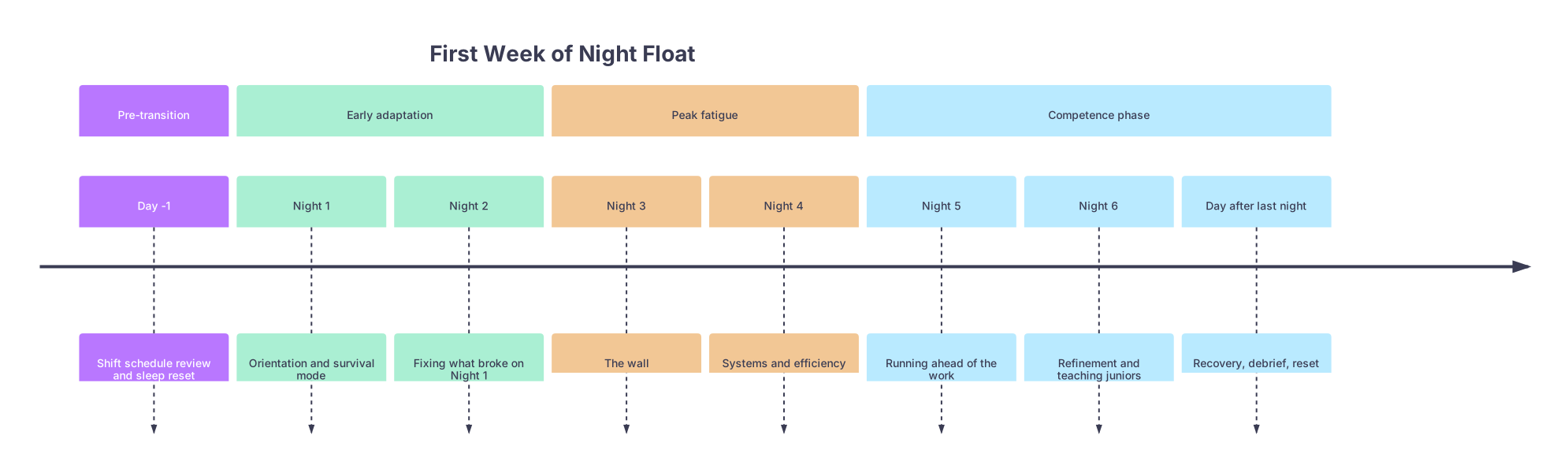
| Period | Event |
|---|---|
| Pre-transition - Day -1 | Shift schedule review and sleep reset |
| Early adaptation - Night 1 | Orientation and survival mode |
| Early adaptation - Night 2 | Fixing what broke on Night 1 |
| Peak fatigue - Night 3 | The wall |
| Peak fatigue - Night 4 | Systems and efficiency |
| Competence phase - Night 5 | Running ahead of the work |
| Competence phase - Night 6 | Refinement and teaching juniors |
| Competence phase - Day after last night | Recovery, debrief, reset |
At each of these points, what you do before the shift matters as much as what you do during it.
Day −1: The Transition Day – Set the Board Before the Game Starts
At this point you should be engineering your sleep and logistics, not “resting a bit and seeing how it goes.” That casual approach is why people feel hungover Night 1.
Morning (Post‑Last Day Shift)
- Leave your last day shift on time. Do not be the hero who “just finishes a few extra notes.”
- Light carb‑heavy dinner at a normal hour.
- Decide your sleep strategy:
For a 7 p.m.–7 a.m. night:
- Target: sleep 1–3 p.m. and then a 30–60 minute nap 5:00–6:00 p.m.
Concrete steps:
- 09:00–12:00: Normal wake time. Errands, laundry, scrub check, meal prep.
- 12:00–13:00: Early lunch, hydrate.
- 13:00–16:00: First long nap in a dark room:
- Blackout curtains or taped trash bags.
- Phone in another room.
- Fan or white noise.
If you “can’t fall asleep”:
- Get in bed anyway. Eyes closed. No scrolling.
- Aim for quiet rest; even that will help your first night.
Late Afternoon / Early Evening
From here on you are on “night mode.”
- 16:00–17:00: Wake, strong coffee or tea, high‑protein snack.
- 17:00–18:00: 30–40 minute walk or light exercise. You want your body to believe this is the start of the day.
- 18:00–18:30: Small meal you can repeat nightly (do not experiment with new spicy takeout Night 1).
- 18:30–19:00: Commute in. Quiet, no heavy podcasts or heated calls.
Checklist: Pack for Night 1
At this point you should have your bag loaded:
- 2 pens, 1 highlighter, small notebook or folded signout sheets in a clipboard
- Stethoscope, badge, hospital passwords list (secured)
- Snacks:
- 2–3 quick‑protein options (nuts, cheese sticks, protein bars)
- 1–2 simple carbs (banana, crackers)
- 1 big water bottle (you will underestimate how much you need)
- Charger + portable battery
- Thin hoodie / scrub jacket (hospitals are freezing at 3 a.m.)
Night 1: Orientation and Controlled Survival
Night 1 is not the night to be a hero. Your goal is to learn the ecosystem and not drown.

18:30–19:30: Arrival and Handoff
At this point you should be aggressively collecting information, not just nodding.
During signout:
- Identify:
- Sickest 3 patients on your list.
- Pending tasks: blood cultures, 2 a.m. troponin, 4 a.m. labs, 5 a.m. EKG, CT that is “ordered but pending.”
- New admits expected: from ED, from OR, transfers.
- Ask targeted questions:
- “Who is my 3 a.m. worry?”
- “Who will call me the most?”
- “Who is actual DNR vs just elderly?”
Write these at the top of your signout sheet. Do not trust yourself to remember at 04:37.
19:30–21:30: Territory Walk and Relationship Building
Before you sit, walk.
- Physically locate:
- All your units (med‑surg, step‑down, ICU if you cover it)
- Call rooms
- Supply rooms
- Pyxis / med rooms
- Bathrooms that are not disgusting
- Introduce yourself:
- Charge nurses on each floor
- Unit secretaries
- Respiratory therapists if you cover a unit with a lot of respiratory issues
Simple script:
“I am on nights this week covering [X/Y services]. If you are worried about a patient, please call early. I would rather see them before they crash.”
That sentence will save you a code. I have seen it.
21:30–00:00: Managing Early Calls and First Admits
At this point you should be prioritizing, not multitasking.
- When the pager goes off:
- Write down:
- Room
- Nurse name
- Brief reason (“BP 80/50,” “pain,” “no urine,” “confused”)
- Decide: Now, After I finish this, or Bundle with other visits
- Write down:
- First admits:
- Decide your template and stick to it:
- 5–7 minute focused H&P
- Admit orders with a standard order set for the common things (CHF, COPD, DKA if relevant)
- Aim: Done within 45–60 minutes each, including documentation.
- Do not write poetry in the HPI. Night float notes are functional, not Pulitzer.
- Decide your template and stick to it:
00:00–02:30: The False Quiet
Midnight is when new admits slow and floor calls settle. You will be tempted to relax. Use this slot smartly.
- Clean up:
- Check all “timed tasks” from signout.
- Follow up on critical pending labs or imaging flagged at signout.
- Pre‑chart:
- Skim AM lab trends on the sickest 3–5 patients.
- Draft quick one‑liners for these patients for morning signout.
02:30–04:30: The First Real Fatigue Wave
This is where unprepared residents start making sloppy decisions.
At this point you should:
- Shift to short‑burst work:
- 20–30 minutes of charting
- 5–10 minutes walk/stretch
- Caffeine:
- If needed, this is your last caffeine window (no later than ~03:00–03:30) if you want post‑shift sleep.
- For “stable but annoying” calls (pain, sleep meds, mild agitation):
- Use simple, repeatable algorithms.
- Avoid new benzo regimens at 3 a.m. for the pleasantly confused.
04:30–06:30: Pre‑Dawn Rounds on the Sick
Before days show up, your job is to hand them stable patients, not surprises.
- Recheck:
- Vitals and I/Os on anyone you worried about earlier.
- Any “if X then call me” parameters you gave nurses.
- Quick bedside reassess of:
- Anyone with pressors
- Anyone on BiPAP
- Anyone with borderline vitals overnight
06:30–07:30: Handoff to Days and Exit
Keep it structured, brief, and honest.
For each service:
- Start with:
- Who got worse
- Who is new
- Who might crash
- Then:
- “Things I did”: admits, major medication changes, rapid responses, transfers.
Once you leave:
- Light breakfast, no caffeine.
- Home, blackout room, phone on Do Not Disturb with emergency exception.
Day 1 Post‑Shift: Recover, Do Not Socialize
Your first daytime after Night 1 is where many residents self‑sabotage by “trying to stay up.”
Do not.
08:30–14:00: Anchor Sleep
At this point you should be asleep, not “resting on the couch watching Netflix.”
- Routine:
- Shower to cool off.
- Small snack if hungry.
- Dark, quiet room.
- Target:
- Sleep 08:30–13:30 or 14:00.
- If you wake at 11:00:
- Stay in bed. Do not pick up the phone.
- Quiet rest is still helpful.
14:00–17:00: Controlled Awake Time
- Light meal (protein + complex carbs).
- 30–45 minute walk outside. Daylight into your eyes; helps anchor your shifted circadian rhythm.
- No gym heroics. This is not max‑deadlift week.
17:00–18:30: Pre‑Shift
- Short 30–45 minute nap if you feel heavy fatigue.
- Caffeine immediately after that nap.
- Same pre‑pack ritual as Night 1.
You are now in the pattern.
Night 2: Fix What Broke on Night 1
Night 2 is where you decide if the whole week will be chaos or controlled.
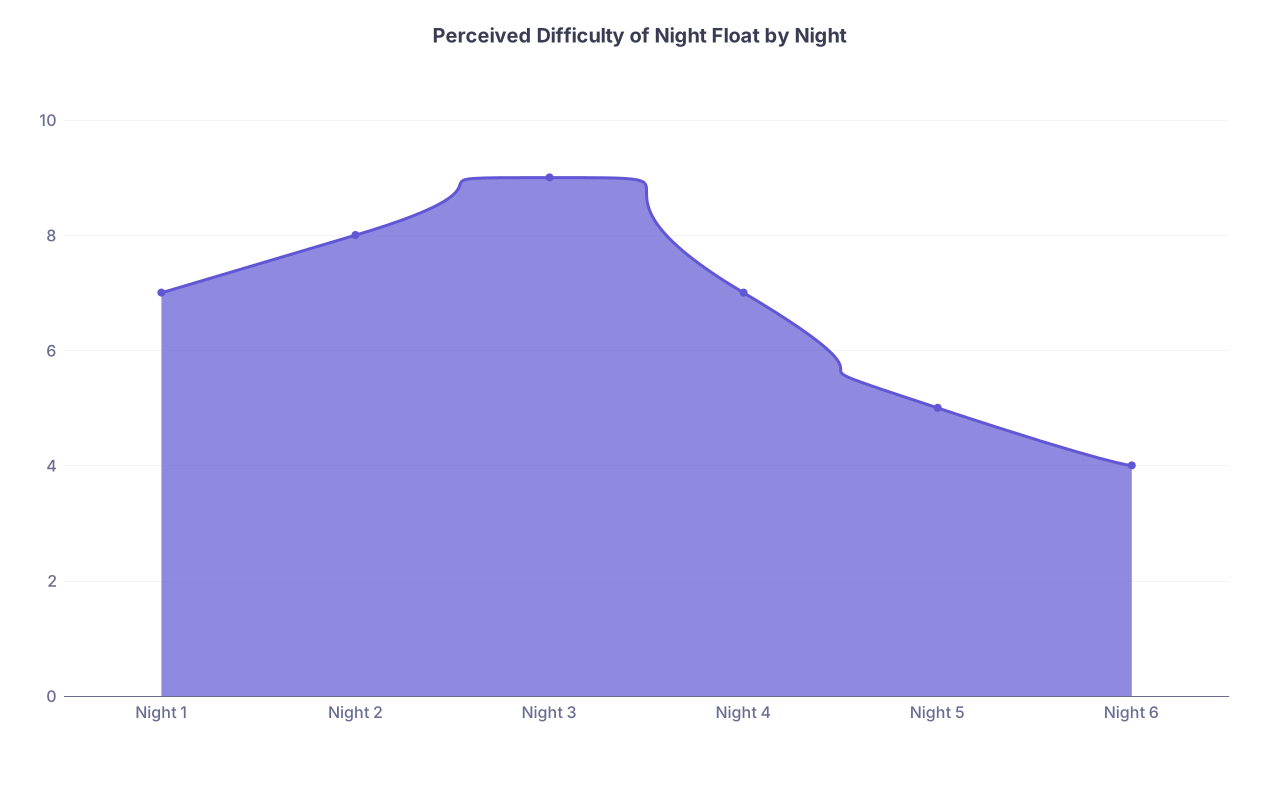
| Category | Value |
|---|---|
| Night 1 | 7 |
| Night 2 | 8 |
| Night 3 | 9 |
| Night 4 | 7 |
| Night 5 | 5 |
| Night 6 | 4 |
18:45–19:30: Tight Signout
At this point you should be correcting yesterday’s confusion.
- Ask:
- “Who did I misunderstand yesterday?”
- “Which patients generated the most pages and why?”
- Update your personal list:
- Highlight the chronic pagers.
- Star the “actual sick” vs “administratively annoying.”
19:30–22:00: Early Night Streamlining
Take the most annoying pattern from Night 1 and kill it.
Examples:
- Pain calls every 90 minutes:
- Standardize a PRN regimen.
- Clarify expectations with nurses: “If this does not work after 2 doses, call me; otherwise, no more new orders tonight.”
- Diabetic roller coaster:
- Adjust basal/bolus intelligently.
- Set better insulin parameters.
Night 3: The Wall – Surviving the Hardest Night
Night 3 is usually the worst. Your circadian rhythm is disoriented, sleep debt is building, and the novelty has worn off.
At this point you should assume impaired judgment and compensate with systems.
Pre‑Shift Adjustments
Defense, not offense:
- Prioritize sleep over everything else today.
- No errands. No family dinner. No “just one episode.”
Nutrition:
- Eat a real meal around 17:30–18:00.
- Pack zero‑sugar‑bomb snacks; your brain will be craving junk.
On Shift: Use Checklists, Not Memory
You will forget things tonight if you rely on memory. So do not.
Make simple paper checklists:
- “Timed tasks” box (labs, meds, imaging):
- Check off as you go.
- “People to re‑examine before 5 a.m.” list:
- Every time you tell a nurse “keep an eye,” add that patient.
For clinical decisions:
- Lower your threshold for:
- Calling your senior.
- Checking a lactate.
- Getting an EKG.
- Higher threshold for:
- Starting new sedating meds.
- Drastic overnight regimen overhauls unless clearly needed.
This is how you avoid the 3 a.m. “what was I thinking” review in morning conference.
Night 4: Systems and Efficiency – Now You Get Faster
By Night 4 your brain starts accepting that this is the new normal.
At this point you should shift from bare survival to deliberate optimization.
| Aspect | Night 1 Approach | Night 4 Approach |
|---|---|---|
| Signout notes | Scribbles, reactive | Structured, prioritized list |
| Admits | Long, unfocused H&Ps | Targeted, problem‑oriented |
| Pages | Answered in arrival order | Triaged, bundled by location |
| Sick patients | Seen when called | Proactively rounded on |
| Documentation | End of shift scramble | Done in small chunks nightly |
Early Shift: Routines
Standardize:
- Your admit order sets.
- Your cross‑cover note template.
- Your personal pre‑round list at 4–5 a.m.
Bundle:
- If you are going to 6 West, clear all tasks there.
- Tell the charge: “I am up here now; anything else before I go to 7 East?”
Mid‑Shift: Protect 30–40 Minutes for Deep Work
Pick a quiet window (usually 01:00–03:00) and do:
- All remaining documentation on:
- New admits.
- Significant overnight events.
When you walk out at 07:15 with notes done, you will understand why this matters.
Night 5: Running Ahead of the Work
Night 5 is often your best night. You know the floors, the personalities, and the pitfall patients.
At this point you should be anticipating problems instead of reacting.
19:30–22:00: Predict and Preempt
After signout:
- Make a “likely issues” mini‑list:
- CHF patient with borderline sats → likely 2 a.m. desat.
- COPD on BiPAP with anxiety → mask intolerance / agitation.
- New GI bleed with borderline Hgb → possible drop and tachycardia.
Then preempt:
- Clarify goals:
- “If sats <92% on 4 L, call me immediately.”
- “If MAP <65 despite current fluids, call, do not wait an hour.”
- Place orders with clear parameters so nurses do not need to guess.
Night 6: Refinement and Teaching
By Night 6, your goal is to leave a trail: systems and tips for whoever is coming after you (or for your own next block).

On Shift: Mentor Mode (Without Slowing Yourself Down)
If you have a junior, this is the night to shape their future nights.
- Let them:
- Take first pass on cross‑cover pages (you supervise).
- Do focused admits while you handle the sicker calls.
- Then share:
- Your signout structure.
- Your 3–4 “non‑negotiable” night rules (e.g., “never ignore new mental status change”).
At this point, you should also be refining your own routines:
- What snack pattern keeps you sharp?
- What caffeine timing works best for your sleep?
- Which units constantly sit on bad news until 5 a.m., and how do you proactively round there?
Last Night → Post‑Block Day: Exit Strategy and Recovery
The last night is where you decide if you will feel almost human in 48 hours or wrecked for a week.
Last Night on Shift
- Documentation:
- Aim to finish all notes by 05:00–05:30.
- 05:30–06:30: last vital checks, signout prep.
- Handoff:
- Be explicit: “I was on nights all week. Here are the 3 patients I never loved overnight.”
Post‑Last Night: Don’t Do Anything Stupid
At this point you are impaired. Treat it like mild intoxication.
- Commute home safely:
- If you feel yourself nodding off driving, pull over. I have seen too many residents drift across lanes after their 7th night.
- Carpool, bus, or ride‑share if possible.
- At home:
- Sleep 3–4 hours (08:30–12:00).
- Get up, eat light, and stay awake with gentle activity.
- Short 30–45 minute nap late afternoon if needed.
- Go to bed 22:00–23:00 local time.
You will not feel normal immediately, but you will reset much faster than if you sleep 8 hours straight and then stay up all night again.
Common Pitfalls You Should Dodge From Night 1
To make this painfully clear, here are errors I see repeatedly in first‑week night interns:
- Random caffeine:
- Sipping coffee from 19:00 through 04:00.
- Result: Trash post‑shift sleep, cumulative fatigue, worse by Night 3.
- Zero structure on signout:
- “I thought they said the GI bleed was stable.”
- If it is not on your paper, assume you will forget.
- Hero complex:
- Re‑admitting 2–3 H&Ps in a row without asking for help, then missing a silent decompensation.
- “No boundaries” eating:
- Large greasy meals at 2 a.m. → reflux, sluggish brain, bathroom marathons.
- Trying to live a day‑shift life on nights:
- Family events, big workouts, errands every day → your nights will be miserable.
Quick Reference: Sample Night‑Shift Personal Schedule
Adjust times for your own hospital, but here is a clean starting template:
| Time | Activity |
|---|---|
| 08:30–13:30 | Main sleep block |
| 13:30–14:00 | Wake, snack, water |
| 14:00–15:00 | Light walk / daylight |
| 15:00–17:00 | Errands / downtime |
| 17:00–17:45 | Nap |
| 17:45–18:15 | Caffeine + meal |
| 18:15–18:45 | Commute / mental prep |
| 19:00–07:00 | Shift (with 1–2 microbreaks hourly) |
Final Thoughts: What Actually Matters Your First Week
You do not need to love nights. You do need to survive them without hurting patients or yourself.
Remember these three things:
- Structure beats willpower. Rigid sleep, caffeine, and signout routines will carry you when your brain falls apart at 3 a.m.
- Anticipation is your real job. The best night float does not just respond to pages; they prevent the scary ones by rounding proactively.
- This is a skill, not a punishment. Treat your first week on night float like training. By the end, you should walk out with systems you can reuse for every future block.