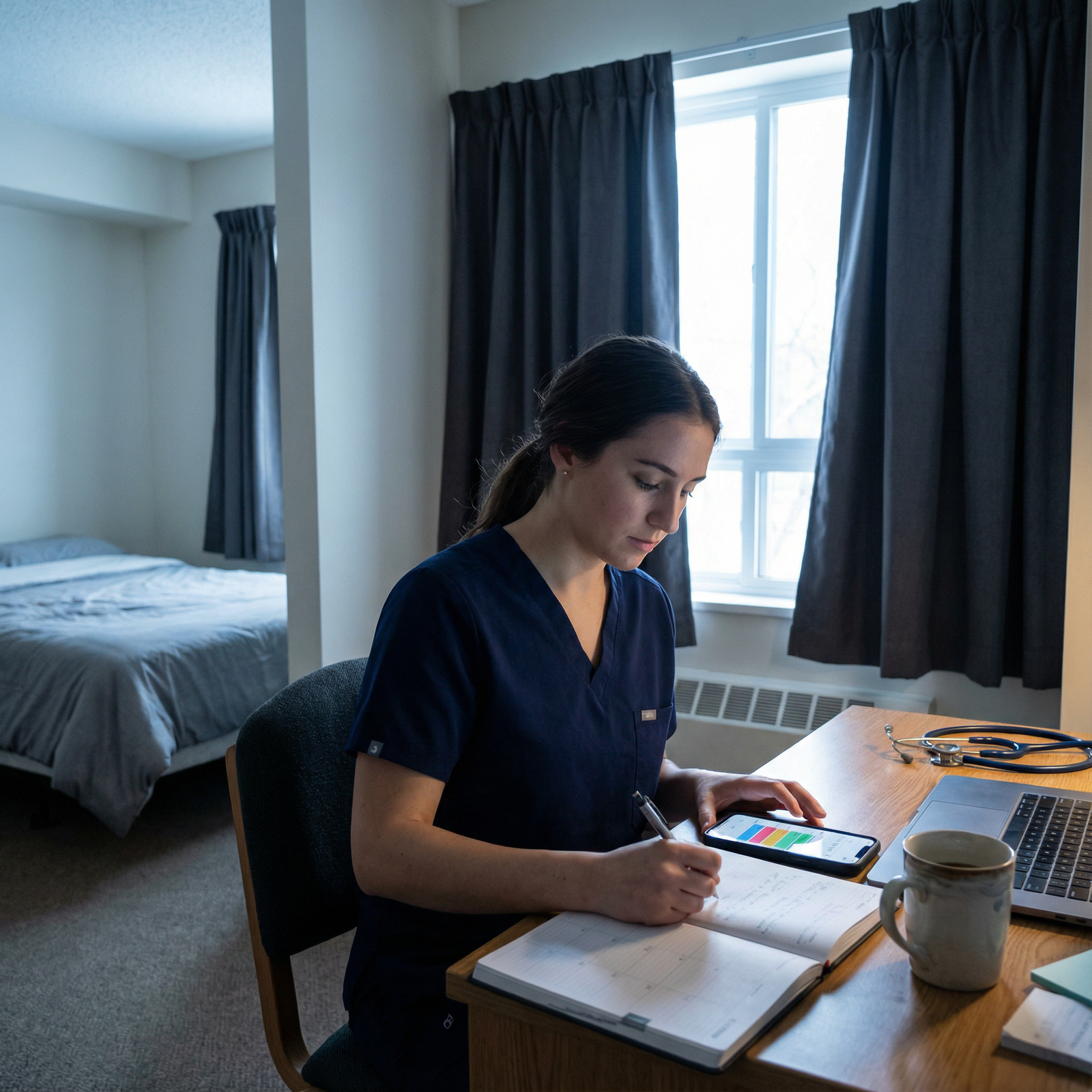
It’s 7:02 a.m. You just finished night float or a 28‑hour call. Your last note is barely legible, your pager is quiet for the first time in 12 hours, and the sun is offensively bright.
You know this part is dangerous. The “I’m fine, I’ll just power through” moment that ruins the next 48 hours.
This guide is about the next 12–16 hours. From sign‑out to actual, decent sleep—without trashing tomorrow.
I’ll walk you through it in real time.
7:00–8:30 a.m. – Sign-Out to Leaving the Hospital
At this point you should be:
Finishing clean, fast, and getting out. Not lingering. Not starting new projects.
7:00–7:20 a.m. – Final Sign-Out
Your only job now: a clean, concise handoff.
Focus on:
- Sickest patients first (what can blow up before noon)
- New admissions and any pending labs/imaging
- Clear “if/then” statements: “If BP < 90, start with ___ and call ICU.”
- Any social bombs: angry family, pending placement, capacity concerns
Do not:
- Re‑write overnight notes
- Start “just one more” order set
- Argue plans; nights are for survival, days can optimize
You should be talking like this:
- “Bed 12, septic shock, on norepi 0.08, stable since 3 a.m., next lactate at 10, watch urine output.”
- “New admit bed 7, chest pain, trop flat x2, needs formal echo today. No active issues.”
If you’re still signing out 30 minutes after shift end, you’re doing too much. Be brief. Be safe. Be done.
7:20–7:40 a.m. – Micro-Reset Before Leaving
You’re tempted to run out the door. Do it badly and you’ll forget something important or crash on the drive home.
At this point you should:
- Use the bathroom
- Drink 200–400 mL of water
- Eat something small (even half a granola bar)
- Send a quick text to whoever is expecting you later: “Post‑call. Will be offline till at least 3.”
Absolutely avoid:
- Another full coffee or energy drink
- Starting a deep conversation with anyone still there (“So about that fellowship…” No.)
Think of this as your “pre-flight check” before you operate a 2‑ton vehicle on zero sleep.
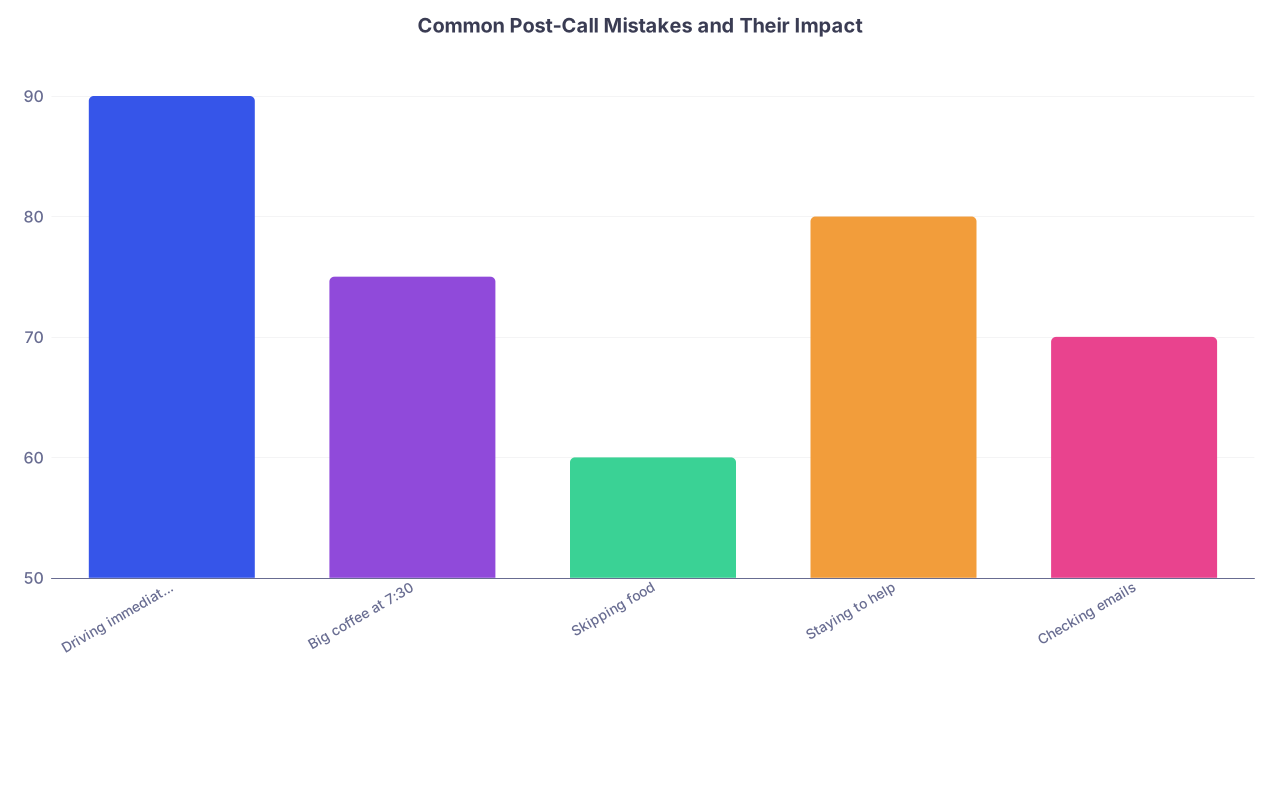
| Category | Value |
|---|---|
| Driving immediately | 90 |
| Big coffee at 7:30 | 75 |
| Skipping food | 60 |
| Staying to help | 80 |
| Checking emails | 70 |
(Values = rough “chance this wrecks your day” out of 100. I’d argue they’re all too high.)
7:40–8:30 a.m. – The Commute Home (Safely)
Non-negotiable rule: if you’re nodding off while walking to the car, you should not drive.
Your options, ranked by sanity:
- Rideshare / taxi – Expensive? Sure. Cheaper than an accident.
- Public transit – Stand, don’t sit. If you sit, you’ll fall asleep.
- Drive only if:
- You’ve splashed your face with cold water
- You’ve cracked a window
- You have a podcast or calm audio playing (avoid aggressive music that spikes adrenaline then crashes)
If you catch yourself:
- Blinking slowly
- Forgetting last few seconds of driving
- Drifting lanes
Pull over. Now. Sleep 15–20 minutes in the car. I’ve done this in the hospital garage more than once. Pride is not worth a guardrail.
8:30–9:00 a.m. – Walk In the Door: Do Not Collapse
You’re home. This is where most residents ruin their post‑call day: they collapse on the couch “for a minute,” scroll their phone, and wake up at 1 p.m. with dry contacts and zero REM sleep.
At this point you should:
- Go straight to the bedroom.
- Drop your bag in the same place every time.
- Change out of scrubs immediately.
8:30–8:40 a.m. – Quick Decontaminate & Decompress
Order of operations:
- Put your bag, shoes, and jacket in a “dirty zone” near the door.
- Take a quick shower (5–7 minutes, warm, not scalding).
- Put on comfortable, non‑tight clothing.
This isn’t spa time. It’s “I am no longer in the hospital” time.
If you live with someone:
- Tell them clearly: “I’m post‑call. I’m going to sleep until around 1–2. Please wake me if I’m not up by then.”
This beats passive‑aggressive tension at 5 p.m. when they realize you ghosted the day.
8:40–9:00 a.m. – Set Up Your Sleep Window
Your brain is fried. So make the environment do the work.
Checklist:
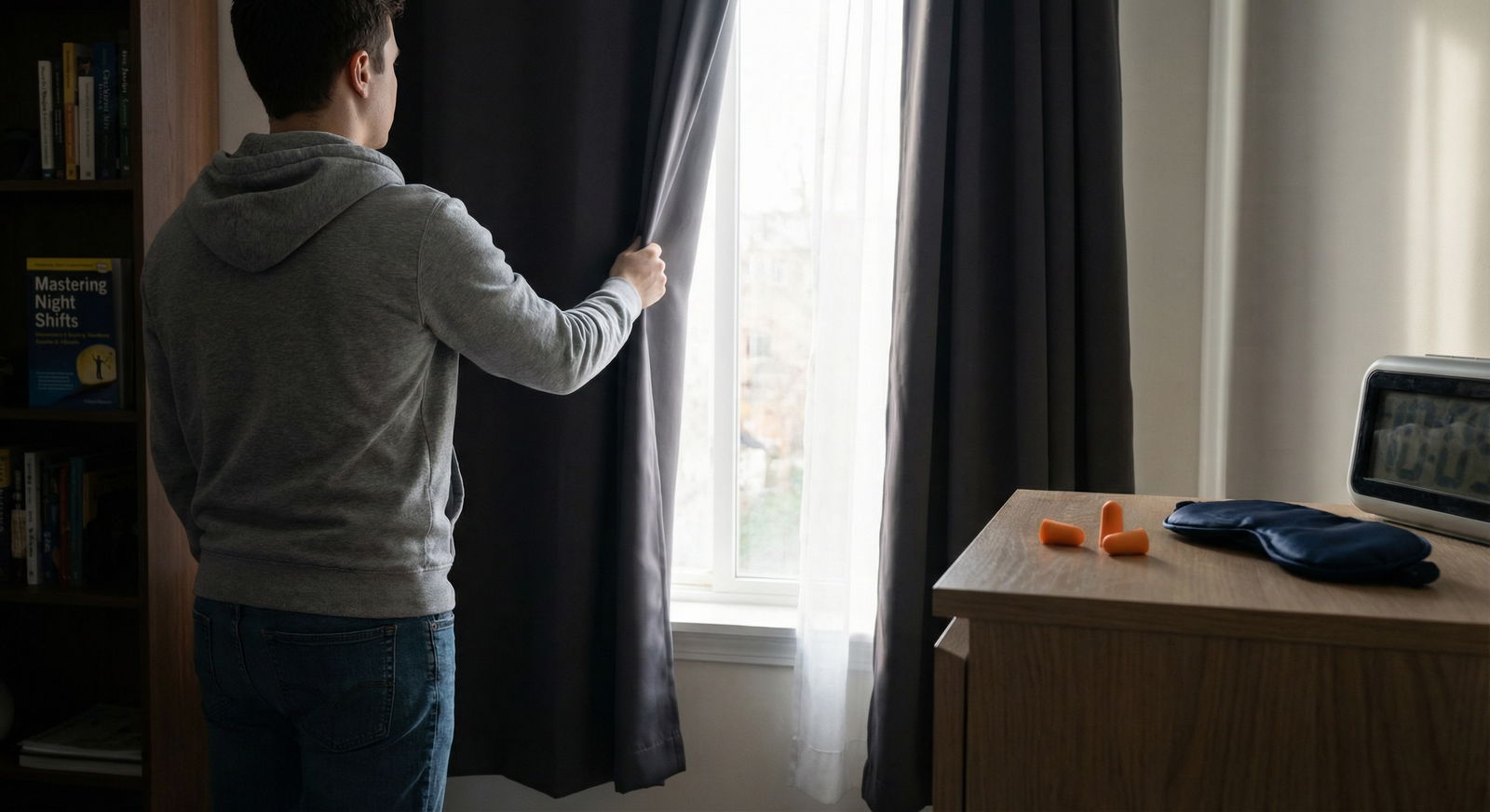
- Blackout curtains or at least blinds mostly closed
- Phone on Do Not Disturb until a set time (e.g., 1:30 p.m.), with exceptions only for critical contacts
- White noise machine / fan on
- Room slightly cool (around 65–70°F if you can control it)
And this part is brutal but right:
No TV “to fall asleep to.” No “just one episode.” You will stay up. I’ve watched people turn a 9 a.m. bedtime into an 11 a.m. disaster that kills their night.
9:00 a.m.–2:00 p.m. – Core Post-Call Sleep Block
This is the spine of your recovery day. Get this right and tomorrow is functional. Blow it and you’ll feel drunk for 48 hours.
Ideal pattern:
3–5 hours of solid sleep, ending by 2–3 p.m. latest.
9:00–9:20 a.m. – Wind-Down, Not Doom-Scroll
You’re wired and tired. That combo makes your phone incredibly attractive. Don’t take the bait.
At this point you should:
- Spend 5 minutes at most doing a “brain dump” in a notebook or app:
- Anything you’re worried about for tomorrow
- Any tasks you must remember (call pharmacy, pay bill, email chief)
- Set a single alarm (and one back‑up) for your planned wake time
Then:
- Use a short sleep meditation, breathing exercise, or relaxing audio track (10–15 min max). Not a 1‑hour podcast.
- Put the phone face‑down, away from the bed if possible.
9:20 a.m.–1:00 p.m. – Protecting the First Sleep Chunk
For most residents, this first 3–4 hour block is the deepest and best.
Target: Sleep 9:30–12:30 or 1:00.
What can wake you:
- Package deliveries
- Roommates / kids / partners
- Alarm you forgot from a normal workday
- Group texts, notifications, random app alerts
At this point you should have:
- DND on your phone set to silence everything except true emergencies
- A clear agreement with anyone you live with: pretend you’re on nights, not home and available
If you wake up around 11 a.m. and feel okay:
- Decide: either commit to another 60–90 minutes of sleep or get up and stay up. Don’t half‑nap for 20 minutes 5 times. That’s how you get sleep inertia and headache.
1:00–2:00 p.m. – The Hard Wake-Up
This is the critical moment. If you sleep until 4–5 p.m., your next nighttime sleep is trashed.
You should force yourself up by 2 p.m. latest (earlier if you have to be up at 4–5 a.m. the next day).
Expect:
- Heavy grogginess
- Feeling like this was a bad idea
- The urge to crawl back under the covers
Your move:
- Get light in your face immediately (open blinds, step onto balcony, walk outside for 5 minutes)
- Drink a full glass of water
- Wash your face or take a 2‑minute cool shower if needed
Caffeine:
Now is your first reasonable window. Have one normal dose (a coffee or tea). Not three cold brews.
Rule: No caffeine after ~4–5 p.m. if you want to actually sleep tonight.
2:00–6:00 p.m. – Re‑Entry Without Overdoing It
This block decides whether tomorrow feels like post‑call or like a regular human day.
At this point you should aim for:
- Gentle activity
- Essential adulting only
- No heroic workouts or deep study marathons
2:00–3:00 p.m. – Light Food, Light Movement
You probably haven’t eaten a real meal since the sad 2 a.m. vending machine run.
Good first meal traits:
- Moderate carbs
- Some protein
- Not fried, heavy, or sugary
Examples:
- Eggs + toast + fruit
- Rice + chicken + veggies
- Oatmeal with nuts and yogurt
Then:
- Do 10–20 minutes of easy walking outside if weather allows
- Or gentle stretching at home
This isn’t “fitness.” It’s “telling your circadian rhythm, ‘Hey, this is day, not night.’”
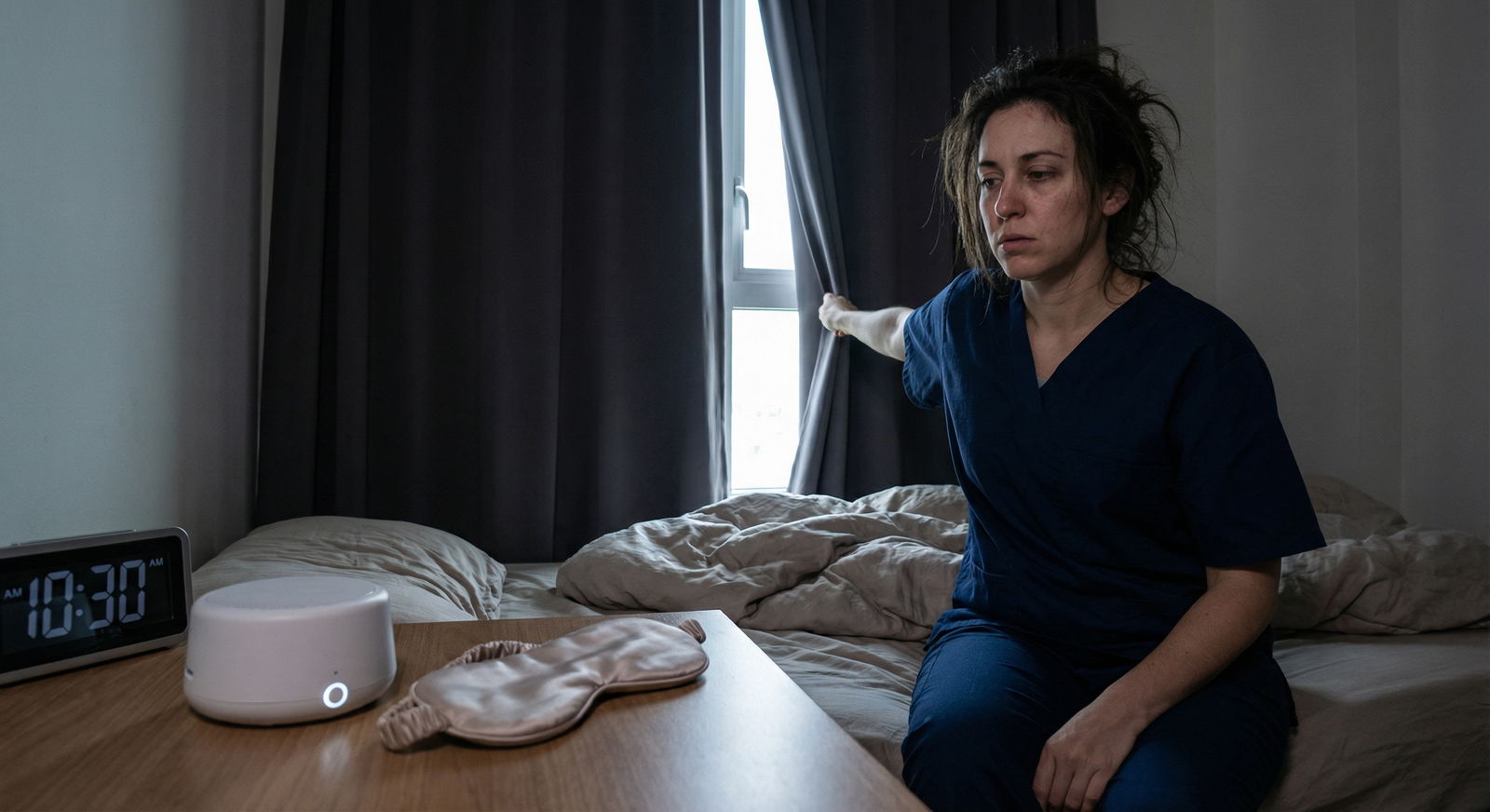
3:00–4:30 p.m. – Controlled Productivity Window
You’re awake, somewhat functional, and you start thinking, “Maybe I can catch up on notes/studying/emails.”
Yes—but with hard limits.
At this point you should:
- Pick 1–2 priorities only:
- Pay bills and handle critical life admin
- Review a small chunk of reading for tomorrow’s cases
- Reply to time‑sensitive emails/texts
- Set a timer for 60–90 minutes. When it’s done, you’re done.
You are not:
- Doing a 4‑hour UWorld marathon
- Writing an entire research section
- Deep‑cleaning your apartment
If your brain feels like wet cardboard, downgrade to:
- Simple chores (dishes, laundry)
- Low‑stakes paperwork
| Good Choices | Bad Choices |
|---|---|
| 60 min light studying | 4+ hours intense study |
| Paying essential bills | Starting big side projects |
| Simple meal prep | Hosting social gatherings |
| Short errand run | Driving long distances |
4:30–6:00 p.m. – Social and Mental Reset (Within Reason)
By now, you’re halfway between zombie and functional human.
Good uses of this window:
- Short, low‑key social contact:
- 20–30 min call with family
- Coffee at home with partner/roommate
- Mildly enjoyable, non‑screen activity:
- Reading fiction
- Light hobby (instruments, drawing, baking something simple)
Bad uses:
- Starting a heavy emotional conversation
- Agreeing to a long dinner out
- Doom‑scrolling until your eyes hurt
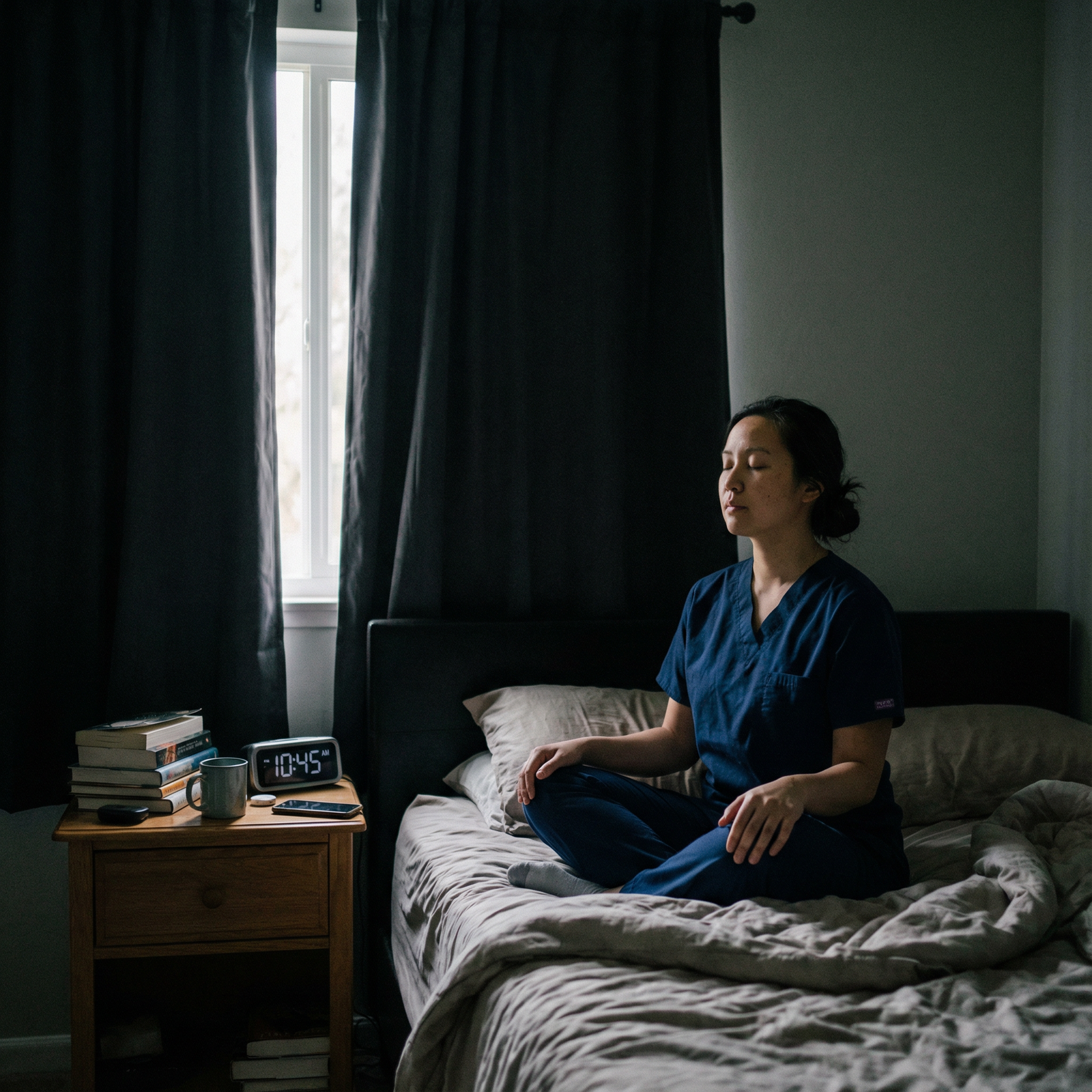
6:00–10:30 p.m. – Landing the Plane: Protecting Night Sleep
This is where people sabotage themselves with “just one more” thing and then complain they can’t sleep by midnight.
Your goal:
Be in bed by 10–10:30 p.m., falling asleep close to your usual pre‑call bedtime.
6:00–7:30 p.m. – Dinner and Shutdown of “Serious” Tasks
At this point you should:
- Eat a normal‑sized dinner, not a huge buffet
- Finish all work/study by 7:30 p.m.
Keep dinner:
- Light–moderate
- Not crazy spicy or greasy
- Not 2 pints of ice cream
If you’re tempted to “just finish one more note” at 8:30 p.m., you’re wrong. That extra 20 minutes of work can cost you an hour of sleep.
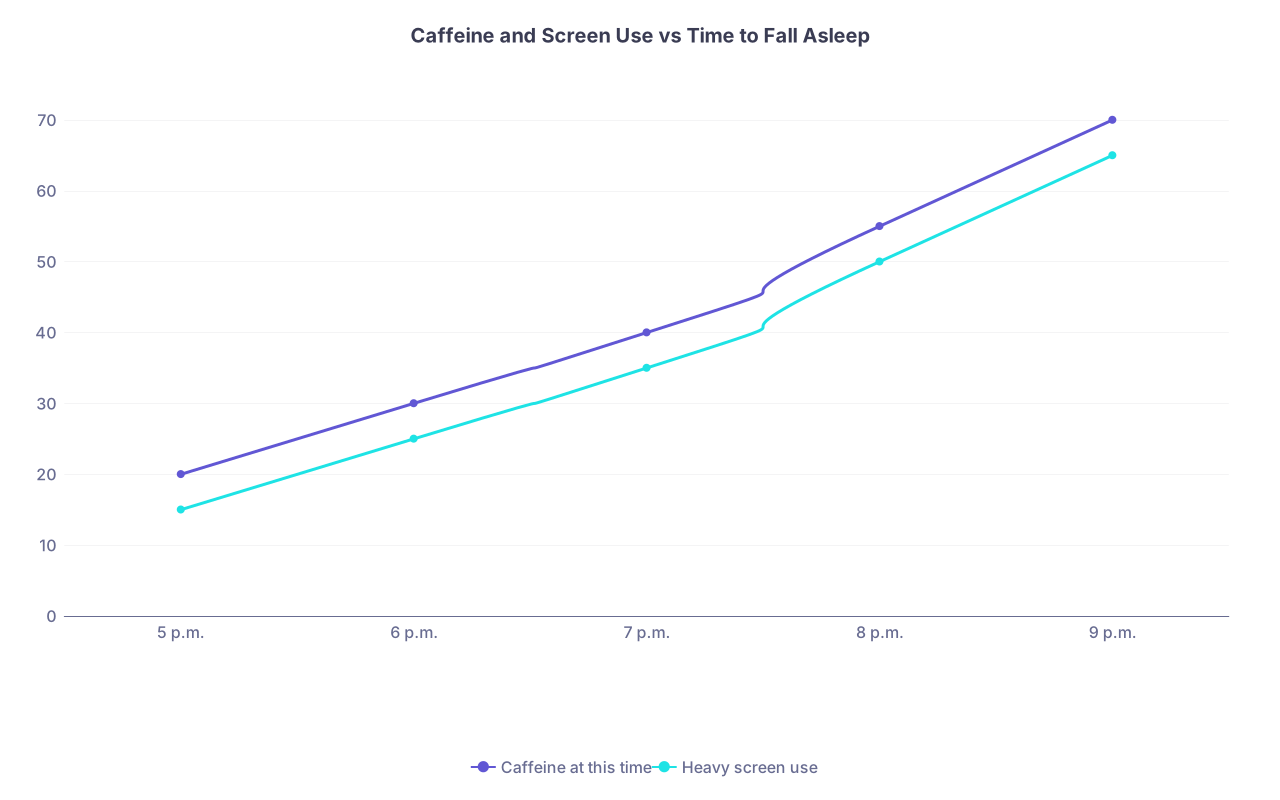
| Category | Caffeine at this time | Heavy screen use |
|---|---|---|
| 5 p.m. | 20 | 15 |
| 6 p.m. | 30 | 25 |
| 7 p.m. | 40 | 35 |
| 8 p.m. | 55 | 50 |
| 9 p.m. | 70 | 65 |
(Values = extra minutes it often takes to fall asleep. You feel this.)
7:30–9:00 p.m. – Calm Evening, Not a Second Shift
Ideal activities:
- Light TV (1–2 episodes, not a whole season)
- Low‑stimulus hobbies (puzzles, knitting, stretching)
- Prepping minimalist stuff for tomorrow:
- Lay out clothes
- Pack your bag
- Quick glance at your schedule
Avoid:
- Bright overhead lights—use lamps
- Starting new intense shows or movies
- Long gaming sessions that jack your adrenaline and heart rate
9:00–10:30 p.m. – Pre-Sleep Routine
This is where you shift from “awake” to “I’m clearly signaling to my brain it’s bedtime.”
At this point you should:
- Dim lights further
- Avoid heavy phone use in bed (blue light plus infinite scroll will push you past your tired window)
- Use a repeatable wind‑down pattern, even if short:
- Brush teeth, wash face
- 5–10 min gentle stretching or breathing
- Read a few pages of something non‑medical
If your mind starts replaying overnight disasters or patient worries:
- Write down 2–3 bullet points of what you’ll do tomorrow about it.
- Then deliberately tell yourself, “I survived the shift. The rest waits until morning.”
If you’re still wired at 10:30:
- Stay in low light, off major electronics
- Avoid getting up and restarting tasks
- Let boredom and fatigue eventually win

Alternative Timelines: Adjusting for Different Call Types
Quickly, because your life is not always a clean 7 a.m.–7 a.m.:
| Shift Type | Core Sleep Window | Max Wake-Up Time | Evening Rule |
|---|---|---|---|
| 24–28 hr call (ends 7–9 a.m.) | 9 a.m.–1 p.m. | 2–3 p.m. | Bed by 10–10:30 p.m. |
| Night float (ends 7 a.m. daily) | 8 a.m.–2 p.m. (anchor) | 2–3 p.m. | Short nap ok before next shift |
| Late swing (ends 1–2 a.m.) | 2–7 a.m. | 7–8 a.m. | Normalize next night if off |
If you’re on a night float block (not a one‑off 28‑hour), the goal shifts:
You’re not trying to flip fully back to days. You’re stabilizing a night‑oriented rhythm.
So:
- Sleep block more like 8 a.m.–2 p.m.
- Smaller nap ~5–6 p.m. if needed
- Protect consistency over “acting normal” socially
The 30-Second Version: What Actually Matters
If you remember nothing else:
Anchor a 3–5 hour sleep block ending by 2–3 p.m.
That’s the backbone. Too short and you’re wrecked; too late and you kill night sleep.Cap caffeine and stimulation after mid‑afternoon.
No late coffee. No “just one more episode” at midnight. You’re faking a normal day, not pulling another night.Treat post‑call like recovery, not bonus free time.
Some light chores, a bit of studying, brief social contact—fine. But your job on a post‑call day is simple: arrive at tomorrow morning as a safe, functioning resident, not a zombie with a badge.