
The way most residents flip from days to nights is unsafe. For patients and for you.
You can’t just “tough it out,” chug coffee, and pray your brain cooperates at 3 a.m. That’s how med errors happen, how you miss a subtle change in vitals, how you end up crying in the stairwell at 5 a.m. because your body thinks it’s being tortured.
You need a plan. Down to the hour.
This is your hour‑by‑hour Transition Day playbook for switching from days to nights as safely as possible. I’ll walk you from your last day shift through the first 24 hours on nights so you know exactly what to do and when.
The Day Before Your First Night: Set the Stage (Evening Timeline)
Assume this scenario (very common and nasty):
- Last day shift: 7 a.m.–7 p.m. on Day 0
- First night shift: 7 p.m.–7 a.m. on Day 1
We’re going to use the time from 7 p.m. Day 0 to 7 p.m. Day 1 as your Transition Day window.
7 p.m.–9 p.m. (Day 0): Post–Day Shift Decompression
At this point you should get out of the hospital and wind down, but do not go straight to sleep.
Goals for this block:
- Lower adrenaline
- Rehydrate, refuel
- Avoid crashing on the couch
Do:
- Leave promptly. No heroic hanging around.
- Quick protein + carb meal:
- Example: grilled chicken wrap, yogurt, fruit; or rice + tofu + veggies
- 10–15 minute “reset” shower at home
- Light, low‑effort tasks only:
- Lay out scrubs for tomorrow night
- Pack night‑shift bag (snacks, chargers, compression socks)
Don’t:
- Don’t sit down “for a minute” on your bed.
- Don’t start chart-watching from home.
- Don’t have a heavy, greasy dinner. You’ll pay for it later.
9 p.m.–12 a.m. (Day 0): Strategic Late Night Wakefulness
This feels wrong, but at this point you should force yourself to stay awake.
Target: go to sleep around midnight–1 a.m., not earlier.
Why? You’re building sleep pressure so you can get a big “anchor sleep” during the day tomorrow.
What to actually do:
- Low‑light, low‑stress activities:
- A couple episodes of something light, not a thriller
- Reading non‑medical fiction
- Folding laundry, organizing your bag
- Hydrate, but taper fluids after 11 p.m. to avoid multiple bathroom wakeups
Hard rules:
- No work emails, no Epic, no board prep.
- No high-intensity workout; a 20–30 minute walk is fine.
- Caffeine cutoff already passed (for you, that should be around 3–4 p.m. on your last day shift).
12 a.m.–7 a.m. (Night between Day 0 and Day 1): Full Night Sleep
At this point you should get a solid, normal‑night block of sleep.
- Ideal: midnight–7 a.m.
- Minimum: 11:30 p.m.–6 a.m.
Make it count:
- Blackout your room (trash bags over bad blinds if you have to).
- Phone on Do Not Disturb.
- White noise app or fan to block roommates/traffic.
You are not yet on nights. So this is your last “normal” night, and you want it to be decent to avoid starting the flip already in debt.
Transition Day Morning: Controlled “Normal”
7 a.m.–10 a.m. (Day 1): Morning Light, Limited Stimulation
You’ll wake up feeling like it’s any other day. It’s not.
At this point you should:
- Get bright light exposure soon after you wake.
- Open curtains fully
- 15–20 minutes outside if possible (walk, coffee on a balcony)
- Eat a moderate breakfast:
- Oats + nuts + fruit
- Eggs + whole grain toast
- One normal‑sized coffee/tea is fine. Finish by 9 a.m.
Your brain still thinks you’re on days. We’ll break that later. For now, let it run the usual script.
10 a.m.–1 p.m.: Light Activity, Zero Naps
This is the danger window where people “accidentally” nap and ruin the whole flip.
At this point you should stay awake, gently active, and out of bed.
Good options:
- Low‑stress errands:
- Grocery run for night‑shift food
- Pharmacy for melatonin if you use it
- Mild movement:
- 20–30 minute walk
- Light yoga/stretching
- Admin work:
- Bills, quick email triage (not deep work)
Critical:
- Stay out of your bedroom unless you’re actually sleeping.
- No “I’ll just lie down and scroll.”
Transition Day Midday: The Anchor Nap
Here’s where most residents either save themselves or wreck the night.
You have two main nap strategies. Pick one and commit.
| Strategy | Timing (Start) | Duration | Best For |
|---|---|---|---|
| Long Anchor Nap | 12–1 p.m. | 3–4 hrs | Most residents switching 7p–7a |
| Split Naps | 12–1 p.m. & 5–6 p.m. | 90 + 60–90 min | People who struggle with long daytime sleep |
Strategy A: Long Anchor Nap (Most Common)
1 p.m.–5 p.m. (Day 1): Core Sleep Block
At this point you should be in bed for your longest daytime sleep block.
Goal: 3–4 hours.
Set yourself up like it’s 11 p.m.:
- Fully dark room (mask + blackout if needed)
- Phone in another room or across the room
- Cool temperature (slightly cooler than usual helps)
Optional but reasonable:
- 0.5–1 mg melatonin taken 30–60 min before (12–12:30 p.m.)
- Earplugs/white noise
You will wake up groggy. That’s fine. That’s the point—you want to have slept deeply.
Strategy B: Split Naps (If You Can’t Sleep Long)
If you know from experience you can’t get a 3–4 hour chunk, do this instead:
- First nap: 12–1:30 p.m. (90 minutes)
- Awake: 1:30–5 p.m. (light activity, nothing intense)
- Second nap: 5–6:30 p.m. (60–90 minutes)
This approximates a core sleep plus a pre‑shift power nap.
Do not shorten both naps “a little” and then hope adrenaline carries you. It won’t.
Late Afternoon: Pre‑Shift Activation
Let’s follow the Long Anchor Nap path. I’ll note where to tweak for Split Nap.
5 p.m.–5:30 p.m. (Day 1): Wake + Shake Off Sleep Inertia
At this point you should be awake and moving within 15–20 minutes of your alarm.
- Turn on bright lights immediately.
- Splash cold water on your face.
- Brief, easy mobility:
- 5–10 minutes of stretching
- A brisk walk around the block or hallway
If you chose Split Naps, this is where your second nap may sit (5–6:30 p.m. instead), and your wake‑up routine shifts to 6:30 p.m.
5:30 p.m.–6:15 p.m.: First Caffeine Dose + Pre‑Shift Meal
This block is where most residents screw it up with either:
- no food and no caffeine, or
- a giant energy drink and pizza.
At this point you should:
- Eat a balanced pre‑shift meal:
- Lean protein (chicken, beans, tofu, eggs)
- Complex carbs (brown rice, whole grain bread, quinoa)
- Some fat (avocado, nuts, olive oil)
- Take your first intentional caffeine dose:
- 1 small coffee / tea / 80–100 mg caffeine equivalent
- Take it between 5–6 p.m.
Avoid:
- Super heavy, greasy foods (burgers, fries, giant burritos)
- Massive sugar spikes (dessert + soda + energy drink)
Think “steady fuel,” not “Thanksgiving dinner.”
6:15 p.m.–6:45 p.m.: Final Prep and Commute
At this point you should be calm, slightly energized, and organized.
Checklist before you leave:
- Badge, stethoscope, penlight, pens
- Chargers (phone, watch, maybe a small battery pack)
- Snacks: nuts, yogurt, cut fruit, simple sandwiches, protein bar
- Hydration: water bottle (aim to refill at least 2–3 times overnight)
- Compression socks if you’re on your feet all night
On the commute:
- No intense podcasts.
- Either quiet, calming music or silence.
- Mentally rehearse:
- “First thing I do: get sign-out list, check admits/ICU/stepdown, scan labs, eyeball sickest patients.”
On Arrival: 7 p.m.–9 p.m. – Shift Takeoff
You’ve officially survived Transition Day… but you’re not safe yet. The first 4–6 hours on night one make or break you.
7 p.m.–8 p.m.: Sign‑Out + Triage
At this point you should be in “assessment mode,” not social mode.
Tasks:
- Get focused sign‑out:
- Sickest patients first
- Active issues, pending studies, time‑sensitive labs
- Clear escalation plans (“If their O2 drops below X, call ICU.”)
- Clarify new admissions process:
- Where do they appear in your system?
- Who calls you? ED, transfer center, floor nurses?
- Ask the day team:
- “Anything you’re worried will blow up overnight?”
- “Any families planning to talk tonight?”
After sign‑out:
- Make your own short priority list. Not a novel. Top 5:
- Sickest patient(s) to eyeball immediately
- Critical labs to recheck tonight
- Time‑sensitive meds (chemo, antibiotics, anticoagulation)
- Procedures likely to come up
- Any “watch closely” patients
8 p.m.–9 p.m.: First Circuit + Task Setup
At this point you should do a deliberate first walk‑through of your key patients.
Focus on:
- Sick or unstable patients
- New admissions from the day that you haven’t met
- Anyone on pressors, BiPAP, or high‑risk drips
You’re not trying to do a full H&P on everyone. You’re calibrating:
- Who looks okay vs. “off”
- Who has family at bedside who might call you at 2 a.m.
- Where the problem rooms are (the loud one, the confused sundowner, the frequent fall risk)
Set yourself up:
- Pre‑write your checklists for labs you know are coming at midnight–4 a.m.
- Open relevant charts in tabs.
- Make a “call list” of consults that might need early contact before they disappear.
Night Shift Core: 9 p.m.–5 a.m. – Staying Functional
Now we move into the hardest band: your circadian low is coming between roughly 2–5 a.m.
We’ll break this into focused blocks.
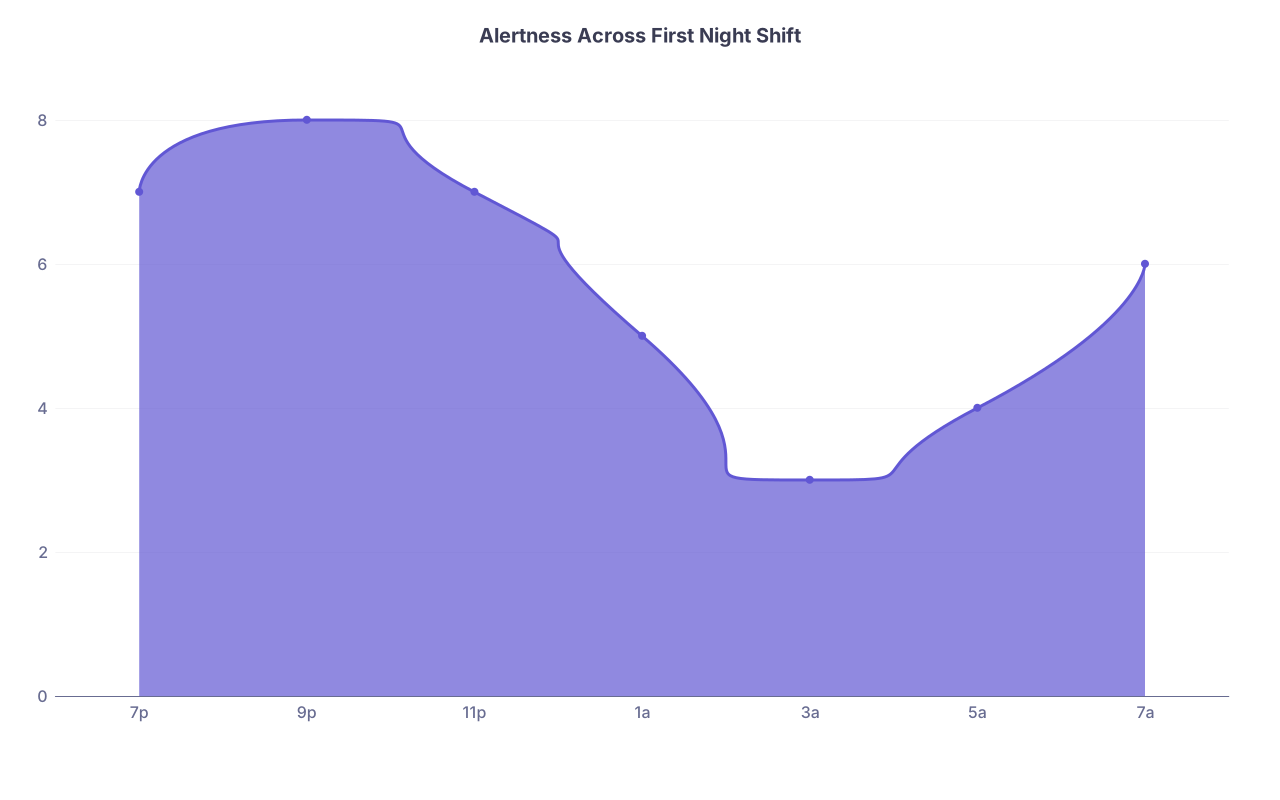
| Category | Value |
|---|---|
| 7p | 7 |
| 9p | 8 |
| 11p | 7 |
| 1a | 5 |
| 3a | 3 |
| 5a | 4 |
| 7a | 6 |
9 p.m.–11 p.m.: Steady Work, No Heroics
At this point you should feel okay. Not amazing, not dead.
Use this window for:
- New admissions that require thinking
- Calling non-urgent consults before they disappear
- Tying up obvious loose ends (missing home meds, clarification orders)
Fuel:
- Small snack around 9:30–10 p.m.:
- Greek yogurt, nuts, half sandwich, hummus + veggies
Hydration:
- Solid water intake here. Your later window will be caffeine‑sensitive.
11 p.m.–1 a.m.: Second Caffeine Window + Mental Check
This is your second and final caffeine chance if you want to be able to sleep after your shift.
At this point you should:
- Take a small second caffeine dose between 11 p.m.–12 a.m. if you still feel sluggish.
- Half coffee, small tea, or ~50–80 mg caffeine
- Eat a light, protein‑heavy snack:
- boiled eggs, string cheese, handful of nuts, small wrap
Operationally:
- Close out any non‑urgent charting that could crush you at 4–6 a.m.
- Follow up on midnight labs and imaging
- Reassess any patient you were slightly uneasy about at 8 p.m.
Do not:
- Slam an energy drink at 1 a.m.
- Eat a full meal with heavy fat. Your gut motility is already slowed.
1 a.m.–3 a.m.: Guard Your Brain
This is where people make dumb mistakes. Your alertness is dropping, and ego + fatigue is a bad mix.
At this point you should:
- Use structured thinking for decisions:
- Write out a quick differential on paper if you’re fuzzy.
- Ask a colleague to sanity-check dosing and big calls.
- Keep moving:
- Every 45–60 minutes, stand up, walk a quick loop.
- Stretch your back/neck.
If it’s quiet (rare, but it happens):
- Do micro-tasks, not deep work:
- Clean up lists
- Pre‑write skeleton notes
- Organize your sign‑out for the morning
No board review. No heavy reading. Your retention will be garbage.
3 a.m.–5 a.m.: Lowest Low – Micro‑Survival Mode
This is the worst of it. Most residents feel vaguely nauseated, cold, and detached.
At this point you should:
- Accept that you’re at your lowest cognitive performance.
- Double‑check:
- All weight‑based med doses
- Any insulin/anticoagulation orders
- Electrolyte replacement protocols
- If you’re writing a long order set or complex note:
- Stand up while you do it
- Read it aloud quietly to yourself before signing
Micro‑breaks:
- 5 minutes of deep breathing in a quiet room
- Brief “eye rest” with lights down, but do not lie down fully. You will fall asleep.
Food:
- Tiny snacks only if needed:
- Small fruit, a few crackers
- Avoid sugar bombs—you’ll crash even harder.
5 a.m.–7 a.m.: Landing the Plane Safely
You’re almost there. Do not sprint to the finish and then blow sign‑out.
At this point you should:
5 a.m.–6 a.m.: Final Clinical Sweep
- Check:
- Early‑morning labs (4–5 a.m. draws)
- Overnight imaging results
- Drip changes, new cultures, any codes/rapid responses
- Reassess:
- Any patient who had a change overnight
- Any patient you felt uneasy about during the night
Update your sign‑out list with:
- Overnight events, clearly time‑stamped
- New concerns or watch items
- Pending results that may hit after you leave
6 a.m.–7 a.m.: Clean Sign‑Out + Exit Strategy
At this point you should be tidy, concise, and honest.
During sign‑out:
- Lead with:
- Sickest patients
- Overnight changes
- Unstable trends (creeping creatinine, rising O2 needs)
- Share specific plans:
- “If X, then do Y.”
- “If BP stays in this range, okay; if it drops below ___, escalate.”
After sign‑out:
- Do a fast self‑assessment before you drive:
- Are you nodding off while walking?
- Do you feel like your head is full of sand?
If you’re dangerously sleepy:
- 15–20 minute car nap (doors locked, alarm set) before driving home.
- Or call a ride if you truly shouldn’t be behind the wheel. No shame, just safety.
Post‑Shift (After First Night): Protect the Flip
Your first post‑night morning sets up the rest of your nights.
7:30 a.m.–9 a.m.: Controlled Landing at Home
At this point you should:
- Get home without errands. No “quick Target trip.”
- Small, light snack if hungry:
- Toast + peanut butter, yogurt, simple cereal
- Avoid bright, direct sunlight:
- Sunglasses on the way home help your brain shift to “night.”
9 a.m.–1 p.m.: Main Sleep Block
This is your post‑shift core sleep.
- Aim for 4–5 hours minimum.
- Reuse your blackout, cool room, earplugs, white noise.
If you’re on a run of nights (3–7 in a row), this becomes your standard pattern:
- Off at 7 a.m.
- Sleep 9 a.m.–1/2 p.m.
- Nap or rest again later if needed.
Visual Summary: Transition Timeline
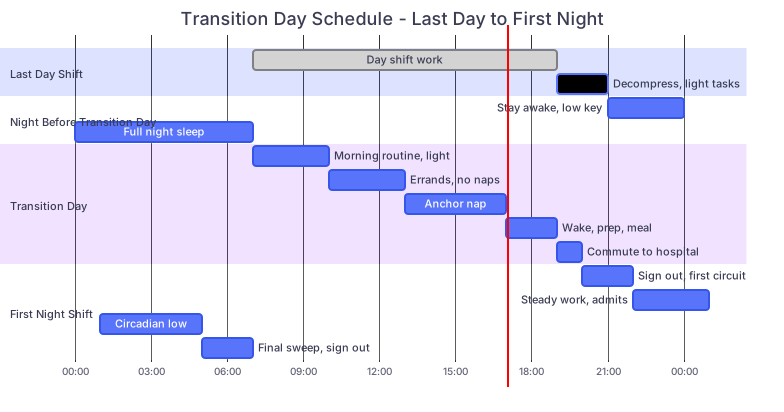
| Task | Details |
|---|---|
| dateFormat HH | mm |
| axisFormat %H | %M |
| Last Day Shift: Day shift work | done, 07:00, 12h |
| Last Day Shift: Decompress, light tasks | active, 19:00, 2h |
| Night Before Transition Day: Stay awake, low key | 21:00, 3h |
| Night Before Transition Day: Full night sleep | 00:00, 7h |
| Transition Day: Morning routine, light | 07:00, 3h |
| Transition Day: Errands, no naps | 10:00, 3h |
| Transition Day: Anchor nap | 13:00, 4h |
| Transition Day: Wake, prep, meal | 17:00, 2h |
| Transition Day: Commute to hospital | 19:00, 1h |
| First Night Shift: Sign out, first circuit | 20:00, 2h |
| First Night Shift: Steady work, admits | 22:00, 3h |
| First Night Shift: Circadian low | 01:00, 4h |
| First Night Shift: Final sweep, sign out | 05:00, 2h |
Three Things to Remember
- The transition works or fails before you ever walk into the first night shift—protect your anchor nap and time your caffeine.
- Between 1–5 a.m., your brain is not your friend; use structure, double‑checks, and small movements to stay safe.
- A clean, honest sign‑out after that first night is as much a safety tool as any order you write at 3 a.m.—land the plane, then go home and sleep.