You’re standing in your apartment at 5:45 PM, scrub top half on, badge dangling from your bag, and you’re thinking: “What the hell do I actually need for this 14-hour night shift?” You grab a random granola bar, your stethoscope, maybe a charger, and you’re out the door.
Halfway through the night you’re starving, your phone’s at 3%, your contacts are glued to your eyeballs, and you’re drinking cold coffee from six hours ago. You had all day to prepare, and you still feel like you showed up naked.
You don’t need more willpower. You need a system. A personal night shift go-bag.
Here’s the answer you’re looking for: a clear, realistic resident’s checklist of what belongs in that bag — and what’s just extra weight you’ll never use.
1. The Core: Bag Setup and Non-Negotiables
Let’s start with the container and the “forget this and you’re screwed” items.
Pick the right bag
You want:
- Backpack or sling bag with multiple compartments
- Easy to wipe down (hospital grime is real)
- Not gigantic — if it looks like you’re moving in, you went too far
Avoid: open tote bags. Stuff spills, food gets crushed, and you’ll lose your penlight at least three times a shift.
| Bag Type | Best For |
|---|---|
| Medium backpack | Most residents |
| Sling bag | Minimalist packers |
| Small duffel | Long call + post-call |
| Tote bag | Avoid for night shift |
Absolute must-haves (do not skip these)
These live in your bag. They don’t leave it unless you’re using them.
Hospital essentials
- Stethoscope (if your hospital doesn’t assign you one)
- ID badge + clip/lanyard
- Pen light
- 2–3 reliable pens (not the garbage ones that skip)
- Small notebook or pocket cards
Tech
- Phone
- Phone charger with long cord (6 ft+; outlets are never where you want them)
- Portable battery pack (for when all outlets are full)
- Headphones or earbuds (for quick breaks, post-call ride home)
Wallet basics
- Hospital parking pass or card
- Credit/debit card
- A little cash (for that one vending machine that hates cards)
These aren’t “nice to have.” They’re the skeleton of your go-bag. If you’re always scrambling for a charger or stealing pens, fix that right here.
2. Food and Hydration: The Difference Between Functioning and Useless
If you only improve one part of your night shift life, make it this one.
Think “slow burn,” not sugar rollercoaster
Your goal: avoid the 3 AM blood sugar crash that turns you from a functioning resident into a zombie staring at the EMR.
Aim for:
- One real meal
- 1–2 smaller “mini-meals”
- 1–2 healthyish snacks
Practical examples:
Real meal:
- Leftover pasta + chicken in a microwave-safe container
- Rice + beans + veggies
- Frozen meal that isn’t 100% sodium and sadness
Mini-meals:
- Greek yogurt + granola
- Peanut butter sandwich
- Cheese + crackers
Snacks:
- Nuts or trail mix (pre-portioned, or you’ll down half a bag at 2 AM)
- Protein bar (not a candy bar disguised as one)
- Apple, banana, or clementines
Hydration setup
Bare minimum:
- 1 refillable water bottle (insulated if you like cold water)
Upgrade:
- 2 bottles: one for water, one for something with flavor/electrolytes
- Electrolyte packets (LMNT, Liquid I.V., or the cheap store-brand versions)
Skip:
- Chugging pure energy drinks all night
- Going the whole shift on just coffee
Caffeine, but not stupid
Reasonable plan:
- One pre-shift coffee
- One mid-shift caffeine dose (around 11 PM–1 AM)
- Cut off caffeine 5–6 hours before you’ll actually sleep post-call
If you’re pounding a Monster at 4 AM, enjoy staring at your ceiling at 11 AM.
3. Comfort, Clothing, and Staying Functional
A lot of residents suffer through minor misery that’s totally fixable with a few cheap items in the bag.
Clothing: your “night armor”
Pack and keep:
- Extra pair of socks
- Compression socks (especially on ICU/ED nights or if you’re on your feet constantly)
- Thin base layer (long-sleeve, moisture-wicking) if your hospital is freezing
- Light fleece or zip-up you can easily remove
- Optional: spare scrub top or undershirt (for spills, sweat, “code brown”)
If you rotate between hospitals, throw one full clean scrub set in the bottom of your bag and forget about it until you need it. Future you will say thank you at 3 AM when coffee ends up on your lap.
Sleep and “micro-rest” kit
You won’t always get a nap, but when you can, you want to fall asleep fast.
Good things to pack:
- Eye mask
- Foam earplugs
- Travel-size blanket or large shawl (especially in cold call rooms)
- Travel pillow or inflatable neck pillow
This stuff lives in a small pouch in your bag. Don’t chase these items every shift. Just leave them in there.
4. Hygiene, “Feel Human Again,” and De-Smelling
You’re going to feel gross at some point in the night. Fixable.
Bare-minimum hygiene kit
This does not need to be fancy. Travel-size is your friend.
Pack:
- Travel toothbrush + mini toothpaste
- Travel-size deodorant
- Lip balm
- Hand cream (hospital soap will destroy your skin)
- Alcohol-based hand sanitizer (yes, there’s some everywhere, but sometimes not where you are)
If you wear contacts:
- Contact case + small solution bottle
- Backup glasses
Forget your glasses on a dry-eye night shift once. You won’t repeat that mistake.
“Nice-to-have but high yield”
These aren’t required, but they massively improve quality of life:
- Facial wipes or baby wipes (post-code, pre-nap, post-nap)
- Hair ties / clips
- Small comb or brush
- Breath mints or gum (post-call encounter with attendings, families, or your Uber driver)
5. Work Brain: Tools That Save You Time at 3 AM
Yes, you have UpToDate and MDCalc. But you don’t want to be reinventing your own workflow every single night.
Quick-reference items
These don’t need to be elaborate. Just tight and practical.
Ideas:
Small notebook with:
- Your go-to admission H&P template
- Checklist for cross-cover calls
- Dosing you constantly forget (e.g., levophed start dose, peds Tylenol, insulin correction scales if allowed)
- Common sign-out formats
Laminated or printed cards:
- Hospital code numbers
- Rapid response numbers
- Common order sets / pager numbers
“Admin survival” kit
These don’t seem like much, but they’re annoyingly useful:
- 2–3 extra pens
- Highlighter
- Small roll of tape (for labels, notes)
- Mini stapler or binder clips (if you’re in a paper-heavy system)
You don’t need a full office desk. Just the basics that stop you from wasting time every hour.
6. Mental Health and Sanity: The Stuff Nobody Lists But You’ll Actually Use
You’re not a productivity robot. You’re a tired human who needs tiny things to stay sane.
Micro-mood boosters
One or two of these is plenty:
- A book or Kindle (for that rare 15–20 minute lull)
- Downloaded podcast or playlist (don’t rely on spotty Wi-Fi)
- One comfort snack that is unapologetically for your soul, not your nutrition
- A tiny notebook for venting or brain-dumping when you’re wired but exhausted
Boundaries: keep it small
Don’t turn your go-bag into a mobile entertainment center. A couple of low-effort options is all you need.
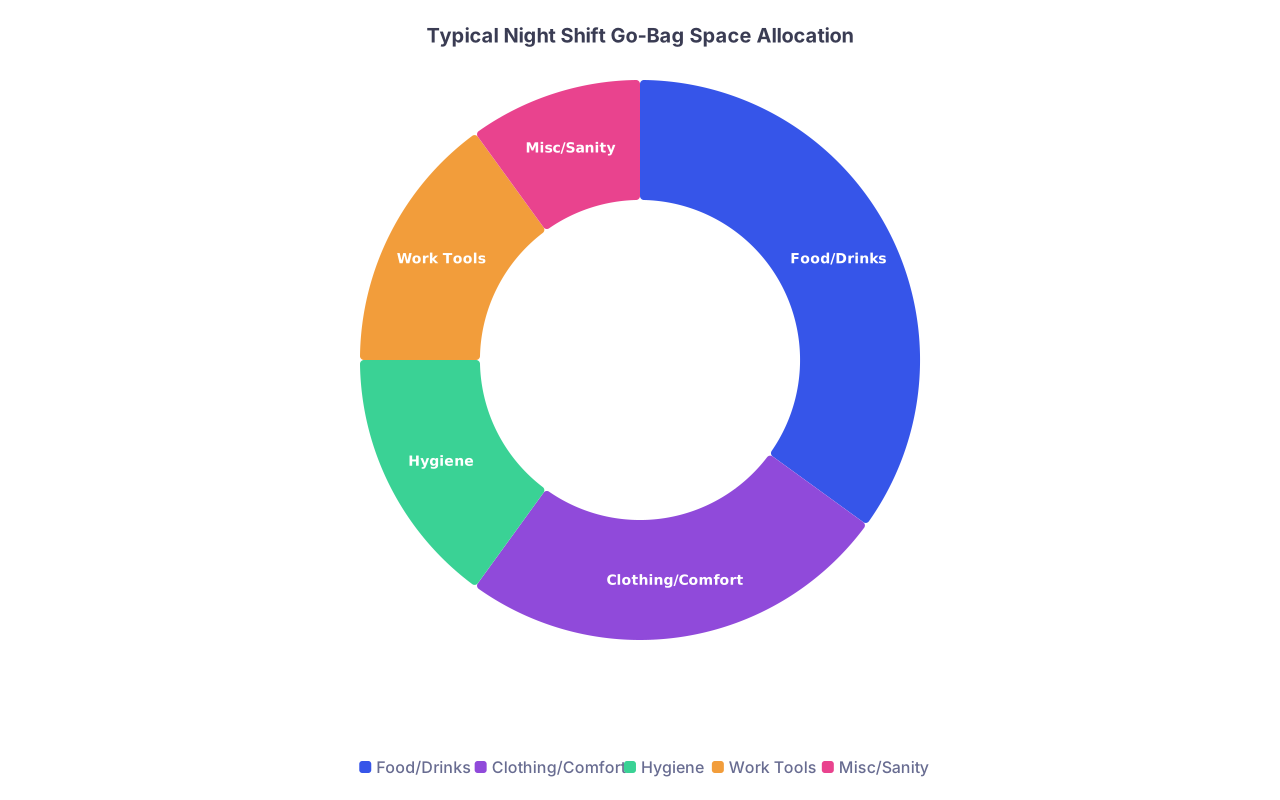
| Category | Value |
|---|---|
| Food/Drinks | 35 |
| Clothing/Comfort | 25 |
| Hygiene | 15 |
| Work Tools | 15 |
| Misc/Sanity | 10 |
7. What Stays in the Bag vs What You Pack Each Shift
The real hack isn’t the individual items. It’s dividing your stuff into:
- Permanent bag items
- Per-shift items
Permanent residents of your go-bag
You do NOT unpack these between shifts:
- Hygiene kit
- Sleep kit (eye mask, earplugs, blanket, pillow)
- Extra scrubs / socks / base layer
- Notebook, pens, badge backup clip
- Portable charger + cord
- Headphones
Once they’re in, they live there. Replenish as needed, but don’t remove them.
Per-shift add-ons
Things you consciously add for each specific night:
- Food
- Drinks
- Fresh contact lenses (if you use dailies)
- Wallet and keys
- Current rotation-specific stuff (e.g., certain pocket cards)
If you’re smart about it, you’re only actively “packing” 5–7 things before each night. The rest is ready and waiting.
8. Quick Checklist: What Belongs in Your Night Shift Go-Bag
Here’s the condensed version you can actually use.
Essentials
- ID badge + clip
- Stethoscope
- 2–3 pens + small notebook
- Phone + long charging cable
- Portable battery pack
- Headphones/earbuds
- Wallet (card + small cash + parking pass)
Food & Drink
- 1 main meal (microwaveable)
- 1–2 mini-meals or solid snacks
- 1–2 healthyish snacks (nuts, yogurt, fruit, bar)
- Water bottle
- Optional: electrolyte packets / flavored drink
Comfort & Clothing
- Extra socks
- Compression socks (if needed)
- Light fleece / zip-up
- Spare scrub top or full set (ideally)
- Eye mask
- Earplugs
- Small blanket or shawl
- Travel pillow
Hygiene
- Toothbrush + toothpaste
- Deodorant
- Lip balm
- Hand cream
- Contact case + solution + glasses (if applicable)
- Wipes (face or baby wipes)
- Hair ties / brush
Work / Brain
- Pocket notebook with templates and key dosages
- Printed/laminated quick-reference cards
- Extra pens, highlighter, small tape
Sanity
- One book / Kindle or offline content
- One comfort snack
- Small notebook for brain-dump (optional)
FAQ: Night Shift Go-Bag
1. Isn’t this overkill? Do I really need all this stuff?
No, you don’t need every single item. But you do need a system. Most residents I’ve seen function best with: food, hydration, basic hygiene kit, spare clothing layer, sleep kit, and a few work tools. Start with the essentials, then add whatever you actually miss after a few nights. The goal isn’t maximal packing — it’s never being miserable for a fixable reason.
2. How big should my night shift go-bag be?
If you can’t easily carry it on one shoulder or your back without annoyance, it’s too big. Think medium backpack size, not a full suitcase. You’re not moving into the hospital (even if it feels like it). If you routinely run out of space for food or a small blanket, your bag is probably too small.
3. What’s the one thing people always forget but always need?
Tie between: long charging cable and backup glasses/contacts. Standard-length chargers don’t reach awkward outlets. And when your eyes are dry at 3 AM and your contact tears, you don’t want to be squinting through the rest of the shift. Honorable mentions: deodorant and an extra pair of socks.
4. How do I avoid my go-bag turning into a disgusting pile of wrappers and junk?
Build a 2-minute ritual into your post-call life: when you get home, dump trash, restock snacks if needed, refill any travel-size toiletries, and check your chargers. That’s it. If it takes more than 2–3 minutes, you’re overcomplicating it. Don’t do full reorganizations every shift; just reset the basics.
5. What should I keep at the hospital instead of in my bag?
If you have a locker or dedicated call room: leave a blanket, pillow, maybe one spare scrub set there. Anything bulky that you use every shift but don’t want to carry. Your go-bag should handle portable, personal, and hygiene items. Stationary comfort stuff can live at the hospital if it’s safe.
6. I’m on a tight budget. What are the highest-yield cheap items?
Three big wins under $30 total: a decent water bottle, a basic eye mask + foam earplugs combo, and a travel-size hygiene kit (toothbrush, toothpaste, deodorant, lip balm). Then add a long phone cable and a couple pairs of compression socks when you can. That alone makes a massive difference in how you feel on nights.
Key points: build one dedicated night shift go-bag, keep core items in there permanently, and standardize your food, comfort, and hygiene basics. Future you — the one answering pages at 3:27 AM — will be very, very glad you did.