
The most common advice about sleeping before nights is vague and useless. “Just sleep when you can” is not a strategy. It’s how you end up wired at 3 a.m. and hallucinating at 5.
Here’s the real answer: you don’t need a magic number of hours; you need a plan. And that plan depends on three things:
- What time your shift starts
- Whether it’s your first night or you’re mid‑block
- How much sleep debt you’re already carrying
I’ll walk you through a practical framework I’ve seen work for residents across medicine, surgery, EM, ICU, OB — the ones who don’t look half-dead at sign-out.
The Short Answer: Target Range, Not a Magic Number
Let me be direct.
For most residents, you should aim for:
First night shift:
4–6 hours of sleep in the late afternoon/early evening before the shift.Subsequent nights in a row:
7–9 hours of daytime sleep anchored as consistently as possible (same start and end times).Post‑night “recovery” sleep:
2–4 hour nap right after your last night → then stay awake until a normal bedtime (9–11 p.m.) to reset.
Not 12 hours. Not “I’ll just power through without sleeping.” Both of those approaches backfire.
Most people function best across a night shift if they:
- Don’t start the night sleep-deprived
- Don’t try to “flip” their schedule completely in one day
- Don’t oversleep so much before the first night that they can’t crash properly the next morning
Now let’s build the actual framework so you can plug in your times.
Step 1: Know Your Shift Times and Goals
You can’t answer “how many hours” until you answer “when exactly.”
Ask yourself three questions:
- What are the exact start and end times of my shift? (e.g., 7 p.m.–7 a.m., 9 p.m.–7 a.m., 11 p.m.–7 a.m.)
- Is this my first night, a mid‑block night, or my last night?
- How many hours have I actually been sleeping the past 2–3 days?
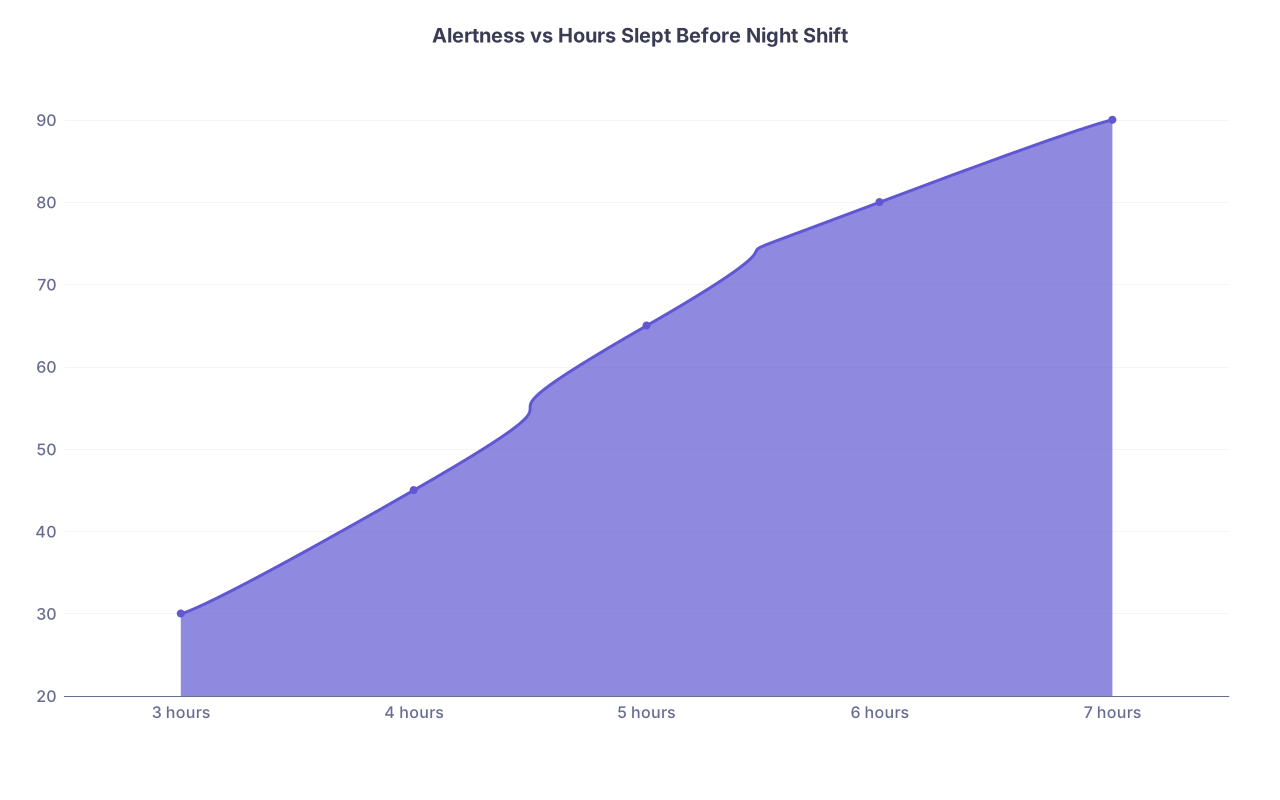
That third one matters more than people admit. If you’re going into nights already running on 4 hours a day from pre‑rounds and late notes, no schedule tweak will fully save you. You’re managing a deficit.
| Category | Value |
|---|---|
| 3 hours | 30 |
| 4 hours | 45 |
| 5 hours | 65 |
| 6 hours | 80 |
| 7 hours | 90 |
The goal is not to feel “perfect.” It’s to be:
- Safe
- Functional
- Able to make good decisions at 4 a.m.
That usually happens when you’ve banked at least 4–6 hours in the recent block before your shift starts, and you’re not carrying massive chronic debt.
Step 2: The First Night Shift – How Much Should You Sleep?
This is the one people screw up the most.
What usually happens:
- They work a normal day before the first night
- They get home at 6 p.m., exhausted
- They “take a nap” and wake up at midnight confused and panicked
Or the opposite:
- They force themselves to stay up all day
- Walk into a 7 p.m.–7 a.m. at ~36 hours awake
- Hit the wall around 3 a.m. and hate life
Neither is smart.
A Better Framework for the First Night
Assume a 7 p.m.–7 a.m. or 8 p.m.–8 a.m. typical shift. Adjust an hour or two as needed.
Your target:
- Stay awake in the morning and early afternoon
- Take a long nap in the late afternoon
- Aim for 4–6 hours of pre‑shift sleep
Sample schedule if shift starts at 7 p.m.:
- 7 a.m.: Wake up after last “day” schedule
- Stay awake, do normal stuff, low‑stress tasks
- 12–1 p.m.: Light lunch, avoid huge carb bomb
- 1–2 p.m.: Start winding down
- 2–3 p.m.: In bed, blackout curtains, phone off
- Sleep until 6–6:30 p.m. (3.5–4.5 hours)
- Quick wake‑up routine, caffeine at the start of shift
That 4–6 hour range is the sweet spot: enough to keep you safe overnight, but not so much that you can’t sleep the next day after your shift.
If your shift starts later (e.g., 11 p.m.), you can shift that nap to 4–8 p.m. Still, keep it in the 4–6 hour range if you can.
Step 3: Subsequent Nights – How Many Hours During the Block?
Once you’re in the middle of a run of nights (3, 5, 7 in a row), your goal changes.
You’re not trying to be a hero. You’re trying to be repeatable.
For nights 2–X:
- Target: 7–9 hours of sleep during the day
- Anchor: Try to sleep at roughly the same time each day
- Reality: You may only get 5–7 hours. That’s when strategic napping comes in.
Typical approach for 7 p.m.–7 a.m. shift:
- 7–8 a.m.: Get home, small snack or light breakfast, basic hygiene
- 8:30–9 a.m.: In bed, room dark, phone out of reach
- Sleep until 3–4 p.m. (6–7 hours)
- 4–6 p.m.: “Daytime” – food, light exposure, small errands
- 6–6:30 p.m.: Get ready, head in
You’re aiming for a core sleep block of at least 6 hours, ideally 7–8. If you can’t get that:
- Lock in minimum 4–5 hours core sleep
- Add a 30–60 minute nap before shift (around 5–6 p.m.) or early in shift if your specialty allows a protected nap window
What if you can’t fall asleep during the day?
This is where people sabotage themselves:
- Lying in bed scrolling
- Caffeine too late in the shift
- Trying to “push through” and then crashing at 1 p.m.
Fix the inputs:
- Cut caffeine 4–6 hours before shift end (e.g., last coffee no later than 3 a.m. on a 7 a.m. sign‑out)
- Wear sunglasses on the way home to reduce bright light exposure
- Commit to strict sleep environment: blackout curtains, earplugs or white noise, phone on Do Not Disturb, eye mask if needed
Step 4: Last Night and Resetting – How Much Should You Sleep After?
This is its own question: “How much should I sleep after my last night?”
Most people either:
- Sleep 10 hours after the last night and then can’t fall asleep again at 11 p.m.
- Or force themselves to stay up all day, become a zombie, and then crash way too early
The cleanest strategy:
After your last night shift:
- Get home, sleep 2–4 hours only
- Set a hard alarm. No “just 5 more minutes.”
Wake up by noon–1 p.m.
- Get out of bed, get light, move, eat a real meal
Don’t nap in the afternoon
- You’ll be tired. That’s the point. You want real sleep pressure by 9–11 p.m.
Go to bed at a normal bedtime
- 9–11 p.m., aim to sleep through the night
- That one full night of normal sleep is what actually resets you back to days
If you oversleep that post‑night nap (6–8 hours), you’ll be up until 3 a.m. and you just created your own mini night shift again.
Step 5: Adjusting for Short vs Long Shifts
Not all nights are 12s. Some places do 8‑ or 10‑hour nights. The logic doesn’t change much, but the buffer you need does.
| Night Shift Length | Pre-Shift Sleep (First Night) | Daytime Sleep (Mid-Block) |
|---|---|---|
| 8 hours | 3–4 hours | 6–7 hours |
| 10 hours | 4–5 hours | 7–8 hours |
| 12 hours | 4–6 hours | 7–9 hours |
Shorter shifts = slightly less “buffer” needed. But here’s the key: the time of day is more important than the sheer working hours.
A 10 p.m.–6 a.m. shift is still wrecking the part of your circadian rhythm that wants to be asleep at 2–4 a.m., even if it’s shorter.
So don’t be casual about “it’s just an 8‑hour night.” Your brain doesn’t care about FTE math. It cares about when you’re awake.
Step 6: Using Naps Strategically (Without Destroying Night Sleep)
Naps are not cheating. Poorly timed naps are.
Use naps like this:
- Before first night: main 4–6 hour “nap” late afternoon
- Mid‑block:
- Preventive nap (30–60 minutes) before shift if you had short daytime sleep
- Early‑shift nap (20–30 minutes) if your team has a protected quiet period (some ICUs/EDs actually schedule this)
Keep most naps:
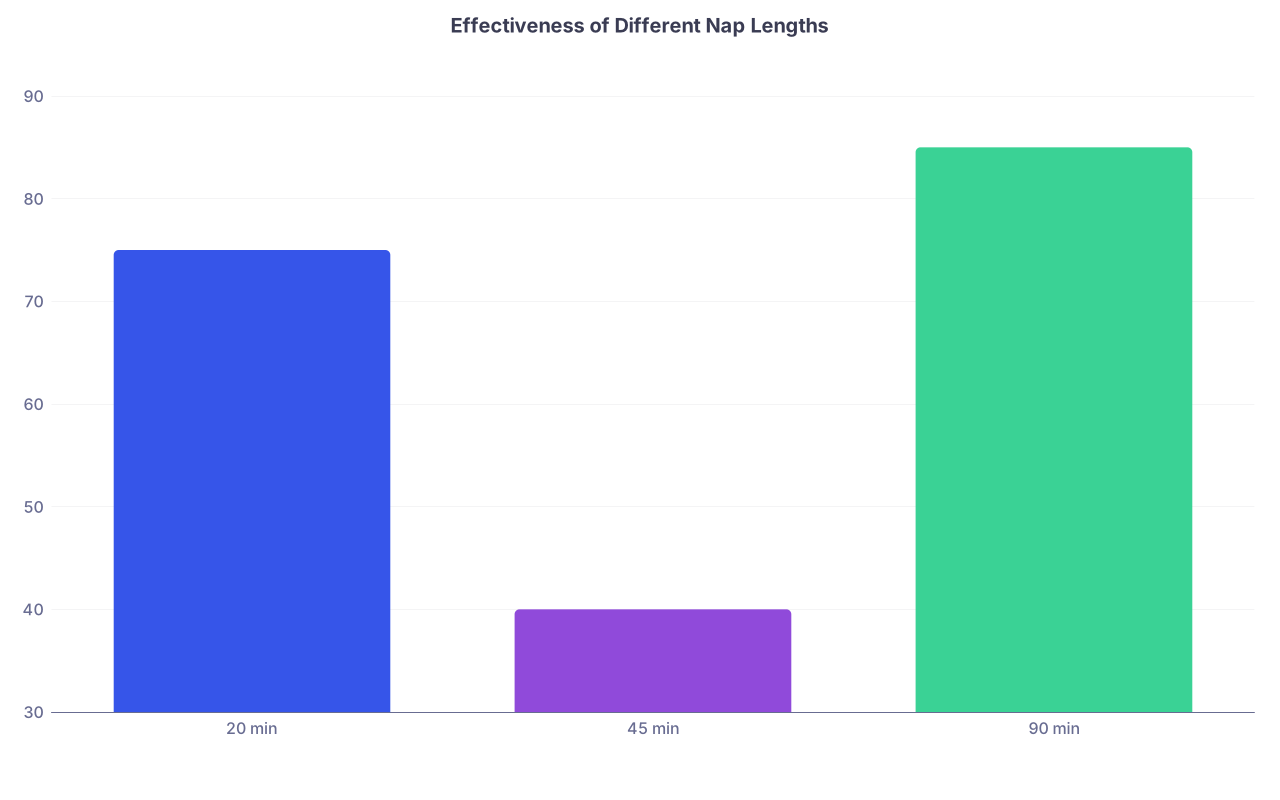
- 20–30 minutes → quick alertness boost, minimal grogginess
- Or 90 minutes → full sleep cycle if you truly have the time
The danger zone is 60–75 minutes: too long to wake up cleanly, too short for a full cycle.
| Category | Value |
|---|---|
| 20 min | 75 |
| 45 min | 40 |
| 90 min | 85 |
Step 7: Caffeine, Light, and Timing – The Multipliers
You can sleep “enough” hours and still feel like trash if your timing of light and caffeine is off.
Here’s the simple, grown‑up version:
-
- First dose at the start of shift, not before your nap
- Last dose about 4–6 hours before the end of shift
- Avoid “panic coffee” at 5–6 a.m. – it will trash your daytime sleep
Light:
- Bright light during shift, especially early night and around your low points (1–4 a.m.)
- Dim light on the way home – sunglasses, avoid blasting screen in bed
- Once you’re awake during the “day” portion, expose yourself to bright light again to anchor your internal clock
You’re basically using light and caffeine to support your chosen sleep window. Not fight it.
Step 8: What If I’m Already Sleep Deprived?
You’re in residency. So yes, you are.
If you’re going into a run of nights already behind, you won’t fully fix it in one afternoon nap. But you can blunt the damage.
What helps:
- The day before the first night, try to get at least 7–8 hours total (even if split: 5 hours at night + 2–3 hour midday nap)
- Use the first night’s 4–6 hour pre‑shift sleep as partial recovery + buffer, not just a flip tactic
- During the block, protect your daytime sleep like it’s golden – this is not the time to offer to help someone move, go to DMV, or attend every optional meeting
If you consistently can’t get more than 4–5 hours daytime sleep and your rotation allows it, stack short naps: pre‑shift 30 minutes + mid‑shift 20 minutes. It’s not ideal, but it’s safer than pretending you’re fine.
Sample Frameworks You Can Copy
Let’s put this in a concrete flow so you don’t have to reinvent it each time.

| Step | Description |
|---|---|
| Step 1 | Know shift times |
| Step 2 | Plan 4-6 hour nap late afternoon |
| Step 3 | Anchor 7-9 hours daytime sleep |
| Step 4 | Limit caffeine after nap |
| Step 5 | Repeat schedule next day |
| Step 6 | Sleep 2-4 hours post shift then reset |
| Step 7 | First night or mid block |
| Step 8 | Last night? |
Another quick mental model:
- First night: 4–6 hour nap
- Mid‑block: 7–9 hour main block
- Last night: 2–4 hour recovery nap, then normal bedtime
That’s 80% of night shift life right there.
Reality Check: What You Should Stop Doing
A few bad habits I’ve watched wreck residents more than the actual work:
- Sleeping “until I wake up” after nights – no alarm, drift to 4 p.m., then wide awake at 3 a.m. again
- Guzzling coffee at the end of the shift because you’re almost done – then lying in bed wired and miserable
- Agreeing to morning conferences after nights with “I’ll just nap after” – then the nap is 2 hours and feels like nothing
- Trying to keep a normal social life during a heavy night float – weekly dinners, early meetings, gym at 8 a.m. Stop. Nights are damage control mode.
You have a finite budget of alertness. Spend it where it matters: on patient care and not crashing your car driving home.


The Bottom Line: How Many Hours Should You Sleep Before a Night Shift?
If you remember nothing else, remember this:
Before your first night, aim for 4–6 hours of sleep in the late afternoon/early evening. Enough to keep you safe, not so much that you can’t reset the next morning.
During a stretch of nights, protect 7–9 hours of anchored daytime sleep as your core. If you fall short, add short, strategic naps — pre‑shift or early in the shift.
After your last night, sleep 2–4 hours when you get home, then force yourself to stay up and go to bed at a normal time. That’s how you actually reset.
You’re not trying to win some contest for “most exhausted resident.” You’re trying to be awake enough to make good decisions at 4 a.m. and still be a functional human on your days off. Use the framework, not vibes.