
What happens when you get a four‑week night float schedule and your “days off” are randomly scattered so you’re never actually rested and your circadian rhythm is wrecked?
Here’s the answer you’re looking for: there is a best way to schedule days off during a night float block—and there are a couple of terrible ways that will absolutely break you by week two.
Let’s walk through it like we’re sitting in the call room looking at your schedule template.
The Core Rule: Protect Your Rhythm First, Life Second
If you remember nothing else, remember this:
During a night float block, your circadian rhythm is your most valuable asset. Your days off should protect that first, then your social life, errands, and everything else.
Residents get into trouble when they treat days off during night float like normal weekends. They flip back to daytime living, then try to flip back to nights 24–48 hours later. That yo‑yo is what crushes you.
So the core principle:
- Minimize full day‑night flips during the block
- Cluster nights together whenever possible
- Use days off as low‑disruption buffers, not mini-vacations
Now let’s break that into actual strategies you can use.
First Decision: What Kind of Night Person Are You?
Before you decide how to schedule days off, you have to be honest about how you handle nights. There are basically three types.

Type 1: The “Stay on Nights” Person
You tolerate nights reasonably well.
You’d rather feel consistently “off” but stable than keep flipping.
Best move for you: keep a nocturnal or semi-nocturnal schedule on days off. That means:
- Sleeping roughly 3–5 am to 11 am or noon on days off
- Doing errands / social stuff in the afternoon and evening
- Avoiding early morning commitments completely
Type 2: The “Hybrid” Person
You feel awful if you go fully nocturnal, but you also can’t flip back and forth completely.
Best move: partial shift. Something like:
- On work nights: sleep 9 am–3 pm (adjust as needed)
- On days off: sleep 2–8 am, then nap from 2–4 pm if needed
- You’re never fully daytime, never fully vampire
Type 3: The “I Must See Daylight” Person
You absolutely hate being flipped. Being awake all night makes you feel sick, and you need one or two “real” daytime days for sanity.
You’ll take a performance hit, and that’s the trade‑off.
Best move: carefully planned, limited full flip on a longer stretch of days off (like 3+ days together), not on a single random day off.
Ideal Day-Off Patterns: What Actually Works
Now to the practical piece: how to place your days off in a night float block.
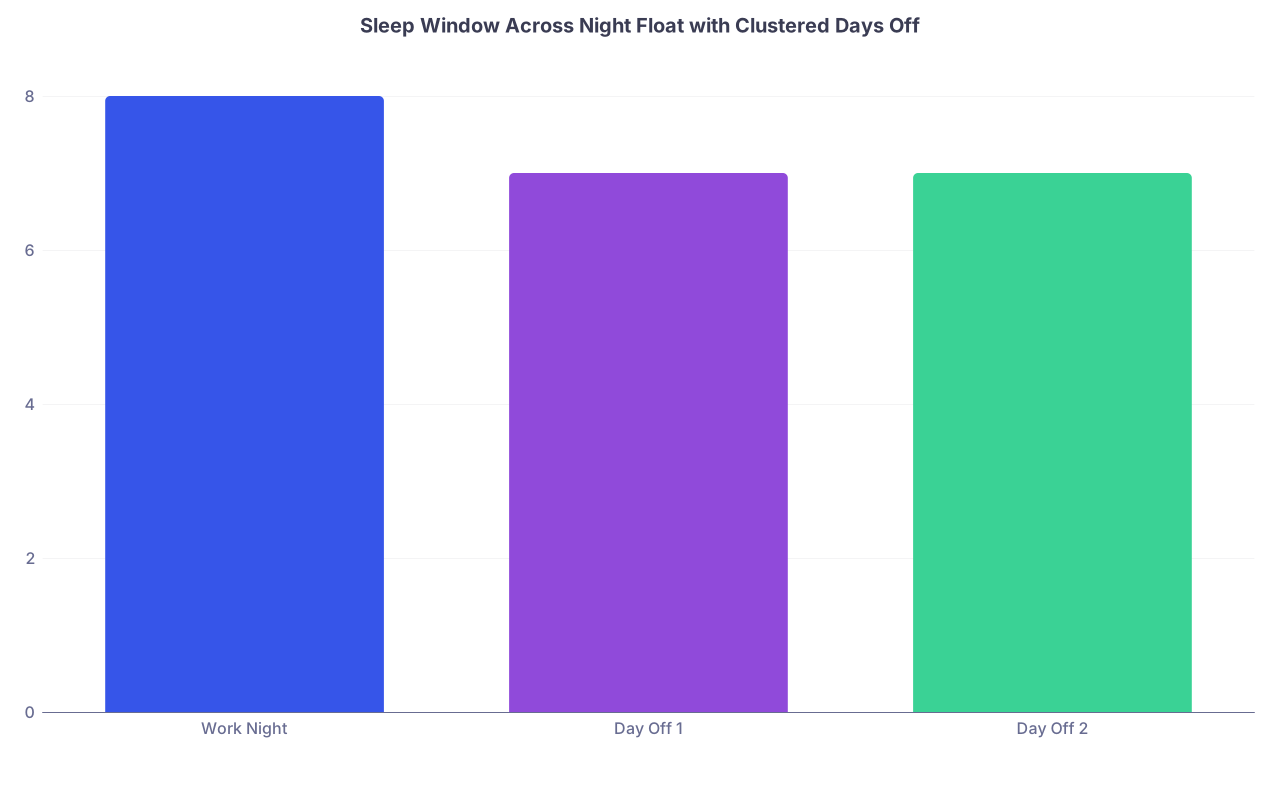
Pattern #1: The Gold Standard – Clustered Days Off
If you can influence the schedule, this is your best friend.
Example 4‑week night float:
- Work: Sun–Thu nights
- Off: Fri–Sat nights
- Repeat x4
Why this works:
- Your body stays mostly nocturnal the entire block
- You get consistent 2‑day recovery chunks
- Sleep schedule barely changes—all that changes is how you use your awake hours
On your “weekend”:
- You still sleep late morning to afternoon (shift it by 1–2 hours at most)
- You use evenings for life: dinner out, Netflix, chores, family time
- You do not schedule a 7 am dentist appointment, no matter how much guilt your teeth give you
| Category | Value |
|---|---|
| Work Night | 8 |
| Day Off 1 | 7 |
| Day Off 2 | 7 |
That’s the point: keep your sleep block roughly in the same zone each day, even off days.
Pattern #2: The 3–1–3 Setup
Sometimes you’ll be on a system where you get a mid‑week day off.
Example:
- Work: Sun–Tue nights
- Off: Wed night
- Work: Thu–Sat nights
How to survive this without wrecking yourself:
On Wed (off day, coming off Tues night):
- Get off at ~8 am
- Go home and sleep a solid block, but shorten it: maybe 9 am–1 pm or 2 pm
- Force yourself up in mid‑afternoon
- Stay awake through evening, light activity, low‑key social if you want
- Go to bed later than a normal person—around 2–3 am
- Sleep until 10–11 am Thursday
- Easy slide back into Thursday night shift
The mistake people make:
They sleep 9 am–5 pm on Wednesday “because I’m off,” then they can’t fall asleep Thursday during the day, and the second half of the week is a disaster.
Pattern #3: The “Single Random Day Off” Trap
Worst case: you’re scheduled like this:
- Work: Mon, Tue, Wed nights
- Off: Thu night
- Work: Fri, Sat, Sun nights
This is common. It’s also brutal if you treat Thu as a normal day off.
Here’s what not to do:
- Don’t fully flip back to daytime living
- Don’t plan an 8 am workout, brunch, and a full social calendar
- Don’t stay up all day Thursday “so I sleep better that night” (you’re off; you don’t need to)
Better option:
- Treat Thu like a “light night” rather than a real day off
- Keep roughly same sleep times, but allow more flexibility
Example:
- Wed: work
- Thu 8 am: off shift, home, sleep 9 am–2 pm
- Thu 2–10 pm: chores, relax, low‑key social
- Thu 10 pm–2 am: wind down, TV, reading, gaming
- Fri 2–9 am: sleep
- Fri 9 am: start pre‑shift routine for Fri night
You’re using the off day to reduce workload and mental strain while not destroying your rhythm.
How Many Flips Is Too Many in One Block?
Simple rule:
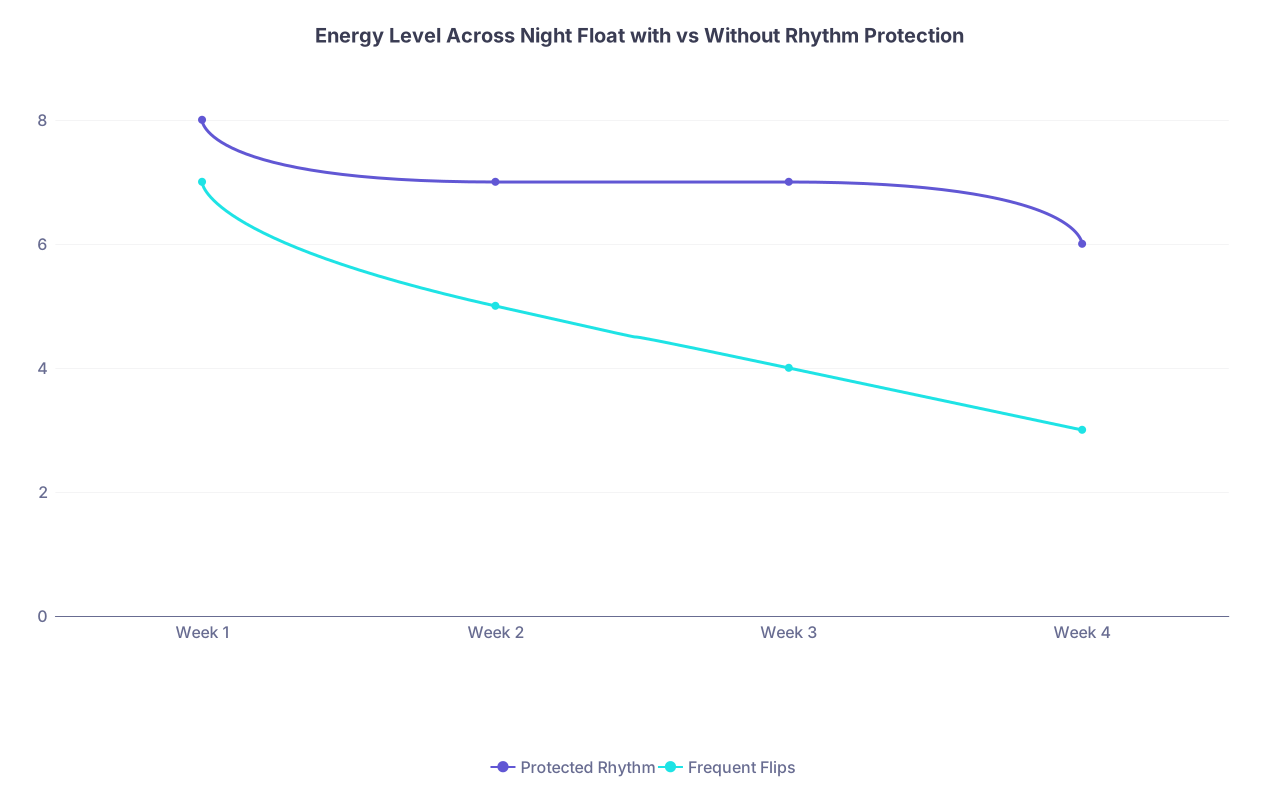
You can probably tolerate one full flip in a 4‑week block. Two or more and you’ll feel like you have permanent jet lag.
So if you have:
- A 3‑day weekend in the middle, or
- You finish night float and go directly into days
That’s where you’re more justified in doing a full flip.
Full Flip Strategy (for 3+ Days Off or End of Block)
Coming off your last night:
- Stay up later in the morning: sleep 11 am–3 pm only
- Force yourself up mid‑afternoon
- Stay awake until 10–11 pm (you’ll feel awful; this is the price)
- Sleep 11 pm–7 am
- You’re now mostly back on days
Where people mess it up:
- They “just take a nap” at 7 pm and wake up at 2 am
- Or they sleep a full 9 am–5 pm right after their last night, then lie awake until 4 am, and the next few days are chaos
What to Ask For When Schedules Are Being Built
You might not control everything, but you can absolutely ask for smarter patterns. Don’t just take whatever shows up in your inbox without pushing back a little.

| Step | Description |
|---|---|
| Step 1 | Given Night Float Block |
| Step 2 | Request 2 consecutive days off weekly |
| Step 3 | Keep nocturnal schedule on off days |
| Step 4 | Use 3-1-3 hybrid pattern |
| Step 5 | Minimize full flips |
| Step 6 | Can days off be clustered? |
| Step 7 | Single days off only? |
Things to request (politely, early):
- “Can my days off be consecutive whenever possible?”
- “If I only get one day off that week, can it be mid‑block rather than right before/after a flip to days?”
- “If we’re alternating NF and days, can we avoid a single random day off right between the two?”
You’re not being high‑maintenance. You’re asking for a schedule that keeps you functional and safe on nights.
What To Actually Do On Your Days Off
Beyond the timing, how you use the time matters just as much.
On Short Off Stretches (1–2 days off)
Priorities:
- Sleep preservation over FOMO
- Low‑key, low‑commitment activities
- No early morning anything
Use your awake time for:
- Laundry, groceries, meal prep
- One or two short social things (evening dinner, FaceTime calls)
- Light exercise: walk, yoga, short gym session—not a 20‑mile long run at 9 am
Avoid:
- Travel that crosses time zones (this is asking for misery)
- Alcohol-heavy nights; it destroys what little sleep quality you have
- Volunteering for extra shifts or favors “since I’m off anyway”
On Longer Off Stretches (3–4 days together)
Now you can justify a flip to daytime if you want it.
Strategy:
- Decide: “Am I using this to live like a normal human or to rest as a vampire?” Don’t half‑do both.
- If you flip: follow the partial-sleep-then-stay-up plan above
- If you stay nocturnal: lean into it. Late‑night projects, streaming, gaming, or studying in quiet hours, then errands in the afternoon.
Sample Schedules That Actually Work
Let’s build a few realistic templates.
| Pattern Name | Days Off Placement | Sleep Strategy |
|---|---|---|
| Classic Cluster | Fri–Sat nights | Stay mostly nocturnal |
| 3–1–3 Hybrid | Wed night | Slightly shorter sleep, late bedtime |
| Single-Day Buffer | Random midweek | Treat as light night, not full flip |
| End-of-Block Flip | Last 3–4 days | Partial sleep then reset to days |
Example 1: 6‑Night Week with 1 Day Off (Brutal but Common)
- Work: Sun, Mon, Tue, Wed, Fri, Sat nights
- Off: Thu night
Best way to use Thu:
- Thu 8 am: off shift
- Sleep 9 am–2 pm
- Awake 2–10 pm (low‑key, nothing intense)
- Wind down 10 pm–2 am
- Sleep 2–9 am Fri
- Back into NF Fri night
You’re not “wasting” your day off; you’re investing it in not falling apart on Fri/Sat.
Example 2: 7 On / 7 Off (Hospitalist or Some IM Setups)
Here you should do a full flip both directions.
Week 1: nights only
Week 2: off
Coming off last night:
- Last NF: Wed night
- Thu 8 am: off
- Sleep 11 am–3 pm
- Stay up until 10–11 pm
- Fri: wake 7–8 am, full daytime schedule for the rest of the week
Then reverse at the end of the off week: stay up later night before starting nights, nap day-of, go into first night reasonably rested.
A Few Non‑Negotiables That Make Everything Easier
Whatever pattern you choose, these are the “don’t argue, just do them” pieces:
- Blackout + white noise in your sleep space. If your room isn’t cave‑dark at noon, you’re losing.
- One consistent pre‑sleep routine. Same snack, shower, podcast, whatever—train your brain.
- Caffeine cutoff: 4–6 hours before planned sleep, even on days off.
- Don’t stack major life events on your nights off. No moving apartments, no big trips, no high‑stakes family drama if you can avoid it.
You can survive a garbage schedule if you protect these basics.
FAQs
1. Is it ever a good idea to flip back to a daytime schedule for a single day off in the middle of night float?
No. That’s the fastest way to feel like you’ve been hit by a truck for the next 2–3 shifts. For a single random day off, keep your sleep roughly in the same time zone—maybe shifted by 1–2 hours earlier at most, but don’t try to live like a normal daytime person for 24 hours.
2. What’s the best sleep window after a night shift if I have the next night off?
Shorten your post‑shift sleep a bit so you’re sleepy again at a semi‑normal late bedtime. Something like 9 am–1 or 2 pm, then awake, then bed around 2–3 am, wake around 10–11 am. You’re rested, your rhythm is mostly intact, and you don’t wreck the following work night.
3. How should I handle switching from nights back to days at the end of the block?
On your last night: take a shorter daytime sleep (11 am–3 pm), force yourself to stay awake until a normal-ish bedtime (10–11 pm), then sleep overnight and wake up 7–8 am. It feels awful for about 24 hours, but it’s much faster than half‑flipping for four days and feeling terrible the entire time.
4. What if my co-residents want to trade shifts and it ruins my clustered days off?
Ask yourself one question: “Will this trade create an extra flip or destroy my only pair of consecutive days off?” If yes, say no unless there’s a truly compelling reason. Protecting rest and safety is not selfish; it’s responsible. You’re no good to anyone if you’re a zombie writing orders.
5. Can I use naps instead of a full sleep block on days off?
Short naps (20–40 minutes) can help on days off, but they’re not a substitute for one solid 6–8 hour main sleep block. If you nap too long or too late, you’ll just destroy your ability to sleep when you actually need to. Use naps as a top‑up, not the foundation.
6. What’s the biggest mistake residents make with days off during night float?
They treat them like “normal” weekends—early brunches, packed social schedules, errands all morning—and then wonder why the next few night shifts feel impossible. The biggest mistake is sacrificing circadian stability for one day of normalcy. During a block of nights, play the long game: protect your rhythm, and you’ll suffer less every single shift.
Key points to walk away with:
- During night float, the best day‑off schedule is the one that protects your circadian rhythm, not the one that maximizes “normal life.”
- Cluster your days off when you can, avoid full flips for single days off, and use shortened daytime sleep to shift only when you have 3+ days off or you’re ending the block.
- Treat sleep like a non‑negotiable clinical task—because if you’re not rested, your patients (and you) are the ones at risk.
| Category | Protected Rhythm | Frequent Flips |
|---|---|---|
| Week 1 | 8 | 7 |
| Week 2 | 7 | 5 |
| Week 3 | 7 | 4 |
| Week 4 | 6 | 3 |