
The Unspoken Rules of Night Float That Residents Learn the Hard Way
It’s 2:37 a.m. Your pager has gone off six times in the last 10 minutes. One nurse wants a sleep aid. Another wants something for pain. Bed 12 is desatting. The ED is trying to sign out “just one more” admission that somehow comes with 15 active problems. Your cross-cover list looks like a graveyard of chronic issues with “monitor” written by someone who clearly knew the shift would end before anything hit the fan.
This is night float. And the stuff that actually makes or breaks you? Nobody really explains that. You’re just expected to “figure it out.”
Let me tell you what really happens. And what the seniors say about you when you are not there.
What Nights Really Are (Versus What They Tell You)
Daytime is about education and optics. Attending rounds, formal teaching, multidisciplinary huddles. Nights are about survival and risk management.
On paper, you “cover X patients and accept Y admissions.” In reality, you are:
- Risk buffer between the hospital and catastrophe
- Complaint sponge for every service that offloaded unresolved issues before sign-out
- Gatekeeper for what actually wakes the attending and what mysteriously resolves by morning
Day teams love to say, “Should be a quiet night.” Translation: “I did not fix half the problems on this list.”
Here’s the basic truth: your reputation in residency is built at night far more than during the day. Not because attendings see you (they mostly don’t), but because:
- Nurses decide if you’re safe or useless
- Seniors decide if you’re reliable or a liability
- Day teams see what you did — or did not do — when they open the chart at 7:00 a.m.
You think you’re being judged on your presentations. You are actually being judged on your overnight decision-making.
The Real Hierarchy at Night: Hint, It’s Not You
During the day, you can hide behind the team. At night, the hierarchy shifts.
If you do not figure this out fast, you will suffer.
Here’s how it actually works after midnight:
| Role | Practical Power at Night |
|---|---|
| Senior Resident | Clinical decisions, escalation |
| Charge Nurse | Workflow, priorities, who gets attention |
| Night Intern | Task execution, first-line response |
| On-Call Attending | Safety net, high-stakes decisions |
| ED Physician | Admission pressure, bed control |
The charge nurse and the senior are the two people who can make your night tolerable or hellish. Not the attending. Not the day team.
If the charge nurse thinks you’re unsafe or unresponsive, two things happen:
- They go straight to your senior or attending.
- Your name gets passed along at morning huddle: “Night doc X never calls back.”
I have literally heard a charge nurse say to a new intern, “We tried to call you three times last night. We will not be doing that again. We’ll just go above you.”
That intern’s life got much harder for the rest of the rotation.
So the first unspoken rule:
Be visibly available and audibly responsive.
Call back fast. Even if you can’t go there immediately, acknowledge the call, ask a quick focused question, and give a short plan or timeline.
Sign-Out: Where Your Night Is Won or Lost
You know the official mantra: “Clear, concise sign-out, include anticipatory guidance.” Fine. But inside closed doors, seniors talk about something else: which night float they trust to not implode.
The real purpose of sign-out at night is not “communication.” It’s liability transfer. Whoever wrote “monitor” instead of committing to a plan is handing you a grenade with the pin half-out.
The unspoken moves you need:
Kill the vague plan.
Any sign-out that says “monitor” without specifics? Fix it before the day team leaves. Ask:
“Monitor for what exactly? What would you want done if it happens?”
Then make them say it. “If SBP < 90, bolus 500 LR and page me,” or “If HR > 130 sustained, get EKG and call cards.” Now you have cover.Force anticipatory guidance for the unstable ones.
Borderline respiratory status. Soft blood pressures. New GI bleed. If you’re inheriting that, you deserve direct instructions.
“If this patient drops their pressure, are you okay if I start pressors before calling you?”
Or: “If they desat, how aggressive do you want me with BiPAP vs calling ICU?”Document the battlefields.
Before the shift really starts, look at your list and mark:- 2–3 patients who might honestly die tonight
- 3–5 who are likely to cause trouble (pain, agitation, borderline vitals)
This is how seniors do “mental triage.” You watch those people first.
Here’s the part nobody tells you: day teams absolutely check whether you followed the sign-out or not. If they see a mess in the chart that ignores their anticipatory plan, they label you as “does not follow through” even if you technically did nothing wrong.
How Nurses Actually Judge You (And Why It Matters More Than You Think)
Nurses run the building at night. Their informal evaluation of you spreads faster than any official feedback.
They are not judging you by brilliance. They are judging you by:
- How fast you respond
- Whether your orders are safe
- Whether your plans are realistic given their workload
- How you behave when everything hits the fan at once
What they will never tell you clearly, but talk about at the desk:
They hate the “Tylenol-only” doc.
The one who orders Tylenol for everything, does not examine, does not consider differential.
They will still follow orders. But they won’t trust you. And they will escalate around you.They notice exactly who comes to the bedside.
If a nurse says “I’m worried” and you do not show up, your stock tanks.
“Worried” from a seasoned night nurse is code for: “This patient might crash and I want your name on the case, not just my note.”They remember who throws them under the bus.
You chart “nursing did not inform MD” when they did. Or blame them in front of an attending. Kiss your good will goodbye.
There’s a trick seniors use that you should steal: when a nurse pages about something borderline, they say, “I’ll come see the patient now. What are you most worried about?” That one question turns the nurse into a collaborator, not just a task generator.
You want the night the ICU charge nurse says, “Call [your name], they actually come and help.” That’s currency.
Managing the Pager Without Losing Your Mind (Or Missing the Sick One)
Night float is not hard because of the complexity. It’s hard because of the volume and chaos.
You’re juggling:
- Cross-cover calls
- New admissions
- Rapidly changing vitals
- Social chaos (family at bedside losing it, unsafe discharges, angry ED)
If you do this like a robot — “respond in chronological order” — you will miss the crashing patient while adjusting someone’s bowel regimen.
Here’s what experienced night residents actually do.
They maintain a working triage in their head every minute.
Every new page gets mentally sorted into three bins:
- Must see now
- Can safely delay
- Can be handled by order-only
And they accept that this is dynamic. The sickest patient in the hospital can become the second priority if another one actively loses their airway.
Let me give you an example of unofficial triage logic that people rarely say out loud:
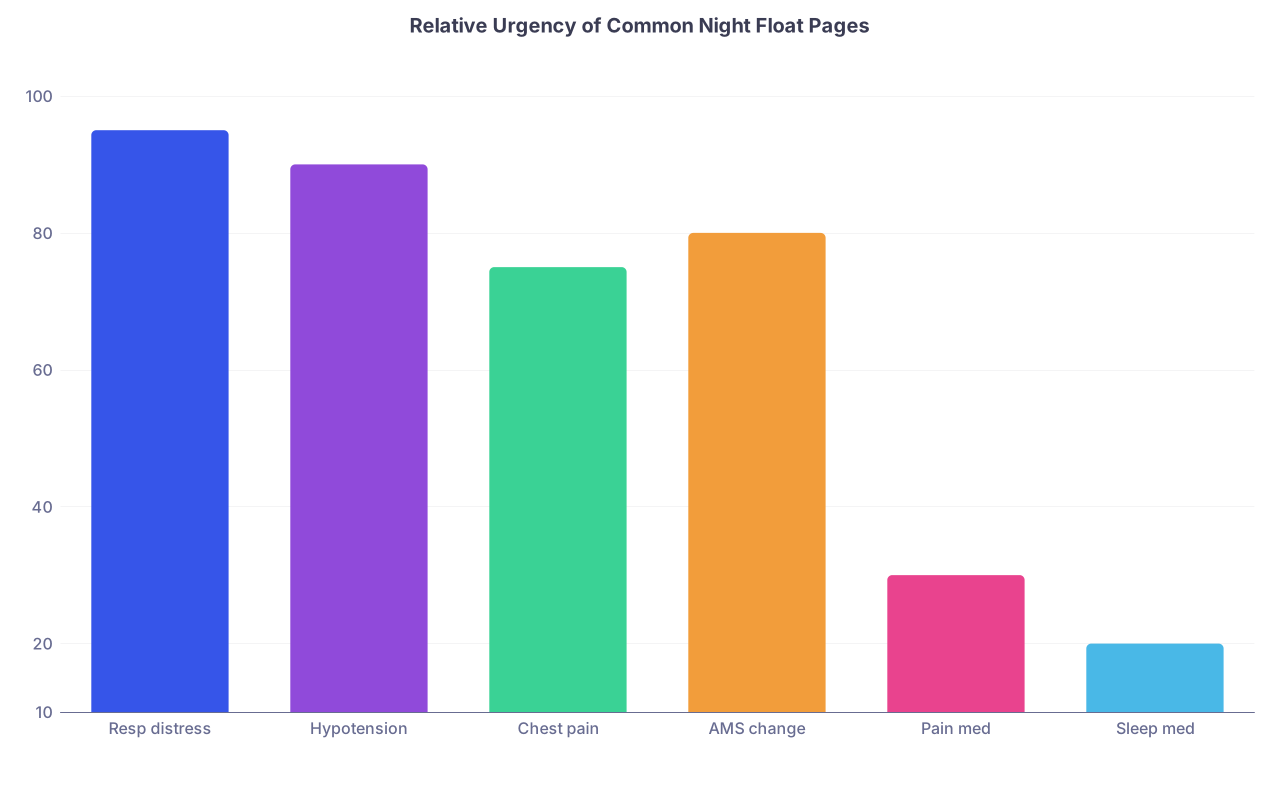
| Category | Value |
|---|---|
| Resp distress | 95 |
| Hypotension | 90 |
| Chest pain | 75 |
| AMS change | 80 |
| Pain med | 30 |
| Sleep med | 20 |
No, you won’t see this chart in a handbook. But it’s how decisions actually happen:
- Acute respiratory distress: drop everything, go.
- New hypotension: nearly always top-tier.
- Chest pain: depends, but usually upper-middle priority.
- Pain or sleep med: can be delayed if you’re actively stabilizing someone.
The mistake juniors make is apologizing for not handling everything instantly. You do not need to apologize for prioritizing the crashing patient over Ambien. You just need to communicate:
“Hey, I’m in a room with a very unstable patient. I will get to your patient as soon as I safely can. If anything changes in the meantime — BP, mental status, new symptoms — page me again immediately.”
That line alone has saved so many interns from being labeled “non-responsive.”
Adults Only: Calling the Attending at Night (The Stuff Nobody Says on Orientation Day)
No one is honest with you about this, so I will be.
You are being judged on two competing, slightly unfair axes:
- Do you call too much? = “Needy, unsafe, cannot function independently.”
- Do you call too little? = “Does not recognize sick patients, dangerous.”
Attending culture at night is insane. You’ll hear both of these about the same intern in different rooms:
“She wakes me up for everything.”
“She never calls me. I never know what’s going on.”
So where’s the line?
Here’s the actual rule that senior residents and PDs use, whether they admit it or not:
You should be able to explain why you did or didn’t call, and it should sound sane to a tired, mildly annoyed attending at 3:00 a.m.
They don’t need you to be perfect. They need you to be thoughtful.
Situations where you call. Every time. No debate:
- New pressor start or escalation
- New BiPAP, intubation, or crash to ICU
- Rapidly rising lactate with unclear cause
- Active GI bleed that isn’t slowing after initial resuscitation
- Anything where a nurse or ICU doc says, “We’re not comfortable with this plan”
And here’s the nuance: often, you call after you’ve already done initial stabilization. Attendings love hearing:
“Here’s what I already did, here’s how they responded, and here’s what I’m thinking next. I wanted to loop you in and confirm we’re on the same page.”
You will never get in serious trouble for a thoughtful, well-framed call. You will absolutely get scarred for the rest of training if you sit on a deteriorating patient who crashes at 5:00 a.m. without the attending ever knowing.
I’ve sat in those M&Ms. I’ve heard the PD say: “Why didn’t anyone call the attending?” It never ends well.
Documentation at Night: Protect Yourself Without Wasting Time
Nobody wants to chart at 4:00 a.m. You’re exhausted. But this is where people get burned.
The unofficial standard:
If you’d be nervous defending it in M&M, you document it clearly. Full stop.
You do not need a novel. You need three things:
- What you saw
- What you thought
- What you did and how they responded
A quick overnight note like:
“Called to bedside for new hypotension. BP 82/50 from baseline 120s. Patient somnolent but arousable, oriented x2, lungs clear, no distress, abdomen soft, non-tender. Suspect volume depletion vs sepsis. Gave 1L LR bolus, sent CBC, BMP, lactate, blood cultures, UA, CXR. BP now 102/64 after bolus. Will continue to monitor closely; alert nursing to page for SBP < 90 or increased O2 needs. Discussed with on-call attending Dr. X who agrees with plan.”
That paragraph? Saved careers.
What gets residents crushed is the black hole of “No overnight events” on a patient who got three liters, two RRTs, and nearly ended up intubated.
Sleep, Food, and Not Becoming Completely Useless by Week Two
You won’t last a night float block if you treat it like a temporary inconvenience. Your brain at 4:00 a.m. is not the same brain at 10:00 a.m. after coffee.
Residents learn the hard way that:
- “I’ll just crash when I get home” turns into scrolling your phone, light sleep, then being wired when you need to rest.
- Heavy food at 1:00 a.m. makes you stupid. Your post-meal crash at 3:00 a.m. is real.
- Going from nights straight into social events destroys you by week two.
A simple framework that actually matches how humans survive nights:

| Step | Description |
|---|---|
| Step 1 | Post shift - 7-8 am |
| Step 2 | Small snack, hydrate |
| Step 3 | Sleep block 1 - 4-5 hours |
| Step 4 | Wake, real meal, light activity |
| Step 5 | Optional nap - 60-90 min |
| Step 6 | Pre-shift caffeine and snack |
| Step 7 | Night shift |
You’re not a robot. If you try to brute-force nights without structure, you’ll start making quietly dangerous mistakes: forgetting to recheck labs, not following up on stat orders, delaying calls you should make.
And the dirty truth: programs judge “can this resident survive nights without falling apart?” as a proxy for “can they handle fellowship or independent practice?”
Political Landmines on Night Float
Nights magnify interpersonal and political issues you barely notice during the day.
A few recurring traps:
The ED admission war.
ED tries to offload borderline patients: “They’re stable, can go to the floor.” You accept, they crash, everyone rounds and says, “Why did you admit this to the floor?”
Protect yourself by being explicit:- “They’re on 10L and we’re still waiting on imaging — I’m not accepting floor-level care until I see them or imaging clears.”
You are allowed to say “ICU eval first.”
- “They’re on 10L and we’re still waiting on imaging — I’m not accepting floor-level care until I see them or imaging clears.”
Consults at night.
Night consults are not just about whether they’re necessary. They’re about inter-service politics.
Ortho hates “hip pain x 6 months” consults at 3:00 a.m. Cards hates “mild troponin bump, asymptomatic” with zero workup.
The unspoken rule: if you can safely temporize until morning with clear documentation, do it. If not, call. But when you call, have labs, imaging, and a coherent one-liner ready. Otherwise your name gets dropped in their sign-out as “that useless night person.”Throwing day teams under the bus.
Almost every intern learns this the hard way: you write, “Issue not addressed on day shift.” That note gets screenshot, sent in group chats, and you suddenly have attendings cold-shouldering you.
The safer phrasing:
“Patient reports ongoing X. Will address acute concerns overnight and defer broader management decisions to primary team in AM.”
You’re not there to win truth-teller of the year. You’re there to survive, be safe, and not create enemies you’ll run into on services for the next three years.
The Quiet Stuff That Actually Builds Your Reputation
By the end of PGY-1, behind closed doors in resident rooms and PD offices, a picture of you has formed. A big chunk of that picture gets painted on nights.
What seniors and chiefs quietly respect:
- You’re calm when things get loud.
- You show up when someone says they’re worried.
- You admit when you’re out of your depth and ask for help early, not at the last second.
- You write short, clear notes that make it obvious what happened at 3:00 a.m.
- Your patients don’t mysteriously decompensate overnight without any MD involvement.
Programs remember the intern who handled their first MICU-level train wreck at 2:00 a.m. with shaky hands but a clear plan. They also remember the one who was “unreachable” for 20 minutes while a patient crashed.
Night float exposes your habits. The good and the bad ones.
You don’t have to be perfect. But you do have to be intentional.
FAQs
1. How do I know when to wake up my senior versus handling it myself?
If you’re asking yourself that question more than twice about the same situation, you should wake them. Practically: new pressors, serious desats, new mental status changes, unexplained hypotension, or anything making the nurse clearly anxious — loop your senior in. They’d rather be slightly annoyed than walking into a code they never heard about.
2. What do I do if a nurse is paging me constantly for minor things?
First, respond promptly. Then, after the third or fourth similar page, call them and ask, “Can we talk for 60 seconds about what you’re most worried about tonight? I want to make sure we’re on the same page so I’m not missing anything.” Often they’re compensating for a previous unsafe night. Once they trust you, the noise drops.
3. How many patients is “too many” to be safe on night float?
Numbers vary by specialty and hospital, but once you’re consistently unable to physically lay eyes on sick patients in a timely way, it’s unsafe. That’s when you involve your senior and, if needed, the attending: “Given X admissions and Y cross-cover, I’m worried I can’t safely manage acute changes. We may need to redistribute or adjust expectations.”
4. How do I avoid looking incompetent when I call the attending at 3:00 a.m.?
Use a tight structure: one-liner, what changed, what you did, current status, what you’re thinking, and what you’re calling to ask. For example: “Elderly patient with pneumonia, now hypotensive to 80s despite 2L fluids, lactate 4, on 3L NC, oriented but fatigued. I started a third liter, drew cultures, started broad-spectrum antibiotics. I’m calling because I think they need ICU level care and possible pressors, and I want to confirm you agree before I involve ICU.”
5. How can I get better at triaging pages quickly?
Start by keeping a small scratch list during the first few nights: for each page, jot down “urgency guess” and later “actual seriousness.” After a few shifts, patterns emerge. Ask your senior to walk through three or four real patients from your night and have them grade your urgency. That feedback loop is how good night residents are built. The ones who never ask stay mediocre and stressed for years.
Key points: nights are where your judgment, not your lectures, defines you. Respond fast, prioritize ruthlessly, and never be afraid to ask for help when a patient is truly sick. The residents everyone trusts — the ones you secretly want to be — earned that on night float. Not on grand rounds.