
The biggest lie about night shifts is that “you’ll just get used to it.”
Some people do. A lot of us don’t. And if you’ve ever wondered, “What if nights push me into burnout or depression and I don’t even see it coming?”—you’re not being dramatic. You’re paying attention.
I’m going to talk to you like someone who’s watched residents go from “I’m tired but okay” to “I don’t recognize myself anymore” over a string of night rotations. And I’m going to spell out the early warning signs nobody really explains when they’re trying to sell you on “resilience.”
You’re not weak for worrying about this. Honestly, you’re smart.
Why Night Shifts Mess With Your Head More Than You Expect
Let’s just say it plainly: nights are biologically hostile to mental health.
Your body thinks nighttime = sleep, darkness, low cortisol, melatonin rising. Residency says nighttime = codes, pages, bright lights, alarms, and eating stale graham crackers at 3 a.m. Your brain is getting completely conflicting messages.
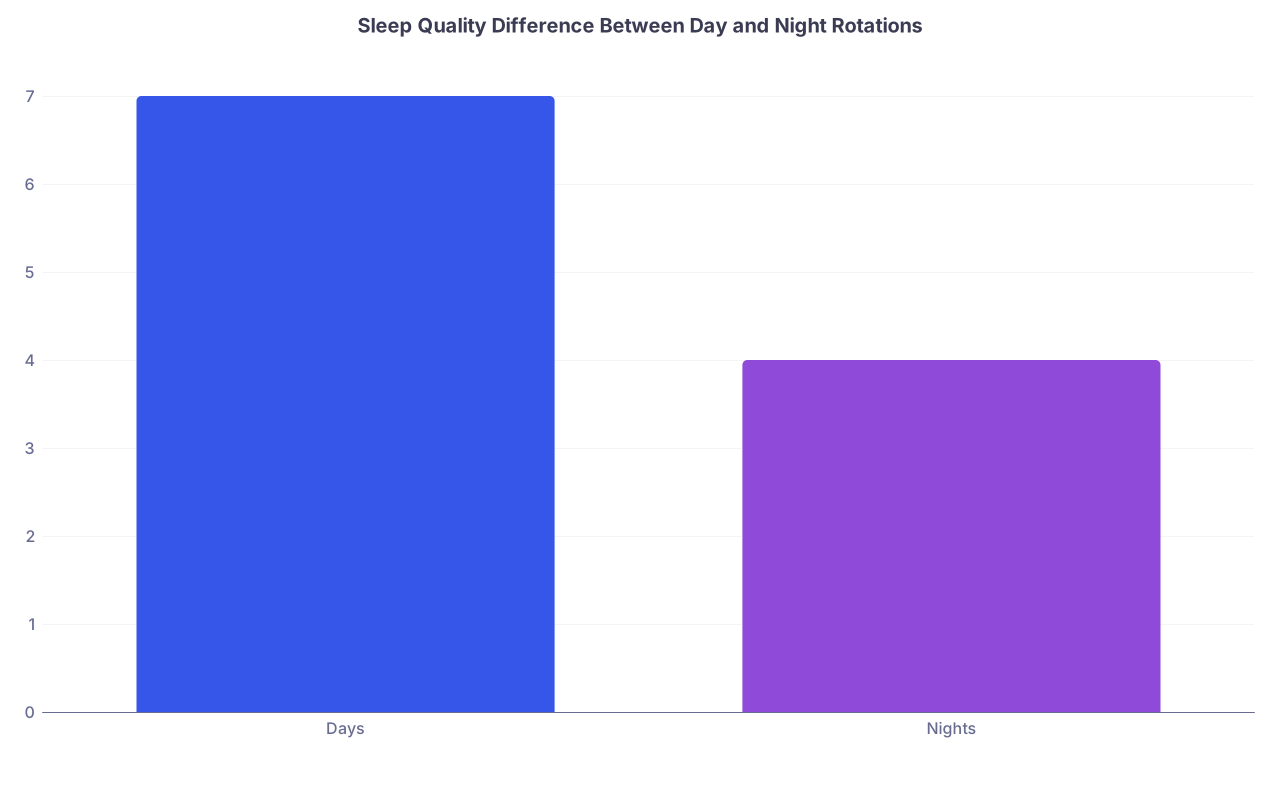
| Category | Value |
|---|---|
| Days | 7 |
| Nights | 4 |
On days, even if you’re tired, you’re at least vaguely aligned with circadian rhythms. On nights, you’re living against your own biology. That mismatch shows up first in your mood and thinking, long before you’re visibly “falling apart.”
I’ve seen this pattern play out over and over:
Week 1 of nights:
“I’m tired, but I can push through. It’s fine.”
Week 2:
“I feel weirdly detached. I’m snapping at people. I cry in my car for no obvious reason.”
Week 3 (if it goes on that long):
“I’m starting to wonder if this is just who I am now.”
Spoiler: it’s not who you are. It’s what chronic circadian disruption plus stress does to a human brain.
And here’s the part that’s actually scary: residency normalizes suffering so much that you start thinking, “Everyone feels like this. I shouldn’t complain.” That’s exactly how early warning signs get missed.
Burnout vs Depression on Nights: What’s Actually Happening?
People throw these words around like they’re interchangeable. They aren’t.
Burnout is basically your mind and body saying, “I’m done. I have nothing left to give.”
Depression is more like, “I don’t care. About anything. Including myself.”
They can overlap. Nights can push you toward both. But the early signs feel a bit different.

Early Warning Signs of Night-Shift Burnout
Burnout usually hits in three zones: emotional, cognitive, and behavioral. On nights, a lot of this gets hidden because “everyone is tired.” You need to get pickier than that.
Emotional signs that are more than “just tired”
You might be edging toward burnout if:
You’re not just tired—you’re hollow.
You finish a shift and instead of “wow, that was rough,” it’s more like nothing. No relief. No satisfaction. Just emptiness.You feel irritated by everyone and everything.
Nurses asking reasonable questions annoy you. Co-residents breathing too loudly annoy you. Patients being sick annoy you. You know it’s irrational, but you can’t turn it off.You feel a creeping sense of “I don’t care what happens” during tasks that used to matter to you.
That’s not fatigue alone. That’s emotional depletion.
Cognitive signs that worry you at 3 a.m.
These scare people the most, because they start to feel unsafe:
You’re making small mistakes you never used to make.
Forgetting to reorder a home med. Mis-clicking orders. Writing notes that don’t make sense on reread.Your brain feels slow, like you’re thinking through mud.
Someone asks a question on sign-out and you need 5–10 seconds longer than usual to even understand what they said.You’re starting to dread even simple decisions.
Do I order this lab? Do I call the attending? Everything feels heavy and mentally expensive.
Behavioral red flags
Here’s where you can’t just blame “tired” anymore:
You stop doing the basic personal stuff that you know helps you.
Short walk? Nope. Decent meal? Whatever. Shower before crashing? Who cares. It’s not just lack of time; it’s “why bother.”You isolate, hard.
You ghost friends, skip resident lunches post-nights, sit away from people in the workroom. Not because you’re introverted, but because you can’t stand more input.You start fantasizing about escape in ways that feel… different.
Not just “I wish I had a day off,” but “What if I got COVID again? What if I just quit and disappeared?”
Burnout on nights often first shows up as cynicism. When your inner monologue shifts from “this is tough” to “this is all pointless,” that’s a yellow flag turning orange.
Early Warning Signs of Night-Shift Depression
Depression isn’t just “sad.” And on nights, it often doesn’t look like the stereotypical movie version. It looks sneakier.
| Feature | Burnout on Nights | Depression on Nights |
|---|---|---|
| Main feeling | Empty, detached, irritated | Hopeless, guilty, numb |
| Energy | Drained at work, slight rebound off | Drained all the time, no rebound |
| Enjoyment | Still enjoy a few things sometimes | Nothing feels enjoyable, even good things |
| Thoughts | “I can’t keep doing this job” | “I’m broken / it’ll never get better” |
| Sleep on days off | Can sometimes feel a bit restored | Oversleeping or insomnia with no relief |
Mood changes that aren’t “just a rough rotation”
You might be sliding into depression if:
Your baseline isn’t stressed; it’s hopeless.
Not “this month sucks,” but “I don’t see any version of my life where I feel okay again.”Things that used to give you tiny sparks of joy now do literally nothing.
Favorite show? Meh. Food you usually like? Tasteless. Day off? Just another day to sleep and feel guilty.You feel guilty all the time.
Guilty for not studying. Guilty for not being a better resident. Guilty for being behind on notes. Guilty for feeling this bad when “other people have it worse.”
Thought patterns that should ring loud alarm bells
These are the ones I want you to pay attention to, even if you’re tempted to downplay them:
“Everyone would be better off if I weren’t here.”
Even if you don’t have a plan. Even if you’d never act on it. That’s a big red flag.“If I got into an accident on the way home and didn’t wake up, that might be easier.”
That’s not normal night-shift complaining. That’s suicidal ideation sneaking in through the side door.You start to feel like you are the problem.
Not “this schedule is brutal,” but “I’m weak. I shouldn’t be a doctor. I’m a burden.”
If those thoughts are showing up, I’m going to be blunt: that’s the point to reach out, not to “push through.”
Physical stuff that’s easy to shrug off
- Your appetite is completely off—either you’re barely eating or you’re overeating junk just to feel something.
- Your sleep on post-call days is trash even when you can sleep. You wake up unrested no matter how many hours you clock.
- You have random aches, headaches, or GI issues with no clear cause.
Are these caused by nights alone? Not always. But when they show up with the thought patterns above, I’d call that early-stage depression until proven otherwise.
The Silent Middle Zone: “Functional but Not Okay”
This is the zone I worry about most for people like you—high-functioning, anxious, don’t-want-to-be-a-burden types.
You’re still:
- Showing up on time
- Getting your notes done
- Not getting formal complaints
- Smiling when you have to
But internally, you’re running on fumes and held together by fear—of failing, of disappointing, of being labeled “not resilient.”
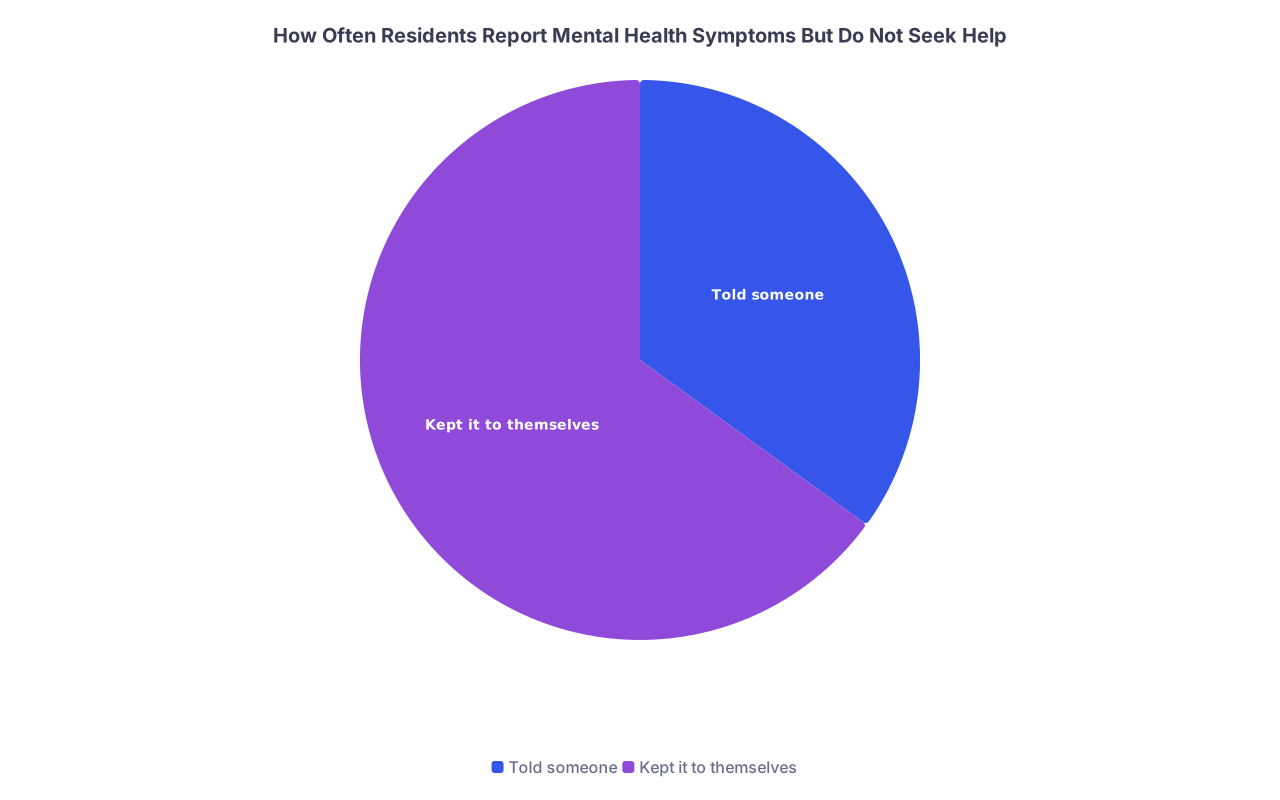
| Category | Value |
|---|---|
| Told someone | 35 |
| Kept it to themselves | 65 |
I’ve heard this sentence more times than I can count:
“I’m not bad enough to need help, but I’m definitely not okay.”
If you’re:
- Crying in your car before or after nights, regularly
- Dreading shifts so much you feel physically sick the day before
- Counting down the years until training is over like a prison sentence
…you are not “fine but tired.” You’re in that silent middle zone. And this is exactly when intervening actually works best.
What Early Action Actually Looks Like (Without Blowing Up Your Career)
Here’s the fear: “If I admit I’m struggling, they’ll doubt me, I’ll get labeled, maybe I’ll lose my spot.”
Reality: when things fall apart, it’s almost always because people waited too long.
Does every program handle this perfectly? No. Some are supportive. Some are trash. But you have more options than “stay silent and hope it goes away.”
Early moves that don’t require some big dramatic disclosure:
- Tell one person you trust: a co-resident, chief, or attending you’ve clicked with. Use real words: “Nights are hitting me harder mentally than I expected. I’m worried it’s sliding toward burnout/depression.”
- Use your GME or employee mental health resources. Most hospitals have some counseling or access service that’s separated from your evaluations. Is it perfect? No. Is it better than nothing? Yes.
- Ask about schedule tweaks before you fracture. Swapping a block, combining nights instead of scattered singles, getting a protected day to flip your sleep. Small changes help more than you’d think.
And if your brain has gone to dark places—thoughts of not wanting to wake up, planning out harm, or just scarily numb—this is not a “wait and see” situation. This is a “today, not next week” thing. Crisis line, psych, ER, trusted attending. I don’t care which door you pick as long as you don’t stay in the room alone.
How to Distinguish “Normal Hard” From “Not Okay Anymore”
This is the part your anxious brain will obsess over: “What if I overreact? What if I’m just being soft?”
Here’s my personal line:
If the way you’re feeling on nights is:
- Persistent (not just one bad shift, but days to weeks)
- Worsening (each block or week feels a little darker)
- Intrusive (you can’t fully escape it even when off)
…then it’s not just “normal hard” anymore.
If you need a gut check, try this:
Imagine a med student you’re supervising came to you and described exactly how you feel, word for word. Would you say, “Eh, you’re fine, just power through,” or would you say, “Yeah, that sounds serious, let’s get you support”?
Use that standard for yourself. You’re not special in the “I deserve less care” direction.

You’re Not Broken For Worrying About This
If you’re reading this thinking, “I’m already seeing some of these signs in myself,” that doesn’t mean you’re doomed to full-blown burnout or depression.
It means you’re catching the pattern early.
This fear you have—that nights will flip some irreversible switch in your brain—is coming from a real place. You’ve probably seen older residents or attendings who look dead behind the eyes. You don’t want to become that.
You don’t have to. But pretending it’s not a risk? That’s how people slide into it.
Let yourself be the anxious one who over-monitors, who reaches out when it still “feels early,” who adjusts instead of white-knuckling the entire residency. That’s not weakness. That’s survival.
FAQ: Afraid Night Shifts Will Trigger Burnout or Depression
1. How do I know if it’s just sleep deprivation and not actual depression?
Look for what happens on your days off. If you get some sleep and your mood noticeably lifts, you still laugh at a show, and you can feel small bits of enjoyment, that leans more sleep-related. If even with good sleep you feel hopeless, numb, or like nothing matters, that’s leaning depression. Also, passive thoughts like “I wouldn’t mind not waking up” are not explained away by “just tired.”
2. I’m scared to tell my program I’m struggling. Will it ruin my career?
In most places, disclosing early and asking for help quietly is far less risky than waiting until you crash, make dangerous mistakes, or disappear mid-rotation. Lots of programs have had residents take short leaves or adjust schedules and still graduate on time and match fine. Yes, there are bad programs, but the fantasy that staying totally silent is “safer” is usually wrong once your functioning is slipping.
3. What’s one concrete thing I can do on nights to protect my mental health?
Have a non-negotiable, tiny ritual after every night shift that signals to your brain, “I’m a human, not just a resident.” Ten minutes. Walk around the block, hot shower with no phone, brief stretch with music you like, calling or texting one safe person. Consistency matters more than what it is. It anchors you when the nights all blur together.
4. Is it normal to dread night shifts before they even start?
Yes, but there’s a line. Some anticipatory dread is normal—everyone groans when the night block is coming up. It stops being normal when you’re losing sleep days ahead, your chest feels tight thinking about it, or you’re mentally bargaining for illness or injury to get out of it. That’s a sign your nervous system is already maxed out, and you should treat that as an early warning sign.
5. What if I start having dark or suicidal thoughts but “know” I’ll never act on them?
Don’t trust that logic. The frequency and intensity of those thoughts can change when you’re severely sleep deprived, under pressure, and depressed. The presence of the thoughts at all—“better off without me,” “I wish I wouldn’t wake up”—is enough reason to reach out. You don’t have to be on the edge of acting to deserve immediate help.
6. I’m not even in residency yet, and I’m already terrified nights will break me. Does that mean I’m not cut out for this?
No. Honestly, the ones who worry about this are often the ones who last, because they actually pay attention to their mental state. Being afraid doesn’t mean you’re unfit; it means you understand the stakes. What will matter is whether you ignore yourself later or listen when the early signs show up. Awareness is an asset, not a flaw.
Key takeaways:
Night shifts can push you toward burnout or depression, but they usually do it gradually, with early, subtle signs—emotional, cognitive, and behavioral—that you can learn to recognize. Those “I’m not bad enough to need help, but I’m not okay” moments are exactly when to act, not when to go silent. You’re not weak for worrying about this; you’re paying attention. And that’s how you keep from losing yourself in the process.