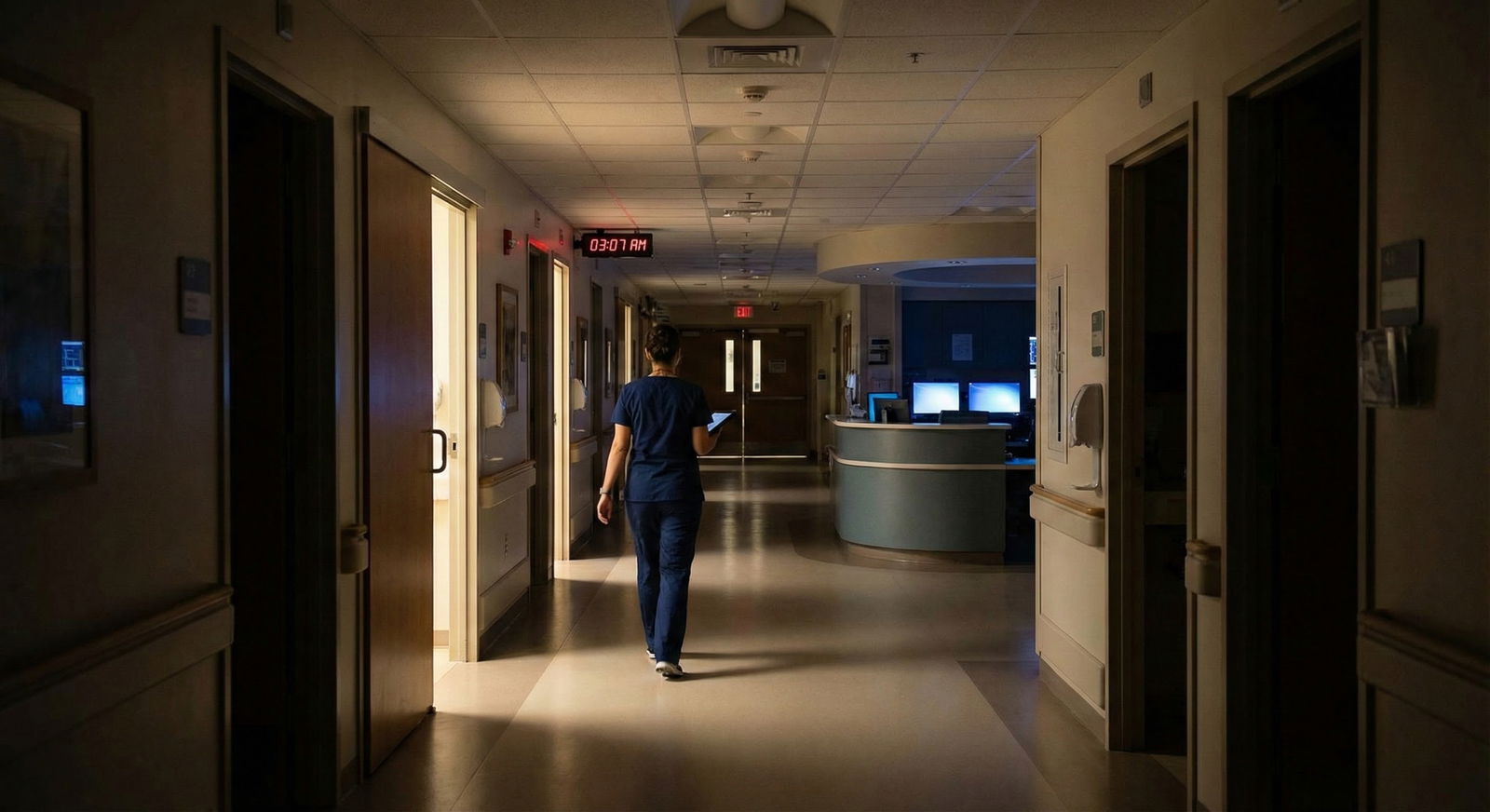
The fear of making a catastrophic mistake on night shift is not a sign you’re weak. It’s a sign you’re awake to the reality of medicine.
You’re not crazy for replaying every order, every note, every phone call in your head as you walk to your car at 7 a.m. You’re not overreacting when your heart drops because you suddenly think, “Wait… did I actually discontinue the heparin?” or “Did I check that creatinine before ordering contrast?” That constant low‑level panic? Yeah. That’s pretty standard.
And it’s worse at night. Because it’s just you, a skeleton crew, and a hospital that doesn’t sleep.
Let’s talk about what actually happens when you almost screw up, when you do screw up, and how you live with the fear that tonight might be the night something really bad happens on your watch.
The 3 a.m. Terror: “What If I Missed Something Huge?”
You know that moment. You’re halfway home from nights, sun is barely up, and suddenly your brain goes, “Hold on… did I…” and your stomach falls through the floor.
Sometimes it’s something small and fixable. Sometimes it might be huge. The problem is, your brain can’t tell the difference at 3 a.m. or 7 a.m. All it knows is: worst case scenario.
I’ve seen residents:
- Pull over on the side of the road to log into the EMR on their phone hotspot to double‑check an order.
- Cry in the stairwell because they were sure their missed K of 2.9 was going to turn into a code blue.
- Call the unit from the parking garage to ask a nurse to re‑read vitals from two hours ago.
Here’s the messed‑up thing: the people who worry like this? They’re usually the safest ones.
The intern who shrugs and says “It’s probably fine” about every borderline situation is way more dangerous than the one who’s terrified they missed an NSTEMI in room 12.
But fear is exhausting. And if you don’t manage it, it will eat you alive.
Near Misses vs Actual Harm: What You’re Really Up Against
You’re scared of “a big mistake.” Let’s unpack what that actually means, because your brain currently puts everything from a late Tylenol order to missing sepsis into the same category: catastrophic failure as a human being.
That’s not how the real world works.
| Type | Example | Outcome Likelihood |
|---|---|---|
| Trivial error | Late bowel regimen | No lasting harm |
| Process slip | Missed lab check | Usually caught by team |
| Near miss | Wrong med dose, intercepted | No harm but serious review |
| Minor harm | Extra stick, delay in test | Temporary patient impact |
| Serious harm | Missed sepsis, wrong drug | Rare but possible |
Most of what you’re calling “big mistakes” are actually:
- System failures with your error buried inside them.
- Near misses that got caught by nurses, pharmacists, or attendings.
- Delays or inconveniences that feel huge to you but don’t change outcomes.
You’re scared of the rare but real situation where:
- You miss something critical.
- No one catches it.
- The patient is harmed. Maybe permanently.
That can happen. Pretending it can’t is delusional.
But here’s the uncomfortable truth: if you practice long enough, you will have a case where you wonder if what you did or didn’t do contributed to harm. Most attendings can name theirs instantly. Same tone. Same thousand‑yard stare.
The question isn’t “How do I avoid ever making a big mistake?”
The real question is: “How do I lower the risk as much as humanly possible—and still function as a human?”
Systems That Quiet the Panic (At Least a Little)
You will never fully think your way out of the anxiety. The only thing that helps long‑term is building boring, repeatable systems that catch your brain when it’s at its worst—aka nights.
This isn’t sexy. It’s checklists and habits and rules you follow even when you’re tired and annoyed.
Here’s what I’ve seen actually help residents survive night shift without dissolving:
1. The “Before I Sign Out” Ritual
Most people do a rushed sign‑out and bolt. Then they freak out in the car. Flip that.
Give yourself a 5–10 minute ritual before sign‑out where you assume your brain is fried and untrustworthy, and use structure instead.

| Step | Description |
|---|---|
| Step 1 | Start Sign Out Check |
| Step 2 | Run patient list |
| Step 3 | Review active STAT orders |
| Step 4 | Check recent labs and vitals |
| Step 5 | Confirm pending critical results |
| Step 6 | Update sign out notes |
| Step 7 | Ask nurse outstanding concerns |
| Step 8 | Sign out to day team |
Literally go line by line through your patient list and ask:
- Is anyone unstable or could become unstable?
- Did I order what I said I would order?
- Are there pending results I need to at least flag in sign‑out?
- Does each sick patient have a “if this, then that” plan for the day team?
You will catch stuff. Every single time. It’s annoying. Do it anyway.
2. The “3 a.m. Gut Check” Rule
You know those borderline decisions where you think, “This is probably fine, I won’t wake anyone up”?
Make yourself a rule:
If you hear yourself think “I don’t want to bother them,” you page.
That thought is a red flag. It usually means: “I’m slightly worried but more scared of looking dumb than of missing something serious.”
You’ll annoy a few seniors and attendings. Good. Safe medicine is a little annoying.
When You Realize You Made a Near Miss (Or a Real Mistake)
Here’s the scenario you’re terrified of:
You’re on nights. You order a med wrong, or miss a lab, or discharge someone too soon. Someone else catches it in the morning. Or worse, it causes harm. Now you’re living in shame.
Let me walk you through what actually needs to happen, step by step, because your fear‑brain is jumping straight from “I wrote the wrong dose” to “I am getting sued and losing my license.”
Step 1: Triage the Reality (Not the Catastrophe)
First question: is the patient currently in danger?
- If yes: fix it immediately. Call whoever you need. Own it. No one cares about your pride in a crisis.
- If no: you still take it seriously, but you have time to be methodical.
Either way, your main priorities are:
- Patient safety now.
- Transparency to the team.
- Documentation that’s factual, not self‑protective or self‑flagellating.
Step 2: Tell Someone Early, Not Perfectly
You will be tempted to “wait and see” or to come up with the perfect wording first. That’s just anxiety trying to delay embarrassment.
Tell your senior or attending as soon as you realize. It sounds like:
“I just realized I [ordered X when I meant Y / didn’t check the K before giving Lasix / missed this fever overnight]. I’ve done [A, B] to correct it. Right now the patient is [stable/unstable]. What else should I do?”
Direct. Concrete. No long justification speech.
Most seniors have already had their own screw‑ups. There will be a debrief. There may be a morbidity and mortality (M&M) conference. You might get called out.
That sucks. But it’s normal.
Step 3: Separate “I Made a Mistake” From “I Am a Disaster”
This is the part that eats people alive.
Your brain will do this move:
“I missed that lab” → “I’m careless” → “I shouldn’t be a doctor” → “Everyone else is better than me” → “I’m dangerous.”
I’ve watched excellent residents sit in my call room at 4 a.m. convinced they needed to switch careers because they missed something that ended up not changing the outcome at all.
You need a different script:
“I made a mistake” → “What system failed?”
“Where was I tired, rushed, or distracted?”
“What can I build into my process so that next time the same mistake doesn’t slip through the cracks?”
This is not letting yourself off the hook. It’s putting yourself on the right hook: the one that leads to safer practice, not self‑annihilation.
The Fear of Being Sued, Reported, Or “Found Out”
Let’s just say it: you’re not just scared someone will get hurt. You’re scared of your own destruction.
Malpractice. Licensure boards. Getting a reputation. Attending who never lets it go. Program director hauling you into their office.
And underneath all of that: “What if they realize I never should’ve been here in the first place?”
The hidden, poisonous belief: “A good doctor doesn’t make serious mistakes.”
That’s a lie. A dangerous one.
Every specialty has its “That Case” stories. Missed epidural hematoma. Delayed STEMI activation. Anticoagulation error. Wrong side procedure. And yes, sometimes the resident or attending’s decision played a role.
The difference between people who survive careers in medicine and those who mentally crumble is not who’s perfect. It’s who can tolerate being imperfect, take responsibility, and still show up the next day.
Is that easy? Absolutely not. Especially when you’re sleep deprived, under‑supported, and constantly evaluated.
But your job is not to be flawless. Your job is to be honest, learn fast, and keep building safeguards around your own tired, overwhelmed brain.
How to Sleep After a Night Shift When Your Brain Won’t Shut Up
This might be the most miserable part: your body is done, but your mind is sprinting through worst‑case scenarios.
A lot of people jump straight to “I just have insomnia,” but what you really have is unprocessed adrenaline, guilt, and incomplete cognitive loops. Your brain is trying to finish the work you didn’t let it finish before you left.
Here’s a structure that helps more than just scrolling your phone until you pass out.
1. The 10‑Minute “Download” Before You Leave
After sign‑out, before you walk out of the hospital, sit down with a blank piece of paper or a notes app and write three things:
- Things I’m still worried I missed:
- Things I actually did well tonight:
- Things I want to ask about later (for learning, not self‑punishment):
No editing. No pretty sentences. Just a dump.
You’re basically telling your brain: “I’ve captured this. You don’t have to scream at me about it all morning.”
2. The “If It’s Truly Bad, They’ll Call” Rule
Harsh truth: if something catastrophic happens because of something you did or didn’t do, you won’t find out from your own rumination. You’ll find out because your phone rings.
Establish a rule for yourself:
“Once I’ve done my checklist, signed out thoroughly, and done my 10‑minute download, I’m allowed to say: if it’s truly urgent, someone will call me. If no one calls, I’m not allowed to keep inventing disasters.”
Sounds simple. It’s not. But it’s a boundary for your brain.
3. A Short, Boring Wind‑Down Routine
Not a 2‑hour sleep hygiene ritual. You’re a resident, not a wellness influencer.
Just:
- Quick shower to literally wash off the hospital smell.
- Something small and familiar (same snack, same 5‑minute show, same music).
- Dark room. Phone away from your face.
Your goal isn’t blissful relaxation. Your goal is “I’ve done what I can. Now my job is to be unconscious.”
What Actually Lowers the Risk of a Night‑Shift Disaster
Here’s the part you want: the levers you can actually pull to decrease the odds of “big mistake overnight” scenarios. Not eliminate—decrease.
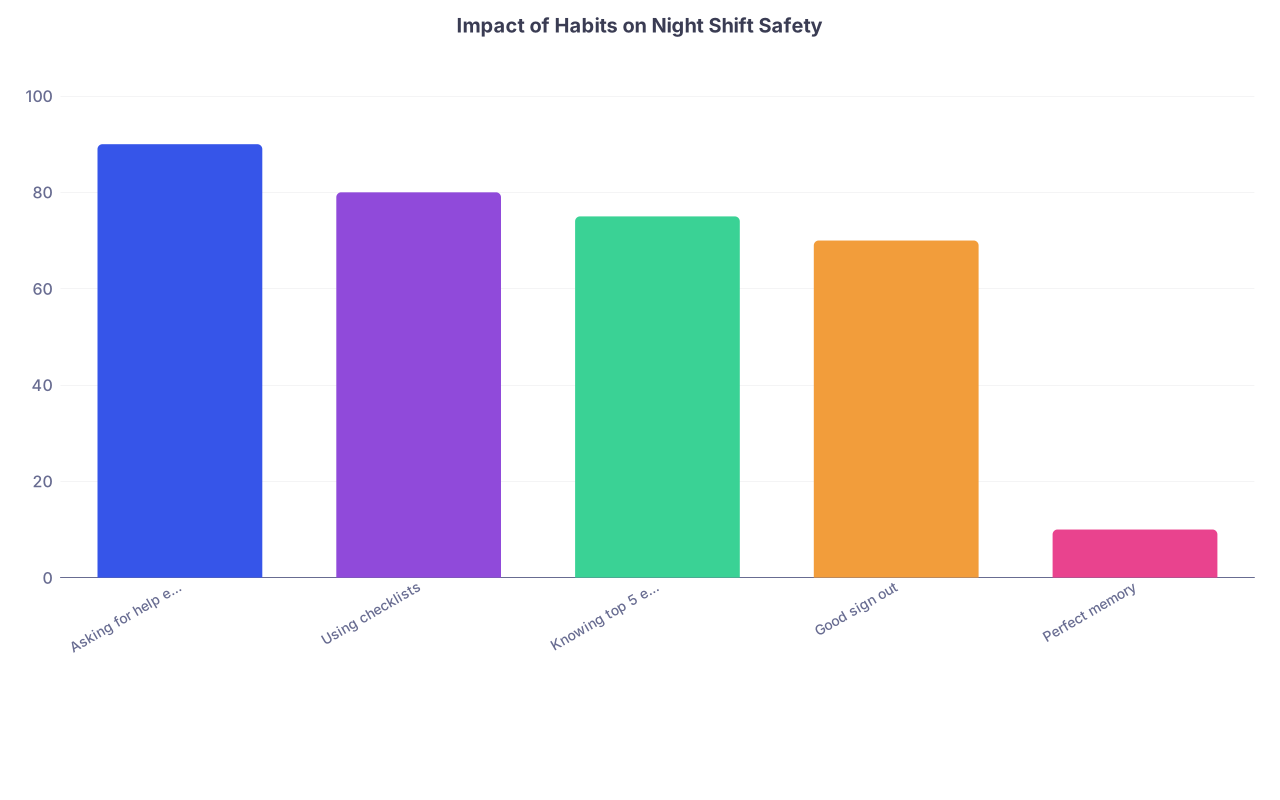
| Category | Value |
|---|---|
| Asking for help early | 90 |
| Using checklists | 80 |
| Knowing top 5 emergencies | 75 |
| Good sign out | 70 |
| Perfect memory | 10 |
The stuff that matters most:
- Asking for help before you’re sure you need it. Your ego hates this. Patient safety loves it.
- Checklists for admissions, cross‑cover, and sign‑out. Boring but powerful.
- Having a mental or written playbook for the common night emergencies in your specialty: chest pain, SOB, hypotension, delirium, low UOP, postop fever, etc.
- Building relationships with nurses and pharmacists so they feel comfortable double‑checking you instead of just executing your orders silently.
- Clear, written sign‑out that highlights which patients are truly fragile and what to watch for.
What does not drastically reduce harm: demanding flawless memory or constant hypervigilance from yourself. That just guarantees burnout.

You’re Allowed to Be Scared. You’re Not Allowed to Be Alone.
The worst part of residency isn’t just the work. It’s feeling like you’re the only one who’s barely holding on.
You see the confident upper levels who seem unfazed. You don’t see them crying in their car after their own near miss. You see attendings who move through codes like they’re playing a video game. You don’t see the case that wakes them up at 3 a.m. fifteen years later.
Medicine has a nasty habit of pretending fear is weakness. But the reality is: people who aren’t scared enough are dangerous. People who are scared but silent are suffering.
So talk. To your co‑intern. To that one senior who actually remembers what it felt like. To a therapist if your program offers one (and yes, use them—this is literally what they’re for).
You don’t need to be fearless to be safe. You need to be honest, supported, and willing to build structure around your very human brain.

FAQ: Coping With Near Misses and Fear on Night Shift
1. What do I do if I get home and realize I might’ve made a mistake overnight?
Call. If it could impact patient safety, you pick up the phone. Call the floor, the unit, or your senior—whoever makes sense for the situation. Don’t sit at home spiraling. Say: “I was the night resident for [team]. I’m concerned I might have [missed X / ordered Y]. Could someone please check [specific thing]?” If it turns out it was fine, you’ll feel ridiculous for 30 seconds. That’s a cheap price for safety and peace of mind.
2. How do I know when something is serious enough to wake up my senior or attending?
Use this rule: if you’d feel sick to your stomach tomorrow hearing “yeah, they had x symptom/lab change/vital and no one called me,” then you call now. Any new chest pain, shortness of breath, hypotension, acute change in mental status, concerning lab (like K, troponin, lactate, creatinine jump) or “I just have a bad feeling” about a sick patient is enough. Your job at night isn’t to be a hero—it’s to be a safe bridge until morning.
3. How do I stop obsessively replaying every overnight decision?
You won’t “stop,” but you can contain it. Do a structured review before you leave: go through your list, confirm orders, check vitals/trends, and write down anything still bothering you. Once that’s done, give yourself a hard rule: mental review time is over. If it’s still gnawing at you and could represent a safety issue, you call. If you’re just torturing yourself over non‑critical stuff, you label it: “That’s my anxiety, not reality,” and redirect. It’s a skill, not a switch.
4. What if a near miss turns into an M&M case and I’m terrified I’ll be humiliated?
M&M can be brutal or incredibly educational depending on the culture. But either way, it’s not a public execution. Focus on: What actually happened? What was I thinking at each step? Where were the system gaps? What would I do differently next time? You’re allowed to feel embarrassed. Just don’t turn it into, “I’m a fraud and everyone knows it now.” The attendings leading a good M&M are looking for system fixes, not sacrificial interns.
5. How do I know if my fear is “normal” or if I need real help?
Normal: worrying on the way home, second‑guessing calls, feeling sick after a near miss, having a specific case stuck in your head for a while. Not so normal: constant intrusive replay, panic attacks, dread so intense you fantasize about quitting medicine, thoughts of self‑harm, or believing you’re irredeemably dangerous despite objective feedback. If you’re in that territory, you don’t white‑knuckle it. You talk to someone professional. Confidentially. This career is hard enough without untreated anxiety or PTSD layered on top.
6. What’s one concrete thing I can do before my next night shift to feel a little safer?
Make a one‑page “night playbook” for your most common scary scenarios: chest pain, hypotension, low urine output, acute confusion, new fever, and “nurse says the patient just looks wrong.” For each, write: two or three key questions to ask, initial orders (labs, imaging, meds), and your personal threshold for calling your senior. Print it or keep it on your phone. You don’t want to be inventing your approach at 3 a.m. when your brain feels like oatmeal.
Open your sign‑out from your last night shift and your current patient list (or imagine a typical night if you’re still pre‑residency). Now, write down a 5‑step “before I leave in the morning” checklist you actually could follow—then commit to using it on your very next shift.