
The point where night shifts start wrecking your health is earlier than most residents admit—and later than most programs are willing to notice on their own.
If you’re asking whether it’s time to say something, you’re already past the “just push through it” phase. The real question is not if to tell your program, but how early and how clearly you should raise the alarm.
Let me lay out a simple framework so you can stop second-guessing yourself.
The Line Between “This Sucks” and “This Is Unsafe”
Everyone hates nights. That alone is not a reason to email your PD.
You speak up when the pattern and severity of your symptoms cross into one of three zones: patient safety risk, serious health impact, or violation of policy/contract.
Here’s the practical threshold: if nights are causing problems that persist beyond a normal post-call reset (one good sleep, one day off) and they’re showing up in more than one part of your life—clinical performance, physical health, mental health, or basic functioning—it is time to talk to your program.
Specific red flags:
- You’re making or almost making clinically significant errors you never used to make.
- You’re driving home and repeatedly nodding off, drifting lanes, or needing to pull over.
- You’re having chest pain, palpitations, new or worsening migraines, or blood pressure creeping up and staying up.
- Your mood is tanking: frequent crying, hopelessness, thoughts like “If I got into a car accident and didn’t have to go in, that’d be fine.”
- You cannot recover between shifts despite doing all the right sleep hygiene things.
- You’re on a schedule that appears to violate ACGME or local duty-hour rules.
If any of those sound familiar, you are no longer in “tough rotation” territory. You’re in “this needs to be documented and addressed” territory.
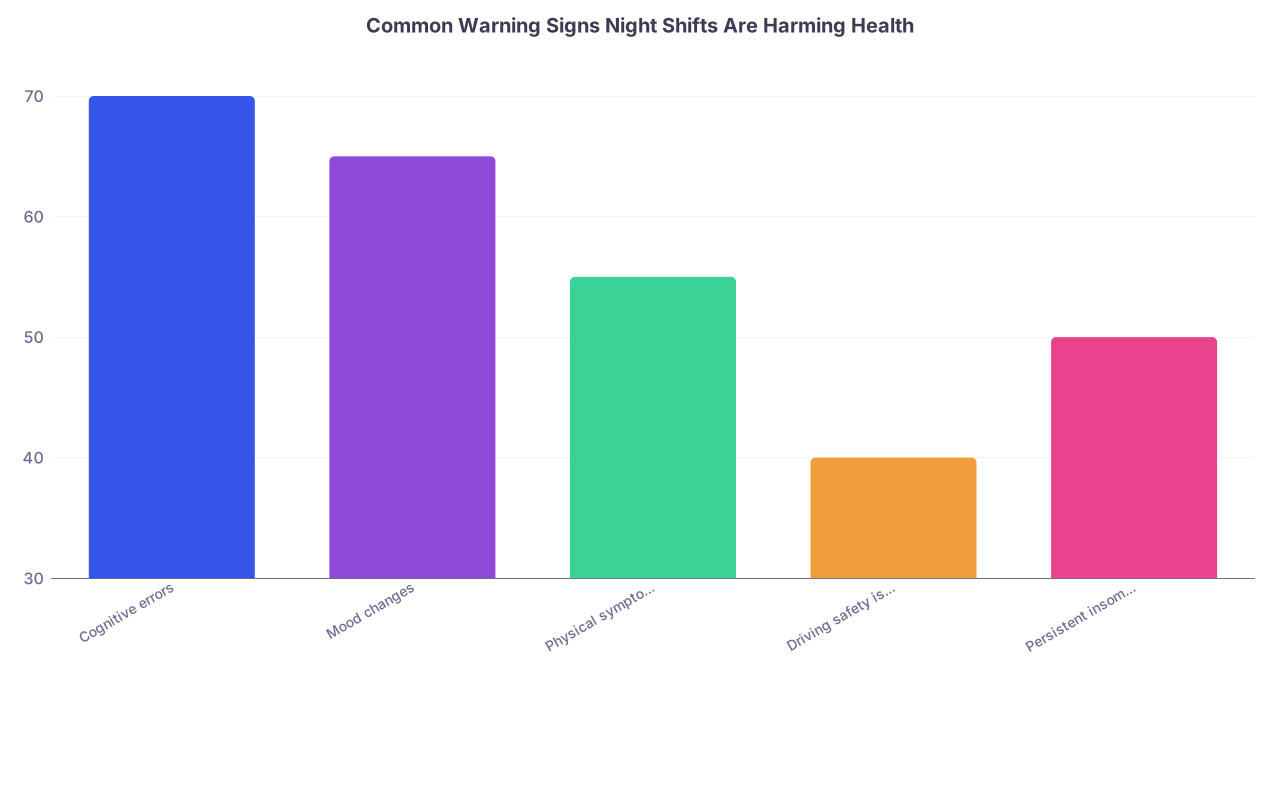
| Category | Value |
|---|---|
| Cognitive errors | 70 |
| Mood changes | 65 |
| Physical symptoms | 55 |
| Driving safety issues | 40 |
| Persistent insomnia | 50 |
(Percentages here represent how often residents report these issues in surveys—rough estimates, but the pattern is real: cognitive and mood problems show up early and often.)
Concrete Health Signs You Should Not Ignore
You are not supposed to feel amazing on nights. But you are supposed to stabilize. If you’re not, that’s your first clue something’s off.
Watch for these patterns over 2–3 weeks of night work:
Cognitive and Performance Red Flags
- You forget basic orders or repeat tasks (ordering labs twice, missing STAT orders).
- Nurses start double-checking you more than usual—or gently saying, “You seem really tired, are you okay?”
- You have trouble following sign-out or remembering key patient details without rereading notes multiple times.
- You’re slower at basic tasks and constantly feel “behind” even when the workload is reasonable.
If you can honestly say: “I am clearly functioning below my normal baseline for more than a few shifts in a row,” that matters.
Physical Health Red Flags
These are not “I’m tired” complaints. These are medical issues:
- New or persistently elevated blood pressure.
- New arrhythmias, frequent palpitations, or chest pain (especially if you’re also drinking more caffeine/energy drinks).
- Worsening migraines or frequent tension headaches that don’t go away with rest.
- GI issues: constant nausea, diarrhea/constipation swings, loss of appetite or binge eating at weird hours.
- Significant weight loss or gain over a few months tied clearly to night-heavy blocks.
If you’d be concerned about a patient reporting this, you should be concerned about you.
Mental Health Red Flags
This is where people stay quiet way too long out of fear and shame.
Take it seriously if you notice:
- Anhedonia: you stop enjoying things you used to like, even on your days off.
- Persistent anxiety about going to work, dread that starts the day before your shifts.
- Crying in the call room, bathroom, or car more days than not.
- Passive thoughts like “If I didn’t wake up tomorrow, it might be a relief.”
- Active thoughts of self-harm, or “accidental” fantasies (like wishing for a minor car crash to get you out of work).
Those are not personality flaws. That is your brain saying, “The way you’re living is unsustainable.”
If you hit any of the suicidal ideation territory, you do not wait. You seek immediate help (hospital resources, employee assistance, crisis line) and you tell someone in leadership as soon as safely possible.
When It’s a Schedule Problem, Not a You Problem
Sometimes your health issues aren’t because you’re “bad at nights.” They’re because the schedule is bad.
Here’s what unhealthy systems often look like:
- Repeated “flip-flop” patterns: days → nights → back to days in short cycles, no real adaptation time.
- Too many consecutive nights (e.g., 7+ in a row) with inadequate recovery days.
- No protected recovery day transitioning off nights back to days.
- Unwritten expectations: “You’ll still show up for didactics/extra work even post-call, right?”
- Hidden duty-hour violations: charting at home, “voluntary” after-hours work that everyone feels forced to do.
Compare a reasonable vs. high-risk pattern:
| Pattern Type | Description |
|---|---|
| Safer Model | 4–5 nights, 1–2 days off |
| Risky Model | 7+ consecutive nights |
| Flip-Flop Pattern | 2 days, 2 nights, 1 off |
| Poor Transition | Last night → clinic same day |
| Better Transition | Last night → full day off |
If your schedule looks like the risky ones and you’re having health or safety issues, you have both a personal and a systemic problem. That’s a stronger case to bring to your program.
How to Decide: Do I Speak Up Now?
Use this simple decision framework.

| Step | Description |
|---|---|
| Step 1 | Noticing problems on nights |
| Step 2 | Optimize sleep and coping |
| Step 3 | Track symptoms 1 2 weeks |
| Step 4 | Improve sleep schedule caffeine |
| Step 5 | Talk to mentor or chief |
| Step 6 | Notify PD and document |
| Step 7 | Lasting beyond post call reset? |
| Step 8 | Affecting safety or health? |
| Step 9 | Tried basic fixes? |
| Step 10 | Errors or safety events? |
If you’re in boxes H or J (errors, “near misses,” driving danger, serious mental health symptoms), you’re done debating. You tell someone.
Who To Tell, What To Say, and What To Ask For
You do not need a dramatic confession. You need a clear, medically framed, documented conversation.
Step 1: Decide who to start with
Reasonable first contacts:
- A trusted chief resident.
- An associate program director (APD) you’re comfortable with.
- Program director (PD) directly if it’s urgent or safety-critical.
- Occupational health or employee health if your symptoms are clearly physical.
If there’s an element of mental health or stigma concern, many residents feel safer starting with a confidential therapist or counselor (many hospitals have them) who can also help you phrase things.
Step 2: Use medical language, not apology language
What does not work:
“I’m just tired and not sure I can handle nights as well as others.”
What does work:
- “I’m experiencing persistent insomnia and cognitive slowing that are significantly worse on night rotations and not resolving post-call.”
- “I’ve had two near-miss medication errors overnight in the past week that I would not typically make. I’m concerned this schedule is impairing my ability to practice safely.”
- “I’m having chest pain and palpitations on nights, and my BP has been running 150s/90s. My PCP is concerned this is related to my schedule.”
You’re not whining. You’re reporting a risk.
Step 3: Be specific about patterns and impact
Bring data, even if it’s simple:
- A brief log of sleep times, symptoms, and work days (1–2 weeks is enough).
- Concrete examples of errors, near misses, or instances of unsafe driving.
- Blood pressure readings or notes from your PCP, therapist, or urgent care.
Then connect it to the schedule:
- “This started after my third consecutive block of nights in 4 months.”
- “The problems are specifically on strings of >4 nights or quick flip schedules.”
What Reasonable Accommodations Can Look Like
Programs can’t always erase nights. But they can modify how you experience them.
Realistic options residents have successfully gotten:
- Fewer consecutive nights or shorter night blocks.
- Extended recovery time post-nights before switching back to days.
- Swapping some night-heavy rotations for others with more balanced schedules.
- Temporary medical leave or reduced schedule while stabilizing a medical or psychiatric condition.
- Lightened patient load at night for a defined period, if staffing allows.
- Formal occupational health evaluation documenting restrictions (e.g., “no more than X consecutive nights”).
This is where documentation helps. If occupational health, your PCP, or a psychiatrist writes something in objective medical language, programs almost always take it more seriously.
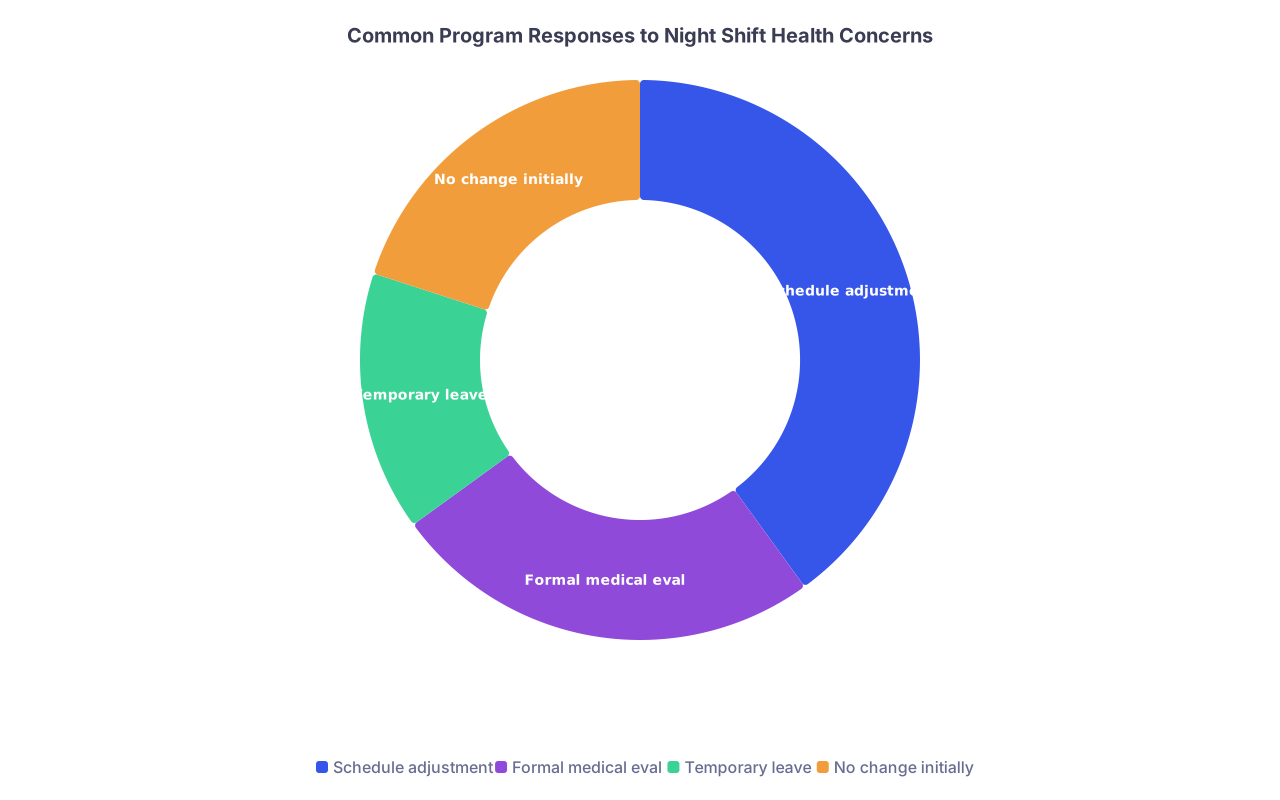
| Category | Value |
|---|---|
| Schedule adjustment | 40 |
| Formal medical eval | 25 |
| Temporary leave | 15 |
| No change initially | 20 |
You may not get your dream schedule. But you’re not powerless. Residents who speak up early usually get some movement.
What You’re Probably Worried About (But Shouldn’t Let Control You)
You’re thinking:
- “They’ll think I’m weak.”
- “I’ll get a reputation as difficult.”
- “This will hurt my fellowship chances.”
- “Everyone else is tired and they’re not complaining.”
Here’s the reality from the other side of the table:
PDs already know nights are brutal. What they care about is patient safety, liability, and preventing disaster. A resident who raises concerns before a major event is actually easier to trust than one who hides everything until they implode.
What hurts careers more than anything else:
- Unexplained poor performance.
- Documented patient safety events.
- Abrupt disappearances or breakdowns “out of nowhere.”
Thoughtful, specific, health-anchored communication about struggling with nights does not brand you weak. It brands you as someone with insight and judgment—if you handle it like a professional, not like a meltdown.
The residents I’ve seen truly damage their reputation weren’t the ones who asked for help. They were the ones who lied, hid problems, blew off feedback, or became so unreliable that others had to cover for them constantly.
How to Protect Yourself While You Speak Up
A few tactical moves:
- Document your symptoms and any conversations in simple, factual notes.
- Send brief follow-up emails after verbal discussions: “Thanks for meeting. As discussed, I’ve been experiencing X, Y, Z…”
- Keep getting care for your own health—PCP, therapist, psychiatrist, whoever’s appropriate.
- Don’t over-disclose. You don’t need to unpack your entire life story. Stick to what’s relevant to work and safety.
- If your program is blatantly dismissive or retaliatory (rare, but it happens), quietly talk to:
- GME office
- A trusted faculty mentor not directly in your chain of command
- Confidential institutional ombudsperson, if available
You’re not powerless, and you’re not stuck.
Bottom Line: When Is It Time?
Here’s the short version you can pin to your brain:
You tell your program nights are harming your health when:
- Symptoms persist beyond normal post-call recovery,
- They’re clearly impairing your functioning, safety, or health, and
- Basic self-management (sleep hygiene, caffeine control, schedule tweaks you can control) is not fixing it.
At that point, silence stops being “toughness” and starts being negligence—toward yourself and, frankly, toward your patients.
FAQ: Night Shifts and Resident Health (7 Questions)
1. How long should I “wait it out” before saying something about night shifts?
Give it one full adjustment period: about 1–2 weeks of consistent nights with proper off-shift sleep. If by then you’re still having serious health, mood, or safety issues—not just basic fatigue—it’s time to escalate, not “wait and see.”
2. What if I’m worried my program will think I’m weak or not cut out for my specialty?
Programs are far more concerned about unpredictable, unsafe residents than about people who say, “I’m struggling with nights in a specific way; here’s the impact; here’s my plan.” Framing it around safety and health, with specific examples and a willingness to collaborate, makes you look responsible, not weak.
3. Do I need a doctor’s note or formal diagnosis before talking to my PD?
No. You can and should speak up based on observed patterns and safety concerns. That said, involving your own physician or mental health provider can help, especially if you need formal accommodations or schedule changes beyond a simple swap.
4. What if everyone else on my team seems to handle nights fine and I’m the only one struggling?
You’re seeing their outside, not their inside. Some people truly tolerate nights better; others are silently falling apart. Your nervous system, medical history, and stress load are yours. The standard is not “Am I suffering more than my peers?” It’s “Is this harming my health or my ability to practice safely?”
5. Can night shifts really cause long-term health problems, or is this just short-term discomfort?
Chronic circadian disruption is linked to higher rates of hypertension, metabolic issues, mood disorders, and cardiovascular disease. A few bad rotations won’t destroy your health, but repeated, unmitigated exposure without recovery absolutely can move the needle in the wrong direction.
6. What’s the best way to open the conversation with my PD or chief?
Keep it straightforward and professional: “I’d like to talk about some health and safety concerns I’m experiencing on night rotations.” Then describe patterns, impact on work and health, steps you’ve already tried, and what you’re hoping to explore (schedule tweak, occupational health eval, etc.).
7. Is it ever reasonable to ask for no nights at all?
Occasionally, yes—but it usually requires a clear medical indication (e.g., certain seizure disorders, severe mood disorders triggered by circadian disruption) and formal documentation. More often, the compromise is fewer consecutive nights, better recovery time, or shifting the mix of rotations, rather than eliminating nights entirely.
Key points: if night shifts are clearly harming your health or making you unsafe, you’re not overreacting—you’re late. Use medical language, specific examples, and documented patterns. Then push for reasonable adjustments before the damage becomes permanent.