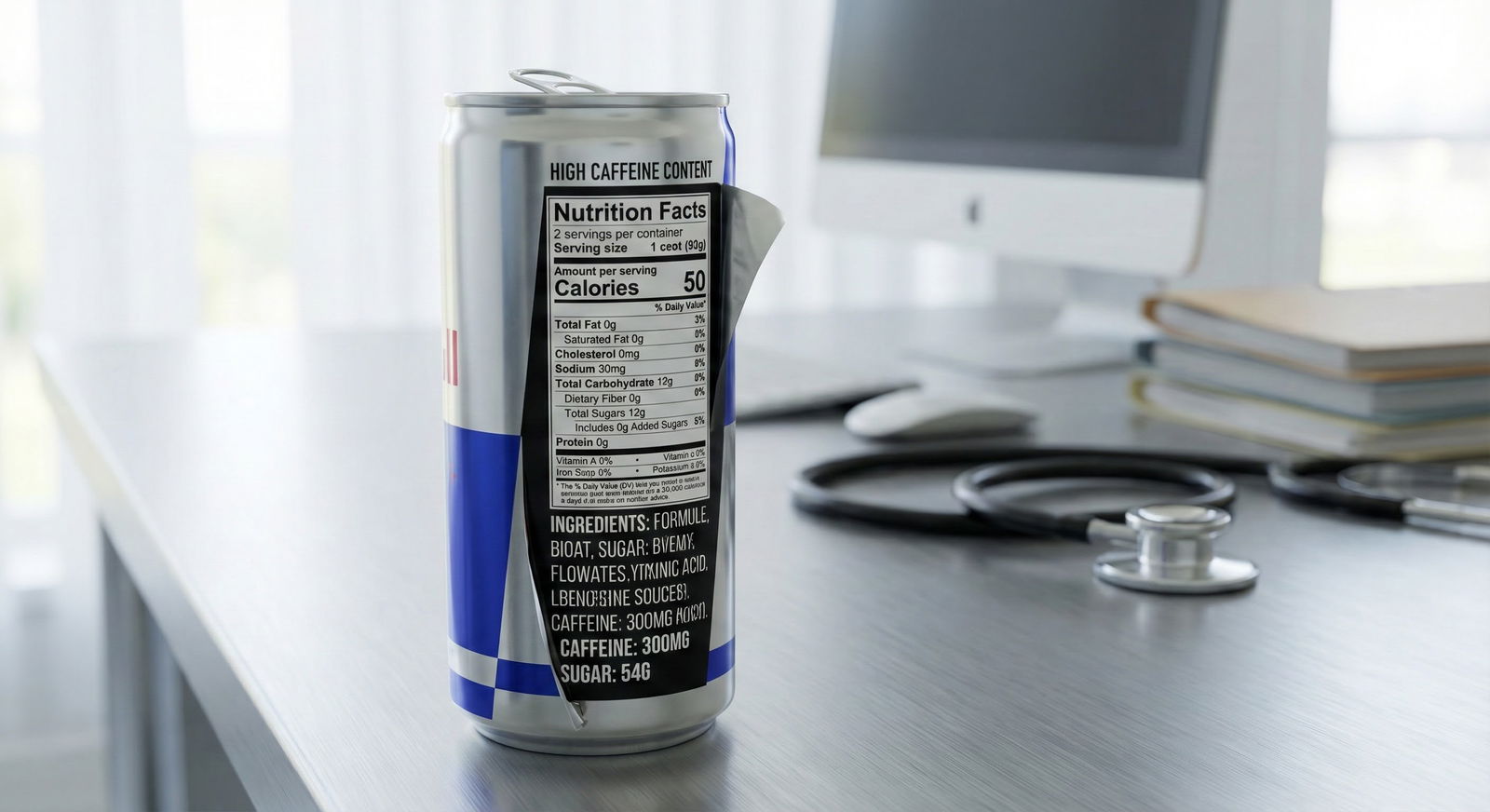
Most residents are quietly overdosing on caffeine every night shift. Not to the point of collapse, but enough to wreck sleep, worsen anxiety, and blunt performance by 4 a.m.—while thinking the problem is ‘not enough coffee,’ instead of too much and too late.
You want numbers and rules, not vague wellness talk. Here they are.
The Hard Numbers: How Much Caffeine Is “Too Much” for Residents?
Let me be direct: if you are a reasonably healthy adult without cardiac arrhythmias, severe anxiety, pregnancy, or other specific contraindications, the true safe daily limit for you on nights is:
Target:
• 100–300 mg of caffeine total on a night shift
• Hard ceiling: 400 mg per 24 hours (including pre‑shift and post‑shift)
That’s lower than what many residents drink. But it’s realistic and evidence-based.
Here’s what that looks like in real life:
| Drink / Item | Approx. Caffeine (mg) |
|---|---|
| 8 oz brewed coffee (hospital) | 80–120 |
| 12 oz drip coffee (to-go cup) | 150–200 |
| 1 shot espresso | 60–80 |
| 8 oz black tea | 40–60 |
| 12 oz cola | 30–40 |
| 16 oz energy drink (standard) | 140–180 |
Most residents hit 400 mg without realizing it:
- “Just” two 12 oz strong coffees = 300–400 mg
- Add one energy drink = you’re past 450 mg
- Plus soda on top? Now you’re in the 500–600 mg zone
Over 400 mg doesn’t guarantee you will collapse. But it does raise your odds of:
- Palpitations and tachycardia
- Jittery, scattered thinking when you actually need to think clearly
- Garbage-quality post‑shift sleep
- A brutal next-day “hangover” that pushes you to drink even more
So from a performance and survival standpoint, 100–300 mg on nights, 400 mg max total per 24 hours is the line I’d draw.
Timing Matters More Than You Think
Residents obsess about how much caffeine. They ignore when.
Caffeine has:
- Peak effect: about 30–60 minutes after you drink it
- Half‑life: roughly 4–6 hours (can be longer if you’re on certain meds, on OCPs, or genetically a slow metabolizer)
That means:
- A 10 p.m. coffee is still in your system at 4 a.m.
- A 2 a.m. energy drink is still hitting at 8 a.m. when you’re supposed to be asleep
If you routinely can’t sleep after nights, your caffeine timing is very likely part of the problem.
Here’s a practical timing structure that actually works for residents:
Pre‑shift (6–9 p.m.):
One moderate dose (80–150 mg). This is your main “anchor” dose.Early shift (9 p.m.–12 a.m.):
Optional top‑up of 50–100 mg if you’re dragging. Sip, don’t slam.After midnight:
Stop scheduled caffeine. Only use a small rescue dose (40–60 mg, like half a cup of coffee or a tea) if you’re truly nodding off with tasks in front of you.Last caffeine cutoff:
Rough rule: no caffeine within 6 hours of when you plan to sleep.
If your post‑call sleep target is 9 a.m., your last real caffeine should be around 3 a.m. or earlier. Not 7:30 a.m. in the call room “to get home safely” (this is how you nuke your entire day).
What Too Much Caffeine Actually Does to You on Nights
You already know caffeine keeps you awake. You probably don’t fully appreciate how it quietly sabotages you at higher doses.
Cognitive performance
Above ~300–400 mg, especially if you are not a chronic high‑dose user:
- Attention becomes narrow and jittery
- You get faster but less accurate
- Complex thinking, working memory, and judgment can suffer
- Anxiety and catastrophizing go up (terrible combo on cross‑cover)
So the irony: that third or fourth cup at 3 a.m. may make you feel more “on,” while you’re actually making more small mistakes, missing details, or re‑checking everything because you don’t trust your brain.
Sleep and recovery
This is the big one for night shifts.
High and late caffeine:
- Decreases deep sleep and REM, even if you “fall asleep fine”
- Shortens total sleep time
- Makes post‑shift sleep more fragmented
- Increases the probability you lie there wired, scrolling, wasting the only chance you had to recover
A resident who has 4 hours of real sleep post‑shift will outperform the one who had 7 hours of low‑quality, caffeinated pseudo‑sleep.
Physical symptoms
Over 400–500 mg in sensitive people often causes:
- Palpitations, “flip‑flop” heartbeat, or inappropriate sinus tachycardia
- GI upset (great combo with call room pizza)
- Sweating, tremor, and that wired-but-exhausted feeling
- Headaches when it wears off, which many people misinterpret as “I need more coffee”
If you’re frequently aware of your own heartbeat on nights, or your hands shake when placing orders, your caffeine is probably too high or too fast.
The Sweet Spot: How Much Caffeine Helps vs Hurts
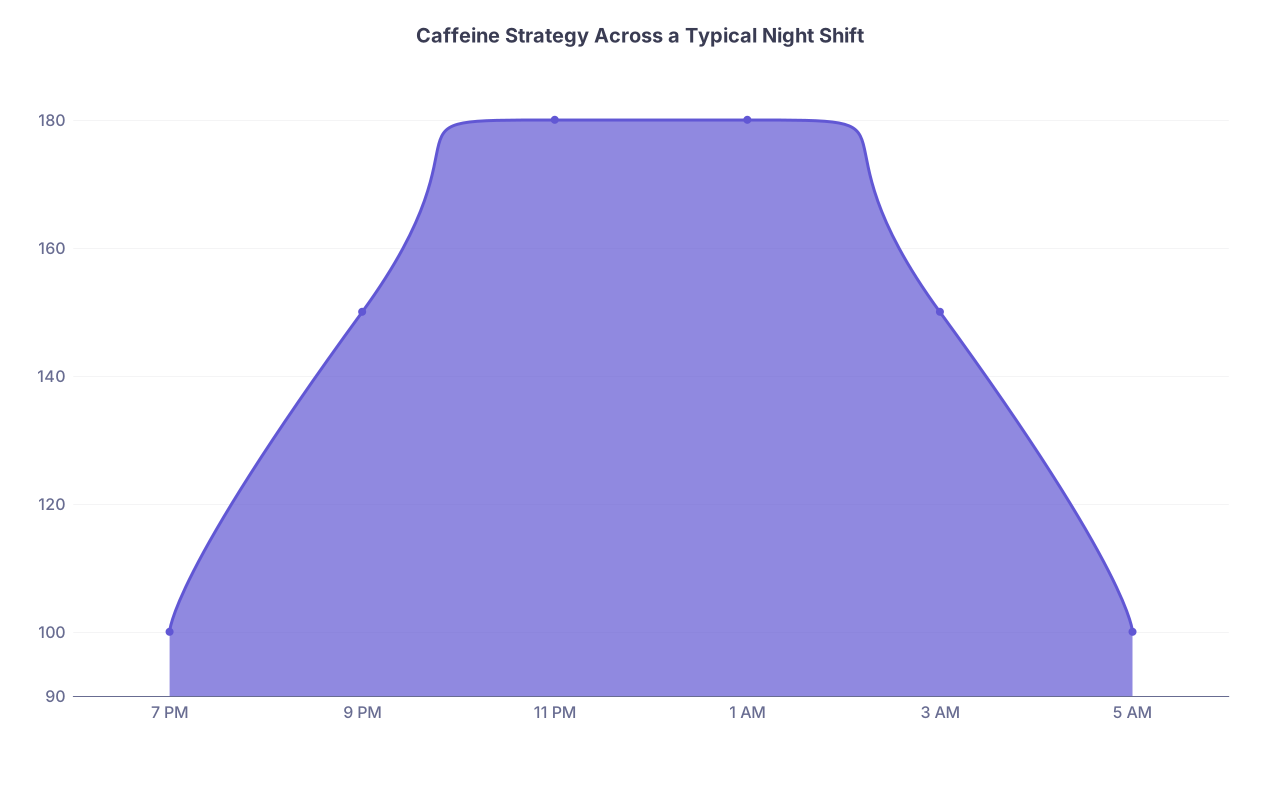
Think in phases, not a constant drip of coffee all night.
| Category | Value |
|---|---|
| 7 PM | 100 |
| 9 PM | 150 |
| 11 PM | 180 |
| 1 AM | 180 |
| 3 AM | 150 |
| 5 AM | 100 |
Here’s a simple framework:
Front‑load, don’t back‑load.
Get the majority of your caffeine in the first half of the shift. That’s when it boosts performance without trashing your post‑shift sleep as badly.Single meaningful dose > constant sips.
One 100–150 mg dose gives a more predictable curve than idle sipping from a 24 oz cup all night.Use small “booster” doses, not bombs.
If you’re slipping, 40–60 mg (half‑cup coffee or a tea) is often enough. You don’t need another 200 mg blast.Respect your own threshold.
If you’re the person who gets palpitations at 200 mg, your max is not 400 mg. Your body is giving you data. Don’t ignore it because “everyone else is fine.”
A Concrete “Safe Caffeine Plan” for a 7p–7a Shift
Let me give you a specific example. Adjust the times to your schedule.
Assume:
- Shift: 7 p.m.–7 a.m.
- Planned sleep: 9 a.m.–2 p.m.
- No major caffeine sensitivity
3–5 p.m. (pre‑shift wake-up)
- Hydrate, light snack
- If you must: ≤ 50–80 mg (small tea or half coffee). Many residents don’t need this if they slept decently.
6:30–8 p.m.
- Main dose: 100–150 mg
Example: 8–12 oz coffee, or small energy drink
This covers sign‑out and early admissions.
10–11 p.m.
- If flagging: small top‑up 50–80 mg
Example: black tea or small coffee
Many people stop right here and do fine.
After midnight
- Avoid scheduled caffeine
- If you hit a wall at 2–3 a.m. and are struggling to stay awake while writing notes or cross‑covering: 40–60 mg max
Think: half‑cup coffee, green tea, or diet soda.
From 3 a.m. onward
- No more caffeine unless you’re genuinely unsafe to drive home.
- If you do use a small dose at 5–6 a.m. purely for driving safety, accept that your post‑shift sleep will be worse and plan recovery accordingly (dark room, strict phone off, maybe a shorter but protected sleep).
Total typical intake in this model: 150–250 mg. Well under the 400 mg ceiling, with much better odds of decent sleep.
Special Situations: When Your Limit Should Be Lower
There are scenarios where even 200–300 mg is too high, and you should talk to your doctor and possibly your program leadership if needed.
You should consider tighter limits or medical input if you:
- Have a history of atrial fibrillation, SVT, or other arrhythmias
- Have severe generalized anxiety, panic disorder, or PTSD that flares with caffeine
- Are pregnant or attempting pregnancy
- Are on medications that slow caffeine metabolism (like some SSRIs, OCPs, certain antibiotics)
- Notice repeated, bothersome palpitations or chest discomfort on caffeine
- Have uncontrolled hypertension
In these cases, many residents do better capping at ≤200 mg total, and leaning much harder on non‑caffeine strategies to stay functional at night.
How to Stay Awake Without Just Pounding Coffee
You’re not going to white‑knuckle a full night shift on willpower and water. But you also don’t have to drink 600 mg of caffeine to get through.
Non‑stupid alternatives that actually help:
Bright light
Get as much bright light as you can when you arrive (even a brisk walk outside from the parking lot) and in the early part of your shift. Use the brightest lit areas for charting when possible.Movement “micro‑breaks”
Every 60–90 minutes: stand up, walk the unit once, stretch your back and neck. Two minutes is enough.Strategic food
Avoid huge carb‑heavy meals at midnight. Aim for smaller, protein‑containing snacks (nuts, yogurt, cheese sticks, hummus + veg, etc.) every 3–4 hours. Big pasta + third coffee = guaranteed 3 a.m. crash.Short naps when allowed
If your program permits, a 10–20 minute nap around 2–3 a.m. will beat an extra coffee almost every time for actual alertness. Longer than 30 minutes gets you into sleep inertia.Hydration, not just caffeine
Residents forget this: half the “I’m dying” feeling at 4 a.m. is mild dehydration in a dry hospital.

Red Flags You’re Overdoing It
If these are becoming your norm on nights, your caffeine strategy is broken:
- You routinely cannot fall asleep for 2–3 hours after getting home, despite feeling exhausted
- You feel heart pounding or notice irregular beats several times per shift
- Hands are shaking when you’re trying to type, place orders, or draw labs
- You need more caffeine every week to get the same effect (classic tolerance)
- You feel wired and anxious overnight, then crushed and empty during the day
One or two episodes isn’t a crisis. But if it’s your pattern, scale back and restructure your intake for a week. Many residents are shocked that cutting from 500–600 mg to 200–300 mg actually improves their night shift performance because sleep and anxiety improve.
Sample Comparison: Reasonable vs Overboard Caffeine Night
| Time | Reasonable Plan | Excessive Plan |
|---|---|---|
| 6:30 p.m. | 8 oz coffee (~100 mg) | 16 oz energy drink (~160 mg) |
| 10 p.m. | Black tea (~50 mg) | 12 oz strong coffee (~180 mg) |
| 1 a.m. | Water, light snack | 16 oz coffee (~200 mg) |
| 4 a.m. | Optional half tea (~25) | Energy drink (~160 mg) |
| Total | ~175–225 mg | ~700 mg |
The second resident feels like they’re “doing what they have to” to survive.
In reality, they’ve created their own crash cycle.
Bottom Line: Safe Caffeine Limits for Residents on Nights
- Stay under ~400 mg per 24 hours, and aim for 100–300 mg total on a typical night shift.
- Front‑load your caffeine in the first half of the shift and cut if off about 6 hours before planned sleep.
- Use caffeine as a deliberate tool, not a constant IV drip. When in doubt, try less and earlier, and let better sleep do the heavy lifting.