
What actually happens to your performance at 3 a.m. if you nap before call versus “powering through” awake all day?
Let me answer the core question first, then we’ll break down the details.
If you’re on a standard 24‑hour (or 16+ hour) call starting in the late afternoon or evening:
Most residents will perform better if they get a 60–90 minute nap before call rather than staying awake.
But the details matter: timing, duration, and your own sleep debt.
The Short Answer: Default Strategy
Here’s the direct, no-nonsense answer you’re looking for:
If your call starts 5 p.m. or later and you can nap safely beforehand:
- Aim for a 60–90 minute nap ending 1–2 hours before sign-in.
- Set two alarms. Dark, cool room. Eye mask if needed.
- This is your default strategy unless you know you get brutal sleep inertia from longer naps.
If your call starts early afternoon (e.g., noon to 3 p.m.):
- A big pre‑call nap is harder to time.
- Use a short “coffee nap” of 15–20 minutes early afternoon, plus prioritize a real night’s sleep before call day.
If you’re going into call already extremely sleep-deprived:
- Any safe sleep you can get before call is better than staying awake all day.
- In that state, “toughing it out” is not impressive; it’s dangerous.
Staying awake straight from 6–7 a.m. pre-call day through to post-call rounds with no nap is a recipe for slower thinking, more errors, and feeling like a zombie during morning sign-out. I’ve watched people try it. They don’t look heroic; they look impaired.
The rest of this is about customizing that strategy to your body, your rotation, and your schedule.
How Sleep Debt Changes the Equation
You’re not starting call in a vacuum. You’re starting with:
- How much you’ve slept the past 3–5 nights
- How hard the previous call was
- How brutal your current rotation is (ICU vs outpatient clinic is not the same universe)
Think about your last few days:
- If you’ve averaged 7–8 hours of real sleep:
- You’re in a better position to use shorter pre‑call naps (20–45 minutes) and rely more on circadian drive to push you through the night.
- If you’ve averaged 4–5 hours or less:
- Your brain is already in the red.
- You’ll benefit more from a full 60–90 minute nap to grab at least one full sleep cycle.
This isn't just comfort. Reaction time, decision speed, and working memory all tank with sleep debt. You’re making medication decisions, interpreting subtle exam findings, writing orders at 3 a.m. The “I’m fine” bravado does not impress the patient who gets the wrong dose.
Nap Length: 20 Minutes vs 90 Minutes vs “Oh No I Overslept 3 Hours”
Here’s how different nap lengths usually play out:
| Nap Type | Duration | Pros | Cons |
|---|---|---|---|
| Power Nap | 15–20 min | Quick alertness, low grogginess | Small benefit, short-lived |
| Medium Nap | 30–45 min | More rest than power nap | Higher sleep inertia risk |
| Full Cycle Nap | 60–90 min | Deep recovery, more restorative | Grogginess if mistimed |
15–20 minute “power nap”
- Good when:
- Call starts early afternoon or you can’t get a bed for long
- You’re prone to heavy grogginess from longer naps
- Effect:
- Mild boost in alertness for a few hours
- Easy to wake up and function quickly
60–90 minute “full cycle” nap
- Good when:
- You’re already pretty sleep-deprived
- Call starts 5–7 p.m. or later
- You have a real bed or call room and enough time
- Effect:
- Lets you complete at least one full sleep cycle (into and out of deep sleep)
- Stronger protection against the 2–5 a.m. crash
2–3+ hour “crash” nap before call
- This is the dangerous one if mistimed.
- If it ends too close to your shift start, you can wake up with:
- Heavy sleep inertia
- Headache, mental fog, irritability
- Only makes sense if:
- You’re coming off a night float or brutal shift
- You can wake up at least 2–3 hours before call to “clear” the cobwebs
If you consistently wake from longer naps feeling like you got hit by a truck, default to 20–30 minutes pre-call and fight to protect your sleep the night before instead.
Timing Your Nap: When to Sleep vs When to Suffer
Timing matters just as much as length. You want enough sleep to help, but enough awake time before sign-in that you’re not incoherent during check-out.
Here’s a simplified rule:
- End your nap 1–2 hours before you start call.
- Don’t wake up and walk straight into sign-out if you can help it.
For common start times:
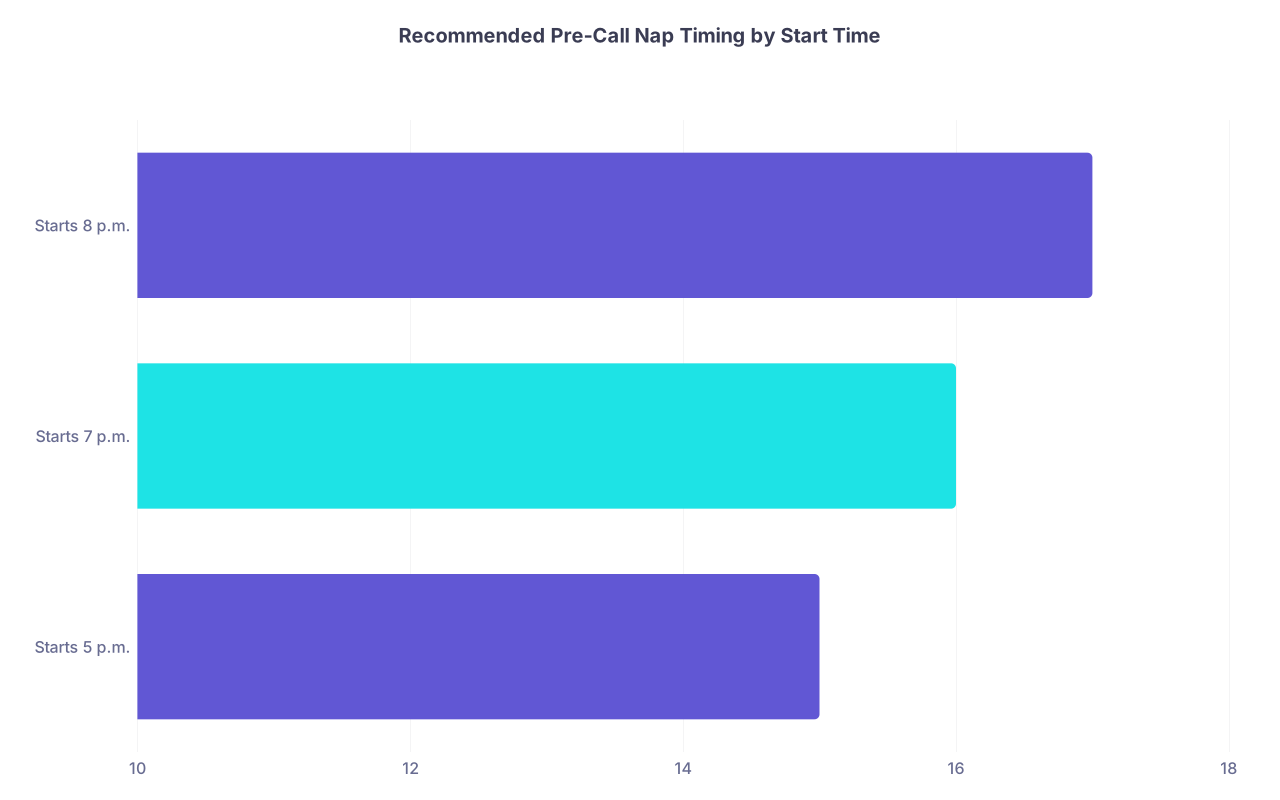
| Category | Value |
|---|---|
| Starts 5 p.m. | 15 |
| Starts 7 p.m. | 16 |
| Starts 8 p.m. | 17 |
(Interpretation: for a 5 p.m. start, nap roughly 2–3 p.m.; for 7 p.m., nap around 3:30–5:30 p.m.; for 8 p.m., nap 4–6 p.m.)
Realistic examples:
Call starts 5 p.m.
- Light lunch at noon.
- Nap 1:30–3 p.m. (60–90 minutes).
- Shower, quick snack, get in by 4:30.
Call starts 7 p.m.
- Normal morning tasks/errands.
- Nap 3:30–5 p.m. (60–90 minutes).
- Eat before or right after your nap.
Night float starting 8–9 p.m.
- Treat your “day” like a night worker’s schedule.
- Block a solid sleep period mid‑day (e.g., 11 a.m.–4 p.m.) and maybe a 20‑minute top‑off nap around 6:30–7 p.m.
If your program hands you a completely chaotic pre‑call schedule (it happens), any nap is better than none. Even 15 minutes on a bench in the lounge with your phone on loud.
Caffeine: Friend, Foe, or Nap Booster?
Caffeine can save you or sabotage you. Depends how you use it.
The smart move: coffee nap
This actually works and is not just a TikTok hack:
- Drink a small coffee or tea.
- Immediately lie down for a 15–20 minute nap.
- Caffeine kicks in right as you’re waking up, and adenosine (sleep pressure) is partially cleared.
Use this when:
- You only have 20 minutes free pre‑call.
- Or you’re mid‑call (2–4 a.m.) and have a brief protected window.
When caffeine becomes the enemy
- Huge coffee right before a long pre‑call nap → you just lie there anxious and wired.
- Energy drinks all night → GI upset, crash around sign-out, jittery charting.
Basic framework:
- Keep caffeine modest after midnight on call if you’re signing out around 7–9 a.m. You still need to sleep when you get home.
- Use small, frequent doses (half-cup coffee or small tea) rather than monster doses.
Situations Where You Might Skip the Nap
Yes, there are a few times when staying awake before call is reasonable. Not admirable, just reasonable.
You might choose to skip or shorten a pre‑call nap if:
You slept a full 8–9 hours the night before
You’re relatively fresh, and your call is likely to be moderate. Short 15–20 minute “reset” is fine, but a long nap isn’t essential.You know you get awful sleep inertia from any nap >20 minutes
Some people really do function worse after a longer nap. If you’ve tested this on easier days and it’s a pattern, obey it.Your pre‑call responsibilities are immovable
Conferences, family obligations, kids, commuting. If your only nap opportunity would end 15 minutes before sign-in, it may not be worth risking the grogginess.
But the idea of “training your body to handle no sleep” by forcing yourself to stay awake all day pre‑call? That’s just self-sabotage. You’re not building resilience; you’re just working impaired.
Rotation-Specific Strategies
Different rotations, different calculus.
ICU / CCU / Surgery night call
Assume:
- Higher chance of being up most of the night
- More time-sensitive decisions
- More procedures and cross-cover pages
Strategy:
- Prioritize a 60–90 minute nap before call if at all possible.
- Eat a real meal before arriving; don’t rely on scrounging at 1 a.m.
- Bring caffeine, but don’t pre‑load heavily before your nap.
Floor medicine call
Some nights are busy; some actually let you sleep a couple hours.
Strategy:
- Still aim for a 45–90 minute nap if you’re at all sleep-deprived.
- If your service historically lets you sleep 2–3 a.m., don’t fully rely on that. Patients don’t read the schedule.
Night float blocks
This is different from a single 24-hour call.
Think like a night worker:
- Anchor your main sleep chunk in the daytime, post-shift.
- Short 20–30 minute nap in the evening before each shift if you’re dragging.
- Don’t fully flip back to daytime sleeping on your days off if you have short breaks.
Here’s a quick comparison so you can see what makes sense for you:
| Scenario | Best Default Strategy |
|---|---|
| Single 24h ICU Call | 60–90 min nap, end 1–2h pre-call |
| Light Medicine Call | 45–60 min nap or 20 min power nap |
| Early Afternoon Start | 15–20 min coffee nap |
| Night Float Block | Big daytime sleep, small evening top-off nap |
Mid-Call Naps: The Other Half of Survival
The question you asked is pre‑call, but the real survival trick is how you handle mid‑call opportunities.
If you have a night where things slow down:
- Take scheduled 20–40 minute naps when safe (often residents protect each other for this).
- Lie down even if you “don’t feel tired.” Your body will cash in quickly at 3 a.m.
- Aim to finish your last mid‑call nap at least an hour before sign-out, so you’re not groggy presenting to the attending.
I’ve seen residents refuse to lie down at 1 a.m. because “something might come up.” Then they crash at 4 a.m. and are useless. Take the lull when you have it.
Practical Checklist: What To Actually Do
On a typical call day with an evening start:
Night before call
- Protect your sleep. 7–8 hours if you can. Don’t doom-scroll until 1 a.m.
Call day morning
- Normal wake time. Light to moderate activity. Don’t run a half marathon.
Early afternoon
- Light lunch. Avoid heavy, greasy food that will make you sluggish.
Pre‑call nap
- Aim for 60–90 minutes ending 1–2 hours before call.
- Dark, cool room. Eye mask, earplugs if needed.
- Two alarms: phone + watch or old-school alarm.
Pre‑call wake window
- Shower, stretch, hydrate, caffeine if you want (modest).
- Pack snacks, water, and something with protein.
During call
- Take micro-breaks and short naps when safe.
- Small, frequent fluids and food.
Post-call
- Get home safely (this is where sleep debt bites).
- Short nap (1–2 hours max) if you must, then solid sleep the next night.

| Step | Description |
|---|---|
| Step 1 | Call start time known |
| Step 2 | Plan 60 to 90 min nap |
| Step 3 | 45 to 60 min nap or 20 min nap |
| Step 4 | 15 to 20 min coffee nap |
| Step 5 | End nap 1 to 2 hours before call |
| Step 6 | Sleep deprived? |
| Step 7 | Start time after 5 p.m.? |
When You Really Have No Chance To Nap
Sometimes pre‑call is a fantasy. Clinic runs late, buses are delayed, your kid is sick. Fine.
Here’s what to do if you’re walking into call with zero pre‑call sleep:
- Eat. Real food with protein and some carbs.
- Hydrate, but don’t chug a liter 10 minutes before sign-in.
- Use strategic caffeine:
- Modest dose at start of call.
- Another modest dose around 1–2 a.m.
- Be honest with your senior if you’re dangerously exhausted, especially if you’re doing procedures, driving between sites, or managing unstable patients.
Hero culture is strong, but no one wants the truly sleep-impaired intern handling their LP solo at 4 a.m.
FAQs
1. Is it bad to sleep “too much” before call?
It depends what “too much” means. If you sleep 10–12 hours and wake up groggy right before call, yes, that’s a problem. If you’re severely sleep-deprived and manage a long nap that ends 2–3 hours before call, that’s usually helpful. The key is how you feel on wake-up and how much buffer time you have before the shift.
2. I always feel worse after napping. Should I just stop napping before call?
Not necessarily. First, tighten your naps to 15–20 minutes and see if that helps. Second, give yourself at least an hour between waking and true cognitive demands. If even short, well-timed naps make you feel terrible, then prioritize nighttime sleep before call and rely on caffeine plus micro-breaks instead.
3. What if my program culture shames people for napping?
Some places still equate fatigue with dedication. That’s outdated and unsafe. You do not need to make a speech; you can quietly protect your pre‑call nap on your own time and take brief mid‑call rests when appropriate. If seniors explicitly block safe rest, that’s a systems issue, not proof you’re weak.
4. How do I adjust this if I’m naturally a night owl or early bird?
Night owls might tolerate later bedtimes and longer pre‑call wake windows a bit better, but they’re not immune to sleep debt. Early birds may need the pre‑call nap even more because their circadian rhythm tanks hard in the late night hours. Still follow the same basic rules: nap length 20 vs 60–90 minutes, ending 1–2 hours before call, adjusted to your own pattern.
5. What matters more: pre‑call nap or post‑call recovery sleep?
Both matter, but in different ways. The pre‑call nap protects your performance and safety during call. The post‑call recovery protects your long-term health and burnout risk. If you must pick one on a bad week, prioritize something—anything—before call so you’re not working dangerously impaired, then fight for serious recovery sleep when you’re off.
Key takeaways:
- For most residents, a 60–90 minute nap ending 1–2 hours before call is the best default.
- If you can’t swing that, a well-timed 15–20 minute (coffee) nap still helps.
- “Staying awake to be tough” is not a strategy; it’s avoidable impairment.