
The most dangerous part of your call shift might be the five miles between the hospital and your bed.
I’m not exaggerating. I’ve seen more residents tear up over the drive home post-call than over codes, angry attendings, or failed procedures. Because at 7:30 a.m., when your brain is soup and your eyes burn, the question hits: “Am I actually safe to drive? Or am I about to kill myself or someone else over a stupid 10‑minute commute?”
You’re not dramatic for worrying. You’re right to worry. Sleep-deprived driving is real, and it’s ugly.
Let’s go into the stuff everyone else hand-waves: what your actual options are, how bad fatigue really is, when you should not drive, and how to build a safety plan that doesn’t depend on “I’ll just power through.”
How Dangerous Is Driving Home After Call, Really?
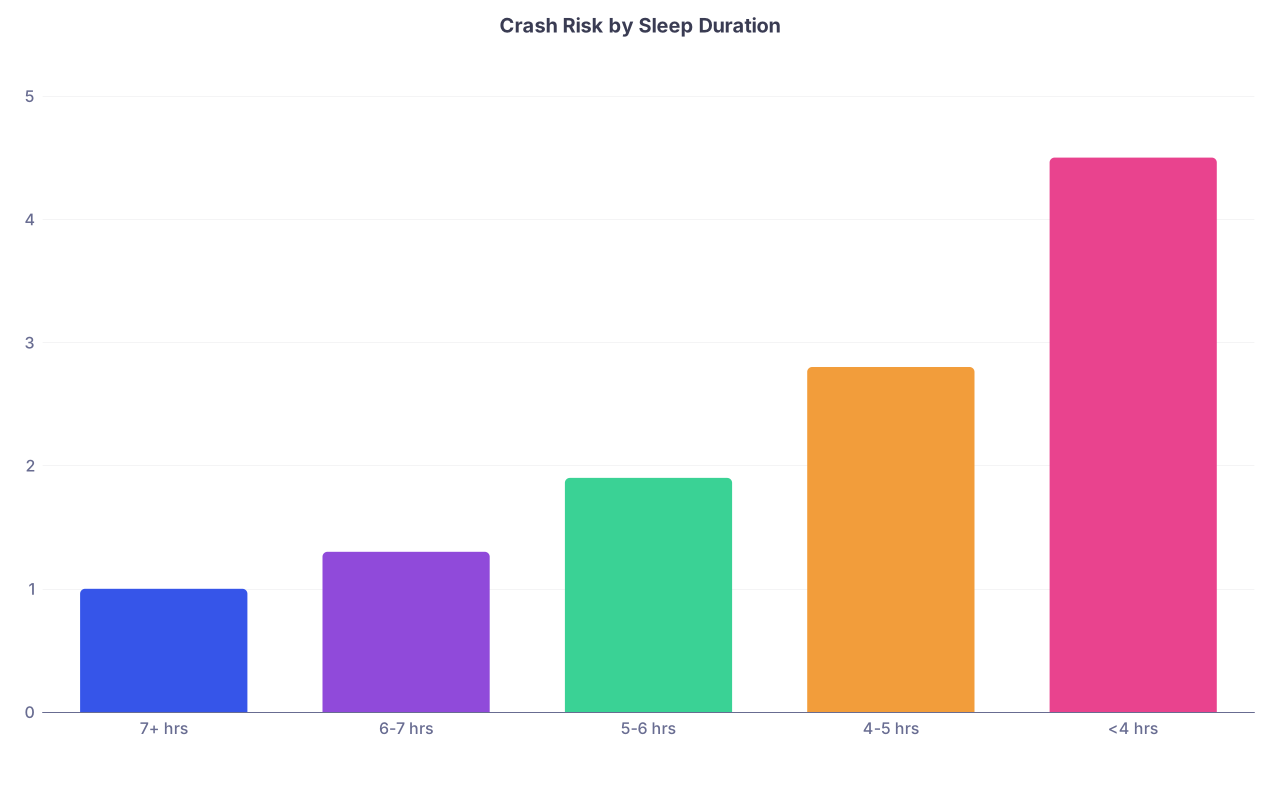
Let me be blunt: sleep deprivation trashes your driving like alcohol does. We just pretend it’s “part of training” instead of calling it what it is.
| Category | Value |
|---|---|
| 7+ hrs | 1 |
| 6-7 hrs | 1.3 |
| 5-6 hrs | 1.9 |
| 4-5 hrs | 2.8 |
| <4 hrs | 4.5 |
If you’ve slept less than 4 hours in the last 24, your risk of a crash is several times higher than someone rested. That’s not me catastrophizing; that’s the data. And that’s before factoring in:
- Overnight adrenaline crashes
- Constant pager interruptions
- Monitors beeping for hours
- Emotional stuff (codes, bad news, angry families)
I’ve heard residents say things like:
- “I woke up at a red light to someone honking behind me.”
- “I don’t remember the last 10 minutes of my drive.”
- “I drifted into another lane and only noticed when I hit the rumble strip.”
If any of those sound a little too possible for you? You’re not being paranoid. You’re describing microsleeps. And microsleeps at 60 mph can be lethal.
That 10‑minute drive when you’re destroyed at 8 a.m. is more dangerous than a 40‑minute drive when you’re rested and it’s dark out. That’s the part nobody tells you on interview day.
The Sick Logic in Your Head: “I’ll Be Fine, It’s Just…”
Here’s what actually happens at 7:15 a.m.:
You’ve been up all night. Maybe you got an hour between 3 and 4 a.m. You’re numb. Your sign-out is done. Your brain starts bargaining.
“It’s only 10 minutes.”
“I’m not that tired.”
“I’ll blast music, open the windows.”
“I can’t afford Uber every call.”
“I have to get home, I have to sleep, I’m on again tomorrow.”
That mix of tunnel vision + guilt + money anxiety + fear of “being weak” is exactly how residents end up behind the wheel when they shouldn’t be.
Let me say it clearly:
Needing help getting home doesn’t mean you’re weak or dramatic. It means your brain is accurately registering that it’s impaired.
You wouldn’t say to a drunk intern, “It’s only 10 minutes, just be careful.” You’d take their keys. But we say that to ourselves all the time post-call.
Your Real Options for Getting Home (Even If They All Feel Bad)
None of these options are perfect. Some are annoying. Some cost money. Some require swallowing pride. But they’re better than waking up to an airbag.
1. Pre-planned ride (friend, partner, co-resident)
This is the gold standard you don’t want to admit you need.
For known heavy-call rotations (ICU, ED, night float, trauma), you set up ahead of time:
“On post-call days, can you pick me up at 8 a.m. if I text you that I’m wiped?” Or the reverse:
“You drive me in the night before; I Uber home and sleep; we swap next time.”
People are often more willing than you expect—especially other residents who’ve been there.
2. Rideshare or taxi
Yes, it’s money. Yes, you’re underpaid. Yes, it stings.
But play out the worst case. You hydroplane in your exhausted state and hit a guardrail or another car. Now add deductible, tow truck, maybe physical therapy, maybe a missed block, maybe months of back pain.
One bad crash can wipe out years of saved Uber money.
A lot of programs won’t say this in orientation, but informally they’ll quietly admit: “If you feel unsafe driving, just get an Uber and we’ll figure it out.” Ask your chiefs or a trusted upper-level if there’s a reimbursement policy. Some hospitals actually do reimburse late-night/early-morning rides for call.
| Option | Main Barrier | When It Works Best |
|---|---|---|
| Friend/Partner | Scheduling | Predictable heavy calls |
| Co-resident swap | Coordination | Same shift patterns |
| Rideshare/taxi | Cost | Very exhausted, short distance |
| Public transit | Time/safety | Urban areas, daylight return |
| Nap in hospital | Inconvenience | Extremely fatigued |
3. Nap before driving
This is not a perfect fix. It’s a damage-control move.
If you’re doing the head-bob thing in sign-out, go lie down in a call room or empty on-call space and set an alarm for 20–30 minutes. Not 90, not 3 hours. A quick, intentional nap.
You will wake up groggy. Do not interpret “I feel like trash” as “the nap didn’t work.” Your alertness will improve over the next 15–20 minutes. Get up, splash water on your face, actually walk for a few minutes before you get in the car.
If you wake up and still feel like you were hit by a truck? That’s your answer: don’t drive. Move to Plan B—rideshare, call someone, or nap longer and go home later when you’re safer.
4. Public transportation (if you’re lucky enough to have it)
In some urban programs, this is the default. Resident parking is a pain, buses/metros are close, and the risk of dozing off on a train is way lower than mid-lane on the freeway.
Downside: getting home takes longer. Upside: you’re not piloting a 3,000‑pound death machine.
How to Tell If You’re Too Tired to Drive
The problem is your brain is worst at judging its own fatigue when it’s actually destroyed. So don’t wait for some dramatic sign like hallucinations or full-blown confusion.
If any of these are happening, I’d treat them as red flags:
- You had zero meaningful sleep all night, or less than 2 hours total
- You’re having trouble following a simple, normal conversation at sign-out
- You almost fell asleep sitting upright (charting, in a chair, etc.)
- Your eyes keep closing on their own and you have to “snap yourself out of it”
- You’re feeling weirdly “wired” and spacey rather than just tired
- You can’t remember chunks of the last hour clearly
This is where I’d draw a hard line:
If you’re having microsleeps (head snapping, involuntary eye closing) or you literally can’t remember the last 5–10 minutes while sitting still, you should not be driving. Full stop.
Building a Personal “Drive or Don’t Drive” Rulebook
You’re already juggling 500 decisions a day. Post-call you need fewer choices, not more. So you decide your rules in advance, while you’re rested.
Something like:
- If I sleep less than X hours during a 24‑hour call, I do not drive myself home.
- If I have ANY head-bob or microsleep during sign-out, I nap or get a ride.
- If I feel unsafe or “not fully here,” I’m allowed to spend money on an Uber without guilt.
Write it down. Seriously. In your notes app. You want a version of you at 2 p.m. making this policy for the version of you at 7 a.m. who’s bargaining.

| Step | Description |
|---|---|
| Step 1 | Post call finished |
| Step 2 | Did you sleep 3+ hours total? |
| Step 3 | Any microsleeps in last hour? |
| Step 4 | No driving - ride or nap |
| Step 5 | Do you feel alert enough to safely drive? |
| Step 6 | Drive home with extra caution |
Is it oversimplified? Sure. But it’s miles better than “I’ll just see how I feel and decide.”
Tiny Things That Help If You Do Drive
Sometimes you will drive home. Because the world is messy and your life doesn’t always line up with ideal policies.
If you’re at the edge but still above your personal “no-drive” threshold, use every safety crutch you’ve got:
- Shortest, slowest route. Take the boring local roads instead of the freeway, even if it adds 5–10 minutes.
- Phone out of reach. You’re already struggling to stay awake; you don’t need Instagram.
- Cold air and music help only a little. They can keep you from zoning out, but they aren’t magic. Don’t use them to justify driving when you shouldn’t.
- Pull over if you feel yourself fade. I’m not joking. If you catch your eyes closing at a light, pull into a safe lot and do a 15–20 minute nap.
You’re not a robot. You’re a very tired human doing a cognitively demanding job. You’re allowed to prioritize not dying on the way home.
The Money Guilt: “I Can’t Afford This”
Here’s the anxious spiral:
“I’m already drowning in loans. I can’t just Uber every time I’m tired. That’s irresponsible too.”
You’re right that you can’t spend $50 on rides four times a week. That’s not sustainable.
But you also don’t need to be binary about it: either “I always drive” or “I always Uber.” This is about having a plan, not a permanent Uber subscription.
Use rides strategically:
- On notorious “no-sleep” rotations (ICU nights, ED overnight, cross-cover where you’re constantly paged)
- On days you’re already starting sleep-deprived before call
- After especially bad shifts (codes all night, emotional cases, crisis after crisis)
The financial hit of a few targeted rides is real. But it’s not bigger than the financial and physical hit of an accident.
If your program has a wellness committee or GME office, ask—explicitly—about transportation support for unsafe-to-drive situations. Some places have meal vouchers and ride vouchers that never get advertised properly.
Advocating Without Getting Labeled “Weak”
Here’s the fear: if you say “I don’t feel safe driving home,” they’ll think you’re not cut out for residency.
Reality check: the people who’ve been in this game long enough know drowsy driving is an actual liability nightmare. Programs have lost residents to crashes. Attendings have seen it.
You don’t need to stand on a soapbox. You can keep it matter-of-fact:
- To chief: “Hey, I’ve had a couple of post-call drives where I didn’t feel safe. Is there any established way people handle this here? Nap spaces, ride policies, anything like that?”
- To co-residents: “Does anyone else get worried about post-call driving? What have you found that works?”
You’re not asking for a personal chauffeur. You’re saying: “I’d like not to die on the way home from serving this hospital all night. Any ideas?”
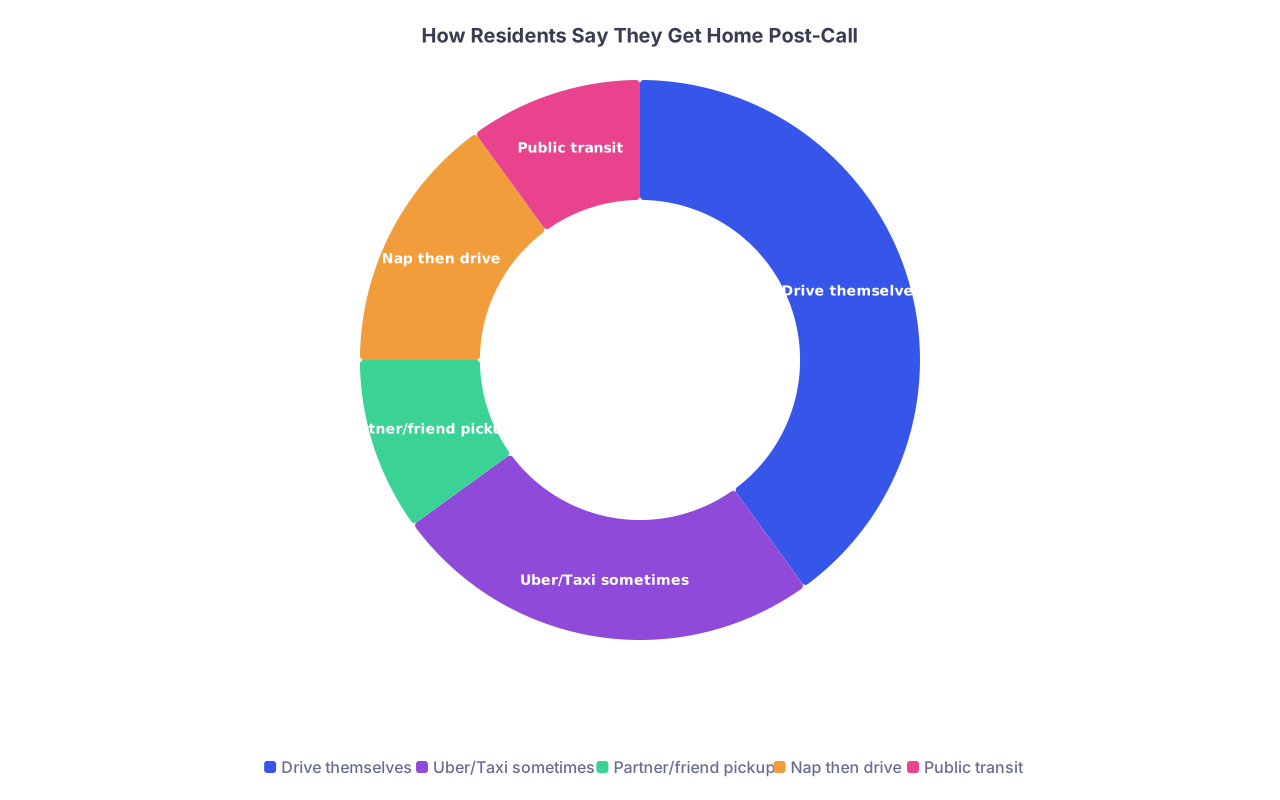
You might be surprised how many people quietly say, “Oh yeah, I Uber if I don’t sleep. I just build it into my budget during ICU months.”
| Category | Value |
|---|---|
| Drive themselves | 40 |
| Uber/Taxi sometimes | 25 |
| Partner/friend pickup | 10 |
| Nap then drive | 15 |
| Public transit | 10 |
Even if that’s not your exact program, those proportions are realistic. You are not the only one scared to drive home.
A Simple Post-Call Safety Plan You Can Actually Use
You don’t need a 10-page wellness manifesto. You need a bare-bones plan that your mushy 7 a.m. brain can follow.
Here’s a template to steal and customize:
Before starting a heavy-call month, decide:
- Your no-drive cutoffs (e.g., “<2 hours of sleep = no driving.”)
- Your primary backup (Uber? Partner? Co-resident swap?)
- Where you’d nap in the hospital if needed (specific room, not just “somewhere”).
The morning of post-call, run a 30-second self-check:
- How many hours did I actually sleep?
- Any microsleeps in the last hour?
- Do I feel spaced out or “not fully here”?
If you fail your own test, you automatically:
- Text/call your backup plan, or
- Nap 20–30 minutes in a defined place and reassess.
If you pass but still feel uneasy, you:
- Take the slowest, safest route
- Turn your phone off
- Give yourself explicit permission to pull over and nap if needed
You’re not trying to eliminate all risk. You’re trying to avoid the obvious, preventable disaster.
The Part You’re Afraid to Say Out Loud
You’re not just scared of crashing.
You’re scared of waking up in an ICU bed, or worse, knowing you hurt someone else. And then still being “the resident who fell asleep at the wheel.” Like people would talk about you in hushed voices in the workroom.
That fear is heavy. It’s also not irrational. I’ve watched people carry that kind of guilt after non-fatal crashes. “If I’d just taken an Uber.” It haunts them.
So let me flip it: future you—five years from now, finished with residency, maybe an attending, maybe finally sleeping like a human—what does that person want?
They do not care that you spent $30 on an Uber that one brutal post-call day. They care that you got to this point alive.

What You Can Do Today
Don’t wait for the next soul-crushing call to figure this out.
Today, while you’re awake, do this:
Open the notes app on your phone and write:
“Post-call driving rules for me” at the top. Under it, write your:
- No-drive sleep cutoff (X hours)
- What counts as a red-flag symptom for you
- Your first backup (who you’ll call/text or which app you’ll open)
- Where you’ll nap in the hospital if you need to
It’ll take 5 minutes. Then, the next time you’re standing in the hospital lobby with your keys in your hand and that pit in your stomach, you won’t have to reinvent the plan from scratch. You’ll just follow what your saner, rested self already decided.