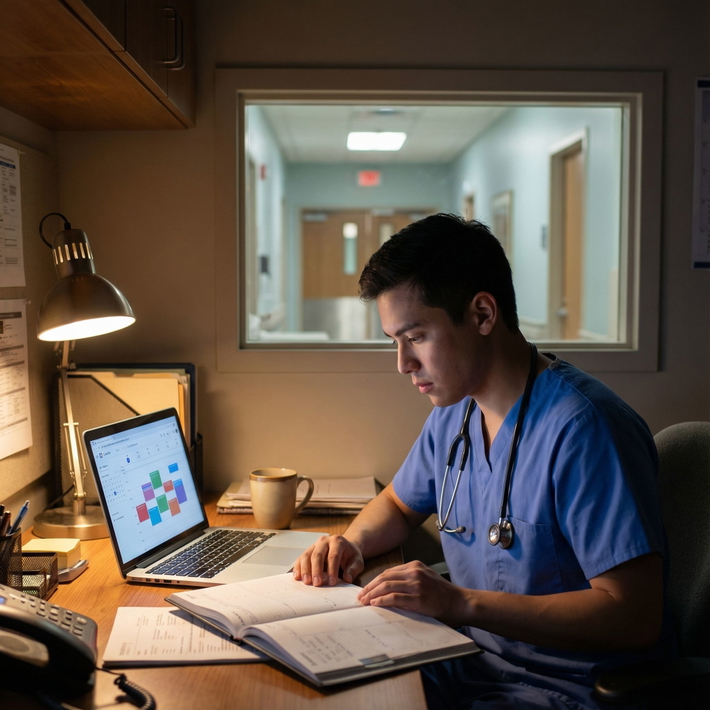
Last month, a PGY-1 told me she woke up at 3 a.m. in sheer panic, convinced she’d fall asleep during her first 28-hour call and miss a code. She wasn’t on call. She was in her own bed. On a Sunday. That’s how deep this fear gets into your nervous system.
If you’re anything like her—or like I was—you’re not just “a little worried.” You’re catastrophizing. “If I fall asleep, a patient will die. I’ll get fired. I’ll get sued. Everyone will know I’m unsafe. My career will be over.” You’re not being dramatic. You’re just scared in a very specific, residency-shaped way.
Let’s walk straight into that fear and pick it apart.
The Nightmare Scenario Playing in Your Head
You already know the horror reel:
You’re on night float or a 28-hour call. It’s 4 a.m. Your eyes burn. The pager is quiet for once. You sit down “just for a minute” to write a note. The next thing you know, it’s 5:17 a.m.
You check your pager.
…No missed pages.
…but what if there were and you slept through the vibration?
…What if the nurse called about chest pain and you didn’t respond?
…What if someone coded and you weren’t there and they look through the chart and see you were the covering resident?
The logical part of your brain knows this is unlikely. The anxious part does not care.
Here’s the uncomfortable truth that nobody likes to say out loud: residents do fall asleep on call. Sometimes in call rooms. Sometimes slumped over Epic. Sometimes literally sitting upright at the nurses’ station. I’ve seen someone sleep with their hand still on the trackpad.
The part they don’t tell you? That’s not the end of their career. Not even close.
How Residents Actually Survive Night Shifts (Not the Instagram Version)
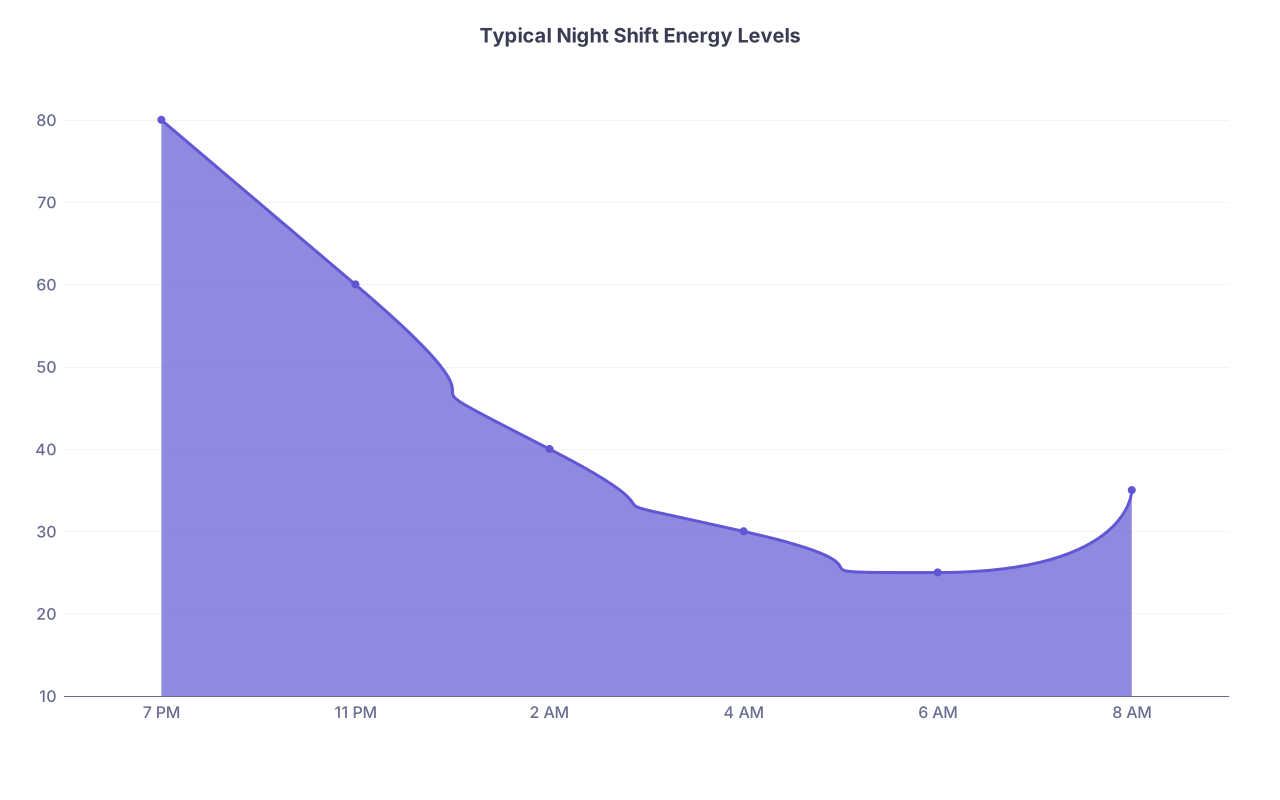
| Category | Value |
|---|---|
| 7 PM | 80 |
| 11 PM | 60 |
| 2 AM | 40 |
| 4 AM | 30 |
| 6 AM | 25 |
| 8 AM | 35 |
You might have this idea that “good” residents are basically nocturnal superheroes who never get tired, never close their eyes, and answer pages on the first ring, chipper and sharp, at 3:42 a.m.
Reality is messier and more human.
Here’s what actually happens on most services:
There are built-in safeguards.
Pagers are loud. Phones ring multiple times. Nurses escalate if you don’t respond. There are hierarchies: intern → senior → night float → on-call attending. It’s not “one sleepy resident between life and death.” It’s a system.People micro-nap—in controlled ways.
Residents don’t always talk about this because it feels like admitting weakness. But they power-nap:- 10–20 minutes between pages in the call room
- 15 minutes after a code when things stabilize
- 5-minute eyes-closed reset in a chair before pre-rounding
It’s not reckless; it’s strategic so they don’t crash later.
Workload isn’t constant from 7 p.m. to 7 a.m.
Nights are front-loaded. Admissions spike between 7–11 p.m., again around midnight. The 3–5 a.m. window is usually quieter, except for SICU/ED chaos or random disasters. Residents plan around this. They don’t slog flat-out all night.People watch out for each other more than you think.
I’ve seen seniors quietly take the pager from a shaking, exhausted intern at 5 a.m. and say, “Go lie down for 20. I’ve got this.” Not because they’re saints. Because they know a zombified co-resident is a liability and a danger to patients.
You’re imagining a solo war movie. It’s more like being on a very tired team with half-functional systems that, somehow, kind of work.
“But What If I Actually Fall Asleep and Miss Something Important?”
This is the core fear, right? Not “I’ll be a little drowsy.” You’re worried you’ll be dangerously impaired.
Let’s separate reality from your anxiety’s storyboarding.
How often do people actually miss things because they fell asleep?
Way less often than your brain thinks.
Why?
- Pagers vibrate and beep obnoxiously.
- Nurses will call multiple times.
- If no response, charge nurse escalates.
- If it’s truly emergent, they may overhead page a code or call a rapid response team directly.
Is it possible to miss a page? Yes. Residents do it. But usually:
- It’s for something non-critical (“patient wants ginger ale”).
- It gets re-routed or re-paged.
- You answer it groggy and feel like you’ve committed a felony. You haven’t.
What happens if you really miss something?
Here’s the unfiltered version I’ve seen:
- A night nurse pages an intern about rising blood pressure. Intern’s in the bathroom or passed out in call room and doesn’t answer.
- Nurse repages. No answer.
- Nurse calls senior or oncoming shift.
- Senior handles it and later says, “Hey, when I paged you at 3 a.m. you didn’t respond. You okay?”
Worst case in most of these situations:
- You get a talking-to.
- You feel like garbage.
- Your anxiety spirals.
- You become over-vigilant next time.
The “I slept through a code and someone died” catastrophic version is the extreme edge case, not the standard scenario. And when bad outcomes happen on nights, it’s almost never all on one tired intern.
What Residents Actually Do to Stay Awake (That Programs Don’t Really Teach You)
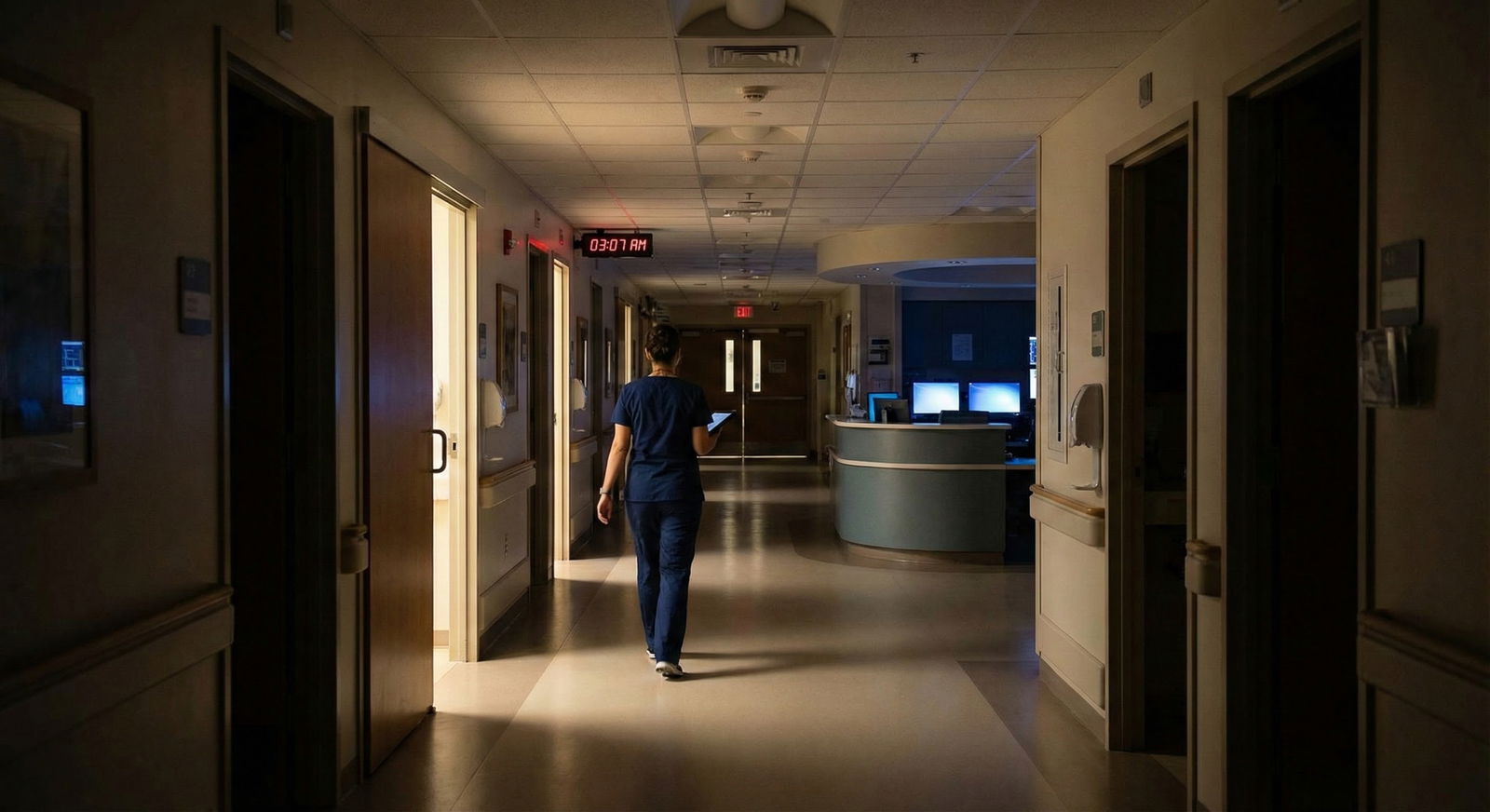
Your fear is partially rational. Sleep deprivation is brutal. There are some concrete things people use that actually help, beyond “drink coffee and hope for the best.”
1. The Caffeine Strategy That Doesn’t Backfire
Most interns either:
- Don’t use caffeine because they’re scared they’ll be too jittery
- Or slam it randomly all night and then can’t function post-call
Smarter residents:
- Pre-load a little: one coffee/tea at the start of shift (6–8 p.m.)
- Use a small “booster” around midnight–1 a.m.
- Avoid big doses after ~3–4 a.m. so they don’t wreck their post-call crash
And they don’t chug an energy drink on an empty, stressed-out stomach. That’s just asking for palpitations and diarrhea on top of existing misery.
2. Strategic Micro-Naps (Without Feeling Like You’re Neglecting Patients)
This is where your anxiety screams, “If I close my eyes, I’m irresponsible.”
Reality: A 15–20 minute nap can restore enough alertness to literally keep you from making dangerous mistakes later.
How residents make it safe(ish):
- Tell the nurse at the main unit: “I’ll be in the call room for 20 minutes; page me if anything at all comes up.”
- Put your pager/phone on your body with volume/vibrate maxed.
- Set a backup alarm for 20–25 minutes.
- Only do this when the board is relatively quiet, you’ve checked on your sickest patients, and your senior knows where you are.
You’re not abandoning patients. You’re doing maintenance on the brain that has to make medication and triage decisions.
3. Movement, Not Just Coffee
Wakefulness isn’t just chemistry. It’s circulation and stimulation.
Residents I’ve seen survive nights long-term:
- Do 1–2 laps around the unit every hour they’re charting. Even 3 minutes.
- Stand up to field pages when possible instead of staying slumped in a chair.
- Use the stairs once or twice a shift for a quick jolt. One or two flights, not a workout.
It sounds stupidly small. But you know what doesn’t help? Staring motionless at Epic at 3:30 a.m. with dry eyes and a weakening neck.
4. Light Hacking
Hospitals are weirdly bright and dim at the same time. Bright overheads, but weirdly sleepy vibes.
Small hacks:
- Sit near brighter lights when you’re doing notes. Don’t burrow into the darkest corner.
- If your call room is pitch black, use that only for actual napping, not charting. Train your brain: “This room = sleep, not half-working.”
Some residents even bring a small, bright desk lamp. It’s not “wellness influencer” level. It just helps your brain accept that it’s “daytime” while you’re writing notes.
The Psychological Part: You’re More Afraid of Being Judged Than Being Tired
| What You Say You Fear | What You Actually Fear |
|---|---|
| Falling asleep on call | Being seen as weak or unsafe |
| Missing a page | Nurses or attendings losing respect |
| Being tired | Making a mistake that proves you don't belong |
| Long night shifts | That you can't handle residency at all |
Nobody admits this out loud, but I will: a huge piece of this isn’t “patient safety” in your head. It’s shame.
You’re terrified of:
- The nurse walking by and catching you with your eyes closed.
- The senior making a joke at sign-out about “someone snoring in the call room.”
- Being the intern everyone secretly thinks is “not cut out for this.”
I’ve seen interns stand at the nurses’ station, dead on their feet, refusing to sit down because “I don’t want them to think I’m lazy.” Their brain is mush, but their image is safe. That’s backwards.
The residents who last:
- Quietly rest when they can
- Ask for help when they’re truly at the edge
- Care a little less about how it looks and a little more about not harming patients
You’re not going to earn extra respect by wrecking yourself.
What Programs and Systems Actually Do When Someone Is Too Tired

| Step | Description |
|---|---|
| Step 1 | Resident extremely fatigued |
| Step 2 | Missed pages or errors |
| Step 3 | Nurse or colleague reports concern |
| Step 4 | Program leadership informed |
| Step 5 | Meeting with resident |
| Step 6 | Adjust schedule or add support |
| Step 7 | Provide counseling or coaching |
Another thing your anxiety does: it tells you that one slip = catastrophic firing.
Reality (at most programs that aren’t completely toxic):
- If someone is clearly not safe because they’re so exhausted, leadership wants to fix it. Because they’re liable. And because they’re human, usually.
- I’ve seen schedules changed, workloads adjusted, nap opportunities pushed, wellness/fitness for duty consults ordered—not in a punitive way, but like, “This isn’t sustainable. How do we help you function?”
There are absolutely malignant places, and yes, some chiefs/attendings handle this badly. But even then, there are still ACGME duty hours, state regulations, and institutional risk people who do not want “chronically unsafe fatigue” on their record.
You’re not dangling over a canyon alone. There are guardrails, even if they’re imperfect.
Concrete Things You Can Do Before Residency to Calm This Fear
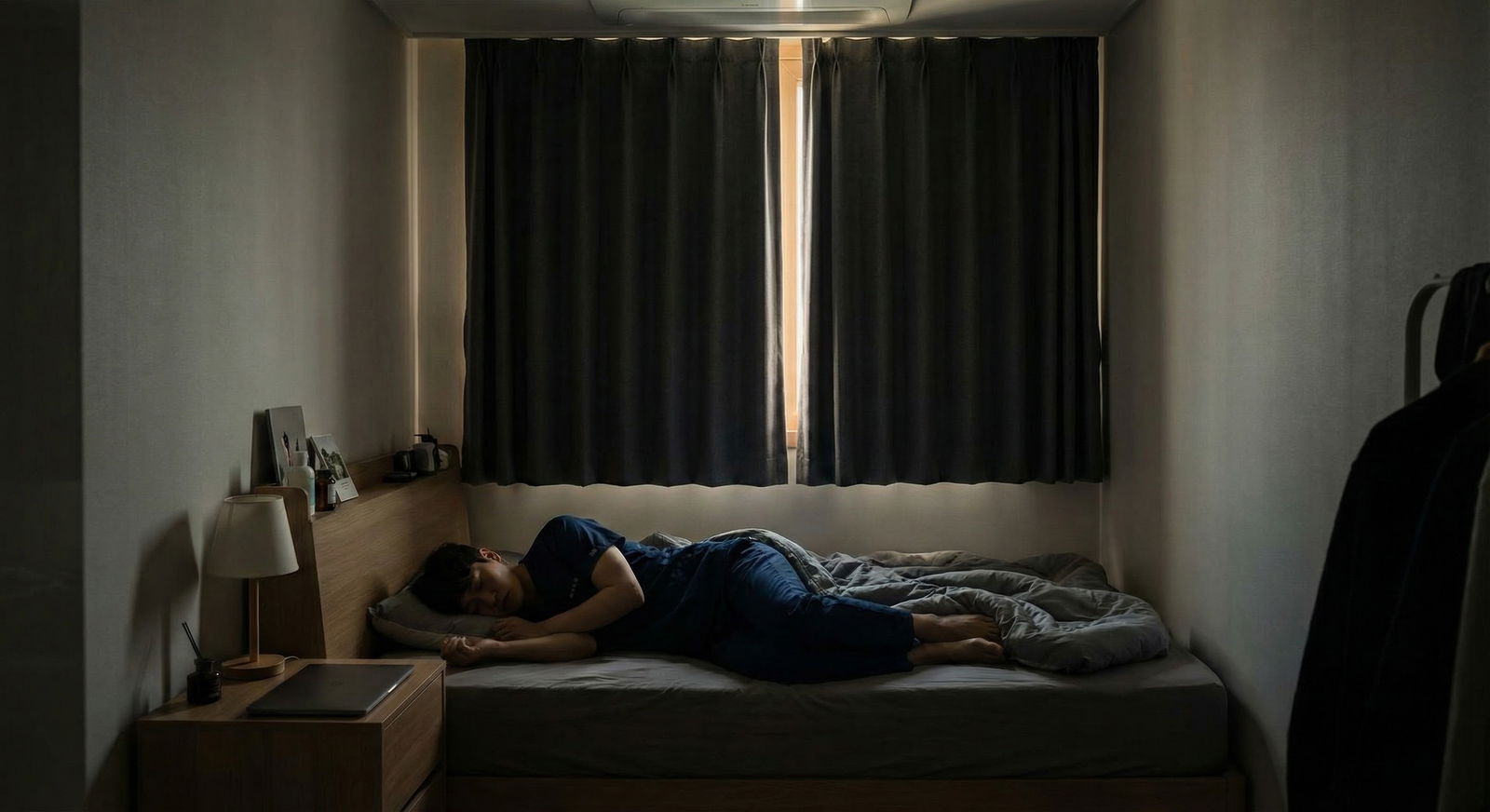
You’re probably reading this before residency or early PGY-1. You can’t change call schedules, but you can stack the deck in your favor.
Here’s what actually helps (beyond vague “sleep hygiene”):
Know your own sleep patterns honestly.
Are you a true night owl or do you fall apart after 11 p.m.? Know which rotations will hit you hardest and mentally budget more recovery around them.Practice being up late with structure, not doom-scrolling.
A couple of times, intentionally stay up until 2–3 a.m. doing something mildly cognitively engaging:- Practice questions
- Reading
- Watching lectures
And notice: when do you really crash? What helps? How does a 20-minute nap feel vs 60?
Build small daytime anchors.
Night shift destroys your sense of time. Having:- One regular meal
- A pre-shift ritual (same snack, same podcast, same walk from parking)
anchors your brain, which oddly helps the panic.
Decide your personal “floor” rules now.
Examples:- “I will never drive home more than 20 minutes post-call without a nap if I’m nodding off.”
- “If I truly cannot safely function, I will tell my senior rather than silently risking a patient.”
Making these decisions before you’re delirious means you’re likelier to follow through.
The Thing Nobody Tells You: Everyone Is Terrified At First
Every intern class has the same group chats lighting up after first call:
- “I was hallucinating by 5 a.m.”
- “I’m scared I missed something important because I don’t remember 2–3 a.m.”
- “I fell asleep sitting up in the workroom and woke up when a nurse said my name.”
And then… they go back. They adjust. Their body starts to anticipate the pattern. Their brain becomes disturbingly good at functioning at 3 a.m. with half the RAM.
You will not be a special failure because you’re scared of falling asleep on call.
If anything, the fact that you’re this anxious about it means you’re unlikely to be casually reckless.
You’ll:
- Triple-check your sickest patients before lying down.
- Over-communicate with nurses: “If anything changes, page me immediately, even if it seems small.”
- Set alarms and give people your location.
That’s not weakness. That’s appropriate fear channelled into safety.
Quick Reality Check vs Your Brain’s Disaster Movie
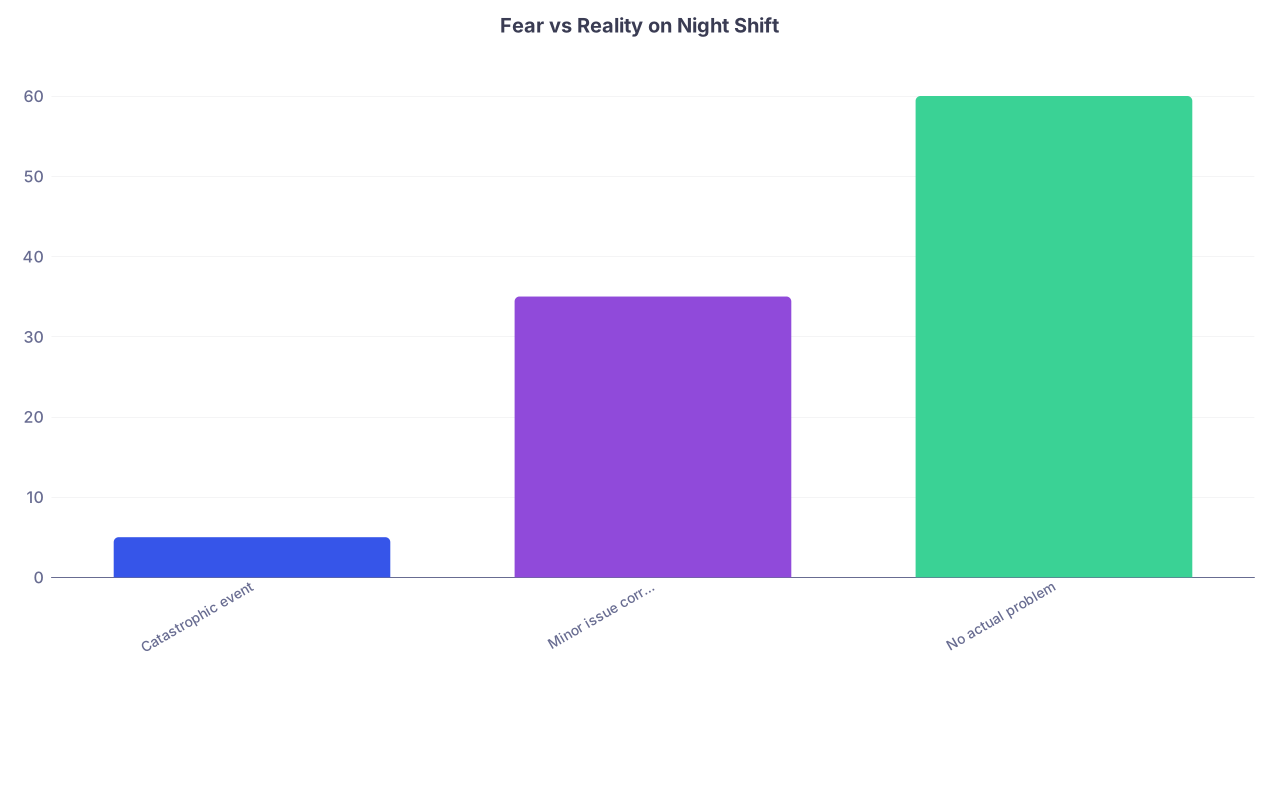
| Category | Value |
|---|---|
| Catastrophic event | 5 |
| Minor issue corrected | 35 |
| No actual problem | 60 |
What your brain is telling you:
- There’s a 90% chance you’ll fall asleep inappropriately and cause serious harm.
What actually happens for most residents:
- You will feel like death at 3–5 a.m.
- You will have nights where you micro-sleep at your workstation.
- You’ll answer a page groggy and hate the sound of your own voice.
- You’ll miss non-urgent pages once in a while and call back apologizing.
- You’ll learn your body’s patterns and gradually build systems around them.
And very likely:
You’ll get through residency without a single catastrophic “I slept and someone died because of me” situation. You will have regretful, imperfect, tired nights. That’s different.
FAQ (The Questions You’re Too Embarrassed to Ask Out Loud)
1. What if I literally fall asleep during a patient encounter?
Honestly? It happens. I’ve seen an intern nod off while a very chatty patient was giving their fifth repetition of the same story at 4 a.m. Worst case, someone notices and is (rightfully) not thrilled and you jerk awake, apologize, finish business. If this is happening regularly, that’s not a personal failing; that’s a serious fatigue issue you need to bring up with chiefs/program leadership. One episode in the dead of night does not make you dangerous or unfit to be a doctor.
2. Can I actually get in serious trouble for sleeping in the call room?
Sleeping in the call room is literally what it’s for. The issue isn’t “Did you sleep?” It’s “Were you reachable and responsive?” If your pager was on loud, nurses knew where you were, and you responded to pages, you’re fine. Residents only really get in trouble when they vanish—pager off, no one knows where they are, repeatedly unresponsive. That’s different from taking a 20-minute nap between admits.
3. What if I’m so tired I feel unsafe but my senior seems fine and I’m scared to say something?
Say something anyway. You can keep it simple: “I’m hitting a wall. I’m worried I’m going to miss something or make a mistake. Can we figure out a 20-minute break or redistribute something?” Any decent senior would rather juggle one extra admit than have an intern in full cognitive meltdown. If they blow you off entirely and this is persistent, that’s when you start looping in chiefs or your program director—not because you’re weak, but because unsafe fatigue isn’t just your problem.
4. Is it normal to start residency already losing sleep over night shifts?
Yes. It’s almost cliché at this point. People worry months in advance, have nightmares about missed codes, and obsess over hypothetical disasters. The fact that you’re thinking this through now actually sets you up better than the people who waltz in assuming, “I’ll be fine, I pulled all-nighters in college.” You’re going to feel scared. Then you’re going to do it anyway. And over time, the fear will shift from “I can’t do this” to “This sucks, but I know how I get through it.”
Open your calendar or notes app right now and write down one concrete “night shift rule” you’re going to follow for yourself—something like, “I will always tell the nurse where I am if I lie down for a nap” or “I will use a 20-minute alarm if I close my eyes on call.” Start there. Give your future, exhausted self at least one safety rail.